- Book info
- Sample
- Media
- Author updates
- Lists
Synopsis
Johnstone Country. Where the Brave and the Bold Serve Justice.
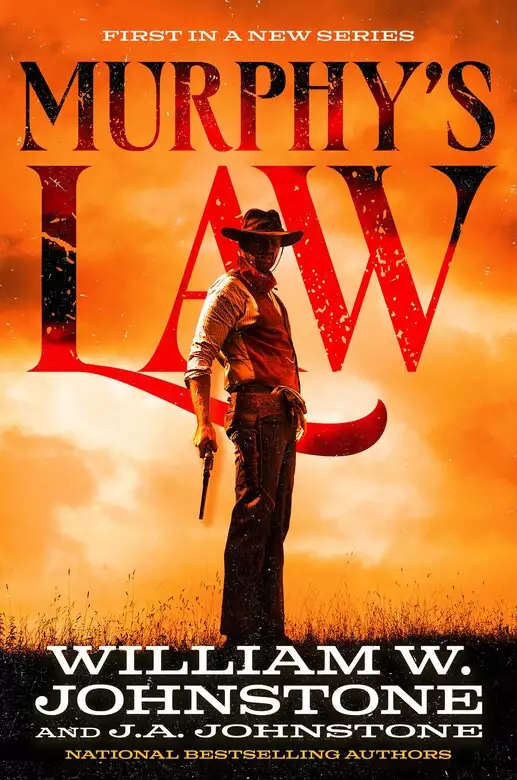
From the national bestselling authors of American Western sagas and legends comes an action-packed new series. Cullen Murphy was forged in the fires of notorious towns, rough cattle drives, and brutal battlefields. And in a land where the strong prey on the weak, he’s a law unto himself . . .
Orphaned as a child, Cullen Murphy battled against life’s cruelties as he drifted from one unforgiving frontier town to the next across Western Texas. A hired hand at saloons and ranches, he was aimless until he met a drover who taught him to drive cattle, and inspired him to build a spread of his own on the San Saba River just outside of the small Texas Hill Country town of Newtown.
Then the war came and Cullen spent four years wearing Confederate gray, earning the rank of sergeant. Caught up in the viciousness and bloodshed from both sides, he became a hardened soldier—and a merciless killer. He fought in hard-won campaigns, gaining honor, only to become embittered by defeat. With the country in ruins and no family awaiting him, Cullen returned to Texas, only to find his home pillaged and his fields overrun by weeds—and Newtown under siege.
With no marshal or sheriff to keep the peace, outlaws have taken over the town, harrassing citizens and threatening merchants with no fear of retribution. But when these gamblers and gunmen target Cullen Murphy, they incur the wrath of a man who doesn’t need a badge to enforce his law . . .
Release date: April 28, 2026
Publisher: Pinnacle Books
Print pages: 336
* BingeBooks earns revenue from qualifying purchases as an Amazon Associate as well as from other retail partners.
Reader buzz
 Please log in to recommend or discuss...
Author updates
Murphy’s Law
William W. Johnstone
Looking back on his enlistment, he could not regret volunteering for the army when war was officially declared. It had been a matter of personal responsibility to fight to save his small ranch in West Texas. It may have been an easier choice for him than it had been for many men his age at the time. He had had no family to support, having been orphaned at the age of ten, when his mother was beaten to death by a drunken cow-hand in Fort Worth. When the town marshal was summoned to the woman’s room over a saloon, he found her slain body on the floor and the body of the cowhand slumped in her easy chair. There was a hole in the cowhand’s temple and a larger one on the opposite side of his head. His pistol was in his hand, and there was no one else in the room. There was no sign of the boy, although the one window was wide open. The marshal easily concluded that the cowhand had beaten the woman to death in his drunken state. Realizing what he had done, he took his own life.
The years that followed his mother’s death were years that would toughen the boy to the cruelties of life in the world of saloons, dance halls, and brothels. Always large for his age, he managed to find work for himself in the bawdy houses and hog ranches of the day. Then one day he met a man named John Tate, who offered him a job riding with a herd of cattle he was driving to market in Kansas. He started out riding drag with the horse remuda, breathing the dust stirred up by the cattle herd, learning to ride a horse on the way to the Kansas railheads. He worked for John Tate for four years before deciding he wanted to build his own ranch, leaning more toward raising horses than cattle. He found a property he could afford on the San Saba River in the Texas Hill Country and was just short of two years in the building of his ranch when war was declared.
Feeling it his duty to volunteer, he sold the horses he had managed to acquire to the army, then enlisted himself and the one horse he kept for active duty. Everything was in a hurry-up stage as the Confederate army rushed to train new recruits for battle. Murphy, a few years older than so many of the young men who enlisted and obviously a horseman, was put to use right away to train recruits for the cavalry. In a few months’ time, he was promoted to the rank of sergeant. It was a rank he kept throughout his army career and one for which he seemed to be born. He proved to be a no-nonsense sergeant, fearless in battle and strictly by the book. In his platoon, there was “Murphy’s Law,” and woe unto him who challenged it.
When he was discharged, he left Brownsville and followed the Rio Grande River northwest for the first four and a half days to Laredo. He knew there was an old Indian trail that left the river from there and headed in the general direction he wanted to go. Although there were still reports of Comanche Indian parties in the area, his main concern was the scarcity of water after leaving the river. He knew there was no real source of good water until striking the Nueces River. As near as he could estimate, it would take him two and a half days to reach that river. He would hope to come across a spring or creek during that stretch of his journey. But in case he didn’t, he left the Rio Grande with two canteens for his own consumption and two small kegs for his horses. Once he struck the Nueces River, he could follow it up into the Texas Hill Country, where he would cross the Llano River to finally strike the San Saba and follow that to his ranch.
When he’d left Brownsville, he had hoped to supplement his rations with some fresh game, but he was disappointed to find nothing to hunt until he left the desertlike flatlands and finally reached the Hill Country. Since it was still late in May, it was the middle of the whitetail rutting season, so when he finally reached the rugged limestone and granite hills of the Hill Country, he began to see deer signs close to the rivers. It was when he came to the Llano River that he decided to camp overnight and go deer hunting the following morning. Even as anxious as he was to complete his journey, he was more enthusiastic about some fresh meat to eat. His hunt was not in vain, for he was successful in killing a doe. So his horses got the day off while he butchered the deer and spent the rest of the day smoking the biggest portion of the meat, to be eaten later. Now that he was in country he was more familiar with, he could safely estimate that he was within about seventy miles of his cabin on the San Saba River. He had built it right where Brady Creek emptied into the river. He figured it would take two full days to reach it, due to the terrain between here and there. He crawled into his bedroll that night with a full belly of fresh roasted venison and started out the next morning for home.
Murphy arrived at the confluence of Brady Creek and the San Saba River early in the afternoon. Staring at the oak trees on the opposite bank as he approached, he watched for the first sight of his cabin, not even sure if it was still there. It seemed the grove of Texas live oaks had grown deeper since he had last been here four years ago. Then he spotted the dark form of the log cabin through the trees. It was still there, but had someone moved into it since he had left to fight in a war? This was his next question, and it was answered when he crossed the river and rode into the trees to find his cabin abandoned. The door was off its hinges and leaning against the wall beside the open doorway, the locked padlock still on the latch.
“I reckon I shouldn’t have locked the door,” he said. His initial thought was relief that no one was occupying the cabin at the present time, so he dismounted and continued staring at it for a long time. Then he looked beyond the cabin to a grassy clearing that held a small grave. He was relieved to see the simple cross still upright and the grave obviously undisturbed. He thought a silent prayer of thanks for that. Someone had been there, obviously, but it had been some time since, judging by the bush standing two feet high squarely in the middle of the open doorway of the cabin.
With a shrug of his shoulders, he walked over, took a good grip on the bush, and ripped it out of the ground. “Papa’s home,” he announced as he threw the bush over in the trees.
Inside the cabin, there was ample evidence that someone had used it, but they had not destroyed it. The front door was the only sign of destruction that he saw right away. A stone was out of place on his fireplace, and there appeared to be bullet holes in the window shutter. The bullets were evidently still in the wood, for they didn’t go through to leave open holes. Small-caliber weapon, he thought. He checked all the corners of the cabin to make sure no critters had become tenants while it was vacant. Satisfied that it was his alone again, he decided he would fix the door that afternoon and go into town in the morning to get what supplies he needed.
He took care of his horses and freed them to go to the water. Then he put his saddle and packsaddle inside the cabin. After that, he looked in his saddlebags, found the key, and unlocked the padlock on the front door. It didn’t want to work at first, so he put a little gun oil on it, and it finally cooperated. Next, he got his short spade from his packsaddle and went to the little grave beyond the cabin and started digging it up. He continued to dig in earnest toil until getting about three feet below the surface of the ground, where the point of his spade struck something solid. Good, he thought. The coffin’s still there. He kept shoveling until he could take hold of one end and pull the wooden box out of the grave.
He carefully lifted the lid, so that it could be put back in place when he was through. Inside, he found all his carpentry tools, as well as his cookware and dishes. He was happy to see nails and screws, which he might need, and his axe. There was some rust but not as much as he expected. There was also an oilskin sack holding all the money he had received for the eleven horses he had sold to the army. It was all in gold Union coins, and not in worthless Confederate paper money, which had not yet been printed at the time of the sale. He was certain now that it was one of the luckiest decisions he had ever made when he buried the money, for he had no immediate prospects of earning the money he needed to get started again.
After repairing the door to his satisfaction, he cleaned the cabin as best he could without a broom or mop. Then he checked his fireplace to make sure nothing had built a nest in the chimney. When he had split enough wood for his fireplace, he changed his mind and decided to build his supper fire outside. Since it was such a nice night, he would delay cabin living for one more night. He took a look at the corral he had built, at least the half that was still there. It appeared that some of his guests had found it easier to chop up the corral rails for firewood. Taking a walk beyond the corral, he was satisfied to see the pasture hadn’t been grazed out. All things considered, he realized that conditions could have been a whole lot worse. He could fix everything that needed fixing at his cabin. His major concern now was the town of Newtown, three miles north of his cabin. It was just getting a good start when the war was declared, and he hadn’t heard much news from the town the whole time he’d been gone.
When he decided it was time to fix something for his supper, he built up his fire and emptied the last of the dry beans the army had given him in his ten-day rations. He had put the beans to soak in a jar of water when he left his camp that morning. Now he poured them into a kettle he’d retrieved from the grave and put it on the fire to boil while he sliced some of the uncooked meat he had wrapped in the deer hide. It was then that he heard the call from the other side of the river.
“Hello, the camp! Mind if I come across?”
Surprised, Murphy backed away from the fire and picked up his rifle. “How many are you?” he asked.
“Just me, Elmo Dillon,” the answer came back. “Mean you no harm.”
“In that case, you’re welcome,” Murphy replied. “Come on across.”
Murphy stood close to the cabin and watched as a single rider entered the water on the other side of the river and rode across to come up by the fire before asking if he could step down. Murphy said he was welcome to, so Elmo dismounted.
“I caught sight of your fire back there a ways, and I was just curious to see who had took up with this cabin again. I see you’re wearin’ a uniform. You passin’ through Newtown on your way home?” When Murphy started to answer, Elmo interrupted. “It ain’t none of my business, but I felt like I oughta tell you that a lot of the boys are comin’ back from the war to try to pick up the pieces they left here. That’s the only reason I was wonderin’ if you was just passin’ through on your way home.”
“Tell you the truth,” Murphy said, “I plan to stay right here. I’m tired of travelin’.”
“Fellow by the name of Murphy built this cabin,” Elmo informed him. “I never met the man, but folks have said he was plannin’ to make a nice little farm outta this place. He signed up with most of the other young men when war was declared. Don’t know if he made it through the war or not.”
Murphy couldn’t help chuckling over what he perceived as a polite warning. He was frankly surprised that anyone would care who took over his cabin. “Well, Mr. Dillon, I can tell you that Murphy made it through the war. And if you’re hungry, he’s invitin’ you to supper. I’ve got a lot of fresh deer meat that needs to be eaten before it turns. I’d appreciate it if you could help me get rid of some of it.” He extended his hand. “Cullen Murphy, Mr. Dillon. Pleased to meetcha.”
“Well, I’ll be …,” Elmo started, then shook his hand. “Ain’t that something? I’d be tickled pink to help you get rid of that meat.”
“Good,” Murphy said. “Here’s what I’m fixin’ to cook over here on that deer hide. Take a look at it. It looks like it ain’t goin’ bad yet as far as I’m concerned. I just killed it yesterday.”
Elmo led his horse away from the fire, then took a quick look at the raw meat. “It sure looks fine to me,” he said. “Even if it had started to turn, it wouldn’t have bothered me.”
So Elmo cut a suitable branch from a tree to hold his cut of venison over the fire to roast, and Murphy emptied half of the kettle of beans onto one of the two plates that had been in the grave and handed the plate to Elmo. He apologized for not offering any coffee, but he had run out of it a couple of days before. He emptied the rest of the beans onto the second plate, and then he and Elmo held their venison over the fire. “I’m goin’ into Newtown in the mornin’. I hope I can buy some coffee, if Baxter’s store is still there,” he said, referring to the Newtown General Store.
“Baxter’s still there,” Elmo told him. “A lot of the businesses that were there when you left are still there. It’s just that everybody’s hanging on by their fingernails. The money’s damn near useless, and everybody’s doing business any way they can—bartering or credit. Some folks still take Confederate paper, but it takes a knee-high stack of it to buy what used to cost a couple of dollars.”
“That don’t sound good a’tall,” Murphy said.
“It ain’t,” Elmo remarked, “but we’re all in the same boat together, and we’re hopin’ if we just hang on, we’ll make it outta this mess.” He paused and shook his head as if he wasn’t really that confident. “The town’s got other problems,” he felt the need to confess. “It seems like more and more of the troublesome breed have started showin’ up in Newtown. Drifters and downright outlaws have found out the town has no law.”
“I can see where that could cause all kinds of problems.” Murphy studied Elmo’s grim face for a few moments before asking a question. “I didn’t see which way you were ridin’ before you called from the other side of the river. Were you ridin’ to town or from town?”
“I was heading to town,” Elmo answered. “I had been to my brother’s farm about a mile south of here. I’ve got a house in town.” He shrugged. “I’ve been visiting him and his family a lot more often since the war ended.”
His remark prompted Murphy to ask if he had a business in town.
“Yes,” Elmo answered. “I’m a tailor. I’ve got a little shop in town that was doing pretty well before the war.”
“A tailor, huh? I reckon that explains why we didn’t know each other when I was here before,” Murphy remarked. He pulled his venison from the fire, took a bite, and tried to chew with his lips open to keep the hot meat from blistering them. “I didn’t wear any tailor-made clothes,” he said when he could talk again.
“Everybody thinks tailor-made shirts and pants are more expensive than store-bought, but they ain’t if you compare the same quality clothes,” Elmo said. “Of course, it’s been mighty hard getting cheap wool durin’ the war. If things get right again, I’ll be glad to prove it to you.”
“If you say so,” Murphy said with a chuckle. “I ain’t never known you to lie to me.”
Elmo laughed in response. “And I’ll swear I never will. At least not one you might catch me in. Welcome home from the war, Cullen. I’m glad I got the chance to meet you, and I thank you again for the venison. I expect I’d better get on my way home now. That three miles will be a lot shorter with a full belly.”
“Take some more of this raw meat with you for breakfast in the mornin’,” Murphy said. “It oughta be good for one more meal, and I can’t eat all that’s left.”
“If you’re sure,” Elmo said. “I’ll look for you in town tomorrow. I’d like to buy you that cup of coffee we were missin’ tonight. We can get a good cup at Bradshaw’s Saloon and Café.”
“Bradshaw’s?” Murphy responded. “That was just a saloon when I left here.”
“That’s right, it was,” Elmo replied. “But with the way the economy slumped, Bradshaw had to combine his saloon business with a dining room to try to offset the money he was losing with the Confederate dollar devaluating. The Newtown Café had to close down, so Irene Floyd moved her cookstove into Bradshaw’s, and they built a little eating room on the back of his saloon.”
“Ain’t it gonna cost a helluva lot for a couple of cups of coffee?” Murphy asked.
“No, it’ll be about the same as a drink of likker used to cost, because I’ve got a credit arrangement with them,” Elmo explained. “You see, Tyson Bradshaw still likes to have his trousers and his morning coat tailored to fit his fine figure of a man.”
“I see what you mean,” Murphy remarked, “but I don’t know if I’ll ever get used to buyin’ something without real money. Can you use greenbacks?”
“Sure, if you got ’em,” Elmo answered. “They’re almost the same as gold. Trouble is nobody’s got ’em.”
“I managed to come by a few Yankee dollars, so I reckon I’ll use them first thing,” Murphy said as he walked with Elmo to get his horse.
“Thanks again for the venison,” Elmo said when Murphy handed him the sack he had put the meat in and Elmo hung it on his saddle horn. “I’ll see you in town tomorrow.”
“Right,” Murphy echoed, “see you in town.”
First day I’m back to Newtown, and I’ve already made a friend, he thought as he watched Elmo ride away. Maybe that’s what I’m just naturally good at, making friends.
He was more than a little surprised when he rode into town the next morning. It had been four years since he had last seen what they had named Front Street, and it looked practically the same as it had then, only showing a lot more wear. He rode the length of the main street and saw some shops that were not there when he’d left for the war, but most of them appeared to be empty. When he spotted a small building that had a sign identifying it as ELMO DILLON, TAILOR, he pulled his horses over and tied them at the hitching rail. He went to the door and tried the knob, only to find it locked. The hour was not early by any means. He certainly expected Elmo to be open by this time of morning. He stepped away from the door and looked up and down the street. He realized then that he was the only person in sight. Finding that hard to believe, he stepped back to the door, tried the knob again, then knocked on the door.
“We ain’t open yet.” He heard a voice from inside. It sounded like Elmo Dillon.
“I’ll catch up with you later for that cup of coffee,” Murphy called back, although totally puzzled by his reception. “Sorry to bother you,” he added and turned to leave.
“Cullen! Wait!” the voice exclaimed, and he heard the key in the door lock. The door swung open, and Elmo stuck his head out and looked up and down the street. “Come in quick!”
Completely dumbfounded, Murphy stepped inside, and Elmo locked the door behind him. “I swear, I’m sorry you had to come back today. I’da told you to wait till another day, but I didn’t know this was goin’ on today. I was at my brother’s place yesterday, so I didn’t know about it.”
“Know about what?” Murphy asked, but before Elmo could answer, they heard two gunshots from somewhere up the street. When Murphy’s natural reaction was to go back outside, Elmo stopped him.
“Best we stay inside,” Elmo told him. “You go outside, you’re liable to get shot.”
“By who?” Murphy responded, completely confused by Elmo’s behavior.
“Rafer Polk,” Elmo answered. “He’s on one of his drunken binges, and there ain’t nobody safe till he’s had enough and leaves town.”
“I don’t understand,” Murphy said. “Is he in a saloon this time of mornin’?”
“He’s in Bradshaw’s,” Elmo answered. “He’s been there since last night, and he won’t let Bradshaw close till he’s ready to leave.”
When Elmo could see that Murphy didn’t understand the situation at all, he went on to explain. “Rafer’s just one of a gang of outright outlaws, four of ’em, that have a hideout somewhere north of town. They hit town on a regular basis now to drink and raise hell in one of the saloons. When they’ve had enough, they usually go back to their hideout. But last night Rafer decided he didn’t wanna go back with ’em, so he won’t let Bradshaw close. This ain’t the first time he’s done it. He threatens to shoot anybody who comes in the door, and he threatens to shoot Pete Brice—he’s the bartender—if he tries to leave. Them two shots you just heard could be somebody dead or just something in the saloon he decided he didn’t like. Might even be somebody passin’ by out in the street. He’s done that before.”
“Why ain’t somebody done something about it?” Murphy asked, still amazed that no one had.
“Who?” Elmo asked. “We ain’t got no sheriff or town marshal. Some of us have talked about a citizens’ vigilance committee, but we’re afraid that gang he belongs to might take it out on the town if we tried to do anything. Besides that, Rafer by himself might be a little too much to handle. Mean as a rattlesnake and handy with a six-gun. We might lose some men tryin’ to capture him.”
“So you do nothing about him?”
“Just wait till he’s done with his visit to town and stay off the street till he goes on back to his pals,” Elmo said. “Too bad he picked Bradshaw’s this time. Irene and her daughters won’t be able to come to work until he’s gone. But I can make you that cup of coffee I promised right here, if you still feel like having one.”
“Thanks just the same, Elmo, but I’ve got a cravin’ for some breakfast and a good cup of coffee at Bradshaw’s. You’re welcome to join me, if you like.”
“Whaddaya gonna do?” Elmo asked.
“I’m gonna go build a fire in Irene’s cookstove, so she can get started fixin’ some breakfast,” Murphy declared.
“Are you crazy?” Elmo blurted. “I’m serious. That man is dangerous.”
“He’s a bully,” Murphy stated, “and I can’t abide a bully. I’ll leave my horses here, if that’s all right with you.”
He didn’t wait for Elmo’s response, just turned and walked back out the front door. He walked by his horses and paused long enough to draw his rifle out of his saddle scabbard, then walked up the street toward the saloon, leaving Elmo to watch him from his doorway.
As he approached the saloon, he noticed that a path had been fashioned between Bradshaw’s Saloon and the barbershop next door. Most likely so folks who only want to go to the café don’t have to walk through the saloon, he thought. Hoping the back door was not locked, he walked down the path to the back of the building. The three women standing outside the back door were startled by his sudden appearance and would have run had it not been for the fact that he was wearing a uniform.
“Sorry,” Murphy said. “Didn’t mean to scare you. I wasn’t expectin’ to find anybody back here.”
“Well, if the army is finally gonna help, I wish they’da sent more than one soldier,” Irene Floyd remarked. “You gave me a start, though. I thought that fool had gone out the front door and come lookin’ for us.”
“Sorry,” he said again. “In case you ain’t heard, the Confederate army’s gone outta business, so there’s just me. Is that door locked?”
“Yes, it is,” Irene answered, “and it’s gonna stay locked till that maniac goes out the front door.” She held up a little chain with a key on it. “And if he doesn’t get out of town any minute now, me and my girls are going home. So if you’re looking for breakfast, you’re gonna have to settle for dinner, if he’s gone by then. If he ain’t, maybe we’ll see you for supper.”
“I reckon I can’t blame you for that,” Murphy said. “But I’ve been outta coffee for three or four days, and I had a strong cravin’ for a good breakfast, cooked by a woman’s hand. So I’d consider it a real favor if you could wait a few minutes longer.”
“What are you gonna do?” Irene asked.
“I’m gonna go in the kitchen and build a fire in your stove,” Murphy replied. “That is, if you’ll unlock the door for me.” She looked hesitant to do so. “You can lock it as soon as I’m inside.” She nodded, so he asked, “Have you got firewood inside somewhere, or should I take an armload off that woodpile yonder?”
“There’s a stack of firewood just inside the door,” she answered. “I keep it there to make sure I’ve got dry wood to start my fire, and there’s kindling in a box beside it.” She turned to exchange glances with her two daughters, who shared her opinion of the stranger. Then she turned back to Murphy and asked, “Are you crazy?”
He smiled at her and replied, “I’ve been accused of it from time to time. You wanna unlock that door now?”
Without another word, she stepped up to the door and unlocked it, then stood waiting while he slipped inside and closed the door behind him. He heard the key in the lock immediately after. It was quiet in the short hallway, and at the moment, he heard no noise from the front of the building, where the saloon was. He saw the stack of firewood right where Irene had said it was, and he was pleased to see part of the stack was comprised of pieces of wood that looked too big to put in a stove. Still there was no sound coming from the saloon, so he hoped Rafer Polk had finally passed out, making his job an easy one. Moving as quietly as he could, he left the hallway and walked through the small dining room. He noticed a fireplace in the far wall of the dining room, the reason for the larger pieces of firewood, he figured. About to go into the kitchen, he stopped when he suddenly heard a shot fired, followed by a warning in the slurred speech of a drunken antagonist.
“Damn,” he muttered under his breath, disappointed to hear Rafer hadn’t passed out, after all. He cranked a live round into his rifle and cautiously made his way into the kitchen, ready to return fire if threatened. No one was in the kitchen, so he moved up beside the door to the saloon to get a look at the situation. He saw Rafer Polk seated at a table in the middle of the room. His six-gun was on the table before him, next to a bottle of whiskey. Tyson Bradshaw was seated at another table in a front corner of the saloon, and Pete Brice, the bartender, was sitting on a stool in front of the bar. There was no one else in the room.
It didn’t take any imagination to assume that Rafer was nearing the end of his endurance. It would be a simple matter to step into the open doorway and put an end to the problem with one shot from his rifle. But so far, at least on this visit to town, Rafer had not killed anyone, so Murphy didn’t consider Rafer’s crime one deserving of outright execution. He was guilty of drunken and disorderly conduct, destruction of property, and disturbing the peace. If there was a town marshal, he would place him under arrest and throw him in jail. So Murphy sought to take him alive, if possible.
With that decision made, he went quietly back to the stack of wood, propped his rifle against the wall, and picked . . .
We hope you are enjoying the book so far. To continue reading...