- Book info
- Sample
- Media
- Author updates
- Lists
Synopsis
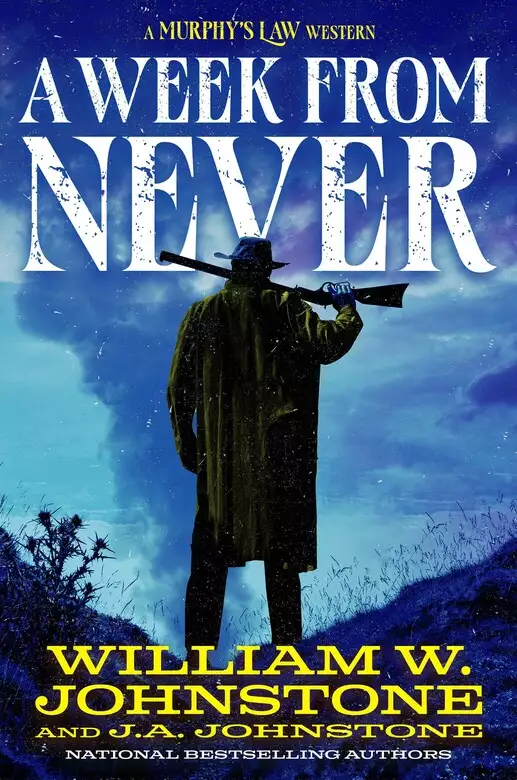
From the bestselling Johnstones comes the latest adventure in the wild life of Cullen Murphy, a West Texas legend-in-the-making, with big dreams, fast guns, and whose word is the law. . . .
BREAK MURPHY’S LAW, FACE MURPHY’S WRATH.
Life is hard in the Old West—but so is Cullen Murphy. Orphaned as a child, he drifted from town to town across a merciless frontier, taking any job he could in order to survive. Ranch hand, cattle driver, Confederate soldier. Whatever it took, he was up for the task. But when the Civil War ended, Murphy was ready to settle down and start his own ranch in Newtown, Texas, a beautiful but untamed stretch of land with no marshal, no jailhouse—and no defense against trigger-happy lowlifes looking for trouble.
As rumors spread about a sittin’ duck of a town in that godforsaken corner of the West, every stripe of lawless miscreant comes crawling out of the Panhandle with nothing but bad intentions. Like Spade Atkins, a degenerate gambler and gunslinger ready to bet his life away. Or a gang of outlaws just itching for mayhem, with ill-gotten money to burn. Holed up three miles outside of town, it won’t be long before they come riding through. But Cullen Murphy is not one to stand down.
High noon or last call, it’s time for the deadly justice of Murphy’s Law. . . .
Release date: June 30, 2026
Publisher: Kensington Books
Print pages: 320
* BingeBooks earns revenue from qualifying purchases as an Amazon Associate as well as from other retail partners.
Reader buzz
 Please log in to recommend or discuss...
Author updates
A Week from Never
William W. Johnstone
“He knows,” Timothy “Beaver” Branson answered. Everybody called him Beaver because of an overbite that made his teeth look like those in a beaver’s mouth. “He works in the Waco station and he’da told me if they changed the date they’re sendin’ that money to Austin. They’ll show up here anytime now.”
“They better, or I’m liable to have a little talk with your cousin,” Carter threatened. The five outlaws were waiting on the south bank of a little river about four miles past a stage station. Cleve Carter, the leader of the gang, planned to strike the stagecoach after it crossed the river and was pulling up on the other bank.
“You want me and Calvin to go on back on the other side of the river and get ready?” Hank Welch asked Carter.
“Yeah, go on back over there and get set up in a good spot. Make sure they ain’t gonna spot you before they go into the river,” Carter said. “Signal me as soon as you get the first sight of ’em.”
“Right,” Hank replied, and he and Calvin Darcy crossed back over the little river to conceal themselves in the trees that lined the banks. After another quarter of an hour, however, Hank pulled out of the trees and rode out to the edge of the road to take a look back toward Waco. He jerked his horse to a stop when he spotted the stagecoach in the distance. “Son of a …” he started. “They’re comin’, but it ain’t just the stage! There’s a couple of guards ridin’ ahead of it! I’ll tell Cleve. We might wanna back off.” He rode back down to the water’s edge and called out, “Cleve! The stage is comin’, but there’s two guards leadin’ it! Whaddaya wanna do?”
Damn! Cleve thought. I didn’t count on that! “Just two?” he called back.
“That’s all I see,” Hank answered, “but I expect they might be US Deputy Marshals.”
“Well, what did you expect? That’s just good news. Means there’s a big payday ridin’ in that coach for us. Hell, there’s five of us. We need to hit ’em hard before they know they’re in trouble. We’ll knock those two marshals down and I don’t think that feller ridin’ shotgun will give us any trouble a’tall after that. He’d have to be crazy to. If there’s any passengers inside who wanna give us any trouble, they’ll get what they deserve, too. Go on back and get ready. Tell Calvin we’ll knock those two deputies down for good, first thing. If they try to get behind the stage for cover, you and Calvin can cut ’em down.”
“I’ll tell him,” Hank replied. He wheeled his horse around and loped back to where Calvin was waiting anxiously to hear whether or not the holdup was still on. “We’re going ahead with it,” he told Calvin. “There’s too much money not to.”
“What if there’s more marshals ridin’ inside that stage?” Calvin responded, not sure it was such a good idea if that was a possibility.
“Then I reckon we’ll just shoot it to pieces,” Hank answered. “Cleve said we had to hit ’em hard and make sure we knock those two marshals outta the saddle. Then him and Beaver and Ed are gonna stop the stage and take care of the driver and his guard. Me and you’ll come up behind ’em and take care of anybody tryin’ to jump out the doors.”
“I swear, I don’t know if we oughta go ahead with this job or not,” Calvin said hesitantly. “We’ll be wanted all over the country if we kill those marshals.”
“That wouldn’t be near as bad as if you ran out on this job and had Cleve Carter on your trail. We’ve got a stagecoach comin’ at us carryin’ enough money to make us rich. Cleve’s right, take the money and kill the witnesses. We’ll just make sure those two marshals on horses are took care of and the rest will go all right.” He hesitated before saying his last thoughts on the matter. “Let me make one thing clear. If you decide you wanna cut and run when the shootin’ starts, that shot you feel in your back will be from my rifle.”
“Hell, Hank, whaddaya wanna say a thing like that for?” Calvin responded. “You know I ain’t the kind to run out on the gang, right?” Hank didn’t answer, his eyes glued on the road and the approaching stagecoach. “You ain’t never had no call to say something like that about me.”
Ignoring the opportunity to apologize for the remark, Hank said, “Get ready. They’re just about here.” They both got off their horses and tied them in the trees, then gave their rifles a quick check before moving closer to the road to hide behind a clump of bushes. “Wait here till they ride past us. Then I’ll run across the road so I can get a better shot at the one on that side of the coach. If they ain’t dead after Cleve and them hit ’em, we’ll cut ’em down when they try to get behind the stagecoach.” He gave Calvin a hard look. “You ready for it?”
“Hell, I told you I’m ready,” Calvin insisted. “Don’t worry ’bout me.”
“Here they come!” Hank warned. “Get ready!” They hunkered down behind the bushes, gripping their rifles while the two deputy marshals rode past them. A few yards behind them, the horses pulling the stage followed the deputies down into the river and started across. “Don’t miss!” Hank whispered, and ran across the road as soon as the coach was in the water.
On the other side of the narrow river, the other three outlaws waited, each man waiting for the right moment when the horses were pulling the stage out of the water. Cleve Carter’s shot was the signal to fire. The sound of his Winchester when the bullet struck the guard sitting beside the driver had not faded before Ed Moore and Beaver Branson fired. Both riders were struck and both came off their horses. As Carter had figured, the wounded deputies struggled to take cover behind the stagecoach, where they were met with the rapid fire from Hank and Calvin. The massacre of the guard detail was completed as the deputies were hit time after time until both bodies were floating in the shallow water. Waiting terrified, the stage driver sat paralyzed by the sudden attack.
“Pull that stage up here out of the river,” Carter ordered, then stood there until the coach rolled up on the road and stopped beside him. “Halt!” he ordered. Eager to see the treasure he knew was inside, he pulled the door open, only to be met with the point-blank blast of a Colt .45 knocking him backward, causing him to land on his back. Wells Fargo detective James Silverton’s last act to serve his employer was to die in a hail of gunfire from Beaver Branson and Ed Moore. The money he was protecting was hidden in a canvas sack behind the backrest of Silverton’s seat in the coach.
“Damn!” Beaver exclaimed. “That was a dumb-fool thing to do.” He grabbed Silverton’s coat and pulled him out of the stagecoach to land on the ground beside Carter.
“I wouldn’t say that,” Hank said. “Hell, he knew he was a dead man, so he decided he weren’t gonna go peaceful. He sure surprised ol’ Cleve, though, didn’t he?”
“There ain’t no money in here,” Ed declared after looking around on the floor and under the seats.
“The hell there ain’t,” Hank responded. “Get outta the way!” He grabbed Ed by the arm and pulled him out of the coach. Like Ed, he didn’t find anything. “They didn’t send a stagecoach down to Austin, guarded by four men, with nothin’ in it,” he said. Then he took hold of the backrest where Silverton had been sitting and gave it a hard yank. When the seat-back gave a good four inches, he was motivated to give it a stronger one. This time, the whole back of the seat gave way to reveal a canvas sack holding five fat packs of twenty-dollar bills. The discovery caused an eruption of cheers and inspired Hank to destroy the remaining seatbacks, but there was no more hidden treasure to be found. He looked over at the stagecoach driver, who was shivering under the watchful eye of Calvin Darcy. “Where’d they hide the rest of the money on the stage?”
“There ain’t no m-more m-money anywhere on the stage,” the driver stuttered. “I swear to you, they was just takin’ whatever’s in that sack to a bank in Austin. I ain’t got nothin’ to do with that money. I’m just a stagecoach driver. How ’bout you just let me drive the coach on back to the station? I can’t identify nobody.”
“I reckon you’re right,” Hank said as he drew his pistol again and shot him twice in the chest. He holstered his pistol and said to Beaver, “Like Cleve said, don’t leave no witnesses.”
“What are we gonna do with the stagecoach and them four horses?” Beaver asked.
“Ain’t gonna do nothin’ about ’em,” Hank replied. “Maybe they’ll run off and start their own stage line somewhere.” He laughed at the thought of it.
“You reckon they’ll pull that stage back to that station back yonder?” Beaver asked, still concerned about the matter.
“I don’t give a nickel’s worth what them horses do,” Hank told him. “Somebody’ll come along and find ’em.” He went over to check on Cleve then, who was lying on the ground, mortally wounded, with Ed and Calvin kneeling beside him. “Is he gonna make it?”
“Don’t look like it,” Ed answered him. “He got two right in the chest. He’s tryin’ to hang on, but I don’t think he’s gonna make it.”
Hank knelt down beside him and took a look at the blood pumping out of the bullet holes. Then he leaned close over him. “How ’bout it, partner, you gonna make it?”
Cleve’s eyes flickered open when he recognized the voice. “Hank,” he struggled to speak clearly, “always my right-hand man. Don’t let ’em leave me. I’m hurt bad, but I’m gonna make it.”
“Don’t you worry about it,” Hank said. “You know I got your back. You just lay right there for a minute or two while we make sure we’ve got everything we wanna take with us. Then I’ll get you ready to ride.” He looked at Ed and Calvin then and shook his head as he got up on his feet again. “Let’s see what those bodies have on ’em that we might want and catch up those two horses they was ridin’.” Then he walked around behind Cleve, drew his six-gun, and put a bullet hole in Cleve’s forehead.
When the other three jumped in reaction to the sudden execution, Hank said, “He weren’t gonna make it. Might as well put him out of his misery, right?” When nobody answered, he said, “I reckon that makes me boss now, so let’s get the hell outta here. One of ya check that stage to see what kinda food they packed with ’em. Probably a lot better’n what we brought with us.” He looked at Beaver and asked, “You still sure you know how to get to that hideout you told us about?”
“Yeah, I’m sure,” Beaver answered. “It’s almost straight west of where we are right now, over in the hills, about a two and a half days ride from here.” He hesitated a few moments before asking, “What about Cleve? We gonna dig him a grave?” It seemed the least they could do would be to bury him.
“Nah,” Hank responded, “maybe whoever finds him will think he was riding with the stage or got shot by one of ’em. And they can bury him.”
It was the middle of a Saturday morning when the stranger riding the unusual-looking horse turned off the river road onto the main street of the remote settlement called Newtown. Located in the Texas Hill Country, Newtown was not on a popular trail to any major cow town or railhead. In spite of that, it was a town that had continued to grow in size because of the availability of cheap land and dependable water for the small farms and ranches. Like every town in Texas, Newtown had suffered financially since the ending of the war that divided the North and South. But it was finally in the healthy stages of recovery that showed a promise of continuing growth.
The stranger entering the town on this particular chilly morning was accustomed to the stares of the people on the street as he rode the length of Front Street. His horse always caught the casual eye. A white Appaloosa with black dots and solid black shoulders and hindquarters, there were not many like it. While the unusual horse caught the eye first, the rider was also an interesting study. A tall man of slender build, he had a sharp face with a nose similar to a hawk’s beak and a thin mustache that drooped to his chin. Dressed in black from his flat crowned hat to his soft leather boots, he had the look of a well-oiled killing machine under his buffalo overcoat.
He walked the Appaloosa slowly up the main street, leading a black packhorse behind him, slowing even more when he came to the jail. He pulled his horse to a stop, looking for a sign that would identify the marshal’s office, but there was none. So he figured the marshal’s office must be in the jail and guided his horse to the hitching rail, where he dismounted. Finding the door unlocked, he walked in to discover Marshal Cullen Murphy seated at his desk, cleaning an 1860 Henry rifle.
Murphy looked up when he heard the door open. Either an undertaker or a gunslinger, he thought. “Can I help you?”
“Are you the marshal?” the stranger asked.
“That’s right, I’m Marshal Murphy. What can I do for you?”
“My name is Spade Atkins.” He took a moment’s pause to judge if there was a spark of recognition of his name. When there was none obvious, he continued. “I’ve just rode into town. Never been here before and I always like to check in with the marshal or sheriff whenever I hit a town for the first time.”
“Why is that?” Murphy asked.
“Because I’m a professional gambler and I like to let the local law enforcement know I play a straight game. I depend on the luck of the cards and that’s all. Sometimes I win, sometimes I lose. I’ve been winning more times than losing, and as long as that continues, I’ll keep doin’ what I like to do and that’s gamble.” He stepped in front of the iron stove heating the small office and opened his heavy buffalo coat to permit some of the heat to get inside it.
“There’s no law in Newtown against gamblin’,” Murphy said when Spade held his coat open. “There is a law against firin’ a firearm inside the town limits, though. I notice you’re wearin’ a fast-draw holster, most likely totin’ a revolver with a five-inch barrel.”
Spade smiled. “That’s strictly for self-protection. Unfortunately, sometimes the people I’m playin’ cards with ain’t as honest as I am. There ain’t no law against protectin’ myself, is there?”
“No, I reckon every man oughta have that right, no matter where he is,” Murphy answered. “The place where it makes a difference is when one man pokes at another man to make him mad enough to draw his weapon, knowing all the time he’s faster. You look like you’re pretty handy with that sidearm you’re wearin’. You pretty fast with that gun?”
“I get by, I reckon,” Spade replied. “I wear it mostly for show, just to make it look like it might be risky to try me.”
“How’s that been workin’ out?” Murphy asked.
Spade smiled again and answered, “Well, I’m still dealin’ the cards.”
“Well, Mr. Atkins, like I said, it’s against the law to shoot a firearm inside the town limits, except in a situation where somebody attacks you and you have to defend yourself. But if somebody calls you out and you accept the challenge, then the law insists that you take it outta town to settle it. That don’t happen very often here, but when it does, they usually take it down by the river.”
Spade chuckled. “That’s good to know. Since I plan to spend a couple of days in your town, maybe you could tell me where I can find a room to rent. I haven’t gone up the whole street yet, but I didn’t see a hotel so far.”
“We don’t have a hotel in town yet, but there are a couple of places to rent a room, depending on which you prefer. A lady named Pearl Johnson runs a rooming house back toward the south end of the street. You passed it if you came up from the river road. You can rent a room there for the night, if you’re looking for a nice quiet place. If you wanna stay close to the gamblin’, there’s a couple of saloons in town that rent rooms upstairs. They’re the two biggest. Bradshaw’s Saloon is also the best place to eat. They’ve got a dinin’ room built on the back of the saloon called Irene’s Café. It’s run by a respectable lady named Irene Floyd. You can also rent a room upstairs. The other saloon where you can get a room is Pratt’s Saloon. You can pay for the companionship of one of Pratt’s saloon girls, if you’re of a mind to. Bradshaw’s Saloon doesn’t offer that.”
“That café you said was in the back of the saloon, do they serve three meals a day?”
“That’s right,” Murphy replied. “It’s a regular café. They’ll be openin’ up for dinner at noon.”
“Good, ’cause I didn’t have anything left for breakfast this mornin’ but a piece of beef jerky. This town is farther from Waco than I thought it was,” Spade remarked. “I think you’ve told me all I need to know, Marshal, and I appreciate it. I can’t think of but one more place I need to stop at.”
“The stables?” Murphy guessed. When Spade smiled and nodded, Murphy said, “North end of the street.” He got up from the desk then. “I’ll walk out with you.” He walked to the door and held it open for Spade.
Damn! Spade thought when Murphy stood up, surprised by the size of the man. I won’t have to worry about taking dead aim. It’d be hard to miss him. He walked out the door and Murphy followed him, unaware that he was already being sized up by the stranger.
“That’s a mighty fine-lookin’ horse you’re riding, Mr. Atkins.” Murphy couldn’t help but admire the black-and-white Appaloosa. “That’s one of those Palouse horses bred by the Nez Perce Indians, ain’t it?”
“That’s a fact,” Spade answered. “I got him from a man who bought the horse directly from a Nez Perce breeder. I inherited him when that man passed away after a spell of heart trouble.” He elected not to go into further detail, but he could have told Murphy the man’s heart trouble was brought on by the bullet in his chest. It was a shame. The man had never really been seriously ill a day in his life. That was before the little dispute at the card table that resulted in a face-off between the two former friends.
“Well, you can depend on Paul Mathers to take good care of the horse,” Murphy told him. “Paul’s the owner of the stable. And you can’t see it from here, but it’s right at the end of Front Street. If you had come into town from the north, the stable would have been the first thing you saw.”
“Much obliged, Marshal, ’preciate the help,” Spade said as he stood by his horse, preparing to step up into the saddle. He paused for a short moment to make a quick evaluation of Murphy’s potential as a possible opponent in a quick-draw competition. Unlike most of the professional fast guns, himself included, the marshal was not the typical willowy gunslinger whose hand hung naturally to fall on his gun handle. Murphy was tall and brawny, with wide shoulders over a muscular chest. He looked to be more suited to steer wrestling. Spade liked his chances in a face-off against the marshal. He stepped up into the saddle and turned the Appaloosa away from the rail to continue his slow walk up the street to let the people he passed admire his horse. The remote little town may not have heard of Spade Atkins before, but they would be familiar with the name when he left. That much he was sure of.
Cullen Murphy stood outside a few minutes to watch the stranger as he rode up Front Street. He wondered if Spade Atkins was going to cause as much trouble as he looked capable of. This, in spite of his visit to the jail to announce his peaceful intentions. Newtown was not a town big enough to cause a professional gambler to ride all the way from Waco. And it was not on the way to one that was big enough, either.
Murphy had to wonder about the real reason Spade Atkins showed up in Newtown. He turned around and went back into the office to finish cleaning his rifle.
A little before noon, Murphy locked the office door and walked up to Bradshaw’s Saloon. There was a path down the side of Bradshaw’s that led to an outside entrance to Irene’s Café. It was for those customers who preferred not to go through the saloon. Murphy usually went through the saloon when he went to Irene’s. It was a Saturday, but still a little early for the saloon to get really busy. When he walked up to the bar, Pete Brice, the bartender, greeted him. “Cullen, pour you a drink?”
“No, thanks, Pete. I’m just waitin’ for the women to open up for dinner,” Murphy responded, referring to Irene and her two daughters, who ran the dining room.
“Say, thought you oughta know a feller came in here a little while ago and rented one of the rooms upstairs. Said he was gonna be in town for a couple of days and he likes to play cards. Wanted to know if there was any regular card games here he might could get in on. I told him there was always a few fellers that liked to try their luck, but they weren’t usually high-stakes games. He said he didn’t care if it was for matchsticks or pennies, he just likes to play cards.”
Murphy waited until Pete finished, then said, “He stopped in my office as soon as he hit town this morning to let me know he was a professional gambler—and the only one that was honest.”
“Well, what in the world is he doin’ in Newtown?” Pete wondered.
“I was askin’ myself the same thing,” Murphy said. “Might be he’s lookin’ for somebody. Have you seen any other strangers in the last couple of days?”
Pete shook his head.
“Me neither,” Murphy commented. “Can’t arrest him for lookin’ suspicious. Reckon we’re just gonna have to wait and see what he’s up to. Might be he’s what he says he is, just somebody who likes to play cards.” He took out his pocket watch and compared it to the clock on the wall behind the bar. “Wonder what’s holdin’ up dinner?” He nodded toward the door at the back of the barroom that was the entrance to Irene’s Café. Irene’s youngest daughter, Bonnie, usually flipped the sign to the OPEN side at noon on the dot. Now, according to his watch and the wall clock, Bonnie was over fifteen minutes late. “Somebody musta dropped a dish and they’re havin’ to clean it up off the floor before they can put it on anybody’s plate,” Murphy joked. The smile froze on his face in the next second when he heard the scream.
He didn’t take any time to wonder as he rushed to the café entrance. Inside the dining room, he found a stranger holding a gun on another stranger, who was unarmed. Bonnie Floyd, Irene’s younger daughter, was standing close by, both hands over her mouth. Her mother and older sister, Ginger, were both standing in the kitchen door, obviously in distress.
Murphy drew his six-gun and commanded, “Holster that weapon unless you want a shot in the back.”
The gunman turned halfway around to see who was issuing the demand. Seeing the formidable figure of the town marshal, the gunman decided not to risk it. He wisely holstered his weapon. Since the two men were both strangers to him, Murphy ordered them both to sit down. Then he asked Bonnie to tell him what happened.
She pointed to the gunman and exclaimed, “When I came to the table to ask him what he wanted to drink, he grabbed me and pulled me down on his lap. When I told him to let go of me, he wouldn’t do it.” She pointed to the young man at the other table and said, “He came to help me get away from him,” she referred again to the man who had grabbed her. “But he jumped up and drew his gun and said he was gonna shoot him.” She shook her head, still shaken by the sudden turn of events. “I guess that was when I screamed.”
Murphy glanced at the unarmed young man, now sitting patiently at his table. Satisfied that he was no threat, the marshal turned his attention to the one who had drawn his gun. “Don’t remember ever havin’ seen you in town before.”
“I ain’t ever been in this damn town before,” he replied, “and I gotta admit, I wouldn’ta missed much if I’d rode around it.”
“Well, I’m right sorry to hear we disappointed you, but you were headin’ for a chance to see how you like the inside of our jail and you still might be. Pullin’ a gun and threatenin’ to shoot somebody will land you in jail in this town. Since you obviously didn’t know any better, I’m willin’ to cut you some slack. In the first place, you’re in the wrong eatin’ place. This dinin’ room is for respectable folks. You need to go on down to Pratt’s Saloon to get something to eat. It ain’t as good as what you’d get here, but none of the other saloons serve any food. You can have a saloon gal sit in your lap while you eat at Pratt’s, though. So, what’s your choice, get on down to Pratt’s, or spend the night in the jailhouse?”
“I’ll leave,” he said, and got to his feet. Under Murphy’s watchful eye, he headed for the outside door, pausing only briefly when he walked past the man he pulled his gun on. “You’re lucky I didn’t put a hole in your head,” he murmured low.
Hearing him, Murphy said, “The same gun laws apply in Pratt’s and every other saloon in town, so keep that six-gun in the holster till you’re outta town.” He followed him out the back door and watched him until he got on his horse and rode the path back to the street.
When he went back inside the dining room, he found both of Irene’s daughters at the young man’s table expressing their thanks for his coming to Bonnie’s defense. Murphy paused to take a closer look at the stranger. His dress was that of a typical cowhand and he looked as if he was overwhelmed with the attention he was getting from Ginger and Bonnie.
“Mind if I sit down with you?” Murphy asked.
“No, sir, Marshal Murphy,” the young cowhand replied.
Murphy was pretty sure why he had stepped into a confrontation with the man he had just sent on his way, but he wanted to hear him explain. “What’s your name?” he asked.
“Will Pickens,” the young man replied.
“Who do you ride for?” Murphy asked.
“Well, sir, nobody right now. I hired on to drive a herd up to Abilene in Kansas for the Rocking-J. But I was one of the newer hires, so I wasn’t kept on the payroll after we got back. So I’ve been ridin’ the grub line, lookin’ for some work, but I ain’t had much luck. I decided to spend some of the last of my money on a good meal.”
“How’d you happen to get in it with that fellow who just left?” Murphy asked. “You ain’t even wearin’ a gun.”
“I left my gun outside with my horse,” Will said. “I figured the folks who own this place would feel better if I left it outside. But it ain’t right to treat a lady like he treated that young girl, so I had to try to do something to help her.”
“So now you’re tryin’ to hire on at another ranch,” Murphy declared.
“Yes, sir. I’m pretty near broke. But there ain’t much chance of hirin’ on at any ranch this time of year. I reckon I’m lookin’ for any kind of work that’ll keep me from starvin’ this winter.”
“How’d you like to work for me at the jail?” Murphy asked.
Will looked totally surprised, so Murphy quickly explained. “I’m not talking about law enforcement. I’m lookin’ for somebody to take care of the chores in the jailhouse. Cleanin’ up the cells, keepin’ water buckets filled and chamber pots emptied, just whatever needs takin’ care of. I’d pay you thirty dollars a month, same as you’d make herdin’ cattle. You get your meals provided right here, three times a day, and you’d have a place to sleep in the back of the jail, and you can keep your horse at the stable. Whaddaya think? Is that too much like a janitor’s job for you?”
“No, sir! I’ll do most anything, long as it ain’t against the law. I appreciate the chance. I’ll take the job.”
“Well, let’s. . .
We hope you are enjoying the book so far. To continue reading...