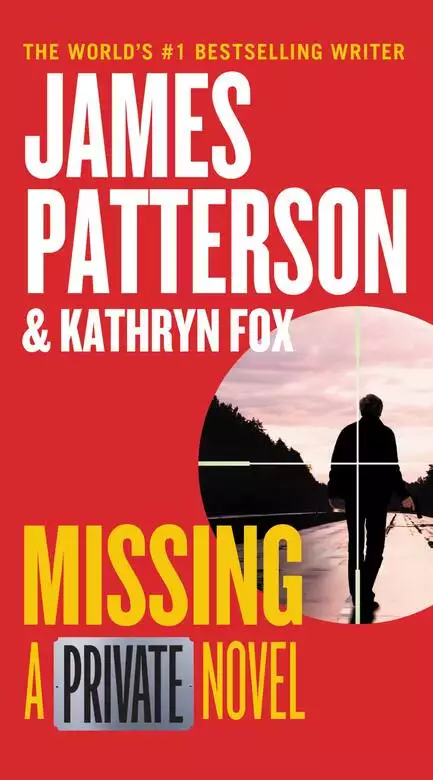
Even for Private Investigations, the world’s top detective agency, it’s tough to find a man who doesn’t exist . . .
Craig Gisto has promised Eliza Moss that his elite team at Private Sydney will investigate the disappearance of her father. After all, as CEO of a high-profile research company, Eric Moss shouldn’t be difficult to find.
Except it’s not just the man who’s gone missing. Despite the most advanced technology at their disposal, they find every trace of him has vanished too.
And they aren’t the only ones on the hunt. Powerful figures want Moss to stay “lost,” while others just as ruthlessly want him found.
Meanwhile, a routine background check becomes a frantic race to find a stolen baby and catch a brutal killer—a killer Private may well have sent straight to the victim’s door.
Release date:
October 4, 2016
Publisher:
Grand Central Publishing
Print pages:
384
* BingeBooks earns revenue from qualifying purchases as an Amazon Associate as well as from other retail partners.
BRANCHES FROM THE eucalypts and blue gums cracked as they whipped the electrically charged air.
A storm from the east would hit soon and cover his tracks through the dense bushland. The cabin was isolated and close to a river, with a 270-degree vantage of the valley below, but that was in daylight.
Every sense on heightened alert, he scanned the door frame with his night-vision goggles for the two strands of hair he’d positioned in the jamb days before. Locating both, he exhaled as the door eased open.
The urn over the fireplace was exactly as he’d left it too, the tiny notches in the wood lined up precisely with its rim. He checked his watch. Ninety seconds.
He unscrewed the base of the urn and located the USB device, which he secured inside his zippered jacket pocket.
His watch buzzed with a slow pulse. Someone had infiltrated his perimeter. With no road access from the north, they had to be on foot.
The pulsing sound doubled. Now two people headed towards the cabin. Cleaners. Men whose job it was to clean up messes and make sure nothing was left behind.
It confirmed he was a priority. If they had made it here, a hell of a lot of manpower was being invested in hunting him down.
He snatched his backpack and headed for the bedroom. Sliding back a rug at the foot of the bed exposed the trapdoor.
With the alarm pulsing on his wrist, he grabbed a bowie knife from his pack and dug it into the narrow space between the hatch and floor, dislodging caked dirt.
Summoning all his strength, he grunted and yanked. The hatch gave way. He squeezed through and lowered himself feet first. With a hook and wire he’d screwed into the cavity years before, he reached up, replaced the handle in its recess, and repositioned the rug before lowering the hatch.
Sweat dripped from his forehead. He checked his watch again and listened.
No other sensors had been tripped. Instinct told him there were still just two men out there.
On his elbows and stomach the fit was tight, but at least he could propel backwards. After a few meters he removed a rope and screw-top tin from his pack. He unwound the line of rope before topping it with a thin layer of magnesium powder.
Fifteen more meters back and his boots should reach the removable panels at the rear of the wood shed.
The sound of feet clomping inside the cabin was suddenly paralyzing. There were two male voices, then glass smashed.
He lit the rope and reverse commando-crawled as fast as his elbows, toes, and knees could manage.
Flame ripped along the tunnel to the base of the cabin. As he kicked out the shed boards and escaped the tunnel, yelling pierced the night.
By the time they’d dealt with the flaring caused by the water, he’d be long gone.
Goggles fixed and backpack secure, he jogged along one of the paths he’d previously mapped out, careful to stay close to the gully on his left.
Fifty meters along, one of his motion detectors was attached to the base of a tree. It had already saved his life and could come in handy next time.
As he bent down and unstrapped the cord, something brushed his right wrist. Instinctively, he slapped it hard with his other gloved hand before pocketing the device and running on.
Within minutes, pain tore through his wrist, like a nail had been hammered into it.
He could hear voices in the distance.
Sweat poured from his face as the burning in his wrist intensified. Nausea rose in his gullet but he had to keep moving. He was light-headed.
Wind howled as the storm moved in. The sooner it came, the less likely they’d find him before daylight. He headed off again and stumbled on a rock formation. Reeling back, he staggered, unable to maintain his footing. He reached for something to grab. Anything.
Agonizing pain shot through his side as he hit the rocks below. The world went black.
THE EARLY MORNING temperature was crisp as I stretched aching muscles. Even a punishing run couldn’t lessen the grief that today brought. I watched the flaming sun rising above the north and south heads, as a mammoth cruise ship glided into Sydney Harbour. It took me back to my honeymoon when Becky and I sailed home from Noumea.
The spectacle of passing through those heads as the sun lit the city was one of our most treasured memories. It was the moment she told me she wanted to be known as Mrs. Craig Gisto.
It had been eight years now, and a song, a smell, even a sound, could still trigger a volcanic release of pain from my core.
If Cal had lived, he would be eleven today.
The car accident that took their lives trapped Cal as an eternal three-year-old and me as a widower. I wondered why there was a word for children who lost parents, but not one for parents who had suffered the greatest loss of all.
After a quick shower and breakfast, I was comfortably heading to the city in my Ferrari Spider. On Military Road, I stopped at the traffic lights just before the turnoff to Taronga Zoo. Cal’s favorite place.
Memories of him hanging off a gorilla statue were interrupted by a call. Jack Morgan. It had to be late morning on the west coast.
“Hi, Jack, what can I do for you?”
The LA-based owner of Private spoke quickly. “Craig, I’m on a helicopter so we may lose connection. I’m asking for a favor. Eric Moss is the CEO of a company named Contigo Valley.” The background noise made it difficult to hear.
“You’re fading,” I said into the hands-free microphone.
He shouted over the din. “He and his daughter are old friends. Moss was at the top of his field and disappeared two days ago. E-mailed a resignation with no explanation.”
“Do you suspect foul play?”
Jack gave directions to the pilot then returned. “This is a billion-dollar company with international contracts. It needs Moss.”
I knew some of the work the company did with safety and medical equipment. So the CEO resigned on Friday and hadn’t been heard of over the weekend. He could have been drinking away his sorrows or celebrating with a young fling.
I braked as a BMW cut into my lane on the approach to the Harbour Bridge.
“Is the daughter high-profile?”
Most of Private’s clients were either famous, wealthy, or both, and wanted scandals kept out of the tabloids.
“She’s special, Craig. I’m asking you to do this for her. Her name’s Eliza Moss. She owns Shine Management.”
The phone crackled again.
“I’ve been a big supporter of Eric Moss,” Jack continued. “Trust me, this isn’t like him. Eliza and the company are his life. He wouldn’t walk away without a fight. And he’d never do this to his only child.”
I wondered what sort of daughter panicked when her father didn’t contact her over the weekend. But if Jack thought it worth looking into, I’d do it, despite this week’s heavy workload.
“Thanks, Craig,” he finished. “Let me know if I can help in any way.”
When the line went silent, I replayed the conversation in my mind. Jack mentioned Eliza was special to him. I wondered how special.
After pulling into the car park just after seven a.m., I took the stairs to street level.
First thing I saw was shattered glass.
The ground-to-ceiling door to Private had been smashed.
I STEPPED PAST the two young men working on the glass repairs and was greeted by our receptionist thrusting forward a handful of messages. Collette Lindman hadn’t been with us long, and seemed overly eager at times, but had skills that I believed would come in handy one day.
“These are the important calls on the machine. And there’s a married couple waiting in your office. They were supposed to see Johnny at eight but came early to beat the traffic and had a good run. I couldn’t leave them in the waiting area with all that broken glass and without the door, it’s been pretty breezy—”
Collette barely drew breath. First thing was the door, which she still hadn’t explained.
“What happened? I didn’t get a call.”
“Oh, that? I didn’t want to bother you. The security company phoned me at home and said our door had been smashed by vandals. Anyway, I rang the glass repairers, who came straight out. They said other businesses had breakages too. I hope it was the right thing to do. Before you ask, the door was shattered but unopened. No one got inside.”
Given the amount of high-tech equipment in the place, that was one positive. It was difficult to take it personally when other businesses had been affected.
I stepped farther inside so the workmen couldn’t hear. “Who exactly are the people in my office?”
“Mr. and Mrs. Finch. It’s heartbreaking what they’ve been through. I didn’t think you’d mind, under the circumstances.”
Getting to the point was not Collette’s strong suit. “That’s fine. What are they here for?”
“A background check. I assured them the name ‘Private’ means their information stays that way, ’cause they seemed pretty nervous about confidentiality.”
I felt a pounding in my head. “You did the right thing, Collette. The police will need the security footage from last night. We’ll have good images of the door being hit and who did it.”
She hesitated. “That’s another thing I didn’t want to bother you with yet.”
“Tell me now.”
“The computers are down. I mean, that might be why there isn’t actually any vision of what happened overnight.” She touched my arm. “Don’t worry, I’ve called the technicians. They’ll be here in a couple of hours.”
Technicians would take far too long. Without computers we couldn’t work.
“Get Darlene to come in early. If she can’t fix the problem, she’ll know who can.”
I took stock of Monday morning so far: a favor for Jack Morgan, a smashed door, no computers, and an anxious couple in my office, all by seven a.m. Cal’s birthday was shaping up to be one hell of a day.
I COULD SEE the pair through the glass wall to my office. The man paced while his wife sat twisting the rings on her left hand.
I entered, introduced myself. The husband was late forties. The cut of his suit, along with the white shirt and pale blue tie, suggested middle management, or a small business operator.
“Gus. Finch.” He shook my hand vigorously. “And this is my wife, Jennifer.”
I greeted the woman, who wore a crimson silk shirt with a black skirt. She had to be at least ten years younger than Gus.
I took a seat at my desk. Finch sat next to his wife and held her hand.
“How can we help you?” I asked.
“We want a background check on someone. A potential employee.”
With the computers down, I opened a journal and started taking notes as Finch began rattling off his requirements.
“You should check she is healthy, no mental illness, has no criminal past, and that includes charges for DUI. I don’t just mean convictions in case she got off on some technicality, I’m talking charges, any history of affairs…” He ticked off the list on his fingers. “Doesn’t abuse drugs or alcohol, is clear of any sexually transmitted infections, has a mortgage to show she’s committed to staying locally, and isn’t in more than $200,000 debt.”
This was clearly no ordinary pre-employment check, unless the job was for a child-care worker. The mortgage question threw me. Not many nannies in Sydney had paid off mortgages to the last $200K. Nannying jobs were something students or new graduates sought.
His wife added, “And we have to know she’s a good mother.” She squeezed her husband’s hand, pale gray eyes boring into mine.
“Yes,” Finch confirmed. “If we’re going to trust her with our children.” The inflection in his voice went up a notch at the end of this comment. He was lying, and he wasn’t very good at it.
Today, I didn’t really care to know why. “Agencies routinely do employment checks and they charge a lot less than us. To be honest, you’d be better going through one of them.”
Finch slapped an envelope on the table. Hundred-dollar notes spilled out.
“We want you, not anyone else, to do the check. You guarantee confidentiality.”
I didn’t like people assuming I could be bought. Not everyone has a price. Whatever they wanted kept secret didn’t sit right.
Maybe it was just my mood, but it didn’t seem worth the hassle.
“That isn’t how we do business, Mr. Finch. I’m afraid we can’t help you.”
I stood to usher them out the door.
They remained seated.
“Walk away and you’ll regret it,” the man said calmly. “You do the right thing by us and we can boost your business. Turn us away and I can guarantee Private will suffer.”
I SWUNG AROUND. This guy had picked the wrong day to tick me off. “I don’t answer to threats.” I took a step forward. “Or deal with liars.”
Finch now stood and his wife quickly stepped between us. The guy was volatile and she knew it.
“I’m sorry,” she interjected. “We’re not being truthful. I—we—can’t have children so we’re looking at a surrogate.”
Suddenly the couple’s questions made sense. I relaxed a little.
Finch’s bluster evaporated. “We didn’t know if you’d agree to help us if we told you the truth. We have to know if she’s likely to extort us for more money, and that we won’t be dragged into legal fights down the track.”
This was obviously difficult for them, but there was no point continuing the conversation. Commercial surrogacy was illegal in every Australian state. Carrying a baby out of kindness, known as altruistic surrogacy, was permitted but fraught with potential legal complications.
“We didn’t mean to threaten you,” she added. “It’s just that there are many of us in the same situation and we could bring you a lot of business. Most of us would pay whatever it took to have our own children.”
“We work closely with law enforcement,” I explained, “and what you’re proposing is illegal. You’re obviously planning on paying for this baby. I’m sorry.”
“Mr. Gisto.” The woman touched my arm. “Do you have children?”
The question stopped me cold.
“I’ve had eight miscarriages and we had a daughter, Caroline…”
“Stillborn,” the husband almost whispered.
She held my gaze. “We’ve tried everything natural, multiple rounds of IVF. And now my husband’s too old at forty-eight to adopt. This isn’t a whim. We can give a child a wonderful life.”
It was impossible not to feel for what they had been through, but I was responsible for this business. I certainly couldn’t let emotion sway my decision.
She paused. “Doctors have told us it isn’t possible, so we are turning to a surrogate who says she just wants medical costs covered. That’s all.”
A stranger becoming pregnant and not wanting anything in return sounded risky.
“We could have gone to somewhere like India or Thailand, but that doesn’t seem right.”
Not to mention the practice was outlawed there now too, I thought. We moved back inside the office. “How did you hear about this woman?”
“Her name’s Louise Simpson. She advertised on a surrogacy website. We just want to know if she’s genuine.”
A background check could only give her credit rating and criminal history. She would have to approve of them accessing her medical information, and I told them that.
“We understand. But this is our last chance,” Mrs. Finch pleaded.
Despite reservations, I agreed to help.
WITH THE FINCHES sorted, I could concentrate on more pressing issues. Johnny Ishmah had begun trying the computers and backup systems, starting at reception.
The young investigator was completing a degree in criminal psychology. Brought up in a rough part of the western suburbs, his schoolmates included the son of a leading underworld figure. Those contacts had proved helpful more than once.
Dust swirled into the entrance as two men maneuvered a large pane of glass towards the door.
I asked Johnny what he had so far.
“I ran a virus scan on the entire system. Nothing showed up. The cameras didn’t record because Collette’s computer was shut down.”
The video feed was accessed on her station. One of her tasks was to fast-forward through the footage each morning.
I turned to Collette, who was anxiously picking at bright red fingernails.
“Could you have accidentally shut it down instead of logging off last night?”
“No. I did what I do every night. Log off.”
Whatever happened, the footage didn’t exist.
Next to arrive was Darlene Cooper, her usual immaculate ponytail and wrinkle-free shirt and jeans replaced with a baggy top and crinkled pants. Nothing about today seemed routine.
“Sorry, boss. I came as quickly as I could.”
I explained the situation and she told us not to turn anything on until she’d had a chance to update the virus library. Meanwhile, I went to find Mary in her office. She could start on the Finch job.
After filling her in, I suggested she use her phone until online access was restored. Instead, she stood, arms folded across her chest. The former military police officer and kickboxer was formidable at the best of times. The stance emphasized her biceps and was designed to intimidate. “You can get. . .
We hope you are enjoying the book so far. To continue reading...

 Please log in to recommend or discuss...
