“Violaine Huisman explores and contests the myths surrounding the great men of her family, using fiction where the official archives fall silent. The Monuments of Paris is a moving elegy for her accomplished, mercurial, outrageous father—and a beautiful act of disobedience.” —Ben Lerner, author of Transcription and The Topeka School
“In Violaine Huisman's captivating novel, the real monuments of Paris are not its buildings, but its people—a grand, multigenerational family saga, blending the history of France with intimate personal narratives.” —Anne Berest, author of The Postcard
Named a Most Anticipated Book of 2026 by Literary Hub
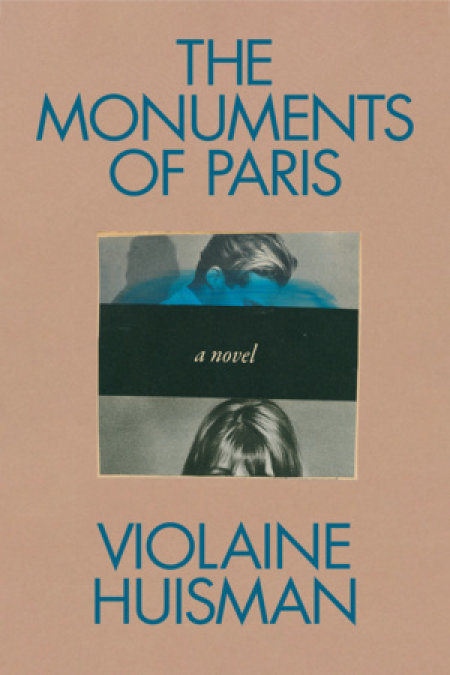
A remarkable novel drawn from life about a Frenchwoman’s efforts to come to terms with the legacy of her father and grandfather, powerful forces who left a mark on their country’s culture but whose incorrigible womanizing also left a complex mark on their wives and children
Violaine Huisman grew up in Paris with her beautiful, bipolar mother —the subject of Huisman’s acclaimed debut novel The Book of Mother —and her iconoclastic, flamboyant father, whose self-dramatization made him a formidable raconteur and a questionable parent. The one constant in her father’s personal narrative was his obsession with his childhood during the Vichy regime in France and of his father Georges, long dead, a Belgian Jew whose heroic and tragic biography had taken on the trappings of family myth. In The Monuments of Paris, Huisman transforms these complex layers of history into a moving fiction about exile and belonging, about the lies families are built on and the truths they hold dear.
As the novel opens, “Violaine” returns to Paris from her adopted home of New York City to visit her dying father for the last time. And as he once again tells the story of his father’s rise and fall during the Second World War, Violaine becomes herself obsessed with this myth of her grandfather Georges—and with the nearly erased story of the most significant of his many mistresses, a beautiful and aristocratic woman named Choute, who bears a strange resemblance to her own mother. With the help of a local historian, she sets out to hunt down the truth as it might be known, and in so doing creates the necessary and deeply compelling fiction that is this singular book.
In prose as elegant as it is precise, The Monuments of Paris draws a haunting portrait of twentieth-century France through the outsized ambitions, infidelities, and tragedies of the author’s own family, both real and imagined.
Release date:
April 14, 2026
Publisher:
Penguin Press
Print pages:
240
* BingeBooks earns revenue from qualifying purchases as an Amazon Associate as well as from other retail partners.
To see you collapsed in front of the TV in the middle of the afternoon breaks my heart. I mute the sound. Silence. The glow of the screen colors the air as if the light has filtered through a chapel's stained glass. Late afternoon sun from the window to your left forms a halo around your white hair. On the shelves behind you, a vast expanse of brown leather-bound books, gilt titles shimmering on their spines. I push your wheelchair aside to clear a path to you. I sit on an ottoman beside your mechanized recliner and take your hand. You raise my wrist to your lips, cover my arm in kisses. "How sweet of you, my beloved darling, to visit your decrepit old father. Your ancient papa, a poor old fool." "Hush, come now." I smooth back your hair. I brush away crumbs from your unevenly shaven cheeks. I lower my surgical mask to kiss your neck. I hold back tears. How I will miss your scent. Now the room smells of pharmaceuticals and piss. You welcome my embrace with a kind of calm acceptance that the Greeks might have called ataraxia-a word you taught me.
I moved back to France to be near you as you neared death. You often lamented the distance between us over the two decades I spent in America. We talked regularly, you called me late at night, until you stopped being able to use the phone. You still have your beautiful head of hair, and your temples still carry the smell of the little round plastic brushes you used to smooth it. You bought them in elegant old-fashioned pharmacies, along with your signature bottle of Schoum, a lime-green digestive tonic I never saw anyone else drink; extra-strong Ricqlès peppermint spray; eau de cologne Impériale; and an array of other novelties that you simply couldn't live without. These scents permeated your skin; your scarves and overcoats; the dashing suits you used to wear, linen or cashmere, dark gray, navy, or camel, with Dior ties and matching pocket squares. Now the suits are stored away-forever, most likely, but I prefer to think that they are waiting for you, as I so often did.
You fall asleep mid-sentence. I enjoy watching you at rest. The way you hold your head remains as dignified as ever, I decide, despite the stains on your sweater, the diaper protruding a little from your sweatpants. You keep your legs crossed as you did in your reading chair, in your office, a gentleman's pose, but now there are elastic bands around your bony shins, your enormous, bandaged feet stick out. Your feet are covered in scabs, sores, and cuts that won't heal, won't ever heal again. Your left foot looks like a Cubist sculpture underneath its dressing, your toes crooked, the big one entirely black. That monstrous toe was already terrifying to me as a child-a nail the size of a baby tooth clinging to its flesh.
As I hold your hand, I couldn't care less that you remember nothing-not my age, not my children, not my mother's suicide. The war is pretty much all you remember, so when you resurface from sleep, I ask you one more time to tell me about the Nazi invasion, the exodus, your family's destitution under Vichy. From your recliner or your sick bed, you bring me, again and again, aboard the Massilia in June 1940. I follow you each time onto the deck as though it were a stage. And at the conclusion of each performance, I hear, in your rapid heartbeat, the audience applauding-a protracted curtain call, a refusal to let the drama end. May it never end.
My father was a man of another generation, one might have said to excuse his misogyny or his pedantry, a man whose success supposedly justified his arrogance, whose affability could turn suddenly to rage, whose excessive, baroque, and unbridled displays of affection betrayed his eccentricity or explained, in part, the devotion he inspired in spite of his impossible temper. I was his baby girl-"Number eight" was how he referred to me in public. In private, he called me "Little angel." In addition to me and my sister, Elsa, two years my elder, my father had six other children, from three different women, spread over thirty years.
In the spring of 2020, I told my daughters, who had been in "remote school" for months, that we would be moving to France to be near their ancient grandfather. George and Sissi were born in New York and thought of English as their mother tongue. They called my father "Doggy," a nickname passed down across generations, its origin obscure, and which they hadn't questioned until their formerly commanding Doggy found himself diminished, dependent, and so the term of endearment became disturbing, shameful. It didn't help that my father and his wife also owned a very barky and incontinent Yorkshire. Over four decades of marriage, they had owned a series of Yorkies, each impossible to tell apart from the next. They had no children, but they always had a dog, who Doggy called his dog-child.
"And why is Doggy's dog named Loup?" Sissi asked me, as she tried to condone my father's odd nickname. Good question, my beloved darling. We must have some kind of compulsion to mix up names and species in our family. I recognize in my little girl's puzzled look the confusion I felt as a child when trying to figure out our family tree and my place in it, to separate out myth from reality in our genealogy. I, too, still struggle to understand, and I keep myself from telling her. "Sissi, mon amour," I reply, "didn't you name your bunny rabbit Wawa, like a puppy's bark in French? Well then."
A nurse from the French welfare system comes several times a day to change your dressings. Your wife wants to keep you home, a decision for which we, your children, are grateful. Another private nurse helps you travel from your bed to the living room in a wheelchair at mealtimes or when you have visitors. You thank her with pompous courtesy, then implore us to fire her. What in the world does this woman want from you? You beg to be left in peace. Why can't she let you enjoy your daughter's visit? You break down in tears of rage and humiliation. What is this talk of changing you? Have we all lost our minds? You insist that you and I must dine out, that you will take me to a restaurant. I try to mollify you. Instead of stating the obvious fact that you're in no condition to leave the house, I remind you that public spaces are closed until further notice. You have always preferred eating out. At lunch and dinner, on vacation, and in Paris. Soon, your wife will bring you a tray with a bland meal that I will help you ingest in child-sized bites. This role reversal reverses time, past and future collide, interpenetrate, dissolve.
My girls love hearing stories about you. Fanciful adventures where Doggy goes on epic quests-such as shopping for dinner, skipping the customary restaurant. We call this story "Doggy Goes to Market." And here we have Doggy on his way to the bakery. (You are always already old in these stories, but charmingly so, without shit or suffering.) Doggy has a chair waiting for him by the shop entrance-his chair, Monsieur Huisman's chair. Doggy sits, cane in hand, and greets Madame the Baker, whom he has known for a very long time-yes, a very long time, longer than his little angel has been alive! "Bonjour madame, bonjour mesdemoiselles, how are you this morning?" says Doggy to the young ladies who work there, a twinkle in his eye, before calling out his order from his seat: "My dear lady, I should like, if you please, six croissants, eight pains au chocolate, and, let us see, four raisin rolls, and give me"-here, I tap on his shoulder. "Papa, slow down, who's this all for?" "Well, everyone!" "Everyone who? There are only three of us: Elsa, your wife, and me. With your diabetes, you can't have any of this. Nobody's going to eat it all!" "Of course we will, everybody will, these are exceptional viennoiseries! Where was I? Oh, I see your pâtisseries look especially fine today. Let me get this tart here"-he points with his cane-"and what is it, may I ask? Apricots! It looks like it's encrusted with emeralds. Ah, pistachios! Marvelous! And that superb Black Forest cake, did your husband make it? Congratulate him for me. What a fine fellow he is, and so talented. And a sample of éclairs, yes two, no three, of each, yes, chocolate and coffee, and a box of your fabulous sugar cookies, world famous really, and . . ." (What do you think, girls? Do you think he's ordered enough? No, you're right, it's never enough for Doggy.) "Papa, this is really too much! We're never going to eat it all, please stop!" (Do you think he listens? Of course not.) When we finally leave the shop, I'm balancing six boxes of cakes, one on top of the other, four bags of pastries are dangling from my wrist, and I have three baguettes wedged under my arm. Next stop: the butcher! (Can you guess what happens there? It is never enough . . .)
When we arrived in France, I asked the girls if they wanted to visit Doggy with me. "Oh yes," they'd replied, "we'd love to!" I thought they laid it on a little thick. On our last visit, when the pandemic was still a distant nightmare, my father had asked George ten times who she was. "You're asking me again? I've told you, lots of times! I'm George! George! Your granddaughter!" Doggy had burst into laughter. "Of course, my beautiful George. I'd be just as indignant if I were you. How awful to have to put up with such a senile old fool." (You'd raised her wrist to your lips, covered her arm in kisses.) "Little angel!" (Little little angel.) "My, my, growing old is no fun . . ." The three of us had laughed it off, embraced. I'd taken my beloved father's hand in mine, his knotty, bluish hand, his fingernails yellow and striated like dandelions before they go to seed. "It's okay, Papa, you're allowed to forget a few things after a lifetime of remembering so much."
"Maman," George had said with great seriousness, sensing my doubt. "I swear I'm happy to see Doggy. Even if he has no idea who I am."
Through me, George inherited my father's eyes: large, obsidian, perpetually on the verge of tears, whether of joy or sadness, always registering the emotional weather. Whenever they were together, I watched my father marvel at George's face-which is easy to mistake for mine at her age-and as I watched George consider his withered face in turn, the scene would organize itself into a kind of painterly composition, a relay of gazes that transcended time. And in such moments, my father's sickroom was transformed, however briefly, into a sanctuary, a place where love or care might find expression beyond words.
When awake and lucid, you talk ceaselessly about your past-a past that precedes me. You stroll through a version of Paris I know only through your eyes. You’re not making conversation; you’re delivering a monologue, except when you suddenly call on me to supply a word or name that escapes you. I must help you recover it in order to keep you going. “Not watertight, but you know-impermeable is not it, Christ-hermetic, that’s it, yes! The stem of a fruit-I mean the technical term-a peduncle!” Phalanstery, paleontologist, rodomontade. You embellish reality with abandon, but your vocabulary, your ornate lexicon, will tolerate no approximation. Your intimate cartography of the city has its unique set of references, a network of associations, which only your immediate family can follow or repair. “Come on, you know, Place de la Madeleine, the Art Deco restaurant, lobster salad . . . Yes: Lucas Carton! That’s it.” Helping you find the missing word has been one of my favorite games since childhood. You still speak with authority, in professorial tones: You are perpetually giving a lecture in a grand hall of the Sorbonne-even now, from a mechanical bed, facing death. You recite poems, soliloquies, passages from political speeches. A motet of names issues from your mouth, names of old scholars, long-forgotten luminaires and statesmen, for whom so many Parisian streets were named. Yes, streets, not people, are summoned for me by this litany of names: In the portrait gallery your reminiscence conjures, I see-instead of faces-the famous white and blue plaques that mark the street corners, the intersections, of our respective youths.
My father had lived his entire life within a two-mile radius of the Eiffel Tower. As a young boy, he had grown up in the Élysée Palace, where his father had served as secretary of state under Paul Doumer. And Paul Doumer became the name of an avenue in the sixteenth arrondissement that originated Place du Trocadéro, or more precisely by the Palais de Chaillot, whose construction my father's father had later overseen. On the opposite corner was the Carette tearoom, between Avenue Kléber and Avenue Poincaré: "Raymond Poincaré," said my father, "not to be confused with his cousin Henri Poincaré-eminent mathematician, member of the Academy of Sciences and the Académie française, author of Science and Hypothesis, greatly admired by Albert Einstein, etc. etc.-also a member of the Académie française, president of France from 1913 to 1920, three times prime minister, whose alliance with Russia made him rather unpopular, he was decried as a bit of a warmonger-Si vis pacem, para bellum!-and he gave that notorious speech: A diminished France, a something France, wait, how did it go again? A diminished France, a France exposed, something something, would no longer be France! To which Clemenceau replied: War is too important to be left to generals! Anyway, the First World War, which everyone thought would be over within weeks, lasted four years, more than a million and a half dead, a quarter of the men of that generation slaughtered, Papa's generation. But Papa had been spared because he served in the air force-which wasn't yet called the air force, but aeronautics-not as a pilot, he served on the ground, as a technical observer. That's why he refused the medal of the Legion of Honor: He protested that he didn't deserve it. What a fool!"
When I was a child, my father always stopped at Carette on our way out of town for the weekend or holidays, so we would have snacks to eat on the train. And on such train trips, eating our sandwiches, I would unfailingly receive these monologues-at once mesmerizing and utterly baffling-his personal history mixing with that of the Republic. Fast-food chains had not yet penetrated the French market, and regardless, Carette, my father believed, was the only place in the world to offer acceptable sandwiches, finger-sized rectangles of crustless white bread individually wrapped in wax paper stamped with the store's iconic logo. And so for me, the names of my father's heroes, Paul Doumer among them, are forever associated with Carette, with the flavor of the Parisian sandwich par excellence: the jambon-beurre. Not just any buttered baguette with ham, this was a sandwich with pretensions to an entremet. While I ate, I would hear my father's thunderous voice, somewhere between the Petit Palais and the Pont Alexandre III, braiding personal anecdotes with official history. This was an old habit. Apparently, my father, at the age of three, had walked into his father's office in the Élysée Palace and asked out of the blue: "Say, Papa, what news from Pierre Laval?"
We hope you are enjoying the book so far. To continue reading...

 Please log in to recommend or discuss...
