
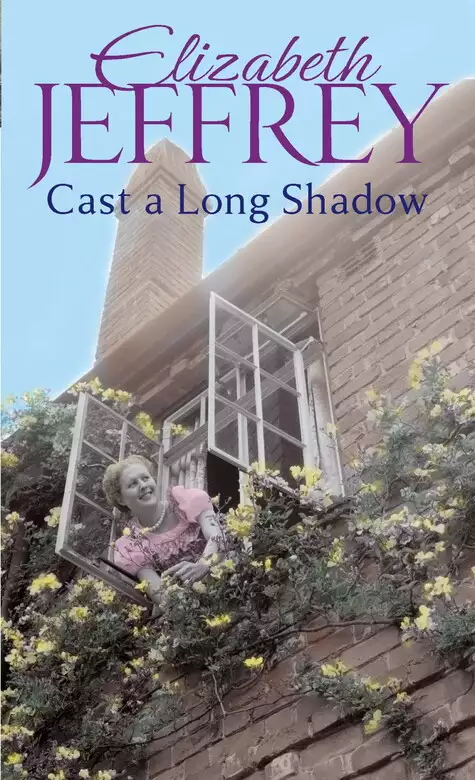
Cast A Long Shadow
- eBook
- Paperback
- Hardcover
- Book info
- Sample
- Media
- Author updates
- Lists
Synopsis
The year is 1916 and twenty-year-old Poppy Barlow is clearing the desk of her late father when she comes across a faded photograph of her father with his two sisters - aunts that Poppy never knew she had - along with their address. Poppy contacts her aunts, and is thrilled when they invite her to stay with them in Sheffield. But while Dale House might look grand from the outside, on closer inspection, the place is run-down and crumbling. Poppy determines to change all this and applies for a job at the local scythe works - to the horror of her aunts. As Poppy learns to survive, she is tormented by many unanswered questions. Why had her father rejected Dale House? Why had he never mentioned his sisters or the past? And what could have happened between her aunts and Frederick Kenton, her new boss, that could cause them so much anguish every time his name, or the scythe works, is mentioned?
Release date: August 7, 2014
Publisher: Piatkus
Print pages: 349
* BingeBooks earns revenue from qualifying purchases as an Amazon Associate as well as from other retail partners.
Reader buzz
 Please log in to recommend or discuss...
Author updates
Cast A Long Shadow
Elizabeth Jeffrey
Taking a deep breath, she picked up her two suitcases, straightened her shoulders and crossed the road to begin her search. She was looking for Dale House, Whirlowdale Road, Sheffield. The address had burned itself into her brain.
‘Just up t’hill yonder, then tek t’road on t’left. That’ll be where Dale House is,’ the tram conductor had said when she alighted. The hill was quite steep, wooded on one side and with her heavy suitcases she was glad when she came to the turning. The houses, what few there were, appeared to be mostly set back from the road and separated by tall trees and hedges. She was beginning to wonder if she had come to the wrong place after all when she saw the name DALE HOUSE engraved on a stone pillar beside a tall and rather shaggy laurel hedge.
Relieved, she hurried through the gateway and then stopped, catching her breath. The house behind the hedge was so big! Much bigger than anything she had expected, although in truth what had she expected? She’d had nothing to go on. Nothing, that is, except an old faded sepia photograph she had found tucked behind a drawer when clearing out her father’s desk after his death six weeks ago.
The photograph was a group of three people: a young man and two girls, one wearing a dark floor-length dress with the suspicion of a bustle, her hair piled up in an effort to make her look older and the other, much younger, in a white dress, flounced, with a sash, white stockings and black pumps. The young girl had an impish look about her, an air of suppressed excitement, and her hair fell in loose ringlets with a floppy bow over one ear. On the back of the photograph was written Josiah’s children, Arthur 21, Kate 19, Meg 13 and the date, March 1882. Underneath, in her father’s neat copperplate handwriting, was an address. Poppy had spent a long time studying the photograph. There was no doubt that the young man was her father, his features had changed little over the years, and the two girls were clearly his sisters. His sisters … her aunts … Her aunts. Poppy had repeated the phrase over and over, mystified as to why he had never spoken of them. Never even spoken of Josiah, his father.
Why had he hidden the photograph? Why, until that moment, had she never known he had a family at all? Why had he never told her?
She realised that the only way to find out about his – and her family – was to write to the address on the back of the photograph. It was a long shot and she didn’t really expect a reply. After all, it was thirty-four years since the photograph was taken. The two sisters, Kate and Meg, had probably married and gone away, their parents no doubt long dead.
But to Poppy’s surprise there had been an answer to her letter almost by return post. Even more surprising, both her aunts were still living at Dale House. Their reply had been warm and welcoming and it was at their invitation that she was standing here now. Of course they couldn’t know she had nowhere else to go.
She stood by the gatepost, staring at the imposing bulk of grey stone, with its squat portico and symmetrically placed windows, the longest on the ground floor and then decreasing in size till the ones under the eaves looked as if they had been jammed in as an afterthought. The house was enormous! And so grand! Yet her father had never, ever spoken about it. Even when his printing business was on the rocks and they were reduced to a diet of bread and jam he had never so much as hinted that he had come from a wealthy Sheffield family. Because wealthy they must be, to live in a house this size.
It began to rain, a soft, penetrating drizzle. With a slight shiver, she picked up her suitcases again and mounting the four steps to the huge front door she rang the bell. It jangled away into the distance with a faintly hollow sound, then there was silence. She took a step back and looked up at the windows. In spite of the gathering gloom there was no glimmer of light anywhere that she could see. Her heart sank and she turned away, tears of disappointment threatening.
Then she heard a shuffling sound and the door opened a few inches. A face, above which a white cap was perched incongruously, scowled round it.
‘What’s tha want? Tradesmen’s entrance is round at t’back.’
Poppy was somewhat taken aback. ‘I’m not a tradesman. I believe my aunts are expecting me. My name is Poppy. Poppy Barlow. They’ve invited me to stay.’ She spoke quickly, firmly, anxious to state her case before the door closed in her face.
The scowl cleared slightly. ‘Oh, aye. T’missis did say summat. You’d best come in.’ The door was opened just far enough for Poppy to sidle through with her cases. ‘Be sharp now, we don’t want to let t’cold in.’ The door slammed behind her, reverberating through the house. ‘Come on, this way. You can leave your cases there. Rivers’ll tek ’em up in a bit.’
She followed the woman – parlourmaid? housekeeper? – as she shuffled across the black-and-white-tiled hall. As for not letting the cold in, the atmosphere struck chill, if anything less warm inside the house than it had been outside. Poppy gave an involuntary shiver and in the dim light from the long stained-glass window above the front door gained a fleeting impression of heavy, dark furniture and a carved stairway before they turned left into a wide passage, also tiled in black and white, with a glass-panelled door at the end. The woman walked with evident discomfort and Poppy noticed that under her long black dress she was wearing old carpet slippers with holes cut out to accommodate large, painful-looking bunions.
Halfway down the passage she flung open a door on her right. ‘She’s here,’ she announced without ceremony. ‘I’ll fetch t’tea. It’s muffins and seed cake.’
Poppy blinked as she found herself in a room, lit by a single oil lamp, that seemed to be crammed with furniture. Plush-covered chairs and settees, a writing desk, two matching work-boxes on spindly legs, a whatnot in the corner and numerous little tables all laden with china ornaments, photographs and stuffed birds under glass domes. A chiffonier with mirrored doors held photographs of Queen Victoria, King Edward the Seventh and various other minor members of the royal family plus two more oil lamps, unlit, with extravagant tasselled shades. The mantelpiece was draped in red plush and held two pairs of Staffordshire china dogs and a pair of china Scottish pipers separated by a large marble clock with a gilt face. A round table with a red plush cover and four spoonback chairs placed round it stood in the centre. It was a room that had every appearance of being stuffy. In fact, to Poppy’s surprise it was barely warm.
A tall, thin, elegant, slightly masculine-looking woman in a long, dark grey skirt and white high-necked blouse, a jet brooch at the throat, her iron grey hair piled into a thick bun with a tiny lace cap perched on top, got up from her armchair by the somewhat meagre fire and held out her hands.
‘Poppy!’ she said warmly, taking both her hands. ‘How very nice to see you.’ As she leaned forward and kissed her Poppy got the impression of a cool, papery-dry cheek and a waft of lavender water.
She turned her head, smiling, still holding Poppy’s hands. ‘Look, Meg. Poppy has arrived. Arthur’s daughter. You remember, I told you she would be here this afternoon?’ She led Poppy between the furniture to where her sister sat on a small couch by the window, surrounded by multicoloured scraps of material and embroidery silks. Meg was the exact opposite of her sister, small and dumpy, very feminine, with curly white hair escaping from under her cap and an unlined, pink and white complexion.
‘Don’t get up, Aunt Meg,’ Poppy said, bending over and kissing her smooth pink cheek as Meg, flustered, tried to gather her belongings into some semblance of order so that she could get to her feet. Again there was the waft of lavender water.
Meg looked up at her and then quickly looked away. ‘Arthur’s daughter,’ she repeated, touching the spot where Poppy had kissed her. ‘How nice. Yes. Kate said Arthur’s daughter would be coming.’ She looked a little bewildered. ‘But where is Arthur? Isn’t he coming, too?’
‘No, dear. Don’t you remember? I did tell you,’ Kate said patiently. ‘Arthur has died. That’s why Poppy wrote to us. To tell us he had died.’
‘Oh.’ Meg returned to sorting out her silks.
Kate turned back to Poppy. ‘I’m sorry about that, Poppy.’ She glanced at Meg and lowered her voice. ‘She doesn’t always understand …’ Her voice rose again. ‘It was good of you to write to us, my dear. Naturally, we’d often wondered about Arthur. But of course, there was no question …’ She broke off as the woman who’d let her in returned with the tea tray and put it down on the table beside her chair.
‘Thank you, Mrs Rivers,’ Kate said, seating herself. She looked up. ‘Ask Rivers to take Miss Poppy’s cases up to her room, will you? The room next to Miss Meg’s. That’s the one you’ve prepared, isn’t it?’
‘Aye. He’s already done it,’ Mrs Rivers said shortly.
‘And is the bed well aired?’
‘I dunno about that. It’s not been slept in for years. I’ve put a hot brick in it. Can’t do more than that.’
‘Thank you, Mrs Rivers. That will be all.’
Mrs Rivers shuffled from the room. When she had gone Kate said apologetically, ‘I’m afraid Mrs Rivers is rather inclined to take liberties. But she’s been with us a long time and good servants are so hard to find, these days, so we put up with her little idiosyncrasies, don’t we, Meg?’ She smiled across at her sister and Poppy noticed that her lips were thin and bloodless and that her smile didn’t reach her eyes.
Meg fluttered her hands. ‘Yes, we put up with her little …’ The sentence trailed off.
‘You mustn’t take any notice of her,’ Kate said and Poppy wasn’t altogether sure whether she meant Mrs Rivers or her own sister.
Poppy said nothing. The behaviour of servants was not something she was at all familiar with. She glanced at the tea tray, laid with delicate porcelain patterned with buttercups and daisies, beside a heavily chased silver tea set and chafing dish, and her mouth began to water. She hadn’t eaten since breakfast and she was hungry. But to her disappointment all the chafing dish held were two muffins and there were three small slices of seed cake on the cake stand. Carefully, Kate took one muffin, cut it in two and buttered it. Then she handed Meg half, keeping the other for herself. She buttered the other one and gave it to Poppy.
‘Meg and I have small appetites,’ she explained, ‘don’t we, Meg? But I’m sure you can manage a whole muffin, Poppy, even though they are quite large.’
I could quite easily have managed two, Poppy thought, biting into it gratefully, but she said nothing. After all, it was wartime. These days everyone had to make sacrifices. In the event the muffin wasn’t very appetising. It was slightly stale and the butter appeared to have been scraped on and then scraped off again. But the sisters didn’t appear to notice and fortunately there was plenty of tea to wash the food down, because the seed cake was heavy. Even so, Poppy was glad to eat two slices, her own and the slice that Kate declined. She noticed that Meg ate every last crumb on her plate.
When Mrs Rivers had removed the tea tray Kate said, ‘Now, you must tell us all about yourself, my dear. To think you are, what? Eighteen …?’
‘Twenty,’ Poppy corrected.
‘Twenty, then, and we had no idea you even existed! Think of that, Meg, we have a niece of twenty years old! What do you think of that?’
Meg frowned. ‘Arthur’s niece?’
‘No, dear. Arthur’s daughter. He really should have told us. But there …’ Kate shrugged eloquently.
‘He never spoke about you, either,’ Poppy said. ‘Why was that? Why did he never tell me that he had two sisters?’ She glanced round the room. It looked more cosy than it felt in the firelight and the light from the oil lamp on the table. ‘Was this where he lived before he married my mother?’
‘Yes, of course.’ Kate nodded, her tone clipped.
‘We used to play together. All the time. When we …’ Meg’s voice trailed off. ‘Were children,’ she added, looking almost apologetically at Kate.
‘Then why did he never say?’ Poppy looked from one to the other, frowning. ‘I don’t understand.’
‘Did he never tell you anything about us?’ Kate asked. She gave a sniff. ‘No. Of course he didn’t. It’s hardly likely that he would.’ She frowned. ‘How long is it since he died?’
‘Six weeks.’
Kate looked pointedly at Poppy’s wine-coloured costume. ‘You’ve quickly discarded your mourning,’ she said disapprovingly.
‘This is my best suit. Father bought it for me. He always liked me in it.’ She couldn’t bring herself to tell her aunt she couldn’t afford to buy new clothes, even for her own father’s funeral.
Kate ignored her words. ‘And had he been ill for long?’ she asked.
‘Not really.’ Poppy said briefly. Remembering the scandal in her home town when it was revealed that Arthur Barlow the printer had committed suicide she felt it prudent not to dwell on his manner of death.
‘But he left you,’ Kate was watching her closely, ‘provided for?’
‘No, I’m afraid he didn’t,’ Poppy said bluntly.
‘Oh, dear.’ Kate’s face fell. She was clearly disappointed in her brother’s neglect of his duty.
Poppy was stung to defend him. ‘It wasn’t his fault. He used to have a thriving printing business. He’d built it up over the years with my mother’s help. They always worked together. But then Mother became ill so when I left school I went to work for him in her place. That’s how, with her help, I learned shorthand and typing and some book keeping. But then she died and after that my father lost the will to live. You see, they’d been very close all their married lives.’
‘Your mother? The daughter of that nailmaker?’ Kate’s lips curled distastefully as she laid a slight but unmistakable emphasis on the last word.
Poppy looked at her in surprise. ‘Was she? Yes, I believe she was, now you come to mention it. Her parents both died some years ago when I was quite small. As far as I know I have no relatives left on that side of the family.’
‘I should hope not!’ Kate almost spat the words out.
‘I don’t know why you should say that, Aunt Kate,’ Poppy said, her voice sharp. ‘As I told you, my parents were very happily married.’
‘Hmph. I suppose it was your mother who chose that ridiculous name for you,’ Kate said scathingly. ‘Poppy, what kind of a Christian name is that!’
‘As a matter of fact my father chose my name,’ Poppy said quietly. ‘He always said that with my dark hair and little red face I was like a poppy uncurling when I was born.’
‘I think it’s a pretty name,’ Meg said, her voice so quiet that it was almost inaudible.
‘Thank you, Aunt Meg.’ Poppy smiled at her. Her voice softened. ‘As I was saying, my mother was a wonderful woman and my father couldn’t live without her. They were in love right up until the day she died. In fact, you could almost say he died with her because after her death he lost interest in everything. Even his business. Orders were late or not fulfilled at all, mistakes were made, oh, it was awful. I tried to keep things together but it wasn’t any use, especially when he started drinking.’ She looked down at her hands. ‘He became a changed man.’
Kate raised her eyebrows in disbelief. ‘You mean to tell me that Arthur went to pieces when that wo— your mother died?’
‘Yes. That’s right.’ Poppy nodded.
‘I can hardly believe that,’ Kate said firmly.
‘I’m afraid it’s true, whether you believe it or not,’ Poppy said with a shrug. She went on, ‘As I said, he became a changed man. So much so that when I tried to take the whisky bottle away from him one night he hit me with it. Of course he was full of remorse the next morning when he saw what he had done to me and he vowed he would never touch another drop. He was full of plans, how we would start a new life, the things he was going to do to pull the business round.’ She gave a crooked smile and went on in a flat, unemotional voice, ‘But it was too late. Even as he was making his plans the fish-and-chip shop underneath his printing rooms had caught fire and the whole building, including the shop next door, was burnt to the ground.’
‘But no doubt he was well insured?’ Kate was watching Poppy intently.
She shrugged. ‘My father didn’t believe in insurance. Said it was a waste of money.’
‘And the house? Where you lived?’
‘It was rented. I had no money to keep it on after –’ she swallowed – ‘after he died.’ She was silent for several minutes, then she lifted her chin and said in a rush, ‘You may as well know the whole story. The truth is, I came home from seeing if there was anything to be salvaged from the fire – there wasn’t, of course – and found him hanging from the banister.’ She gave an involuntary shudder at the memory, then went on, her voice barely above a whisper, ‘I called the man next door and he managed to cut him down, but it was too late.’ She turned her head away, aware of the sudden hostility in the atmosphere.
‘He committed suicide? Arthur committed suicide?’ Kate clutched the arms of her chair, her eyes standing out like organ stops.
‘Yes.’
Kate swallowed two or three times. ‘But that’s disgraceful,’ she said at last. ‘I simply can’t believe that a member of our family would stoop to do such a wicked thing!’
‘He must have been very unhappy,’ Meg whispered without lifting her head.
‘He was,’ Poppy said quietly.
‘That’s absolutely no excuse. It’s unforgivable. Quite unforgivable,’ Kate said. She drummed her fingers on the arms of her chair, glaring at Poppy as if that was where the blame rested.
Poppy screwed up her face, puzzled at her aunt’s attitude. ‘I’m sorry, Aunt Kate. I didn’t mean to upset you. Maybe I shouldn’t have told you. I wish I hadn’t, now. I nearly didn’t, but I felt it would be deceitful to keep it from you.’ She stared down at the plush tablecloth. ‘I’m sorry,’ she said again. ‘I do understand how shocked you feel. It was a terrible shock to me, too.’
‘Understand? Understand? You can have no idea!’ Kate shook her head savagely. ‘To think that the name of Russell, the name Papa made so honoured in the city, should be besmirched with a suicide! Oh,’ she took out a lace handkerchief and dabbed her eyes, ‘it’s beyond bearing.’
Poppy looked up, puzzled. ‘Russell? But my father’s name wasn’t Russell, it was Barlow. The same as mine.’
‘Barlow?’ Kate’s head shot up. Then her shoulders relaxed. ‘Oh, thank God for that. At least the family name is safe.’
‘I don’t understand.’ Poppy was still puzzled. ‘Has there been some mistake? Have I come to the wrong place?’ For a moment she almost hoped she had.
‘No. No.’ Kate waved her hand impatiently. ‘My brother’s name was Arthur Barlow Russell. Barlow was Mother’s maiden name. He obviously dropped the Russell when he … when he left.’ She pursed her lips. ‘And quite rightly, too.’
‘I shouldn’t have come here,’ Poppy said dully, watching her hands twisting themselves together in her lap. ‘I realised that now. When I found the photograph I wrote to you on impulse – I was so pleased to think I might have living relatives. It was clearly not the right thing to do. I apologise.’ She lifted her head. ‘But as I’ve very little money and nowhere to live I’d be grateful if you would let me stay here with you for just a few days until I decide what to do with my life. Then I’ll go away and I promise you’ll never need to see me again.’
There was a long silence in which the only sound was the rhythmic ticking of the marble clock on the mantelpiece. Then Meg spoke, her voice so unexpected that both Kate and Poppy turned to look at her.
‘No. Don’t go away. Please, stay with us, Poppy,’ she said plaintively, then embarrassed at her own temerity she bowed her head and busied herself sorting through the tangle of silks on her lap.
‘Yes, of course. Meg is right. You must stay with us for as long as you like,’ Kate agreed, pulling herself together with an obvious effort, although her tone was a good deal less warm than her sister’s.
‘Thank you,’ Poppy said dully. But she realised she was not really welcome, so she was determined to make her stay as short as possible.
As soon as the clock struck nine Kate got to her feet and picked up a cashmere shawl and draped it round her shoulders. ‘I think perhaps I should show you to your room now –’ she hesitated for the merest fraction of a second, ‘– Poppy. You must be very tired. In any case, my sister and I never keep late hours, do we, Meg?’
‘No, we don’t keep late hours,’ Meg repeated obediently. She too stood up and wrapped herself in a shawl.
Kate took a candle from a shelf just inside the door and lit it, then shielding it from the draught she led the way along to the entrance hall and up the wide staircase. At the head of the stairs a corridor stretched in both directions as far as Poppy could see by the light of the candle, with doors leading off on each side. Kate indicated the one nearest to the stairhead.
‘That’s the bathroom,’ she said, ‘and this next one will be your room, Poppy. Meg’s room is the next one along and mine is opposite. Mrs Rivers will bring you tea and hot water in the morning.’ She held the candle high. ‘I think you’ll find everything you need here. Ah, yes, Rivers has brought up your cases I see.’ She went over and lit the candle by the bed from the one in her hand. ‘Goodnight, my dear. Sleep well.’ She kissed Poppy’s cheek coolly and left the room as if she couldn’t get out fast enough.
Meg waited until her sister had left, then she grasped Poppy’s hand. ‘Please don’t leave. Please stay with us,’ she whispered urgently.
‘Come along, Meg. Don’t stand all night chattering,’ Kate’s voice called from the landing.
Meg squeezed the hand she still held. ‘I’m glad you’ve come. Whatever she says, I’m glad you’ve come. Goodnight, Poppy.’
Poppy bent and kissed her. ‘Goodnight, Aunt Meg.’
The door closed and Poppy took stock of the room. It was difficult to see very much by the light of one candle and she wondered why the gas hadn’t been lit since there were gas mantles on the chimney breast, but she could see that the room was large and furnished with heavy furniture that looked to be of very good quality. It was icy cold.
She yawned and shivered. She was very tired. The day had been emotionally draining: leaving the little house in Rotherham for the last time and coming to Sheffield uncertain as to how she would be received, fearful of the future. And then Aunt Kate’s decided change of mood when she had spoken of her father’s death. Of course, a suicide in the family was a terrible disgrace yet, unlike her aunt, Poppy couldn’t find it in her heart to blame her father for what he had done, knowing how unhappy he had been.
Poppy shivered again and her teeth began to chatter. A fire in the grate would have been more welcoming than the decorative fan of paper that graced it. And in a prosperous house like this it shouldn’t have been too much to ask of one of the maids. Hurriedly, she opened her suitcase and found a nightgown. The rest of the unpacking could wait until morning. She quickly undressed, careful to hang her coat and skirt over the back of a chair so that they didn’t crease, and got into bed. It was still warm where Mrs Rivers had put the hot brick, but when she pushed an experimental toe down to the foot of the bed it struck so cold that it felt damp.
She curled herself into a ball and hugged the brick to keep warm while she took stock of the situation and tried to ignore the fact that she was hungry. A stale muffin and two slices of heavy cake were hardly enough to take her through the night.
Almost as if she had spoken aloud there was a tap on the door and Mrs Rivers shuffled in wearing a shapeless dressing gown.
‘I’ve brought you a bit of bread and dripping,’ she whispered. ‘Them two don’t eat enough to keep a sparrow alive but I guess a young lass like you is still clemmed.’
Poppy sat up in bed and took the plate gratefully. On it were two doorsteps of bread and dripping. ‘Oh, thank you, Mrs Rivers. I was just thinking I was never going to be able to sleep for hunger.’
Mrs Rivers nodded. ‘No need for that, lass. Any time you’re hungry just come to the kitchen. I can allus find you a bit o’ bread and jam or summat.’ She tapped the side of her nose. ‘Just don’t let on to them.’ She jerked her head in the direction of the other bedrooms.
Poppy ate the bread and dripping with relish. When she had finished she snuggled back between the sheets – they definitely did strike lightly damp – and hugged the brick again. She recalled with affection the tiny cottage she had left earlier in the day, the cottage in which she had spent her life until now. It was so small it would have fitted into the big entrance hall of Dale House and left room to spare. Dale House, the home – the mansion! – her father had rejected, along with his family name, years ago before she was even born. Why had he done that? Why had he never mentioned his family’s wealth? Why had he never spoken about his two sisters? Why had he never, ever mentioned his past?
And what about his two sisters, her aunts? Kate was obviously in charge and made the decisions. But what of Meg, who was so clearly intimidated by her sister? Gentle little Meg, who had begged her to stay on at Dale House, whilst Kate, it seemed, couldn’t wait to be rid of her. What would be the right thing to do? Should she stay? Or should she leave? And if she left, where should she go? The questions circled round and round in her brain until at last she fell into an exhausted sleep.
She woke as Mrs Rivers tapped on the door and shuffled in with a cup of tea and an enamel jug of hot water. She was wearing an enormous shapeless grey cardigan over a faded overall, and the same old carpet slippers.
‘You’ll not want to use t’bathroom for washing. It’s like a morgue in there, and there’s no hot water,’ she said, putting the jug down beside the marble-topped washstand. She gave a shiver. ‘Not that it’s much better in here, it’s that cold the whole house is like a perishin’ ice house. You’ll need to wrap up warm if you’re to stay here, lass, I’ll tell you that for nowt.’ She went over and pulled back the heavy brocade curtains. A shower of dust motes floated down as she let in the pale February morning. ‘Breakfast is at eight thirty. She likes it prompt, an’ all.’ She shuffled towards the door.
Poppy sat up in bed and hugged her knees. ‘Thank you, Mrs Rivers. I’ll try not to be late.’ She glanced at her wrist watch, a present from her father in happier days. ‘Three quarters of an hour.’ She glanced up as Mrs Rivers reached the door. ‘Oh, Mrs Rivers, where do my aunts take breakfast?’ She had visions of scuttling about the house, opening doors and closing them again as she tried to find them, and upsetting Aunt Kate by being late.
Mrs Rivers turned back, her eyebrows raised. ‘Why, in t’parlour. Where they were last night. That’s the room they allus use. You’ll not find a fire anywhere else in this house. ’Cept in t’kitchen, o’ course.’
‘I see. No, I suppose not. Everybody has to make economies with this wretched war. Oh, what shall I do about my bed? Shall I make it myself or will the servants …?’
‘Servants?’ Mrs Rivers eyebrows went up even further. ‘There’s no servants here, lass. Only me and Rivers.’
‘Oh, I beg your pardon.’ Poppy realised she had made a grave mistake in thinking that there might be. ‘Well, thank you, Mrs Rivers.’ She gave a little laugh. ‘I’ll make sure and leave my room tidy then.’
Mrs Rivers nodded and gave a ghost of a smile. ‘It’d be a help, miss.’
Realising she had redeemed herself a little, Poppy climbed out of bed and threw back the covers. The sheets were very good quality linen but to her amazement they were patched, and not just patched, there were patches over the patches. No wonder the bed had felt so uncomfortable! What with that and the lack of servants she was beginning to wonder if perhaps her aunts were not quite so wealthy as she had first thought.
Shivering in the cold morning air she washed and dressed quickly, glad of the hot water Mrs Rivers had brought. As she brushed her dark curls and fastened them at the nape of her neck with a tortoi
We hope you are enjoying the book so far. To continue reading...
