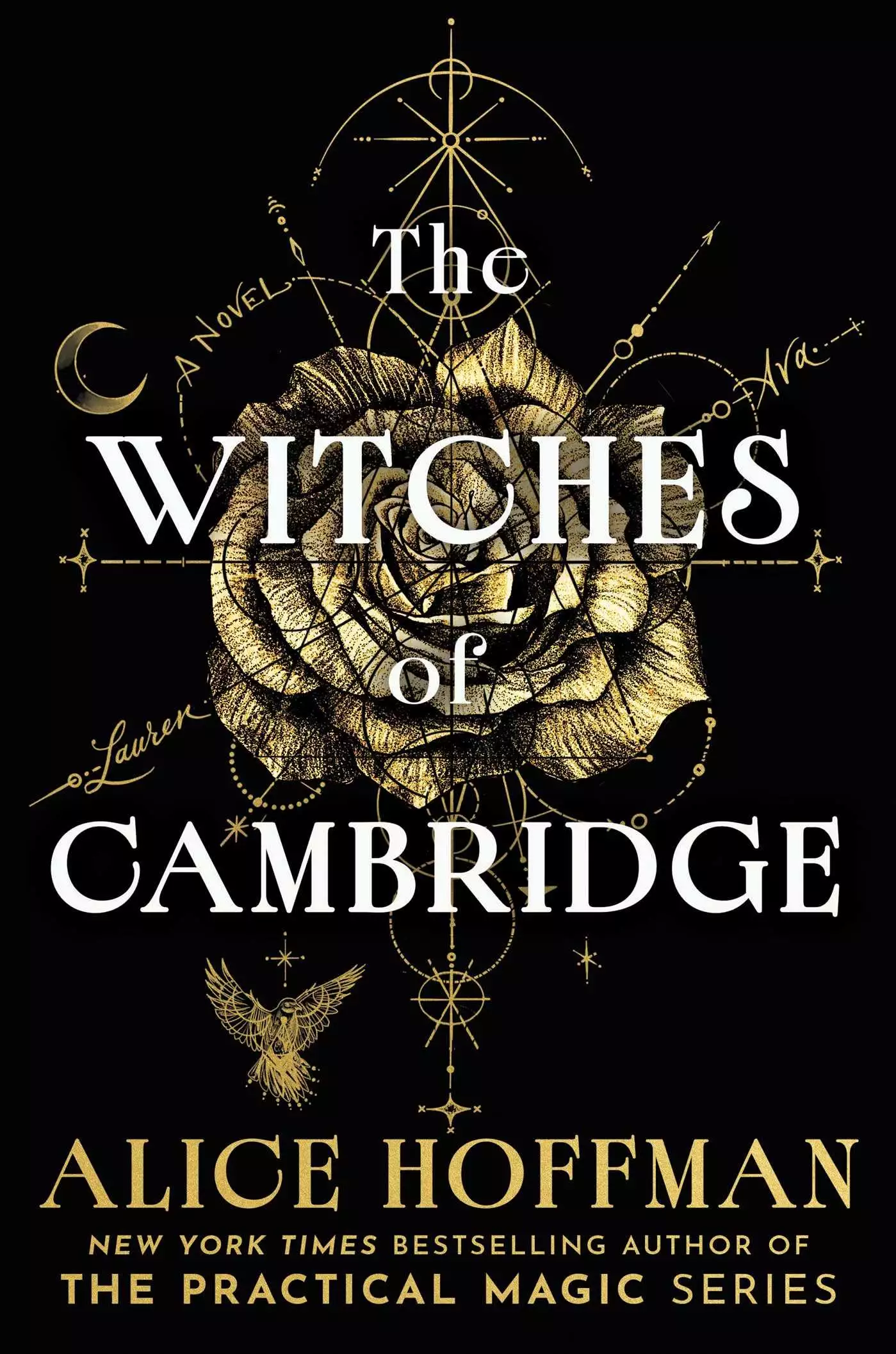
The brand-new series from the bestselling author of Practical Magic, following two brilliant young women in 1950s Cambridge, Massachusetts, as they become immersed in a mysterious secret group of witches at Radcliffe known as the Lilith Society.
Once upon a time, women were drowned in the river and the only witnesses were the crows in the trees. The Puritans blamed Eve for the sins of the world. That was when we began to meet in the name of Lilith, Adam’s first wife—banished for refusing to do as she was told.
We Fly Together…
By the 1950s, Cambridge, Massachusetts feels far removed from the legendary witch trials that marked its early days as a colony. Ava, a bright young woman from a small town in Maine, arrives for her first year at Radcliffe College. There, she meets Lauren, her opposite in every way—the wild and brazen daughter of a wealthy and well-established Cambridge family. But the two have more in common than they think. Both are recruited by the Lilith Society, a secret organization of witches at Radcliffe dating back to colonial times. As they learn more about their legacy, Ava and Lauren form a close bond that is put to the test as they learn to navigate their new power, friendship, and love.
While Radcliffe seems like a safe haven, the shadow of McCarthyism looms large, an ever-present threat to the flourishing creative and intellectual life in Cambridge. And as girls from the Lilith Society begin to go missing, Ava and Lauren realize the witch trials of the past may not be as deeply buried as they once believed.
Release date:
August 11, 2026
Publisher:
Scribner
Print pages:
416
* BingeBooks earns revenue from qualifying purchases as an Amazon Associate as well as from other retail partners.
Chapter One CHAPTER ONE In every story there is a beginning, and this was hers, the one she had been waiting for all her life. Ava Abbot had grown up in Genesis, Maine, a town too small to be on the map, the only child of a couple who tended an apple orchard. Her parents vowed they would never travel beyond the state line, insisting there was nothing to be found in the outside world other than chaos and crime. To venture forth was foolhardy and dangerous, they insisted, and yet from as far back as she could remember, all Ava had wanted to do was run away.
With her red hair and ink-black eyes, Ava seemed almost too beautiful to be real. Of course, there were flaws. She had been born with an eleventh finger on her left hand, an abnormality that had been removed when she was little more than a baby, but the scar still stung on damp, rainy days. Wary neighbors told their children that Ava had come from the underground land where fairies resided beneath the twisted roots of the apple trees. Don’t talk to her, they whispered. Don’t even glance in her direction. Something was different about her, that much was clear. Something that made them stay away.
There were no mirrors in the house where Ava grew up, for such things were said to encourage vanity, but she had seen her reflection in the still water of the pond at the edge of their land. Whenever she caught sight of herself, she half-believed she’d spied a stranger. She didn’t resemble her parents, and her long hair looked ruby red, so bright she had to blink. She had come to believe she didn’t belong in a house where the front door was double-locked every night at the hour when the world disappeared into darkness.
She was someone else entirely. Someone she didn’t know.
Jeanne and John Abbot, Ava’s parents, were strict and no-nonsense, far older than most other children’s parents, with their hair already turning white. Ava’s mother sat beside her when she had fevers, and made her soup from scratch; she checked in on her every night, but she was a strict caretaker and Ava was expected to follow the rules. The Abbots didn’t believe in praising children or marveling at their every accomplishment. A child was to follow the household rules and not set themselves above others. Lock the door, pick the apples, sit out at the farm stand, braid your hair, come right home, don’t go to the library.
Ava felt ashamed each time she wished for another life. She didn’t dare defy her parents, but she envied other girls in town. It was difficult to ignore how different she was, and not to wonder how that difference had come to be. Crows gathered on her windowsill, refusing to depart unless her mother banged on an old pan with a wooden spoon to drive them away. Ava knew that crows were faithful and unafraid of people; they brought messages from the other side, and they brought good fortune as well. When they rose into the air, Ava found herself lifting off the ground along with them, just an inch or so, but floating all the same until she was pulled back down by her mother’s quick hand. Ava knew there was something her parents were keeping from her. If she asked too many questions, they locked her in her room. Each time they found the books she brought home from the library, they burned them in a barrel out by the barn. If they saw her try to fly, they tied her to the ground. Then one night someone left her a message scratched into the wood of her windowsill with a sharp knife. I know where you are. That brought her comfort. In time, she learned to climb out the window. She perched there, speaking to the birds, biding her time, knowing there would come a day when she could fly.
“Don’t you do that again,” Ava’s mother said when she discovered how Ava had escaped. “Not if you’re half as smart as you think you are. I need you to be a good girl and do what I say.”
A rope was looped around Ava’s waist, and she was tied to a chair, kept there until she learned her lesson and remained where she belonged, feet on the ground, nothing more than an ordinary girl.
On Ava’s thirteenth birthday, her parents had presented her with a silver necklace her mother said had been handed down through the family, but the chain had turned black as soon as it was looped around Ava’s throat. Her parents had exchanged a worried look, then had quickly taken back their gift. It was a test, that much was obvious, and she had failed. “Never wear silver,” her mother had said in a solemn voice.
It was one more rule among many. Ava knew she must beware of strangers, especially if they pretended to know her. She’d been instructed that in this rural part of Maine there were women who walked the country lanes dressed in black, carrying branches of hazel wood, which allowed them to see in the dark as they searched for children to bewitch and spirit away. Ava couldn’t help but wonder why a stranger would want her when she was a nobody, even in her parents’ eyes, a seemingly unexceptional girl, who was forced to keep her talents to herself. She sneaked into the library whenever possible, immersed in the novels she found, and she managed to read as many books as she could during school hours while her classmates struggled with their assigned work. She taught herself Italian one year, and studied botany another, and when she received A’s on papers and tests, she tore them up, embarrassed to have done so well.
Ava knew how to keep a secret. She told no one that on some nights she found a black apple on her windowsill. A unique sapling had been planted in the woods, a rare variety called Black Oxford, which had first been grown in Maine in 1799, as sweet as could be. Ava dared to take a bite, and she found it was the most delicious fruit she’d ever tasted.
Apples had been the original charm, Eve’s downfall and Lilith’s delight.
It was the sign that she was meant for a very different life.
Ava was not allowed to bring anyone home from school, not that her classmates would have cared to visit even if they had been invited. They wouldn’t have dared to walk down the long dirt driveway with its gloomy overhang of sweeping branches, or dash past the wild, barking sheepdogs. These same girls flared with jealousy when the boys in school all fell wildly in love with Ava, not that they would ever have been bold enough to approach her. She was quiet, and yet she seemed dangerous, and her nearly black eyes seemed to look right through them—I know what you think and what you want—so the boys teased her instead, calling her a witch, the worst word they could throw at her. And wasn’t it true that she was followed by twelve crows wherever she went? A sign of evil, sure enough. Hadn’t she once turned a stone into a frog? The sign of a witch for certain. The children in town wanted to provoke a reaction with their constant name-calling, but Ava merely slinked back to the orchard, her face dark with shame, wanting to be accepted by them, but feeling the heat of anger in her throat. As for home, it was a place that was more isolated and lonelier each year. The wild sheepdogs with tangled coats and bad tempers roamed the property, and there was an iron gate at the end of the drive that was nearly impossible to open, so that what was the countryside felt like a prison.
You can never trust people’s intentions, Ava’s mother always told her. Those girls at school will steal our apples and tell you lies. They’ll want whatever you have and give nothing in return.
That’s not what I’m worried about, her father would add.
On nights when there was a full moon, Ava’s father often sat on the porch with a rifle. He said he wanted to be prepared if one of the dogs got into a skirmish with a coyote, but whenever a coyote slinked by in the woods, he’d looked the other way. Clearly, John Abbot was waiting for something else. For all the years that Ava was growing up, the outside world stayed where it was meant to be, at the edge of the dirt road. Even when people stopped at their farm stand, where the family sold vegetables in the summer and apples in the fall, there was no one to greet them, only a tin can where they could leave a payment in single dollar bills.
Ava’s parents expected her to remain in Genesis and continue to work in the family orchard after her graduation from high school. Though much of farming was drudgery, there was also joy to be found. Under Ava’s care trees bloomed in early March, the time of year when the surrounding orchards were still in winter’s grip, nothing more than scraggly black sticks. She might never have realized there was an option, she might have indeed stayed on at home, had her science teacher not convinced her to apply to Radcliffe College, an elite school for women considered to be the sister school of Harvard, for her grades blossomed even more than the apple trees, and she was a straight A student.
One morning a large white envelope arrived at the principal’s office. Ava had been afraid to give the family’s address when she sent her application to the school, and she’d never expected to even get a response. As soon as she was told of her acceptance to Radcliffe, she fainted and had to be revived by a secretary who flung a full glass of water in her face. When Ava came to, everyone applauded, and there it was, like it or not. She was special.
There was little Ava’s parents could do once the school announced the good news that she had been offered a scholarship other than glumly accept her new fate. Before she left for Cambridge, they sat Ava down in the parlor and ticked off a list of warnings.
Do your work without asking for praise. Be modest and kind. Be wary at all times. Trust no one. Avoid men who drink and girls who stay out past curfew, for such people will only bring trouble down upon you.
Ava nodded in agreement, not daring to admit that trouble was exactly what she wished for. She wanted it more than anything. She knew about life from the books she sneaked to read at school while her classmates were at recess, novels by Austen and the Brontës and Mary Shelley that had allowed her to see there was another side of life. She didn’t want to be polite at all costs and as plain as possible. She wanted to be surprised by life, to walk along dark streets and kiss someone as if her life depended upon it and dance all night, even if her feet ached in the morning, even if dancing was thought to be wicked and vain.
Her mother left her off in town, where the bus to Boston stopped outside the general store. When Ava looked back she thought she saw her mother crying, but she herself didn’t shed a tear. When she arrived in Cambridge, she immediately pulled off the scratchy, unfashionable gray jacket her mother had stitched by hand to create what she called a proper traveling outfit. Proper was not what Ava was after. She quickly unbraided her hair, allowing it to fall down her back, something she had never been allowed to do in public at home. When she spied a flash of her reflection in a store window, she was astonished to see the person staring back at her. Right then and there, in the middle of Harvard Square, she had decided that from now on she would do exactly as she pleased.
Most students arriving in Radcliffe Yard were accompanied by families who drove up in station wagons or sedans; brothers and fathers leapt out to drag huge steamer trunks across the lawn to the dorms. Ava had only a single black suitcase, and she was most certainly all alone. She stopped in front of the brick dormitory and breathed in the blue air. She might not have a family with her, but she was free to do as she pleased, rescued by an acceptance letter to the place she most wanted to be.
The school had originally been called the Harvard Annex in 1879, then was renamed Society for the Collegiate Instruction of Women, and had finally been called Radcliffe College, after a donor who valued women’s education. The same professors who taught the male students held separate classes for the women, although they were paid far less to do so and many of the most esteemed and respected professors simply refused to teach at Radcliffe, considering it a waste of their time.
Radcliffe and Harvard students often hired tutors to help them through the toughest classes, math and chemistry and the natural sciences. Male and female students received their degrees from separate institutions, and there were scores of guidelines for women that didn’t apply to men, with rules listed in The Red Book, a pamphlet distributed only to newly arrived female students. The book presented a moral and social blueprint they were obliged to follow at all times. Women were not to smoke on the street or wear blue jeans in public, and because it was feared that their presence in classrooms would distract men, female students who insisted on taking science classes, allowed with the president’s approval, were made to sit in hallways rather than classrooms or laboratories so they would not distract the male students. Married female students with children had to leave their children in strollers on the first floor while they ran upstairs to fourth- or fifth-floor classrooms, listening for their babies’ crying and fussing, the sound of which might rise up through the stairwell.
Ava stood where she was, in the middle of Radcliffe Yard, her heart wild with excitement. There were the twelve crows from Maine gathered on the roof, watching over her. She would soon learn that class options for women in the sciences included comparative zoology, numerology, a comparative study of plants, as well as anthropology. Radcliffe students were polite but not pushy, brilliant, but well aware that it was not wise to outshine the men, for who would want to marry you if you were smarter and more accomplished? Better to enter the Miss Radcliffe beauty contest, judged by Harvard professors who would watch the girls read from a provided passage. The winner had a spread in Glamour magazine featuring the ten best-dressed college women in America, a lifetime pass to the Brattle Theatre in Harvard Square, and a stuffed bunny rabbit.
Here it was, the life Ava had always wanted, the one she’d only dared to imagine. Slants of light filtered through the hawthorns and the oak trees. No one knew who Ava was, and she could do exactly as she pleased. That was when she understood that her parents had been right about one thing.
Anything could happen now.
We hope you are enjoying the book so far. To continue reading...

 Please log in to recommend or discuss...
