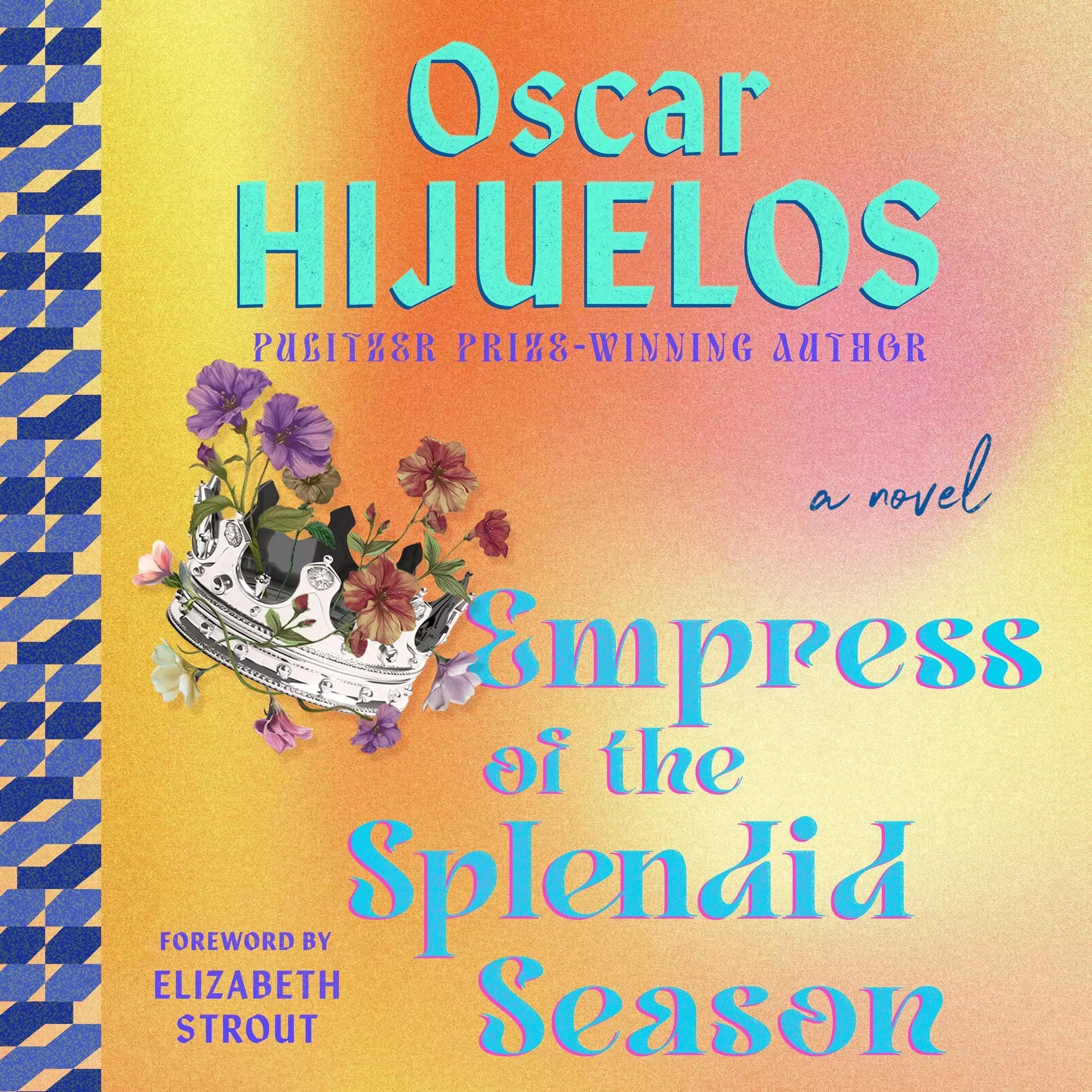
In Empress of the Splendid Season, Pulitzer Prize-winning author Oscar Hijuelos brings the joys and heartbreaks of twentieth-century America vividly to life: “resounds with sights, tastes, textures and even the humming ambience of deep, well-appointed brownstone apartments” (Los Angeles Times).
Lydia España—once a wealthy, spoiled daughter of Cuba—works at a sewing factory in New York. Adjusting to her sharp change of circumstances, missing the days when her prosperous father provided her with every luxury, she ruminates on the incident that drove her away from her homeland in the late 1940s—until she falls in love with Raul, a kindhearted, working-class waiter who sees Lydia as the “Queen of the Congo Line” she used to be: the empress of "the most beautiful and splendid season, which is love.”
Despite their age difference, a loving marriage follows, as well as two children. Lydia revels in her newfound happiness, but when Raul’s health declines, she finds her fortunes reversed yet again. Now working as a cleaning lady, Lydia can’t help but contrast her experiences with those of her clients, whose secret lives and day-to-day realities are so starkly different from her own—but over time, the role may prove to be just what she needs to secure a better life for her children.
Written with absorbing, magnetic prose, this tenderly rendered novel follows a proud, hardworking woman through the ups and downs of her simple, sensible, and at times heart-wrenching life. It is Hijuelos at his masterful best, a lasting and expert portrayal of the highs and lows of chasing—and living—the “American Dream.”
Includes a Reading Group Guide.
Publisher:
Grand Central Publishing
Print pages:
368
* BingeBooks earns revenue from qualifying purchases as an Amazon Associate as well as from other retail partners.
In 1957 when her beloved husband, Raul, had fallen ill, Lydia España went to work, cleaning the apartments of New Yorkers much better off than herself. She took up that occupation because Raul, with jobs in two restaurants, had waited on so many tables, for so many hours, and had snuck so many drinks from the bar and smoked so many cigarettes, that his taut heart had nearly burst, half killing him one night at the age of forty-one. (Lydia imagined the heart muscles all twisted like a much used table rag.) She went to work because, aside from their own children, her husband had a second little family to look after in Cuba (the devil!) and because, among other reasons involving the vicissitudes of making money, they were suddenly “poor.”
She was thirty-two years old and carried herself with the imperious attitude of a young movie starlet (so she fancied). Thin but voluptuous enough to draw the attentions of men, she had fiercely intelligent eyes, a lovely and inquisitive face; her dark and curly hair falling to her shoulders. She had been living in New York for ten years by then, her family’s third-floor walk-up apartment situated on a block of tenements in a working-class neighborhood not too far from the 125th Street and Broadway El. Her English was adequate but not good enough for the Woolworth’s store manager to hire her, nor for the Macy’s personnel department. For a few afternoons a week, she found a “part-time” in the neighborhood, at the 120th Street A&P, sweeping wood shavings off the narrow and musty floors and dusting dirt and moth wings off the tops of thirty-two-ounce-size juice cans and detergent bottles that lined the aisles, a routine that often forced her to crouch down, embarrassing Lydia when friends like Juanita López or Mrs. Esposito, whose husband owned a pizzeria, came along. On her way home she found herself clicking her tongue and shaking her head, as if to ask, “How did a woman of my background end up doing this?” She had such thoughts because in her other life, before she had arrived in New York, she had been the spoiled, hard-to-reach daughter of a businessman who was also the alcalde—or mayor—of their small town in Cuba, by the sea. She had her own maids and servants and a carriage driver/chauffeur back then, and she had never given the idea of work or the suffering of others much thought; but that was before her family, turning unfairly against her with a nearly Biblical wrath, had banished her, unprepared to contend with an indifferent world.
And now, who, looking at her putting away soup cans in a supermarket aisle, would believe her? Or care?
People in the neighborhood always found Lydia a little aloof and arrogant, for early on she had made certain conscious choices about whom her family would consort with. It had nothing to do with money—few in that part of the city had money. But she made distinctions between people without money who had class and refinement and those who did not. Like her best friend, Mireya Sanchez, a petite and beautiful public high-school teacher whom she had met at church, or Mr. Fuentes, the butcher who was also a poet—(“The blood of eternity is in this steak”). Or the piano tuner, Mr. Haines, who worked at Juilliard, a few blocks away, and sometimes brought her family the odd classical recording, usually something like Liszt, which they never listened to if they could help it. (To Pérez Prado, yes, to Marion Sunshine, yes, to Frank Sinatra, yes.) Or their postman, Mr. Brown, a black man with the clearest eyes on the earth and a scent of sweet lilacs about him, the most courteous of her acquaintances; or, on the floor below, that professorial fellow who was always traveling far away, Dr. Merton, an archeologist or classicist of some kind with his scholarly preoccupations and eclectic tastes, the kind of gent to wear a Japanese kimono, and an ankh hanging off a chain around his neck, while throwing out his garbage; or Mr. Belky, the pharmacist, in his heavy suits even in the summer, who used to bring the family the urgent telephone messages he received in their name, as when Raul fell ill. (They did not yet have a telephone.) Then, to the contrary, there were la gente baja—the drunks on the street, the petty Irish gangsters who sold cartons of Virginia cigarettes out of the trunks of their Oldsmobiles down by the 125th Street pier, the drug addicts, the crazy people who shouted and threw parties all night, broke bottles in the alleys and tossed their garbage out the windows—persons whom Lydia would have been happy to live without.
Still, they were a part of her world.
With her head held high, and posture correct, Lydia had always conducted herself with a quiet dignity, dressing as well as she could afford and seeing to it that her children, Rico and Alicia, who were four and six years old, behaved genteelly. (Poor Rico, with his hair slicked to the sides and parted straight down the middle, and his shiny black shoes, high white knee socks, matador jacket, and knee pants.) Even while shopping in the crowded Klein’s department store on 14th Street, where she hoped to save a few dollars—the way of the wizened poor—Lydia tried to maintain a ladylike demeanor, reluctant to push and shove and elbow her way through to the bins stacked with three-for-a-dollar boys’ underwear, the seventy-nine-cents ladies’ blouses, the two-dollar sneakers, or whatever else the sales help dumped from big cardboard cartons onto the “marked down” tables. Liking to think of herself as upper lower class, she moved through her days with an otherworldly detachment (shock) that sometimes put people off—“What, you think you somebody better?”—and with a patience for the rudeness of others that, years later, she would say other people did not deserve. (And if she fought back, struggling over a few dollars saved on a pair of trousers or a skirt, and won, her “triumph” hardly seemed worth the trouble, at least to her children, or so they would remember, the mad scrambling for bargains always leaving them with feelings of shame.) For all that, there was always someone to express a miserable opinion about the “pretentious lady.” Sometimes, as Lydia walked toward her stoop from the subway, she saw people scowling at her through their windows (or so she imagined), and on one occasion a neighborhood kid, running along the sidewalk, shouted, “Hey, Queenie,” and threw a clump of lit firecrackers at Lydia and her children, the charges exploding by their feet. Alicia, in her lemon-yellow raincoat, began to cry as if the world was going to end, asking her, “Why was that man so mean?” in the same way she asked about why her Poppy was sick. To that, as to many other questions, Lydia had no answer.
She’d sigh, move on.
She had tried, as well, to master the cash register at the pharmacy, thanks to Mr. Belky, without much success, and for a time also worked at Jimmy’s Steak House on Lexington Avenue, where her husband had fallen ill, but she was not too fond of Jimmy and, in any event, he did not pay her much and she disliked hanging around all day in that kitchen, with its hamburgers and sizzling vats of shortening and fries. (The smell stuck to her the way it stuck to her husband, Raul, who could never shake it.)
In any event, her days found her fretfully, diligently trying a number of things—jobs of the poor—before entering into the occupation that would be her own for the next thirty-three years, a cleaning lady.
With a widowed Cuban friend named Concha Alonso she had gone door to door trying to sell Korean-made toys; she had cut hair, ever so briefly, for the pretty Cortez sisters on Amsterdam Avenue (it did not work out); had hawked, in her own aristocratic way, candy on street corners; and, with another friend, Virginia, whose husband was also sick, attempted to peddle homemade shampoos to the big department stores, a few of their products taken by some kindly East Harlem merchants.
There had been another enterprise with her friend Concha, to make and sell their own cloth dolls for Christmas. These they’d fashioned after the famous American Raggedy Anne doll, but with black and cinnamon faces, sewing five dozen of them in Concha’s apartment on West 111th Street. On those days these ladies, the widow and the near widow, with good-natured fervor, cut, measured, and sewed, skills that, incidentally, they had acquired in New York, years ago, as new arrivals, the two having met in a sewing factory downtown. As they worked, Concha’s elderly grandmother paced in the hallway, perturbed because they had taken over her bedroom. Tormenting them, she carried on about their “idiotic stupidities.” “If you were birds,” she warned them, “you two would be swimming in the ocean.”
Every now and then Concha, thinking about her husband and how he’d left her alone to fend for her family, would begin to cry. When that happened Lydia’s practical—or impractical—side came out. She would get some cold cuts from the corner, the cheap kind, like baloney, and a ten-cent loaf of Wonder Bread and a big bottle of Ballantyne Ale and they would sit in the kitchen with their modest feast, laughing and telling dirty stories, even as the grandmother’s voice echoed in the halls: “Next thing you two will be on relief. May God pity your souls.”
The dolls turned out nicely, but failed to sell, so that they ended up donating most of them to an orphanage and giving the rest away to the kids of the neighborhood. They had a better success setting up a last-minute Christmas-tree stand in front of Freddy’s Bodega on 122nd Street; these two attractive latina women, in their thirties and dressed like lumberjacks, put out a sign that said “Lovely X-Mas trees for sale,” but the trees, of questionable origin, were often dry and brittle, the needles dropping off, even as their buyers, happy with the bargain prices, dragged them through the snow. Then there were the homemade cakes for Three Kings Day, or the Epiphany celebration, which went well. But even that little success dried up after the holidays, and Lydia, faced with the responsibility of supporting her husband and kids, without a family in the States to help her, and with friends who were as poor as herself, passed some difficult nights, trembling in her husband’s arms.
Despite her troubles, the Christmas that followed Raul’s illness was good, thanks to the generosity of local merchants and friends, and Rico’s dapper Cuban godfather, su padrino, Mario, a singer who worked for the Transit Authority and who always showed up at the apartment with shopping bags of pastries and candies and gifts for the children. His were welcome visits—no chicken neck stews for dinner when he came over—but even so, Lydia’s apprehensions grew daily because lurking behind every positive thought and hope for the future was the suspect health and behavior of her husband. Within three months after his attack, Raul began sneaking smokes on the street (she saw him once from the bus coming uptown on Broadway) and drinking booze again, amber pint and half-pint bottles collected at the bottom of the garbage cans in the kitchen. For all her distress, she couldn’t blame the poor man. What happened to him had put an official end to his youth and any illusions of immortality, and that weighed heavily upon him, though he, with slouched shoulders, and lost in thought, did not, in those days, mention a word about it.
In fact, at first, from a certain angle, Raul seemed nearly optimistic, dressing in a suit a few days a week, setting out to make social calls and, if the weather was fine, taking the kids to the park or the zoo. On Sundays he accompanied Lydia and the children to church. During those Masses, he sat through the service with what the children would remember as a “look of curious expectation” upon his face, as if he were awaiting the sudden appearance of Jesus or the Holy Ghost over the altar, the ritual and music inspiring him, his brow gnarled with thought and contemplation—of death? of afterlife?—though he did not give the responses and rarely sang along with the hymns. He always threw a dollar into the collection basket, even if, in Lydia’s opinion, they could not afford to, and she would say, “But Raul, God is already rich!” Afterwards, as they would file out into the street, he made a point of telling the Irish priest, Father Malloy, “Good service, Padre,” and punctuated the compliment by rapping the priest on the back. Then, with Lydia walking silently beside him, he would say things like, “Wouldn’t it be nice if we really knew that God exists.” And, “But of course, He does,” for the sake of Rico and Alicia, who were sometimes confounded by the doubt or disappointment in his eyes.
Raul did not go back to work for a year, until the late spring of 1958, and after a while, the tedium of staying home got to him. Sleeping badly, he had dreams of his own flower-covered coffin appearing in their living room, awakening with a start, and pacing, exhausted and tense, in the mornings. When someone mentioned that he might be better off with a hobby, Raul, a man of simple tastes, seemed at a loss, as he was one of those fellows who’d known only work from early childhood. Aside from fishing upstate or off the Hudson pier for polluted bass, and watching television, he was hard-pressed to engage in an outside interest, even when Lydia bought him a Chinese checkers game, which he played with the children, and a piece of balsa wood that she hoped would inspire him to take up carving. He did practice on the Hohner concert harmonica that Lydia bought him, learning the melody to “Moon River,” and sometimes he sat in the living room strumming on his old beat-up guitar, a true love of his life, but just as often, feeling perplexed by his enforced indolence, he stashed his instruments in the closet, to gather dust.
At night, he would stand by the window, watching the moon rise over the projects, Harlem bursting with life, receding into the distance, to the east and north.
The poor man should have seen his illness coming: by the time the pains had started creeping up his arms, they’d been married for six years and he, never saying a word about what he was feeling, used to gasp for breath as he slept. Some days he barely made it out of bed, but he always dressed for work, no matter how he felt. When Lydia would tell him, “Stay home today,” he refused, for that was not part of his manly duty. Even though the pains had been going on for months, Raul just imagined that they were muscular, from arthritis, as he was always lifting heavy trays and hoisting chairs onto table tops at the end of the last shift. The kind of Cuban who lived mainly to work, he ignored his symptoms. When his chest felt sore and his arm sometimes went numb, he used hot compresses and Vick’s Eucalyptus ointment, tried short naps between shifts, whenever possible, took a lot of aspirins, but never found the time to see a doctor, despite Lydia’s occasional entreaties, as “destiny was destiny.”
And why waste the money on a doctor or drag his tired bones down to the public clinic, when he could spend it on other things, like candies for his children, or on gambling with his pals from Brooklyn, or on Arsenio Rodríguez records to play on the hi-fi; why bother? he would say, even as things hurt inside.
One afternoon during the autumn of 1957, Mr. Belky, the pharmacist, climbed the three flights up to the apartment and, hat in hand, stood breathless and sweaty before their door, saying, “Mrs. España, I haff sometink for you.”
With four-year-old Rico by her side, and in the half-light of the foyer, Lydia read the note in her careful and deliberate manner, her lips moving with every penciled word. Manny from the restaurant had called to say that Raul had been taken to Knickerbocker Hospital after falling ill while waiting tables. She read it over a few times before reaching into her skirt pocket to give Mr. Belky a dime (he refused it), and then she put on a different pair of shoes and dress. Leaving her children with her upstairs neighbor, Mrs. López, she got someone from the building to take her by car to the hospital.
She passed the night in an emergency ward filled with unfortunates, and pacing impatiently outside the room where the doctors were doing something—what she did not know—to her dear husband, Raul. Part of that night she prayed, though she was not especially prayerful—or brimming with gratitude or hope—because her husband was still a young man and did not deserve “all this.” Trying to think positive thoughts, she nevertheless kept worrying about finding the money for his funeral, if it came to that, and wished to God that she had not, earlier in the day, been so aloof with him, when he, surprising her from behind, had started to caress her breasts through her cotton nightgown as she stood before their bedroom mirror, brushing out her long dark hair.
“Raul, por favor,” she had said.
During that long night, with sirens sounding through the hive-wired gray windows, she missed her family. She had not seen them since she left Cuba, hearing little save from one of her sisters, who’d had a kind heart and felt sorry for her. (Thank God for friends like Mireya, for she would have been desolately lonely without her.) Because her mood worsened she found herself shouting at the nurses to do something more for her husband (Lord, how she worried about his dying alone). A social worker, who spoke some Spanish, managed to calm her down, giving her a couple of “relaxation” tablets. But the next morning, when she had to stand over his bed in the ward, surrounded by machines and with wires and beeping instruments attached to him, the strangeness—and difficulty—of her situation saddened her.
what had happened was this: he was working his day shift at Jimmy’s Steak House in midtown, a joint whose good specials were popular with the middle-rung executives and office workers who lunched there. Balanced on one of his shoulders was a large metal tray, heavy with four Tuesday specials—each platter holding a nicely grilled twelve-ounce porterhouse steak, smothered in butter, salt, and a few sprigs of parsley, an aluminum-wrapped baked potato with sour cream and chives inside, and a rubbery-tasting salad (the kind that was delivered in big plastic bags once or twice a week). Moving through the crowded room, weaving between the press of chairs, he had the sudden impression of being whacked in the chest with a baseball. Turning around he had expected to see shattered glass flying about from the front window on Lexington Avenue, as that would have explained why people were so startled, and then he realized that they were interested in him and that he was falling and that the heavy tray was dropping from his hands. Then, he found himself resting on the restaurant’s tile floor, the mess of food all around him, the back of his head aching. Even though he could barely breathe, he was worried about making a bad impression on his boss, Jimmy, who had come out from behind the cash register to take a look at him. There were others—the maître d’, Luigi, and one of the kitchen girls, María, and one of the cooks, José, and several other waiters, Maurizio the Neapolitan and that other Cuban fellow with whom he worked, Manny—looming over him, all concerned. When they kept repeating his name, “Raul? Raul?” he heard their voices through a room filled with cotton, though the ambient background sound of the restaurant itself was annoyingly loud, plates and utensils clacking like seashells (perhaps he was thinking about the seaside towns of his youth in Cuba).
through all of that what raul really cared about was keeping his job. He had tried to get up, and although kindly hands were touching him, and María had undone his collar and loosened his bow tie, and someone else had thought to take off his bright red jacket (which he’d never liked anyway), he somehow felt that he was being punished—for what he did not know. As an overhead fan turned slowly, he noticed the nice, slightly gritty art deco molding of the tin ceiling above him. And then, as someone lifted his head onto a pillow, with the smell of potatoes and bloody grilled meat strong in his nostrils, he descended into a kind of sleep.
So it was that on certain mornings, when she would sit in the kitchen trying to figure out the week’s budget, Lydia nearly came to tears, feeling underqualified and undeserving of those challenges and responsibilities suddenly imposed upon her. Nothing in her youth, nothing in her loveliness, or her sexual ardor, or a husband who had never wanted her to work and promised that he would labor like an animal for the family, had prepared her for this. Just trying to add the numbers up right, or fretting that something terrible would happen if she did not pay the electric bills or rent on time, sometimes put a broodish scowl on her pretty face, made her quick to judgment, and quick to unfairly punish her kids. Gradually her children began to see in her a certain severity that was never really intended for them, the fitfulness of a once spoiled child, used to having things come easily, now having to count pennies and resew old clothes and look around for bargains and work and work and work.
sometimes, on her most heartsick days, lydia, feeling hard-edged about reality, would attempt to recapture the hopefulness of her youth, and yet, asking God to look out for Raul and her children, she felt that no one was there.
still she was greatly comforted by the crucifixes and images of the Virgin she kept in the apartment; and when, in Raul’s company, she attended Mass, a nice feeling of wealth and grandeur came over her, for churches were the mansions of the poor.
Once, in the days when Raul was in the hospital, she half-fainted while standing by the edge of a subway platform, from fatigue or sadness, nearly falling in front of an approaching train, as if the platform had suddenly tilted. Aware of what was happening and carrying a bag of groceries to bring home to the family, she had felt more worried about the breakfast rolls (ten for fifty cents!), which she had found in a bakery near the hospital, spilling out of her bag onto the track, than about herself. Just then, as she was toppling forward, her eyes closing, a man in an epauletted London Fog trench coat (all the rage in that epoch) who had noticed her unsteadiness caught her by the arm and pulled her back toward the turnstiles. He made no big deal about it, telling her, “You should take more care, lady.” Thanking him, she collected herself and made her way home safely, preparing sandwiches for the children, and that evening, when mentioning this incident to Mireya, she told her: “I don’t know what to think. Maybe that man was standing there for a particular reason.”
years later, she would change that to: “once, in the days when Raul first became sick, and I was coming back from the hospital, I nearly fell from a train platform but an angel saved me. Te juro. Un angel de Dios.”
In the early spring, the year after Raul had fallen ill, it was the butcher, Mr. Fuentes, who sold her several pounds of chicken legs and said, “The soul of the sun kissed the flesh of this bird, as delicious as life itself.” And with that, knowing her troubles, Mr. Fuentes came up with the name of an acquaintance who cleaned apartments for a living. This “little bird,” another Cuban woman, spoke with Lydia and put her onto a forlorn college professor whose apartment on West 110th Street was a horror. She had told Lydia, “Listen, it may sometimes feel bad cleaning up after others, but you are left alone and can choose your hours.… Sometimes these people can be very nice.”
She called the professor, who sounded like a lonely old man, and first stood before his door on a rainy April afternoon, the scent of pissy kitty-litter boxes, disintegrating books, bachelorhood, and rotting linoleum hitting her instantly; and though she smiled and nodded at him respectfully—to her mind he resembled the genius Albert Einstein—she set woefully about doing something which, in her youth, she could never have imagined, being someone else’s servant. In Cuba she had never washed her own clothes or ironed, cleaned the floor, or even made her own bed, and when she had daydreamed of a future, she had not seen herself on her knees scrubbing the mildewed tile walls of a bathroom in the seventh-floor apartment of a retired and not altogether tidy university professor.
Now she passed those days telling herself that such labors were “temporary,” for such work did not come easily to her. In those circumstances she learned that there was a difference between cleaning up after someone else’s shit and cleaning up after your own and that there was very little she would not do for her family, no matter how unhappy she sometimes felt.
And there was something else: she almost began to enjoy her access to other people’s homes and the cositas that defined their lives.
At first, it took her a while to get used to the idea, but soon Lydia, willfully attending to her duties, was cleaning for other college professors who lived near Columbia University; and these jobs led to even more jobs. In time, she got her own kit of rags and scrub brushes, and two light-blue cotton maid’s outfits hung in her closet, bargain-priced dresses that she bought from a Hasidic fellow on Delancey Street in downtown Manhattan. (“Look here, Mireya,” she once said to her friend. “Qué barato!”) She began to enjoy the odd solitude of the profession (at least people were not watching you all the time), learned to laugh at things, and to greet employers with a smile.
This back before she grew tired of it all.
Riding the bus or train to work she would make the acquaintance of many other cleaning ladies and housemaids and delight in their company. She’d say. “Oyeme, chica, where’d you get those shoes?” to strike up a conversation. Or, “It’s almost the weekend. What are you going to do?” And in those days, just before the event of the Cuban revolution, she would launch into harmless nostalgia about her pueblo and how she often missed it. She knew the look—the tennis shoes, the shopping bag filled with wax-paper-wrapped sandwiches, the thin twelve-carat neck chains with a crucifix or Virgin medallion; the slightly distracted, heartbroken, and daydreamy expression on the ladies’ faces, wistful mascaraed eyes, shoulders primly back, raincoats in the spring and autumn, heavy coats and woolen hats in the winter, and high rain boots, especially in the snow (from fear of losing a job over sick days). She knew where they shopped—Klein’s on 14th Street, John’s Bargain Stores throughout the city, Annie’s on 125th, Alexander’s downtown or in the Bronx. She knew their watery eyes in the flu season, the early morning depressions in January and February when everybody, even the rich bosses, were melancholic, when the ladies only wanted to go home to their kids. (“Ay, how I wanted to stay in bed.”) She could practically read their thoughts as they looked up admiringly at the Miss Subways ads in the overhead racks, knew how they played the numbers and daydreamed about winning new washing machines on the Queen for a Day television show. She knew the magazines in their coat pockets (Spanish-language Look, Vanidades, or La Bohemia), the occasional letter from San Juan or Mayagüez, Santiago or Havana, reread in the jostle and crowds of the subways, again and again ever so slowly, to help pass the early morning loneliness. Or a New Testament or some book opened on their lap—on dreams or an aspect of the supernatural (Living Your Days by Numbers, The Meanings of Your Dream Last Night, Why the Spirits Have Reason to Care). There were the aching hips, the slightly bent backs, the thick nylons with runs in them, bandaged knees and fingers, cracked nails, the lavender perfume, the oversized purses, the change bags—hands held out carefully monitoring the change and counting out the two tokens’ fare—the way the cleaning ladies nervously pressed their purses to their breasts whenever some rough-looking kids came along, those few dollars a significant part of their futures.
Sometimes, despite all her boundless “dignity”—that wondrous pride-saving province of the poor and working class—she got up in the morning and vomited, not from morning sickness or from something she’d eaten, but out of a kind of despair, the “bad nerves” that come from getting down on one’s knees to wipe clean a stranger’s toilet; from swallowing one’s pride, out of necessity.
Quite simply, she had turned around to find that Lydia España, from Cuba, the Empress of the Splendid Season as her husband once thought of her, had somehow become Lydia the Spanish cleaning lady.
and she went to work because she didn’t want her kids to feel poor or disadvantaged. She wanted to make sure that even if neither she nor Raul knew how to read or write English in any e. . .
We hope you are enjoying the book so far. To continue reading...


 Please log in to recommend or discuss...