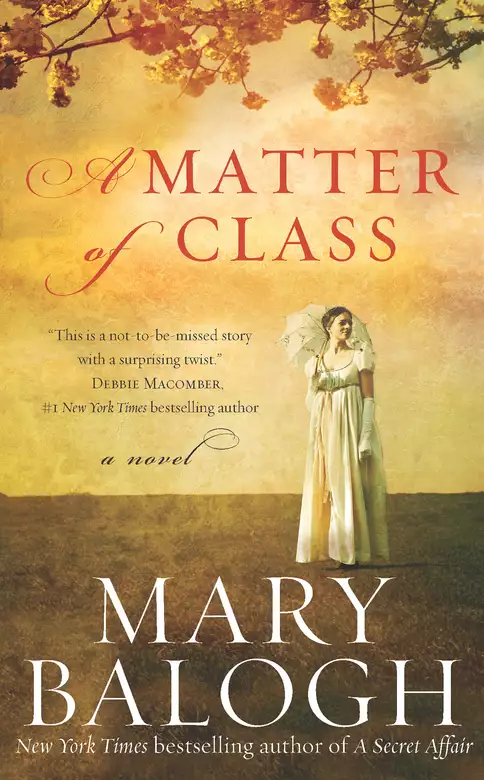
Reginald Mason is wealthy, refined, and, by all accounts, a gentleman. However, he is not a gentleman by birth, a factor that pains him and his father, Bernard Mason, within the Regency society that upholds station over all else. That is, until an opportunity for social advancement arises, namely, Lady Annabelle Ashton. Daughter of the Earl of Havercroft, a neighbor and enemy of the Mason family, Annabelle finds herself disgraced by a scandal, one that has left her branded as damaged goods. Besmirched by shame, the earl is only too happy to marry Annabelle off to anyone willing to have her.
Though Bernard wishes to use Annabelle to propel his family up the social ladder, his son does not wish to marry her, preferring instead to live the wild, single life he is accustomed to. With this, Bernard serves his son an ultimatum: marry Annabelle, or make do without family funds. Having no choice, Reginald consents, and enters into a hostile engagement in which the prospective bride and groom are openly antagonistic, each one resenting the other for their current state of affairs while their respective fathers revel in their suffering.
So begins an intoxicating tale rife with dark secrets, deception, and the trials of love-a story in which very little is as it seems.
Release date:
December 29, 2009
Publisher:
Vanguard Press
Print pages:
226
* BingeBooks earns revenue from qualifying purchases as an Amazon Associate as well as from other retail partners.
Reginald Mason crossed one elegantly clad leg over the other and contemplated the gold tassel swinging from one of his white-topped Hessian boots. The boots had been just one of many recent extravagances, but what was one to do when fashions shifted almost daily and one had been taught from the cradle onward that keeping up appearances was of the utmost importance?
What one could do, of course, was ignore the almost daily vagaries of fashion and instead aim for basic good grooming, and that was what he had always done—until the past year, when, for reasons of his own, he had chosen to pursue the path of high fashion.
It was his father who had drummed the lesson of keeping up appearances into him. Bernard Mason was not a gentleman by birth but rather a self-made man who had spent lavishly of his enormous wealth on all the trappings of gentility, including the very best education for his only son and a large country estate in Wiltshire. He was, by his own estimation, lord of all he surveyed—except the world of the beau monde, which looked down upon him along its collective nose as a very inferior being and an upstart to boot. As a consequence, he heartily despised the ton—and dreamed incessantly of finding a way into its hallowed ranks. His son was his greatest hope for accomplishing that dream.
All of these facts made it illogical that he was so furiously angry now, that he had been angry all too often during the past several months. For Reggie had been behaving exactly as a young gentleman of ton was expected to behave in order to demonstrate his superiority over the mass of ordinary mortals who must perforce be more intent upon earning money than spending it. He had been as extravagant and reckless and idle as the best of his would-be peers.
His father was sitting a short distance from Reggie, though the wide expanse of the solid oak desk in his study stood between them and set them symbolically much farther apart. The wildly successful and prudent businessman confronted his wildly expensive, aimless, and profligate son with thunderous displeasure. He had just finished delivering an eloquent lecture on the theme of worthless cubs—not for the first time. Reggie had been told, loudly enough to imply that he must be deaf as well as daft, that a man who aspired to be accepted as a gentleman must give all the appearance of gentility, good breeding, and wealth without dabbling in any of its attendant vices.
And Reginald had done more than dabble.
Was it a vice to buy the very best and most fashionable of boots? Reggie jiggled his foot slightly and watched the tassel sway into motion again. It glinted in the sunlight beaming through the window.
He sat half-slouched in his hard wooden chair as a visual sign of his apparent unconcern. He did consider yawning, but that would be going too far.
“Anyone would think, lad,” his father said after a few moments of exasperated silence, “that you were out to beggar me.”
His use of the word lad was not, in this instance, an endearment. It was his father’s way of speaking. Whereas Reggie’s expensive education had polished his speech until it was indistinguishable from that of the beau monde, his father still spoke with a broad and unabashed North country accent.
It would take far more than his recent extravagances to beggar his father, Reggie knew. A little excessive and expensive attention to his wardrobe and a little unlucky gambling would put scarcely a dent in his father’s fortune, nor even a fair amount of unlucky gambling, which was probably a more accurate and only slightly understated description of his recent losses.
Reggie swallowed the uneasy sense of guilt that rose into his throat like bile.
“That there curricle, now,” his father began, stabbing the desk top with the tip of one broad finger, as though the offending vehicle were cowering beneath it.
Reggie cut him off. He risked a bored cadence to his voice.
“Any self-respecting gentleman below the age of thirty-five,” he said, “must have a racing curricle as well as one for simply tooling about town, sir. And you do wish me to be a gentleman, do you not?”
His father’s face took on a slightly purple hue.
“And a matched pair of grays to go with it?” he said, still poking at the desk. “The chestnuts you purchased last month would not do the job?”
Reggie shuddered elegantly.
“They do not match the paintwork,” he said, his voice pained. “Besides, they are all prancing show, perfect for impressing the ladies in Hyde Park, but quite useless if I should decide to race the new curricle to Brighton. You would wish me to win, would you not?”
“And serve you right if you were to break your neck in the attempt,” his father said brusquely. “I am going to have to lease more stable room.”
Reggie simply shrugged.
“And these… debts,” his father said, picking up a sheaf of papers from one side of the desk in his large fist and waving them in the direction of his son’s nose. “You expect me to pay them, I suppose?”
They were large. Most of them were gaming debts. Reggie never left the card tables or the races until he had lost. Whenever he surprised himself by winning, he always stayed until he had lost all the money again and sent plenty more in chase of it.
“If you please, sir,” he said with a weary sigh.
His father’s bushy eyebrows collided above his nose.
“If I please?” he barked wrathfully, and he squeezed the bills in his hand and dropped them onto the desk. They fanned out into an alarmingly large heap. “Was it for this that I brought you into the world, Reginald, and spent a king’s ransom to have you educated as a gentleman? Was it not rather that I might see and enjoy the fruits of my labors in my old age? I will never be accepted by all the high and mighty gentlemen of this realm. I will always reek of coal in their pampered, perfumed noses. And that is just grand as far as I am concerned. I have no interest in rubbing shoulders with popinjays. I despise the lot of them. But you… you could have the best of it all. You could be my son and a gentleman.”
Reggie shrugged and refrained from pointing out the lack of logic in his father’s attitude toward the beau monde.
“I am accepted well enough by all the gentlemen I know,” he said. “I went to school with half of them. As for the ladies, well, who needs them? There are plenty of women who are far more, ah, interesting.” He made a careless, dismissive gesture with one well-manicured hand.
His father’s large hand slammed down flat on the desk.
“If you were to settle down with a good woman, lad,” he said, “you would be less trouble to me and more of a gentleman to boot.”
“Time enough to think of that,” Reggie said hastily, “when I am thirty-five or so. I have at least ten years of good living to do before settling down.”
He would have been better advised to keep his mouth shut. His father’s eyes narrowed in a familiar look. His mind had latched onto a subject and was giving it shrewd consideration. And that subject—Reggie knew it even before his father spoke again—was matrimony. Specifically as it concerned his son.
“You will marry into gentility, Reginald,” he said. “Even into nobility. You are handsome enough, God knows, having had the good fortune to take after your mother’s side of the family instead of mine. And you are rich enough—or will be if I do not cut you off without a penny.”
As well as standing to inherit the whole of his father’s vast fortune, Reggie was the sort-of owner of Willows End, a sizable home and estate in Hampshire, a sort-of gift on his twenty-first birthday four years ago. Exclusive ownership was to pass to him on his thirtieth birthday or on his wedding day, whichever came first. Or the gift could simply be withdrawn if he was deemed unworthy of it before either of those dates hove into sight. The threat had never been made—until now.
“No one in the upper echelons will have me,” Reggie pointed out, rubbing one finger over what might have been a small smudge on the inside of his boot. “Not for a husband.”
“Someone will,” his father said viciously. “All we have to do is keep our eyes and ears open and wait for the right opportunity.”
“But not for the next ten years or so,” Reggie said firmly. “There is no hurry. I am perfectly happy as I am for now.”
It was the wrong thing to say again. His father impaled him with a ferocious glare.
“But I am not,” he said. “I am not at all happy, Reginald. I do not know what has happened to you of late. I used to think myself the most fortunate of fathers. I used to think you the very best of sons,” he sighed. “I shall start looking for a bride for you without any further delay. And I shall look high. I will not waste you on some obscure gentleman’s daughter.”
“No!” Reginald said firmly, uncrossing his legs and straightening out of his slouch. “I will not marry simply to please you, sir. Not even if you were able to persuade one of the royal princesses to have me.”
His father’s heavy eyebrows soared halfway up his forehead.
“To please me?” he said. “You do not please me at all, Reginald. You have not pleased me—or your mother—for some time now. She pleads your case by telling me that you are merely sowing your wild oats. If that is so, you have sown far too many of them for long enough. You will marry, lad, as soon as I have found you a suitable bride, and you will settle down and live a respectable life.”
“I beg your pardon,” Reggie said, a thread of steel in his voice now even though he spoke politely enough, “but you cannot force me, sir.”
“You are right,” his father said, his voice dipping ominously in volume. “I cannot. But I can cut off your funds, Reginald, and that would be like cutting off the air you . . .
We hope you are enjoying the book so far. To continue reading...

 Please log in to recommend or discuss...
