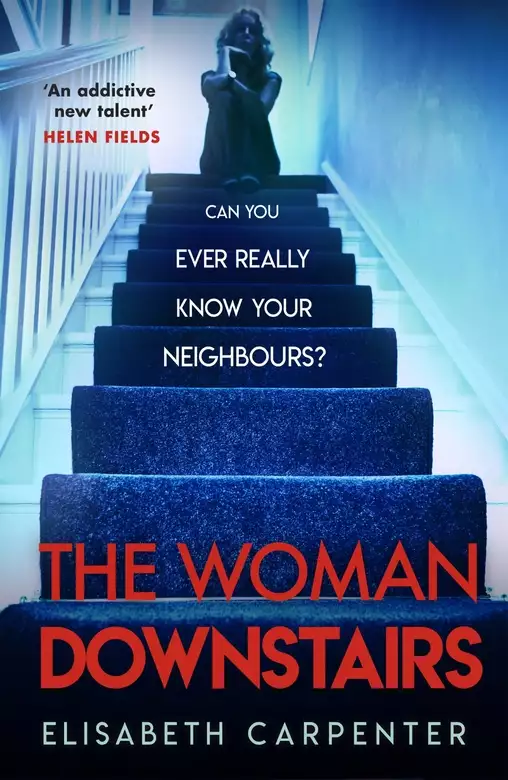
When human remains are found in a ground floor flat, the residents of Nelson Heights are shocked to learn that there was a dead body in their building for over three years.
Sarah lives at the flat above and after the remains are found, she feels threatened by a stranger hanging around the building.
Laura has lived in the building for as long as she can remember, caring for her elderly father, though there is more to her story than she is letting on.
As the investigation starts to heat up, and the two women become more involved, it's clear that someone isn't telling the truth about what went on all those years ago....
Release date:
November 15, 2019
Publisher:
Orion Publishing Group
Print pages:
320
* BingeBooks earns revenue from qualifying purchases as an Amazon Associate as well as from other retail partners.
She knocks on the door three times, but there’s no reply. That’s not unusual; it’s just before six in the morning. This is the best time to catch people at home – not yet awake, not at work, not off their faces on drink or drugs (not generally, anyway).
Her colleague taps the window with the knuckle of his index finger. There’s a glow from the television in the gap between the curtains, but there’s no movement or sound from inside.
‘Think we’d better get Doris to work,’ she says, picking up the door enforcer.
It takes her two smacks of the battering ram for the door to give way. There’s resistance from the other side. He pushes the door harder. It doesn’t budge.
‘Want some help there?’ she says, laughing.
‘Fuck off,’ he says, as a droplet of sweat runs down his left temple.
She puts both her hands on the door at waist height, standing on tiptoes as she pushes.
Slowly, it opens.
The mountain of mail is almost a third of the height of the door.
‘Shit,’ he says, treading over the pile. ‘It looks like no one’s opened this door in years.’
‘Or someone’s made it look like that,’ she says, following him inside.
‘How would they have done that? Jumped out of the window afterwards?’
‘Just an idea.’ She shrugs. ‘But we’re not paid for our ideas, are we?’
‘It’s only council tax arrears,’ he says. ‘It’s not like we’re searching for drugs.’
She sniffs the air. ‘It’s a bit musty in here … a really weird sweet smell … like a rubbish dump.’
‘Weird,’ he says, opening the door to one of the bedrooms. ‘It’s pretty tidy so far.’
There are photos on the hallway wall. Various framed pictures of the same couple. In most of them, they’re smiling.
She follows him into the kitchen.
‘Jesus Christ,’ he says, walking over to the sink.
There’s a bowl of unwashed dishes covered in cobwebs – the mould has decayed into dust. A plastic milk bottle stands on the counter. He picks it up, giving it a shake; it sounds as though rocks are inside.
‘What’s the date on the bottle?’ she says, looking around the tiny kitchen.
The clock has stopped on a quarter to twelve; the shelves above the fridge are also draped in thick cobwebs.
‘Twenty-fourth of March,’ he says, leaning towards the window for light. ‘Two thousand and seventeen.’
‘Bloody hell,’ she says. ‘How could this place have been empty for so long?’
He shrugs.
‘I’m going for a look around.’
She ducks her head around the door to a small bathroom. There are bottles of shampoo and shower gel on the window sill. The first bedroom is neat, tidy. The double bed has a navy throw tucked in with hospital corners. The second bedroom has shoes and women’s clothes littered on the floor. A sparkly dress hangs on a metal coat hanger from the curtain rail.
‘In here!’ he shouts from another room.
She recognises the panic in his voice – they’ve worked together for three years.
‘Though I don’t think they’re going anywhere,’ he says as she reaches the doorway to the living room.
Lying on the sofa, facing the television, is a body. Not much of it is left. The face, arms and hands are little more than skeletal remains. A shroud of black is stained on the sofa around it.
She drops to the floor, her hand covering her nose and her mouth.
‘Is it a man or a woman?’ she says, almost breathless.
She wants to be at home, shower the death from her skin; breathe in the fresh air and be free from the decay in this flat.
That’s what the smell was: decay.
‘I don’t know,’ he says quietly. ‘I can’t tell from the clothes.’ He takes out his phone. ‘Police, please.’
She looks around the living room. On the coffee table are two wine glasses stained red at the bottom. On the floor, near the settee – inches from the corpse’s dangling hand – are three wrapped presents.
She glances at the body again.
Its face is lit by the glow of the snow on the soundless television.
A face that couldn’t be seen from the gap between the curtains.
A face that nobody has missed for almost two years.
No amount of concealer will disguise the dark circles under Sarah’s eyes. Her shoulder-length brown hair is pulled into an unflattering (but practical) ponytail, leaving her too-pale skin exposed. She wishes she could look amazing with little effort, but she’s never been bothered enough.
She dabs some blusher onto her cheeks using her fingers but it’s no use; she’s always been crap with make-up. Now she looks like a clown that’s been brought back from the dead.
Loud crashes came from the flat below at 5.58 this morning, though she’d been clock-watching long before that. The stomping of feet on wooden floors alongside muffled voices followed that. Sarah couldn’t hear what they were saying, although she can hear every word from the young couple in the flat above when they yell at each other in the early hours.
It’s the first time she’s heard anything from the flat downstairs since she and her son Alex moved in two years ago. They’d assumed it was empty as she was vaguely aware of the residents in every other flat in the block.
At least she didn’t have to listen to Rob snoring all night. He’s been working away for the past three days. Sarah would never admit it to him, but she loves sleeping alone. He doesn’t officially live here yet – she’s hesitant to make it official. After being married to Alex’s dad for nearly twenty years, she doesn’t take her independence lightly.
Rob mustn’t realise that. He’s telephoned every morning and night, which gets a little annoying – suffocating almost. They run out of things to say five minutes in because they always talk about the same things: what he’s having for lunch, how tired Sarah is, and exciting plans for the weekend they never stick to.
He thinks Sarah misses him too much. When he first started going away, she reminded him that she was perfectly fine alone with Alex – she’d been a lone parent for over a year before they met. But Rob doesn’t like to think of himself as dispensable. She learned just recently that Rob had only one proper relationship before her. He said it was two years ago and only lasted a couple of months. Sarah didn’t probe him too much as he seemed uncomfortable talking about it. He’s nearly ten years younger than Sarah.
‘She was someone I worked with,’ he said. ‘I was too focused on my career. It didn’t end well.’ He said that she messaged him constantly for weeks after he ended it. When Sarah asked him her name, he said it didn’t matter. Sarah found herself doubting that the woman even existed; his mother didn’t seem to know anything about her. Sarah didn’t know why she asked – it was curiosity rather than jealousy.
When Sarah first met Rob, he said he’d just come back from backpacking around Europe two years ago (which she thought he exaggerated a bit – he wasn’t a camping sort of guy). There was no mention of a relationship. But then, that’s normal when you meet someone new, isn’t it? Perhaps he had travelled with this mystery woman and wanted to play it down so Sarah wouldn’t ask any more questions. Rob has never asked Sarah about her marriage to Andy. She thought it was either that he didn’t like to think of her with anyone else or he didn’t really care. Probably the latter.
Sarah flings the make-up case onto the bed and sits down to put on the ugly (but practical) flat work shoes. They have a thick sole that gives her a couple of inches in height, but that’s the only good thing about them. Thankfully, her feet are hidden behind the counter most of the time.
Why does she work somewhere that opens so early? If she were twenty years younger, she could have been a student who had the opportunity to lie in bed all day. Working in a café seemed the perfect job: flexible hours that fit in with her studies and a decent wage to top up the maintenance loan. But the early mornings are a killer. She never seems to feel anything but tired for the rest of the day.
She stands, walks across the hall and opens Alex’s door, peering inside. He doesn’t usually wake before seven thirty. His room smells of sweaty socks and Lynx deodorant, but at least he’s tidy – his clothes are in the wash basket, albeit overflowing.
‘Alex,’ she hisses. ‘Don’t sleep through your alarm. You’ll get into trouble if you’re late again. It’s an important year this year.’
He groans, flops an arm over the covers and pulls them over his head. Sarah tiptoes to the bedside cabinet and grabs his mobile phone. She places it on the floor near the door. It’s evil, but it’s the only way he’ll get out of bed.
‘What time is it?’ his muffled voice says.
‘Quarter past seven.’
He groans again.
‘It can’t be that time already.’
‘Tell me about it,’ says Sarah. ‘But I told Kim I’d open up the café this morning. I’ll ring you later.’
He sticks his hand out of the dark blue quilt and waves.
Sarah puts on her coat, wraps the scarf around her neck, and opens the front door.
It’s freezing outside the flat, and the concrete balcony offers no shelter from the bitter wind. She looks over the top of it, which is just above waist height, and still her legs feel like jelly. There’s an ambulance parked across the bays, but no lights are flashing. She takes the stairs (the lift is old and it creaks and she’s only on the first floor) and finds Mr Bennett from number twelve loitering by the double doors to the ground-floor flats. His first name’s Sylvester but she can’t bring herself to call him that without thinking of the cartoon cat. He usually wears a scarf, gloves and a tweed cap when it’s this cold, but he’s wearing a beige cardigan and tartan slippers.
‘Morning, Sarah,’ he says, without his usual cheer.
He rubs his gloveless hands together, his breath a white cloud that evaporates around his face.
‘You’re up early,’ she says, frowning and stepping closer to him. ‘Are you all right?’
‘I only went to pop this in the bins,’ he lifts up a small carrier bag, the smell of cooked fish wafts in the air, ‘but I couldn’t get near them.’ He moves his head closer to Sarah’s, his teeth gently chattering. ‘I think they’ve found a body.’
‘What? Who? Where?’ A shiver runs through her – from both the cold and the sinister visions running through her mind. ‘It’s not Mrs Gibson, is it? She’s not been too well, has she?’
Mr Bennett shakes his head.
‘No, no,’ he says. ‘It was found in the flat near the bins.’ He narrows his eyes. ‘Been there a while from what I gather. It certainly explains a few things. Do you remember that smell? Not long after you moved in, I think. Everyone thought it was a dead animal … and so many flies.’
Sarah’s hand goes to her mouth. ‘Good grief,’ she says. It’s only because she’s talking to Mr Bennett that she doesn’t swear or blaspheme, though she doesn’t know if he’s religious. ‘That was years ago.’
‘I know,’ he says. ‘I feel terrible for not kicking up more of a fuss, but my wife Angela had just passed. That’s why I remember the smell and the timing of you moving in.’ His eyes are wide and watery. ‘Oh, it’s just awful. That poor soul inside … I must have walked past there hundreds of times.’ He takes an envelope from his pocket. ‘I found this on the floor – I shouldn’t have taken it, really. I just wanted to know who it is … was. There must’ve been hundreds behind the door for them not to notice some escaping. I can’t make out the name … I’m not wearing my reading glasses.’
He hands it to Sarah, his hands shaking slightly.
‘Robin Hartley,’ she reads from the envelope, which also states This is not a circular. ‘Is that a man or a woman?’
‘A man,’ says Mr Bennett. ‘I think my Angela was friends with his wife. I can’t remember her name. I haven’t seen her for a long time … five years, at least.’
‘Could it be his wife they found inside?’
‘I don’t know. They might’ve moved. That letter could’ve been sent to the wrong address.’
He’s right. There’s a small possibility that the random envelope Mr Bennett picked up was addressed to a previous owner. A few of these flats have a high turnover of tenants. Sarah’s always getting mail for at least three different people.
Sarah chances one more question – Mr Bennett seems distressed, confused.
‘When was the last time you saw Robin Hartley?’
He frowns and looks to the concrete floor, then to the large shared garden behind them.
‘I can’t remember. A few years ago. Their kiddie used to play with our grandson.’ His gaze returns to the doors, but his mind seems elsewhere. ‘Happy days, they were. Always noisy, but a good kind of noise.’
Sarah pushes open the door to the ground-floor flats and looks right.
Police tape flaps in the wind. A woman stands a few feet away from it.
‘There’s someone outside the flat,’ Sarah hisses to Mr Bennett. ‘I’m going to have a closer look.’
She tightens the scarf around her neck as she steps over twenty or so envelopes fluttering on the ground that no one seems bothered about. Won’t they be evidence? She picks up a few and stuffs them in her pocket.
Sarah stands next to the woman. Her hair is gathered into a bun at the nape of her neck and she’s wearing a black padded jacket, jeans and heavy boots that wouldn’t look out of place on a building site.
‘Do you know who it is?’ says Sarah.
It takes the woman a few seconds to register Sarah’s presence.
The woman turns to her, frowning. ‘Excuse me?’
‘Do you know whose body it is?’ Sarah says again.
‘Who are you?’
‘I’m Sarah Hayes. I live on the first floor. I thought this flat was empty. Who have they found?’
In the distance, Sarah spots the woman from the flat next door-but-one, hurrying across the car park. Why isn’t she interested in what’s going on here?
‘I found it with my colleague,’ says the woman next to her. ‘And I don’t know who it was.’ She looks pale, as though in shock. She mustn’t be a detective. ‘We came to … there were arrears and we had no choice but to break in. And then we found it. The television was still on … a carton of milk was dated March 2017. There were wrapped presents – they must’ve been for someone. How …’
Her voice drifts to silence. No wonder she looks so terrible – Sarah couldn’t imagine finding a dead body.
‘What did you mean by it?’ says Sarah.
She has tears in her eyes, though she can’t have known the person.
‘There was barely any skin left. It was more of a skeleton than a body. How could people not have known before? He must’ve been there for years and no one noticed.’
He?
The woman picks up one of the envelopes and stares at the name it’s addressed to, but Sarah can’t make it out from where she’s standing without looking as though she has no personal boundaries.
Sarah’s mobile phone rings. She reaches into her bag.
Shit, it’s Kim. Sarah’s over half an hour late opening the café.
‘Sorry, sorry,’ she says before Kim has time to bollock her. She turns her back on the woman in the padded jacket and walks towards the exit. Mr Bennett must’ve gone home. ‘A body’s been found in the flat below mine. It’s been there for years, apparently.’
‘Are you crying?’ says Kim quietly. ‘Did you know them?’
‘No, I’m just sniffing from the cold. Sorry, I won’t be long.’
‘It’s OK. I couldn’t sleep so I’ve been here since seven.’ A strange gagging noise sounds down the line. ‘To think that for years there’s been a dead body rotting away below you.’
The foyer door slams shut as Sarah walks towards the main road.
‘Thanks, Kim,’ she says. ‘I hadn’t thought of it like that.’
‘Who is it?’
‘One of the envelopes from behind the door is addressed to a man called Robin Hartley.’
‘Oh. Never heard of him,’ says Kim. She sounds disappointed. ‘Well, hurry up, then.’ Sarah rolls her eyes. ‘We can tune the radio to the news station to find out more.’
Kim seems almost excited. Sarah supposes that she needs something to take her mind off things, but it feels wrong. A person has been dead for years and no one has missed them. Sarah will have to get used to this uncomfortable feeling. Studying for her journalism degree has taught her to distance herself from distressing events, though she hasn’t yet mastered total disregard. That’s what keeps her interested in a story: the human connection.
She pockets her phone and crosses the road. A woman, who looks to be in her forties, and dressed in a dark grey trouser suit with a black overcoat, stands on the kerb. There’s a gap in the traffic but she doesn’t move.
Her eyes are on the ground-floor flat. Her gaze suddenly meets Sarah’s.
‘What’s happened over there?’ she says, her voice monotone. ‘There’s an ambulance.’
‘They found a body,’ Sarah says as the wind makes her ponytail whip across her face.
The stranger nods slowly, narrowing her eyes.
‘I knew someone who lived in those flats.’
She pulls a pair of sunglasses from her coat pocket and puts them on, even though the sun is hidden behind thick, grey cloud.
‘Did you know the person at number three?’ says Sarah. ‘That’s where they found the body.’
The woman takes out black gloves from her bag and slowly puts her hands inside them. Sarah feels the skin on her arms prickle.
‘I suppose you could say that,’ she says. ‘Thank you for your time.’
Sarah watches as she turns and walks away.
The woman doesn’t look back.
There was a lot of noise coming from one of the other flats early this morning, which is typical as it’s the first time in months – years even – that I’ve had to set my alarm clock. I needn’t have bothered, but I’ve an interview for a position in telemarketing. I don’t know why I applied – I hate speaking to people on the telephone and I’ve zero experience in anything. They must be desperate to consider me. I’ve heard these jobs are brutal, but I’ve got to show that I’m actively seeking employment. Dad’s savings are running low; I knew I wouldn’t be able to live on them forever.
I stand in front of the only mirror in the flat, which is in the bathroom. It’s so old that there are patches of black where the silver has worn off. My hair still looks OK from the cut and blow dry Mandy gave me when she came round yesterday. She said to wear a shower cap or a hat in the night to keep its shape, but that was a ridiculous idea. She’s always coming out with nonsense.
Perhaps that makes her sound like a friend, but she isn’t. She’s a mobile hairdresser – another thing I inherited from Dad. I don’t want her to do my hair any more. She always cuts it the same – two inches below my shoulders, but I can’t tell her I want a change in case I offend her and she shaves my head in revenge. When I asked for a fringe a few months ago, she narrowed her eyes – the scissors two inches from my face – and said, ‘I style your hair to suit you … your face and your personality. I think it looks better as it is.’
I didn’t ask again. I daydream about getting highlights in the salon on the high street – you get a free cup of tea, too (or a glass of Prosecco, which everyone seems to be drinking these days). But instead, Mandy cuts my hair in our – my tiny kitchen.
Yesterday, I pretended to read War and Peace (opened it in the middle and turned the pages occasionally) so she wouldn’t try to talk to me, but it didn’t work.
‘How long has it been now?’ she said, putting a towel around my shoulders and stuffing the edge into my collar.
‘Four months,’ I said.
‘And it’ll be the first time you’ve been outside properly?’
Don’t be so ridiculous, I wanted to say, but instead I just said, ‘Yes.’
It’d give her something to talk about.
‘Oh, Laura,’ she said. ‘I often. . .
We hope you are enjoying the book so far. To continue reading...

 Please log in to recommend or discuss...
