
- Book info
- Sample
- Media
- Author updates
- Lists
Synopsis
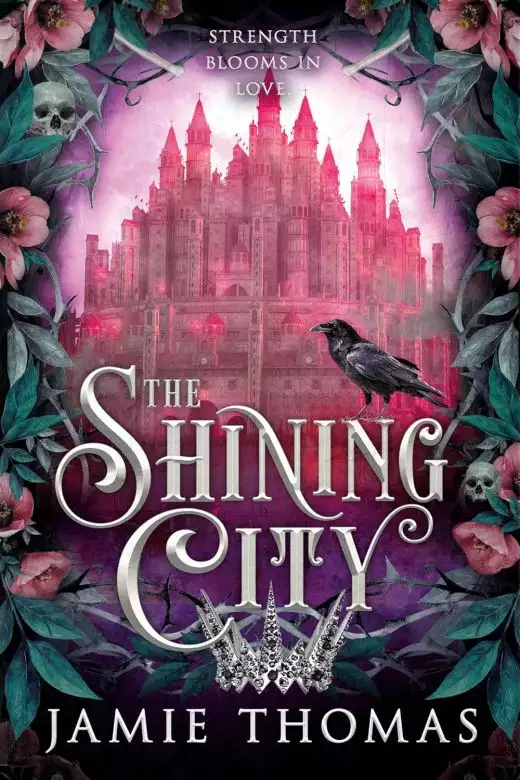
A mage and a lost prince will save the kingdoms or destroy them in this breathtaking conclusion to the Asperfell trilogy.
For more from Jamie Thomas, check out:
Asperfell
The Forest Kingdom
Release date: June 23, 2026
Publisher: Orbit
Print pages: 450
* BingeBooks earns revenue from qualifying purchases as an Amazon Associate as well as from other retail partners.
Reader buzz
 Please log in to recommend or discuss...
Author updates
Close
The Shining City
Jamie Thomas
I’d hardly expected our return to be met with triumphant celebration.
We were, after all, convicted criminals and traitors to the crown. But in five hundred years no one had ever returned from the Mage prison of Asperfell, so who could have possibly known what our reception might be? Still, nature and the Old Gods might’ve shown us at least a modicum of respect.
Beneath the temple of the Dae Spira, the wellspring of magic, the Incuna, had thinned the veil between the world of Asperfell and our own, and when with our own magic we pierced it and summoned a Gate, all any of us could make out was the vague inclination of shadows. In crossing, we might’ve stumbled from the caves into the parlor of some lordling sympathetic to Tiralaen’s tyrant king or walked right off the edge of a cliff to be claimed by the ravine below.
But when the four of us clasped hands and stepped into the unknown that felt as familiar as the magic singing in my blood, humming in my veins, it was the quiet dark of a familiar forest that enveloped us, a gentle, welcoming embrace.
My breath caught at the sight of the ancient tree before me, branches spreading from its thick, gnarled trunk, so low and nearly parallel to the ground, and I stumbled forward and sunk my fingers into the softly draping coat of moss it wore. I knew this forest as well as I knew myself. As a child, it had raised me. As a Mage, it would shelter me.
I’d come home, and the sky above the Morwood split open in welcome.
“Are you kidding me?” Arlo shouted to the sky as we darted for cover beneath the canopy of glossy, green leaves, Vindar shaking the unwelcome water from his oil-slick fur whilst Phyra fussed and fretted over the general state of his wellbeing and Arlo fussed over her and I shook the rain from the hood of my cloak and attempted to cover my curls before they became more tangled than the Morwood.
I’d let go of Elyan’s hand to hold the skirt of my traveling gown away from the sopping ground as I’d run, but when I turned, expecting to find him once more beside me, I realized he’d not followed us.
The rightful king of the land upon which we stood remained in the middle of the clearing, one hand pressed upon his heart and his hood pushed back, bearing his face to the rain. It streamed over the sharp planes and angles of his severe beauty, soaking his hair, his cloak, and yet he cared not. The corners of his mouth curled up in a smile, and while I watched, thinking he’d gone quite insane somewhere between Syr’Aliem and Tiralaen, his deep rumbling laughter filled the Morwood.
The banished prince, the Raven King of Asperfell, had come home at last.
“Elyan, you fool!” I shouted even as my own face split in a joyful smile. “Perhaps you haven’t noticed, but it’s raining!”
He lowered his head, his extraordinary eyes meeting my own, and held out his hand. I laughed because it was absurd, and because it was absurd and I positively adored it and him, I dashed back into the clearing.
“Good sign or ill?” he asked me as I slid my hand into his and let the rain cover me as it did him. It mattered little; we were Mages. ’Twas but a drying spell we would need once he had soaked himself through to his heart’s content, and Elyan was the most gifted Mage of my acquaintance.
A great lover of growing things, I had always thought of rain as renewal, vital and necessary, and was Elyan’s return to his homeland anything but the same?
“Good,” I therefore told him with a firm nod.
As it happened, I was quite mistaken.
The storm was unrelenting, leaving us sopping wet and miserable as we slogged our way through the muddied underbrush, seeking the main road that wound through the Morwood from Gryfeld to the base of the Sundering. Orwynd, my ancestral home, was to the south, though I did not know how far on foot. We’d traveled north from Asperfell to reach Syr’Aliem, but it was anyone’s guess how close to the Sundering we’d come this side of the Gate.
We slept beneath shelters of Arlo’s making and exhausted the supplies given us by Nymet Nata until at last, after three days, the deluge abated, the trees began to clear, and we stumbled upon the trunk road paved in ancient stone.
No less than ten crudely painted signs of varying sizes were nailed haphazardly to a leaning post half rotted in the ground and pointed the way to the nearest villages, all known to me. I gave a great shout and pelted out of the underbrush toward it, and—yes! Yes, it was the Sheffling Crossroads! Laughing like a woman gone mad, I fell upon the post and traced with eager, shaking fingers the names of villages well known to me and the miles that stood between us. I laughed and I cried, and my fingers trembled upon the wood, for although I’d believed we’d at last come home, until that moment I’d not known it.
“Irynsmead!” exclaimed Arlo. “There’s an inn in Irynsmead that makes a pie I would kill the lot of you for. We’re definitely staying there tonight.”
“We’re not likely to be recognized,” I said. “I haven’t been this far north in years.”
“But what of Vindar?” Phyra stood near the Phaelor’s massive head, dark eyes pleading. “I cannot simply leave him.”
“Sweetheart, he’s a wild animal, even if he is somewhat dead. He’ll be fine for the night.”
There was little any of us could do to dissuade him, and besides, after sleeping on the ground beneath the roots of trees and then within the gilded walls of a false kingdom, we were all of us desperate for somewhat in between, somewhat of the life we’d known before Asperfell.
Phyra stroked his oil-black fur and told him to stay, promised that we would return, and when he slunk off into the underbrush, I took her hand and squeezed it tight.
“It will all be well,” I reassured her.
“Oh, I know,” she answered softly. “Fool is he who tries to harm him, for he shall have to face me.”
I winced. “Then let us hope the forest remains blessedly free of fools tonight.”
I’d been to the village of Irynsmead once when there had been a traveling festival of wares and my aunt had wished to see what cloth might be had, and I remembered it with some fondness for the main square boasted a rather charming fountain of maidens at play. My aunt had not cared much for it, but Layn had come with us, and she and I shared a cinnamon bun and a cup of honeywine. We tossed coins into the water gone muddy from the feet of children who splashed about in it until, shrieking with jubilation, they were chased from it by a shopkeeper with a broom and a mighty bellow. The moment he turned his back they snuck back in, hiding giggles behind their hands.
There was no such fountain now.
In its place stood a crudely constructed wooden platform supporting a heavy beam from which hung three bodies: two women, one man. I was no expert, despite oft communicating with the shade of a Mage’s magic, but from the purple bloating of their ruined faces, they’d been dead several weeks now.
About their necks hung signs with a symbol painted in blood, perhaps their own: the Magemark, two Ms interlocking, scrawled across the doors of suspected Mages in Iluviel when I was a child.
The fetid stench of rotting flesh hung ripe in the air, and those who crossed the square did so with the detachment of those long used to the aroma and to the horrifying sight. A flame of rage bloomed within me. Why did they allow the dead to suffer such indignities when ’twould be nothing to cut them down, to give them a proper burial?
“It is a disgrace to treat the dead thus,” said Phyra, and from the rage in her dark eyes I feared she meant to climb upon the scaffolding in front of the entire village and unleash her terrible power.
I set my hand gently on Phyra’s arm. “Careful, now.”
Mageguard in obsidian armor bearing the sigil of the raven and thorn were stationed at every point around the square, heavily armed with gleaming swords crafted by Alchemists; the sight of them reminded me of Thaniel, and my heart constricted terribly within the cage of my ribs in longing for my friend who had chosen to remain behind in Syr’Aliem for love.
Arlo tugged the hood of his cloak over his head. “Inn’s this way.”
Phyra hesitated, eyes flickering once more to the grotesque sight of the dead, and a dread trickled down my spine as black began to seep from her pupils, mottling the brown of her irises and spreading through the whites of her eyes like ink through water.
“Phyra,” I said, my hand closing around her wrist. “Come back.”
The black stilled, swirling but no longer spreading, and a moment passed, then another before with a great, shuddering sigh, she returned to me. “It’s not the right time,” she murmured.
“The right time for what?”
But she’d already shaken her head free from any shadows that still clung and stepped forward to take Arlo’s proffered arm as he hurried them from the square. I made to follow, tucking my hair into my hood as it was easily my most distinguishable feature, but Elyan did not.
Elyan, who stood to lose the most should he be discovered out in the open like this, remained rooted before the gallows as though some terrible magic held him fast.
“These are my people,” said he, and his voice was as low and broken as he was in that moment. “These are my people, and I have failed them.”
I yearned to wrap my arms around his waist, to press my face against his broad back and hold him fast until the heaviness in his heart abated at least somewhat, though I knew such comfort would not last. But because passersby were beginning to stare at the unusually tall figure with the striking face beneath the wide hood of his cloak, I merely laid my hand upon his arm.
He exhaled, a low, shuddering sound that I felt as much as heard. Then he swathed his angular features within the black of his cloak, and together we left the carnage of his brother’s rule behind us.
There was only one room available at the Crimson Key, and it was the attic.
We were led up a set of winding, rickety steps by the wife of the innkeeper, a golden-haired, buxom woman who made eyes at Arlo until we reached a door that required her to bash her hip against it repeatedly until it came unstuck.
We could not very well stop her from lighting the fire in the hearth without revealing ourselves as Mages, and so we stood by as she swayed her ample behind in the air and fussed about with the kindling until the sweet tang of woodsmoke filled the room that, for all its size, was sparsely furnished. There was a small table set with four wobbly chairs beneath one of the only two windows, a small bureau with a desilverized mirror, and beneath a steepled ceiling interlaced with thick, dark beams heavy with dust and cobwebs sat a single, solitary bed.
Arlo took one look at it, then turned a blinding grin upon the poor, hapless innkeeper’s wife. “I don’t suppose there’s a second bed hiding in here somewhere?”
His face fell when she reached beneath the bed and dragged from beneath it a stained, lumpy mattress.
“You and Phyra will take the bed, of course,” Elyan said to me once she’d gone. “Arlo and I will take…whatever this is.”
Arlo sighed. “Must we?”
“Right, then,” I said, slipping my hand into the crook of Elyan’s arm. “Now that’s settled, let’s go down, shall we?”
I’d been in many a tavern, but never under circumstances that might have allowed me to enjoy the strains of a poorly trained fiddle and drink cider from a pewter tankard.
We’d been but children, Livia and I, when my father had spirited us from Iluviel—or was it my uncle? The memories of those weeks were a hazy coalescence of uncomfortably long carriage rides and nights spent confined within our lodgings eating hearty stews and dozing by the fire to the sounds of Livia’s quiet sobs while travelers below shed their cloaks and laid their burdens down amidst cards and coin and raucous laughter. She’d been terribly distraught at being ripped from the bosom of the court she loved; a court she would discover much too late was entirely unworthy of her tears.
I’d snuck out one night after she’d wept herself to sleep, wishing no doubt to see what all the fuss was about, but there was something else tugging stubbornly at the threads of my memory, something else I’d sought in that tavern, but it refused to surface and so I shook it away.
Under ordinary circumstances I would have been eager—ecstatic, even, given how fervently Arlo had waxed poetic about the pie that awaited us—but the gruesome scene in the square had cast a pall over the evening such that weeping seemed the only appropriate activity.
But we required information, and we would not find it huddled in front of the meager fire.
“Regrettably, I will not be joining you,” Elyan said.
“Because you might be recognized?”
“Because the spell of concealment required to shield our magic from the Mageguard in the square will require my full concentration,” he replied. He looped one of my curls around his finger and tugged gently. “You must be my eyes and ears tonight.”
“But you always say I would make a terrible spy!”
“Observe and listen to what is offered, but offer nothing of yourself, and however difficult it may be, do not call attention to yourself.” His expression grew pained. “On second thought, maybe I should go…”
“Have no fear, your highness—it’ll be grand.” Arlo slapped Elyan soundly on the back. “Just keep us hidden. As for you.” He pointed at Phyra. “Change out of those wet clothes—I can hear you shivering from here. Get some rest, and I’ll have them send up a hot meal.”
She stood at the window, gaze fixed below, but I did not think it was the Mageguard who occupied her thoughts.
“It’s awfully quiet,” I said as Arlo and I descended from the attic into the tavern below. “Granted my experience with taverns is limited, but I recall them being quite lively—you know, laughing, singing, chairs toppling over…”
His mouth flattened into a tight line as we rounded the bend at the end of the stairs and the room came fully into view. “They usually are.”
Dark wood beams spanned a low ceiling, meeting walls made of stones and mortar, and the last of the day’s meager light struggled to penetrate the grimy, leaded glass panes of the windows. The fire in the hearth was somewhat to blame. The flue smelled as though it hadn’t been properly scoured in ages, and I wrinkled my nose at the smoke hanging in the air; I’d become accustomed, it seemed, to the cleanliness of Magefire.
At the bar with its handsomely carved back displaying jugs of ale and bottles of wine and whisky and cider, a hulking man filled pewter tankards and barked orders at the women ferrying them to the round, rough-hewed tables. Their occupants were hunched over bowls of stew and pottage, muttering amongst themselves as they scraped them clean with chunks of bread. Their expressions were as dark as the shadows gathered in the corners of the room, keeping company with the cobwebs.
“It’s not like what I thought it would be at all,” I said, deflating in bitter disappointment.
“There,” Arlo said, nudging me toward a small table tucked away in a corner where we could see the whole of the room. As I slid into the rickety chair a wet rag slapped the tabletop as the innkeeper’s wife set about wiping away the sticky residue left by its previous patrons.
“What can I get you?” she asked Arlo without sparing me so much as a glance. “We’re known for our pie round these parts.”
“Oh, I know it.” Arlo winked, she swooned, and I rolled my eyes. “We’ll take two, and wine,” he said. “And send the same to my companions upstairs in your lovely attic, if you would be so kind.”
As she shuffled away, I chanced a glance about the room. Our arrival had been marked with suspicion—we were, after all, strangers in fine clothing, appearing without warning or reason and paying for our lodging and supper with gemstones. They watched us through baleful slits, the denizens of Irynsmead, as the innkeeper’s wife plunked a dusty bottle and two pewter goblets down on our table followed by pies fresh from the oven, steam rising from a flaky, golden crust that made my mouth water instantly. They watched as Arlo filled our goblets and we attempted to unscrew our faces from the shock of the sourest wine either of us had ever tasted, and they watched as the pie more than made up for it, the groan that spilled from my lips positively indecent.
“It’s so good,” I whimpered.
I think he might’ve said “I know,” but the words were lost around a mouthful of flaky crust and piping hot, savory filling of meat and root vegetables.
They watched and they whispered while we ate and drank and tried to avoid their eyes, and when they had either decided we posed no threat or were less interesting than their own troubles, they went back to their tankards and grumblings, and it was our turn to watch, and to listen.
The scrape of a chair upon stone, the jangle of coin, and deft hands shuffling a deck of cards; Arlo’s eyes gleamed as a group of men assembled at a table across the room and a stocky man with a weathered face and a head of black hair and beard to match began to deal.
“And there’s our opening.” He drained his goblet of the sour wine, stood, and made his way over to the table, leaving me to stumble afterward as I shoved the last of the pie into my mouth.
“Room for one more?” Arlo asked as we approached.
The black-haired man raised his bushy eyebrows. “Do you have coin?”
“In a manner of speaking,” Arlo said, and set an emerald dancing across his knuckles, a flash of green in the candlelight.
The man shook his head. “Coin only.”
“Now Rodrick,” said the man at his side. “Let’s not be too hasty.”
“What use do you have for a shiny bauble like that?” Rodrick scowled.
“My wife’s sister is in Fevrel. I reckon she could find a buyer for it next market day.”
“And you lot?” Rodrick addressed the rest of the table.
When none of them offered any objection, Arlo grabbed a chair from a nearby table and the rest shoved over to allow him room to wedge it in.
“You, girl,” Rodrick barked, and he flicked a coin in my general direction. It struck my bodice and rolled away. “Fetch us a bottle of whisky.”
My mouth fell open in outrage. “I am not—”
“At all opposed!” Arlo said, too loud, and swiped the coin from the ground before steering me away from the table by my elbow. “Play along or we’ll lose our chance.”
“He called me girl.”
“Yes, well, he’s a prick, but we need this, Briony.”
“And he needs his face rearranged.”
“Go,” he groaned “I beg you.”
At the bar, I exchanged the man’s coin for a squat, dusty bottle and slammed it down on the table next to the pile of gold coins and other treasures that had been wagered for the first round before sidling up beside Arlo, leaning over so that I was eye level with the cards in his hand.
An embarrassingly long moment of silence followed before I looked up and realized that every man at the table was staring at me.
“What are you still doing here?” Rodrick asked.
My fingertips itched with magic, and I imagined sending the bottle hurtling into his smug face, only Arlo looked as though he might do the same to me if I did not play my part, and so I buried my hands in my skirt and stomped over to a small, round table beneath a bank of leaded glass windows. I could make out bits of conversation between the shuffling of cards and the clank of coins as bets were made, but frustratingly little was said about the bodies hanging in the square, or the Mageguard posted around it.
As if I’d conjured it, a goblet of wine appeared before me, and a woman fell into the chair opposite mine.
“That’s a fancy frock,” she said by way of greeting. “You must not be from around here.”
“Passing through,” I replied. A tentative sip of the wine revealed it to be no better than the swill I’d consumed earlier, and she grinned when I set it back down.
“I’m Mae.”
“Briony,” I answered before I’d thought better of it, but if the name meant anything to her, she gave no indication.
“That’s my husband,” Mae said, jerking her chin toward Rodrick.
“My condolences,” I said.
She could have emptied her own glass over my head and I would not have blamed her in the slightest, but instead she laughed, a loud, raucous sound that was entirely at home in my tavern fantasies, and I flushed. “He can be quite the curmudgeon,” she said. “But he means well.”
“I shall have to take your word for it.”
“He fancies himself an excellent card player,” she continued, “but I’d wager he’s about to lose everything to that husband of yours.”
Sure enough, groans followed the hand Arlo had just played, and he stretched out eager hands to collect the winnings.
“He is not my husband.” I shook my head. “But you’re right to be wary—his skill at the gaming table is unmatched.”
“I can’t watch,” she said, wincing, and stood. “Come on—if he’s not your husband, you needn’t watch, either.”
Taking my wine, I followed her to a table where other women sat crushing walnuts, picking the bits of meat from the shells and piling them into a shallow wood bowl.
“Shove over,” Mae said, nudging another woman out of her chair and into the one next to her. “This is Briony. She’s just passing through, and no—he’s not her husband.”
The youngest women at the table giggled behind their hands as Mae passed me a pile of walnuts, and I drained the rest of the sour wine in my goblet and slammed it down upon the nut the way the others did. Had I the use of my magic, I might’ve performed a spell of unlocking upon its seam; with my luck, I also would have split the table right down the center, so perhaps the need to conceal my magic was for the best.
“So,” I said, separating the jagged bits of shell from the nutmeat. “How long have Mageguard been in Irynsmead?”
“They used to show up every week or two,” the woman beside me said. She was older than Mae, with gray curls pinned around her sweet, round face. “And move on to another village, but about six months ago, all that changed.”
Across the table, a woman near my own age pinched her features in disgust. “They live here now, in the village.”
“They live here?”
She nods. “Quartered in our homes.”
“Why? Surely there are no Mages left for them to kill in a place as small as Irynsmead. I’m amazed you found the three currently decorating your town square.”
The woman with the gray curls set down the nut in her hand. “Where did you say you hailed from, Briony?”
“I, ah…grew up in the countryside,” I said. “Nearest village was three days away. I didn’t get out much.”
“No wonder.” She shook her head. “Those aren’t Mages.”
“Mae,” said one of the other women sharply.
“Oh, come off it, Greta. She ought to know. Everyone ought to know.”
I leaned forward. “If they aren’t Mages, who are they?”
The tavern door swung open, striking the stone wall with such force that it rattled in its hinges, and the room fell silent as the three Mageguard from the square strode inside.
The one in front, ostensibly the leader, stepped forward, his hand resting upon the pommel of a wickedly curved obsidian sword, the sort that used to both terrify and fascinate me as a child growing up in the Citadel. At the gaming table, hands and bets were forgotten, and when Arlo’s gaze met mine, there was a warning there, and a plea.
“Gentlemen.” The innkeeper’s wife approached. “Can I get you anything?”
“You know you can’t, Lisbeth,” the Mageguard leader grunted.
Lisbeth dipped one shoulder. “No harm in asking.”
“You always do, and the answer’s always the same.”
“Suit yourselves.”
The Mageguard leader’s gaze rose over her golden head, and he surveyed the room with a curl of disdain in his lip. “Curfew’s in an hour,” he barked. “Finish stuffing your gobs and clear out.”
He turned, his men turned with him, and I thought we’d gotten away with it, that we were safe, until he stopped. His head snapped around, his eyes narrowed, and time stood still as they fell on me.
“You,” the Mageguard leader barked, stepping back into the room. “With all that red hair. Don’t recognize you. What are you doing in Irynsmead?”
“Passing through.”
Firelight gilded his obsidian armor as he stepped closer, and my gaze fell to the sword at his hip, a sword I knew could end my life in the space of a breath.
“A woman, traveling alone?”
“I’m not alone. My, uh…brother—he’s just there.”
Arlo swore, then plastered a bright smile on his face and waved from the gambling table. Any evidence of their nefarious activities—ostensibly forbidden—had been swept away.
But the man hardly spared him a glance; his eyes were fixed upon me, searching my face, and the hot shock of fear sent my heart racing as I realized it was magic he sought. Had it betrayed me somehow, despite Elyan’s spell? Keeping my face smoothed in guile, almost dull in my sanguinity, I sought it within, churning in answer to the threat of the Mageguard, and tried to make it small, insignificant, undeserving of their attention.
He drew close, so close, and I didn’t dare breathe.
“And where does your journey take you?”
“We leave for Gansey upon the morning.”
“I don’t know how they do things in Gansey, but in Irynsmead we have a curfew. Best make sure you abide by it, or you’ll find yourself clapped in the stocks.”
I swallowed, hard. “I will.”
“See that you do.”
He turned on his heel and strode from the tavern, the other two Mageguard at his heels, and it was not until the door had closed that the entire room seemed to exhale as though a great weight had lifted.
“Curfew?” I asked once chatter resumed once more: subdued, resentful. Some patrons didn’t bother waiting. Tossing a few coins upon their tables, they slouched from the tavern into the night, and I wondered how many returned to havens now held hostage.
Mae’s face twisted. “Nine o’clock. Whole town shuts down and if you’re caught out on the street, well…best not be.”
“What’s happened?” I said, aghast. “It’s only been—what, nine months? Perhaps ten?”
Mae tilted her head. “Since what?”
“Nothing. What you said before, about the people hanging in the square—if they aren’t Mages, who are they?”
“Folk who helped them. Poor bastards.”
“Helped them?”
“We’re on the route,” her voice dropped to a whisper. “Or we were.”
“The route,” I said slowly. “But you cannot mean…to Sidonia?”
“Hush!” Mae clapped a roughened hand over my mouth, eyes darting about the room. “You never know who might be lurking about, even with the Mageguard gone.”
My indiscretion could not quell the smile blooming behind her hand, because if Mages were still being smuggled out of Tiralaen, it meant that I’d family still living, still fighting.
And it meant Elyan had allies.
Even in death, my father’s goodness, and his unwavering courage, lived on.
Back in the attic, we passed around a flagon of sour wine as we sat around the fire in the grate—conjured, as we’d not been left any wood—and I told Elyan and Phyra all I had learned from Mae and the rest of the women in the tavern while we’d crushed walnuts.
“Mages are still being smuggled out of Tiralaen and into Sidonia,” I said. “Don’t you see, it must be my Uncle Geordan—no one else knew of my father’s arrangement with Gwynliere!”
Elyan’s gaze had remained fixed upon the fire as I spoke, the light softening the severe angles of his face. He drained the sour wine in his goblet and cast it aside. “And has Gwyn finally come out from behind her mountain and entered the fray?”
“Yes,” I hedged, “and no. She still refuses to engage Keric, but neither can he recoup the Mages who’ve fled beyond the Sundering.”
“Of course he cannot. The Keep of Sidonia is the most heavily fortified and formidable fortress on the continent. It has never been breached.”
“To that end, he’s doing everything he can to apprehend them before they reach it.”
Arlo whistled. “You got all of this from a bunch of women crushing walnuts?”
“Women hear things men do not,” I replied. “Because men never stop talking long enough to listen.”
“Do not ever change, my love,” Elyan told me as he reached over to slap Arlo on the back as he choked upon his wine between bouts of laughter.
We winced our way through the rest of it as I recalled how Mageguard and soldiers now demanded quarter throughout the northern region of Tiralaen, patrolling the roads, terrorizing the villages, and swarming all possible roads through the mountain range.
“Viscario,” said Elyan.
“What about the bastard?” Arlo frowned.
“At Asperfell, he fed off the magic of the Mages there to prolong his life. It stands to reason that with that fount now denied him, he would seek another source.”
“He must be furious with Keric,” I said. “He killed ever so many of us.”
“We need to get out of this village at first light.”
“And go where?” Arlo asked.
“Orwynd,” I declared. “My ancestral home. It’s not far from here—perhaps two days’ travel south by foot. I doubt Keric allowed my aunt to continue occupying it, bu
We were, after all, convicted criminals and traitors to the crown. But in five hundred years no one had ever returned from the Mage prison of Asperfell, so who could have possibly known what our reception might be? Still, nature and the Old Gods might’ve shown us at least a modicum of respect.
Beneath the temple of the Dae Spira, the wellspring of magic, the Incuna, had thinned the veil between the world of Asperfell and our own, and when with our own magic we pierced it and summoned a Gate, all any of us could make out was the vague inclination of shadows. In crossing, we might’ve stumbled from the caves into the parlor of some lordling sympathetic to Tiralaen’s tyrant king or walked right off the edge of a cliff to be claimed by the ravine below.
But when the four of us clasped hands and stepped into the unknown that felt as familiar as the magic singing in my blood, humming in my veins, it was the quiet dark of a familiar forest that enveloped us, a gentle, welcoming embrace.
My breath caught at the sight of the ancient tree before me, branches spreading from its thick, gnarled trunk, so low and nearly parallel to the ground, and I stumbled forward and sunk my fingers into the softly draping coat of moss it wore. I knew this forest as well as I knew myself. As a child, it had raised me. As a Mage, it would shelter me.
I’d come home, and the sky above the Morwood split open in welcome.
“Are you kidding me?” Arlo shouted to the sky as we darted for cover beneath the canopy of glossy, green leaves, Vindar shaking the unwelcome water from his oil-slick fur whilst Phyra fussed and fretted over the general state of his wellbeing and Arlo fussed over her and I shook the rain from the hood of my cloak and attempted to cover my curls before they became more tangled than the Morwood.
I’d let go of Elyan’s hand to hold the skirt of my traveling gown away from the sopping ground as I’d run, but when I turned, expecting to find him once more beside me, I realized he’d not followed us.
The rightful king of the land upon which we stood remained in the middle of the clearing, one hand pressed upon his heart and his hood pushed back, bearing his face to the rain. It streamed over the sharp planes and angles of his severe beauty, soaking his hair, his cloak, and yet he cared not. The corners of his mouth curled up in a smile, and while I watched, thinking he’d gone quite insane somewhere between Syr’Aliem and Tiralaen, his deep rumbling laughter filled the Morwood.
The banished prince, the Raven King of Asperfell, had come home at last.
“Elyan, you fool!” I shouted even as my own face split in a joyful smile. “Perhaps you haven’t noticed, but it’s raining!”
He lowered his head, his extraordinary eyes meeting my own, and held out his hand. I laughed because it was absurd, and because it was absurd and I positively adored it and him, I dashed back into the clearing.
“Good sign or ill?” he asked me as I slid my hand into his and let the rain cover me as it did him. It mattered little; we were Mages. ’Twas but a drying spell we would need once he had soaked himself through to his heart’s content, and Elyan was the most gifted Mage of my acquaintance.
A great lover of growing things, I had always thought of rain as renewal, vital and necessary, and was Elyan’s return to his homeland anything but the same?
“Good,” I therefore told him with a firm nod.
As it happened, I was quite mistaken.
The storm was unrelenting, leaving us sopping wet and miserable as we slogged our way through the muddied underbrush, seeking the main road that wound through the Morwood from Gryfeld to the base of the Sundering. Orwynd, my ancestral home, was to the south, though I did not know how far on foot. We’d traveled north from Asperfell to reach Syr’Aliem, but it was anyone’s guess how close to the Sundering we’d come this side of the Gate.
We slept beneath shelters of Arlo’s making and exhausted the supplies given us by Nymet Nata until at last, after three days, the deluge abated, the trees began to clear, and we stumbled upon the trunk road paved in ancient stone.
No less than ten crudely painted signs of varying sizes were nailed haphazardly to a leaning post half rotted in the ground and pointed the way to the nearest villages, all known to me. I gave a great shout and pelted out of the underbrush toward it, and—yes! Yes, it was the Sheffling Crossroads! Laughing like a woman gone mad, I fell upon the post and traced with eager, shaking fingers the names of villages well known to me and the miles that stood between us. I laughed and I cried, and my fingers trembled upon the wood, for although I’d believed we’d at last come home, until that moment I’d not known it.
“Irynsmead!” exclaimed Arlo. “There’s an inn in Irynsmead that makes a pie I would kill the lot of you for. We’re definitely staying there tonight.”
“We’re not likely to be recognized,” I said. “I haven’t been this far north in years.”
“But what of Vindar?” Phyra stood near the Phaelor’s massive head, dark eyes pleading. “I cannot simply leave him.”
“Sweetheart, he’s a wild animal, even if he is somewhat dead. He’ll be fine for the night.”
There was little any of us could do to dissuade him, and besides, after sleeping on the ground beneath the roots of trees and then within the gilded walls of a false kingdom, we were all of us desperate for somewhat in between, somewhat of the life we’d known before Asperfell.
Phyra stroked his oil-black fur and told him to stay, promised that we would return, and when he slunk off into the underbrush, I took her hand and squeezed it tight.
“It will all be well,” I reassured her.
“Oh, I know,” she answered softly. “Fool is he who tries to harm him, for he shall have to face me.”
I winced. “Then let us hope the forest remains blessedly free of fools tonight.”
I’d been to the village of Irynsmead once when there had been a traveling festival of wares and my aunt had wished to see what cloth might be had, and I remembered it with some fondness for the main square boasted a rather charming fountain of maidens at play. My aunt had not cared much for it, but Layn had come with us, and she and I shared a cinnamon bun and a cup of honeywine. We tossed coins into the water gone muddy from the feet of children who splashed about in it until, shrieking with jubilation, they were chased from it by a shopkeeper with a broom and a mighty bellow. The moment he turned his back they snuck back in, hiding giggles behind their hands.
There was no such fountain now.
In its place stood a crudely constructed wooden platform supporting a heavy beam from which hung three bodies: two women, one man. I was no expert, despite oft communicating with the shade of a Mage’s magic, but from the purple bloating of their ruined faces, they’d been dead several weeks now.
About their necks hung signs with a symbol painted in blood, perhaps their own: the Magemark, two Ms interlocking, scrawled across the doors of suspected Mages in Iluviel when I was a child.
The fetid stench of rotting flesh hung ripe in the air, and those who crossed the square did so with the detachment of those long used to the aroma and to the horrifying sight. A flame of rage bloomed within me. Why did they allow the dead to suffer such indignities when ’twould be nothing to cut them down, to give them a proper burial?
“It is a disgrace to treat the dead thus,” said Phyra, and from the rage in her dark eyes I feared she meant to climb upon the scaffolding in front of the entire village and unleash her terrible power.
I set my hand gently on Phyra’s arm. “Careful, now.”
Mageguard in obsidian armor bearing the sigil of the raven and thorn were stationed at every point around the square, heavily armed with gleaming swords crafted by Alchemists; the sight of them reminded me of Thaniel, and my heart constricted terribly within the cage of my ribs in longing for my friend who had chosen to remain behind in Syr’Aliem for love.
Arlo tugged the hood of his cloak over his head. “Inn’s this way.”
Phyra hesitated, eyes flickering once more to the grotesque sight of the dead, and a dread trickled down my spine as black began to seep from her pupils, mottling the brown of her irises and spreading through the whites of her eyes like ink through water.
“Phyra,” I said, my hand closing around her wrist. “Come back.”
The black stilled, swirling but no longer spreading, and a moment passed, then another before with a great, shuddering sigh, she returned to me. “It’s not the right time,” she murmured.
“The right time for what?”
But she’d already shaken her head free from any shadows that still clung and stepped forward to take Arlo’s proffered arm as he hurried them from the square. I made to follow, tucking my hair into my hood as it was easily my most distinguishable feature, but Elyan did not.
Elyan, who stood to lose the most should he be discovered out in the open like this, remained rooted before the gallows as though some terrible magic held him fast.
“These are my people,” said he, and his voice was as low and broken as he was in that moment. “These are my people, and I have failed them.”
I yearned to wrap my arms around his waist, to press my face against his broad back and hold him fast until the heaviness in his heart abated at least somewhat, though I knew such comfort would not last. But because passersby were beginning to stare at the unusually tall figure with the striking face beneath the wide hood of his cloak, I merely laid my hand upon his arm.
He exhaled, a low, shuddering sound that I felt as much as heard. Then he swathed his angular features within the black of his cloak, and together we left the carnage of his brother’s rule behind us.
There was only one room available at the Crimson Key, and it was the attic.
We were led up a set of winding, rickety steps by the wife of the innkeeper, a golden-haired, buxom woman who made eyes at Arlo until we reached a door that required her to bash her hip against it repeatedly until it came unstuck.
We could not very well stop her from lighting the fire in the hearth without revealing ourselves as Mages, and so we stood by as she swayed her ample behind in the air and fussed about with the kindling until the sweet tang of woodsmoke filled the room that, for all its size, was sparsely furnished. There was a small table set with four wobbly chairs beneath one of the only two windows, a small bureau with a desilverized mirror, and beneath a steepled ceiling interlaced with thick, dark beams heavy with dust and cobwebs sat a single, solitary bed.
Arlo took one look at it, then turned a blinding grin upon the poor, hapless innkeeper’s wife. “I don’t suppose there’s a second bed hiding in here somewhere?”
His face fell when she reached beneath the bed and dragged from beneath it a stained, lumpy mattress.
“You and Phyra will take the bed, of course,” Elyan said to me once she’d gone. “Arlo and I will take…whatever this is.”
Arlo sighed. “Must we?”
“Right, then,” I said, slipping my hand into the crook of Elyan’s arm. “Now that’s settled, let’s go down, shall we?”
I’d been in many a tavern, but never under circumstances that might have allowed me to enjoy the strains of a poorly trained fiddle and drink cider from a pewter tankard.
We’d been but children, Livia and I, when my father had spirited us from Iluviel—or was it my uncle? The memories of those weeks were a hazy coalescence of uncomfortably long carriage rides and nights spent confined within our lodgings eating hearty stews and dozing by the fire to the sounds of Livia’s quiet sobs while travelers below shed their cloaks and laid their burdens down amidst cards and coin and raucous laughter. She’d been terribly distraught at being ripped from the bosom of the court she loved; a court she would discover much too late was entirely unworthy of her tears.
I’d snuck out one night after she’d wept herself to sleep, wishing no doubt to see what all the fuss was about, but there was something else tugging stubbornly at the threads of my memory, something else I’d sought in that tavern, but it refused to surface and so I shook it away.
Under ordinary circumstances I would have been eager—ecstatic, even, given how fervently Arlo had waxed poetic about the pie that awaited us—but the gruesome scene in the square had cast a pall over the evening such that weeping seemed the only appropriate activity.
But we required information, and we would not find it huddled in front of the meager fire.
“Regrettably, I will not be joining you,” Elyan said.
“Because you might be recognized?”
“Because the spell of concealment required to shield our magic from the Mageguard in the square will require my full concentration,” he replied. He looped one of my curls around his finger and tugged gently. “You must be my eyes and ears tonight.”
“But you always say I would make a terrible spy!”
“Observe and listen to what is offered, but offer nothing of yourself, and however difficult it may be, do not call attention to yourself.” His expression grew pained. “On second thought, maybe I should go…”
“Have no fear, your highness—it’ll be grand.” Arlo slapped Elyan soundly on the back. “Just keep us hidden. As for you.” He pointed at Phyra. “Change out of those wet clothes—I can hear you shivering from here. Get some rest, and I’ll have them send up a hot meal.”
She stood at the window, gaze fixed below, but I did not think it was the Mageguard who occupied her thoughts.
“It’s awfully quiet,” I said as Arlo and I descended from the attic into the tavern below. “Granted my experience with taverns is limited, but I recall them being quite lively—you know, laughing, singing, chairs toppling over…”
His mouth flattened into a tight line as we rounded the bend at the end of the stairs and the room came fully into view. “They usually are.”
Dark wood beams spanned a low ceiling, meeting walls made of stones and mortar, and the last of the day’s meager light struggled to penetrate the grimy, leaded glass panes of the windows. The fire in the hearth was somewhat to blame. The flue smelled as though it hadn’t been properly scoured in ages, and I wrinkled my nose at the smoke hanging in the air; I’d become accustomed, it seemed, to the cleanliness of Magefire.
At the bar with its handsomely carved back displaying jugs of ale and bottles of wine and whisky and cider, a hulking man filled pewter tankards and barked orders at the women ferrying them to the round, rough-hewed tables. Their occupants were hunched over bowls of stew and pottage, muttering amongst themselves as they scraped them clean with chunks of bread. Their expressions were as dark as the shadows gathered in the corners of the room, keeping company with the cobwebs.
“It’s not like what I thought it would be at all,” I said, deflating in bitter disappointment.
“There,” Arlo said, nudging me toward a small table tucked away in a corner where we could see the whole of the room. As I slid into the rickety chair a wet rag slapped the tabletop as the innkeeper’s wife set about wiping away the sticky residue left by its previous patrons.
“What can I get you?” she asked Arlo without sparing me so much as a glance. “We’re known for our pie round these parts.”
“Oh, I know it.” Arlo winked, she swooned, and I rolled my eyes. “We’ll take two, and wine,” he said. “And send the same to my companions upstairs in your lovely attic, if you would be so kind.”
As she shuffled away, I chanced a glance about the room. Our arrival had been marked with suspicion—we were, after all, strangers in fine clothing, appearing without warning or reason and paying for our lodging and supper with gemstones. They watched us through baleful slits, the denizens of Irynsmead, as the innkeeper’s wife plunked a dusty bottle and two pewter goblets down on our table followed by pies fresh from the oven, steam rising from a flaky, golden crust that made my mouth water instantly. They watched as Arlo filled our goblets and we attempted to unscrew our faces from the shock of the sourest wine either of us had ever tasted, and they watched as the pie more than made up for it, the groan that spilled from my lips positively indecent.
“It’s so good,” I whimpered.
I think he might’ve said “I know,” but the words were lost around a mouthful of flaky crust and piping hot, savory filling of meat and root vegetables.
They watched and they whispered while we ate and drank and tried to avoid their eyes, and when they had either decided we posed no threat or were less interesting than their own troubles, they went back to their tankards and grumblings, and it was our turn to watch, and to listen.
The scrape of a chair upon stone, the jangle of coin, and deft hands shuffling a deck of cards; Arlo’s eyes gleamed as a group of men assembled at a table across the room and a stocky man with a weathered face and a head of black hair and beard to match began to deal.
“And there’s our opening.” He drained his goblet of the sour wine, stood, and made his way over to the table, leaving me to stumble afterward as I shoved the last of the pie into my mouth.
“Room for one more?” Arlo asked as we approached.
The black-haired man raised his bushy eyebrows. “Do you have coin?”
“In a manner of speaking,” Arlo said, and set an emerald dancing across his knuckles, a flash of green in the candlelight.
The man shook his head. “Coin only.”
“Now Rodrick,” said the man at his side. “Let’s not be too hasty.”
“What use do you have for a shiny bauble like that?” Rodrick scowled.
“My wife’s sister is in Fevrel. I reckon she could find a buyer for it next market day.”
“And you lot?” Rodrick addressed the rest of the table.
When none of them offered any objection, Arlo grabbed a chair from a nearby table and the rest shoved over to allow him room to wedge it in.
“You, girl,” Rodrick barked, and he flicked a coin in my general direction. It struck my bodice and rolled away. “Fetch us a bottle of whisky.”
My mouth fell open in outrage. “I am not—”
“At all opposed!” Arlo said, too loud, and swiped the coin from the ground before steering me away from the table by my elbow. “Play along or we’ll lose our chance.”
“He called me girl.”
“Yes, well, he’s a prick, but we need this, Briony.”
“And he needs his face rearranged.”
“Go,” he groaned “I beg you.”
At the bar, I exchanged the man’s coin for a squat, dusty bottle and slammed it down on the table next to the pile of gold coins and other treasures that had been wagered for the first round before sidling up beside Arlo, leaning over so that I was eye level with the cards in his hand.
An embarrassingly long moment of silence followed before I looked up and realized that every man at the table was staring at me.
“What are you still doing here?” Rodrick asked.
My fingertips itched with magic, and I imagined sending the bottle hurtling into his smug face, only Arlo looked as though he might do the same to me if I did not play my part, and so I buried my hands in my skirt and stomped over to a small, round table beneath a bank of leaded glass windows. I could make out bits of conversation between the shuffling of cards and the clank of coins as bets were made, but frustratingly little was said about the bodies hanging in the square, or the Mageguard posted around it.
As if I’d conjured it, a goblet of wine appeared before me, and a woman fell into the chair opposite mine.
“That’s a fancy frock,” she said by way of greeting. “You must not be from around here.”
“Passing through,” I replied. A tentative sip of the wine revealed it to be no better than the swill I’d consumed earlier, and she grinned when I set it back down.
“I’m Mae.”
“Briony,” I answered before I’d thought better of it, but if the name meant anything to her, she gave no indication.
“That’s my husband,” Mae said, jerking her chin toward Rodrick.
“My condolences,” I said.
She could have emptied her own glass over my head and I would not have blamed her in the slightest, but instead she laughed, a loud, raucous sound that was entirely at home in my tavern fantasies, and I flushed. “He can be quite the curmudgeon,” she said. “But he means well.”
“I shall have to take your word for it.”
“He fancies himself an excellent card player,” she continued, “but I’d wager he’s about to lose everything to that husband of yours.”
Sure enough, groans followed the hand Arlo had just played, and he stretched out eager hands to collect the winnings.
“He is not my husband.” I shook my head. “But you’re right to be wary—his skill at the gaming table is unmatched.”
“I can’t watch,” she said, wincing, and stood. “Come on—if he’s not your husband, you needn’t watch, either.”
Taking my wine, I followed her to a table where other women sat crushing walnuts, picking the bits of meat from the shells and piling them into a shallow wood bowl.
“Shove over,” Mae said, nudging another woman out of her chair and into the one next to her. “This is Briony. She’s just passing through, and no—he’s not her husband.”
The youngest women at the table giggled behind their hands as Mae passed me a pile of walnuts, and I drained the rest of the sour wine in my goblet and slammed it down upon the nut the way the others did. Had I the use of my magic, I might’ve performed a spell of unlocking upon its seam; with my luck, I also would have split the table right down the center, so perhaps the need to conceal my magic was for the best.
“So,” I said, separating the jagged bits of shell from the nutmeat. “How long have Mageguard been in Irynsmead?”
“They used to show up every week or two,” the woman beside me said. She was older than Mae, with gray curls pinned around her sweet, round face. “And move on to another village, but about six months ago, all that changed.”
Across the table, a woman near my own age pinched her features in disgust. “They live here now, in the village.”
“They live here?”
She nods. “Quartered in our homes.”
“Why? Surely there are no Mages left for them to kill in a place as small as Irynsmead. I’m amazed you found the three currently decorating your town square.”
The woman with the gray curls set down the nut in her hand. “Where did you say you hailed from, Briony?”
“I, ah…grew up in the countryside,” I said. “Nearest village was three days away. I didn’t get out much.”
“No wonder.” She shook her head. “Those aren’t Mages.”
“Mae,” said one of the other women sharply.
“Oh, come off it, Greta. She ought to know. Everyone ought to know.”
I leaned forward. “If they aren’t Mages, who are they?”
The tavern door swung open, striking the stone wall with such force that it rattled in its hinges, and the room fell silent as the three Mageguard from the square strode inside.
The one in front, ostensibly the leader, stepped forward, his hand resting upon the pommel of a wickedly curved obsidian sword, the sort that used to both terrify and fascinate me as a child growing up in the Citadel. At the gaming table, hands and bets were forgotten, and when Arlo’s gaze met mine, there was a warning there, and a plea.
“Gentlemen.” The innkeeper’s wife approached. “Can I get you anything?”
“You know you can’t, Lisbeth,” the Mageguard leader grunted.
Lisbeth dipped one shoulder. “No harm in asking.”
“You always do, and the answer’s always the same.”
“Suit yourselves.”
The Mageguard leader’s gaze rose over her golden head, and he surveyed the room with a curl of disdain in his lip. “Curfew’s in an hour,” he barked. “Finish stuffing your gobs and clear out.”
He turned, his men turned with him, and I thought we’d gotten away with it, that we were safe, until he stopped. His head snapped around, his eyes narrowed, and time stood still as they fell on me.
“You,” the Mageguard leader barked, stepping back into the room. “With all that red hair. Don’t recognize you. What are you doing in Irynsmead?”
“Passing through.”
Firelight gilded his obsidian armor as he stepped closer, and my gaze fell to the sword at his hip, a sword I knew could end my life in the space of a breath.
“A woman, traveling alone?”
“I’m not alone. My, uh…brother—he’s just there.”
Arlo swore, then plastered a bright smile on his face and waved from the gambling table. Any evidence of their nefarious activities—ostensibly forbidden—had been swept away.
But the man hardly spared him a glance; his eyes were fixed upon me, searching my face, and the hot shock of fear sent my heart racing as I realized it was magic he sought. Had it betrayed me somehow, despite Elyan’s spell? Keeping my face smoothed in guile, almost dull in my sanguinity, I sought it within, churning in answer to the threat of the Mageguard, and tried to make it small, insignificant, undeserving of their attention.
He drew close, so close, and I didn’t dare breathe.
“And where does your journey take you?”
“We leave for Gansey upon the morning.”
“I don’t know how they do things in Gansey, but in Irynsmead we have a curfew. Best make sure you abide by it, or you’ll find yourself clapped in the stocks.”
I swallowed, hard. “I will.”
“See that you do.”
He turned on his heel and strode from the tavern, the other two Mageguard at his heels, and it was not until the door had closed that the entire room seemed to exhale as though a great weight had lifted.
“Curfew?” I asked once chatter resumed once more: subdued, resentful. Some patrons didn’t bother waiting. Tossing a few coins upon their tables, they slouched from the tavern into the night, and I wondered how many returned to havens now held hostage.
Mae’s face twisted. “Nine o’clock. Whole town shuts down and if you’re caught out on the street, well…best not be.”
“What’s happened?” I said, aghast. “It’s only been—what, nine months? Perhaps ten?”
Mae tilted her head. “Since what?”
“Nothing. What you said before, about the people hanging in the square—if they aren’t Mages, who are they?”
“Folk who helped them. Poor bastards.”
“Helped them?”
“We’re on the route,” her voice dropped to a whisper. “Or we were.”
“The route,” I said slowly. “But you cannot mean…to Sidonia?”
“Hush!” Mae clapped a roughened hand over my mouth, eyes darting about the room. “You never know who might be lurking about, even with the Mageguard gone.”
My indiscretion could not quell the smile blooming behind her hand, because if Mages were still being smuggled out of Tiralaen, it meant that I’d family still living, still fighting.
And it meant Elyan had allies.
Even in death, my father’s goodness, and his unwavering courage, lived on.
Back in the attic, we passed around a flagon of sour wine as we sat around the fire in the grate—conjured, as we’d not been left any wood—and I told Elyan and Phyra all I had learned from Mae and the rest of the women in the tavern while we’d crushed walnuts.
“Mages are still being smuggled out of Tiralaen and into Sidonia,” I said. “Don’t you see, it must be my Uncle Geordan—no one else knew of my father’s arrangement with Gwynliere!”
Elyan’s gaze had remained fixed upon the fire as I spoke, the light softening the severe angles of his face. He drained the sour wine in his goblet and cast it aside. “And has Gwyn finally come out from behind her mountain and entered the fray?”
“Yes,” I hedged, “and no. She still refuses to engage Keric, but neither can he recoup the Mages who’ve fled beyond the Sundering.”
“Of course he cannot. The Keep of Sidonia is the most heavily fortified and formidable fortress on the continent. It has never been breached.”
“To that end, he’s doing everything he can to apprehend them before they reach it.”
Arlo whistled. “You got all of this from a bunch of women crushing walnuts?”
“Women hear things men do not,” I replied. “Because men never stop talking long enough to listen.”
“Do not ever change, my love,” Elyan told me as he reached over to slap Arlo on the back as he choked upon his wine between bouts of laughter.
We winced our way through the rest of it as I recalled how Mageguard and soldiers now demanded quarter throughout the northern region of Tiralaen, patrolling the roads, terrorizing the villages, and swarming all possible roads through the mountain range.
“Viscario,” said Elyan.
“What about the bastard?” Arlo frowned.
“At Asperfell, he fed off the magic of the Mages there to prolong his life. It stands to reason that with that fount now denied him, he would seek another source.”
“He must be furious with Keric,” I said. “He killed ever so many of us.”
“We need to get out of this village at first light.”
“And go where?” Arlo asked.
“Orwynd,” I declared. “My ancestral home. It’s not far from here—perhaps two days’ travel south by foot. I doubt Keric allowed my aunt to continue occupying it, bu
We hope you are enjoying the book so far. To continue reading...
Copyright © 2026 All Rights Reserved
