'I entered instantly into the piercing clarity of these pages, utterly absorbed' JHUMPA LAHIRI
'Hypnotic . . . filled with unforgettable characters' SANDRO VERONESI
'An intense, moving book' DOMENICO STARNONE
It is a June morning in Milan when Sandro abandons his flat, his job and the increasingly unfulfilled promises of a stiflingly hostile city to return to his hometown of Rimini, on the Adriatic coast. His mother, Caterina, has been dead for a few years, but his father - headstrong, taciturn Nando - soldiers on in the same house of Sandro's youth.
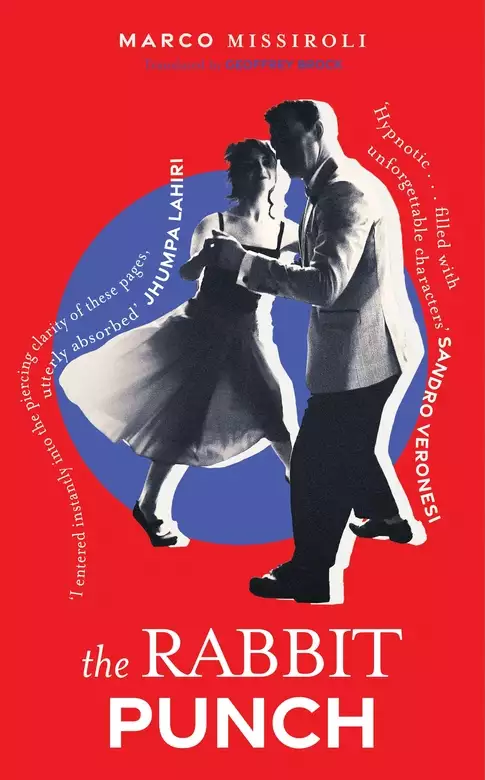
The two men could not be more different - Nando a former railway worker, Sandro a young professional in advertising - but they have one thing in common: their passion for winning. Nando and Caterina used to dance in amateur ballroom competitions up and down the Riviera - and they danced to win. Sandro inherited his obsession with success from them, but the stakes are a lot higher at the card table than on the dancefloor.
As the days and weeks go by and their forced cohabitation gently returns them to the old rhythms of a past life - sweet in its nostalgia but punctured by memories heavy with sorrow - it becomes clear that both Nando and Sandro are hiding difficult truths. Where does Nando disappear to every night, driving around Rimini in his battered car, his old dancing shoes hidden in the trunk? And what did Sandro leave in Milan - besides an empty flat and a broken heart?
'An intense novel that floors the reader . . . Magical' CORRIERE DELLA SERA
'A gem. Heartbreaking and light-hearted' LA STAMPA
'Unexpected and impossible to forget' IL FOGLIO
'A ticking time bomb of a book' IL MESSAGGERO
Release date:
February 27, 2025
Publisher:
Hodder & Stoughton
Print pages:
192
* BingeBooks earns revenue from qualifying purchases as an Amazon Associate as well as from other retail partners.
I’m at the supermarket when he calls. When I answer he clears his throat but doesn’t speak. I know he drives around at night in his Renault 5.
I ask if he’s okay.
‘Sorry to bother you,’ he says.
‘Stop it.’
He drags on his cigarette. ‘They pay you yet?’
‘Not yet.’
We’re quiet like when I was a kid and would watch him fixing a socket, the dresser in the kitchen, the back gutter. His fingers light.
Then I tell him I’m coming to see him.
‘Really?’
‘It’s your birthday.’
‘But how will you manage with work?’
‘I’ll manage.’
Five days later I arrive at his house in Rimini. The roller blinds are lowered and the garage door is wide open. He’s among the tomato plants in his fisherman’s cap.
‘Hi,’ he says, rising from the earth, shiny with sweat. ‘Much traffic?’
‘No, not much.’
He comes up beside me and reaches for my bag; I pull it away. I follow him into the downstairs apartment but stop as soon as we enter. Then he realises I want to sleep upstairs.
I raise the blinds in my old bedroom and the sun beats down on the dust and the shelf of Panini trading cards. Outside the window, the Renault 5 he has driven for twenty-seven years. One rim is dinged and the bumper is polished to a shine. It was Don Paolo who phoned me in Milan to warn me that he’s been staying out until dawn and something’s wrong.
‘Wrong how?’
‘Word at the bar is that he stops by at night with a scowl on his face. You know your dad.’
‘Talk to him.’
‘You talk to him, Sandro.’
Later he comes in with pillowcases and the rest. We make the bed, shaking the sheet out like she used to. We’re slow and precise and as soon as we finish he leaves the room and heads to the kitchen.
I hear him rummaging, clattering, crunching. When I look in he’s on his tiptoes on a chair browsing the preserves. He’s developed a paunch.
He hops down, landing soft as a dragonfly, then goes to the stove and turns on the gas. Out of nowhere he whips out a match and the head flares: Nando the gunslinger.
Later I make my rounds. I walk up Via Magellano towards the Ina Casa housing complex, its windows packed with people waiting for June to come. And coming it is, the season’s first outsiders bringing that acerbic cheer that those of us further from the beachfront find so tiresome.
It takes me until the park to shake Milan – it generally happens around the primary school or a little past, when I cut through the courtyard of the horseshoe building. My shoes loosen up and the North fades from my head as I reach the street that leads to Bar Zeta: I’ve come for the sea bream with the tuna-artichoke sauce. Someone says hello. Someone says: it’s Pagliarani’s son.
When I get home it’s roasting hot outside and he’s not in the kitchen. He’s in my room checking the window screen. He signals that it’s okay and goes out. He has cleaned up the nightstand, tidied the desk. My bag is still on the floor, the zip now a third of the way open.
We eat at 7.30 sharp and before we sit down he asks whether I’ve turned out the lights. What lights? The lights in the rooms you were in. He has a thing about waste, which he used to also take out on her: it’s not like you’re the electric company’s wife, he’d say.
He stewed a local cockerel in a frying pan with potatoes, made a sauce with aubergine and squash flowers. He watches me suck the browned skin of the cockerel; he sucks it too.
‘In Milan, you only eat frozen stuff.’
‘Not true.’
‘But you’ve got bags under your eyes.’
‘And you’re Clark Gable?’
Then he starts in again about the payments I’m expecting. He’s ready to help me out.
‘I’m good and anyway they’re coming.’
‘Still ten thousand eight?’
‘Ten thousand four.’
‘But how does that happen, at forty years of age.’
‘I’m sorry I ever told you.’
He snorts. ‘Sure you don’t need anything?’
‘I’m good.’
He pushes some crumbs around, cuts an aubergine stem and leaves it there. ‘You give up your steady job and look what happens.’ He springs to his feet and takes the wine from the sideboard, twists the cork out in one motion, rolls it between his fingers. ‘When we shut down Bar America, remember how I was always yelling?’
‘I remember you were always pissed off.’
‘Five years earlier I’d lent fourteen million lire to Roberti who wouldn’t pay me back and I needed it for the bar.’ He pushes the squash flowers towards me.
‘What’s that got to do with my money?’
‘It’s got to do with it because I never had the guts to go and take those fourteen million back. Do you think I was calling Roberti about that? Not a chance.’ He wipes his mouth. ‘I was sitting at the table balancing the books every night. You call these guys?’
I nod.
He refills my wine. ‘One Bar America is enough, Sandrin.’ He lifts his glass. ‘Cheers.’
But I know it’s not Bar America. It’s the crate of cardinal peaches. The trajectory that alters as he picks them with his father. He’s fifteen, about to enrol in the surveying school in Ravenna.
She’s the one I heard the story from. She told me as we climbed up to Verucchio, hand on her hip, her dancer calves out of tune with her mother body. She slowed to speak, winded: You, Muccio, choose the university you like and don’t be like Dad in the peach orchard in San Zaccaria.
We paused to look out at the Marecchia Valley, beyond the city walls.
You know, that big orchard in San Zaccaria? So your dad’s there with Grandpa Giuliano and he’s about to settle on his new school. He’s happy, he likes building sites, foundations, spirit levels and square metres – he thinks about that stuff even when he’s arranging peaches in crates.
I was about to pass her and she grabbed on to my shirt, so I grabbed her arm and started to pull her, but instead she surged forward, pulling me.
So, at some point in the orchard your dad picks up a crate heaped with peaches and gets your grandpa to help him load it on to the cart by the ditch. That’s where the road is, and just then Russi the engineer passes by. He greets your grandpa, your dad, asks how things are going, then notices the cardinals: those good? Your grandpa motions for him to try for himself, and Russi holds out a hand to catch one. But guess who throws him the peach over the ditch? Your dad. A beautiful toss. You know your dad, always throwing things with that perfect aim. Russi asks him if he wants to be a baseball player, then he takes a bite of the peach. As he chews, he learns that your father wants to be a surveyor. Russi takes another bite and looks at your grandpa: surveyor is no good anymore, nowadays you need to be an electronics expert. Electronics expert? Electronics and telecommunications, there’s a school in Cesena, in Italy these days everybody’s a surveyor. Then he throws his pit into the ditch, waves goodbye and goes on his way. Your grandpa leans over the crate, arranging the peaches even though they’re already arranged.
And then?
We were about to finish the climb to Verucchio.
Well, by then your dad had already bought the rulers and the squares and the graph paper. But after the cardinal peaches he threw all that away.
We clear the table with the news on. He makes two instant coffees and adds milk. He hands me one and rubs his eyes. He has the chest of a swimmer and the hips of a girl. And that moustache. He wants to look like Volonté in A Fistful of Dollars but looks instead like D’Alema in parliament. He downs his heart pills and snatches up the briscola deck from the wicker basket. ‘Let’s play.’
I sip my coffee.
‘We playing or not?’ He hacks up some phlegm to clear his voice.
‘I’ve got stuff to do.’
‘A quick game,’ he says, shuffling. He puts on his glasses, lights a cigarette and deals me the three cards.
I wait to pick them up. I’m looking at him and he’s looking back.
‘A quick one, Sandro, that’s it.’
We play. On the third hand he takes my king of coins with his three of coins and his mouth widens like a frog’s. ‘Good times tonight,’ he sneers.
‘And other nights not so much?’
He snuffs his cigarette in the ashtray. ‘Yesterday they showed Scorsese, Goodfellas. Remember that scene with the waiter with the bandaged foot and Pesci’s shooting at him?’ He draws a card and adds it to the others in his hand. ‘And you, what do you do in the evenings?’
I draw a card too, my fingertips dry. ‘I work, go out. Like that.’
‘You still think about Giulia?’
I take his knight of swords with my three.
Electronics and telecommunications expert, ticket taker on seaside tour buses, railway worker, bartender, computer programmer for the railway. On his government ID he never chose to write: dancer.
After briscola we go out on to the terrace and I smoke too. Here I make him play a game: where would you want to be if you were a million euros richer and fifty years younger.
He sets his cigarette in the pot of geraniums and stands there sniffing the breeze from Ina Casa, which smells like the river. He answers at once: ‘With my dad, working in the field. Or at that dance hall in Milano Marittima, with your mum.’
But you can tell already he’s back with his father before he died, hacking clods.
‘And you?’
‘Fifty years is tough.’
‘Twenty-five.’
I’m thinking I don’t want to go back to being fifteen: those freckles, and Rimini’s hard on shy kids. ‘I want to be in London, in a penthouse apartment, watching people down on the street.’
‘And the million euros?’
‘The penthouse apartment.’
He gives me his squinty, puzzled look. He blows out smoke and blurts that there’s a problem with the rules of my game: ‘It makes no sense to ask what I would’ve bought fifty years ago with a million euros, which would have been a couple billion lire. It’s better to ask: where would you want to be and what would you want to buy now if you were fifty years younger and a million euros richer.’
‘Okay, go.’
He doesn’t answer. He leans out from the terrace and studies the blackbirds scrabbling in the street. It’s already summer at Ina Casa: loud voices from the balconies, playful shrieks from the courtyards. He’s not talking anymore, he’s smoking, his back to me. He always turns his back when he wants to be alone.
‘Think about the million to spend now,’ I say, resting a hand between his shoulder blades before going off to my room.
I turn on my computer. On the desk, the gooseneck lamp, old invoices, the box with my graduation-gift fountain pen. I uncap it, write in my diary to call the bank back about the line of credit, and then get down to work.
Forty minutes later, the Renault 5 starts up and drives off.
He took her paintings down. Her evening gowns are still here, and her shoes. And the safe, behind the last two volumes of the Fabbri encyclopaedia.
I unpack my bag: four T-shirts, a cotton sweater, two button-downs, a pair of sandals, three pairs of trousers. I zip it shut and arrange everything in my wardrobe. Nagged by the thought that he may have done what he did when I was a teenager: rifled through my book bags, the pockets of my clothes. Looking for evidence to confirm his suspicions.
It’s past midnight when I stop working. He’s still out. In the kitchen, the saucepan sits on the stove with a finger of milk, the matchbox on the scale. He left chickpeas soaking with bay leaves, beside a jug ready to pour the oil. I eat a slice of Emmental cheese, his favourite, which he cuts by slaloming from hole to hole. The briscola deck is sitting on the walnuts, in the wicker basket, strangled with a rubber band, next to a standard fifty-two-card deck. Outside, Via Mengoni is black.
I take the standard deck. I pick it up with my right hand and pass it to my left. I sit down and remove the rubber band. I scramble the deck and hold my fingers over the scattered cards. I gather them up. I do a riffle shuffle. The middle phalanx of my index finger always pushes against the back of the deck. I do a Hindu shuffle. Thumb plucking from the top, palm cupped. I slow down when my fingertips feel a bite. I spread the cards into a half moon, pick them up, repeat. Speed matters less than care: the tilt of the arm, the rotation of the wrist, the three middle fingers orchestrating. Since I first started doing this, I’ve been meticulous about it.
I start again then wrap up. I press the cards to the table with my palm. The. . .
We hope you are enjoying the book so far. To continue reading...

 Please log in to recommend or discuss...
