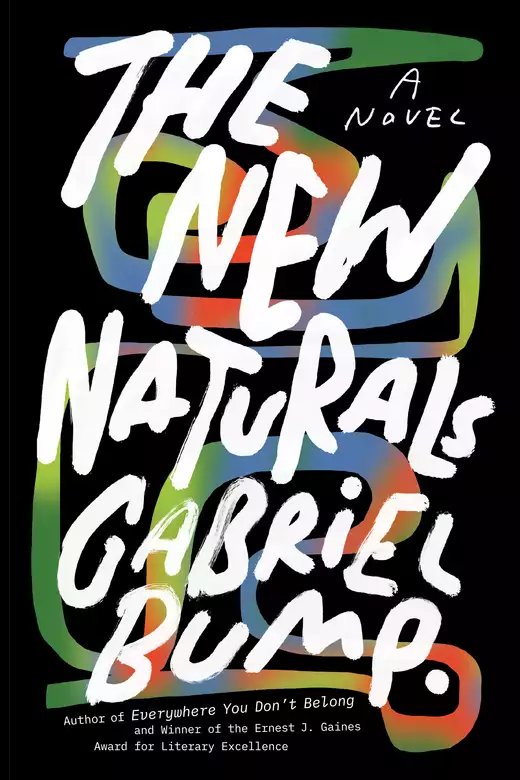
From the Ernest J. Gaines Award-winning author of Everywhere You Don't Belong, a touching, timely novel—called a "tour de force" by Kaitlyn Greenidge (Libertie) and "wry and astonishing" by Publishers Weekly—about an attempt to found an underground utopia and the interwoven stories of those drawn to it.
*Included in Fall Preview & Most-Anticipated Lists: New York Times, Washington Post, The Boston Globe, Vulture.com, ELLE.com, The Millions, and Lit Hub*
An abandoned restaurant on a hill off the highway in Western Massachusetts doesn't look like much. But to Rio, a young Black woman bereft after the loss of her newborn child, this hill becomes more than a safe haven—it becomes a place to start over. She convinces her husband to help her construct a society underground, somewhere safe, somewhere everyone can feel loved, wanted, and accepted, where the children learn actual history, where everyone has an equal shot.
She locates a Benefactor and soon their utopia begins to take shape. Two unhoused men hear about it and immediately begin their journey by bus from Chicago to get there. A young and disillusioned journalist stumbles upon it and wants in. And a former soccer player, having lost his footing in society, is persuaded to check it out too. But no matter how much these people all yearn for meaning and a sanctuary from the existential dread of life above the surface, what happens if this new society can't actually work? What then?
From one of the most exciting new literary voices out there, The New Naturals is fresh and deeply perceptive, capturing the absurdity of life in the 21st century, for readers of Paul Beatty’s The Sellout and Jennifer Egan’s The Candy House. In this remarkable feat of imagination, Bump shows us that, ultimately, it is our love for and connection to each other that will save us.
Publisher:
Algonquin Books
Print pages:
272
* BingeBooks earns revenue from qualifying purchases as an Amazon Associate as well as from other retail partners.
The New Naturals were formed in a basement, under flickering light and frayed nerves. In those nascent days, Gibraltar and Rio worried about their unborn daughter. The world was imploding in certain places, exploding in others, melting, sliding, boiling. Gibraltar and Rio were academics living in Boston, at a liberal arts college with a progressive mission. They taught Black people to white children. They had met in graduate school in North Carolina, fell in love with each other’s research, discovered each other’s bodies during a Christmas karaoke party, in a one-person bathroom.
Rio was the brilliant one, the beautiful mind. She studied slave revolts, was descended from a post-Emancipation Black executive from an all-Black town. She could trace herself to a lush grove in Florida.
Gibraltar studied modern athletics and its connections to slavery. He wanted to write a bestselling book and get paid lump sums to comment on race for media conglomerates. Gibraltar was born to hustlers in Little Rock, Arkansas, an untraceable lineage, a web of false identities convoluted in the Jazz Age. There was a distant uncle, a war hero, sent to die in Europe, exploded.
After graduation, followed by a luxurious fellowship in the Berkshires, Rio took the job in Boston; Gibraltar rode her star; Rio took six different pregnancy tests; Rio found an OB, scheduled an appointment; they waited weeks; Gibraltar paced around the house; Gibraltar paced in the hallway; Rio sat up on the hospital bed, looked at pictures of her womb; Gibraltar stood in the hospital room, cried at the black-and-white images of his baby, no bigger than a bean.
Gibraltar admired his wife’s growing stomach, cared for her aching joints, cried when they found out the sex, a baby girl. Gibraltar rubbed healing butters on Rio’s stretching body, kissed her collarbone when they maneuvered through sex, twisting, gentle, prioritizing comfort.
Rio looked around and hated what her new perspective revealed. When she first moved to Boston, she’d admired her colleagues, lifelong New Englanders, who drank wine and whiskey by the bottle, toughed through blizzards, lamented what they saw as our cultural mettle softening. These were people descended from Pre-America, colonizers, in the literal sense. Immigrants, too, escaping famine, war, divorces, abuse. A calculus professor, from Neapolitan parents, had put his arms around Rio and Gibraltar after orientation, when they were milling about, minding their business. The calculus professor sandwiched his face between their faces and said he understood, you know, what it was like—didn’t they know Neapolitans were the Blacks of Europe? Sure, whatever, it was charming, a misguided attempt at comradery.
She walked around Boston’s twisting and impractical streets, imagined her daughter popped out her belly, walking at her side, holding her hand, growing a foot a minute until she was taller than Rio, taller than a bus, taller than the new multipurpose luxury structure in her neighborhood. She’d look up at her giant daughter, see her giggling when a cloud tickled her nose.
Her giant daughter squatted behind Rio during a committee meeting, her giant head a floor above, listening in on a two-hundred-level debate about Jonathan Franzen. This was a new committee, one created for Inclusion, Diversity, and Representation. Rio, the only Black person in the room, held her notebook over her face. The calculus professor said something about affirmative action, a dismissive statement, or Rio guessed it was dismissive because a sociology professor threw a glass of orange juice at the calculus professor’s face. Rio wasn’t listening. Rio was worried about her giant daughter, who was twisting with boredom, just like Rio.
There was a neighborhood meeting in a church basement, to discuss a new pizza place, which promised to serve organic toppings and local beer. Rio stood close to a rear wall, leaned against her daughter’s ankle. When her daughter’s gigantic muscles twitched, Rio felt the aftershocks, felt her own body convulse. A white woman, new to the neighborhood, a minor executive with a minor-executive husband, with a new glass house built where an old wood house once stood, rose from her foldout chair and gave a speech about settling this neighborhood as a new world without violence, drugs, poverty, vandalism, and petulance; it’s about safety, a world for our children, who here feels safe?, raise your hand if you feel safe, when you’re walking down the street at night and some junkie is sitting at the bus stop, how can you feel safe, with that stuff around?; and your homes, your investments, imagine your home doubling in value, tripling in value, how is that going to happen with junkies at the corner store, standing around, laughing, smoking cigarettes, howling?; and that stabbing, disgusting, the looming threat of violence, the lowest human urges, how is that going to improve our investments?; imagine, Clean Boston, imagine, a utopia, imagine. Rio’s daughter stomped, twice, jerked Rio alive. The white woman was receiving applause from the other attendees, all white and minor rich in warm coats from London and Paris and Turkey. Rio stood where she stood, hands twitching against her hips, realized, here too, she was the only Black person in the room, removed from the applause, removed from the new world, under construction, all around her. She clutched her daughter’s big toe when the white woman stopped her speech, removed her white fur cap, took a deep bow. Rio left, found the sidewalk illuminated by her daughter’s towering glow, found for-lease and for-sale signs where she didn’t before, found a small ramen place crowded with white people in suits listening to hip-hop, found her apartment building, a white man walking through the front door, looking over his shoulder, seeing Rio coming, shutting the door as Rio waved for him to wait. She rode the elevator in silence with the man and her giant daughter, who filled the entire elevator shaft.
She found Gibraltar on the couch, grading papers, watching the Celtics, eating gourmet popcorn from a new gourmet popcorn store around the block, turning his head when she entered, asking how it went, turning his head back around when she didn’t respond and went into the bathroom, understanding it was a long day with classes and meetings and tensions he didn’t understand. He turned his head, again, and tried to catch a glimpse of her closing the bathroom door. That was a moment they had learned to love, that brief second where one was shutting away and smiling at the other, knowing they’d see each other again soon. Gibraltar didn’t catch her this time. Small defeat paused him, head twisted like it was, trying to catch quick love before she disappeared.
He heard the sink start up, water creaking up the pipes, rumbling the walls. He remembered again to call the landlord about the pipes, how the creaking and banging, whenever a neighbor took a piss in the night, jolted them awake at night, how his wife was pregnant and needed her sleep. Rio had told Gibraltar to make her the excuse, always, if he wasn’t getting anywhere.
One afternoon, a few weeks ago, he was watching European soccer while Rio was at work, enjoying the lazy solitude that had mostly vanished from his life. He was transported back to a couch he’d shared with three others, in college, in a house off campus, a neighborhood blended with families and young idiots. From that couch, he could turn left and see the street; right, there was the backyard; straight ahead, above and beyond the screen, the neighbor’s kitchen. That afternoon—high a little, a little hungover, typical—Gibraltar heard a ruckus. He shook himself out of the stupor, saw glasses breaking in that kitchen. Woman yelling at man. Man yelling back. Objects flying from an unclear hand—who did it?
Woman out the front door, on the sidewalk, standing there, getting her breath. Her belly bigger than it was a month ago. Her hand on her lower back. Gibraltar felt the pain: in her body, swelling on her face.
Man out the back door, in the backyard, bent over, crying into his knees. Standing, now, breathing, deep, deep. A scream loud enough for Gibraltar to feel. Like a low-flying plane, close enough to the highway, for a moment, it felt like a historic catastrophe, a forever horror.
Gibraltar had turned the volume up, cheered for the Spanish team, made several vows to himself: to never live with a girlfriend, to never bend a knee in the beautiful wheat field, to never negotiate with caterers, to never, ever, purchase an ice sculpture, to never kiss the bride, dance with his mother to Elton John, to never buy a house in a college town, blow up in the kitchen, storm out.
Now, whenever he had an afternoon off, whenever European soccer came on, Gibraltar remembered how that college afternoon ended. Right before the final whistle, he saw them again, man and woman, in the kitchen. He watched them hold each other, exchange tears, yell apologies. Then later, right before graduation, weeks from move-out day, Gibraltar, from the couch, a little high, hungover a little, saw them come up the sidewalk with a stroller. He saw them in the kitchen, man holding baby, dancing swaying; woman taking pictures. In the backyard, he saw them, aflame with joy, rolling in the grass. Joy he felt, hot, searing love and joy. There was time and love collapsed on each other. Future, past, and present on a couch, a little high, a little hungover.
Now, looking at his wife and unborn daughter through the closed bathroom door, he felt seared with love. He could see them through the flimsy wood. He could see them when they were miles away, walking home, walking to class, riding the T, taking a break on a bench. He felt ridiculous and corny. A cornball. He understood his luck, the rarity. Rio didn’t happen to most people. Waking up next to Rio, watching Rio read, grade papers. He was a simp. He was pathetic in his love.
Now, Gibraltar stood at the bathroom door, his forehead knocking, soft.
“Hello?” Gibraltar asked.
“I need a minute,” Rio said.
“Can I come in?” Gibraltar asked.
“A minute,” Rio said.
Rio heard another soft knock. His forehead. It annoyed her, a bit, when he acted like this: a big baby, whining. He needed to toughen up if they were going to keep going, make it through. She couldn’t scream in overwhelmed moments like this because when she screamed, Gibraltar would hold her and whisper something boring and comforting, which wasn’t comforting, just flat and flimsy, not true. Something like “tomorrow is a new day,” or, worse, “I will carry you across the river, I will bury you in the sand,” or, the worst, “We will float on our power.” Something about water in his mind, it poked all these horrible and romantic neurons. She liked him better on the couch, staring at the screen, lost in action, a European soccer match during the weekday, for example, or, like now, the Celtics, the Grizzlies, the Bulls. She loved his ability to detach, ignore the world. They were leveled through Rio’s intensity, her ability to see and feel each particle in the universe, throughout history, galactic dust drifting across blank space before the big bang. Leveled by Gibraltar’s inability to hear a train coming, a bus coming, a jogger coming up from behind, asking him to move left.
They were unleveled when Gibraltar got like this, head against doors, whispering, asking to feel the universe with Rio, to hold her and whisper assurance and protection. When they felt too much, the floors went slant, jars fell off the spice cabinet. She wanted him to go back to the couch, sit and wait for her to appear, to let her walk over to him, put her feet in his lap, ask him to rub.
Another knock. “Rio,” Gibraltar said.
“Gibraltar,” Rio said, grabbing the sink.
“I’m coming in,” Gibraltar said.
“Don’t,” Rio said. “Please don’t.”
Gibraltar twisted the knob.
Rio stomped her foot.
Gibraltar stopped twisting his wrist. Instead, his ankles twisted and moved him back to the couch, papers, basketball, and worry.
Rio released the sink, sat on the toilet, head on her daughter’s ankle. An urge for flight, which she fought, pushed down on her throat. All of it. She wanted to leave it all, all of it, every meeting, each paper, each class, each forced exchange with a colleague, a student, a stranger on the sidewalk forcing her aside, sorry, excuse me, fuck you. This world. She fought several urges at once. She sunk deeper into her giant daughter. Urges, like a horde, running up her nose, right into her brain, that impulse part, the delicate one. Violent urges. Less violent urges. Taking a sledgehammer and smashing a skull; taking two muffins and paying for one. The urge to march right down to city hall and demand more money for teachers, less money for cops. The urge to commandeer a stealth bomber and free the Uyghurs, free the homeless. These jumbled, nonsensical urges transformed from hordes into colorful ribbons pouring out her eyes and ears. Something was wrong. What the hell is happening to me? Not Boston. Not Gibraltar. Not the baby. Of course, not the baby. Not you, Rio thought and sunk deeper into her giant daughter, the unborn monstrosity engulfing her, the vision, the hallucination. I’m busted, Rio thought. Downright losing it, Rio thought. Deep breaths. One, two, slow down, one, two, too fast. She was gone. She was down the slope, flying down. Dizzy. She was one long rainbow streamer floating around the small bathroom, these creaking pipes, fix these damn pipes, fix the damn world. How can you explain a sensation, a spiral, like this? How can you explain a baby, five stories tall, unborn, giggling? She had to stand up. Stand up, Rio thought, you must. Rio, you must. Stand up. Rio looked up, saw her daughter looking down. No ceiling above, no upstairs neighbors, no rooftop social area with a grill and uncomfortable lounge chairs. Just a big smiling face looking down, smiling back. Stand up.
Rio stood up.
Rio went down.
Gibraltar watched Rio twist in the hospital bed, tangle up some tubes, wake a bit, moan, free herself from a nightmare. He knew what came next. He scooted his chair closer to the bed.
Rio jolted.
“Gibraltar!” Rio yelled.
Gibraltar grabbed her hand.
“Here,” Gibraltar said. “Here. Here.”
A nurse, a doctor; an onlooker hooked up to an IV on a rolling pole type deal taking a walk. They all stepped into the doorway, asked if everything was okay.
“She’s awake,” Gibraltar said, without turning around, trying to lock into Rio’s drifting gaze.
“Everything alright?” the doctor asked.
“I don’t know,” Gibraltar said.
“I’ll get someone,” the nurse said.
“You are someone,” Gibraltar said.
The nurse and doctor weren’t Rio’s nurse and doctor. They kept walking. Gibraltar wanted to follow them, get some help, she was awake. Rio squeezed his hand.
The onlooker stayed watching.
“What happened?” Gibraltar asked Rio.
“I was flying,” Rio said.
“Oh,” Gibraltar said.
Rio closed her eyes, went somewhere else. Gibraltar felt a deep and frightening urge to explode with fear and sadness.
“I’ll yell for someone,” the onlooker said, then yelled.
A nurse appeared, told the onlooker to keep it quiet, there are sick people here. The onlooker pointed to Rio and Gibraltar. The nurse walked in, looked at charts, touched the machines and tubes.
“I’ll keep you company,” the onlooker said. “You look troubled.”
“Please,” Gibraltar said to Rio, to the onlooker. “Please. Make sense.”
A doctor nudged the onlooker aside, knocked on the door. A nurse followed.
“Mr. Hurston,” the doctor said.
“I’m Mr. Donohue,” Gibraltar said. “She’s Ms. Hurston.”
“She’s your wife,” the doctor said.
Gibraltar held up Rio’s hand, kissed it, not knowing why, at the moment, he felt the desire.
“Seems like you got it handled,” the onlooker said.
The onlooker kept walking, pulled his IV along, shouted thanks for the miracle, shouted thanks for protecting our mothers and our babies, shouted, pleaded for a miracle of their own, a miracle to suck the poison from their blood. If there were any miracles left, by chance, after today was done. Imagine that, the onlooker shouted, waking up to a miracle.
And the onlooker was gone.
“Rio,” the nurse said, holding her bicep. “How are you feeling?”
“You had a scare,” the doctor said. “You’re in a hospital.”
“Are you feeling okay?” the nurse asked.
“Is she okay?” Gibraltar asked. “Please tell me she’s okay.”
The doctor turned to Gibraltar, serious, dour.
“We don’t know,” the doctor said. “There’s no way to know.”
“I’m fucking fine,” Rio said. “How’s my baby?”
“Rio,” the doctor said. “You had a fall, a spell.”
“I guessed,” Rio said.
“Do you need water?” Gibraltar asked.
“I had some water and drank it,” Rio said.
“Your husband was very worried,” the nurse said.
“My baby?” Rio asked, rubbed her stomach. Still there. The size.
“The baby is fine,” the doctor said.
“Your baby is fine,” the nurse said.
Rio sunk in relief, found Gibraltar, noticed, finally, his hand squeezing hers, noticed his worry. That overbearing worry. Annoying now as always. Embarrassing, now, with the small crowd.
“Can I have a second?” Rio said.
“Of course,” the nurse said.
“We need to talk,” the doctor said to Rio, stern. “There are things to discuss.”
“I want my husband,” Rio said. “My family. Please.”
The nurse pulled the doctor out.
In the hallway, the nurse slapped the doctor’s gut. Between them, standing in the hallway, all the things left unsaid, things said late at night in the cafeteria, in the parking garage, on the phone driving home, in their separate driveways, their separate families waiting inside, the children, the children, mistakes spoken, mistakes in action, all of it between them, that couple in that room, . . .
We hope you are enjoying the book so far. To continue reading...

 Please log in to recommend or discuss...
