'Jean Brash is my favourite character and David Ashton's writing is as delicious, elegant and compelling as she is' Siobhan Redmond (Jean Brash in BBC Radio 4's McLevy series)
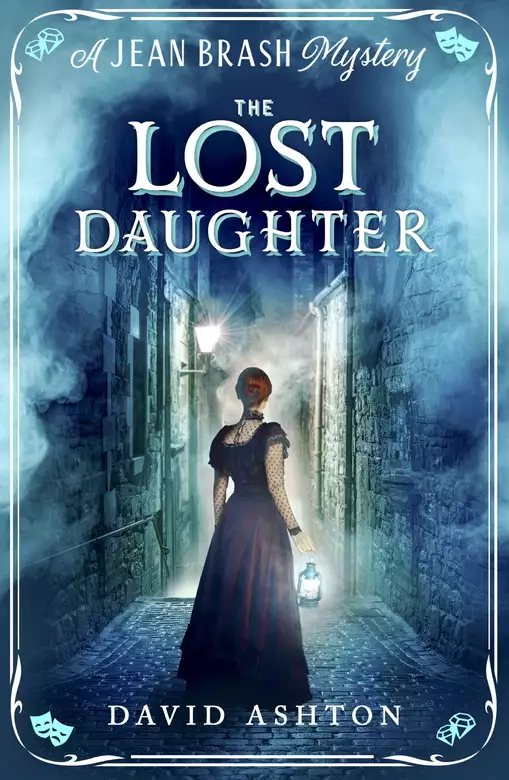
After Mistress of the Just Land, the second adventure in David Ashton's Jean Brash series...
A theatre company arrives in Leith to perform King Lear. A robbery is planned, a gruesome murder committed, both of which set Inspector James McLevy on the prowl, and Jean's past returns in the shape of the avenging son of a man she has long ago been accused of poisoning.
Even more lethally, her own lost family life resurrects in the present, as a wild young actress who trails violence and death behind her, involves Jean in a dangerous complex game that gnaws at the very root of her identity. All this grounded in Leith's gritty backdrop - the rich exotic world of the theatre meeting the harsh reality of the streets.
Past, present and future - this unholy trinity collide to overwhelm the world of Jean Brash and involve her in a tale where the abandoned child inside her demands the right to grieve as well as feel some fractured, fleeting joy. By the end, a chapter of Jean's life may close and a new future might be signalled in other lands and other countries...
(P)2017 John Murray Press
Release date:
September 7, 2017
Publisher:
John Murray Press
Print pages:
304
* BingeBooks earns revenue from qualifying purchases as an Amazon Associate as well as from other retail partners.
The baby was howling blue murder. Jean could see that; she could also see that it was a girl baby, for the creature was naked as a mason’s nail.
What was a naked baby doing in a bawdy-hoose? For Jean could also note that they were both in her boudoir – a cradle of frills and lace that Hannah Semple often likened to a spider’s web. The woman had a damned cheek; Jean Brash, Mistress of the Just Land, did not remotely resemble a spider plus the fact there was not a man of woman born who had ever lain in that bed except for yon Italian lawyer ensconced unannounced and see where it had got him.
Thrown out on his lughole. Arrivederci.
The baby howled again. It was now quite purple in the face, which was a wee bit alarming, and Jean supposed she’d better pick the thing up.
Mind you, this was definitely not her baby, even though not long born by the looks, because Jean would surely feel the after-agonies of birth and there was no sign of any slidey placenta to say nothing of the nine months of watching your veins bulge out all over the place as if they were kale worms: surely she would remember that?
Queen Victoria was forever having progeny but that had stopped when her husband died. Albert, by name, was the source of such fertility. A sad loss.
To tell truth, babies were not Jean’s speciality. When they were at a distance, cocooned inside a perambulator, buried under protective layers, she could manage an appropriate cooing noise or even a guarded wave, but that was about her limit.
Anyhow, who’d want a bawdy-hoose keeper, even if the venue were the best in Edinburgh, waving at your child? Albert and Victoria for certain sure would have drawn the line.
Another howl, though it was more of a yowl this time, as if the poor wee mite were losing conviction.
She bent down, girded her loins, and picked it up. The thing went quiet immediately as Jean held it close to her breast after the manner illustrated in the best household magazines. It began nuzzling at the opening in her nightdress, mouth opening and closing like one of the exotic fish that Jean so admired.
But the fish were slouching in her garden pond; this was closer to home. A more insistent nuzzle. My God, was the creature hungry?
That would explain the howling of course but she had nothing to offer bosom-wise. She could go down to the kitchen below and get some milk and a sugar biscuit – that was always possible – but the baby had its head right inside the nightdress and was sucking at what she could only surmise was a nipple.
Her nipple.
The sensation made her feel a wee bit rubbery and Jean felt herself being drawn to the bed; that little mouth had a power all of its own, like a leech or a limpet, and her legs were turning to jelly as if she were wading through a peat-bog. She only just made it to the bed before collapsing on to the sheets, where she lay stupefied while the baby sucked and chewed. It must be getting something but God alone knows what . . .
There was a sharp nip of pain. Surely the thing didn’t have teeth already, or was it a vampire, maybe?
Jean looked down at the top of the baby’s head. A few strands of hair, dark in colour, stuck to the scalp. Sweat maybe had caused that, coming out of the womb was surely no joke; no, the thing couldn’t be a vampire. It was too small, too vulnerable. She felt an odd stab of tenderness to go with the nipping. Oh, to hell with it.
So Jean Brash just lay on her side and let nature take its course in the filmy paradise of her boudoir, the delicate gauze curtains moving gently in a breeze of sorts as they hung round the bed. Jean must have left a window open again, Hannah Semple was forever gnashing at her about that: you never knew, said the old woman, what might fly in unannounced through the gap.
Was that how the baby had got in maybe, planked there by the stork?
Once a madman who thought he was the natural son of Robert Louis Stevenson had come in through that window and damned near killed Jean, whipped her with his cane till the flesh wept blood and would have dealt the death blow but for an interruption that sent him back through the window and over the garden wall.
Divine intervention.
Or rather Hannah with a cut-throat razor when Jean, with her last remaining strength, threw an empty perfume bottle through a pane of glass to signal that all was not well in the boudoir of Madame.
Inspector James McLevy had tracked the madman down and the assailant killed himself inside a church, hurtled down from on high to hit the flagstones like a rotten apple.
But that was another story and the baby seemed to be asleep now. Jean surmised she’d better follow suit and therefore closed her eyes.
Enough was enough.
‘Mistress!’
Jean was jolted awake to find the indignant face of Hannah Semple glowering down at her like some Notre-Dame gargoyle with a grievance.
‘It’s near nine o’clock in the morning, are you jist going to lie there lik’ a lump of coal?’
‘I beg your pardon?’
‘You heard,’ replied Hannah, unmoved by the icy tones of the erstwhile sleeper. Then she was taken aback to see the said mistress turn and wildly shake the pillow beside her, turning it this way and that while scrabbling about in the bedclothes.
‘Where’s the baby?’
‘Whit?’
‘I had a baby visit, where is the thing?’ The pupils of her green eyes were dilated and swivelling from side to side uneasily.
‘I warned ye about them oysters last night,’ came the stolid response. ‘But you would eat a whole dozen.’
Late the previous evening, Jean had closeted herself in a side room with some male visitor that she herself had let in the front street door, and the pair had consumed twenty-four of the best pan-door shellfish plus a bottle of champagne between them before the fellow slid off into the night.
For sure it wasn’t Jean’s young lover: that mannie walked like a Highland bullock, this gent was light on his feet and skipped out like a spring-heeled lamb. The Mistress had been a touch thoughtful afterwards but at this present moment she was plain carnaptious. ‘Oysters be damned,’ she muttered. ‘I had a baby beside me.’ She gazed down and pressed the sheets with her hand as if trying to find a trace left by the strange arrival.
The two women looked at each other while a crow in the garden outside complained about some matter of corbie concern.
‘It would be a dream, Mistress,’ said Hannah soberly. ‘A dream of some kind.’
‘But why about a baby?’
Hannah had no answer to this as Jean felt round about her waist and then looked down reproachfully at her breasts, which were certainly full enough but not with anything resembling milk.
‘It was hungry. A girl.’
‘Weans are aye hungry.’
Neither woman had ever borne a child. Hannah had only met one decent man ever in her life and he’d been shot dead at a gambling table.
And Jean Brash? A bawdy-hoose keeper waddling around like a duck? Not much chance of that.
But behind the thought lay a darker one. Of her own lost childhood. The fear of what? A repeat performance?
She could not remember the baby’s face, just the little mouth opening and closing around her.
Jean rose from the bed, wandered over to the open window and looked out at the garden of the Just Land.
Spring had finally arrived after a dull, drookit first three months of the year, and the buds of bushes, trees and flowers were cautiously poking forth their heads like cave dwellers coming out into the light. Plookie Galbraith had mown the lawn yesterday and managed not to lose any limbs, which was a miracle in itself, so there was still the sweet scent of cut grass.
All was serene. Ornamental peacocks like debt collectors prodding beaks into the ground; the aforesaid exotic fish disturbed the surface of the pond, their sluggish equivalent of a salmon leaping mightily in the air as it launched upstream to spawn; her beloved roses also paying tribute with a wary budlike unveiling to the watery April sunshine as its rays dispersed a morning haze that still clung like a cobweb from the early dawn.
Had all inclined towards the window they would have witnessed a woman in her prime, red hair tumbling over the ruffed shoulders of a silk nightdress, green eyes to match the emerald tones of the cut grass and a skin smooth as the milk she had failed to collect in her dream. Pretty as a picture.
All was serene.
So why did this beauty feel a lurch inside as if the earth were crumbling beneath her feet?
‘We have a bawdy-hoose tae run, the girls are still in their scratchers, and you havenae had your breakfast.’ This from Hannah Semple, who was by no means pretty as a picture but keeper of the keys of the Just Land.
Jean nodded. Back to the real world.
Chapter 2
There was never yet fair woman
But she made mouths in a glass
King Lear and his three rivalrous daughters lolled restlessly in the railway carriage, each with murderous thoughts in mind.
The train on its way from London to Edinburgh Waverly Station, a long journey through the night that was nearing its end taking at least treble the running time of the play itself.
Alfred Tyrone lifted a regal chin and reviewed the theatre company that occupied some of the compartment. He caught sight of a hawklike profile reflected in the carriage window, jet black hair long and straight, the nose also long, hooded eyes to flash emotion and a wide slash of a mouth that hid his least admired facet – small teeth, some of them slightly discoloured from the many cigars inhaled and, did he but know it, a little congested near the gums, producing an occasionally acrid odour similar to burnt cork.
Had he risen from the seat, Alfred would have measured over six feet to the naked eye and, aside from somewhat spindly shanks, proved himself to be a fine, upright figure of a man with a voice whose timbre could be heard from here to John o’ Groats.
Master of all he surveyed.
King Lear in clover.
His sister Bridget, who would not welcome the comment that she had been dealt a poor hand in the family queue for striking countenance – being thin featured, eyes set a smidgeon close together, skin somewhat dry and flaky, perfect casting for Goneril, malevolent older daughter of the King, but far from ingénue material – glanced at her brother opposite and wished to puncture his massive ego with a sharp hat needle or poisoned bodkin. They were twins by birth who did not remotely resemble each other and that, in some way, added insult to injury.
The six feet of length that served Alfred so well did Bridget no favours at all, emphasising that she was flat-chested, bony hipped behind the corsetry, and still a virgin. Almost. That was another story.
Alfred had always been the favourite, the beautiful boy, handsome man, the gifted one – not as gifted as he and the whole family thought but gifted enough, in their opinion, compared to her. An eagle to her dowdy pigeon.
She was, in fact, the more sincere actor, but he took up more space and gobbled up attention. Bridget was relegated to performances of ‘character’ though she had once heard Alfred describe them as ‘born spinsters’. Mind you, Goneril was no old maid. Perhaps she ought to take a leaf out of the character’s book?
One day she would kill Alfred, put out his eyes and, with them, play marbles in the gutter.
The woman sitting beside Bridget was rather pretty, fair-haired to the sister’s stringy brown tresses, and her own murderous inclinations were scattered like stray seeds in the wind.
Melissa Fortune – a name conjured up to replace the real one – had hitherto played the sweet leading parts of the company, tremulous innocence being her speciality. This was augmented by full lush lips and a slender willowy figure hinting at pliable corruption. However, now she was condemned to Regan, other homicidal daughter of His Majesty, and though there was the promised pleasure of male humiliation and other assorted cruelties that she might relish, Melissa had been spurned from her rightful execution because of that little bitch.
The fact that Cordelia, the heroic offspring of King Lear, dies in the play was of little compensation. Like a Gorgon, she would live anew at the next performance.
How dare she usurp the rightful queen?
The fact that Melissa was a shallow creature who lived her life in the manner of a skittery seabird on the surface of the deep ocean of existence and cared only for her own gratification, should not overlook that she might well be capable of inflicting death. Providing she did not break her fingernail.
Emilia Fleming, seemingly asleep, nestled beside Alfred, not at all overly close to excite gossip but near enough that he might be aware of a certain fragrance of sweet cologne, could sense the hatred from opposite and it excited her to the very bones. She loved hatred, looked down on love unless used as a tool, and adored their bastard child of lust.
Her body, though clothed to the latest fashion, was small and rounded. There was a rumour in the company she might be double-jointed, and dark hair with auburn tints tumbled down her face and neck, tendrils escaping as if wild and wanton, framing the gypsy cast of her countenance. Not pretty exactly; more sensual and spoiled, like a bruised rose.
It was said she came from Newcastle and there was the slightest tinge of that accent to her speech but the girl kept such history to herself.
The past is a shadow that haunts us; and can be no more shaken free than a shadow. In the absence of light, it still remains hidden. Biding time. And lurking under Emilia’s excitement of what might be looming ahead was a shuddering fear from what lay behind.
For a moment she swivelled round to see if he was watching – her lover, her killer-to-be. He had warned her that he might have to take a life or two in Edinburgh and her only response was ‘Can I watch you, Billy?’ Then they had laughed, neither knowing precisely what the other meant. And neither caring. Not yet.
Time would test whether this might offer pretence, like a role upon the stage, or a harder reality.
Until then, they would delight together.
Billy Musgrave saw her turn. He fingered his gold earring as a memory of her naked body danced across his mind. Double-jointed. Twisting like a corkscrew.
He had a gold tooth to match that earring and a grin like a basking shark.
The young keelie would have made a wonderful Edmund, the bastard son and arch manipulator of evil in the play, but was, due to his inability for stringing the Bard’s words together and even had he, a thick Leith accent rendering them incomprehensible to delicate English ears, relegated to that of the main stage helper.
In fact, stage manager, for Billy was clever with his hands and knew how to work effects and machinery. An unwitting disciple of Archimedes, he pulled levers and changed a world upon the stage.
As Billy gazed out the window at a sea he had never bathed in, being baptised in the Waters of Leith along with all the other wild boys of the parish, it must be said of him that, again like Edmund, his instincts for evil were impeccable.
At the front, where every leader of men should be, Alfred allowed a vision of Henry Irving to enter his mind and conjectured how the great actor would look fallen from the battlements in Hamlet to break his neck and lie there on the stage, all animal magnetism fled.
The cast would gather round to gaze downwards at the dying prince. How sad, thought Alfred, how desperately sad it would be. But of course, the show must go on.
He lit a cigar, tried to forget the perils of precipitate finance and puffed out a cloud of obscuring smoke as the train rolled on, taking them all to a terminal conclusion.
Chapter 3
I am even
The natural fool of fortune.
The human ran, the animal followed, both hurtled onwards by terror – the boy, a lank, disjointed figure, sallow pockmarked face crunched in panic. All his life it had been like this; moments of promised joy broken by persecution and pain.
The small dog yelped and, as the pursuing footsteps grew louder and nearer, it darted away in front, little legs driving piston-like as the beast disappeared into the morning mist of the cobbled, twisting wynd.
Vinegar Close, in fact.
Leith was fissured by these conduits, narrow alleys that gripped close upon entrance like a hand around the throat or so many cracks in a chamber pot; slots of ambush gouged out of the damp walls of a warren of crumbling buildings that housed families ten to a room like a nest of insects, rustling and writhing together in the night. Near the harbour, salt air stinging the face, they resembled a giant hive that crawled with scuttling humanity.
One of which was Plookie Galbraith, whose large feet slipped and crashed his body against the mildewed wall.
Good that wee Raggie Biscuit got away, they cannae injure the beast now – he has his wee collar, that’ll save him.
But what such fragmented thought had forgotten was that in the absence of one target another might appear all the more enticing.
As Plookie lurched onwards, the side of a leather boot clipped at his heels and the boy fell flat on his face, wind hammered out of the body.
A primitive superstition: if he lay face down they would go away because if he could not see them, they would not be there. What you cannot see cannot hurt. Only God sees everything. And He never interferes.
The same foot flipped Plookie over as if he were a dead rodent.
Eyes held shut: it might still work.
Then a cruel dig at skinny ribs goaded him into vision. Bob Golspie. That was bad enough but standing beside his large hulking frame was Niven Taggart. Jack-a-dandy. Dressed well – a real gentleman you might think but that was as far as it went.
It was said the devil had almond eyes, slanty, cold and yellow. Niven was Satan’s double. He smiled thinly and ground the toe of his fancy boots deeper just below the ribs, forcing a gasp out of his victim.
‘Where ye goin’ in such a hurry?’ he asked.
‘I – I – didnae want tae be late.’
Bob Golspie laughed. With his broad flat face you could easy mistake him for an Eskimo. You could also think he was a fat cheerful soul but that would be a mistake. Yet at least his violence was casual, he would swat at you like a fly. Niven was just born evil. He could walk into a low tavern and folk would feel a chill in the backbone as his slight stiletto figure slid inside, a baleful spirit.
Plookie had seen the two of them waiting on the corner and shot off another way but he must have left a trail of some kind because here they were.
And so was he. Open-eyed.
‘Ye work for Jean Brash now, I hear?’
A casual question riddled with danger, Niven’s eyes like icy pinpricks.
‘Aye – I help wi’ the horses. And the grass.’
‘She must pay ye well.’
‘Not much.’
The toe dug in again. Plookie winced and tried to play daft. Bob laughed. Niven looked bored.
‘Empty your poche.’
Plookie sat up and did so, making a good job of it, turning the dirty pockets inside out. Some coins fell on to the cobblestones. Small change. Bob scooped it up.
‘Ye get paid every week?’
‘Not much. Shillins. Wee coin.’
Niven suddenly hauled Plookie up off the ground with a slim arm like a steel bar, sliding out from a hidden harness the large hook-knife that was his preferred weapon. Taken from a lascar seaman, it was feared amongst the street keelies as a hellish cutter; it could operate both at close quarters and from distance. He had a butcher friend who kept it sharp. Niven paid for such diligent labour by cutting up the animal carcasses – he had become quite an expert in dismemberment.
As he had proved to himself not ten hours ago on a moonlit harbour. Up and through.
The hook now rested just under the boy’s groin and Plookie tried to keep the fear from showing on his face.
Play daft. Play stupid. Pray to God.
‘Don’t mark him,’ said Bob quickly. ‘We don’t want Jean Brash tae know.’
‘How come?’
‘She has friends, Niven.’
‘Such as?’
‘Jamie McLevy for a start.’
The policeman was one person in Leith who knew the wynds better than any of the keelies and he was also a thing to avoid, like the Canongate pox.
‘She has her ain street folk as well,’ Bob continued. ‘Best leave her. She’s Queen Bee.’
Niven smiled. He had his own thoughts on that, yes, his own private thoughts as he pulled Plookie near enough that the boy could smell some kind of scent.
Did Satan wear cologne? Barber’s scent, maybe? Niven was clean-shaven, not a hair on his face, smooth, small featured like a baby. Till you got to the eyes.
‘How much does she pay ye?’
Plookie thought to lie then thought again. If Niven found out, he’d be a gutted herring. But how could he find out?
‘On the Friday. Seven shillings.’
Liar – it was ten. And he had saved. And hidden. One day he wanted a place of his own. Out of the wynds.
‘Every week. Ye come tae us. Give us half. Ye don’t cheat or I’ll rip your guts like a pig’s bladder. Ye get paid. Ye give us half. For safeguard. That’s fair, eh?’
Niven’s gang operated a system where they ‘protected’ the denizens of Vinegar Close and their surrounding area from a violence that the keelies themselves would mostly inflict and generate, though there were other invaders that might seek to intrude.
Other gangs.
It is a mark of humanity that no one seems to be able to remain where deposited. As a dog will mark out its territory with copious urine, so they cross invisible lines of conflict and then kick hell out of one another. Nations, tribes, Napoleon, Alexander the Great, or even a bunch of keelies in the wynds of Leith.
‘Fair. Aye, dead fair,’ came the gormless answer.
Niven looked narrowly at Plookie Galbraith. It was hard to believe that the boy was so glaikit a specimen as presented – otherwise how come he had lived this long?
Last night Niven had watched a man die. A single strike. A secret kept. No one knew but him. Something that would give him a name amongst them all was on the approach, but you cannot neglect day-to-day proceedings.
‘Don’t mark him, eh?’ he asked.
Bob nodded solemnly in response.
‘Whit about this?’
Niven jabbed the heft of the hook-knife sharply into Plookie’s midriff to double him over at the sudden pain.
While Bob laughed, Niven bent his face close again.
‘I’m watching you, Plookie. One mistake. That’s all I need.’
Wide-eyed fear. Don’t wet yourself. Only the one pair of trews for all weathers.
‘And one day I’ll be calling you for a deed tae perform wi’ Jean Brash. One day.’
The boy nodded. Mouth agape. Slaver if it helps.
Then Niven strutted off followed by Bob while the other straightened up slowly and tried to stop any sudden tears forming in the eyes.
All his life Plookie had been battered by people like Niven. His gangling frame had no strength and no violence of intent. All his life.
And now he had a chance with Jean Brash. He had not long ago stood out in the pouring rain for her to spot out a pair of killers she had in mind to track down, and the woman never forgot a favour. That’s what she had said anyhow.
Plookie had been summoned to the Just Land; auld Hannah Semple had glowered at him and Angus the gia. . .
We hope you are enjoying the book so far. To continue reading...

 Please log in to recommend or discuss...
