Don't miss the next explosive and utterly gripping thriller from Marina Palmer, available to pre-order now!
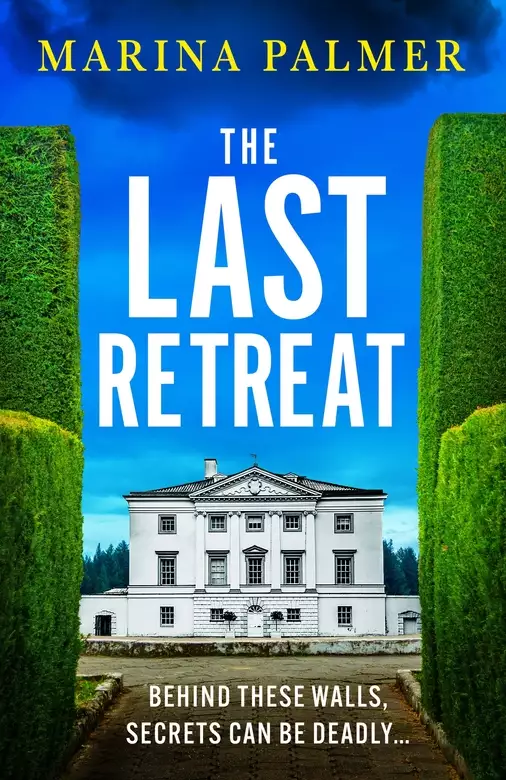
After surviving a raid in Ukraine, war photographer Tash Carter is in desperate need of recuperation. She accepts a job teaching photography at Belford Abbey, a luxurious estate where the super-rich come to switch off and be renewed.
One of Belford's most esteemed clients is billionaire Eliot Drake, owner of Panopticon, a data-mining company which could be any government's biggest asset, or their greatest weapon.
When Tash is approached by an MI6 agent asking her to uncover information, she quickly learns that Eliot Drake is not just powerful - he is dangerous.
Tash has seen enemies on the battlefield, but soon she'll find that the biggest threat lies within Belford's walls...
Praise for Marina Palmer: 'Fast-paced and clever, with a pleasing blend of political intrigue and romantic suspense as well as a whodunnit, this is perfect entertainment for a winter's evening' - Guardian
'Elena is a delicious villainess, and the compelling dynamic between plutocrat and protégée makes this an addictive read' - The Sunday Times
'Part thriller, part romance, part social commentary, this is a wildly entertaining novel' Literary Review
'Best book I've read this year' - Simon Conway, author of The Stranger
'The Russian Doll gripped me with layer upon dangerous layer' - Alison Bruce, author of The Moment Before Impact
'I couldn't put it down and finished it in a day . . . Superb!' - Mara Timon, author of City of Spies
Release date:
August 6, 2026
Publisher:
Hodder & Stoughton
Print pages:
320
* BingeBooks earns revenue from qualifying purchases as an Amazon Associate as well as from other retail partners.
Belford Abbey, nr Alnwick, Northumberland, 29 June 2025
Light poured in from the floor-to-ceiling windows. Tash crouched low against the back wall of the room, watching it saturate the purples and pinks of unrolled yoga mats, tease halos out of the long hair of the women, and catch highlights in the eyes of the men. One man in his early thirties with a short black beard, had his knee up, arms loosely hanging round it. He seemed absorbed, enchanted. One of the women was lying on her front, her elbows on the floor and chin in her hands. There were about thirty of them in all, lounging on their mats on the polished parquet, all barefoot but expensively pedicured, dressed in soft cotton casuals. Each of them had a water bottle in peach or pink within reach.
The focus of their attention was a woman in her forties with long red hair worn in a half-up style, who sat on a raised platform between the central windows. Jemima Carter. One of the original Instagram wellness influencers; purveyor of body lotions, bubble bath and scented candles to the select, and the best-selling author of self-help books for the masses. St Jemima of the dirty laugh, down-to-earth advice and elegant packaging, offering enlightened self-care in an unsettled age. Everyone’s safe space. No judgement, no agenda, no pressure to be perfect, just better. And now she was the owner of Belford Abbey, this luxurious estate in Northumberland where the burned-out super-rich came to be renewed.
Sometimes charisma is a visible thing. It seemed to shiver off Jemima in crenulating waves, trailing from the tips of her fingers as she waved them in the air, conducting her audience. The pomp and grandeur of the space should have diminished her, but instead the attention of the watchers acted like a spotlight. Jemima wasn’t wearing yoga clothes but an emerald-green dress with a wide skirt, a red leather belt cinching her tiny waist and the collar turned up. She looked like a Hitchcock heroine.
Tash didn’t listen to what she was saying, just watched how audience and speaker mirrored each other. When Jemima leaned forward, so did they; when she smiled crookedly, her palms lifted, they shook their heads and laughed back. All friends together.
Tash moved, finding the shot first with her eye before lifting her camera, letting the colour and light fill the foreground in an impressionistic blur, but with Jemima, small in the middle left third of the frame, in sharp focus – the centre and source of all the energy in the room. Tash released the shutter, then, knowing she wouldn’t take a better picture that day, let her Nikon rest in her lap and looked round.
A real stately home. These walls must have been hung with old masters once. Tash had visited enough National Trust properties with her grandparents as a kid to imagine Italianate landscapes and Gainsborough portraits hanging against red damask wallpapers. Now the walls were all white, and hung with huge abstract oil paintings. Good ones.
Tash felt someone’s gaze on her, like a fly settling on her skin, and looked around. Bethan, Jemima’s PA, had come in through the high narrow door behind her with a large buff envelope under her arm. She crouched down.
Impressive. The crowd watching Jemima might be in yoga pants and baggy T-shirts, but Bethan wore a close-fitting cream dress and four-inch heels.
‘Jemima won’t be free for another hour or so,’ Bethan whispered, her mouth close to Tash’s ear, her breath smelling of cinnamon candies. ‘Can I take you to your room, Tasha? Get you settled in?’
Tash nodded and got to her feet, but before she left she looked over her shoulder and Jemima caught her eye and smiled. The focus of the room shifted and the heads of the listeners turned in a ripple towards Tash, friendly and curious as small children.
Tash nodded in return and as she stepped through the door Jemima said something which provoked a warm wave of settling laughter in the room.
‘You’ve never visited Belford Abbey before, have you?’ Bethan said, speaking at a normal volume now and walking quickly through another drawing room, this one full of sofas and armchairs, then another lined with books. All the furniture was in pastel shades with gold or accents and looked too over stuffed to sit on. Fresh flowers, branches of lilac in tall grey and white ceramic vases stood on every side table.
‘No. It’s not lilac season, is it?’
‘Lilac is Jemima’s signature flower,’ Bethan replied with a note of reproach, as if Jemima’s preferences could alter the passage of time. Perhaps they could. Tash tried to guess Bethan’s age. Could be mid-thirties, but she was so groomed she could have been ten years older. Wellness Barbie, Tash thought, then breathed in and out, trying to control the feeling of sulky bitchiness this place seemed to provoke in her.
‘We’re very excited to have you on staff.’
‘It’s just temporary,’ Tash said.
Bethan pushed open another door and paused, halfway on to a stone landing. ‘Oh, I hope you’ll never want to leave,’ she continued warmly. ‘No one ever wants to leave. Why would you want to go back to the world, with all its troubles and mess, when you could be here?’
‘It’s trouble and mess which means you and Jemima have jobs, isn’t it?’ Tash said, her voice tight. ‘If everything was peachy no one would need her help.’
Bethan stopped and turned towards her. She did not look offended, merely thoughtful.
‘Yes, that is probably true.’ The quick smile returned.
Tash looked around, adjusted her backpack on her shoulder. ‘I left my suitcase in the main hall downstairs.’
Bethan waved her hand. ‘Oh, one of the staff will have taken that up to your room already.’
OK.
‘In that case, can I see my studio?’
‘Oh yes! I’m rather pleased with it.’ Bethan smiled. Her teeth were very white, and her lips a glossy pale pink. Almost everything in this house was pale. Then she pointed upwards, as if to heaven. ‘But as we’re here, this is the family wing. I’ve given you one of the suites on the top floor. Charles Porter, our art master, and Ingrid Moyle, who teaches embroidery, have suites there too. Jemima leads her sessions in the main drawing room, as you’ve seen, and the creative classes are held out in the garden studios.’
She started down the staircase, her hand trailing gently along the polished banister and Tash followed. ‘The gym, sauna and treatment rooms are in the basement, and of course the pool is off the chapel wing in the old greenhouse. FYI, Charles and Ingrid are a couple, and they tend to keep to themselves. He’s English, she’s French. Charles is a softy, and Ingrid can be a dragon, but she’s a fantastic artist.’
‘The French photographers are always the crazy ones,’ Tash said.
Bethan snorted slightly. ‘Ingrid can be very firm, which comes as a shock to our American guests. But her work is amazing. There’s a display on the first floor of the pele tower. Have a look. Your photographs are there too, and Charles’s paintings.’
‘The pele tower is a gallery? I thought it was a ruin,’ Tash said.
She’d noticed the pele tower as they arrived, but then it was impossible not to; the whole landscape of the park seemed designed to lead towards it, a great edifice of stone rearing above the ruins of the old Abbey which gave this place its name, now picturesquely flanking the grand 18th-century mansion.
‘It’s a ruin and a gallery. We didn’t want to change how it appeared in the landscape, but we wanted to make use of it too. The architects did a brilliant job.’
The staircase was cool and quiet; somewhere below them a door opened and closed, an old latch rattling into place as it did. Tash’s step faltered slightly.
‘Have you worked with Jemima long?’ she asked.
‘Five years. So tomorrow you and the other teachers will do the taster sessions in the afternoon,’ Bethan went on, ‘then once the guests have chosen which creative path they want to follow you’ll have two hours of classes each day, Tuesday to Friday. The guests leave Saturday morning, and the new lot arrive Sunday afternoon. Thank you for sending your materials. So helpful if students have questions.’
Tash had found a certain sort of peace, satisfaction, pulling together the workshop plans and slides, whittling down what she knew about film photography into bite-sized chunks with Megan Thee Stallion playing on her headphones. In the evenings she’d taken her own film camera into the streets and shot reflections, the glitter and rain. The people.
Monty’s ghost found it harder to slip into her mind when she was absorbed. When it did though, a face in a crowd of revellers, a distortion in the air between her and the world, her heart plunged fast and hard. Like those nightmares where the elevator snaps and you plummet through floors of steel, glass and light.
Tash’s fingers touched the wooden banister lightly. It was a deep gold in the filtered sunlight, washing down from a skylight high above her.
The stairs ended in a small lobby, the floor a mosaic of dark-green and gold tiles, the walls another variation of beige and abstract prints. Almost like that of an ordinary house, as opposed to the double-height marble hall lined with statues of graces and gods behind the main, porticoed entrance to the Abbey. Bethan pushed open the door and Tash was blinded by a blast of sunshine as she followed her out on to a broad stone-flagged terrace, then down shallow butter-coloured sandstone steps to a formal walled garden of gravel pathways, low box hedges and flower beds. They were thick with lavender and rosemary, cornflowers and verbena.
‘This way,’ Bethan said, and Tash had the strange sensation of following her into a dream.
Chapter 10
Dinner at the Abbey was farm to table food. Most of it made locally, they were told, and though she didn’t recognise the names of most of the stuff put in front of her, it tasted good and there was plenty of it. Everyone sat at long communal tables in the old kitchens, though an end of one of them was set aside for Jemima and a group of students. Everyone, it seemed, was promised dinner with her during their stay. Quality time.
The room itself was high-ceilinged and stone-flagged, lined with antique dressers filled with the same mixture of earthenware and blue and white dishes the food was served on, plus copper pans, silver chaffing-dishes and the sort of junk shop curios Tash was always tempted to pick up before she remembered she didn’t own a shelf to put them on. Vintage butter dishes, a rough pottery model of Bamburgh Castle, a ceramic seal, its whiskered nose high in the air. More cottagecore than sad beige. The staff passed up and down the gaps between the tables in their black polo shirts and brown aprons, telling the diners what the dishes were, answering questions. Efficient and friendly without being obsequious, flashing smiles, most with the local accent, Geordie with a dash of Scottish. Most of Jemima’s clients were in their thirties. A scattering of people in their fifties perhaps, but no one older than that. Expensive haircuts, clothes which hung well on fit, well-fed and exercised bodies. No obvious logos. The women wore very little make-up, or they wore make-up that was good enough to be almost invisible, and the men moisturised.
Having money and comfortable lives didn’t make these bad people, any more than having their home blown away in a missile strike made a Ukrainian a saint, Tash told herself. Still that obvious ease which came with their money grated on her. The solipsism of wealth, she thought. They believed the world revolved around them. But maybe they were right, because on some fundamental level, it did. She put a careful smile on her face and listened to the to and fro, trying to catch and remember the names of the diners around her. ‘Oh, my God! Have you seen the pool?’ ‘The rooms are darling.’ ‘I feel a thousand times better already.’ They would all be having appointments with nutritionists and personal trainers during the week, as well as group classes with Jemima, one-on-one sessions, and their creativity workshops. They could cook with Belford’s chef, or even be sent home with bottles of micronutrients in convenient capsule form, prepared on the premises. One or other of them might say ‘we’ve been so lucky’, or ‘we’re very blessed’, but they didn’t mean it. They couldn’t mean it, or the contrast between their lives and the shit most people went through trying to get to another payday would drive them mad. They had to think they were special, or perhaps they believed everyone else was being poor on purpose just to harsh their vibe.
Give it a rest, Tash, she told herself. You are here to get better. Wellness Barbie wasn’t wrong when she said this was a place to heal just because she was wearing five hundred quid high heels when she said it. Stop overthinking it. You can’t walk on a broken leg, and you can’t go and shoot conflict when you are jumpy as hell and seeing ghosts. So shut up, take the win and enjoy the fancy food and the soft towels for God’s sake. It’s just a temporary retreat. What’s that French phrase? Step back, so you can leap further forward.
Someone mentioned AI and the talk ranged across the reliability or not of Large Language Models, fake news, AI slop, which was apparently the term used for the uncanny pictures of kittens in storms, or Jesus with his arm around Donald Trump, which appeared on her social media feeds from time to time. Tash half-listened, till she realised someone had asked her a question.
‘Sorry?’
‘I asked what you think about the future,’ a man with a touch of grey in his glossy dark hair asked. James. ‘As a creative, aren’t you worried?’
‘I don’t know. There is plenty to worry about here and now, so I just try and deal with what’s in front of me on any given day.’
A round-faced girl, Zoë, laughed. ‘You sound like Jemima! I don’t know. I sometimes think these Luddites have it right. Perhaps we should smash up all the technology. Redistribute the wealth. Start again.’
James leaned towards her, touching shoulders, and Tash realised they were a couple. A couple having a good day. ‘Careful,’ he said. ‘What if they come for your coffee machine?’ He wrinkled his nose at his dining companions. ‘It works via an app. She can operate it from bed. Espresso there and waiting by the time she reaches the kitchen. Can’t imagine she’d want them to redistribute that!’
Zoë covered her mouth in mock horror. ‘They are revolutionaries, not barbarians!’
Barbarians at the gates.
The group laughed along with them. The sort of comfortable laugh which suggested they all believed they were roughly on the same page, that their underlying principles were both shared and praiseworthy.
‘What’s the news from Paris?’ another man asked in the clipped, precise vowels of Nigerian English. Jay. ‘Anyone seen anything further this evening?’
One of the older women, with soft white curls and a scarf in jagged abstracts of pink and red, replied.
‘Nothing good. They are using water cannons against the protestors on the Champs-Élysées, and a lot of the luxury stores in the Marais are getting looted. Or smashed up at any rate. I’m sure all the Birkin bags were moved to a safe place the moment the cash machines started playing up.’ A moment of quiet while they all absorbed the news. Jay offered an appropriately wry smile to the comment about the bags. ‘Do you think it is a cyberattack?’
‘I’m sure it is,’ Jay replied, then glanced at Tash. ‘That is my field, Tash. Cybersecurity. People do not realise what an effort it is to fend off these attacks all day every day. I know of major banks who are now creating paper records of their holdings every hour in case an attacker gets through.’
Tash smiled at him, and found herself hoping he would sign up for photography.
‘Perhaps it’s just incompetence,’ Zoë said. ‘What’s happening in Paris, I mean.’
‘No,’ Jay replied. ‘It is an attack and a clever one.’
‘Whatever the cause, people will die if this goes on,’ the woman with the scarf said, running her fingers over the fine silk at her throat.
‘Do you really think so?’ James asked, a tiny furrow in his smooth brow.
‘Yes,’ she replied simply. ‘People are angry already, this is just the sort of thing to push them over the edge. Most of my Parisian friends are going to their country houses for now.’
Tash flinched, thinking of Ukraine. The wealthy so often forgot most people did not have anywhere else to go.
A waiter arrived carrying more plates of food.
‘Grilled Hispi cabbage with hazelnut dukkah,’ he said, setting down a plate piled high with charred leaves. ‘And this is saddle of rabbit with purple sprouting broccoli.’
The food was welcomed with a flurry of thanks and he winked and passed on.
‘Who do you work for?’ Zoë asked Jay.
‘No one!’ he said cheerfully, and served himself rabbit. ‘I just sold my company to Notebook. I am here to start thinking about what to do next.’
‘Have you met Eliot Drake?’ James asked. ‘That’s the Notebook man, isn’t he? The best sort of billionaire,’ he added to the table at large. ‘Lots of charitable foundations and no social media network.’
More comfortable laughter. The idea of the angry Parisian mob seemed to have been forgotten. Well, they were a long way away.
Jay pursed his lips and shook his head. ‘No! My company was too small for a meeting with the man himself. Less than twenty million. I met with one of his subordinate’s subordinates.’ He put his hand over his heart. ‘Though Mr Drake did send me a gift basket and a polite email. The honour.’ Zoë sniggered. ‘The gift basket included an invitation here, for which I am most grateful. I wonder how many of the people here are owners of businesses he has bought. He must acquire a dozen companies like mine a week. Cybersecurity, facial recognition, machine learning . . .’
‘He funds all sorts of journalism start-ups too. That man, Rupert, who’s here. He got his seed money from Notebook,’ salt-and-pepper added.
‘Well, I paid,’ said silk scarf. ‘Since my husband died there has been so much pressure over the inheritance. I’m looking for a little clarity and escaping my son’s start-up ideas. He worships Eliot Drake. He says Drake makes Elon Musk look like an idiot.’
‘I think Elon does that all by himself,’ a long-haired girl replied.
Suddenly, Monty’s ghost was leaning against one of the dressers. He caught Tash’s eye and waved. Someone said something about Hearst and Citizen Kane.
Tash needed to ignore Monty. Loosen up. Let the chinks in her armour open up and let all this warmth in rather than resent it. Contribute, Tash.
Friends in London had bought or sent her books to read while she was convalescing. A new thing apparently, book gifting. One, a history of the great American titans of the gilded age, had painted a picture of a society grinding through its gears till the metal smoked, letting off a crunching screech of distress and dislocation in the wake of too many new inventions and innovations, trains, the telegraph, electric light. A portrait of progress falling over its own feet. But that was in America, and Tash was safe here, surely, behind these old British walls. Britain was, Tash thought, less than America. Less rich, less powerful, less extreme, less, she hoped, insane. Britain was perhaps sauntering downhill into an uncertain future with an umbrella over its shoulder, rather than careening off a cliff in a fully automated self-driving cybertruck.
She mentioned the book and the conversation swirled around what the past can or cannot teach us, till the party broke up in a mood of polite well-fed satisfaction.
Chapter 11
Back in her pale, beautifully appointed room, she tried not to hate Jemima’s clients, their smooth security. She thought of Bethan’s You will be kind to our clients, won’t you? and gritted her teeth; she had meant what she’d said to her mother about doing a good job. Though what her job would be when Eliot Drake turned up, still seemed unclear. She sat down on the window seat and faced the room. Monty’s ghost sat in the armchair.
She froze and waited, staring him down.
Reality shifted and he was gone. She knew that Monty sitting there, in her tastefully upholstered armchair, was just her brain still processing the trauma of that day in the woods. Part of her wondered if she’d ever be free of these sudden appearances. They could be frightening, destabilising, but she was afraid she’d miss them a lot if they did stop. A print of the Abbey ruins hung over the fireplace. It reminded Tash of an outdoor version of Hamlet she’d seen as a kid.
She twisted in the seat and looked out at the view. The sky was finally darkening, though touches of purple and pink still softened the sky to the west, held aloft by oak and sycamore trees on the brow of the hill. She pushed open the window, pulled her tobacco from the pocket of her jacket and rolled a cigarette, trying not to think too much until it was lit and she could exhale, slowly, into the still summer air.
Eliot Drake. His friend falling from the tower. Wealth on that scale has a certain gravity.
A door shut, downstairs, outside, with a rattle and clack. The shot that killed Monty suddenly deafened her and her palms stung. The terrible now of it. Her heart plunged.
‘Just a door. Just a door. I’m here. I’m in England.’ She said it out loud. The night was silent again, the present struggled to assert itself and the past reluctantly withdrew.
She picked up the smouldering cigarette from the carpet – fuck – then stubbed it out on the outside of the windowsill. She wrapped the butt in toilet roll with shaking fingers and threw it in the bin in the bathroom. She washed her hands with soap that smelled of bergamot and lemons. A week here, and she wouldn’t recognise the smell of her own skin. This place. The kingdom of Jemima Carter. Fairyland. The folk tales her grandfather read to her as a child had stern warnings about fairyland, and its many dangers. She breathed in through her nose, out through her mouth, waiting for the panic to subside fully.
Back in her room, she unpacked, then pulled the thumb drive from her pocket and plugged it into her laptop. Monty’s thumb drive. A familiar untitled folder appeared on the screen. She double-clicked it for the millionth time. It asked for a password. She tried a fresh handful of random words.
Hamlet
Belford
Alnwick
The image shuddered, like it was shaking its head each time. Rupert had said Monty had pitched him a story about tech in the battlefield, hadn’t he?
Techwarfare
AIwar
Robosoldier
Nothing.
She unplugged it and returned it to her pocket then touched the braided leather bracelet round her wrist. She hadn’t taken it off since the day it was given to her. Karin told her she’d fought the nurses when they tried to remove it at the hospital. In the end they’d given up, wrapped a sterile bandage round it and got on with the operation.
She looked at the chair. She wanted him to come back. When he didn’t, she spoke to the void where he should have been.
‘Monty, when did you stop thinking of me as a source, and start trying to protect me? Christ, I never even noticed.’
Tears came into her eyes. At first she swiped them away. Then she didn’t, and, trying not to make any noise the embroiderer or the artist might hear, she let herself weep.
Chapter 12
Kyiv, June 2024
Monty and Tash were giving themselves a day off, after a week reporting on the Russian advances in the Donetsk region. The action was grinding and miserable. Tash had got the shots, and Monty had done the words, but the weariness and gloominess of it had got into their bones. An air strike in Kharkiv killed four people, and Tash found herself thinking, That’s not enough to get the front page, and hated herself and everyone else.
She’d have got over it, pushed through, but then they drove through the devastation of the Holy Mountains. The area had been famous for its forests and hiking trails along the river valleys before the war. Now huge swathes of it were burned to bare bones and scattered with minefields. The news on the radio was filled with speculation about the American elections, the upcoming presidential debate, with a side order of the UK election news. She’d told Monty what she felt, and he told her they should get back to Kyiv for a couple of days. So after twelve hours of driving, their documents being photographed at every checkpoint, a shower and change of clothes, they joined the promenaders and day drinkers and tried to get the smell of smoke out of their system.
He talked about his childhood. His younger brother, who he admired, but didn’t understand, the distance his ambition and love of books built up between him and his parents. How his mother’s baffled admiration of him made him feel small. He left gaps for her to contribute as she wanted, but didn’t press. It made talking easy.
‘Jemima visited a few times when I was a baby,’ Tash told him, ‘but the first time I remember meeting her I was five, six, maybe? I couldn’t work out why Gran kept cleaning the front room, or why I was wearing my good dress, but we weren’t going to church.’
They had bought ice cream and sat out on the pavement in the warmth.
‘The bell rang, and Gran called me, and I came to the top of the stairs and there was this woman there. I didn’t recognise her, but I knew she was important somehow. She had bags from the toy shop in town in her hands, and red hair, then she looked up and smiled, and I thought she looked like a Disney. . .
We hope you are enjoying the book so far. To continue reading...

 Please log in to recommend or discuss...
