- Book info
- Sample
- Media
- Author updates
- Lists
Synopsis
Jo told him the phone call had been about a woman who wanted to have her husband declared dead. DC Smith is called by a woman named Amanda Fitch who wants to have her husband declared dead, but there's no body, no proof of death, and Smith does not want to get involved.
But on this occasion, Smith will have to investigate. The insurance company, which will have to pay out a very substantial amount of money if Amanda Fitch obtains her certificate of presumed death, has engaged Diver and Diver Associates to look into the disappearance of Gerald Fitch—more than five years ago now. As Jason Diver says, he has the very man for the job. All he has to do is to persuade that man to take it on.
Publisher: Union Square & Co.
Print pages: 400
* BingeBooks earns revenue from qualifying purchases as an Amazon Associate as well as from other retail partners.
Reader buzz
 Please log in to recommend or discuss...
Author updates
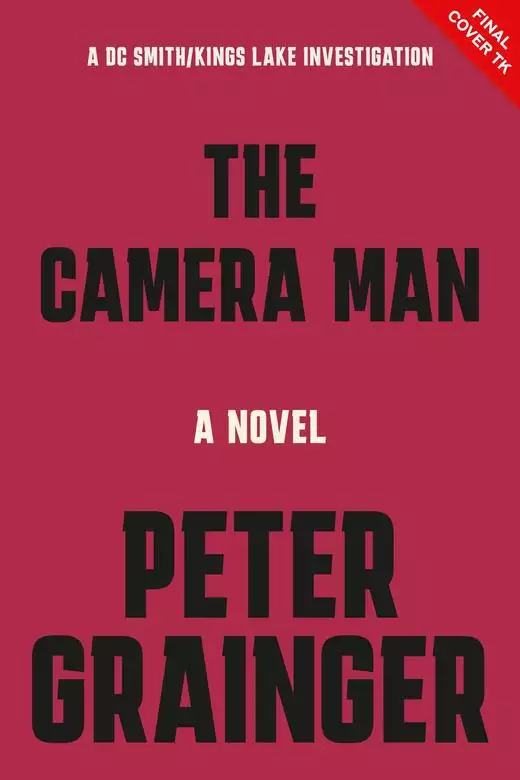
The Camera Man
Peter Grainger
Spending the low tide hours buried deep below the surface of the mud in a mucus-lined tunnel of one’s own making might seem the perfect solution to the ever-present risk of being devoured but there are other creatures who have solved this problem. The long bill of the Curlew is curved like a sabre but he uses it more as a rapier, probing into the ooze, finding the burrows of the worms and then angling his head and neck as the bill is worked deeper, seeking out the occupants. Remarkably, the tip of the bill is flexible – an adaptation that took perhaps a million years to perfect – enabling the bird to open its beak and seize the ragworm several inches below the surface. The unfortunate creature is dragged up into the daylight just as a Blackbird or a Song Thrush produces worms from your lawn after a shower, as if by magic. And if all this isn’t some sort of natural magic, then what is?
It’s early. The sun rose less than thirty minutes ago, and the wet, shining surfaces of the saltmarsh are soft shades of blue and fading pink, reflecting the clear skies of a Norfolk dawn in late July. The Curlew has been feeding since before first light, his movements up and down this coast governed by the ebb and flow of tides and the phases of the sun and moon. This is a good place, one he knows well from past seasons, and he will find all he needs for the day here, but now he has his head raised and the beady black eye is watching. He has an intimate knowledge of this low horizon. Any change at all is a warning, and there has been a change.
A man has appeared in the east, a silhouette against the newly risen sun. The figure is tiny but as the bird watches, it grows a little larger. The man is approaching. For some reason he raises his right arm and a dog appears, leaping up towards the hand. The man throws something into a creek and the dog disappears. There comes the sound of distant splashing. The bird crouches a little, as if ready to take flight, as if the man and the dog might be hunting. But he does not fly. Dimly, in the memory that is so very different to our own, the Curlew remembers – he has seen this man before, on other mornings. He cannot judge whether it was yesterday or a year ago for he has no such concepts, but he did not fly away, did not waste the precious resources of his energy, and he is still here, still in existence. It is a complex but vital calculation, one his instincts must make a hundred times a day. He crouches a little more and watches.
The man has called to the dog and now it trots by his side, looking up at him every few paces. He, the man, is aware of the bird out on the marsh but he doesn’t look at it directly because that will make it fly. From the corner of his eye he watches it. The coastal path will take him to within fifty yards of where the Curlew waits, as if it is a painted thing, a decoy – and fifty yards would be within range of the heavy-bore shotguns the old wildfowlers used when they hunted such birds for the London markets.
Imperceptibly the bird turns its head, keeping one eye fixed on the man and the dog as they pass by. They grow smaller again. The dog runs ahead once more, leaping into another creek. When they are almost out of sight, the Curlew ruffles its feathers and begins to probe the thick, sweet-smelling ooze for another worm.
The man walked briskly along the top of the bank until the village of Marston was in sight. Soon after that he reached a point where there were two sets of steps – one set went down to his right, to a newly-repaired wooden landing stage where a small sailing dinghy called Rebecca Louise was moored, and the other steps ran down the bank to his left where a cottage sat snugly in the morning sunshine and out of the prevailing south-westerlies of autumn and winter. He stopped, as he did briefly almost every day, and admired it all: idyllic, of course, as every visitor felt obliged to say, but in a January gale it was a different story. Not that he could now imagine ever leaving the place. An unsurfaced track called The Drift led from it towards the village, and being at the end of this track had resulted a long time ago in some no-nonsense, early occupant of the cottage naming it Drift’s End.
Going down towards it, he noticed the car was missing and checked his watch. As far as he knew, the woman who lived here with him was working from home today, and so he was a little puzzled. He took the dog round to the side of the house, feeling in his pockets for a mobile phone in case there was a message, but it wasn’t there. He could not be certain about where he had left it – this was not unusual and he didn’t let it bother him.
The dog, Layla, was waiting patiently by the outdoor tap. He was certain this was the smartest animal he had ever encountered, and it was only a matter of time before he managed to convince his partner of this, too. The water in the coiled hosepipe was still warm from yesterday’s afternoon sunshine, and he wasted no time in washing the worst of the saltmarsh smell out of her thick coat – it’s either this or being tied up outside until you’re dry he said to the dog when he caught sight of her reproachful eyes. He had to admit the aroma could be a little overpowering at the breakfast table.
There was a garden bench up against the wall beside the tap, and on it lay an old bath towel. He used this to rub down the dog, and she made no attempt to avoid his attentions, knowing full well this was the quickest way to a bowlful of food. When that job was done, he hung the towel back on the bench – the sun would reach this corner in a very few minutes. It was warm enough to eat outside, so he positioned the little iron bistro table and its two chairs where they would be in the sun and offer the best view of the garden behind the cottage, and then he went inside, followed by the dog.
Slices of bread had already been cut for toast, and they were still moist and fresh – she could have left only minutes before he returned. On the marble worksurface next to the breadboard he found the reason for her disappearance; the plastic bottle contained only an inch of milk. Force of habit led him to open the fridge door but sure enough, the compartment at the base of the door was empty. He had done the most recent shop and would have to accept responsibility.
The dog sat behind him in a rectangle of sunlight – she knew where each one would appear in succession as a day passed. He wondered whether she made any allowances for seasonal changes, and thought he might make an attempt to observe her behaviour in that respect: then he shook his metaphorical head and told himself things hadn’t got that bad, not yet. He measured out enough Colombian beans for four cups and put them into the electric burr grinder but he didn’t press start – people do not realise the importance of grinding coffee beans only seconds before adding the first dash of not-quite-boiling water. Soak for thirty seconds before adding the remainder of the water – this softens the grind and releases certain oils which would otherwise be missed. Jo had asked him once whether he thought some people might consider him a coffee-bore, as well as a tea-bore. He had answered that he thought it quite likely, and said that actually he was probably capable of being a bore about quite a wide range of topics. She’d said that he was probably right.
He thought he could hear a vehicle coming along the track, and when he turned around the dog was back on four feet and wagging her tail; ironic, really, when he considered how often he had to explain and defend the dog’s apparent misdemeanours to the mistress of the house. Then he switched on the kettle and set the temperature to 92C, which is just right for a single-estate Colombian with notes of biscuit, dark chocolate and caramel.
Personally, he would never have added any of that freshly-bought milk to a Colombian, but they’d had that discussion a while ago and Jo did so without inhibition, just a dash of it. Layla knew better than to beg at the table, and she’d taken up a position in front of the bench, a few feet away. On the table was a selection of marmalades and a jar each of Marmite and peanut butter, but Smith had spread on all three pieces of his toast the home-made blackberry jam – home-made by Alice who ran the village shop in Marston. It was so good Smith was wondering why he’d never tried to make it himself. They had an old book about making preserves, and he added to one of the lists he kept in his head the task of finding out what was involved in the process. People think retirement is all about leisurely lounging but it is not so, at least not for me, he thought, wondering whether he should grind another 40 grams of Colombian beans – it was a particularly beautiful morning and Jo seemed in no hurry to go up to her office and begin her day’s work.
The honeysuckle which was slowly smothering the garden shed was in full bloom, and a pair of Spotted Flycatchers had built there. For a few minutes there had been thin anxiety calls because the people were close by, but now the birds were busy again, taking insects to the little nest wedged between the main stem and the wooden side of the building. Jo had told him this was a rapidly declining species, which made their presence more special and at the same time more sad. He thought about that Curlew out on the marsh – another one on the way out in most of Britain according to the wildlife magazine they received each month. Is it really impossible for us to solve this problem, for us to share the place a little better than we do?
Jo said, ‘If we’re going to book that weekend away, Alice says she’ll have Layla, by the way.’
Smith finished the coffee and put down the cup – the dog’s ears pricked up in case this was a signal he was about to head for the kitchen, though one could argue it was because she’d heard her name mentioned.
He said, ‘The only problem with that will be getting her back again. But let’s do it. When does the exhibition finish?’
She told him it was on until the end of September – an exhibition of Monet landscapes at the Royal Academy. Smith knew little enough about art – so little that it was a subject on which he could not be a bore – but there was something about a good Monet, and some of these pictures hadn’t been on show in Britain for a century. Many years ago he and Sheila had visited the Musée d’Orsay and he’d stood for a long time in front of some of those pictures without saying very much. And there were Van Goghs too, which were far more powerful in life than in books and prints, running the Monets a close second. Technically, when he stood regarding a painting, he had no idea what he was looking at but the feelings were strangely moving. Jo knew more about the matter, and he told her he was more than willing to be instructed – ‘In fact,’ he’d said, ‘you can treat me as a blank canvas…’
They’d been together for a while now and were past the point at which she felt obliged to laugh at his jokes, even the good ones – probably a sign that matters were pretty sound, all things considered.
She said, ‘Let’s make it a long weekend, then. Go down on a Friday and come back on the Monday morning. I’ll find a hotel in the city and we’ll get about on public transport. It’ll be a nice break.’
He agreed and stood up, the decision about more coffee having been made. Without being asked, Jo said she’d love another cup this morning, and then, ‘Oh, I almost forgot…’
Smith turned to face her – that last statement wasn’t necessarily the whole truth. You develop an instinct for these things.
He said, ‘Yes?’ with a barely disguised note of suspicion.
‘You left your phone in the car. It rang and I answered. It was Jason Diver.’
Smith looked at his watch and said the call had been rather early.
‘Yes,’ Jo said, ‘he mentioned that as well. He called early in the hope of actually getting a response. He seems to think you’re difficult to get hold of during normal working hours.’
Smith ignored all that and asked whether Jason had said what the call was about.
‘He did, a bit, which I thought was unusual. He’s got something he wants you to look at. He says it will interest you.’
The dog was on her feet, tail wagging, eyes puppy wide as she attempted to manipulate the human to go into the kitchen and open the food bag – this was a most unfortunate delay in the proceedings.
Smith said, ‘Did he give you any clues? Any details?’
Jo seemed to be finding something amusing. She said, ‘A little more. It’s about a woman who wants to have her husband declared dead.’
He thought for a moment and then said, ‘Hmm. There must be a few million women in this country who feel like that. I take it he’s been missing a while and she’s decided it’s time to move on. In the absence of a body, which is always a nuisance, she wants Diver and Diver to confirm there’s no proof he’s alive. And I’ve told Jason a dozen times I’m not getting involved in anything matrimonial. I have enough trouble sorting out my own relationships.’
Jo took this in the best of spirits and blew him a kiss – he even wondered if there was a reason why she wasn’t in a hurry to get into her office this morning. Then she said, ‘No, you’ve guessed wrongly this time. The Divers have been approached by the life insurance company involved. Jason said there’s a lot of paperwork but he’d like you to look at it.’
Smith said, ‘With a view to…?’
‘I don’t know. He didn’t go into it any further. But I suppose there’s some reason they don’t want to pay out, other than the obvious one.’
Back in the kitchen, Smith fed the dog and ground more coffee beans. In the two months since he’d succeeded in getting the charges against Charlie Hills’ son dropped and then discovered the young man had been guilty, it was true he had not always returned Jason Diver’s calls. Almost everyone involved in that case had considered it a triumph for Smith – only he, Jo and Detective Chief Inspector Cara Freeman knew the truth. It was a bitter moment for Smith, to think that his own skills, such as they were these days, had been used to undermine the investigations of his former colleagues. It had not been an auspicious beginning to a new career as a private investigator, and he would admit to himself that he’d hoped by not answering Jason Diver very often, the young man might eventually forget about the idea of offering him more cases.
Neither was he too keen on the idea of helping an insurance company not to pay out. They’d need a damned good reason not to – and then, of course, he fell to wondering what it might be. How long had the husband been missing? It’s almost impossible to disappear completely, increasingly so in the modern digital world. If there has been no sign of a body, it’s most likely because someone has hidden it well… But if that’s the case, if that’s even suspected, the police would have been involved. This is another worrying thought – he doesn’t want anything to do with an investigation involving the police after last time. Nice job, Jason, telling Jo just enough to get me thinking about it, though. Maybe the insurance company has…
He heard Jo in the kitchen and turned around. She looked at him and said, ‘I think I’ll have that coffee up in the bedroom. Would you mind bringing it up to me?’
He said he wouldn’t mind at all and she went up the stairs. He added more coffee to the filter, switched on the kettle again and made a face of pleasant surprise at his reflection in the kitchen window. Some days begin more auspiciously than others, there’s no doubt about that. He might even give Jason a ring later on.
Madison came into Jason Diver’s office and said, ‘Just checking you’ve remembered moving the Zoom with the people in Warsaw to midday…’
He looked up from the screen and said he hadn’t forgotten.
Then she said, ‘And David will be here in seven minutes.’
Diver nodded again, and said, ‘How do you know he’ll be here in exactly seven minutes?’
‘Because your meeting with him is at eleven, and he always arrives two minutes before.’
He glanced at his watch and indeed the time was nine minutes to eleven. He said, ‘Always two minutes?’
‘Yes. If he’s early, I expect he waits outside.’
‘But we have a waiting room. He could…’
His receptionist-cum-p.a. smiled as she nodded, and went back to her own desk. Diver stared at the file in front of him and wondered whether it was worth saying something; he’d already discovered that the people one employs as private investigators are a rather odd bunch but even so, how is one supposed to build a team ethic if they stand outside the building until two minutes before a meeting? After the considerable success of that first case, when all charges against Anthony Hills had been dropped and the solicitors, Fraser and Metcalfe, had been very grateful, Diver had hoped Smith would become more open to the opportunities on offer, but his reaction had been quite the opposite. Jason had contacted him about three more potential investigations but there had been an obvious reluctance on Smith’s part to become involved. Diver and Diver had gone out of their way to get him on board, expediting and paying for his registration with the Association of British Investigators, but perhaps Smith really had meant it when he said he would take the Hills case only to help out an old colleague and friend. If so, that was a waste of his abilities – but what other explanation could there be?
He sat back in the new Aeron Office Chair – “it combines a deep knowledge of human-centred design with cutting edge technology” – and swivelled it slightly from side to side. It was very comfortable. The file on the desk in front of him was nicely bound and he wondered whether the Axon Life Insurance Company did that in-house. He could ask Maddie to look into this for their own investigation files, if they ever managed to complete enough of them. Polly was good, and the only one so far to stick around and make a go of it – all the rest had drifted away after Diver and Divers’ expectations had one way or another overwhelmed them. It was true that his sister Katherine had personally frightened off a couple of them but was professionalism too much to ask? The investigator’s position offered all the benefits of self-employment with no upper limit on earnings: having made a success of the online security business through a great deal of hard work, it was difficult for him to understand why others were not prepared to invest in themselves in the same way. The younger ones, anyway – someone like Smith was in a different position, having retired from many years of service in the police force: his professionalism was beyond doubt but it seemed odd that nothing he had been offered since the first case had caught his interest. Once he had got going on the Hills investigation, he’d been unstoppable – there’s a better word – indefatigable – and if that was also to be his last case, it was a pity. Diver opened the file and thought, this is probably the last chance we have with him.
Moments later he heard voices in reception and looked at his watch – 10.58. Maddie was laughing already, something else that always seemed to happen as soon as Smith arrived. She was the only person who continued to call him by his Christian name; Jason had tried but it had never worked for either of them as far as he could tell. DC was acceptable but in the end Jason had realised that whenever he thought about him, he did so as Smith, and there was no point in fighting losing battles.
The eponymous and apparently reluctant private detective appeared in Diver’s doorway and said good morning. The door itself often remained open in these encounters, but today there was a waving of the hand to indicate it should be closed before Smith sat in the seat on the other side of the desk. Smith took another glance at the closed door before he said, ‘If this is a disciplinary procedure, I’d like a witness or a friend present.’
As ever, this was delivered with a perfectly straight face. Whilst Jason Diver would not have claimed to be wise to it now, he had enough experience not to rise to the bait on every occasion.
He said, ‘It isn’t. But we are going to talk about a possible case, and Madison has said she would rather not overhear the details of those. So-’
‘She’s a star,’ said Smith. ‘I hope you realise that. I’m surprised she’s still here, to be honest.’
Diver took his time, looking the other man directly in the eye.
‘Well, she’s certainly had the time to look for another job and serve her notice, if she wished to do so – it’s been a while since you’ve been in to see us.’
Smith agreed – ‘Hasn’t it? I don’t know where the time goes…’
Diver didn’t respond immediately, and a look of surprise appeared on Smith’s face – he was staring at something. He said, ‘That’s a new chair, isn’t it?’
‘Yes. Very observant of you.’
Smith still appeared to be taking in the details, as if office furniture had always been something of a passion. He even leaned a little to his left to get a better view.
He said, ‘It looks like a good one, too. They don’t come cheaply, do they?’
Diver said, ‘No. But if we ever get a team going and you’d like to manage that team, we’ll get you one just like it.’
Smith nodded and acknowledged that as a decent backhand return. He said, ‘Still having problems? It’s not for everyone, is it, the detective thing? You had a lady last time. Has she gone too?’
Diver said, ‘Polly? No, she’s still here and doing well. Didn’t you meet her?’
No, said Smith. A short silence followed – it was clear to Smith that Jason had something on his mind as well as a file on his desk.
‘You’re right,’ Jason said, ‘it isn’t for everyone. Our problem is, it doesn’t seem to be right for many people at all. We’ve tried five others since we started. The demand is there, for a reputable, honest local agency but…’
‘You just can’t get the staff.’
Diver said, ‘Yes, basically. You had a lot of experience in the force. What makes a good detective, Smith? What should we be looking for?’
There was no glib or flippant answer this time. Smith shifted into a more comfortable position on his chair. Out in reception, a phone was buzzing – perhaps someone else requiring the services of the detectives that Diver and Diver could not recruit.
Smith said, ‘Well, like all the best questions, it seems to be a simple one but you could write a book in answer to it. If my partner wasn’t so busy, I’d suggest she’s the person for that job. There’s no single quality that makes a good detective – it’s a blend. Like Johnnie Walker Blue Label.’
Jason Diver said, ‘You drink whisky?’
‘I have been known to indulge. Usually a single malt but I’m not a purist. There’s an argument to be made for blended whisky, as long as you’re prepared to pay. Cheap blends are awful – the best are very interesting.’
Diver said, ‘I prefer vodka.’
Smith nodded and said, ‘Yes. I’m not at all surprised.’
‘Why do you say that?’
‘Vodka’s a young person’s thing. You can mix it with anything, and make up new drinks all night. I like to be in bed with a book by half past ten. Vodka is Waters’ drink. But I did manage to introduce him to proper beer, so there’s still hope.’
Smith was well aware that his former protégé, now Detective Sergeant Chris Waters, was a friend of Jason Diver’s. But the young man in front of him was not to be deflected from his original question. He said, ‘OK, I take your point that a good detective needs a blend of qualities. What are they? I’m assuming that Chris has them. I could name some myself, of course, but I’m interested in your take on it.’
And this, thought Smith, while it’s an interesting question, could also be a very devious way of getting me involved in something, because young Mr Diver is a long way from the naïve and over-enthusiastic youth I first met a few years ago: if I give away what interests me in a job, he could use that, couldn’t he?
He said anyway, ‘What makes a good detective? I can’t answer for myself – that’s for other people to say – but looking back at the good ones I’ve known? Well, in no particular order…’
There was a pause during which Jason Diver resisted the temptation to pick up his pen and make notes of anything Smith might be about to say.
‘Once, I talked to a surgeon in A and E. He’d just spent several hours saving the life of a victim of a savage attack, someone we were eventually able to interview, and that led to a conviction. I said to him, I don’t know how you manage to leave this all behind when you go home. I remember he was shattered, totally exhausted, but he looked at me and said, I don’t leave it behind. I dream about it, and if I’m awake I think about it. He said, I replay it over and over – what could we have done differently, how should we be better prepared next time? Is there some new technique I haven’t heard of in another country? I’d better catch up on my reading…’
Jason Diver nodded but said nothing – he’d learned to listen since the two of them first met. Smith went on, ‘That’s something I’ve seen in good detectives. They go home, they go to the football, they go on holidays, but they can never quite leave an unfinished case behind. They’ll be watching a film or sitting on a beach but there’s a tiny bit of the mind focused on some nagging detail in a folder on someone’s desk.’
Inadvertently, Smith glanced at the item on Diver’s desk before he continued, ‘You mentioned Waters. Even on our first case when he’d only been at Kings Lake a week or two, he’d come in of a morning and say straight away, ‘So, what if…’ or ‘Is there a way we can…?’ I had a man called Murray on my team for years. Sometimes he’d come back to a conversation or something said in a briefing weeks before – he’d been chewing it over all that time, couldn’t let it go. Usually all this leads to nothing, but these people can’t help it. And sometimes, of course, it leads to something.’
Diver said, ‘That’s interesting. What else goes into the blend?’
‘The good ones get hung up on a detail everyone else passes over. The one thing that doesn’t fit the pattern, or the one thing that’s missing. How long does the average person spend looking for the last piece of the jigsaw they’ve done? I mean, they’ve done it but the last piece isn’t there. Five minutes? Ten? Half an hour? Then they forget about it. The people we’re talking about – or rather, I am – will never get over that. Even when they’ve retired, there are still things bugging them about cases they worked…’
Diver half-smiled and realised he didn’t need to ask the question – it was plain Smith was speaking personally about that particular situation.
Smith said, ‘I don’t want to take up the rest of your morning. Good detectives are curious, which is a polite way of saying they’re nosey. Once they’re focused on someone, they want to know all the ins and outs – if you ever find yourself being formally interviewed, don’t assume every question is relevant to the investigation. Also, they tend to be people who have trust issues – I think that’s the modern parlance – which is handy in the job but also explains why lots of them have serial car-crashes when it comes to relationships. Good detectives think analytically but not always in a conventiona. . .
We hope you are enjoying the book so far. To continue reading...