- Book info
- Sample
- Media
- Author updates
- Lists
Synopsis
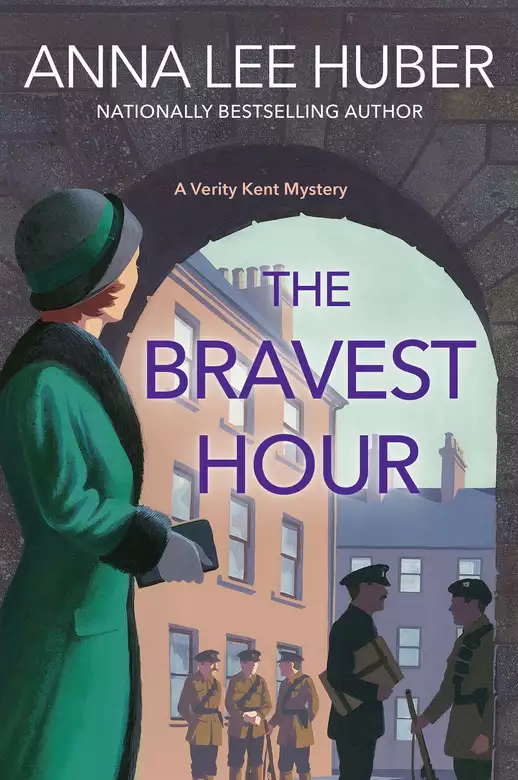
British Intelligence Agent Verity Kent managed to survive four years of The Great War, slipping in and out of German-occupied Belgium and northeastern France, dodging serious consequences or capture. But as she faces her most dangerous—and devastating—challenge yet, her luck may have run out. Hopefully, her resilience has not . . .
November 1920. Dublin, Ireland. Verity’s efforts to foil a contemptible plot by the traitorous Lord Ardmore and save countless lives—as well as the British government’s reputation—has exposed her to detrimental scrutiny, bringing her contact with the Irish rebels to light. Crushingly, she finds herself incarcerated in Dublin Castle, the “Dread Bastille,” where she must withstand interrogation from her own countrymen.
Despite her circumstances, Verity knows better than to talk—though decrying Ardmore to his face would be more than satisfying. For once again he has escaped culpability, scapegoating his associates. Her only hope is intervention from her shadowy superior. And yet, when rescue finally comes, Verity finds herself changed by what she has endured, perhaps for the worst.
Still, there’s no time for respite or healing. Ardmore’s latest nefarious objectives go beyond mere treason. Allegiances are shifting as the war between the Irish Republican Army and the British reaches a new fever pitch. If Ardmore is to be brought down, Verity and her husband, Sidney, must gather all the allies they can for one last stand.
But just when victory seems assured, one shocking and vicious turn of events changes everything. Now Verity must decide where her loyalty lies. And it may not be on the same side as the man she’s loved to the grave and back.
Release date: August 25, 2026
Publisher: Kensington Books
Print pages: 384
* BingeBooks earns revenue from qualifying purchases as an Amazon Associate as well as from other retail partners.
Reader buzz
 Please log in to recommend or discuss...
Author updates
The Bravest Hour
Anna Lee Huber
November 1, 1920
Dublin, Ireland
If I’d thought the sight of Dublin Castle was alarming on my previous visits, I discovered that entering it as a prisoner was infinitely more terrifying. Its stark, imposing stone edifice draped with barbed wire and topped with meshwork meant to deflect bombs, and canvas screens supposed to hinder snipers, may have seemed intimidating before, but now I could barely summon the saliva to swallow as I eyed the cast-iron gates reinforced by steel plates before me. They were flanked, as usual, by guards and policemen with guns at the ready, all of whom stared at me with rampant curiosity where I sat stiff-backed in the rear of the open-topped British Army’s Crossley tender, a woman surrounded by no less than eight soldiers in full kit.
I knew it was too much to hope that none of the guards had recognized me, either from my previous unescorted visits to the Castle, or because my image had been plastered across the pages of newspapers countless times over the past few years, be it posing in my glad rags for the society columns or reporting my exploits with my war-hero husband, foiling murderers and treasonous plots. I wondered how long it would be before someone leaked to the press that I was now the one being held under suspicion of treason.
I forced myself to take deep, calming breaths even as my heart pounded wildly in my chest as the Crossley was cleared to continue through the Palace Street gate. It was the first time I’d entered the “Dread Bastille,” as some of the Irish called it, via the main archway rather than the small pedestrian side door, and I decided I would have been quite content never to have had the experience. Especially when the Crossley rolled to a halt only a short distance inside and a rifle butt was thrust unceremoniously into my side by one of the Auxiliaries seated next to me. “Move!”
I winced in pain, as much from the blow as the clatter of the castle gate slamming shut behind us.
“Now, now,” an officer who had emerged from the narrow passage leading off to the right admonished the Auxie. “That’s no way to treat a lady.” He offered me his hand, and while I accepted his help in climbing out of the Crossley, I didn’t trust it. Or his smile. His teeth were straight, albeit yellow, and his brown mustache neatly trimmed, but his grin held little sincerity.
His courtesy was merely a tactic. The men who had detained me had been rough and frightening, and so he would be solicitous and gentle, coaxing my trust. It would be the simplest thing to unburden myself to him and plead my case. It would certainly be the most painless option. For now.
But I knew that anything I said would be twisted and used against me. O would make sure of that. And Ardmore, if he’d managed to escape accountability, as I feared.
I still couldn’t help but be suspicious of how rapidly the Castle had moved to have me detained. Less than three hours had passed since my husband, Sidney, and I had left the Crown Forces to sort out the muddle outside the gates of Mountjoy Jail. Since we’d returned home and ordered our staff to pack while we tied off a few loose ends. Another hour and we would have been safely away. Though there was every chance we might still have been prevented from boarding the ferry to England at Kingstown that evening. But in my experience, bureaucracy never moved that swiftly. Not unless measures had already been put in place.
Anger spiked through my veins, sharp and hot. For there was no doubt in my mind who was behind my arrest. Colonel Ormonde de l’Épée Winter, otherwise known as O, had been appointed director of intelligence in Ireland and deputy advisor to the police by his boss, Sir Basil Thomson, director of intelligence at the Home Office and ostensibly head of all British intelligence agencies. Neither man was enamored of me or my abilities.
Though to be fair, I wasn’t entirely certain how much of my service during the war and after they were aware of. My superior, C, the Chief of the newly christened Secret Intelligence Service—the foreign division of British military intelligence—was rather prone to keeping matters close to the vest, particularly when it came to his agency. And for good reason! The safety of his agents and the sanctity of their missions were reliant on secrecy and discretion. Which was not to say that C’s stubbornness in functioning as if he answered to no one wasn’t also driven by his ego and delight in the clandestine nature of intelligence work, but the main principle still applied.
In any case, I’d been demobilized along with most of the women who had worked for the various military intelligence agencies during the war, operating in only an unofficial capacity for C since then. My main objective had been to gather evidence to expose Lord Ardmore as the traitor and murderer he was. Unfortunately, he was too crafty and devious to ever leave admissible evidence directly tying him to any of the dastardly plots we knew he was responsible for, and his friends were so highly placed in the government—Thomson among them—that they refused to entertain such a besmirchment on his character and theirs by association.
Most recently, he had attempted to trick the British Army into deploying a batch of deadly phosgene cylinders on the crowd of protestors gathered outside Mountjoy Jail that morning as Kevin Barry, a young Irish rebel, was executed. The poisonous gas cylinders had been disguised to look like a simple lachrymatory agent—a tear gas. Sidney and I had risked much when we’d interceded to stop the soldiers tasked with crowd control outside the prison just as they were preparing to utilize the gas. Not only had we saved countless numbers of Irish civilians’ lives, but we’d prevented the damage such an act would have caused to Britain’s reputation around the globe. A reputation that was already badly damaged from the government’s handling of the Irish rebellion.
Among the risks we’d taken had been our being seen in the company of some of those known Irish rebels. Rebels we had convinced to help us, also at great personal risk to themselves, when our own British Intelligence connections had failed to assist us, and indeed, had even accused us of wasting their time when they had been the ones whose dithering had allowed the phosgene to slip through our fingers during an earlier attempt to confiscate it. An operation that the F Company of Auxiliaries based here at the Castle was perfectly aware of, for some of them had joined us in that raid.
But I knew none of that would matter to O. Not if he could prove that I had been in contact with the Irish rebels and failed to report what I’d learned. Never mind that any report I tried to file would have been dismissed as feminine nonsense and all but ignored. The fact of the matter for him would be that if he could demonstrate I’d corroborated with known enemies of the state, then he could discredit me and my sex. To O and many of the men within British Intelligence, women were seen as unreliable and inherently inferior agents, no matter what my record and those of the other female agents I’d worked with demonstrated to the contrary. If he could see me brandished as a traitor, he and others like him would see it as confirmation of all of their prejudices against the fairer sex.
No. Better to remain silent, I decided as I accepted the officer’s proffered arm and allowed him to lead me through the narrow alley. At least until I knew which way the wind blew and what tack they intended to take. Sidney would find a way to get in touch with C.
Unless he was detained, too.
The probability was strong. Though the fact that he was a well-known war hero and a recipient of the Victoria Cross gave me hope that the government would wish to avoid such an embarrassment. It also gave me hope that, as his wife, they would realize they couldn’t hold me for long either. Not when such news was bound to be splashed all over the papers. Unfortunately, that only heightened the danger I would be under for the duration. Desperate men took desperate measures.
Nevertheless, even if Sidney and our staff were also arrested, surely C must discover our plight sooner than later. After all, Nimble, my husband’s valet, had sent off my telegram to C just that morning before my detention, letting him know we’d foiled Ardmore by preventing the phosgene from being deployed and that we would give him a full report upon our return to London the following morning. Surely, he would realize something was wrong when we didn’t turn up. Our friends Max and George, who I’d also sent telegrams to, would realize the same.
My stomach churned with anxiety, knowing there was every chance C might also refuse to interfere. After all, Sidney and I had been sent to Dublin in an unofficial capacity. In addition to locating the missing phosgene, we’d been tasked with finding an intelligence colleague who had been sent to infiltrate the Irish Republican Army and then disappeared. However, C had made it clear when he sent us that we were on our own. British Intelligence here would not be made aware of our assignment so as to keep us from being discovered by one of the informants we knew that Michael Collins, the director of intelligence for the IRA, had recruited within the Castle, and to keep Thomson from interfering.
But Thomson had become suspicious of our presence in Ireland anyway, and Collins had learned of my and Sidney’s real reasons for being there. Mostly because my intelligence colleague, Captain Alec Xavier, had switched sides and begun working for the republicans. And there was no telling how angry C was that we’d both ignored his recent orders for us to return to London and failed to report that Alec had defected to the enemy. I supposed I was soon to find out.
“I do apologize,” the officer was saying. “I’m afraid the men get carried away with their duties sometimes.” He chuckled, as if finding the terror the Crown Forces often meted out on the Irish public to be humorous. I’d witnessed the same behavior during the war from German soldiers in relation to the Belgian and French citizens whose territory they occupied. The comparison was not complimentary. “Perhaps they didn’t recognize you.”
I wasn’t certain exactly what he’d meant by this remark or the look he cast at me, but if he meant to imply that my celebrity demanded special treatment, I would take it, no matter the unfairness to other prisoners. I was no fool. However, I was quickly disabused of this notion.
The officer nodded to a soldier standing along the corridor, who opened a door for us. He halted with me at his side just inside the doorway, as if waiting for me to register the impact of my surroundings. I would later come to know that this was called the guardroom. The space was fairly large with two tall windows that looked out on a passage called the Exchange Court that ran alongside the City Hall toward Dame Street. Against one wall sat a handful of men on wooden boards or blankets, who I gauged to be fellow prisoners. Opposite them clustered another group of men around the warmth of the fire, dressed in the police uniform of the Auxiliaries. Both groups had been chatting quietly as we entered but stopped at the sight of me.
“I’m afraid the accommodations won’t be to your standards,” the officer escorting me quipped with a cruel twist to his lips.
I ignored this remark as well as the pounding of my heart and resisted the urge to straighten my appearance. I looked far from my best, having been on my feet all night hunting for the phosgene, and then manhandled not once but twice. First, by the soldiers we’d had to convince were about to fire phosgene and not tear gas at an unsuspecting crowd, and then later by the Auxiliaries who had arrested me. But I wasn’t here to impress these men. My armor as a fashionable society woman would do me no good here, and in fact, might cause me greater harm.
“Sign in,” the guard who was the section commander stood to order me, pointing at a book.
I stepped closer, peering down at the logbook of names written in various spidery scrawls. I could feel the officer looming behind me and picked up the pencil. There was little use lying about my identity as I’d suspected some of these men had done, eager to separate themselves from any past records. So I marked down the truth.
Verity Kent. London, England. Wife of Sidney Kent (V.C.).
I gritted my teeth as I wrote V.C. for Victoria Cross. Just let them try to deny who we were and what we’d done for our country. Then, as I lowered the pencil, I recalled that V.C. could also stand for vi coactus, indicating this had been signed under coercion or duress. Let them wonder which I intended.
“Have a seat, Mrs. Kent,” the section commander told me, gesturing toward the pale green wall along which the other prisoners sat.
I did as instructed, sweeping my gaze along the row of eight motley-dressed men as I approached. My initial fear was that I might recognize one of them and they me. But while it was clear that most of them knew who I was, none of them appeared to give any indication that they were aware of my connection to Alec or Michael Collins.
I had to give British Intelligence credit for their cleverness, for it was obvious why I was here. They’d hoped a rebel detained here might in some way give me away. Perhaps they might also attempt to use a stool pigeon to try to coax information from me. But I’d been trained to expect these tactics, albeit from the Germans, not my own men.
As such, when a man of about thirty, with dark hair and a dusty flat cap, moved over to make room for me on his board, I was instantly on guard. Sinking down beside him, I adjusted my skirt and pulled the sides of the jacket of my navy-blue walking ensemble tighter around me against the chill. They had not given me time to don one of my warm coats or even to grab a hat before hauling me from the town house Sidney and I had rented on Upper Fitzwilliam Street.
The man passed me a gray blanket. “So, you’re really Verity Kent,” he remarked as I weighed the possibility that the blanket might be lousy. During the war, the men in the trenches had been riddled with lice, and I didn’t trust the conditions here were much more sanitary.
“Oh, sure. There are cooties on some of this lot,” the fellow declared with a lopsided grin, having divined my thoughts. “But that blanket’s clean. Ye can smell the soap. And there’s no tellin’ when they’ll bring us a fresh batch.”
He was right. I could smell the abrasive stench of lye. That and the cold stone at my back convinced me to risk it. Though the moment I felt the blanket settle around my shoulders, my scalp began to itch. It was undoubtedly from fear and not actual lice, for they couldn’t move that quickly, but it was all I could do not comb my fingers through my auburn Castle-bobbed tresses searching for the little buggers.
In any case, the scent of lye was preferable to that of some of the men around me, who reeked as if they hadn’t bathed in weeks. I wondered how long some of them had been detained here, but I didn’t dare ask. For one, I wasn’t sure I wanted to know, and such a question would only make me look like the stool pigeon. Though an odd one, to be sure. Out of my periphery vision I could see some of the other prisoners sneaking looks at me.
“I’m Mick, by the by,” the man next to me said. “Not the Mick, but near enough.” He chuckled at his own jest, clearly unaware that I was familiar with the Mick Collins—Britain’s enemy number one—and so I knew he was nothing like him. At a glance, he was much too scrawny compared to Collins’s tall brawler’s frame. Though I imagined him making light of the situation much as this fellow was.
I nodded in acknowledgment but still didn’t speak.
He eyed me with interest. “You’re bein’ quiet to a purpose, then.” He nodded, turning to look up and down the row at the other prisoners and then across the room at the four guards seated near the fire. The officer with the mustache had left. “Prolly wise.”
Though he seemed genuine, I was still leery of this being a ploy. After all, wouldn’t a stool pigeon who realizes his mark is aware of his existence say something similar to put them at ease?
“Let’s talk of anythin’ but ourselves and Ireland,” he suggested.
“All right,” I agreed, not relishing the idea of sitting here silently hour upon hour, waiting to see what would happen. A distraction would be most welcome. Though I would still have to take care with my words.
Just then, my stomach emitted a rather embarrassingly loud growl. I flushed, pressing a hand to it as Mick laughed.
“Sure, and it’s been a long time since my breakfast, too.” He announced, turning hopefully toward the guards.
“The mealtimes haven’t changed, Corcoran,” one of them replied quellingly, though his lips curled at one corner in amusement.
“Sure, but for the lady …” His voice was hopeful as he gestured toward me.
I shook my head. “I’m fine.”
“Fine? Ye sound like you’ve swallowed a tree cat!”
“A pine marten,” the man on my right explained in response to my alarmed expression. “They do have a distinctive growl when provoked.”
“I’m fine,” I insisted even as my stomach growled even louder. My face flamed.
The commander nodded to one of the other guards. “Go see if you can scrounge something up for Mrs. Kent.”
I drew breath to protest but then realized it would do no good. Besides, I was hungry. The boxty Sidney had procured for us on our return from Mountjoy Jail had been consumed hours ago. The potato pancake had also been the only thing I’d eaten in nearly twenty-four hours, and while at times I’d subsisted on less during the war, such a state was always less than ideal. Especially when coupled with no sleep.
One of the prisoners sighed. “We missed the barmbrack.”
This seemed to hold great significance for some of them as they ruminated on past Halloweens and whose mother’s recipe for the moist sweet bread speckled with raisins and sultanas was better. Listening to them talk about the fortunetelling trinkets hidden inside—rings and coins and beans—reminded me of the cakes we’d always enjoyed on Twelfth Night.
In spite of our preoccupation with locating the phosgene the previous evening, I’d still been aware of the passage of Halloween. Hollowed-out turnips with penny candles had decorated many a step and window, and children dressed in colorful clothing—most without shoes—had marched through the streets banging saucepan lids and tooting horns, demanding apples, nuts, and treats, their hair flecked with the salt people sprinkled them with to ward off evil spells. The republicans with us had jested with the children and passed them bits and bobs of whatever they had in their pockets while Sidney doled out halfpennies. The children had been a stark reminder of what was at stake if we’d failed to capture the phosgene and prevent it from being deployed, for many of those same shoeless children would inevitably have been among the crowd holding vigil at Kevin Barry’s execution the next morning.
I wanted to take comfort in knowing that at least that potential horror was over. But it was hard to do so when I knew another possible horror awaited me deeper inside the Castle.
The guard returned with a stale piece of bread for me, but I didn’t dare complain. I simply ate it and was grateful. Though once my stomach had stopped rumbling, in spite of my terror, I found myself struggling to stay awake. It would have helped if I could get up and move about, but the guards only allowed us exercise of any kind at prescribed hours. Such was my fatigue that I thought I might have even been willing to take Forced March if it had been given to me, even though the pills of powdered kola nuts and cocaine, which were supplied to soldiers to keep them awake and sharp, made me keyed up. Not that the guards were offering. They would have kept such substances for themselves.
Hour after monotonous hour slipped by, broken only by the occasional patrol moving through, pulling on or taking off their ammunition slings and strapping their holsters low just above their knees, rifles clutched in hand. Most were Auxiliaries, or Auxies as they were called by the populace, dressed in their police uniforms with their distinctive tam-o’-shanter hats, but a few were dressed in mufti, marking them as intelligence agents. Nearly all of them took their time looking at me, though none approached. Perhaps they’d been warned not to. I kept my eyes peeled for a friendly face, in particular Sidney’s acquaintance, Captain Maxwell, but it seemed as if anyone who might be acquainted with me was being kept away.
Each time the door opened, I felt a surge of hope that someone was there to straighten this muddle out, to tell me it had all been a mistake and I was free to go. That they’d spoken to Bennett and Ames and Maxwell about the raid several nights past, or the officer in charge of the battery of Livens Projectors outside Mountjoy Jail who I’d saved from gassing hundreds if not thousands of Irish men, women, and children with phosgene. That C had called to vouch for me and Sidney and demand our release. But each time my hopes were dashed.
As the afternoon wore on, the guards ventured to speak to me. They were for the most part officers from the war, much like my husband and our friends. I knew their type well. They’d been drawn here by the promise of good pay and a chance to recapture the comradery that many of them had missed since being demobilized from the army. But they’d not known what they were getting themselves into.
They were good soldiers, battle-hardened, but rather than being seen as liberators as they had been in Belgium, France, and Gallipoli they found themselves surrounded by a hostile populace who for the large part didn’t want them here. Rather than fighting a battle of organized warfare, they’d had to adapt to the IRA’s guerilla tactics and isolated skirmishes and had quickly gained terrifying reputations. They’d been recruited to bulk up the Royal Irish Constabulary police force, but they were men who’d been baptized in the fire of four long years of bloody combat, not peacekeeping.
And our government had known it. Had known it and counted on the havoc and retaliation that would inevitably result. I felt certain of that now. Our contacts within the government in London and here among the Castle administration had revealed enough to suggest their underlying motive. So here I was, caught in the middle, feeling sympathy for the Irish and their cause and suffering, and yet also empathetic to these men our government were using as instruments of terror, twisting their war-weary bitterness into spears and battering rams.
“But what on God’s green earth are you doing here in Dublin?” one of them exploded with, once they’d grown comfortable enough with me. For this was the question that was clearly on all of their minds. The question from which all other questions stemmed. They simply couldn’t fathom why a social darling like me would willingly come to Ireland. From that emanated their suspicions that I might genuinely have been up to no good.
I met his gaze evenly, knowing I had to answer something. “I’m here with my husband.”
It wasn’t truly an answer, but it was. Because these men knew who Sidney Kent was, knew of his reputation, and they would assume what most people had when we’d arrived in Dublin. That Sidney had been sent here on some sort of clandestine assignment, possibly on behalf of the army or the War Office, possibly at the lord lieutenant’s behest, and I was merely here to support him. It made clear my loyalty was to my husband, and that I would not speak out of turn without his permission. This was something I knew these men would grasp and even respect without my having to spell it out.
It was something the other prisoners recognized as well. If they were Volunteers—members of the IRA—and they suspected I was sympathetic to their cause, they might even have perceived it as the ploy it was. Though they did not give me away.
As evening closed in, the guards were served their dinner and then rose to allow us prisoners to eat at the table where we were served the same food. We were to share knives and forks, but none of the men would hear of me eating after them, instead insisting their hands or a piece of bread would do to shovel the grub into their mouths. I accepted the courtesy with gratitude, not wanting to offend their kindness.
Eventually we were ordered to turn in, a command I received with mixed emotions. I was exhausted and wanted nothing more than to lay my head down, but as tears stung the back of my eyes, I also realized I’d been counting on rescue. Accepting that it had not come, that I would have to pass the night here, was a bitter pill to swallow.
I forced myself to focus on the procedure as another prisoner showed me how to make our beds lest I give way to a spate of tears. Two thin boards were balanced on top of two wooden trestles and then layered with three mustard-brown firmly padded squares called army biscuits. I still had my blanket from earlier, and I lay down, pulling it over me.
Most of the men knelt beside their beds to pray, but I stayed where I was, winging a desperate plea toward heaven. Many of them shared their makeshift bunks, but no one tried to crawl in with me. I also noticed somewhat belatedly that they’d ranged their beds around me almost as if forming a ring of protection, and I felt tears once more bite at the back of my eyes.
The lights were kept on and would remain so throughout the night. The better to see us, I supposed, and ensure we weren’t up to mischief. Most closed their eyes, at least feigning sleep, but I found it difficult to settle despite my fatigue. Gingerly turning over to my other side, I met the kind gaze of one of the older gentlemen.
“Don’t worry, lass. We’ll see ye don’t come to harm,” he whispered.
“Thank you,” I choked out on a sliver of sound, appreciating the sentiment even if I didn’t see how they could interfere with the guards if they took it into their heads to harass me. After all, they had all the power and the weapons, and essentially the government’s sanction to shoot first and worry about explanations later. But perhaps he was speaking of protecting me from any new prisoners.
“Naw. We should be the ones thankin’ you.” He nodded toward the guards clustered once more around the hearth. “They’re on their best behavior with ye present. Mark me, there won’t be any drunken rants tonight or guns pointed at our heads.”
My eyes widened in alarm.
His voice gentled. “They’re only threats. They never shoot. Usually.”
The last was a muttered afterthought, but it gripped me fast and wouldn’t let go. I didn’t dare look at the guards for fear they would know we’d been talking about them. Time ticked by slowly as I told myself to listen to the sounds in the room. The snores of the man at my feet. The tick of the clock on the wall. The scrape of one of the guards’ chair legs against the floor.
I discovered the Auxies were more talkative at night. I didn’t know whether they’d been waiting for us to fall asleep, or the darkness outside the windows invited confidences, or more likely, the bottle they passed around lubricated their vocal cords, but I heard a pair of them commiserating over how they missed their wives. This was in stark contrast to the younger guard, who tried to convince the others to lend him money for an assignation in one of the back lanes, promising to share the details later.
I tried to find the humor the other guards seemed to take in the younger man’s plight, but all I could summon was pity for the women forced to resort to such work and anger at a system that had driven them into it. They reminded me of the women in occupied Belgium and France who had been denounced as horizontal collaborators after the war because they’d been obliged to sleep with German soldiers or else go without food and watch their children starve. Their neighbors who should have known better had shown them no mercy, and it was doubtful the Irish were any more compassionate.
At some point, I must have drifted off to sleep, because some hours later I woke with a start, disoriented and afraid. I lay rigid as my sluggish brain readjusted to my reality. I couldn’t see the clock without moving my head, but I could see that it was still dark outside the windows. More importantly, something had awakened me, though I wasn’t sure what.
Moving as little as possible, I surveyed my surroundings. I could see that there were new prisoners now mixed in among us. I’d been forewarned this happened every night, as people out past curfew or captured during raids were brought in. There were also bound to be a few drunks, though they sobered up quickly once they realized they were in the Castle. However, I didn’t think one of these fresh recruits had startled me.
Then I heard the rumble of the guards’ voices.
“It must be a mistake,” one of them whispered to the others.
The commander’s lips smacked as if he’d been puffing on a cigarette. “All I know, is that they want to see her in the intelligence room, if not first thing, then near after.”
“Good God!”
“But surely they won’t …?”
“I don’t know what they intend. ’Tisn’t my
We hope you are enjoying the book so far. To continue reading...