- Book info
- Sample
- Media
- Author updates
- Lists
Synopsis
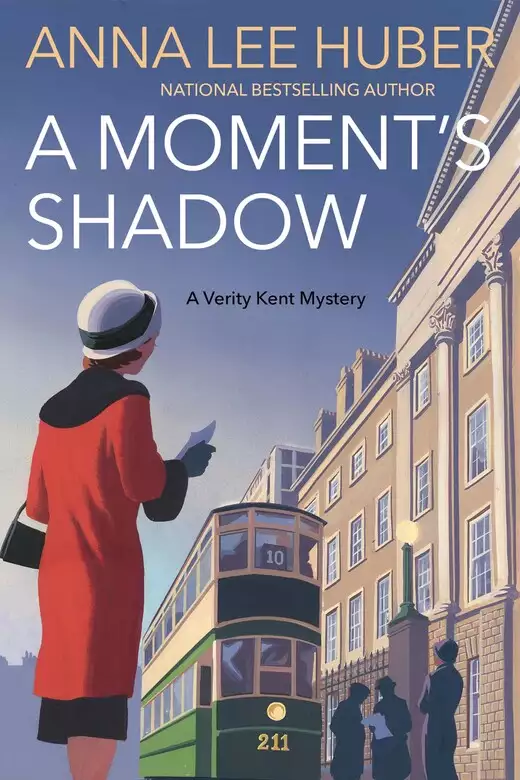
Violence, reprisal, and intrigue abound in post-World War I Ireland as the bloody conflict between the Irish Republican Army and the British authorities continues to escalate. But former British Intelligence agent Verity Kent must deal with a more immediate concern—the possession of poisonous gas by a ruthless adversary . . .
August 1920, Dublin, Ireland: A fraught task keeps Verity and her husband Sidney in the country after their initial clandestine mission has been completed: the traitor Lord Ardmore is scheming to employ the deadly phosgene gas he’s stolen for some terrifying purpose, and the couple will need both the Crown Forces and the rebels’ help to thwart him.
As they pursue their quarry, they are drawn into a case involving a series of cunning and brazen jewel thefts. Many believe it is the work of the Irish rebels, seeking to fund their revolution, but when Verity and Sidney are also approached by Michael Collins and the IRA to unmask the thief, they suspect he may instead be an opportunist using the political unrest as a cover for his crimes.
As the thief continues to pull ever more risky jobs—including targeting Verity and Sidney’s friends—the couple receive new intelligence that the gas they seek may be intended for a crowded event, one that the entire world will be attuned to. They must stop Lord Ardmore at all costs—or the consequences will be devastating . . .
Release date: August 26, 2025
Publisher: Kensington Books
Print pages: 368
* BingeBooks earns revenue from qualifying purchases as an Amazon Associate as well as from other retail partners.
Reader buzz
 Please log in to recommend or discuss...
Author updates
A Moment's Shadow
Anna Lee Huber
Despite the fact our friend had vouched for us, it was clear that Michael Lynch still didn’t trust us. I supposed I couldn’t blame him. My husband, Sidney, and I were, after all, British ourselves. We were also rather famous—or infamous, depending on how you looked at it—for exposing a nest of traitors and solving a number of highly publicized murders. It made sense that the man in charge of munitions for the Irish rebels would be reluctant to talk to us.
Though, it certainly didn’t help when Sidney persisted in making snide remarks. “Why not? It would undoubtedly prove more effective than these homemade bombs your men keep using in their ambushes.”
Alec and I joined Lynch in scowling at him. While it was true I’d read the same newspaper articles criticizing the Irish Republican Army’s use of makeshift grenades and explosives in their ambushes of the Royal Irish Constabulary’s barracks and patrols, I knew better than to rile the man. Not when we needed answers from him.
“Maybe so,” Lynch retorted. “But the men aren’t exactly trained in handlin’ dangerous chemicals. I’ve already got men stickin’ gelignite beneath their shirts next to their skin in order to thaw it out faster so it’ll ignite, poisonin’ themselves in the process. Not to mention a recent experiment with a lachrymatory gas, which exploded in one of my men’s faces and blinded the lad for twenty minutes.” He arched his thick dark eyebrows. “You were in the war, Mr. Kent.”
This was common enough knowledge given Sidney’s status as a war hero and his recently being decorated with the Victoria Cross.
“So tell me, how often did the poisonous gas that was released blow back in the men’s faces when the wind shifted? How often did it fail to do anything whatsoever except to create panic?”
This was a point well-taken. As horrific and terrifying as poisonous gas was, more often than not its deployment had been less than successful.
Lynch shook his head. “Naw, Mr. Kent, phosgene would not be my choice. Not unless, like I said, ye British used it first.” The way he said “British” was more of a curse word than a descriptor.
“As the leadership fears they might,” I interjected, letting him know we were well informed of their concerns, as well as put some metaphorical distance between us and the Crown Forces and British government they were fighting against.
He grunted noncommittally, eyeing Alec as if he was the source of this information. But while Alec and the man he now worked for, Michael Collins, the director of intelligence for the IRA and minister of finance for Dáil Éireann—the Irish Republic’s shadow government—had filled us in on a number of matters related to Mr. Lynch’s work, they were not the sources for that particular tidbit. Rather we’d learned it from two of our contacts inside British Intelligence, which had intercepted a letter detailing the IRA’s belief that since the British had used poisoned gas on the Germans during the war that they might use it versus the Irish rebels, and so they needed to be able to retaliate if necessary. However, I decided it was best not to share that detail with Mr. Lynch. Not when my and Alec’s history with British Intelligence was complicated enough, and thus better kept concealed.
“Maybe so,” Mr. Lynch conceded. “And rightly, if they do. But I’ll still not be after advocatin’ its use. Not unless we have to.”
“Have you seen its effects?” I asked, curious how much of his aversion came from experience.
“Naw, but I’ve heard tell from returnin’ nurses and some survivors.” His sallow countenance tightened with strain. “I’m sure there are worse ways to die, but havin’ your lungs burned by vapor and then drownin’ in the resultin’ fluid they release is a hell of a way to go.”
Out of the corner of my eye, I saw Sidney stiffen even as I struggled to squelch my own reaction to this reminder of just how steep the stakes were if we failed. We were both acutely aware we were not talking in hypotheticals. The sole reason we remained in Dublin was to find a batch of phosgene cylinders that had been stolen during the height of the war. Cylinders we’d confirmed had been brought here to Ireland for some nefarious purpose.
We’d been chasing them and the man behind their theft for nearly a year, and yet the canisters’ exact location and the proof to finally expose Lord Ardmore for the traitor he was remained elusive. We might have been drawn to Dublin in order to find Alec, who was both a friend and former fellow intelligence colleague, but we had stayed to stop Ardmore and prevent a catastrophe. Ardmore’s arrival in Ireland seemed to indicate the start of some sort of endgame, but we were still no closer to finding the phosgene than we had been a fortnight earlier despite all of our concerted efforts.
It didn’t help that with the implementation of the Restoration of Order in Ireland Act, the temperament of the war had escalated. The attacks on the Crown Forces by the IRA were growing fiercer and more widespread, and the retaliations and reprisals committed by the police swifter and more brutal. It seemed every day the newspapers reported another policeman had been ruthlessly killed and another village had been terrorized and vandalized in retribution. Barrack after barrack was raided, and creamery after creamery—the economic lifeblood of many rural communities—was burned. The barrage of tit-for-tat violence was unending, and it only threatened to get worse.
Even in Dublin, we couldn’t escape it—be it Crossley tenders bristling with soldiers and guns racing through the streets, nightly raids on residences, or deadly ambushes in the narrow lanes. The British government was determined to characterize the conflict as a rebellion, but the fact was this was a war, and the people suffering the most were those caught in the middle. Those who might or might not have voted for Sinn Féin, the predominant Irish political party which had pledged to break the bonds of British rule and make Ireland a republic, setting up its own government, the Dáil Éireann, which the British government had promptly proscribed along with a dozen other Irish organizations.
But just because people supported Sinn Féin’s aims did not mean they espoused the violent efforts of the IRA, or that they participated in them. However, the Crown Forces’ reprisals didn’t differentiate and they were steadily driving the moderates into the arms of the more radical republicans by lashing out at the most vulnerable instead of protecting them. The police blamed the IRA for their need to commit reprisals, but from the perspective of the average citizen it wasn’t the republicans who were pillaging and burning their villages, destroying their livelihoods, and physically attacking and threatening them. It was the police. And the worst offenders seemed to be the demobilized British soldiers the government had brought in to shore up the dwindling numbers of the RIC. They’d been dubbed the Black and Tans because of their hodge-podge uniform—half regulation dark green RIC, half army khaki.
As we fell quiet, I could hear voices through the curtain that closed off this musty storage space from the bookshop proper. For a moment we all froze, intent on discovering if the owner, Máire, was speaking to a friend or foe. If the Crown Forces decided to raid the place, or British Intelligence had been tipped off to the clandestine activities that took place here, we could find ourselves in hot water. My eyes went to the rear door of the shop, which any self-respecting officer would have already ensured was covered. If the shop was raided, we would simply have to try to brazen our way out.
Fortunately, I had nothing incriminating on me. Though, with enough notice, papers were easily hidden in a bookshop by stuffing them between the pages of a random book. It was no wonder the rebels had taken Máire’s offer to use this place as a drop point for urgent messages.
My gaze shifted to Sidney, wondering if he had a heftier problem. I’d urged him to leave his Luger pistol at the town house we rented, but he preferred to have it on him. A fact that, thus far, had not caused him complications, as his reputation preceded him among the British soldiers and police, so he was rarely searched. However, it only took one suspicious officer to create problems for us. Especially since no private citizens were supposed to be carrying weapons.
Then, Máire raised her voice just enough to be clearly heard before steering her customer away from the curtain toward where the book she was recommending was located. I breathed deep in relief, but recognized Lynch’s deep scowl as an indication this interview would soon be over. Obviously, this bookshop on Dorset Street had been chosen as the meeting place for the sake of convenience for Lynch, and not its accommodations. Which meant the IRA’s “munitions factory” that Lynch oversaw must not be far away. Though I didn’t dare share this deduction with the others. I already knew too much, and I didn’t need to give Collins a reason to regret letting me walk free, or Lynch a greater cause to regret talking to us.
“Where would phosgene most likely be stored?” I murmured before swiftly elaborating. “What type of facility? What type of conditions?”
Distrust still lurked in Lynch’s eyes, even as he rubbed the dark stubble dusting his jaw. “How much?”
“As near as we can guess, several dozen cylinders.” Our witnesses, the men who had loaded the phosgene onto the boats that would take it out to the Zebrina anchored off the coast of the Isle of Wight, thinking it was normal contraband, hadn’t exactly been precise. “And a Livens Projector.”
“Then an average-sized garage would do. Someplace the temperature can be kept relatively constant, but not too hot or too cold.”
Sidney and Alec shared an aggrieved look, for they’d both believed the storage space would need to be larger.
“What about a cellar?” I continued, ignoring them. Lynch tipped his head in consideration. “I suppose. If it were dry enough.”
Which only made our search all the more difficult. After all, the warehouses throughout the Dublin area we’d been focused on up until now extended to a finite number. Even garages, while more plentiful, were easily located. However, it would be difficult to know which buildings contained cellars and which didn’t, and altogether impossible to search many of them unobtrusively.
My frustration must have been evident, for Lynch seemed to view this as an indication we were done. “If that’s all then . . .” he murmured, moving toward the curtain.
“Just one more question,” I interrupted before he could exit.
He glared at me impatiently.
“The phosgene. Does it degrade over time? While it’s in storage,” I added in clarification, lest he think I was asking about after it was dispersed.
“How old is it?”
“At least three years.”
We’d discovered the phosgene had been loaded onto the Zebrina in October 1917, though we still didn’t know how Ardmore’s men had contrived to get their hands on it before transporting it to the Isle of Wight. The Royal Engineers had refused to cooperate when C, the chief of the Secret Intelligence Service, and my former superior, had requested information about the batch of phosgene that the three cylinders Sidney, Alec, and I had been able to recover had come from.
As C was in charge of the foreign division of British military intelligence, and the theft of any poisonous gas on British soil was a domestic problem, he couldn’t force the issue. He might have asked Sir Basil Thomson, director of intelligence at the Home Office and ostensibly head of all British intelligence agencies, to intercede on his behalf, but such an effort would not only prove fruitless, as Thomson was good friends with Lord Ardmore, but it would also require C to openly concede that Thomson had some right to oversee his operations. I knew C preferred to function as if he answered to no one, not only for the safety of his agents and the sanctity of their missions, but also purely from a position of ego.
In any case, all we’d been able to uncover was that a batch of phosgene from a Royal Engineers depot in Wiltshire had been labeled destroyed in autumn 1917. We surmised that this was where the cylinders and Livens Projector had come from.
Lynch shook his head. “Don’t know for certain how long it takes to degrade, but we’re talkin’ decades, not years.”
I nodded, knowing it had been a forlorn hope to think the gas would no longer be viable.
His brow softened in a show of empathy before tightening again as he slapped his flat cap back on his head and strode through the curtain.
Alec waited until the fabric settled back into place before quipping in Irish brogue, “Well, we made a gaffe o’ dat one.”
Sidney glowered at him. “It’s just us monkeys here. You can lose the accent.”
“Maybe so, but Máire might hear.”
I could appreciate Alec’s desire to maintain the fiction of his origins with as many Dubliners as he could. After all, most people would not take kindly to the discovery that Alec had originally come here as a British intelligence agent tasked with infiltrating Michael Collins’s inner circle. This, he had achieved, only to switch sides, taking on the alias of MacAlister. A fact known just by Collins himself and a few of his closest allies, as well as me and Sidney.
When Alec’s reports had stopped reaching C and his handler had reported him missing, Sidney and I had been sent to Dublin to find out what had happened to him. The truth hadn’t been easy to reconcile with, but by then our own doubts about the manner in which our country was conducting itself in Ireland had been roused. They’d compounded the disillusionment we already felt about certain revelations we’d recently uncovered about the British government’s culpability in prolonging the war with Germany. Because of this, we’d made the uneasy decision to remain neutral and to not reveal Alec’s duplicity. Rather, we’d reported that he’d probably been assassinated, either by Collins himself or his Squad of hitmen, sometimes referred to—in a tongue-in-cheek manner—as the Twelve Apostles.
Had I still officially been an agent of the SIS, this might have caused me greater moral qualms, but eighteen months ago I’d been demobilized along with most of the other women who’d worked for military intelligence. As such, all of the missions I’d undertaken for C since then, including our search for Alec, had been conducted in an unofficial capacity. Given this and the fact we stood the best chance of locating the stolen phosgene and finding the evidence to put away Lord Ardmore by working with both sides, our decision had been less fraught than it might have. Though that didn’t make the thin line we were walking any less precarious. For now, Collins and the rebels were content to accept our pledges of neutrality and promises not to reveal what we knew about them, and the British still believed we were loyal subjects with no contact with the republicans. But if either of those states were to change, our entire world could come crashing down around our ears.
Still, it was evident from the mischievous glint in Alec’s brown eyes that his reason for continuing to use an Irish accent was not solely fear of Máire overhearing. He also enjoyed irritating Sidney. Though, I had to admit I wasn’t entirely sure which of Alec’s flawless accents was his natural one. I’d seen him portray a German staff officer, a Belgian gentleman, an upper-crust Britisher, and now a middle-class Irishman. I’d recognized long ago what a true chameleon he was, shifting personas with what seemed the utmost of ease.
Ignoring that fact for the moment, and Alec’s antagoniza-tion of Sidney, I redirected them to the point of this meeting. “So now that we know the phosgene could be stored in a garage or cellar, what are we going to do about it? We can’t possibly search them all. Not without showing Ardmore our hand.”
Alec sobered. “I’ll see what I can uncover about any other aliases Ardmore might have used, or any companies he might have a secret partnership in.” We’d already found a few. “It’s likely the cylinders are being held some place he owns that we just don’t know about yet.”
“See what you can find out about any family and friends as well. Anyone with a connection to him we haven’t yet looked into. Maybe he’s using one of their properties.” I crossed my arms. “I’ll contact Kathleen and ask her to do the same.” Kathleen Silvernickel was a trusted friend, a former colleague, and one of the last remaining women in the service. She still acted as C’s private secretary. “There must be some link we’re missing.”
After all, we knew the phosgene was in Dublin. One of Lord Ardmore’s henchmen had confirmed as much for us back in April as he lay dying, and Ardmore himself had broached the subject with Collins just a few weeks ago, in about as direct a manner as he ever did anything. Given that, the phosgene couldn’t have just materialized. Someone must know something. Someone must have seen it, whether they realized it or not.
“And I’ll touch base with Bennett and Ames,” Sidney offered, his square jaw set as he lifted aside the edge of the curtain to peer through before letting it fall back into place. “It’s doubtful they’ve uncovered anything. At least, none of their other anonymous tips have borne fruit in the past. But one lives in eternal hope they might prove useful.”
I’d been furious with my husband when he struck up a friendship with the two British Intelligence officers, particularly Captain Bennett, who I was acquainted with from my time spent in Holland during the war. Because of his Dutch heritage, Bennett had been stationed with British Intelligence there. Meanwhile, I had frequently passed through the neutral Netherlands, either coming from or sneaking back over the electrified fence at the border with German-occupied Belgium. There I’d liaised with the various intelligence-gathering networks who were working for the British and undertook countless other assignments. It was during one of those missions that I’d first met Alec, who had been embedded with the German Army two years before the war even began, eventually rising to the rank of a staff officer stationed in Brussels.
Few enough people knew what role I’d played for the Secret Service during the war. The fact that Bennett was one of them made him dangerous. Particularly as he was working under Colonel Ormonde de l’Épée Winter, otherwise known as O, the man tasked with running British Intelligence operations within Ireland. O and I didn’t precisely get along. I thought he was a slimy little snake, and he was alternately dismissive and then suspicious of me. It depended on the day which of these opinions won out. However, I couldn’t deny that thus far Sidney’s friendships with Bennett and Ames had proved useful, and that they just might be the ones who helped us foil Ardmore in the end.
Alec seemed to agree, though he offered one piece of advice. “Just know that if Bennett starts tellin’ ye stories about his father’s duck decoy pond that he’s on to ye.”
I turned to him in surprise.
His voice was wry. “He’s that obvious.”
Bennett did have the rather annoying habit of trying to demonstrate how clever he was. In the process, usually indicating the opposite. I’d even gone so far as to warn my superior about this tendency, lest Bennett reveal more than he should to one of the German agents who were also crawling all over the neutral Netherlands. But perhaps in this instance Bennett’s inclination was to our advantage rather than our detriment.
“I’ll keep it in mind,” Sidney muttered. His disinterest seemed to suggest he found the warning unnecessary.
I frowned, worried my husband still wasn’t taking the matter seriously enough. He’d always possessed a bit of a reckless streak, one that the war had exacerbated. Not because he thought himself impervious, but because he knew he was not.
However, Alec merely shrugged it off, settling his own flat cap on his head.
“Has Ardmore tried to arrange any more meetings with Collins?” I asked, having hoped the Big Fellow might be able to convince Ardmore to at least share where he’d hidden the phosgene if not persuade him to hand it into the rebels’ care. After all, he’d been the one to approach Collins about his possibly putting it to good use.
“No.” Alec seemed pained to have to give me this answer. “But we’ve still got men tailin’ Ardmore. Not that we expect him to lead us to the phosgene.”
No, Ardmore was too cunning for that. He would be expecting to be followed, and so he wouldn’t go anywhere near the stuff.
“We’re still followin’ Willoughby, as well.” He grimaced. “That is, when he doesn’t manage to give our lads the slip.”
This also didn’t surprise me. For Captain Willoughby was not only Ardmore’s right-hand man, but also a former Naval Intelligence officer. He would have been trained in evasion techniques. Unfortunately, he was also the person most likely to be spearheading whatever Ardmore’s objectives were for the gas. Not that he would venture near the phosgene often either.
“I’ll contact ye as soon as I’ve somethin’ to report,” Alec told me, his tone conveying a confidence I lacked. Then with a nod to Sidney, he slipped through the curtain.
I made no move to follow, knowing Sidney and I needed to wait an acceptable period of time before we emerged so that no one would connect us with Alec’s departure. No one but Máire that is, who was still helping customers in the main room of the bookshop. This afforded me the opportunity to pin my husband with a stern glare. But before I could even speak, he cut me off with a glare of his own.
“I already know what you’re going to say, Verity, and I don’t need to hear it.”
“Then you realize Alec’s word of caution was perfectly valid,” I retorted, ignoring his demand.
He flicked a peevish glance back at me from where he continued to peer through the edge of the curtain. “I’m already perfectly aware that Bennett doesn’t have a subtle bone in his body. How he hasn’t clicked it yet I’ll never know.”
Sadly, I feared it might only be a matter of time.
I blanched at the thought. After all, Collins’s men knew who he was. They’d even been in contact with Bennett and Ames. And everyone knew the Squad focused on members of the police, the military, and the British government who sought to hinder the cause of the Irish republic.
They’d already crippled the Dublin Metropolitan Police by assassinating or injuring many of the officers on political duty with the G Division who had, in all but name, worked as intelligence agents for Dublin Castle. So much so, that the British government had essentially written off the DMP from being of any use in the fight against the rebels. Now that Intelligence had established its own branch within the Castle, the Squad’s efforts would, by necessity, switch to the agents that O was recruiting, in order to neutralize them before they could threaten the rebels.
I understood how it worked, but that didn’t make it any easier to know that some of my former colleagues might be killed in the line of duty. Just because I wasn’t fond of some of them didn’t mean I wished them dead. Yet, I also knew of the atrocities some of them were perpetuating against the other side. There were no angels in this conflict, only demons in various shades of gray.
“If Bennett gets suspicious we’re playing both sides, I’m sure I’ll know it,” Sidney stated, continuing to stare through the gap in the brown curtain. “And I’ll mitigate it.”
“Maybe. Or maybe not,” I challenged, drawing his gaze back to me. “Don’t get cocky, Sidney. It’s been the death knell of many a seasoned agent. If you get complacent and sloppy, it won’t take a mastermind to catch you, just someone paying attention.”
He looked as if he were about to argue this point, but then shook his head and turned away. “I think it’s been long enough. The shop is clear.”
I would have preferred to wait another minute or two, but it was obvious my husband was anxious to be away, so I slipped through the drapery into the bookshop proper. Dust motes danced in the light that spilled through one of windows placed high on the wall near the two-story ceiling, the sunlight bleaching the worn wooden floors of the central aisle blond. There were tables stacked high with books on either side while bookshelves spanned the perimeter of the space, each filled helter-skelter with more volumes.
I would have liked nothing more than to spend several blissful hours perusing the shop, but I knew by doing so I would risk drawing unwanted scrutiny to the premises if word got out. More than one store I’d patronized in London had received a boost in commerce when it was reported in the gossip rags that I preferred to buy my gloves or perfume or even lingerie there. Particularly when they managed to snap my photograph emerging from it. Sidney had once complained that—much like Lady Diana Cooper—those shops and designers should be paying me for the privilege of having me wear their garments, considering the number of customers I brought them. I’d reminded him Diana and Duff needed the money. We didn’t.
I turned toward Máire where she stood behind the counter, catching her eye and nodding just once in silent communication before exiting the shop with Sidney now at my elbow. I looped my arm through his as we set off toward Frederick Street to catch a tram going south. The weather was mild and the sun shining, but my husband’s shoulders were stiff as if warding off the cold.
I began to wonder if his petulance at Alec’s remark was more to do with the specters Mr. Lynch had raised with his description of the effects of phosgene. After all, Sidney had survived three and a half years in the trenches, and while he’d never been gassed, like the other soldiers, he’d lived in constant dread of it. He’d known friends who were not so fortunate and witnessed the struggles of afflicted patients while visiting his injured men in the hospital. The lines of blinded, stumbling soldiers; the skin blistered with boils from mustard gas; the gargling, rasping breaths; the omnipresent, insidious fear of attack. They were not something one quickly forgot.
“You’re not just annoyed with Alec, are you?” I murmured as we passed a pub, the scent of its yeasty interior spilling out into the street as a patron opened its door.
For a moment I thought Sidney might not answer me, but then he exhaled a long breath. One that told me he craved one of his specially blended Turkish cigarettes. Like most men, he’d returned from war with the dreadful habit of smoking dozens a day, to steady his nerves and make the foul stench of the trenches at least bearable. But at my urging, he’d steadily decreased the number he smoked to just a few per day, usually at more socially acceptable times. While escorting a lady down the street was not one of them.
“I thought we would have found it by now,” he finally confessed, his voice tight with frustration. “After all, for the past fortnight, we’ve devoted ourselves almost exclusively to this task. And yet, we aren’t any closer to finding it than we were before.”
“That’s not entirely true,” I countered somewhat feebly. “We know more places it isn’t.”
Sidney huffed in exasperation. “Yes, but we don’t need to know everywhere it isn’t, just where it is. We’re floundering in the shallows and meanwhile Ardmore is steaming forward with his plans, whatever they are!”
I was equally provoked by our failure to uncover the phosgene or even Ardmore’s exact intentions for it, but was hesitant to admit it. My husband had made it clear on numerous occasions that he would prefer to have me out of harm’s way, and while I didn’t believe he would ever force the issue, I didn’t care to test him. Nonetheless, I did prod to discover his level of discouragement.
“You’re not regretting our decision to remain in Dublin, are you?”
We drew to a halt at a corner, waiting as a lorry carrying produce lumbered by, belching smoke. I lifted my hand, shielding my nose and mouth with my pale gray glove and the drape of my wide periwinkle sleeves, though the crosshatched trim negated some of its effectiveness. Sidney seemed not to notice the officious fumes, standing broodily with his trilby hat pulled low over his eyes. He didn’t try to speak, but I suspected that had more to do with the people who now clustered close around us than the distasteful exhaust.
Once the lorry had passed, we crossed the street, putting some distance between us and the pair of women behind us discussing the rising price of dairy—no doubt because the Crown Forces kept burning down the creameries. I pressed closer to Sidney to give a man approaching us more space, but he darted out into the street, lightly leaping up onto the outer step of an electric tram as it glided past, ringing its bell.
I turned my head to see beyond the tilted brim of my hat, thinking I might have to repeat my question, but I could tell from my husband’s somber countenance that he knew I was still waiting for an answer.
“
We hope you are enjoying the book so far. To continue reading...