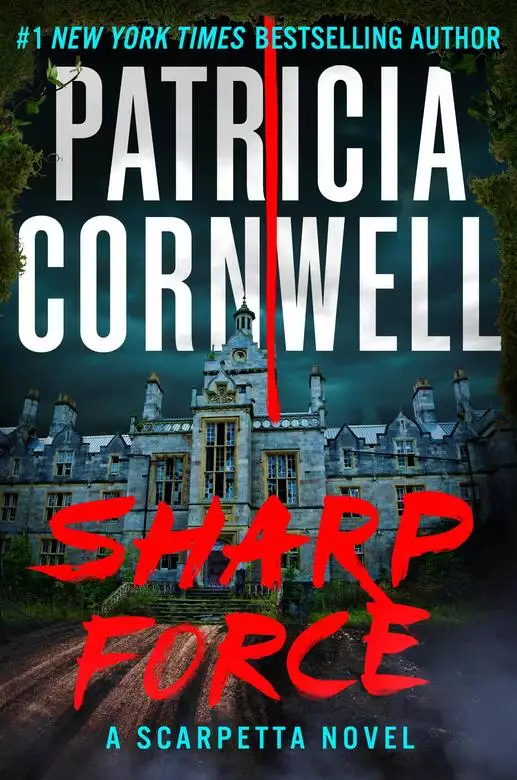
- Book info
- Sample
- Media
- Author updates
- Lists
Synopsis
A serial killer terrorizes Northern Virginia, his ability to come and go baffling those pursuing him with zero success.
He disables the victims' WIFI, attacking them in bed, the cause of death exsanguination due to sharp force injuries.
This has been going on for six months when Dr. Kay Scarpetta is awakened by her phone in the early morning hours of June 12, her birthday. She's informed that the Phantom Slasher has struck again, only this time there are two victims, and one of them has survived, the scene Mercy Island and its notorious old psychiatric hospital. This is a modern ghost story, a ghastly apparition seen around the time the Slasher strikes in each case. The same figure in black is spotted levitating through the fog, and the technical explanation is one that's of keen interest to the CIA, even the White House.
It's up to Scarpetta to stop the Phantom Slasher before they strike again and vanish, leaving another trail of blood in their wake.
Release date: October 7, 2025
Publisher: Grand Central Publishing
Print pages: 400
* BingeBooks earns revenue from qualifying purchases as an Amazon Associate as well as from other retail partners.
Reader buzz
 Please log in to recommend or discuss...
Author updates
Sharp Force
Patricia Cornwell
Wiping my gloved hands on a towel, I’m changing the blade in my scalpel, alone at my stainless-steel workstation near the walk-in cooler’s massive door. Up to my elbows in what the cops call a floater, I find the festive songs, jingles and breaking news on the verge of annoying.
“… NORAD is tracking Santa as he makes his way around the globe tonight,” the radio announces cheerily. “We’ll hope the big storm won’t delay his deliveries! In other news, police are clueless about what happened to Rowdy O’Leary, his body recovered from the Potomac earlier this afternoon…”
The latest update starts in again about the dead man on my table, decomposed beyond recognition, his soft tissue turned into soap after a week in the river. No doubt, he never intended to be an assault on the senses. He likely didn’t mean to cause inconvenience and pain to anyone, most of all his wife and two young sons.
“… The thirty-nine-year-old software designer was last seen fishing the night of December seventeenth just south of Mercy Island…,” the radio goes on. “O’Leary’s body was found nine miles from where it’s believed he fell into the water…”
X-rays on lightboxes show healed skeletal fractures, the bones bright white against the murky shapes of organs. I can make out prosthetic knee joints, and degenerative changes from old trauma. Living with chronic pain, Rowdy O’Leary had trouble walking.
“… Alexandria police aren’t saying if they suspect foul play in his mysterious disappearance and death…”
Spaced across the room are three autopsy tables covered with his wet winter clothing and personal effects. Boots, socks, a hooded parka, jeans, a flannel shirt are spread out to dry on long sheets of brown paper.
“… Commonwealth’s attorney Bose Flagler is calling the case highly suspicious, demanding a thorough investigation…”
The radio cuts to Flagler’s syrupy voice as he talks about the heartbreak for the O’Leary family. How dreadful to lose a husband and father this time of year.
“I won’t rest until there are answers,” he declares.
“Doctor Scarpetta?” Shannon Park pokes her head inside the autopsy suite.
My secretary’s not about to come any closer, her Ugg-booted foot propping the door half open. I catch a glimpse of her purple overcoat and matching leather gloves, and a quilted pocketbook as big as a rucksack. Her red bucket hat is decorated with winking lights, plastic candy canes and sprigs of mistletoe.
“God, that’s bloody awful!” she exclaims in her thick Irish brogue, covering her nose and mouth with her coat sleeve. “I don’t know why you’re doing it now. Seems it could have waited.”
“Someone had to take care of him. And no, it couldn’t wait.” I raise my voice over Karen Carpenter’s pitch-perfect “Merry Christmas, Darling.”
“Bless his poor family,” Shannon muffles, and maybe it’s the stench stinging her eyes, but she seems about to cry.
I look up at the wall clock. It’s 4:35.
“You should get on the road before the snow starts,” I tell her.
“Bose Flagler keeps calling.”
Talking behind her pocketbook, she won’t look at the gutted body on my table, the skin marbled green, the top of the head sawn off.
“The media is ringing your phone off the hook.” She stares down at the tile floor. “And Maggie Cutbush is demanding information as usual.”
“Definitely no comment,” I reply.
“As I keep telling everyone.”
“Merry Christmas, Shannon.”
“And to you and Benton. Safe travels tomorrow,” she says, the door swinging shut.
Pulling down my face shield, I return to what I was doing. The brain is in terrible shape, disintegrating like wet tissue paper. Had I decided to leave the body in the cooler several days, the condition would have continued to deteriorate. It wouldn’t be fair to anyone, most of all Rowdy O’Leary’s wife and children.
Several hours ago, I was notified by police that the body was on the way here. I couldn’t in good conscience walk out the door to start my vacation. I was the only one left who could do the autopsy. Most employees in my office and the forensic labs were gone by early afternoon because of the holiday and predicted bad weather.
I continue glancing up at the security video display on the wall across from my table. The late afternoon is volatile, thick clouds rolling in like a tarp. The parking lot is nearly empty, dead leaves skittering over pavement, trees shaking and shivering. Streetlights are bleary in the fog.
I watch Shannon on video as she emerges from the back of the building, the wind snatching at her coat, and I sense her anxiety. Hurrying to her pink Volkswagen Beetle, she holds on to her hat flashing red and green like a low-flying aircraft. She’s glancing around as if someone monstrous might be hiding in the darkness, watching, waiting.
Fumbling her car key, she bends down, groping to pick it up, her attention everywhere, and I can imagine her swearing under her breath. She yanks open the driver’s door, heaving her big pocketbook across the stick shift and into the passenger’s seat. Locking herself in, she’s glancing around frantically, and it’s out of character.
A former court stenographer in her sixties, my secretary is no stranger to human nature’s savagery. She’s aware of what can happen when one least expects. There’s little she’s not seen and has always seemed fearless. But a serial killer dubbed the Phantom Slasher has gotten to her and a lot of people as he continues terrorizing Northern Virginia.
Shannon complains that she doesn’t sleep well anymore. Living alone in a ground-level condo, she doesn’t feel safe. She’s talked about moving to a high-rise or leaving this area altogether. Installing a security system and deadbolts on doors, she keeps a Smith & Wesson “Ladysmith” revolver by her bed.
I watch her VW on the video display, the engine puttering, the headlights blinking on. Then she’s driving through the security gate, taillights fading in the roiling grayness.
… Better watch out, better not cry… shrills the Jackson 5, and it’s too late for that.
Rowdy O’Leary didn’t watch out and died rather much the way he lived. Eating and drinking as he pleased, never exercising, chronically depressed. According to his wife, he was the perfect package until six years ago when he was struck by a car while jogging at night.
“A hit-and-run, whoever did it never caught,” Reba O’Leary said to me over the phone before I began the postmortem. “After that a light went out inside Rowdy. He gave up.”
I’m dropping sections of liver into the plastic bucket by my feet when the vintage wall phone begins to clangor. The black push-button model is decades old, the handset cradled by a metal hook that you push down to hang up, reminding me of my childhood.
The long cord is always hopelessly snarled, a sign taped to cinder block demanding Clean Hands Only. There’s no caller ID, and I won’t be able to see who it is. But not many people have this number. Those who do aren’t likely to interrupt autopsies in progress.
An exception is Pete Marino, a former homicide detective I’ve worked with most of my career. He’s now my head of investigations for the statewide medical examiner system. He’s also married to my sister, Dorothy, making him family. That gives him extra privileges, at least in his mind.
He doesn’t hesitate to intrude no matter the circumstances or the hour. Taking off my gloves, I toss them into the trash. Turning off the boom box, I flip up my face shield, pulling down my surgical mask, the stench so intense it seems to discolor the air.
I pick up the handset, pressing it against my ear. “Doctor Scarpetta,” I answer.
“Hate to bother you. I know it’s a bad time to talk,” Marino says.
I can tell he’s inside his big pickup truck, the police scanner quietly chattering while he listens to a Megyn Kelly podcast. I catch the edge of her saying something about the CIA and how to know if someone’s lying.
“You’re supposed to be home, Marino.” I’m breathing with my mouth, not my nose. “And yes, it’s a bad time.”
“We’ve got a sensitive situation,” he announces. “And I’m on my way to help Fruge out.”
“Why would you need to meet with a police investigator on Christmas Eve?” I ask suspiciously. “You’re off for the holiday.”
“My presence has been specifically requested by the complainant at the scene.”
He has a habit of talking in police jargon when he knows I won’t approve of whatever it is he’s decided.
“You’ve lost me,” I reply, and it’s not fair what he’s doing.
“We’re following up on something from Dana Diletti that could be important,” Marino says, and the celebrity TV journalist is rather much the bane of my existence. “She has a tip about the Phantom Slasher cases. It sounds like something’s happened that’s got her pretty shook up.”
“Careful. She’s not known for being trustworthy.” I shouldn’t have to remind him.
“What she says she witnessed sounds credible, Doc.”
“Credible to whom?” I ask.
“Point being, it’s not hearsay.”
“What isn’t?” I’m trusting this less every second.
“It’s to be expected that the Slasher would know who Dana Diletti is and watch her on TV as she talks about him,” he reasons.
“Is she the one saying this, Marino? Or are you?”
“We can expect the Slasher to follow everything in the media. He gets off on being headline news while scaring the crap out of everybody with his fake ghost.”
Marino’s referring to a computer-generated hologram the Slasher uses to stalk and terrorize his victims. Knocking out the Wi-Fi with signal jammers, he invades homes undetected, leaving no fingerprints or DNA. We’re no closer to catching him.
“What’s the tip?” I ask, and it had better be legitimate.
I imagine my sister home on Christmas Eve while Marino is out with the cops, his favorite place to be if he’s honest about it. Which he’s not. A sexually violent psychopath is on the loose, a dangerous storm barreling in, and Dorothy is by herself. I wouldn’t blame her for being hurt and furious.
“I’m on my way to Dana Diletti’s house,” Marino continues to explain. “She requested me and Fruge by name.”
I’m sure she did.
“Do we know what the tip is?” I again ask.
“We won’t be told until we’re face-to-face,” he explains.
“How convenient. Hopefully her film crew won’t be waiting when you and Fruge roll up. And I hate that you left Dorothy by herself.” I go ahead and say it as something darts past my Tyvek-bootie-covered feet.
A tiny gray field mouse stops and starts, zigzagging about, and I assume it’s the same one that Marino nicknamed Pinky. Several days ago, the presumed Pinky visited my second-floor office after I’d left an unfinished chef’s salad on my desk.
He’s been sighted in the breakroom, various storage areas, hiding behind corn plants in the lobby, evading all catch-and-release efforts. Now he’s staring at me with shiny dark eyes, whiskers twitching.
“Our visitor is back,” I tell Marino. “He just scampered by. Now he’s looking at me.”
“Pinky?”
“Unless we have more than one mouse.”
“Maybe while Fabian’s on call tonight he’ll finally catch him. But don’t throw the little fella out the door into the cold. He won’t survive.”
“Wouldn’t think of it.”
“Doc, you should be heading home before the storm lands.”
“As soon as I finish what I’m doing.” I glance at Rowdy O’Leary’s body on my table, grateful his loved ones will never see him like this. “Then I have a stop along the way to drop off personal effects to the family.”
“Say what?”
I repeat myself.
“Why not send the stuff UPS like we always do?” Marino’s tone has turned disapproving.
“That’s a tough package to find on your doorstep, especially during the holiday season,” I explain as the mouse vanishes under a cabinet. “The O’Leary family lives off King Street on South Payne. I practically go right past.”
“That’s mighty nice of you, Doc.” Marino doesn’t want me doing it. “But no way you should. You don’t know these people.”
“I’m thinking of the wife and two young boys he left behind. It’s Christmas Eve.”
“Yeah, I know. It sucks. It always does.”
“A perfect occasion for a little extra kindness. And I have questions that might help me determine her husband’s manner of death. When you show up in person, it’s easier to get someone to talk…”
“It’s not a good idea to be doing something like that alone, Doc.”
“If I don’t figure out why he’s dead, I’ll have to sign him out as undetermined. I don’t want to do that—” I’m saying when Marino cuts me off.
“Got to go. I’m pulling into Dana Diletti’s driveway. And holy shit, she’s got her place decorated like a tacky tour, lights strung everywhere.”
He sounds wonderstruck, almost happy.
“The Grinch, Frosty the Snowman, Snoopy and his doghouse,” Marino marvels. “All kinds of amazing stuff that’s probably going to blow away in the storm. Happy to report there’s no sign of her film crew.”
“Glad to hear it, and where’s Fruge?”
“Right behind me.”
“Please keep me informed,” I reply, dropping the handset in its cradle.
I turn up the volume on the boom box, and the music has given way to more news updates, nothing good. Holiday travel is at an all-time high as the fierce storm rolls in from Canada. The governor is asking Virginians to stay off the roads.
An intoxicated teenager rammed his car into a police motorcycle. Meals on Wheels is asking for volunteers and contributions, food insecurity at an all-time high. A local research lab reports that three monkeys have escaped.
“… Jane and Kong were quickly captured. Their buddy Peanut is still at large. We’re assured there’s no danger of him spreading diseases like monkeypox…” the radio news goes on.
Then Keith Urban is strumming and sweetly singing “I’ll Be Your Santa Tonight” as I work my hands into clean gloves, picking up where I left off before Marino called. I place the enlarged heart into the hanging scale, saving it for last. I’m all but certain it has important things to tell me.
Grabbing a long-bladed knife, I begin slicing on my cutting board. I squeeze water from a sponge over sections, and the thickened muscle of the myocardium shows old transmural ventricular scars. The right coronary artery is completely occluded with calcified atherosclerotic plaque that crunches as I cut through it.
I imagine Rowdy O’Leary sitting in his folding chair on the pier fishing in the glow of a camping lantern, a cooler of beer next to him. At some point, he probably experienced sudden chest pain. It may have radiated to his arms, back and jaw. He might have gotten dizzy and nauseous before collapsing and toppling into the water fully clothed with his boots on.
When police arrived at his fishing spot after his wife reported him missing, they discovered his iPhone and five-shot Colt .38 revolver on the pier as if dropped there. Two spent cartridge cases in the cylinder indicate the handgun was fired twice. Possibly, this happened at an earlier time and is unrelated to his death. But I doubt it.
My preoccupations are interrupted by the buzzer blaring over the intercom, alerting me that we have company. In the video display, a hearse waits to enter the vehicle bay, the engine rumbling in the background. I can see flakes of snow blowing in the glow of streetlamps.
“Peace Brothers,” the driver announces himself in the squawk box. “Here for a pickup.”
The massive rolling door lurches to life, retracting with a lot of loud creaking and clanking. The noises are amplified as they bounce off concrete and metal. The hearse roars inside, exhaust swirling, the dark parking lot and smudges of streetlights showing in the huge square opening.
I watch Wyatt Earle on the live video feed as he hurries down the stretcher ramp. Striding with purpose past pallets of PPE and jugs of formalin, he looks ominous in his dark blue uniform, a pistol on his duty belt. I’m still getting used to my security officers being armed.
I’ve wanted better protection here for years, and now it’s the law. Certain state employees are expected to carry guns on the job. That’s both good and bad depending on who we’re talking about. Not everyone should be armed, and I don’t like politicians deciding for me when I need a concealed weapon.
Wyatt speaks to the funeral home attendant, their voices picked up by security camera microphones, the acoustics terrible. It’s hard to understand what they’re saying, but clearly the attendant is in a hurry. Several times he mentions that it’s Christmas Eve and he has young children. He’s visibly annoyed as he’s told to stay put.
Wyatt needs to “check with the chief” on whether Rowdy O’Leary’s body is ready for release. The attendant shrugs unhappily as Wyatt walks away, looking at something on his phone. Whatever’s caught his interest, his attention is riveted. He almost trips over a pressure washer hose. A few minutes later, he’s in my doorway.
“You don’t want to come inside,” I warn.
“The funeral home is here for him.” Wyatt holds a surgical mask over his lower face.
I notice him returning a Vicks inhaler to his pants pocket. At least I’ve cured him of swiping the ointment version into his nostrils. All it does is trap the molecules of putrefaction. Wyatt doesn’t like the morgue and can be squeamish.
“I’m almost finished.” I glance up at the hearse on the security monitor.
“Dana Diletti’s on TV claiming she saw the ghost from the Slasher murders,” Wyatt informs me. “It’s all over the news.”
I wonder if Marino and Fruge are still with her. I don’t trust Dana Diletti, never have. I hope to hell she’s not creating a spectacle that could impact my office. Not to mention interfering with an investigation, something she does regularly and with no compunction.
“What is she saying?” I stoop down to remove the plastic bag of sectioned organs and other tissue from the bucket under my table.
“She said the ghost floated through her window.” Wyatt looks away as I place the bag inside the empty chest cavity.
“Well, she didn’t waste any time going public about it.” I cut a long section of cotton twine from the dispenser on a countertop.
“She took a video with her phone, and the ghost looks real,” Wyatt reports as I thread a large surgical needle.
“I’m not sure what a real ghost looks like,” I reply.
“You’ll see when you watch the video I just sent you.”
“Let’s be mindful that what she and others have described isn’t a ghost.” I begin suturing the Y-incision. “Think of it as movie special effects. A computer-generated optical illusion, a hologram.”
Wyatt’s forehead is sweating, his eyes miserable. I’m used to the stench. He isn’t and never will be.
“Has Fabian come in yet?” I ask with long sweeps of the needle and twine.
“He’s with Faye.” Wyatt stares at the ceiling.
Firearms examiner Faye Hanaday typically works late whenever Fabian does. They stay in the on-call room, tiny but cozy with a sofa bed, a TV, a kitchenette.
“Please let him know I saw the mouse again.” I pick up the skull cap.
Fitting it back in place, I line up the notch I made with the Stryker saw.
“Okay.” Wyatt has closed the door most of the way, peering through the gap.
“Why don’t you go upstairs, relax and have a coffee?” I suggest. “No need for you to be down here right now. I’ll deal with the funeral home.”
“Thank you, Chief. Merry Christmas.” He can’t leave fast enough.
A half hour later, Rowdy O’Leary’s double-pouched remains have been driven away in the Peace Brothers hearse. The vehicle bay door clanks shut as I return to the intake area with its wall of shiny steel cooler and freezer doors.
Pulling off my PPE, I drop it into the biohazard trash near the floor scale. The security office is empty behind bulletproof glass, and I imagine Wyatt upstairs somewhere. He’s been working here for more than twenty years. As much as he dislikes the morgue, I’ve never understood why he stays.
My sneakers are quiet on the white tile floor as I follow the corridor, noticing speckles of dried blood that nobody bothered mopping up. Pale green cinder block walls are chipped and scuffed, the ceiling water-stained. Walking past the CT scanner and x-ray rooms, I unlock my phone to check on my husband.
“On my way out of here shortly,” I tell him when he answers. “Where are you?”
“Just leaving the CIA finally. No surprise that traffic’s a nightmare on Four-Ninety-Five,” Benton replies, and I can hear loud engines and horns blaring in the background.
A forensic psychologist for the U.S. Secret Service, he’s been in meetings much of the day at the Central Intelligence Agency. Their Langley headquarters is some twenty miles from where we live. In this part of the world, that can take forever.
“I was tied up longer than expected. We’ve been looking at the video Dana Diletti posted all over the internet,” Benton is saying.
“What’s the CIA’s interest?” I ask.
“The technology the Slasher’s using. It’s over-the-top sophisticated. They’re concerned about who might have the wherewithal to use holograms for spying.”
“As are the rest of us.”
“The worry is it’s someone with an intelligence background,” Benton says.
“Maybe one of their own who washed out of the Agency and went rogue,” I suggest.
“Or former military special ops,” Benton proposes. “Or a sophisticated software designer who works with sensitive technologies.”
“I’m about to watch Dana Diletti’s video.” I walk past the locker room, nobody inside. “Do we think it’s a hoax?”
“Lucy’s been analyzing it, says it looks genuine.”
My niece is a cyber special agent and technical expert for the FBI. Like Benton and me, she’s been on the Phantom Slasher task force since the serial killer first struck ten months ago during the early hours of Valentine’s Day. The victim was a psychiatric nurse living alone not far from here in Annandale.
A CCTV camera captured a ghostly figure in old-fashioned black clothing floating along the street in front of her house. The same holographic projection was observed early in the morning on Mother’s Day when a social worker was slashed to death in Fairfax. Then it happened again two months ago on Halloween, the victim a diversity counselor in Arlington.
Weeks before their brutal deaths, the women had complained of feeling watched. They reported peculiar things going on. Area dogs would start barking frantically after midnight. Something would knock on a window, but nothing was there. They claimed to hear a voice and eerie music softly playing with no apparent source of it.
“The storm front’s moving in from the northwest, so it’s already started snowing here at a pretty good clip,” Benton is saying over the phone. “Roads are getting slick, people having accidents, and you can imagine the traffic. I think I’ve moved three feet in the last fifteen minutes. You may get home before I do.”
“I’m afraid there won’t be time to make lasagna and everything else I’d planned.” I walk past the dark windows of the histology lab. “Hope you won’t mind if we keep it simple.”
“Whatever you make is always delicious. And we can stay up as late as we want,” Benton says. “All we’ve got to do tomorrow is show up at the airport.”
We end the call as I detect a Chopin nocturne drifting from the anthropology lab, a cramped cinder block space warehousing our coldest cases. Bright piano notes sound from a portable CD player that Cate Kingston carries with her when she visits our office to help with skeletal remains.
A forensic anthropologist, she’s on the faculty of the University of Virginia. Her input is sought in cases ranging from Civil War remains to dinosaur bones to giant footprints from a Sasquatch. She’s often hired as an expert witness in murder investigations and trials.
She doesn’t notice that I’ve paused in the doorway. Peering into a microscope, she moves a bone around on the stage, her attractive young face troubled. She mentioned today at our office Christmas lunch that she’s working on another disinterment from the ancient cemetery on Mercy Island, the location of an old psychiatric hospital.
Paper-covered tables are arranged with a skull and a scattering of bones and teeth. She’s placed them in the correct anatomical positions like puzzles missing most of their pieces. Swatches of rotting fabric on a second paper-covered table are remnants of the blue wool blanket once wrapped around the body.
On shelves are tall stacks of creamy archival boxes neatly labeled, each one a person waiting to be called by name. Tiny plastic skeletons caper on walls around the room. Some glow in the dark, and it’s disconcerting to walk past the observation window when the lab’s lights are out.
“Merry Christmas.” I hail Cate from the doorway, and she looks up, startled. “Didn’t mean to scare you.”
“I was lost in my thoughts as usual.” She gets up from her chair.
“You’re here late compared to everyone else. Almost the only one left.” I walk inside.
“I was just this minute thinking of calling you.” She wears a baggy white lab coat with Dr. Kingston embroidered over the pocket. “But before I get to the bad news, I hope you and Benton have a wonderful time overseas.”
“Thank you, but right now I’m worried about you getting home,” I reply. “When was the last time you looked outside?”
“I don’t have the luxury very often,” she says with a sigh. “I know we’re expecting a whopper of a storm.”
“It will be far worse in Charlottesville, and I don’t like you driving there after dark on any occasion.” I’m inspecting the bones on her table. “Much less Christmas Eve with snow and sleet predicted. The winds are already picking up, the visibility dropping.”
As I hear myself, I’m reminded of what Lucy calls me, Dr. Worst-Case Scenario.
“I’m not going to Charlottesville, am staying in Old Town with a friend.” She turns down the music. “This case I’m working on from Mercy Island?” She indicates the bones I’m looking at. “Not good. Not good at all.”
“More of the same?” I’m not surprised.
“Afraid so, only more vicious and problematic,” she says. “The bones are nowhere near as old as the other ones from there. That’s what really has me going.”
Cate explains that the remains are a female likely in her twenties when buried on the grounds of Mercy Psychiatric Hospital here in Alexandria. Not long before I moved back to Virginia, a real estate developer decided the cemetery on the grounds should relocate to a churchyard. Otherwise, the valuable waterfront land couldn’t be used to build a fitness center.
Graves were dug up with a backhoe, archaeologists not involved when they should have been. Descendants of the deceased weren’t asked and had no idea this was happening. If I’d been chief then, I wouldn’t have permitted it.
But my predecessor Elvin Reddy is friends with the hospital’s director. The cemetery was an eyesore mostly ignored and overgrown in the woods close to the Potomac’s shoreline. The land was worth a fortune, and the cemetery wasn’t used anymore, hadn’t been for a hundred years. Elvin was happy to cooperate, the outcome disastrous.
Many of the coffins had rotted away, the bones completely gone or in terrible shape. Those relatively intact ended up here in the anthropology lab to be stored in boxes and ignored. Until we can confirm identity and how the people died, they can’t have proper burials.
I took over the Virginia medical examiner system five years ago, and one of my many projects is clearing out the backlog of unfinished cases, including those from Mercy Island. Cate has been coming in these past few weeks while the University of Virginia is on Christmas break.
She’s discovering evidence of trauma that gives a harrowing view at what patients endured during earlier centuries. Shattered skulls and limbs suggest some may have died from falls or chronic beatings. A fracture to the C2 spine was consistent with death by hanging.
At least one patient was shot, the lead bullet still inside the skull. The former Mercy Lunatic Asylum was a dark stain on psychiatry, and the modern version isn’t much better as far as I’m concerned.
“I ’m just getting started on Jane Doe, and she’s definitely a homicide.” Cate Kingston continues to fill me in.
“We have no idea about her identity?” I ask.
“None.”
“Maybe forensic genealogical DNA will show a relationship with someone in a. . .
We hope you are enjoying the book so far. To continue reading...