
- Book info
- Sample
- Media
- Author updates
- Lists
Synopsis
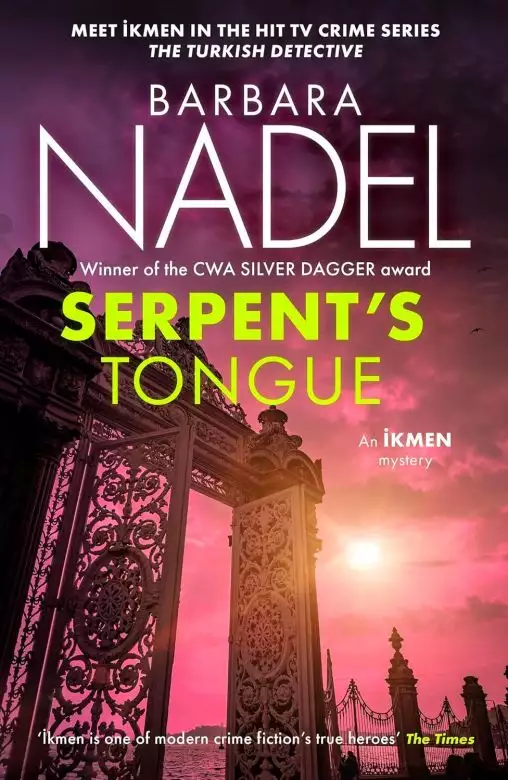
The twenty-eighth mystery featuring Çetin İkmen and Mehmet Süleyman, stars of BBC Two's gripping crime drama series The Turkish Detective, available to watch on BBC iPlayer.
Two women are found dead in Istanbul. One in the slum quarter of Kustepe, the other at one of the most prestigious addresses in the city. Are they connected? Inspector Mehmet Süleyman and his team are assigned to a complex case involving a chic modest fashion house and adherents of an ancient eastern Turkish religion. A further complication is that the death of the woman in the smart quarter of Tesvikiye, has all the hallmarks of a terror attack.
Meanwhile ex-inspector Çetin İkmen is helping his friend Umit place a collection of dazzling sculptures, created by Umit's deceased neighbour, at one of the city's many art galleries. However, the sculptures, though exquisite, are disturbing and, according to Umit, represent apocalyptic themes. In addition, some of the creatures the artist created appear to resemble local people - including the Kustepe victim. Did the artist know her and, if so, in what capacity? And what, if anything, does the violent death of a devout Muslim lady married to a modest fashion designer have to do with an alleged terror plot aimed at undermining the security of the city?
Both Süleyman and İkmen find themselves in a race against time to apprehend whoever killed these women and protect the people of Istanbul itself. Meanwhile, Süleyman has to grapple with his own problems - in the shape of his wife Gonca...
Release date: May 7, 2026
Publisher: Headline
Print pages: 352
* BingeBooks earns revenue from qualifying purchases as an Amazon Associate as well as from other retail partners.
Reader buzz
 Please log in to recommend or discuss...
Author updates
Close
Serpent's Tongue
Barbara Nadel
‘My great-grandmother had blonde hair and green eyes, which my grandmother always told everyone was because she was the daughter of a sultan.’
Gonca Şekeroğlu, the most famous Romani artist in İstanbul, caught her husband looking across at her from his hiding place behind his newspaper.
‘Don’t you dare say a thing, Mehmet Bey,’ she said as she flashed him a warning glare. ‘You know nothing of this!’
The person she was actually telling was her husband Mehmet’s cousin, Nurettin Süleyman. A good-looking man in his early seventies, Nurettin, like the much younger Mehmet, was most definitely a member of Turkey’s long-deposed Ottoman royal family. And he was completely fascinated by the idea that Mehmet’s Romani wife might be a relative too.
‘Oh this is so delicious!’ Nurettin said. ‘But tell me, how did it happen, Gonca Hanım? It must be quite a story.’
‘My great-great-grandmother sold things in the imperial harem,’ Gonca said. ‘Fabrics and jewellery. Also she read cards and danced for the ladies of the court. Trade and entertainment were things only non-Muslim women could do, as I’m sure you know.’
‘The Christians and the Jews were famous for it,’ Nurettin said. ‘No Internet in those days!’
‘Quite. Well anyway, Orkide, my great-great-grandmother, was very beautiful . . .’
‘Like you, Gonca Hanım.’
Mehmet was unable to help himself. ‘Nurettin, my wife mythologises her family.’
‘Oh, be quiet, my darling,’ Gonca said. Then she turned back to Nurettin. ‘Orkide caught the eye of Sultan Murad V. He pursued her relentlessly! My great-grandmother, Çiçek, was the result. And you can imagine it, can’t you? Sultan Murad was pale skinned, light haired . . .’
‘So we could all be related!’ Nurettin enthused.
Gonca took his hands in hers. ‘I thought you’d find that fun, Nurettin Bey.’
Nurettin had come to Gonca and Mehmet’s large old house in the İstanbul district of Balat to await the arrival of the Snake Man. Earlier in the year, Gonca’s almost thirty-year-old boa constrictor, Sara, had died. Now, through one of her many contacts, she had discovered a reptile dealer who had boa constrictor babies for sale. And while she still mourned Sara, she couldn’t resist the pull of snakelets.
The doorbell rang and she gasped. ‘That must be him!’ she said. ‘The Snake Man! Let him in, Mehmet!’
Putting down his newspaper, Inspector of Police Mehmet Süleyman got to his feet and left the room.
Nurettin leaned towards Gonca. ‘Your husband appears to be out of sorts today, Gonca Hanım.’
‘Oh, ignore him,’ she said. ‘He’s unhappy because I’m getting another snake. When Sara died, he thought that was the end of it. He never liked her. But then I told him, “Darling, I’ve always had snakes. I can’t imagine my life without them”.’
Gonca had acquired Sara when she was a young woman back in the Roma quarter of Sulukule, now long gone, where she had performed mildly suggestive snake dance routines for tourists.
Her husband, his handsome face fixed into a scowl, returned with a thin middle-aged man wearing a voluminous brown coat, and carrying a large wicker basket. His heavily matted grey hair hung down his back to his waist.
When he saw the artist, he said, ‘Gonca Hanım!’ and then proceeded to speak to her in a language Nurettin and Mehmet couldn’t understand.
Gonca answered him in kind, and then, reverting to Turkish, she said, ‘This is my husband Mehmet Bey and his cousin Nurettin Bey. I’m sorry they don’t speak Romani.’
The gypsy reptile purveyor smiled, bowed a little and then said, ‘Gentlemen, my name is Damien. I am here to attend to the lady Gonca’s need for snakelets.’
‘Oh, how very exotic!’ Nurettin Süleyman said. His cousin, once again, left the room.
The smell was building. Putrefaction, the action of bacteria on bodily tissues, had begun to turn green what had once been pink flesh. Where there had previously been a slim waist, gases bloated the midsection outwards and the rapidly greening skin began to slip. Alongside putrefaction, autolysis was creeping in as internal bodily organs started to poison and destroy themselves. Fingernails loosened and then fell to the floor. Internal moisture oozed.
It had been just over two days since this body had ceased to live. Still partially clothed in a shirt and matching red and black bra and pants, there was an obscenity in its post-mortem position. Mouth open, legs splayed. And while greening, bloating flesh did not in any aesthetic sense enhance the large tattoo on the midriff, it did make it appear more prominent than usual. Outlined in black, coloured in red and gold, it was a twisty, knotted, mighty hooded cobra.
Nobody told Çetin İkmen where to go and where not to go in his city. In his previous life as an inspector of police in one of the most populous cities in the world, there weren’t many places he hadn’t been or situations he hadn’t faced. Now a lowly private investigator, all that had changed as far as İkmen was concerned was that he no longer carried a gun – and people like taxi drivers were openly rude to him.
‘I don’t go to Kuştepe,’ the first driver said as he put his foot down on the accelerator and disappeared down one of the city’s many new road tunnels.
The second driver said, ‘Seriously?’ before he did likewise, while the final cabbie İkmen approached said, ‘You got a death wish?’
And so in spite of the rain and aching legs, he decided to walk from the nearest Metro station, Şişli.
Although for official purposes Kuştepe was in the posh district of Şişli, as well as being in the lee of the controversial, if equally upscale, Trump Tower, the district had a poor reputation. Back in the 1950s, Kuştepe had been a gecekondu. Basically a shanty town built largely by migrants from the countryside, some of the old self-built homes remained while the rest of the quarter consisted of poorly constructed apartment blocks, mainly populated by Roma from Anatolia.
İkmen was headed for a small street called Papatya Sokak. It wasn’t far from the Bilgi University campus, which existed incongruously among the mean streets of one of İstanbul’s most dangerous boroughs. Another thing that had its being actually on Papatya Sokak was the apartment rented by an old friend of Çetin İkmen’s, Ümit Ceylan.
Neither a Romani nor an original gecekondu dweller, Ümit had ended up in Kuştepe after his third and final prison sentence for fraud had come to an end back in 2001. His criminal speciality had consisted of elaborate long cons involving Ümit posing, usually, as some sort of academic or financial guru in order to extort cash from rich people. İkmen had always admired him, and now that he had reformed into a very charismatic art teacher working at numerous institutes across the city, his respect for him had grown.
Arriving at Ümit’s filthy front door on the second floor of a building that listed alarmingly to the left, İkmen was surprised that it opened even before he had a chance to knock.
‘Ah,’ Ümit said. ‘Çetin Bey! Thank God!’
‘Ümit . . .’
Tall and skinny, Ümit Ceylan pulled the much shorter and even skinnier İkmen across his threshold, being very careful to shield him from any contact with his door.
‘Sorry,’ he said, after he’d shut it behind them both. ‘Landlady’s been smearing shit on my door ever since this business began.’
Inspector Kerim Gürsel put his head around his colleague Mehmet Süleyman’s office door and made eye contact with the man’s sergeant, Timür Eczacıbaşı.
‘Timür Bey,’ he said, ‘you live in Kuştepe, don’t you?’
‘Yes, sir,’ Timür said.
‘In that case, come with me,’ Kerim continued. Then, remembering that Timür didn’t actually work for him, he added, ‘Unless Mehmet Bey has got . . .’
‘He’s on leave today,’ Timür said. He stood up and put his jacket on. ‘Something happened in Kuştepe, Kerim Bey?’
‘Possibly. Body of a woman’s been found in an apartment over there. Where is it you live, Sergeant?’
‘Cihan Sokak.’
‘Well, this is Papatya Sokak. Do you know it?’
‘Yeah.’
‘What’s it like?’
‘No better or worse than anywhere else in Kuştepe, so run down, poor, loud, violent . . .’
‘Sergeant Yavaş will meet us there,’ Kerim said. ‘It’s been a while since I was in Kuştepe. Is it true that there’s some sort of rivalry between two groups of Roma in the quarter?’
‘Yes.’ Timür followed Kerim out into the corridor. ‘Those who came to the city from Kayseri and those originating in Trabzon.’
‘Know what it’s about?’
‘No . . .’
He didn’t really. In spite of the fact that his boss, Mehmet Süleyman, was married to an İstanbullu Romani woman, Timür Eczacıbaşı kept his own Romani origins quiet. Just living in Kuştepe was enough for people to consider him scum without adding racial prejudice into the mix.
Timür’s parents had come to İstanbul from the central Anatolian city of Kayseri back in the 1990s. His father, a car mechanic, had found work in Kuştepe alongside other Romani men from Kayseri, and when he married Timür’s mother they had set up home in the quarter. Various economic shocks along the way had meant that the family had never been able to afford to move out.
As the two officers walked out into headquarters car park, Kerim Gürsel lit a cigarette and said, ‘Apparently the dead woman was some sort of dancer.’
Was this code for ‘prostitute’? In almost anyone else’s mouth, probably, but in Kerim Gürsel’s, no. Timür Eczacıbaşı had been assigned to İstanbul’s murder unit for almost a year now, and of all those officers he had met in that time, Inspector Kerim Gürsel was the most empathic. Not macho or haughty, as his boss Süleyman could be at times, Kerim Bey did what he believed was right in a quiet, unassuming way and Timür respected him for that. There were some in the department who believed that Gürsel was gay, but Timür, who didn’t care either way, ignored them. Inspector Gürsel had a wife and a delightful little daughter and he was a good man. What he did in bed and with whom was his business and no one else’s concern.
‘Do you have a name for this woman, sir?’ Timür asked as he got into Kerim Gürsel’s car.
‘Gözde Turan,’ Kerim replied.
Timür Eczacıbaşı felt his face flush.
They were identical. All three had cream-coloured base scales, with numerous reddish-brown markings, known as saddles. Roughly a third of a metre in length, the boa constrictor snakelets were, so the Snake Man said, all females.
‘I mated my girl Lokum with my brother’s boy Arnie,’ he said. ‘Twenty snakelets we got. These are the last three, Gonca Hanım.’
Gonca was taking her time. Snakelet purchase was a serious business. First you had to find out which baby was best for you, then check it over for possible health problems and finally haggle about the price.
One of the babies could be ruled out straight away because she actively pulled away from any sort of human contact. But then she it was who had been initially handled by her husband’s cousin. In spite of his interest in snakes, Nurettin Süleyman was nervous around them. Not that it mattered, because Gonca had already chosen her new companion. The second baby she’d handled – and the longest of the three – had actually raised herself up to look Gonca in the eye. She’d let her stroke her head and had readily curled herself around Gonca’s forearm.
‘You see,’ the artist said to her husband. ‘This one is cuddling already.’
Mehmet Süleyman looked at his wife from across the other side of the room. ‘It’s constricting, Gonca. Were you a mouse, you’d be dead.’
‘Oh, you have no soul, my husband!’ She kissed the snakelet’s head and then looked at the Snake Man. ‘Name your price.’
The Snake Man began his pitch.
‘She’s an absolute bitch,’ Ümit Ceylan told İkmen as the two men sat down, covered themselves with blankets and lit cigarettes. ‘Never does a thing to this place, as you can see.’
It was a damp day, characterised by intermittent rain, but İkmen knew that every day, weather notwithstanding, was a wet day in Ümit’s apartment, which was cold and cheerless, with faintly greening walls. The damp situation was why Ümit always offered his guests blankets when they visited.
‘And if you say anything, all she does is tell you to go elsewhere or threatens you with chucking you out on the street,’ Ümit continued. ‘Then she says, “If I turned this into Airbnb, I’d not be the poor woman I am today!” As if she’s doing you a favour. Landlords and landladies are allowed to do anything they want these days. Bastards!’
‘To be fair, Ümit, Yasemin Hanım has always been like this. It’s nothing new,’ İkmen said.
Ümit shrugged. ‘She gave me somewhere when no one else would rent me so much as a room, but what she’s doing now is an offence against our nation, Çetin Bey, and I will not have it! Why I called you.’ He shook his head. ‘Absolute outrage!’
Quite what Ümit’s admittedly unpleasant landlady had done now, İkmen couldn’t imagine.
Ümit explained. ‘It concerns my late neighbour,’ he said. ‘Called Mert Karadeniz.’
‘Do I know him?’ İkmen asked.
‘No. Rarely went out,’ Ümit replied. ‘Well, anyway, long story short, he died two weeks ago, aged ninety. His son came, the funeral happened and then, after he’d taken what he wanted of his father’s personal belongings, he gave the keys to Yasemin Hanım. I stood behind my front door when I heard Yasemin Hanım open Mert Bey’s door, because I knew what was coming.’
‘Which was?’
‘She screamed the place down. That Roma woman who lives above me came flying down the stairs. She thought Yasemin Hanım had been attacked. I found them both inside Mert Bey’s place – Yasemin Hanım screaming, the woman from upstairs clutching a bunch of charms to her chest and crying.’
‘Why?’
Ümit smiled. ‘Because, my friend, there are wonderful things in there.’ He stood. ‘Let me show you the amazing world of Mert Karadeniz!’
He took a key out of his pocket and began to walk towards his front door. İkmen, trailing after him, looked out of a window onto the street and saw that Papatya Sokak was full of police cars.
The body was lying on a filthy bed in a third-floor apartment that smelled unspeakable. This was partly because of the body itself and partly due to the proliferation of uneaten food spread across the kitchen counters.
Kerim Gürsel and Timür Eczacıbaşı briefly glanced at the scene and then retreated onto the landing to join Kerim’s sergeant, Eylül Yavaş, and the uniformed cop who had originally found the corpse.
Attempting to get the putrid smell out of his system, Kerim blew his nose into a handkerchief and then said, ‘Any idea when the doctor might join us, Eylül?’
‘He called a few minutes ago and said he’d be here as soon as he can. He’s coming from Bebek so it may take some time, sir,’ she added.
Bebek, a very upscale Bosphorus-facing neighbourhood, was where police pathologist Arto Sarkissian lived. And while he had a driver, a slightly deranged man called Devlet, to convey him around the city these days, not even an unhinged chauffeur could completely overcome the horrors of the İstanbul rush-hour traffic. And a lot of the city’s roads were plagued by broken tarmac and potholes, the narrow roads of Kuştepe being particularly bad.
The constable who had responded to the call from a neighbour that had led to the discovery of the woman’s body said, ‘Roads round here are a nightmare. Everything round here’s a nightmare.’
Kerim and Eylül both knew that Kuştepe was Timür’s home and so the latter changed the subject. Looking at the uniformed officer, she said, ‘Constable Öz, can you tell Inspector Gürsel and Sergeant Eczacıbaşı what you told me?’
Öz was not local but he worked out of Kuştepe police station – a heavily fortified building Kerim had noticed on the way in. Kerim at least had never seen any local station that was more heavily guarded anywhere in the city.
‘Woman in the apartment directly above called,’ Öz said. ‘Talking about bad smells.’
‘Did you break the door down?’ Timür asked.
‘Didn’t have to. Hanging off its hinges. Woman on the fourth floor told me the girl was on the game.’
‘What’s that got to do with the fact her door was hanging off its hinges?’ Kerim asked. ‘Anyway, my understanding is she was a dancer.’
Öz shrugged.
‘Gözde Turan worked three or four jobs,’ Timür said. ‘A lot of people round here do.’
‘Sergeant Eczacıbaşı lives in Kuştepe,’ Kerim explained. ‘It’s why he’s come along.’
Constable Öz nodded at Timür, who did not react.
‘Anyway,’ Kerim continued, ‘with no obvious signs of violence, we have yet to discover how the woman died. It may, for all we know, have been natural causes.’
‘Inspector Gürsel?’
The voice at the bottom of the stairwell was cultured and, to the officers from headquarters, familiar. Kerim leaned over the banister and saw a short, rotund figure looking up at him.
‘I don’t suppose there’s a lift, is there?’ Dr Arto Sarkissian asked.
‘No. Sorry.’
‘God!’
Timür said, ‘Doctor, do you want me to come down and carry your bag for you?’
‘That would certainly make my life easier and may even prevent a cardiac arrest,’ the doctor said. ‘Thank you, Sergeant Eczacıbaşı.’
Timür ran down the three flights of stairs. Watching him leap lightly across steps that in many cases were actually crumbling, Kerim said, ‘These places are a fucking disgrace.’
Gonca had decided to call the snakelet Kleopatra.
‘She’s so seductive,’ she said. ‘The way she moves. You’re a tiny queen, aren’t you, sweetheart?’
She was watching the little creature in the vivarium that was to be her new home. Still rearing up to look at Gonca, the snake appeared to be alert and interested in her surroundings.
Mehmet put a hand on his wife’s back. ‘As long as you’re happy, darling.’
His cousin had gone now and so the couple were alone. She turned into his arms and they kissed. Then she said, ‘Let’s leave Kleopatra alone now. She’s settling in. Anyway, snakelets don’t like too much handling and fuss. Damien Bey said that he fed her this morning, so I’ll get on with some work so that she can get used to the studio with me in it.’
Because Mehmet didn’t like snakes, Kleopatra was going to live in Gonca’s studio. Her predecessor, Sara, had spent some time there too, but in reality the old boa had been given the run of the house and had spent a lot of time in a basket beside Gonca or underneath radiators. Mehmet had got used to it but he’d never liked it. Luckily he was a pragmatist who knew that as Kleopatra aged, so her freedoms would increase and there was nothing he could do about it. Besides, he loved his wife too much to deny her anything.
Although twelve years older than her husband, Gonca Şekeroğlu had fascinated Mehmet Süleyman ever since their first meeting over twenty years ago. Clever, beautiful and sexy, the Romani artist – who also practised fortune-telling and witchcraft – had been the object of his obsessive love and desire ever since. At almost seventy, she still stirred both his body and his soul and the couple spent most evenings they were together making love. Some said that Gonca had bewitched Mehmet – and there was some truth in that – but more to the point was the fact that they adored one another.
He said, ‘I thought that seeing as I’m on leave today, we might go shopping.’
‘Oh?’ She frowned. ‘What did you have in mind?’
‘Antiques,’ he said. ‘A little trip over to Cihangir . . .’
‘Mehmet, between the antiques I have bought over the years and the things you brought from your home, I think we have rather more than we need, don’t you?’
She had him and they both knew it. Why he even tried to fool her was beyond him.
‘Is this something to do with your mother?’ Gonca asked.
She was right on the money, as usual.
‘Yes,’ he said. He shook his head. ‘She needs to sell some heirlooms.’
Nur Süleyman, Mehmet’s mother, lived in a wooden Ottoman house in the smart suburb of Arnavutköy. While her late husband Muhammed had been a distant member of Turkey’s long-deposed royal family, Nur herself came from peasant stock. This had never stopped her from behaving like a princess, however. Not only had she disapproved of Gonca and Mehmet’s brother Murad’s late wife Irena, she had flatly refused to work ever since she married Muhammed, who himself had been perpetually idle. The Süleyman family, like their illustrious forebears, obtained money by selling objects they had inherited. They were also notoriously mean when it came to paying people they needed to work for them. Nur, who now had her older brother Kemal living with her, had clearly run out of both cash, credit and help yet again.
Gonca kissed her husband’s cheek. ‘Do you know what she wants to sell?’
He kissed her back. ‘Well, nothing, but that’s just not an option. Some late-nineteenth-century Ottoman paintings. You know the sort of thing: dark renditions of old battles against Romanians or Greeks, lots of frothing horses, framed in ornate gilded wood. I don’t know what the market for such things might be. I don’t even know whether there is a market – hence let’s go to some antique shops.’
The huge papier-mâché dragon curled around the fireplace was quite a statement. What that statement was, Çetin İkmen didn’t know. The same applied to the free-standing sculpture of what looked like a demon that stared out of the late Mert Karadeniz’s living-room window, while a woman with huge breasts burst out of a wall, riding on some frightening mythical creature. The box upon which the TV sat, created from melted Barbie dolls, was what his youngest son Kemal would probably describe as a ‘vibe’.
‘Well . . .’ İkmen began. He lit a cigarette.
‘It’s called “outsider art”,’ Ümit explained. ‘It’s when someone with no formal training makes art for themselves. Usually they do this in their own home, like this. And while it’s not always brilliantly realised, this is. Mert Karadeniz had amazing skill.’
The entire apartment was peopled by sculpted humans, animals and abstract artworks. The bathroom had snakes pouring out of a huge tap above the shower, the kitchen was dominated by a red and gold ape hanging from the ceiling. Getting closer to the pieces, İkmen noticed what looked like a script of some sort on some of them. It could, he thought, be Armenian. Only a few other objects remained in the apartment – a huge wooden bed, a coffee table upon which stood an empty fruit bowl, an old Polaroid camera, a hatstand.
Ümit continued. ‘Yasemin Hanım is a superstitious old fool, so she looks at this and concludes that the place is possessed. But this is art and it needs to be preserved for the nation.’
‘So . . .’
‘I asked her whether I could move in here and open the place to the public, but she refused,’ Ümit said. ‘So at the moment I’m paying rent on my place and this one until the situation is resolved.’
‘Resolved how?’ İkmen asked.
‘By the belediye. Which is where you come in.’
İkmen frowned.
‘I want them to see the value in this place. I want it preserved and opened to the public,’ Ümit said. ‘But I’ve got a police record, so they’re not going to listen to me. You, like it or not, Çetin Bey, are the establishment, so they will listen to you. I’ll pay you.’
‘Pay me? Ümit, by your own admission you’re paying rent on two apartments already. How are you going to pay me too?’
Ümit glanced away and İkmen knew.
‘Oh for God’s sake, you can’t go to prison again, not at your age!’ he said. ‘What is it this time? The Ottoman prince scam? Or are you posing as a theatrical agent looking for new talent?’
Ümit had been most things during the course of his long criminal career, including the personas İkmen had cited.
‘It’s all online these days,’ he replied. ‘I am completely untraceable.’
‘No you’re not!’
‘Oh, it doesn’t matter, Çetin Bey! What does matter is that Mert Bey’s art isn’t thrown into the bin. Look at all this! Made using old newspapers he found in the streets, cheap paint and any other junk he came across. It’s stunning!’
It was. İkmen had seen a lot of unofficial art across the city – some good, some bad, some adequate. But he’d never seen anything like this. Karadeniz had been, if anything, the Rodin of outsider art. Smooth and anatomically perfect, his chosen material could be mistaken for marble. İkmen got it. But did the preservation of all this warrant Ümit taking yet another risk with his liberty?
‘I can’t get involved if you’re—’
‘All right, I’ll stop!’ Ümit threw his arms in the air. ‘Please, please, Çetin Bey! All you have to do is go to the belediye, talk to them, maybe do some sort of petition. Money can change hands . . .’
Kuştepe was in the administrative council district, or belediye, of Şişli. Well known for its very liberal form of local governance, Şişli was middle class and progressive, and while İkmen was not naïve enough to believe that all its officials were straight, he didn’t relish the thought of trying to bribe one of them. He said, ‘There’ll be none of that. There’ll also be no paying me either. I have my pension and you are a friend. I don’t want to see you back in jail. Whatever you’ve been doing on the Internet, stop it and I’ll do what you want. Now I’m going to take some photographs.’
While he’d been speaking, the noise of boots and voices outside on the landing had increased to the point where İkmen walked back to Mert Karadeniz’s front door and opened it. Seeing a lot of uniformed police out there didn’t come as a surprise, but seeing Kerim Gürsel, Eylül Yavaş and Timür Eczacıbaşı with them did.
His mother appeared carrying a tray loaded with tea glasses, sugar and spoons. Behind her, two of her friend. . .
Gonca Şekeroğlu, the most famous Romani artist in İstanbul, caught her husband looking across at her from his hiding place behind his newspaper.
‘Don’t you dare say a thing, Mehmet Bey,’ she said as she flashed him a warning glare. ‘You know nothing of this!’
The person she was actually telling was her husband Mehmet’s cousin, Nurettin Süleyman. A good-looking man in his early seventies, Nurettin, like the much younger Mehmet, was most definitely a member of Turkey’s long-deposed Ottoman royal family. And he was completely fascinated by the idea that Mehmet’s Romani wife might be a relative too.
‘Oh this is so delicious!’ Nurettin said. ‘But tell me, how did it happen, Gonca Hanım? It must be quite a story.’
‘My great-great-grandmother sold things in the imperial harem,’ Gonca said. ‘Fabrics and jewellery. Also she read cards and danced for the ladies of the court. Trade and entertainment were things only non-Muslim women could do, as I’m sure you know.’
‘The Christians and the Jews were famous for it,’ Nurettin said. ‘No Internet in those days!’
‘Quite. Well anyway, Orkide, my great-great-grandmother, was very beautiful . . .’
‘Like you, Gonca Hanım.’
Mehmet was unable to help himself. ‘Nurettin, my wife mythologises her family.’
‘Oh, be quiet, my darling,’ Gonca said. Then she turned back to Nurettin. ‘Orkide caught the eye of Sultan Murad V. He pursued her relentlessly! My great-grandmother, Çiçek, was the result. And you can imagine it, can’t you? Sultan Murad was pale skinned, light haired . . .’
‘So we could all be related!’ Nurettin enthused.
Gonca took his hands in hers. ‘I thought you’d find that fun, Nurettin Bey.’
Nurettin had come to Gonca and Mehmet’s large old house in the İstanbul district of Balat to await the arrival of the Snake Man. Earlier in the year, Gonca’s almost thirty-year-old boa constrictor, Sara, had died. Now, through one of her many contacts, she had discovered a reptile dealer who had boa constrictor babies for sale. And while she still mourned Sara, she couldn’t resist the pull of snakelets.
The doorbell rang and she gasped. ‘That must be him!’ she said. ‘The Snake Man! Let him in, Mehmet!’
Putting down his newspaper, Inspector of Police Mehmet Süleyman got to his feet and left the room.
Nurettin leaned towards Gonca. ‘Your husband appears to be out of sorts today, Gonca Hanım.’
‘Oh, ignore him,’ she said. ‘He’s unhappy because I’m getting another snake. When Sara died, he thought that was the end of it. He never liked her. But then I told him, “Darling, I’ve always had snakes. I can’t imagine my life without them”.’
Gonca had acquired Sara when she was a young woman back in the Roma quarter of Sulukule, now long gone, where she had performed mildly suggestive snake dance routines for tourists.
Her husband, his handsome face fixed into a scowl, returned with a thin middle-aged man wearing a voluminous brown coat, and carrying a large wicker basket. His heavily matted grey hair hung down his back to his waist.
When he saw the artist, he said, ‘Gonca Hanım!’ and then proceeded to speak to her in a language Nurettin and Mehmet couldn’t understand.
Gonca answered him in kind, and then, reverting to Turkish, she said, ‘This is my husband Mehmet Bey and his cousin Nurettin Bey. I’m sorry they don’t speak Romani.’
The gypsy reptile purveyor smiled, bowed a little and then said, ‘Gentlemen, my name is Damien. I am here to attend to the lady Gonca’s need for snakelets.’
‘Oh, how very exotic!’ Nurettin Süleyman said. His cousin, once again, left the room.
The smell was building. Putrefaction, the action of bacteria on bodily tissues, had begun to turn green what had once been pink flesh. Where there had previously been a slim waist, gases bloated the midsection outwards and the rapidly greening skin began to slip. Alongside putrefaction, autolysis was creeping in as internal bodily organs started to poison and destroy themselves. Fingernails loosened and then fell to the floor. Internal moisture oozed.
It had been just over two days since this body had ceased to live. Still partially clothed in a shirt and matching red and black bra and pants, there was an obscenity in its post-mortem position. Mouth open, legs splayed. And while greening, bloating flesh did not in any aesthetic sense enhance the large tattoo on the midriff, it did make it appear more prominent than usual. Outlined in black, coloured in red and gold, it was a twisty, knotted, mighty hooded cobra.
Nobody told Çetin İkmen where to go and where not to go in his city. In his previous life as an inspector of police in one of the most populous cities in the world, there weren’t many places he hadn’t been or situations he hadn’t faced. Now a lowly private investigator, all that had changed as far as İkmen was concerned was that he no longer carried a gun – and people like taxi drivers were openly rude to him.
‘I don’t go to Kuştepe,’ the first driver said as he put his foot down on the accelerator and disappeared down one of the city’s many new road tunnels.
The second driver said, ‘Seriously?’ before he did likewise, while the final cabbie İkmen approached said, ‘You got a death wish?’
And so in spite of the rain and aching legs, he decided to walk from the nearest Metro station, Şişli.
Although for official purposes Kuştepe was in the posh district of Şişli, as well as being in the lee of the controversial, if equally upscale, Trump Tower, the district had a poor reputation. Back in the 1950s, Kuştepe had been a gecekondu. Basically a shanty town built largely by migrants from the countryside, some of the old self-built homes remained while the rest of the quarter consisted of poorly constructed apartment blocks, mainly populated by Roma from Anatolia.
İkmen was headed for a small street called Papatya Sokak. It wasn’t far from the Bilgi University campus, which existed incongruously among the mean streets of one of İstanbul’s most dangerous boroughs. Another thing that had its being actually on Papatya Sokak was the apartment rented by an old friend of Çetin İkmen’s, Ümit Ceylan.
Neither a Romani nor an original gecekondu dweller, Ümit had ended up in Kuştepe after his third and final prison sentence for fraud had come to an end back in 2001. His criminal speciality had consisted of elaborate long cons involving Ümit posing, usually, as some sort of academic or financial guru in order to extort cash from rich people. İkmen had always admired him, and now that he had reformed into a very charismatic art teacher working at numerous institutes across the city, his respect for him had grown.
Arriving at Ümit’s filthy front door on the second floor of a building that listed alarmingly to the left, İkmen was surprised that it opened even before he had a chance to knock.
‘Ah,’ Ümit said. ‘Çetin Bey! Thank God!’
‘Ümit . . .’
Tall and skinny, Ümit Ceylan pulled the much shorter and even skinnier İkmen across his threshold, being very careful to shield him from any contact with his door.
‘Sorry,’ he said, after he’d shut it behind them both. ‘Landlady’s been smearing shit on my door ever since this business began.’
Inspector Kerim Gürsel put his head around his colleague Mehmet Süleyman’s office door and made eye contact with the man’s sergeant, Timür Eczacıbaşı.
‘Timür Bey,’ he said, ‘you live in Kuştepe, don’t you?’
‘Yes, sir,’ Timür said.
‘In that case, come with me,’ Kerim continued. Then, remembering that Timür didn’t actually work for him, he added, ‘Unless Mehmet Bey has got . . .’
‘He’s on leave today,’ Timür said. He stood up and put his jacket on. ‘Something happened in Kuştepe, Kerim Bey?’
‘Possibly. Body of a woman’s been found in an apartment over there. Where is it you live, Sergeant?’
‘Cihan Sokak.’
‘Well, this is Papatya Sokak. Do you know it?’
‘Yeah.’
‘What’s it like?’
‘No better or worse than anywhere else in Kuştepe, so run down, poor, loud, violent . . .’
‘Sergeant Yavaş will meet us there,’ Kerim said. ‘It’s been a while since I was in Kuştepe. Is it true that there’s some sort of rivalry between two groups of Roma in the quarter?’
‘Yes.’ Timür followed Kerim out into the corridor. ‘Those who came to the city from Kayseri and those originating in Trabzon.’
‘Know what it’s about?’
‘No . . .’
He didn’t really. In spite of the fact that his boss, Mehmet Süleyman, was married to an İstanbullu Romani woman, Timür Eczacıbaşı kept his own Romani origins quiet. Just living in Kuştepe was enough for people to consider him scum without adding racial prejudice into the mix.
Timür’s parents had come to İstanbul from the central Anatolian city of Kayseri back in the 1990s. His father, a car mechanic, had found work in Kuştepe alongside other Romani men from Kayseri, and when he married Timür’s mother they had set up home in the quarter. Various economic shocks along the way had meant that the family had never been able to afford to move out.
As the two officers walked out into headquarters car park, Kerim Gürsel lit a cigarette and said, ‘Apparently the dead woman was some sort of dancer.’
Was this code for ‘prostitute’? In almost anyone else’s mouth, probably, but in Kerim Gürsel’s, no. Timür Eczacıbaşı had been assigned to İstanbul’s murder unit for almost a year now, and of all those officers he had met in that time, Inspector Kerim Gürsel was the most empathic. Not macho or haughty, as his boss Süleyman could be at times, Kerim Bey did what he believed was right in a quiet, unassuming way and Timür respected him for that. There were some in the department who believed that Gürsel was gay, but Timür, who didn’t care either way, ignored them. Inspector Gürsel had a wife and a delightful little daughter and he was a good man. What he did in bed and with whom was his business and no one else’s concern.
‘Do you have a name for this woman, sir?’ Timür asked as he got into Kerim Gürsel’s car.
‘Gözde Turan,’ Kerim replied.
Timür Eczacıbaşı felt his face flush.
They were identical. All three had cream-coloured base scales, with numerous reddish-brown markings, known as saddles. Roughly a third of a metre in length, the boa constrictor snakelets were, so the Snake Man said, all females.
‘I mated my girl Lokum with my brother’s boy Arnie,’ he said. ‘Twenty snakelets we got. These are the last three, Gonca Hanım.’
Gonca was taking her time. Snakelet purchase was a serious business. First you had to find out which baby was best for you, then check it over for possible health problems and finally haggle about the price.
One of the babies could be ruled out straight away because she actively pulled away from any sort of human contact. But then she it was who had been initially handled by her husband’s cousin. In spite of his interest in snakes, Nurettin Süleyman was nervous around them. Not that it mattered, because Gonca had already chosen her new companion. The second baby she’d handled – and the longest of the three – had actually raised herself up to look Gonca in the eye. She’d let her stroke her head and had readily curled herself around Gonca’s forearm.
‘You see,’ the artist said to her husband. ‘This one is cuddling already.’
Mehmet Süleyman looked at his wife from across the other side of the room. ‘It’s constricting, Gonca. Were you a mouse, you’d be dead.’
‘Oh, you have no soul, my husband!’ She kissed the snakelet’s head and then looked at the Snake Man. ‘Name your price.’
The Snake Man began his pitch.
‘She’s an absolute bitch,’ Ümit Ceylan told İkmen as the two men sat down, covered themselves with blankets and lit cigarettes. ‘Never does a thing to this place, as you can see.’
It was a damp day, characterised by intermittent rain, but İkmen knew that every day, weather notwithstanding, was a wet day in Ümit’s apartment, which was cold and cheerless, with faintly greening walls. The damp situation was why Ümit always offered his guests blankets when they visited.
‘And if you say anything, all she does is tell you to go elsewhere or threatens you with chucking you out on the street,’ Ümit continued. ‘Then she says, “If I turned this into Airbnb, I’d not be the poor woman I am today!” As if she’s doing you a favour. Landlords and landladies are allowed to do anything they want these days. Bastards!’
‘To be fair, Ümit, Yasemin Hanım has always been like this. It’s nothing new,’ İkmen said.
Ümit shrugged. ‘She gave me somewhere when no one else would rent me so much as a room, but what she’s doing now is an offence against our nation, Çetin Bey, and I will not have it! Why I called you.’ He shook his head. ‘Absolute outrage!’
Quite what Ümit’s admittedly unpleasant landlady had done now, İkmen couldn’t imagine.
Ümit explained. ‘It concerns my late neighbour,’ he said. ‘Called Mert Karadeniz.’
‘Do I know him?’ İkmen asked.
‘No. Rarely went out,’ Ümit replied. ‘Well, anyway, long story short, he died two weeks ago, aged ninety. His son came, the funeral happened and then, after he’d taken what he wanted of his father’s personal belongings, he gave the keys to Yasemin Hanım. I stood behind my front door when I heard Yasemin Hanım open Mert Bey’s door, because I knew what was coming.’
‘Which was?’
‘She screamed the place down. That Roma woman who lives above me came flying down the stairs. She thought Yasemin Hanım had been attacked. I found them both inside Mert Bey’s place – Yasemin Hanım screaming, the woman from upstairs clutching a bunch of charms to her chest and crying.’
‘Why?’
Ümit smiled. ‘Because, my friend, there are wonderful things in there.’ He stood. ‘Let me show you the amazing world of Mert Karadeniz!’
He took a key out of his pocket and began to walk towards his front door. İkmen, trailing after him, looked out of a window onto the street and saw that Papatya Sokak was full of police cars.
The body was lying on a filthy bed in a third-floor apartment that smelled unspeakable. This was partly because of the body itself and partly due to the proliferation of uneaten food spread across the kitchen counters.
Kerim Gürsel and Timür Eczacıbaşı briefly glanced at the scene and then retreated onto the landing to join Kerim’s sergeant, Eylül Yavaş, and the uniformed cop who had originally found the corpse.
Attempting to get the putrid smell out of his system, Kerim blew his nose into a handkerchief and then said, ‘Any idea when the doctor might join us, Eylül?’
‘He called a few minutes ago and said he’d be here as soon as he can. He’s coming from Bebek so it may take some time, sir,’ she added.
Bebek, a very upscale Bosphorus-facing neighbourhood, was where police pathologist Arto Sarkissian lived. And while he had a driver, a slightly deranged man called Devlet, to convey him around the city these days, not even an unhinged chauffeur could completely overcome the horrors of the İstanbul rush-hour traffic. And a lot of the city’s roads were plagued by broken tarmac and potholes, the narrow roads of Kuştepe being particularly bad.
The constable who had responded to the call from a neighbour that had led to the discovery of the woman’s body said, ‘Roads round here are a nightmare. Everything round here’s a nightmare.’
Kerim and Eylül both knew that Kuştepe was Timür’s home and so the latter changed the subject. Looking at the uniformed officer, she said, ‘Constable Öz, can you tell Inspector Gürsel and Sergeant Eczacıbaşı what you told me?’
Öz was not local but he worked out of Kuştepe police station – a heavily fortified building Kerim had noticed on the way in. Kerim at least had never seen any local station that was more heavily guarded anywhere in the city.
‘Woman in the apartment directly above called,’ Öz said. ‘Talking about bad smells.’
‘Did you break the door down?’ Timür asked.
‘Didn’t have to. Hanging off its hinges. Woman on the fourth floor told me the girl was on the game.’
‘What’s that got to do with the fact her door was hanging off its hinges?’ Kerim asked. ‘Anyway, my understanding is she was a dancer.’
Öz shrugged.
‘Gözde Turan worked three or four jobs,’ Timür said. ‘A lot of people round here do.’
‘Sergeant Eczacıbaşı lives in Kuştepe,’ Kerim explained. ‘It’s why he’s come along.’
Constable Öz nodded at Timür, who did not react.
‘Anyway,’ Kerim continued, ‘with no obvious signs of violence, we have yet to discover how the woman died. It may, for all we know, have been natural causes.’
‘Inspector Gürsel?’
The voice at the bottom of the stairwell was cultured and, to the officers from headquarters, familiar. Kerim leaned over the banister and saw a short, rotund figure looking up at him.
‘I don’t suppose there’s a lift, is there?’ Dr Arto Sarkissian asked.
‘No. Sorry.’
‘God!’
Timür said, ‘Doctor, do you want me to come down and carry your bag for you?’
‘That would certainly make my life easier and may even prevent a cardiac arrest,’ the doctor said. ‘Thank you, Sergeant Eczacıbaşı.’
Timür ran down the three flights of stairs. Watching him leap lightly across steps that in many cases were actually crumbling, Kerim said, ‘These places are a fucking disgrace.’
Gonca had decided to call the snakelet Kleopatra.
‘She’s so seductive,’ she said. ‘The way she moves. You’re a tiny queen, aren’t you, sweetheart?’
She was watching the little creature in the vivarium that was to be her new home. Still rearing up to look at Gonca, the snake appeared to be alert and interested in her surroundings.
Mehmet put a hand on his wife’s back. ‘As long as you’re happy, darling.’
His cousin had gone now and so the couple were alone. She turned into his arms and they kissed. Then she said, ‘Let’s leave Kleopatra alone now. She’s settling in. Anyway, snakelets don’t like too much handling and fuss. Damien Bey said that he fed her this morning, so I’ll get on with some work so that she can get used to the studio with me in it.’
Because Mehmet didn’t like snakes, Kleopatra was going to live in Gonca’s studio. Her predecessor, Sara, had spent some time there too, but in reality the old boa had been given the run of the house and had spent a lot of time in a basket beside Gonca or underneath radiators. Mehmet had got used to it but he’d never liked it. Luckily he was a pragmatist who knew that as Kleopatra aged, so her freedoms would increase and there was nothing he could do about it. Besides, he loved his wife too much to deny her anything.
Although twelve years older than her husband, Gonca Şekeroğlu had fascinated Mehmet Süleyman ever since their first meeting over twenty years ago. Clever, beautiful and sexy, the Romani artist – who also practised fortune-telling and witchcraft – had been the object of his obsessive love and desire ever since. At almost seventy, she still stirred both his body and his soul and the couple spent most evenings they were together making love. Some said that Gonca had bewitched Mehmet – and there was some truth in that – but more to the point was the fact that they adored one another.
He said, ‘I thought that seeing as I’m on leave today, we might go shopping.’
‘Oh?’ She frowned. ‘What did you have in mind?’
‘Antiques,’ he said. ‘A little trip over to Cihangir . . .’
‘Mehmet, between the antiques I have bought over the years and the things you brought from your home, I think we have rather more than we need, don’t you?’
She had him and they both knew it. Why he even tried to fool her was beyond him.
‘Is this something to do with your mother?’ Gonca asked.
She was right on the money, as usual.
‘Yes,’ he said. He shook his head. ‘She needs to sell some heirlooms.’
Nur Süleyman, Mehmet’s mother, lived in a wooden Ottoman house in the smart suburb of Arnavutköy. While her late husband Muhammed had been a distant member of Turkey’s long-deposed royal family, Nur herself came from peasant stock. This had never stopped her from behaving like a princess, however. Not only had she disapproved of Gonca and Mehmet’s brother Murad’s late wife Irena, she had flatly refused to work ever since she married Muhammed, who himself had been perpetually idle. The Süleyman family, like their illustrious forebears, obtained money by selling objects they had inherited. They were also notoriously mean when it came to paying people they needed to work for them. Nur, who now had her older brother Kemal living with her, had clearly run out of both cash, credit and help yet again.
Gonca kissed her husband’s cheek. ‘Do you know what she wants to sell?’
He kissed her back. ‘Well, nothing, but that’s just not an option. Some late-nineteenth-century Ottoman paintings. You know the sort of thing: dark renditions of old battles against Romanians or Greeks, lots of frothing horses, framed in ornate gilded wood. I don’t know what the market for such things might be. I don’t even know whether there is a market – hence let’s go to some antique shops.’
The huge papier-mâché dragon curled around the fireplace was quite a statement. What that statement was, Çetin İkmen didn’t know. The same applied to the free-standing sculpture of what looked like a demon that stared out of the late Mert Karadeniz’s living-room window, while a woman with huge breasts burst out of a wall, riding on some frightening mythical creature. The box upon which the TV sat, created from melted Barbie dolls, was what his youngest son Kemal would probably describe as a ‘vibe’.
‘Well . . .’ İkmen began. He lit a cigarette.
‘It’s called “outsider art”,’ Ümit explained. ‘It’s when someone with no formal training makes art for themselves. Usually they do this in their own home, like this. And while it’s not always brilliantly realised, this is. Mert Karadeniz had amazing skill.’
The entire apartment was peopled by sculpted humans, animals and abstract artworks. The bathroom had snakes pouring out of a huge tap above the shower, the kitchen was dominated by a red and gold ape hanging from the ceiling. Getting closer to the pieces, İkmen noticed what looked like a script of some sort on some of them. It could, he thought, be Armenian. Only a few other objects remained in the apartment – a huge wooden bed, a coffee table upon which stood an empty fruit bowl, an old Polaroid camera, a hatstand.
Ümit continued. ‘Yasemin Hanım is a superstitious old fool, so she looks at this and concludes that the place is possessed. But this is art and it needs to be preserved for the nation.’
‘So . . .’
‘I asked her whether I could move in here and open the place to the public, but she refused,’ Ümit said. ‘So at the moment I’m paying rent on my place and this one until the situation is resolved.’
‘Resolved how?’ İkmen asked.
‘By the belediye. Which is where you come in.’
İkmen frowned.
‘I want them to see the value in this place. I want it preserved and opened to the public,’ Ümit said. ‘But I’ve got a police record, so they’re not going to listen to me. You, like it or not, Çetin Bey, are the establishment, so they will listen to you. I’ll pay you.’
‘Pay me? Ümit, by your own admission you’re paying rent on two apartments already. How are you going to pay me too?’
Ümit glanced away and İkmen knew.
‘Oh for God’s sake, you can’t go to prison again, not at your age!’ he said. ‘What is it this time? The Ottoman prince scam? Or are you posing as a theatrical agent looking for new talent?’
Ümit had been most things during the course of his long criminal career, including the personas İkmen had cited.
‘It’s all online these days,’ he replied. ‘I am completely untraceable.’
‘No you’re not!’
‘Oh, it doesn’t matter, Çetin Bey! What does matter is that Mert Bey’s art isn’t thrown into the bin. Look at all this! Made using old newspapers he found in the streets, cheap paint and any other junk he came across. It’s stunning!’
It was. İkmen had seen a lot of unofficial art across the city – some good, some bad, some adequate. But he’d never seen anything like this. Karadeniz had been, if anything, the Rodin of outsider art. Smooth and anatomically perfect, his chosen material could be mistaken for marble. İkmen got it. But did the preservation of all this warrant Ümit taking yet another risk with his liberty?
‘I can’t get involved if you’re—’
‘All right, I’ll stop!’ Ümit threw his arms in the air. ‘Please, please, Çetin Bey! All you have to do is go to the belediye, talk to them, maybe do some sort of petition. Money can change hands . . .’
Kuştepe was in the administrative council district, or belediye, of Şişli. Well known for its very liberal form of local governance, Şişli was middle class and progressive, and while İkmen was not naïve enough to believe that all its officials were straight, he didn’t relish the thought of trying to bribe one of them. He said, ‘There’ll be none of that. There’ll also be no paying me either. I have my pension and you are a friend. I don’t want to see you back in jail. Whatever you’ve been doing on the Internet, stop it and I’ll do what you want. Now I’m going to take some photographs.’
While he’d been speaking, the noise of boots and voices outside on the landing had increased to the point where İkmen walked back to Mert Karadeniz’s front door and opened it. Seeing a lot of uniformed police out there didn’t come as a surprise, but seeing Kerim Gürsel, Eylül Yavaş and Timür Eczacıbaşı with them did.
His mother appeared carrying a tray loaded with tea glasses, sugar and spoons. Behind her, two of her friend. . .
We hope you are enjoying the book so far. To continue reading...
Copyright © 2026 All Rights Reserved
