- Book info
- Sample
- Media
- Author updates
- Lists
Synopsis
There is consternation among the villagers of pretty Scottish borders town, Priors Ford, when a firm is interested in re-opening an old sandstone quarry. It'll be disruptive, noisy and dusty, despite bringing in some new jobs. Publican Glen organises a protest group - but when the local newspaper takes an interest in him and the story, he starts to feel very nervous indeed. When Jenny Forsyth attends a protest meeting and sees the quarry surveyor she also discovers a problem. So does the surveyor, for he and Jenny recognise each other from years back when they lived different lives. And Jenny has no wish for her friends and neighbours to hear about her past . . . Clarissa Ramsay is too preoccupied to care much about the new threat facing the village. She and her husband, Kenneth, moved to the village a year earlier but Clarissa is newly widowed. But when she discovers he had a secret life she resolves to make some radical changes in her own ...
Release date: March 7, 2013
Publisher: Little, Brown Book Group
Print pages: 368
* BingeBooks earns revenue from qualifying purchases as an Amazon Associate as well as from other retail partners.
Reader buzz
 Please log in to recommend or discuss...
Author updates
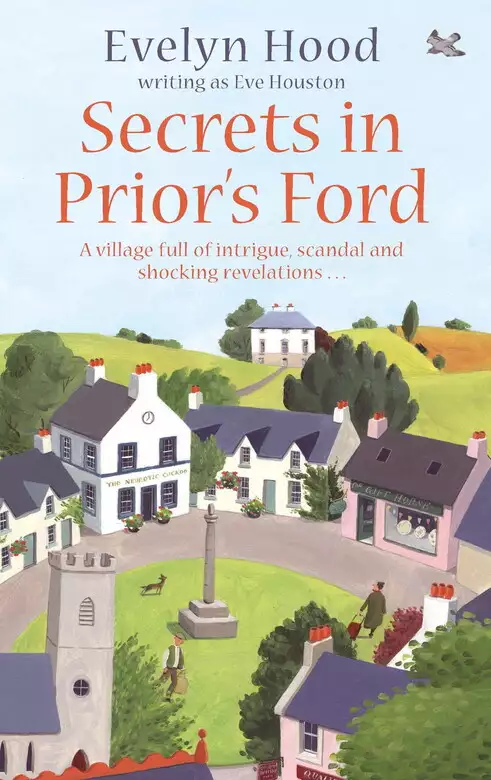
Secrets In Prior's Ford
Eve Houston
Saul was a man with a mission, a townie who had never found the countryside beguiling.
He passed the end of the lane that led up to Tarbethill Farm and only slowed down once he came to the village of Prior’s Ford, cruising slowly along Main Street, past the village hall on his right and the primary school on his left, its playground busy with children enjoying their afternoon break.
He was looking out for the village inn, the Neurotic Cuckoo, but just as he reached the half-moon-shaped village green by the side of the village hall his attention was taken by three young women, each carrying a big cardboard box, waiting to cross the road. Saul braked and waved them across with a gallant flourish of one arm.
The three women smiled at him as they hurried in front of his bonnet, unaware that the polite stranger was on a mission that would soon throw their quiet little village into chaos and set neighbour against neighbour. Saul nodded in return, eyeing them idly. Two were all right, he decided: one small, with long brown hair that she kept trying to flick back with tosses of the head, while the other was taller, with fair, well-cut hair forming a neat frame for her pretty face. But the third woman was the one who captured his interest – tall, slim and an incredibly beautiful blonde.
‘You’re more than welcome, darlin’,’ he murmured as she smiled at him, ‘any time at all!’And he let the engine idle for a moment so he could watch the gorgeous blonde and her friends walk across the village green.
It was as he followed their progress that Saul noticed the local pub, his destination, at the centre of the crescent.
He had passed the turning to the crescent without realising it, but fortunately it opened on to Main Street at the other end as well. Saul put the Land Rover into gear and moved off. As he made the turn and headed towards the pub, he saw the blonde and her friends enter a neat little shop with a sign above the door proclaiming it to be the Gift Horse. Pity, that, he thought. It would have been nice if they had been making for the pub, same as he was.
‘What a gentlemanly man,’ Ingrid MacKenzie said to her two friends as they made their way towards the Gift Horse. ‘Nice of him to stop for us.’
‘For you, I think.’ Helen Campbell winked at Jenny Forsyth, who grinned back at her.
‘Why for me? There were three of us.’
‘It’s that hair – and your height. And the way you carry yourself.’ Helen tossed her long brown hair back from her face as best she could, with her arms full. ‘He could tell you used to be a glamorous model.’ Nobody could ever think that of her, she knew. Mother of four, once slim but now a little on the plump side; she could best be described as ‘homely’.
‘No, no, I haven’t modelled for years. He saw only that I was a housewife and mother, like you and Jenny. Here …’ Ingrid dumped her box on top of Jenny’s. ‘Hold that for a moment while I get my key.’
‘I can’t see!’
‘There is nothing to look at,’ Ingrid replied calmly as she took the key from her pocket and unlocked the door. Then, retrieving the box, ‘There, now you can see again. Come in and I will make you some coffee.’
Jenny and Helen followed her in obediently. There was something about Ingrid – possibly her air of serenity – that marked her as a leader. The two of them had already been good friends when Ingrid, who had left her career and Scandinavia for love of a Scotsman, settled in Prior’s Ford with her husband Peter and their daughters, Freya and Ella. Jenny and Helen had set out to make the newcomer feel at home, and when Ingrid opened her gift shop and tearoom some three years earlier, Jenny, who shared her interest in crafts, had gone into business with her. Helen helped by keeping records of the items sold in the shop, which was open during the spring and summer tourist season.
‘I thought it would have been colder in here, given how cold it is outside.’ Jenny unwound the crimson scarf from around her neck and unfastened her coat, then fluffed up her fair, well-cut hair with the tips of her fingers.
‘I switched the heating on this morning. We can’t work in the cold.’ Ingrid emptied her box of coloured cards, reels of ribbon and plastic envelopes filled with tiny pieces of coloured foam in all sort of shapes, on to one of the three small tables provided for visitors in search of light refreshments, while Jenny, hanging her coat on the back of a chair, lifted two rosy-cheeked rag dolls dressed in brightly patterned frocks from the box she had brought.
‘What d’you think?’ She held them aloft. ‘I finished them last night.’
‘Very nice; they’ll be sure to sell well,’ Ingrid said approvingly, while Helen, discarding the craft and exercise books she had produced from her box, reached for one of the dolls.
‘They’re gorgeous, Jenny.’ She held the doll up, smiling into its cheerful little face. ‘She makes you feel happy just looking at her.’
‘What a nice thing to say!’
‘It’s true. She’ll bring happiness to whoever buys her.’ Just as Jenny herself did, Helen thought. She was a caring person who never had a bad word to say about anyone. Helen had been born and raised in Prior’s Ford, as had her husband, Duncan, while Jenny and Andrew Forsyth had settled in the village a few months before the birth of their only child, Calum. Jenny never spoke about her past and Helen had never pried, though there were times when she glimpsed an inner sadness in her friend’s hazel eyes and a droop to her generous, normally smiling mouth, and suspected that life had not always been as kind to Jenny as it was now.
‘I wish I could make things like that,’ she said as she laid the doll down gently.
‘No you don’t, because we need your efficient mind,’ Ingrid told her. ‘You’re so good at making lists of all the things we have, and the things we still need.’
‘Just you wait until I publish my bestseller – I’ll be too busy writing the next one to do your lists for you,’ Helen teased. She was taking a correspondence course on creative writing, and it was her burning ambition to become a novelist. ‘Not that you need to worry about that, because it’ll never happen,’ she added.
‘Yes it will, though you have to stop telling us and yourself that it won’t,’ Jenny remarked.
‘What’s the point in kidding myself?’ The demands of a husband, a house and four children, together with the typing she did for people in order to make a little money, left her with very little time to spare for her own writing. She heaved a sigh without even realising that she was doing it, and her shoulders drooped.
Her friends glanced at each other, then Ingrid said, ‘Every day and in every way, I am getting better and better. You must say that to yourself every morning, Helen.’
‘Before or after making sure the children have got up and got washed and dressed and eaten breakfast and collected everything they need for school?’
‘One day they’ll fly the nest and you’ll have more time. Until then, you should learn to be more positive,’ Ingrid scolded her, and then, studying Helen, her head on one side, she added, ‘It must be something to do with your Scottish winters – my Peter can feel low at times, just like you, but I tell him I won’t be bothered with that. When you write your bestselling book, Jenny and I will pile copies in the window and nobody will be allowed out of the shop without buying one. Now,’ she delved into her box and produced a bottle, ‘I borrowed some of Peter’s best whisky, so we can each have a tot in our coffee. That should cheer you up!’
* * *
‘It’ll do me well enough,’ Saul Beckett said when he had followed the landlord up the narrow stairs to inspect one of the two rooms available for visitors to the Neurotic Cuckoo. ‘D’you want a deposit?’
‘I’ll trust you,’ Glen Mason told him amiably, eyeing the other’s holdall, his only luggage. ‘Staying long?’
‘A few days, probably no more than that.’
‘Holiday, is it?’
‘Mmm.’ The ceiling sloped, which meant Saul had to stoop to look out of the window at the village green and Main Street beyond. On the opposite side of the street he could see the local church, the village store, a butcher’s shop and a greengrocer’s and flower shop. A road leading off the street directly across from the pub gave him a glimpse of the river and the soft, rolling hills that the district of Dumfries and Galloway was famed for.
‘Not a very big place, this.’
‘Larger than you might think,’ Glen said. ‘There’s a good few houses fitted in between the river and the shops across there, council housing behind the school, and a private housing estate behind the church. I always say, show a developer a few feet of ground these days and he’ll manage to build a house on it.’ He chuckled at his own wit.
‘You’re not from here, are you?’
Glen leaned back against the doorjamb, his thumbs hooked into his braces. He was in his late fifties, a tall well-built man who enjoyed talking, an asset for any pub landlord. And by his way of it, he was interested in folk though his wife, Libby, called it nosiness. ‘Birmingham area. Me and the missus had a corner shop all our married life, then we got fed up with the city so we decided to look for somewhere nice and quiet. We’d always fancied running a pub, so here we are. Been here for – oh, must be comin’ up for eight years now. We’ve never regretted makin’ the move, and never will. This place is the answer to all our dreams.’
‘It that so?’ said the man who was about to shatter Glen Mason’s dream, and the new life he had so carefully created for himself. ‘Prior’s Ford – where did that name come from?’
‘There was a priory here hundreds of years ago – you’ll see the ruins if you go out of the village in that direction.’ Glen jerked his head to the right. ‘It stands up on a hill, and they say the monks built it there because the river’s shallow at that point – a ford. The stepping stones they used are still there. It’s twenty-five pounds a night, by the way, bed and breakfast. Will you be wantin’ dinner as well? It’s fifteen pounds extra, but worth it. She’s a good cook, my Libby. Nothin’ fancy and no menus. She makes it, and the guests eat it. Never had a complaint yet.’ He grinned at Saul. ‘It’s thanks to her that I’m carryin’ all this weight, but I’m not complainin’ either.’
‘Aye, put me down for dinner as well, why not? Do I leave the car out front?’
‘There’s a yard at the back with enough room to take it.’
‘I’ll move it now, then.’ Saul Beckett went towards the door and Glen, who had been set for a chat, had no option but to let him pass.
‘A walkin’ holiday, is it?’ he asked as they clattered back down the stairs to the small hallway. The new guest’s clothes were well worn and shabbily comfortable, and his boots sturdy.
‘Aye, I do a lot of that.’ Saul ducked out of the front door and when he returned five minutes later Glen was waiting in the small reception area.
‘Dinner at seven thirty. Here’s your key, and the register – all we need’s your name and address and your car registration.’
‘Fine.’ The guest spun the register round and swiftly scrawled the required information. ‘See you later,’ he said, and disappeared upstairs while Glen studied the new entry in the register, barely noticing the sound of a taxi passing by.
Clarissa Ramsay, huddled in the back seat, was scarcely aware that the taxi had reached Prior’s Ford. Her mind had been a confused jumble ever since the moment, ten days earlier, when she received the phone call from her stepson to tell her that her husband, visiting his family in the Lake District, had succumbed to a massive and totally unexpected stroke. Since then – throughout the rushed journey south, the funeral arrangements, the funeral itself, the journey back to Dumfries and Galloway – she had felt in a sort of waking trance.
When the taxi drew up outside the house on the corner of Adams Crescent and Main Street and the driver said cheerfully, ‘Here we are, then – Willow Cottage,’ she jerked upright and stared out at the pretty two-storey house for a few seconds before recognising it as her home. Hers and – just hers, she realised bleakly.
‘Oh – thank you.’ She was still fumbling with the rear door when the man opened it from the outside. ‘I’ll see to your luggage, love,’ he said, helping her to alight. While she looked for her wallet he carried her cases up the path and placed them on the mat before the front door.
She paid him, adding a generous tip. Keith hadn’t believed in tipping people. ‘A fair day’s work for a fair day’s pay,’ he always said, and when Clarissa pointed out that people such as taxi drivers and hairdressers depended on tips to make up their low wages, he had informed her that tipping them just allowed their employers to profit by keeping their wages low. But now Keith was dead, and she was free to do as she wished. And the taxi driver had been exceptionally kind.
‘Want me to see you in?’ he asked as he pocketed the money.
‘No, I can manage, but thank you for offering.’
‘You’re very welcome, love,’ he said, and hopped back into his cab. As he drove back to his cab rank Clarissa turned slowly to face the house that Keith had chosen for his retirement.
It looked back at her impassively, neither welcoming nor rejecting her. She walked up the flagged path between the neat borders that Keith had weeded just before leaving for the Lake District and put her key in the lock. Once inside, she put her cases down at the foot of the stairs, then sat on the second to bottom step, wondering what on earth she was going to do with the rest of her life.
When the Gift Horse was open during the tourist season, visitors were served coffee made in the small kitchen behind the shop, but when she was working there during the closed season Ingrid brought her coffee-maker from the house.
Now, as she poured coffee and added a generous tot of her husband’s whisky to each mug, she took time to glance out of the window.
‘Isn’t that Mrs Ramsay getting out of that taxi? Poor woman,’ she added as Helen joined her at the window. ‘Do you think we should ask her in for a coffee?’
‘She might not feel like company, when she’s just back from burying her husband,’ Jenny said doubtfully, joining her friends, a half-made rag doll in one hand. ‘It’s not as if either of them mixed much with people. They seemed to prefer their own company.’
‘That might have been because they were newcomers.’
‘It might also have been because they didn’t care for strangers. Some people are like that.’
‘Whichever it is, best leave her to get settled in,’ Helen advised. ‘She’ll be tired after the funeral and the journey from England.’
‘I wonder if she’ll stay in the village?’Jenny pondered.
‘I imagine she’ll want to go back south now she’s been widowed. Such a shame, him dying so soon after retiring. Poor woman!’ Ingrid said again.
Inside Willow Cottage, Clarissa Ramsay sat motionless on the stairs for a good ten minutes before using the newel post to pull herself to her feet. She took off her black hat and coat and hung them both neatly on the coat stand, then looked at herself in the mirror by the door. A small, neatly built, unassuming woman with brown eyes and short brown hair looked back at her.
Keith, a keen bird watcher, had once told her affectionately that if born a bird instead of a human being, she would have been a sparrow. ‘A sparrow of a woman,’ he had said, smiling down at her indulgently. But today, returning from his funeral, no longer a wife but a widow, she felt more like a mouse than a sparrow.
She remembered reading out a poem by Rabbie Burns, the Ayrshire farmer poet, to one of her classes. It was about a mouse fleeing before the men who were harvesting the field where it had its nest.
Clarissa hadn’t lost her home, but now she knew just how that little mouse must have felt as it scampered, panic-stricken, through the stubble, its world suddenly turned upside down.
She went into the kitchen to put the kettle on. When it had boiled she put a teabag in a mug, added water, and then sat at the kitchen table, watching the liquid in the mug turning darker and wondering what she should do. Stay here, in the village that Keith had chosen to retire to, and in the house he had opted to buy? Or return to England and the life she had lived before becoming a middle-aged bride?
‘Come home soon,’ her closest friend, Stella Bartholomew, had said at the funeral. ‘You need to be with your friends, Clarissa.’
Clarissa had loved being a school teacher, and she had loved her flat and her quiet lifestyle. Although she had friends she had also enjoyed her own company. She liked going to museums and art galleries, seeing the occasional film, reading, attending concerts. Then she had married her headmaster, who had taken over her life. Being looked after and having decisions made for her had been quite pleasant, but now she realised that, without being aware of it, she had gradually lost the ability to be independent.
She thought, with mingled shock and guilt, that she wasn’t even sure what upset her most – the fact that Keith had died, or the fact that she was going to have to get used to being on her own again.
A sudden, deep yawn took her by surprise and forced her into making her first decision – to go to bed. Her new life would have to wait until tomorrow.
The doorways in the Neurotic Cuckoo were not high and Glen Mason, tall as well as burly, had learned the hard way to duck every time he went through one. Fortunately, his scalp was well padded with a layer of thick grey hair.
‘Saul Beckett, from Halifax,’ he reported as he entered the pub’s kitchen. ‘Weather-beaten sort of chap, casually dressed, and strong boots on his feet.’ He poured a mug of coffee and settled his hips comfortably against the edge of the sink. ‘A walker. We’ll not see much of him if this weather keeps up.’
‘All I’m bothered about is, will he be all right for steak and kidney pie?’ Libby was chopping carrots with a speed and skill that never failed to amaze her husband. Like Glen, she was in her late fifties, and where he could be described as burly, she was comfortably plump. With her snowy-white hair, long enough to be pleated and then pinned around her head, and her gentle smile and kindly blue eyes, Libby looked like everyone’s idea of the perfect granny. Sadly, in their twenty-seven years of marriage, she and Glen had never been blessed with children.
‘He looks like the steak and kidney pie type. None of your vegetarian nonsense with a big man like that.’
‘I’ve got a good sturdy broth in the freezer. Fetch it out, Glen, it’s on the top shelf, well labelled. And a jam sponge and custard for afters,’ Libby decided contentedly. Cooking was her hobby, and she was at her happiest when guests were staying at the inn. The Scottish border country was a popular holiday venue in the summer, but she couldn’t recall them having had any bookings in February before. Prior’s Ford and its inhabitants were usually left to their own devices during the winter months.
She said so now, and her husband nodded agreement. ‘He’s a difficult man to get to know. Not keen to talk about himself. It’s as if he’s got a secret past.’
‘Look who’s talking,’ Libby said. ‘We don’t want folk to know our business, do we? So why should you want to know his? Everyone’s entitled to their secrets.’
‘But they can still talk, can’t they? Pass the time of day, an’ that.’
‘You let folk alone, Glen Mason – and if you’re lucky, they’ll let you alone.’
‘You worry too much,’ Glen said, and took himself off to the bar.
It was nice to have a visitor during the closed season, Libby thought as she scooped up a handful of diced carrots, glowing like little rubies, and tossed them into the pie dish. Nice to have someone else to cook for.
As long as Glen watched his tongue and didn’t let it run away with itself, and say too much.
The Neurotic Cuckoo’s one and only guest ate every crumb of his dinner and then moved from the small dining room to the bar, where he ordered a pint of beer and a whisky chaser, and settled at a small corner table with a book. When the regulars began to arrive in twos and threes he glanced up and nodded to each of them, then returned to his reading, clearly uninterested in conversation.
To Glen’s disappointment, the man disappeared upstairs early, giving his host no time for conversation once the regulars had begun to head for home.
In the morning, he devoured a large breakfast, assured both Glen and Libby he had had an excellent night’s sleep, and asked for a packed lunch. As soon as it was ready he set off in his Land Rover.
It took all Clarissa’s courage to step out of the front door the morning after she returned from her husband’s funeral.
To the best of her knowledge nobody had seen her arriving on the previous afternoon and she would have been happy to stay indoors for a day or two, giving herself some time before facing others; but unfortunately, the larder was almost bare, and needs must. There was nothing for it but to do some shopping.
As she was about to enter the village store cum post office run by her neighbours, Marcy Copleton and Sam Brennan, a young woman who was just coming out said, ‘Oh, Mrs Ramsay, how are you?’
‘I’m quite well, thank you …’ Clarissa floundered, trying to recall the woman’s name. She recognised the pretty face framed in a neat cap of fair hair, and knew she had frequently passed the time of day in the street or the shops with this girl.
‘Jenny Forsyth – I live down by the river. I was over in the Gift Horse yesterday with my friends, Ingrid and Helen – Ingrid and I run the shop – and we saw the taxi bringing you home.’
‘Oh, of course, Mrs Forsyth.’ Now Clarissa placed her. She had one son, a nice wee boy who attended the local primary school.
‘We thought of coming over to see how you were, but then we decided that perhaps you’d prefer to be on your own after your journey. I was – we were all so sorry to hear of your loss,’ Jenny said with warm sincerity.
‘Thank you, my dear.’
‘Is there anything I can do to help you? Any errands at all, or if you would like company you are very welcome to drop in any time.’
‘That’s very kind. I’m just – trying to come to terms with what’s happened at the moment.’
‘Of course.’ Jenny reached out and put a hand on Clarissa’s arm, then said, ‘I’ll not keep you, but please do get in touch if you need anything at all. Our number’s in the phone book.’
Clarissa thanked her again and went on into the village store, which was mercifully quiet. She worked her way round the shelves, wishing she had thought to make out a shopping list, then made her way to the counter. Normally Marcy Copleton, a down-to-earth woman in her early forties, efficient but friendly without being too intrusive, could be found there; but today, to Clarissa’s dismay, Marcy’s partner Sam was at the till instead of in his usual place behind the post office grille.
Sam was clearly as embarrassed as Clarissa. ‘You’re back, Mrs Ramsay,’ he said in a loud and over-cheerful voice. ‘Have a good – I mean, did everything go as – as expected?’
‘The funeral went well.’ She concentrated her gaze on his hands, watching closely as one lifted each item from her wire basket and the other tapped busily at the till. It wasn’t that she suspected him of cheating; it was just easier at the moment to look anywhere but at people’s faces.
‘That’s good. Got your basket?’
She lifted her empty hands, then glanced down at the floor by her feet before saying helplessly, ‘I must have forgotten to bring it with me today.’
‘Not to worry.’ Sam picked up one of the polythene bags with the shop advertised on it. ‘Just as well, since it’s coming on to rain. This’ll keep ’em drier than in your basket.’ He packed the items efficiently, remarking in an attempt to keep silence at bay, ‘You’re looking well.’
‘I doubt that – black was never my colour.’ The words were out before Clarissa could stop them. She stared at the man on the other side of the counter, her shock mirroring his, and then grabbed the bag. ‘I mean – I’d better be off,’ she gabbled, and shot out of the shop, almost knocking a wee boy over as they met in the doorway.
What had possessed her? she asked herself as she scurried back to the safety of Willow Cottage, where she opened the gate, closed it carefully behind her as she always did, and almost ran up the path to the green door. Once inside she paused for a moment – again, as she always did – waiting for Keith to call from his study. Then, realising that the call was never going to come again, she shook her head at her own stupidity.
She carried the bag into the kitchen and unpacked it, then stood with it in her hand, at a loss as to what to do with it. Keith detested those bags; he had bought her a very nice wicker basket for her village shopping, and a large, sturdy canvas bag for Mondays, when they drove to Kirkcudbright to do their weekly shop in a supermarket.
Finally, she folded the bag and put it carefully into the swing bin, then put the groceries away.
The doorbell had a genteel ring, a double chime as near to a discreet cough as a doorbell could get, but even so she jumped when she heard it, and peered cautiously round the door once she had opened it slightly.
‘Mrs Ramsay, I’ve only just heard you were back in the village. I thought I would call to see how you are. Is this a bad time?’ Naomi Hennessey went on as Clarissa stared at her in silence.
‘Oh – Reverend H. . .
We hope you are enjoying the book so far. To continue reading...