- Book info
- Sample
- Media
- Author updates
- Lists
Synopsis
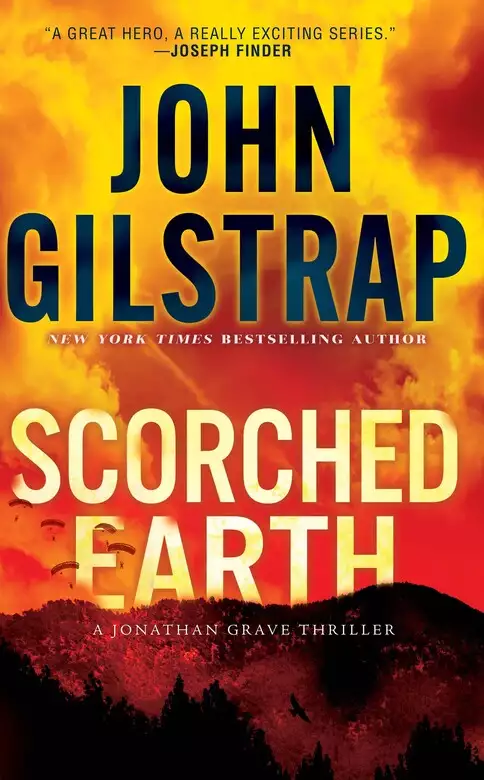
Vengeance, murder, and violent political games are on a collision course in a propulsive Jonathan Grave thriller by New York Times bestselling author John Gilstrap.
Disgraced U.S. President Darmond has been ousted from office, but his minions have taken aim at everyone they perceive to be enemies. Off-the-record contractors on a secret list are being eliminated, one by one.
Jonathan Grave and his Security Solutions team manage to turn the tables when the assassins come for them. But the ultimate attack will strike deep at the heart of what’s best about American values.
High-tech weapons, terror-driven fanatics, and top-level betrayal shred the peace of a peaceful gathering in the rolling hills of rural North Carolina. In this showdown, the winner will take all.
Release date: February 24, 2026
Publisher: Pinnacle Books
Print pages: 368
* BingeBooks earns revenue from qualifying purchases as an Amazon Associate as well as from other retail partners.
Reader buzz
 Please log in to recommend or discuss...
Author updates
Scorched Earth
John Gilstrap
The extra money and loftier title were good, but they didn’t come close to compensating for the extra aggravation.
Like everybody who signed on for a life in emergency services, she supposed, she was in it for the adrenaline rush. God help her, but she lived for hurricanes and forest fires. At thirty-five, she’d been doing this for fourteen years, and those multi-day marathon emergency fests were the reason why she couldn’t imagine herself ever retiring.
The white shirt? Well, the jury was still out on that.
Esther sat in her chair and rolled into her workstation with its eight computer monitors—two rows of four, double-stacked, and four keyboards. Other dispatching stations only used six monitors. Her extra two helped her keep track of what those others were doing. She loved the ambience of the EOC, the NASA vibe of it. Bathed in perpetual low light to better see the screens, the workstations formed a semicircle around an array of large flat-screen televisions that could be set to display broadcast media—news reports, in the event of large events—but on normal days like today merely duplicated the information on all the call takers’ screens.
The computers took care of distributing calls as they came in, first come, first served, delivered to the next available staffer. Esther had found over the years that people self-selected to prefer either taking calls or dispatching crews, but to keep everyone sharp, she switched people off, rotating three consecutive shifts on each. The two tasks, while closely related, required unique skill sets that could go stale if they were not regularly exercised.
Today’s rotation had Esther in her happy spot, answering the incoming 9-1-1 calls. Of the six on duty that shift, she was one of four in that role, with Margorie Griffin dispatching deputies and Craig Tierny dispatching fire and rescue. The first three hours of the shift had been busy, but now they were in a slump.
Esther took advantage of the boredom to review their statistics from the last seven days. Impressive and improving. On average, incoming calls were answered within thirty-five seconds, a perfectly acceptable number that no doubt felt like hours to the terrified citizen on the other end of the line. After that the times were even better—total call-received-to-dispatch-made averaged one minute and twenty-seven seconds. She’d put that up against any jurisdiction anywhere.
But after that, the statistics fell apart, and that’s where the skills of the call taker became so important. Wellington was a rural county that didn’t have a lot of money. Its 73,000 residents lay across nearly four hundred square miles of mostly farmland, protected by five volunteer fire departments, each of which also ran an advanced life support ambulance, and twenty-four sheriff’s deputies divided among three shifts. Dispatch to on-scene times averaged close to twenty minutes. For a true medical emergency, that was literally a lifetime. Three lifetimes, actually.
Esther’s screen lit up with an incoming call. Three years ago, they’d been so proud of the enhanced 9-1-1 system they’d installed that instantly identified the location of every incoming call from a landline—just exactly at the time that everyone in the world stopped using landlines and switched exclusively to their cell phones. Now, this incoming call showed the identities of three cell phone towers, the triangulation of which—calculated by the computer—showed her the approximate location of the caller on a map.
Esther tried to sound as much like a robot as she could as she spoke into the boom mic of her headset. “Nine-one-one, what is your emergency?” As soon as the call connected, the voice-to-text transcription started.
“Uh, yes, ma’am, this is Griffin Smith, I’m on Hadden’s Hill Road about a half mile south of Route Fourteen-Thirty.” He sounded winded, like he’d been running. Or maybe he was just scared. “There’s a pickup truck with two teenagers in it just ate a hickory tree. It’s pretty awful.”
Esther used her mouse to highlight the call on her screen and drag it over to the Fire and Rescue screen, where they would read the text and dispatch the appropriate equipment—in this case, an ambulance, engine company, medic unit and a heavy rescue squad.
“One of them boys was thrown clean from the vehicle,” Griffin said.
“Okay, Mr. Smith, help is on the way,” Esther said. “I need you to answer some questions for me, okay?”
“Oh, them poor boys. Their poor mamas.”
“Mr. Smith, you say there are two people involved?”
“Yes, ma’am, the driver and the passenger. The passenger was thrown out on impact.”
“Is the passenger breathing?”
“No, no, ma’am, he ain’t. Ah, shit, I … I can see his brains, ma’am.” He started to cry.
Esther looked at her upper left-hand screen. Fire and rescue dispatched at 13:02. WCSD dispatched 13:02. WCSD marked responding at 13:03.
“Griffin, hang with me, sir. Don’t look at it. Don’t look at the awfulness.”
“But he’s dead.”
“I know. That’s terrible. Tell me about the driver.”
Esther’s computer screen flashed another incoming emergency call, this one from the other end of the county. Alicia Blakely took it.
“We should say a prayer for that boy,” Griffin said.
“He’s already in the Lord’s arms, Griffin. You know that. He’s already in the place that we pray one day to go.”
“Yes, ma’am, I suppose you’re right.”
Esther felt a tiny spark of happiness when the computer showed Ambulance 4 responding to Hadden’s Hill Road at 13:05. Some of the volunteers must have been hanging around the firehouse when the call came in.
Alicia’s call posted as a structure fire, requiring a standard response of two engine companies, a ladder truck or heavy rescue and an ambulance.
“What about the driver, Griffin?” Esther asked. “Tell me about him. How badly is he hurt?”
Sounds of movement. “It … it’s hard to tell. He’s breathing.”
“That’s good. That’s great, actually. Is his seatbelt on?”
“Yes, ma’am. And his face is beat up pretty bad, but I bet you that’s from the air bag.”
“Is he conscious? The driver?”
Another incoming call, this one from only two miles away from Griffin. Katie Howe took it.
Away from the phone, Esther heard Griffin say. “Hey. Hey, buddy. Hey, you awake? Can you hear me?” Then, into the phone, “No, I think he’s unconscious.”
“What about obvious injuries?”
“No. Well, nothing I can see from outside the vehicle. Just the bruising on his face.”
“I don’t suppose you have any medical training, do you?” Esther asked.
“No, ma’am, I do not.”
“All right, then, Griffin, I’m going to ask you to do the hardest thing there is to do.”
“What’s that?”
“I’m going to ask you to do nothing more. I want you to find a safe spot along the side of the road, away from the immediate accident scene, and just chill out until help arrives.”
Katie’s call posted as a structure fire.
“How long will that be?”
She looked at the computer again, did the math. As she was running the calculations, Engine 4 and Rescue 4 diverted to the structure fire, leaving Wagon and Ambulance 4 to tend to Griffin’s auto accident.
“Police, fire and rescue are all on their way,” Esther said. “Figure seven, maybe ten minutes before they get there.”
“That’s a long time,” Griffin said.
“I know it’ll sure seem like it. But I’ll be right here. I’ll stay on the phone with you.”
“So I don’t go crazy and run off?”
“Nope,” Esther said. “So I know that my new friend Griffin Smith stays safe and sound until help arrives.”
Another incoming call.
“What you just went through is tough. And it’ll be tough again tomorrow, maybe when you think about it. If you need to talk and maybe you’re not sure others want to hear what you want to share, you give me a call. Just call the non-emergency number for the fire department and ask for Esther. Everybody knows how to find me.”
Griffin didn’t respond, but he didn’t hang up, either. After a few minutes, she could hear the sounds of sirens building in the distance, and she watched the statuses on her screen change from responding to on scene.
“Hey, Griffin, you still there?”
“Yes, ma’am.”
“Okay, buddy, well, this is it for us for now. You remember what I told you, okay?”
“Yes, ma’am, I’ll remember. And Esther?”
“Don’t say it, Griffin. No need. You’re welcome. I meant every word.” She pressed the dump button before it got weird.
Esther picked up the emergency line that had been ringing unanswered for fifty-four seconds. “Nine-one-one, what is your emergency?”
“Help me,” a voice said. “My house is on fire.” He recited an address and hung up. Something wasn’t right. The voice sounded … fake. The address was within a mile of the first structure fire that was dispatched. If Esther tapped out this one, she would end up dividing that response team.
“Wagon Two to Control,” said a voice over the air.
Craig Tierny keyed his mic. “Wagon Two.”
Another incoming call.
“I’ve got it!” Esther shouted as she raced to press the connect button.
“Control, be advised, we are on the scene at the dispatched location, and the homeowner advises he never called.”
Esther said, “Nine-one-one, what is your emergency?”
“Help me. There’s an intruder in my home.” The same voice as before gave out a different address.
Over the radio: “Engine Four to Control. Be advised, we are on the scene of the reported house fire and there is nothing here. Homeowner did not make a call.”
Another incoming call.
Another incoming call.
Katie Howe shouted, “Esther, what’s happening?”
Esther stood at her station. “Everybody, stop!”
More calls coming in.
“Is everybody getting the same electronic, computer-sounding voice?”
A general murmur of agreement rumbled through the EOC.
“I think this is some sort of cyber attack,” Esther said.
“What do we do?” somebody asked.
“I make a phone call to my boss is what I do. In the meantime, keep answering calls, and use your best judgment.”
Scotty Tagget let out a war whoop as he watched the statistics roll on his computer screen, and he listened to the confusion on the fire and police dispatch channels.
“Yes!” he yelled, punctuating the word with a fist pump. “Omar, Ervin. You wanted to know if I could do it. Well, there it is. There’s the evidence. Not to toot my own horn, but I am a freaking genius!”
Wellington County Sheriff Ervin Morrissey rested hands on his Sam Browne belt as he leaned in closer to Scotty’s computer screen. The lighting sucked in this glorified barn that Omar Farook called a command center. “What am I looking at, exactly?”
“This is the diversion Omar was asking for. The diversion of all diversions. I’ve designed a program that will flood the emergency call center with random fake emergencies. The system has all the addresses in the county—taken from the tax records, along with the names of property owners—plus their phone numbers of record. I’ve given the system thirty different emergencies to choose from randomly. When I push the go button the system matches an address to an emergency, spoofs the phone number and calls nine-one-one.”
“Then what?”
Scotty recoiled in his seat. “Seriously? That’s not obvious? They dispatch resources to emergencies and then we flood the zone. I can program this to do as many as seventy-two calls per minute. They can’t possibly keep up.”
“I don’t get it,” the sheriff said. “What do we gain from that?”
“The dispatchers stop taking calls.” This voice came from behind, and it belonged to Omar Farook, the man in charge of all things related to the Event, and the man paying literally millions of dollars to make it happen. “We train them to stop taking calls when that’s what we need them to do.” He looked to Scotty. “How long has it been running?”
Scotty looked at the timer. “Seven minutes.”
“Turn it off,” Farook instructed. “That is enough for now. That is proof of concept.”
Disappointed, Scotty turned back to his keyboard and tapped the appropriate keys. “Okay, done,” he said.
“How did last night’s rehearsal go?” Morrissey asked.
“Quite well,” Farook said. “We have a talented team who could go tomorrow if we had to, but we will wait for the assigned date. We need to wait for the exact layout, which I’m told is forthcoming. Eliminating the guesswork will make the plan much stronger.”
“Always does, I suppose,” Morrissey said. “Speed is going to be important. Maximum damage in the shortest period of time.”
“You’re telling me things I already know.”
“Your boy Willy K still out on his vendetta hunt?”
Farook glared at him. “Do you have a reason for being here?”
“Yeah, I do. I left a Pelican case of batteries for Willy K. He’s going to modify them for me. He knows what to do.”
“What kind of modifications?”
It was Morrissey’s turn to shoot the dangerous glare. “The kind that you need to ask Willy K about if you really want to know.”
As Scotty watched the exchange between the two men, he did his best to remain invisible. Whenever they were together, he was half surprised that they didn’t go to guns. Willy K surprised him that way, too. It was like the whole leadership team hated each other. The rank-and-file members of Farook’s army—his American Jihad—didn’t get along all that well, either, but you expected that when you brought a bunch of snake-eating mercenaries together in the same place.
Hell, Scotty didn’t like most people, either.
Leading a bunch of mercs wasn’t an easy task, for sure. It was like leading unleashed egos. Strong, unified leadership was essential with groups like this, but Farook’s leadership team all seemed to be pulling in different directions. Maybe because Omar Farook saw this as some kind of divine mission when everybody else just saw it as a paycheck and said all the right things to make sure the six-figure checks ended up in their accounts.
Or, maybe it was the nature of the target package this time. That’s what really wore on Scotty.
It stole a special chunk of your soul to intentionally kill a bunch of kids, no matter how big the payday.
Jonathan Grave hated boats but loved the water. He was an excellent swimmer because Uncle Sam once required it of him, but swimming for recreation ranked right up there with putting a fork in his eye. But the view of water—in this case, the Rappahannock River along the shore of Fisherman’s Cove, Virginia—and the sight and sound of the water soothed him.
Back when he was maybe ten years old, he’d discovered an outcropping of rocks above a feeder creek about half a mile from town. Nearly invisible through the trees, that vantage point provided a breathtaking view of what he called the ass end of sunset. Facing east, as the sun sank low in the afternoon, the angle of the light on the water and the flora made problems seem easier to manage. Mama Alexander—his surrogate mother after his real mother passed away—named the spot Jonny’s Point. As a boy, it’s where he did his deepest thinking. As a teenager, it’s where he took dates, knowing that there’d be a ninety-eight percent chance of action. Nowadays, it was just about the peace.
This afternoon, he shared the spot with his longtime friend and occasional lover, Gail Bonneville. A lawyer by trade, and a retired FBI agent and former sheriff of a small town in Indiana, she was one of the best shooters Jonathan had ever known—earning herself the call sign Gunslinger, which she hated. Gail seemed to regret every pull of the trigger, even when the result was to rid the world of another bad guy.
They sat side by side in low-slung folding beach chairs, sharing a bottle of sauvignon blanc as they watched the scenery mostly in silence. The private investigation firm he owned, Security Solutions, Inc., often took on the kinds of cases that generated lots of noise. Sitting here in the quiet with a close friend made it all—
“You know, you’re quite a contradiction, Digger,” Gail said.
He suppressed a sigh. Not everyone appreciated silence. “Yeah? Is that a good thing or a bad thing?” Movement in the underbrush on the other side of the creek bed, maybe a hundred yards away, caught his attention. He leaned forward in his seat, as if cutting a few inches off the viewing distance would make a difference.
“Neither good nor bad,” Gail said. “You don’t often show your nature-loving side. I have to say that I like—”
“There’s somebody in the forest over there,” Jonathan interrupted.
Gail huffed at the interruption then followed his eyeline and scowled. “I don’t see anybody. What are they doing?”
“I don’t know. I only saw one, but I don’t like the way he was moving.”
Gail leaned forward, too. “Do you see him now?”
“No.”
“Maybe he’s a hiker,” Gail said. “A fellow nature lover.”
“Maybe.” But he didn’t like what he saw. The guy had been walking with an odd, hunched-over gait, as if he were trying to go unnoticed. People who wanted to remain unnoticed were up to no good in Jonathan’s world.
“Whoever it is, they have every right to be there,” Gail said. “You don’t have to be at war in your mind every day.”
That’s exactly where he was. He’d created too many enemies. Every mystery was a threat until proven otherwise. He considered that to be the secret sauce to survival.
“There he is again,” Jonathan said, resisting the urge to point and give away the fact that he’d seen the guy. “This time, it’s not an image of the guy, but do you see how the bushes are moving right above that big deadfall on the creek bed?”
“It could be a breeze.”
“Breezes move everything, not just one section of bushes.” It occurred to him that the guy’s position would be an excellent spot to set up a sniper’s nest.
“Do you want to go check him out?” Gail asked.
“Part of me does. It doesn’t have to be confrontational. We could—”
Jonathan caught a flash of white light from the bushes over there, as if the woods were winking at him. It could have been a flashbulb, but intuitively, he knew better. It took all of a quarter of a second for him to realize that it was a lens flare from a rifle scope.
“Gun!” Jonathan yelled. He grabbed a fistful of Gail’s blouse, right where the buttons were, and he yanked her off her chair and onto the hard rock.
“What the hell, Dig—”
Before she could finish her sentence, Jonathan heard the whiz and crack of passing bullets that tore into the chairs they’d just vacated, followed immediately by the booming reports of the muzzle blasts. The first two shots came as a quick pair, a double-tap. There was a brief silence, during which Jonathan, acting on instinct, grabbed Gail in a bear hug and rolled to his right. When he was on his back, he heaved Gail over the edge of the rock face onto the mulchy ground below.
More shots came from the woods, the bullets tearing into the rocks and shattering on impact, sending hot fragments of copper and lead in every direction.
Movement was key. The attack wasn’t yet five seconds long, and Jonathan felt confident that the shooter wasn’t experienced enough to lead his targets. He kept shooting at where Jonathan and Gail were, rather than where they were going to be.
The rate of fire doubled, tearing up the world as the guy did a mag dump on the targets he couldn’t hit.
He heard Gail make a barking sound as she hit the ground below, and then he heaved himself over to the same spot. He’d just gone airborne when something white hot pierced the right side of his neck, just below his ear. When he landed on the soft ground, the shooting stopped.
“You’re hit,” Gail said, reaching for his neck.
He could feel the trickle of blood tracking down to the collar of his T-shirt and then beyond to flow down his chest.
But the headline was that he could feel. That meant he was alive and that his spinal cord was intact. He reached to the wound and his fingers found the jagged edge of a piece of metal sticking out of the flesh.
“It’s a fragment,” he said. “Can’t have gone too deep because I’m still here.”
“Let me take it out for you,” Gail said.
“No, leave it in place. I don’t think I’m in mortal danger, but the metal has to be tamponading the flow of blood at least a little.”
“We’ve got to get you to a hospital,” Gail said.
“Bullshit. Sonofabitch was trying to kill us. I’m returning the favor.”
“We’re a bit outgunned for that, don’t you think?”
“I’ve got my Colt and two spare mags.” Jonathan always had his Colt 1911 .45. His enormous coworker, Boxers, called the pistol Digger’s little sister. He never let it out of his sight. “What’ve you got?”
“It’s just an outing,” Gail said. “I have my forty-three.” The Glock 43 had a magazine capacity of six rounds, plus one in the chamber.
“Spare mags?”
“I didn’t expect going to war.” She sounded defensive.
“Not a problem,” Jonathan said. “We’ve got twenty-one rounds between us. That’s enough. Let’s go.”
“Suicide wasn’t on my list for today, either.”
“Okay,” Jonathan said. “Let me have your gun so I can still have twenty-one rounds.”
“You can’t do this alone,” Gail said. “You’re wounded and you can’t set up a crossfire.”
“Right you are,” Jonathan said. “So let’s get going. There’s only one path out of that end of the point that will lead to a road. If we hurry, maybe we can make it.”
He didn’t wait for an answer. Gail would come or she would stay. Either choice was legitimate under the circumstances, but he didn’t have time to debate the point. He took off at a run, keeping low and watching the blood trail he was dropping onto the vegetation. It wasn’t really a flow, but more like a fast trickle. He hoped maybe the trickle would stop on its own.
He fought his way through briars and sticker bushes to get to River Road, and then he turned right and started to run in earnest. He dared a glance behind him and was pleased to see that Gail had decided to come along.
He’d never measured the distance, but it felt like the trailhead would be about a quarter mile away. On a good day, he’d be able to close that distance in ninety seconds, but the hole in his neck, even though it was small, slowed him down. Every stride hurt.
Up ahead, he saw a black SUV pulled off to the right shoulder, just past the access to the trailhead. That would be their ambush point.
As Gail caught up, Jonathan motioned for her to take her place just inside the tree line on the left side of the road while he ran beyond the SUV to take cover in the trees on the same side of the road as the target vehicle.
If the shooter was any good at his craft, Jonathan knew exactly what was going through his mind now. He’d missed his targets, and now he was the one being hunted. All of his choices at this point sucked. The shooter could assume that his targets had run away—the smart thing for any target to do—in which case, the police would soon be on the way. He couldn’t afford to stay where he was.
Unless his targets hadn’t run away, and were lying in wait for him, waiting for him to make a move, in which case moving could prove to be exactly the wrong thing to do.
Ultimately, he had no choice. He had to move somewhere. Problem was, this part of Virginia, around Fisherman’s Cove, had miles of nowhere, and very little somewhere. That’s why Jonathan liked it so much.
The smart money said he’d return to his ride. And Jonathan had infinite patience when it came to waiting for people who had tried to kill him. He drew his Colt and thumbed off the safety.
Turned out Jonathan didn’t have to wait long at all. After ten minutes, he heard movement on the trail. It sounded hurried yet cautious. In this head, he imagined a nervous shooter praying for this. . .
We hope you are enjoying the book so far. To continue reading...