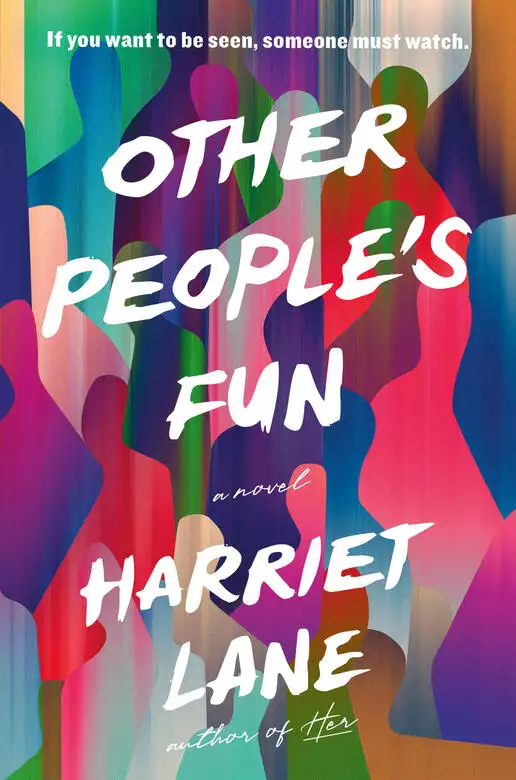
A chance encounter draws two old classmates toward an unforgettable reckoning in this "very smart and darkly funny" novel exploring power—and how it tangles with privilege, marriage, motherhood, and midlife—from the acclaimed author of Alys, Always, and Her (Flynn Berry, author of Northern Spy).
"I look. I can’t stop looking. That’s the deal, isn’t it? We all know that’s how it works. If someone wants to be seen—and oh, how they want to be seen—then someone has to watch."
Ruth is alone, unnoticed, and at a loss: her marriage has ended, her daughter is leaving home, and her job is leading nowhere.
But luckily Sookie is back in her life–vivid, self-assured Sookie, who never spared the time for Ruth when they were teenagers, but who now seems to want to be friends. But as Ruth is caught up in Sookie’s life, she sees that everything is not as Instagrammable as Sookie would have you believe. As the truth about Sookie becomes clearer, so too does the choice Ruth will have to make.
Unputdownable, spiky, and subtle, Other People’s Fun is a novel about modern life, from the little lies we tell our neighbors, friends, families, and ourselves to the hall of mirrors that is social media. Filled with Harriet Lane’s trademark creeping unease and forensic observation, this page-turner considers how desperately we want others to see us as we are—and what happens when they finally do.
Release date:
November 4, 2025
Publisher:
Little, Brown and Company
Print pages:
224
* BingeBooks earns revenue from qualifying purchases as an Amazon Associate as well as from other retail partners.
We are nearly there. Jean turns right at the fingerpost and follows the road through the village, and though some of it is new – the antique shop, the deli with its humbug awning – most of it is horribly, shamingly familiar, a reminder that I’ll never escape this place, no matter what I tell myself. War memorial, flint church, the half-timbered pub we never went to because it was popular with staff, and then Miss Balfour’s redbrick villa, and the bursar’s house, and somehow I miss the drive leading to the ugly bungalow where I occasionally babysat for the Waxham children. The foaming hedgerows rise up and fall away, streaming behind us like a wake, an illusion that makes me feel slightly seasick. Jean is telling me about pulling a muscle during a recent walking holiday in the Abruzzo, describing in some detail her physio routine of stretches and rotations.
I nod and murmur and press my palms on my skirt, and there’s the blue sign and the gate dragged open to the verge. Jean taps the indicator. ‘Here we are,’ she says, hauling at the wheel. ‘Goodness – what on earth is that?’
‘It’s the new art department,’ I say, humiliated that I know this, because really, I shouldn’t study the old pupils’ Bulletin, which is essentially a termly begging letter: I have better things to do with my time, and I certainly have better things to do with my money. ‘I think it won a RIBA award.’
A boy in a Ramones T-shirt, the sort of vintage shirt also popular in our day, steps out of the shade of the Humanities Building and comes towards the car. His mouth moves. Amazing teeth. I roll down my window: ‘We’re here for the—’
‘Keep going – loads more space by the music school, if you need it, but you should be fine,’ he says, and his beautiful eyes are full of pity.
Jean noses the car into the shade of an oak and we sit there for a moment, gazing at the Jacob sheep on the other side of the fence. An old Nissan crawls into the space next to us. I don’t recognise the occupants. Two elderly women – well, older than us, at any rate. Jean starts digging around in her bag. ‘Oh, you will think I’m terribly rude – I’ve been gabbling away,’ she says, applying ChapStick. ‘So much to catch up on. How is Elizabeth? And Robert? Everyone well?’
‘Elizabeth is fine. Yes, Robin, he’s fine too.’ Then, quite hesitantly, because in her birthday cards and January phone calls she has never mentioned a partner, I say, ‘And you, is there…?’
‘There is not,’ she says, without rancour or discomfort, and reaches for the door handle. We get out and fuss around with litter and bags, and finally we can’t put it off any longer so we join the thin procession snaking past the Wye Building over the Meadow towards the New Hall, which is, of course, quite old. The sun has come out, filling the grass and the turning leaves with a golden light, a light I remember from those other Septembers, and the groups of boarders lazing in the Meadow are illuminated too: their hair and bare legs, their wrists strung with twine bracelets, which remind me of the Donne poem I surely encountered here. They lean on each other, chatting, oblivious to us. Carrying over some distance, there’s the crack and whoop of a six.
A charming path has been mown through the long grass, and we follow it. Jean continues to express thoughts as they occur, much as she did on the short drive from the station. I don’t know her well enough to be sure if this is nerves or her default setting, but her voice is loud and clear. Some girls glance in our direction and then carefully turn away, as if they daren’t look at us or each other, though I can’t be sure if this is out of amusement, or horror, or a sort of delicacy. We must seem sad wraiths to them, I suppose: awkward visitors from the past, claiming some kind of ungainly kinship; or perhaps emissaries from a dread future from which all the things that make life worthwhile – youth, fun, possibility – have been stripped away. No wonder they avert their eyes.
Everything is of interest to Jean: the planting scheme around the library steps, the monstrous science extension, the renovation of the clock tower. Something seems to be suspended from the clock tower: a length of shiny pink material, which twists a little, catching the breeze. Jean reminds me that the night before our final Founders’ Day a dressmaker’s dummy was stolen from the textile studio, zipped into Mr Trickett’s red anorak, and winched up there on a noose.
‘Isn’t that Verity Spackman?’ Jean says, and I have a momentary flash of a forceful girl in a brown kilt, someone I would hide from after history, for fear of getting stuck with her for lunch. Thanks to the Bulletin and social media, I know Verity Spackman is now something significant at Google, a runner of half-marathons, a cold-water swimmer and the mother of three high-achievers. ‘And look, look, there’s Dribbler!’
Dribbler has turned into a mild-looking person in a button-down shirt and hiking trainers, treading a cigarette butt into the cobbles. What was Dribbler’s real name? Duncan? Martin? Martin Duncan? I do remember that Dribbler liked heavy metal and was known to keep an airgun hidden in his study in the science block. From time to time he would crack the window and take aim at the little boys making their way to games, so they cried out and raced for cover, clapping hands to their arms or thighs. Dribbler became Dribbler after the Tybalt–Mercutio fight scene got out of hand in Miss Capstick’s drama workshop. I remember the tittering as he lurched to his feet and staggered around, a shoelace of drool swinging from his jaw as he mumbled for Mummy. They – we – never forgot that Mummy.
We step off the Meadow into the small crowd outside the New Hall. Jean darts ahead, waving, seizing people and kissing them, as if this is terrific fun, such a lark, while I trail behind, a smile stuck to my teeth. We’ve all changed, lost hair or put on weight, gained crows’ feet and what we believe to be stylish eyewear, and yet even in this quick instant I recognise the tics and mannerisms of those long-lost adolescents, last seen a lifetime ago, before the realities of life obliterated us or showed us who we really were. Someone in an olive moleskin jacket moves aside to let us pass. His back is turned but I know those shoulders, that neck, those ears. It comes at me with sudden force, a sentimental assault, and just for a moment every sensible thought is knocked out of me. Just for a moment I am overwhelmed, as I always was; overwhelmed by fear or longing, a combination of both.
Absurd. Of course, I am now far older than he was then. I inch past, careful not to touch him, focusing on Jean, who has now reached the steps. A yawning girl is handing out printed sheets. There’s a photograph of Mr Power (we called him Talc, because his first name was Malcolm) on the front: ruddy and jovial, slightly sweaty, as if recently returned from one of his favourite activities – bowling an over, perhaps, or hunting down smokers in the Witch Wood.
The New Hall is already quite full, and I maintain a lively and amused expression as we enter it, though I’m now in the grip of another powerful nostalgia, an echo of the suspense that always came when you went in for Drones, when you prayed that someone had saved you a seat, because if they hadn’t you’d have to walk to the front, searching for a space, and people might start calling out remarks about your weird hair, or the fact that no one ever fancied you.
The benches still fill up from the rear but there is no cat-calling today, just a few smiles, a nod or two, some civilised finger-waving. We sidle along a pew beneath one of the stained-glass windows and, when seated, I study the handout, waiting for the absurd adolescent percussion to slow a little. Breathe, I remind myself. Breathe. This is crazy.
I didn’t really get much of a look at him and yet somehow he made an impression: the same, yet different, like the rest of us. He was only ten years older than us, in his late twenties back then. Early thirties at the most. Retirement now in his sights.
Sitting here, bathed in the light of the stained glass – an eerie light, long-forgotten and yet immediately familiar – time seems to bunch and wrinkle, as if drawn together by a clumsy seamstress, and it’s thrilling, and also a torment, to find myself in proximity to that faraway self and all her violent desires.
The noise in the New Hall dies away as Mrs Power is shown to her seat, and then the newish head, a woman in a magenta shirt-dress and statement necklace, rises and welcomes us all, reminding us of the Howard ethos, the enduring values of endeavour and fellowship, and of Malcolm Power’s tireless commitment to those principles in the classroom and on the playing field; and how, well into his nineties, he remained an enthusiastically forthright presence both on the touchline and in governors’ meetings. Amusement ripples through the room.
A tenor, a newish leaver, sings ‘Silent Noon’. A girl reads some Edward Thomas. In an affectionate tribute, the current head of history describes being interviewed for a junior post twenty years ago, on an afternoon when Talc couldn’t quite bring himself to switch off Test Match Special. A Power granddaughter plays the Allegro from Bach’s Sonata in E Minor on the flute. An Old Boy in a senior role at the Financial Times describes Talc getting so worked up about the Ashes that after an away match he piloted the school minibus into a ditch.
Shifting on the hard benches, we think about the chasm between then and now, all the things the chasm contains.
Now the chamber choir shuffles forward to sing us out. Yes, there he is, materialising over the heads in front of me, taking up position with his back – just the faintest glimmer of a bald patch – to the audience. Lifting his hands, he waits, index fingers raised; and it seems to me he occupies the space between this pair of inverted commas as if he is indeed the point, the whole point. He is entirely at ease in the charged air, as he always was; and though I cannot see it, I remember his expression – eyebrows raised, teeth bared – as he prepared to bring us in.
In the hush, I feel the pressure of the old Drones nightmare, as forceful and dangerous as steam. For a moment it seems I may be swept away by the nightmare’s recurring protocol, familiar for many decades: I will get to my feet, here in the New Hall, here in this pink and green light, and I will open my mouth and speak into the silence, and everyone will turn to look at me. And when this happens I will realise that I am not wearing any clothes, and a shudder of astonishment and revulsion and glee will spill through the room. And then the laughter.
The music starts. It’s an acapella version of ‘Blackbird’. The sound soars towards the rafters, clear and true. There’s the horrifying smart of tears. Jean leans close and whispers, ‘Look – Waxham.’
I blink and make a little gesture – is it? – while the teenagers sing about suffering and patience and release.
It’s important to feign ignorance. People would be uncomfortable if I seemed too familiar with the details of their lives, so I stand in the buttery, the air humid with the exhalations of tea urns, and pretend I know nothing. ‘Really?’ I say, and ‘Congratulations!’ and ‘You have been busy!’ although, thanks to social media and the Bulletin, I am up to speed on most of it: the careers, the marriages and children, even the dogs and holidays and kitchen extensions, and (this is just starting to happen where the men are concerned) the next round of weddings and babies. On a day like this, I keep my powder dry.
It’s no hardship. I am used to asking the questions. Curiosity is sanctuary, camouflage, an open sesame. You ask, and their cheeks flush with the excitement and pleasure of talking about themselves. Even if you already know the answers, or have little interest in them, questions unlock other useful things: good will, breathing space, possibly a little power.
Standing here – burning, ludicrously, with the knowledge that Waxham is over there, a scone’s throw away, with his Tattersall shirt and impressively rumpled hair – I am aware that most people can’t immediately place me. Everyone remembers Jean (who was always a singular character in our year, much mocked for her old-lady name and her unselfconscious diligence in the library) but they turn to me with a blank polite expression.
I learned I was being sent to Howard on the eve of the autumn term. My father was dispatched to the Toronto office at very short notice, and boarding fees were part of the package, so without warning I was removed from my old life (my best friend Nell, a bedroom to myself, a sense of being cared for) and dropped into strange territory where everyone but me knew the rules. It felt as if I never quite overcame that disadvantage.
Howard had two big points in its favour: proximity to the airport, and a spare place. As term started, it became apparent I was one of only a handful of new arrivals. The school was climbing out of one of its sporadic scandals (the expulsion of several sixth formers who’d been supplying the pupil body with the help of a dealer in Westbourne Grove), an episode that was of interest to the red-tops because minor royals with artistic leanings sent their children there, and also rock stars who turned up to Founders’ Day in helicopters and fur coats. (Later, I understood that the parents who stuck with Howard at this moment probably did so because they were simply too busy with their own crazy shit. Or perhaps, like my parents, they didn’t read the tabloids.)
My Howard career was not particularly distinguished. My ambition, socially, was to fly under the radar, and clearly I did a good job because Dribbler confuses me with Clare Snape, and Alexia Freemantle, with whom I shared a study, assumes we were in different years. But Verity Spackman spots me across the room and starts to zig-zag through the crowd, semaphoring energetically. I’ll admit I’m a little flattered. ‘Ruth! I always wondered what happened to you,’ she says, and I remember all the small easy betrayals, the times I hid in the drying room rather than walk down to Crowfield with her on Saturday afternoon, or shuffled my chair sideways so there was no space for her to squeeze in beside me at breakfast. She’s a handsome woman now. Great hair, skilful make-up, a structured jacket that might well be vintage Westwood. Yes, I say, I am on Facebook, but I am not very good at it.
We begin on common ground: with Talc, who inspired Verity to read history (Cambridge – she can’t resist reminding me, as a matter of urgency).
I say I wasn’t planning to come today but Jean Pugh got in touch, quite out of the blue, and I thought: why not? So kind of her to pick me up from the station. I mention I feel a bit of a fraud being here; history wasn’t my strong suit and I found Talc rather terrifying. ‘Oh, that’s right, you did modern languages,’ Verity says, startling me by remembering. Now we must summarise our professional achievements over the last few decades. Necessarily broad-brush. I put a positive spin on mine and, courteously, she downplays hers. As I over-egg the literary aspect, I experience a queasy shame, but of course she would glaze over if I started talking about the bread-and-butter stuff, the legal and marketing translations that pay the bills.
There’s a little awkward pause as we wonder whether to get more personal and it seems we decide against, because Verity remarks on how warm it is and asks if I remember the blistering day after exams when Dribbler’s friends threw him into the Humanities fishpond and he lolled there in the shallows, basking among the bullrushes, until Mr Waxham made him climb out.
‘Rather unnerving to see Waxham again,’ Verity says, lowering her voice. ‘Can’t believe he’s still here!’
‘Who? Oh, yes!’ I say, and then I feel the need to add, ‘I never really saw the point.’
‘Then you were the only one,’ she says, waving away fruitcake. Now she looks back on it, she thinks it was a group hysteria, like The Crucible – wasn’t that one of our set texts? All the boys were so hopeless, and then Waxham arrived, and suddenly we were all joining the choir or taking up the clarinet. ‘He got off on all the attention, and who can blame him? Stuck down a lane in the middle of nowhere, and here’s this ready-made fan club. And of course, though we couldn’t see it ourselves at the time, we were all absolutely gorgeous. He must have felt like Simon Le Bon.’
I smile and nod, perhaps a little embarrassed for her. It occurs to me that Waxham is the only thing we all have in common.
Someone jostles past, murmuring apologies as tea slops into my saucer. Verity bends close again, caught up in the old melodrama. God help her, he’s still kind of hot. Years of conditioning at an impressionable age, well, you can’t just shake it off. ‘You must remember the. . .
We hope you are enjoying the book so far. To continue reading...

 Please log in to recommend or discuss...
