'Love, Love, Love! I absolutely devoured this book... The ultimate locked room mystery... The Reverend was my absolute favourite! Always 5 steps behind and completely clumsy. I loved all the scenes he was in. If you love historical fiction and mysteries then this book will take your fancy!' Reader Review,⭐⭐⭐⭐⭐
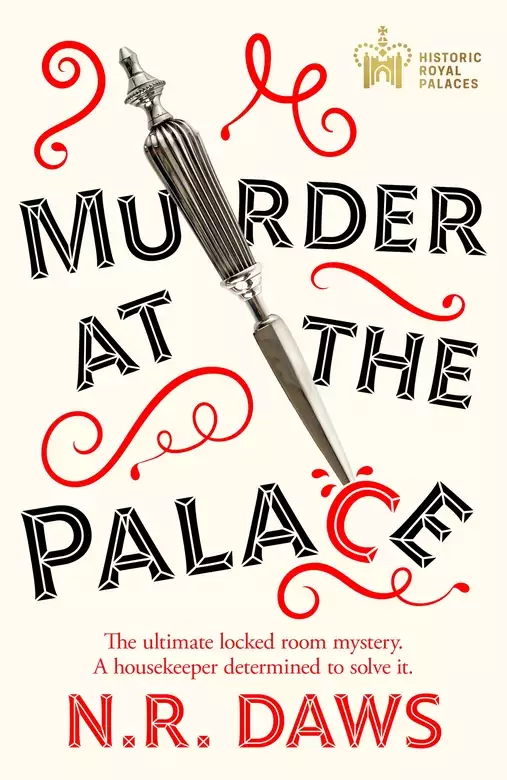
The ultimate locked room mystery. A housekeeper determined to solve it.
When one of the ladies in residence at Hampton Court Palace fails to answer her maid's call in the morning, Mrs Lydia Bramble, palace housekeeper, is called in to investigate.
What Mrs Bramble finds sends shockwaves through the whole palace: Miss Philomena Franklin, slumped over her desk, a knife in her back.
With the police determined to bark up the wrong tree, Mrs Bramble decides to take up her own investigation with the help of Miss Franklin's maid. After all, as servants, they know just how many dangerous secrets and secret squabbles the genteel residents of the palace apartments harbour.
A brilliantly fun cozy mystery, perfect for fans of SJ Bennett and T E Kinsey.
What everyone is saying about Murder at the Palace:
'A refreshingly fun, different and exciting read!... I could do nothing else but laugh at the final line! I really hope this gets a sequel of sorts so we can see what happens next; I was highly entertained reading this.'
'Great historical mystery. I didn't figure it out... doesn't get dull. Great writing. I will definitely look for more by this new to me author. Would recommend.' Reader Review,⭐⭐⭐⭐⭐
'This was a really well done mystery novel... Had that element that I was looking for... Can't wait to read more from N. R. Daws.' Reader Review,⭐⭐⭐⭐⭐
'I am on a cozy kick, and this is as good as a cozy afficionado can hope for. I didn't guess the ending but the clues were pertinent and the mystery was well fleshed out. Will definitely read more by this author!' Reader Review,⭐⭐⭐⭐⭐
Release date:
March 13, 2025
Publisher:
Orion
Print pages:
400
* BingeBooks earns revenue from qualifying purchases as an Amazon Associate as well as from other retail partners.
Mrs Bramble, holding the title of Lady Housekeeper of the grace-and-favour apartments at Hampton Court Palace, was a creature of habit. Two slices of toast with thick butter and a smear of marmalade, always accompanied by a hot cup of Earl Grey tea, constituted her usual breakfast. It may have been the morning after a long shift supervising at a gala entertainments evening but that did not require any special deviation from her routine. On occasion, she might veer towards a soft-boiled egg with toast soldiers, but anything more elaborate was confined to special occasions and yearly events such as Christmas and Easter. That’s not to say she didn’t enjoy fancy food when she could get it, but she wasn’t about to pay fancy prices for it, thank you very much.
Mrs Bramble broke off the corner of a crust, deposited a blob of butter on top and placed it on the floor next to her chair.
‘There you go, Dodger,’ she said to the jet-black cat giving her his full attention through big green eyes.
Dodger by name and dodger by nature, named after Mr Dickens’s slippery character in Oliver Twist, he was also a creature of habit and insisted on licking butter from a cube of toast every morning, after his main breakfast provided by Mrs Bramble’s housemaid, Kitty, of course. Mrs Bramble did not begrudge this particular extravagance, it being a small price to pay for his mousing duties and the company he afforded her of an evening. She watched him for a moment before raising her head to look out of the window, trying to let her mind wander in peace before the rigours of the day intruded. She failed, unable to stop herself from noting the early-morning comings and goings across the bridge over the moat and on Outer Green Court.
Mrs Bramble loved her job, believing it as rewarding and satisfying as anything she had ever done but a lot less dangerous – she had seen more than her fair share of death – and not nearly as traumatic, although never boring. In general, society life at the palace was pleasant and enjoyed by most. However, a number of petty disputes had blighted palace life of late, the recollection of which left a sour taste beneath the sweet marmalade on Mrs Bramble’s tongue.
Even so, she revelled in her chief role of overseeing the staff whose work ensured all areas of the centuries-old palace were kept as spotless and presentable as possible for everyone who lived in, used or visited its hallowed rooms. Residents given tenancy by royal grace and favour, members of the public arriving for the purpose of visiting residents or delivering goods, the humble domestic servants within each household and staff in the public areas dealing with the hordes of tourists who descended on a daily basis all had the same expectation. Every apartment, chamber, corridor, cloister and court had to be maintained to the highest standard and Mrs Bramble prided herself on achieving this day in, day out, all year, every year.
‘I forgot to ask,’ said Mrs Bramble as Kitty appeared in the doorway looking as presentable as always in her uniform of a long-sleeved black dress, white apron and crocheted white cap. ‘Was the disagreement between the two housemaids serving at the gala resolved last night?’
‘They had a bit of a set-to, but it seemed like something and nothing to me,’ said Kitty.
‘Hmm,’ said Mrs Bramble, aware of a past frostiness between the pair.
Then she noticed the envelope Kitty hesitated to deliver and guessed the identity of the sender before even seeing the writing on the front. Kitty took a few steps towards the table and propped the envelope against the marmalade pot before taking a step backwards.
‘Do you need a top-up of tea, Mrs B?’ she asked, glancing down at the envelope. ‘To fortify you?’
‘No, thank you,’ said Mrs Bramble with a smile. ‘I believe I’m used to these by now.’
‘Yes, Mrs B,’ said Kitty, leaving the room.
Mrs Bramble looked at the unopened letter and sighed at the sight of the printing on the outside declaring it had been despatched from the Lord Chamberlain’s Office. As neither he nor his office were in the habit of sending her pleasantries in the post, or by any other means, for that matter, the envelope could contain nothing good. Most likely, one of the many feuds involving the palace residents had taken another turn, hence Kitty’s hesitancy.
Mrs Bramble, having married an infantryman in the British Army and taken his name, had travelled with him and, being childless, had trained as a military nurse to be useful and to occupy her time. Her experience had taught her how to cope with those who were frightened or in pain, and to engage on equal terms with pompous officers and the rambunctious rank and file, skills that often came in useful in her current position.
She thought now of her husband, a much-missed brave man who, having risen to the rank of sergeant, lost his life from cholera. The outbreak in Bengal that had claimed him became a pandemic that even now, all these years later, still swept the globe. She had been posted back to England but left nursing a year later because her heart was no longer in it and she wanted to get away from the army and the memories it evoked. Stints as a housekeeper in hotels of various quality and private houses of dubious repute had further honed her ability to deal with bumptious owners, colleagues and guests alike.
And now, here she was at Hampton Court Palace.
Mrs Bramble cleaned her butter knife and prepared to bite the bullet. She slid the knife under the envelope flap, slit it along its length, removed and unfolded the headed notepaper, and read the short missive.
Her lips pursed. Another complaint from Mrs Gertrude McGowan about the unfair allocation of apartments at the palace.
And people thought her job an easy one.
Mrs Bramble shook her head and closed her eyes for a moment. Yes, she loved her job but conceded she would love it even more if it did not involve daily interaction with some of the more challenging residents.
She took a final mouthful of tea and Kitty reappeared at the sound of the clink as she replaced her cup on its saucer.
‘All done, Mrs B?’ said Kitty.
Mrs Bramble had employed Kitty for the last three years and enjoyed a rapport that facilitated a certain amount of social information and intelligence being fed back via the residents’ servants. In return, she had come to entrust her innermost thoughts to the young woman.
‘I almost can’t bear to go out there today,’ Mrs Bramble confided. ‘That dreadful woman’s gala carried on way past the bedtime of anyone decent.’ She looked down at Dodger, who looked up when she paused. ‘Yes, all right, I know,’ she conceded. ‘I’d better go see whether the Great Hall has been tidied properly, but you mark my words, there’ll be hell to pay if the superintendent or I find one stick of furniture out of place or one unsightly mark. Paying visitors have a right to expect cleanliness if nothing else.’
Dodger left his toast, now licked clean of butter, and sauntered away, unconcerned by the problems of people.
‘I’m sure it won’t be too bad,’ said Kitty. ‘I know most of the staff around here. We have our own get-togethers, as you know, and they’re quick smart about mopping a spillage or sweeping up a breakage. It’ll all be shipshape and Bristol fashion, you mark my words.’
Kitty loaded the breakfast things onto a tray and disappeared towards the kitchen.
Mrs Bramble had been Lady Housekeeper for five years and prided herself on running a tight ship. That meant she needed to know every resident’s business, and she did, but it didn’t mean she had to like all of them all of the time. On her travels, she had sometimes found the higher up the political, military, financial or social scale one existed, the more intolerable they could be, but she always played fair and now took her roles as confidante, facilitator, adjudicator, allocator, protector and gatekeeper to each and every resident as seriously as her duties as guardian of the grace-and-favour apartments.
Mrs Bramble enjoyed living in her own comfortable ground-floor apartment and found its spaciousness and understated elegance most satisfactory. In addition, its position on the south side of the tower that formed the main entrance of the Great West Gatehouse afforded her the satisfaction of being able to look out first thing in the morning and last thing at night to reassure herself all was well. She did so now, watching while a chestnut horse that had seen better days brought a milk cart to a halt as the local postman who had borne the fateful letter strolled away from the palace. Others went about their business, but nothing seemed untoward. And so, the sudden bell-ringing and banging on her front door made her heart beat faster, and in unison with the knuckle rapping.
‘Mrs Bramble, Mrs Bramble, come quickly!’ came a muffled call from outside.
Mrs Bramble wiped her mouth on her napkin and rushed into the hallway, stepping on Dodger’s discarded toast in the process, in time to see Kitty unlock the door.
‘Oh, Kitty—’ A young woman fell forwards as the door opened.
‘Calm yourself, Rosie,’ said Kitty, holding up her hand to quieten her. ‘Where’s the fire?’
Rosie Hawkins, housemaid to Lady Emelia Chafford and her spinster sister, Miss Philomena Franklin, stood in the doorway, shaking.
‘Ain’t no fire, Kitty. It’s—it’s—’
Kitty put her hands on Rosie’s arms for reassurance. ‘Breathe, dear,’ she instructed, and Rosie took gulps of air. ‘Now, take your time and tell us what’s happened.’
She seemed to realise all of a sudden that Mrs Bramble was standing nearby and looked at her with wide eyes. ‘Lady Emelia needs your spare keys urgently,’ said Rosie, taking another gasp. ‘It’s Miss Franklin. Her Ladyship thinks she’s dead!’
‘Kitty, fetch Dr Kemp at once,’ said Mrs Bramble as she hurried along the hallway to the next room.
Kitty complied without hesitation, almost tripping over Dodger as he got caught up in the commotion.
Mrs Bramble unlocked a wooden cupboard set against one wall, unhooked the bunch of spare keys to the Chaffords’ apartment from where it hung alongside many others and returned to usher the distraught Rosie out of the apartment. She locked the door before hastening along the cloister on the west side of Base Court, the largest of the courtyards in the palace, with Rosie scurrying after her. Easing past dawdlers in a narrow passage leading to the much smaller Master Carpenter’s Court, they emerged into the open and reached a painted oak door, left unlocked by Rosie, which gave access to a small, plain entrance hall, lit at night by an ornate chandelier. Winding steps led to the first-floor apartment shared by Lady Emelia and her sister, and Mrs Bramble took these two at a time, leaving the much younger Rosie holding her stomach, breathing heavily and lagging behind.
Lady Emelia met them inside, standing solemn-faced with fluttering fingers worrying the amber-hued opal pendant hanging from a delicate chain around her neck.
‘Mrs Bramble, thank God,’ said Lady Emelia, rattling the knob of the door beside her. ‘My sister’s in the study but not answering, and it’s locked.’
‘I’m afraid I won’t be able to open it if the key is in the lock,’ said Mrs Bramble.
‘It’s not, I checked.’
Mrs Bramble cocked an eyebrow. ‘Rosie said you think Miss Franklin is dead.’ She sorted through the apartment’s spare keys for the one that fitted the study. ‘How do you know?’
‘I, er, looked through the keyhole … and saw her slumped over the bureau.’ Lady Emelia clutched her pendant again. ‘I fear she’s had a heart attack.’
‘Is Miss Franklin in the habit of locking the door while inside?’ Mrs Bramble found the right key and inserted it in the lock.
‘Not usually, no.’
The lock clicked and the door opened with ease. Lady Emelia gasped and Rosie cried out behind them. Mrs Bramble’s heart gave a leap as she caught her breath. Miss Philomena Franklin was indeed slumped forwards on the open writing flap of the bureau, with a silver letter opener protruding from her back between her shoulder blades.
‘Rosie, make some tea,’ said Mrs Bramble, but Rosie stood ashen-faced. ‘Now, girl.’
Rosie turned away, leaving Mrs Bramble to hold Lady Emelia back from rushing into the study.
‘Is she …?’
Mrs Bramble gestured for the woman to stay outside and stepped forwards herself, onto something hard underfoot. She bent down and found the key to the study door. ‘Must have fallen out,’ she said and moved over to Miss Franklin. Having been a military nurse dealing with death every day, she knew a dead body when she saw one, knife or no knife, and a quick check of Miss Franklin’s neck above a string of pearls that matched her earrings and bracelet confirmed the absence of a pulse. She shook her head at Lady Emelia and the woman slumped against the door frame with a cry before retreating to the hallway.
Mrs Bramble’s keen eye noticed a fountain pen lying on the blotting pad rather than replaced in its inkwell. Green blotches stained the paper. A half-eaten beef salad sandwich and full glass of water stood discarded on a tray placed on a low, spindly-legged table between two over-stuffed easy chairs. An expensive-looking drinks cabinet against the far wall displayed bottles labelled as dry gin, dry sherry, a gin flavoured with sloe berries, a single malt whisky and ruby port. A decanter of golden liquid suggesting it might contain a different spirit such as brandy stood alongside several glasses.
The chill air in the room held a slight smokiness and Mrs Bramble moved across to the wide-open window to look out, a floorboard below creaking in protest. A few chimneys showed evidence of early-morning fires lit in sitting-room grates, but even though the study’s hearth held the cold ashes of an old fire, the smell in the study was not of wood or coal. She shivered and closed the window before turning back to the room with a thoughtful expression. Not being familiar with how the two women liked to keep their study, she could not say whether anything had been moved or taken. That would be something for the police to look into.
‘Good Lord,’ said Dr Edward Kemp from just inside the doorway.
At a glance, Mrs Bramble took in his dark, unbuttoned overcoat, striped shirt with every second button undone and a bluish-green stain at the edge of one cuff. Braces held up his black trousers and garish embroidery decorated his house shoes, all suggesting he hadn’t expected an early-morning emergency call-out. Rosie stood by his side, wide-eyed and still looking pale. She clamped a hand over her mouth as she retched and ran along the hallway.
Dr Kemp put his medical bag beside Miss Franklin’s chair and checked for a pulse at her wrist before paying close attention to her head and neck.
‘Somebody’s definitely done for the poor lady,’ he said.
Mrs Bramble sighed. ‘I was once a nurse, Doctor. I thought you might shed a little more light on the matter, other than the obvious.’
‘Pardon?’ Kemp threw her a confused look. ‘Oh, yes. The knife in her back would do it. Sad to say, I saw a lot of this as a young army surgeon in Africa and India. Not often in the back, of course, but stab wounds generally.’
‘As did I.’ Mrs Bramble stepped closer and frowned. ‘That’s why the small amount of blood around the entry wound seems a little unusual, wouldn’t you say?’
Kemp stood upright, making himself as tall and important-looking as he could. ‘Absorbed by the lining of her dress and’ – he gave a nervous little twitch of his shoulder – ‘her underclothing, I should think. The police have been called?’
‘I thought it best to wait for your confirmation before going off half-cocked. We’ll need to send for the sergeant right away, although no doubt we’ll have to wait for Scotland Yard.’
‘Indeed. Quite right.’
She sniffed theatrically, drawing Kemp’s attention. ‘Do you smell that?’
Kemp sniffed, his nose raised. ‘Perhaps Miss Franklin was visited by someone fond of smoking tobacco.’
Mrs Bramble watched him look around as though in search of evidence such as an ashtray.
There wasn’t one.
‘Hmm,’ she said, sounding unconvinced as she followed the doctor from the room. ‘Didn’t smell like wood, coal or tobacco smoke to me.’ She locked the door, keeping both keys. ‘To keep any evidence untainted,’ she explained.
‘Good thinking,’ he said, tapping the side of his nose. ‘I’ll raise the sergeant forthwith. Good day for now.’ He went to tip his hat, realised he’d forgotten to wear one and smiled awkwardly instead. ‘Send for me at my surgery when Scotland Yard arrive. They’ll want me to remove the body after they’ve had a poke around.’ He turned away, nodded to Lady Emelia and scurried off, apologising over his shoulder.
‘What an extraordinary man,’ said Lady Emelia, watching the doctor disappear.
‘I put his eccentricity down to his time abroad,’ said Mrs Bramble. ‘He witnessed the aftermath of a lot of fighting in those days, as did my husband and I, and that can change a person. He is reputed to have been in Africa twelve years ago, at the Battle of Rorke’s Drift in 1879 during the Anglo–Zulu War, but never speaks of it.’ Her mind flicked back to her own experiences that same year on the North-West Frontier of India during what they now called the Second Afghan War. That was the year before she had followed her husband on his ill-fated posting to Bengal. Always so much violence.
‘May I …?’ Lady Emelia moved towards the study door and tried the doorknob.
‘I’m afraid not. We need to await the sergeant, so I’ve locked the door.’
‘But there are things – papers – I need.’
‘I’m afraid everything must remain as it is for now,’ said Mrs Bramble in a tone suggesting the topic was closed. ‘No doubt Scotland Yard will want to examine the room for evidence. I’m sure you understand.’
The haunted look on Lady Emelia’s face implied she did but would still like to get in.
‘You’ve had a shock, Lady Emelia. Why don’t we sit down and I’ll ask Rosie to get you a medicinal brandy with that nice cup of tea?’
‘I hate brandy.’ She screwed up her nose. ‘But I suppose the tea will settle my nerves.’
Mrs Bramble escorted Lady Emelia to the sitting room and went to find Rosie. The housemaid was in the kitchen sipping a glass of water.
‘Are you OK, dear?’ she asked.
Rosie looked startled. ‘Yes, thank you. Just the shock, is all.’ She looked at where Mrs Bramble had glanced. A silver teapot with a bone-china cup and saucer decorated with delicate flowers stood on a tray. ‘Her Ladyship likes her tea strong and dark.’
‘That’s as maybe, but it’s needed right away.’ Mrs Bramble gave her a comforting smile before returning to the sitting room.
Lady Emelia hadn’t moved.
‘May I?’ said Mrs Bramble, indicating a chair with an embroidered cover draped over the back and sitting anyway to forestall any refusal.
Lady Emelia had no choice but to agree. ‘What am I to do?’ she said, wringing her hands. ‘Will I lose this apartment?’
‘I shouldn’t think so.’ Mrs Bramble thought that a strange thing to be considering at a time like this. Then she remembered her own confused feelings at the time her husband had passed away and supposed it was as natural a reaction as any other to losing someone close in traumatic circumstances. ‘This is still your home.’
‘Who could have done such a terrible thing?’
‘And why?’ She watched Lady Emelia dab her eyes with a lace handkerchief, noting a flush to her cheeks but the absence of tears. ‘Did she have any enemies that you know of?’
Lady Emelia raised her eyebrows. ‘That’s part and parcel of being in business, isn’t it? Rivalry?’
Mrs Bramble frowned at the odd reply. ‘I know next to nothing about how business dealings work, but I do know a little about human nature from my time as a nurse. I would suggest ordinary rivals and competitors aren’t in the habit of using letter openers as weapons.’
‘I couldn’t say.’ Lady Emelia gave a small shrug. ‘Dealing with numbers and money has never been my forte, so my late husband left Philomena in charge of all of our business interests. She and I have never been close, quite the opposite on occasion, but she did have a head for finance. Probably why she could never find a man who would marry her.’
Rosie appeared with the tea and Mrs Bramble waited for her to pour a cup for Lady Emelia, add a splash of milk and leave the sitting room.
‘Would it help to tell me what happened?’ Mrs Bramble said, curious about what had occurred the previous evening before Miss Franklin had died, and this morning before her body had been found. ‘To ease the burden, so to speak.’
‘I suppose it wouldn’t hurt.’ Lady Emelia took a sip of tea, grimaced and set the cup back on its saucer. ‘I returned from Lady Venetia Merritt’s gala evening in the Great Hall and saw Rosie, who helped out with the serving, knocking on the door of the study. My sister didn’t answer but I thought nothing of it. She gets wrapped up in those business affairs of hers, you see.’ She paused as though suddenly aware she’d used the present tense. ‘This morning, when Rosie brought me my early cup of tea, she told me my sister hadn’t taken to her bed. Now that I did find odd and went to find her.
‘When I knocked on the study door, I got no reply and the door was locked.’ She paused again, to put two lumps of sugar in her tea. ‘As I said earlier, she isn’t in the habit of doing that, so I became worried about her health. She’s been working hard recently, being a woman moving in a man’s sphere, and I know she had worries she never shared even when I asked. You hear about so many men, and even women, of a certain age having heart attacks, don’t you? And I thought … Anyway, I bent to look through the keyhole on the off chance I might be able to see something, and that’s when I saw her slumped over the bureau.’
‘You saw no one else last night or this morning?’
‘No one of consequence, until you arrived with the spare key.’
‘Of consequence?’ Mrs Bramble tilted her head.
‘One of the other housemaids, from the Woodruffs, I believe, spoke to Rosie outside about an hour before I left to attend the gala. Never liked the girl, as you know.’
Mrs Bramble did know because Lady Emelia had accused Mildred of theft a month ago after she had visited her cook to borrow a cooking ingredient. At around the same time, a gold-plated letter opener with a single tiny sapphire set into the pommel of the rosewood handle had gone missing from Miss Franklin’s study. Before that, the odd pound note had been ‘mislaid’ and put down to absent-mindedness, but this time the obvious but mistaken conclusion had been reached.
The palace police had been called and the sergeant had searched Mildred’s room in the Woodruffs’ apartment, much to Mrs Flora Woodruff’s disgust. Nothing had been found to warrant charging Mildred with theft, but her reputation had been sullied. If you throw enough mud, some of it sticks, and Mildred was the one who had argued with Rosie during the gala.
‘Do you suspect Mildred?’ asked Mrs Bramble.
‘Ah, I’d forgotten her name. I forbade my staff from letting her in ever again,’ said Lady Emelia. ‘But I would not put it past her to have wheedled her way inside.’
‘Miss Franklin was alive when you left for the gala?’
‘Definitely.’
‘Then I don’t see how …’ Mrs Bramble tailed off as Lady Emelia glared at her. ‘And your front door is always locked?’ she continued.
‘Of course.’ Lady Emelia frowned. ‘Your questions are bordering on the impertinent.’
Mrs Bramble gave her a benign smile. ‘Along with the superintendent, it’s part of my job as housekeeper to ensure these apartments run as near to clockwork as time and money will allow, and there is often so little of each to go around. All comings and goings are of great importance both to me and the police who guard this palace, and any breach of security is of serious concern if we are to be your protectors.’
Lady Emelia scoffed. ‘Security? We have been here three months and look what happens.’
Lady Emelia’s household was one of the newest to take up residency in the grace-and-favour apartments, and having never before had a personal run-in with them, Mrs Bramble was inclined towards leniency owing to them still settling in to such a closed community. As such, she chose to ignore the remark as one of the many manifestations of grief.
‘Whoever gained access to your sister managed to get inside once and so may try to do so again. I see it as part of my duty to try to ensure that doesn’t happen.’
Lady Emelia sipped her tea, the two women eyeing each other suspiciously, too many unanswered questions still swilling around inside Mrs Bramble’s head for her to remain silent for long.
‘Did Miss Franklin smoke at all?’
Lady Emelia looked horrified. ‘Are you suggesting she puffed away like a common harlot?’
‘Not at all—’
‘Refined ladies do not smoke, Mrs Bramble, and neither Philomena nor I have ever touched the filthy stuff.’
‘I thought I could smell something in the study, that’s all,’ said Mrs Bramble, keeping her expression as benign as possible to calm the agitated woman in front of her. ‘Did you hear anything at all to suggest there may have been someone in the study with your sister last night, perhaps? A business associate, maybe?’
‘My sister sometimes has. . .
We hope you are enjoying the book so far. To continue reading...

 Please log in to recommend or discuss...
