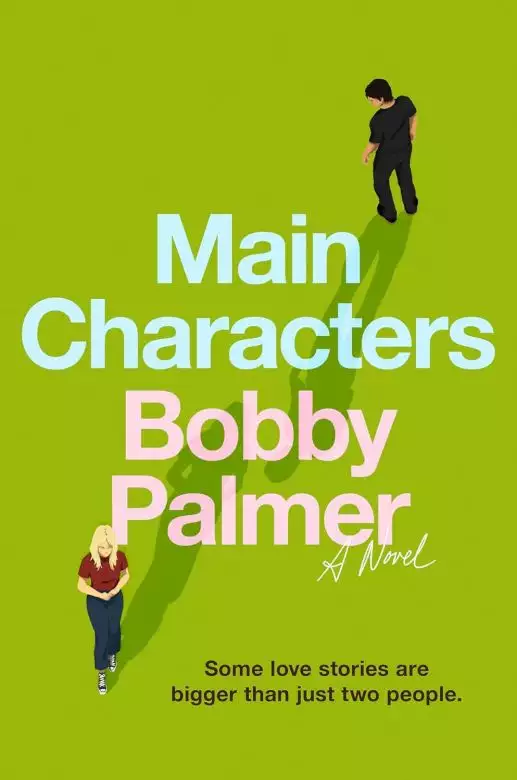
For readers of David Nicholls and Sally Rooney comes a new love story that's at once tender and electrifying, told by everyone but the main characters.
When Clara and Seb first cross paths in a London square, it’s the start of something exciting. Clara, an aspiring director stuck in an entry-level job, itches to pick up a camera. Seb, having floated between music, modeling, and now acting, struggles to find purpose in his work. Yet as random chance brings the two back together, time and time again, neither could predict that their magnetic connection is set to change their lives.
But everyone else does. The spark between Clara and Seb is exactly what falling in love should look like: exhilarating, passionate, undeniable. The two become a whirlwind, their relationship enthralling everyone they come across. But as the years go on and tensions flair, a last-ditch attempt to save their great romance ends with a gut-wrenching betrayal.
Set over the course of two decades, Clara and Seb’s love story is bigger than just themselves. Told from the eyes of their audience—friends and flatmates, rivals and lovers, strangers and confidants—Main Characters is a sweeping portrait of all sides of Clara and Seb. Everyone has their version of events, but only they can decide how the story ends.
Release date:
June 30, 2026
Publisher:
Little, Brown and Company
Print pages:
384
* BingeBooks earns revenue from qualifying purchases as an Amazon Associate as well as from other retail partners.
He’s looking at her, but she’s not looking at him.
She sits on a flat stone bench in the corner of Golden Square, a sketchbook balanced in her lap. You wouldn’t guess that they are only a stone’s throw from the thrumming billboards of Piccadilly Circus, the scene kids shrieking in chorus outside the Oxford Street Topshop. Here, quiet. A pocket universe in the centre of Soho. Though everyone else is enjoying the late-spring sun, which filters through the trees and glints off high windows, she sits in a patch of shade as if she alone exists in a different season. He imagines that she lives like this: in opposition. She’d look like an Old Hollywood actress, if it weren’t for the hoodie and the leather jacket and the thoroughly modern scowl. The cable of a single headphone hangs from one of her ears. Behind the other, she tucks a few strands of white-blond hair. The hair, frazzled by bleach and just short enough to resist confinement, falls back over her face. She tucks it away again. It falls again. In her other hand is a pen. Or pencil. Her fingers are black with ink, or charcoal. He’s too far away to tell.
He plays with the zoom, the focus. His days are spent in an office, but everyone in this square wants to be someone else, and he wants to be a photographer. Through this viewfinder, he can see his whole life laid out before him like developing photographs hanging from pegs on a line. He allows himself to imagine her in one, her eyebrows darker than her hair, freckles dusting the bridge of her nose. Then someone shouts, and the light in his imaginary darkroom flickers. Two men in sleeveless fleeces slap each other on the back. The girl stares silently towards the centre of the square. A statue of some king or another. Covered in moss, its face eroded by the rain. It could be anyone. But she isn’t looking at the statue. She’s looking at the man beneath it.
There’s something statuesque about him, too, something that invites looking. He sits almost at floor level, on a low stone wall in front of the flowerbeds. From the angle of his knees, it’s clear that he’s tall. Broad-shouldered, too, with a tanned forehead over which falls a tangle of thick, dark hair. His eyebrows are just as dark, just as heavy, and his eyes are almost black. He wears a pair of black jeans and a band T-shirt with the sleeves rolled up. He has tattoos on his arms, hints of more where the neckline of his T-shirt meets his chest. Beneath a pair of heavy black headphones, his face is serious. His jaw is flexing. He’s eating a sandwich, thick and Italian, cured meat and sliced cheese squeezed between two towering slices of focaccia. For every bite he takes, he tears off another and feeds it to his dog. The small, scruffy creature is a mirror of its owner. Bushy black eyebrows over intense eyes. It sits by his side and licks its wiry chops, staring from sandwich to owner with an anticipation that vibrates from its whiskers right down to its softly treading paws.
The photographer sweeps his viewfinder back to his subject, finds a hint of humour in that furrowed brow, a smirk in one corner of those pursed lips. She’s enjoying the scene. So, she begins to draw, committing it to paper. Once her sketch is done, she’ll approach the man with the dog, cause him to lower his headphones. All that is to come. For now, the photographer watches her watching, one hand gliding across the page, the other tucking hair behind ear, hair behind ear.
He takes a breath. Then he takes a picture.
‘Some creep just took a picture of me.’
Clara says this, matter-of-factly, sitting down in front of her computer. She removes a can of Diet Coke from the pocket of her leather jacket and pops the ring-pull.
‘What?’ says Ren, who is sitting at the computer opposite, hammering the backspace button. ‘Like, from the bushes?’
Their too-small table has been divided down the middle into two de facto desks, the backs of their monitors pressed up against one another. Across the top, they paddle conversation back and forth, questions lingering like shuttlecocks in the air.
‘Yeah,’ Clara says, her lower lip pushed out. ‘Well, no. From the street.’
‘So, a street photographer?’ Ren says. She stops typing, black nails hovering over the keyboard. ‘Like a street-style thing?’
Elizabeth watches them through the open glass door of her office. ‘Crazy’ by Gnarls Barkley is playing on the radio, turned down to a level she mandates as non-distracting. Clara is supposed to be her PA, and these flights won’t book themselves. Elizabeth had even left a Post-it note on Clara’s desk, with words to that effect. She can see the can of Diet Coke resting on top of it.
‘No,’ says Clara. ‘Just some guy. He wanted to post it on his blog.’
Elizabeth watches Clara pick up her can and take a swig. The Post-it note, now wet, clings to the bottom. Clara pulls it off without reading it and discards it in the bin beneath her desk.
‘What did you say?’ Ren asks.
‘Absolutely fucking not,’ Clara says, proudly.
Elizabeth considers heading over there, reminding Clara and Ren that she doesn’t pay them to chat. But she doesn’t want them to think she’s fusty. She remembers what it was like to be a thwarted creative. Before they entered the world of ad production, Ren wanted to work in fashion, Clara in films. Or was it the other way around? Elizabeth can only half-remember their CVs, preferring to hire on general vibe. She tries her best to bring in renegades and right-brained thinkers, but they never seem the right fit. Ren had recommended Clara – and it would be the last recommendation of Ren’s that Elizabeth would take. She turns to her computer, now, and types out an email.
To: Clara.
Subject: Flights.
She adds a word: URGENT.
Ren sighs. ‘What were you doing when he took it?’
A pause. ‘Drawing.’
‘What were you drawing?’
‘It doesn’t matter.’
God forbid Elizabeth gets out of this godforsaken country. God forbid she gets an assistant who actually assists her, rather than one who makes it her mission every lunch break to get as far away from their Belgravia office as physically possible. Clara says that she walks to ‘clear her head’, that she only draws ‘on her own time’. But it’s called a lunch hour, not a lunch hour-and-twenty-minutes. Clara’s ‘art’ is an aimless habit for restless hands.
I’ve been there, Elizabeth wants to say. I grew up.
‘I’m just saying,’ Ren is saying. ‘If you’re drawing strangers, you can’t get annoyed at people taking pictures of strangers.’
Clara is holding the now-crumpled can in her hand, arranging it like a sculpture. ‘It’s not the same.’
‘It’s exactly the same! He’s a photographer,’ Ren says. ‘They take photos.’
‘Of women?’ Clara says. ‘Without permission?’
‘Did you get this guy’s permission?’ Ren says. ‘To draw him?’
‘A drawing is different.’ A pause. ‘And I didn’t say it was a guy.’
Neither of them says anything else for a while. They have a habit of talking without speaking. The pair of them live together, arrive at work together, leave together. Elizabeth sometimes wonders if they’re conspiring against her.
‘I’m interested in people,’ Clara says.
And something flickers over her face, as if looking like she cares is a cardinal sin. Elizabeth’s co-founder had once described Clara’s look as one of ‘studied disarray’, a high-minded way of saying he wanted to sleep with her despite her being twenty years his junior. Everyone wants Clara, because she’s beautiful, and because she makes it known that she doesn’t care about anything, including the fact that she’s beautiful. How unprofessional, to turn up to the office every day in scuffed Vans and faded jeans, a slacker hoodie and a jacket which, vintage or not, looks like it’s falling apart at the seams. Elizabeth supposes that Clara is trying to be edgy when she dresses like a boy. When Elizabeth had invited her to a glitzy industry do, Clara had turned up in a baggy white shirt and men’s trousers. Elizabeth, in sequined dress and stilettos, had felt like Clara was mocking her.
‘So, what did he say?’ Ren says, without looking up from her screen.
‘Who?’
‘The guy you drew.’
The song has changed. Elizabeth has already stood up, smoothed out her blouse and taken her first steps towards the telling-off she’s about to give Clara. But just then, Clara glances over at her, those bright eyes holding her in place. At the same moment, Elizabeth notices the plane tickets in her in-tray, accompanied by a handwritten note. Clara’s handwriting. Elizabeth falters, sits back in her chair.
‘He asked me what I was going to do with it,’ Clara says.
‘And what did you say?’ Ren asks.
‘Nothing.’
‘And him?’
‘He asked if he could have it.’
‘And?’
‘I said, sure.’
Growing up, the barista had always assumed that living in London would be like a romantic comedy. She’d sat cross-legged as a child in her mother’s apartment in Prague and watched Four Weddings and a Funeral; she’d seen Notting Hill as an impressionable teenager at Cinema City. By then, she’d known that love looked like London, and that London was the place to find it. Five years here, and she’s still looking.
‘Two cappuccinos for…’ She frowns at the writing on the cup. ‘Lawrence?’
‘Right here,’ he says.
Lawrence has a long neck with a pronounced Adam’s apple, hair thinning on top. She imagines him in a You’ve Got Mail scenario with the woman sitting at the end of the counter, adjusting her thick-rimmed glasses as she types on a sturdy laptop. The barista likes to do this, to make up stories about her patrons. She spends her days working in a franchise café on Tottenham Court Road, and she’s thankful for anything that helps pass the time. When she looks at her customers – this portly businessman tapping away on his BlackBerry, that paint-spattered woman with the artist’s satchel, rolling her eyes – she makes matches, sees love stories waiting to happen. Lawrence leaves the café. The woman with the glasses goes her own way. Sometimes, it just isn’t meant to be.
As the barista cleans the spout of the milk frother and gets to work on her next order, her eyes alight on a man standing on the other side of the window, taking the last drag of a rolled-up cigarette before grinding it into the pavement with the heel of his Converse. Could he be a romantic lead? The only thing he has in common with Hugh Grant is that his hair is floppy, though it is almost jet black, tamed only by a pair of heavy black headphones. She can’t imagine him having much to say. He looks too taciturn for impassioned monologues about affection and yearning and being bewitched, body and soul, in the beating-down rain. The man ducks through the doorway, leading his dog to the counter and knitting his dark eyebrows together as he reads the menu above her head. He’s the kind of tall that makes you stop what you’re doing and look up.
‘Cappuccino for…’ She drags her eyes downwards, to the cup on the counter in front of her. ‘Clara?’
A young woman steps forward. Could she be the one? She’s neither a Minnie Driver nor a Julia Roberts. Her hair is so blond it’s almost white. She reaches out to take the coffee, rings on every finger of her hand. Each of her ears is pierced all over. Her nose is pierced, too, and it twitches like a squirrel’s when she smiles. There’s something skittish about her, like she’s already caffeinated enough. But the smile is disarmingly genuine. It seems at odds with the rings, the studs, the armour.
‘Thank you,’ says Clara.
But the barista is once again looking at the tall man, because the tall man is looking at Clara. His eyebrows have relaxed, and suddenly, his face does indeed look like one that could yearn, one that could find itself bewitched. As if automatically, he pulls off his headphones, leaves them dangling around his neck. Could it be?
‘It’s you,’ says the man.
Clara looks surprised, at first, to be approached. She stiffens. She tilts her head, narrows her eyes.
‘Thank you for the picture,’ he says.
Suddenly, she seems to remember. Her freckled cheeks flush red. ‘Oh,’ she says. ‘My pleasure.’
There’s a silence between them. Not an uncomfortable one, but a silence, nonetheless, filled with the sounds of churning coffee machines and chattering customers. If the man is doing his best to look cool and carefree, his dog is giving the game away. It stares up at Clara, its intense little eyes bulging out of its matted black fur as if it’s really, truly, fallen in love. Clara crouches, makes a fuss of saying hello, scratches the dog under its scraggly chin and strokes it on the top of its rough head. The man mouths something to himself, something that seems to say, what am I doing? He takes up space, and everyone who walks past jostles him, finds him in their way. By the time Clara straightens up, he looks like he’s come up with a question. But when she pierces him with those eyes, it seems to escape him.
The barista has been so caught up in the ‘will they, won’t they’ of it all that she forgets she’s holding a coffee, until she sees her colleague at the till looking at her with a face that says will you, won’t you get on with your job? So, when the man finally goes to speak, the barista ends up interrupting him.
‘One double espresso for…’ she says, hurriedly, trying her best to read the illegible scrawl on the cup. ‘Jed?’
Both of them turn to her, the moment punctured.
‘Seb,’ he says, politely, taking the coffee. He turns back to Clara, extends a hand. ‘Seb.’
She raises one of her dark eyebrows a little, shakes his hand lightly. ‘Nice to meet you again.’
There’s another silence. The barista looks down, pretends to neaten a stack of paper napkins as she waits for one of them to speak.
‘What are you listening to?’ Clara asks, eventually.
Seb touches the headphones around his neck. ‘Oh,’ he says. ‘Nothing much.’
‘Is that the name of a band?’
‘Ha,’ says Seb, a single bark of a laugh. ‘No.’
Clara, meanwhile, speaks with a little more ease. ‘You’re taller than you seemed,’ she says. ‘On the floor.’ She hesitates. She flushes. ‘That sounded weird.’
Seb is the one to save her, this time. ‘Not at all,’ he says, quickly. ‘You’re shorter than you looked, up there.’ A pause. ‘Not that that’s a bad thing.’
They laugh awkwardly.
‘Do you work around here?’ he asks.
‘Kind of,’ she says. ‘You?’
‘Something like that,’ he replies. ‘Auditions.’
‘Are you an actor?’
‘Trying to be.’ He winces a little at the admission.
She nods. She looks him up and down, as if studying him in light of this new information. ‘I’ve wondered about you,’ she says. ‘These last few weeks.’ Her fingers travel to her mouth, as if trying, too late, to stop the words.
‘You have?’ says Seb.
The barista hears in his voice what he wants to say. I’ve wondered about you, too. But he doesn’t say it. Clara just smiles, then turns to leave.
On her way out of the door, she casts one last glance over her shoulder. ‘See you around,’ she says. Then, as if committing the name to memory: ‘Seb.’
And she’s gone, already on the other side of the glass. Seb stands for a while, looking at his own hand in disbelief, flexing the fingers like he’s trying to work out why a man in his right mind would ever have decided to shake her hand. He clenches his fist, sets his jaw, shares a look with the barista. He moves quickly, putting his coffee down, taking one of the paper napkins and pulling a pen from his jacket pocket, scribbling a number and departing the café with such velocity that his dog is practically dragged along the floor after him. His double espresso is left, steaming, on the counter.
The long, wide windows look something like a panoramic movie screen. Through the glass, with the ambient noise of a silent film viewed in a packed cinema, the barista watches Seb catch up to Clara, touch her lightly on the elbow. She turns. She looks up. Lips move, though the words are lost to the cacophony of the city. Against a backdrop of red buses and hurrying commuters, he hands her the napkin, shrugs almost apologetically. He walks away before he can see her reaction.
If he’d stayed, he’d have seen this: a smile, a disbelieving shake of the head. And a napkin, folded, put away safely in the back pocket of a pair of ripped jeans.
Boom. Boom. Boom. Three pumps on the heavy door knocker and they’re in, Tristan rolling off the street and on to an antique Anatolian rug, then straight up the narrow stairs of Pippa’s parents’ townhouse. Her folks live in Primrose Hill, but they’re spending the summer in Cap d’Antibes, so this is where the party is, where the parties have been all summer long. Tonight, Tristan enters to a bevy of jeers, Basshunter rattling the floorboards. Ludo is bouncing around the cluttered living room, swigging from a bottle of Malibu, wearing an oversized pink shirt with a popped-collar yellow polo underneath it. Freddie is sporting a large and itchy-looking jumper, fiddling with the aux cable. Pippa is taking pictures with a digital camera, while Liv is passed out in a minidress, draped across a pouffe beneath a mantelpiece of precariously teetering busts. Tristan heads for the fridge with his plastic bag of tinnies. He squeezes past Ren in the hallway, fringe over her eyes, not talking to anyone.
‘It’s style over substance,’ Jacob is saying, in the kitchen. ‘Not to mention self-indulgent.’
‘Just because you don’t like something—’ Clara begins.
Jacob cuts her off. ‘No one actually wants to watch anything in black and white.’
‘The greatest films of all time are black and white.’
‘Because they had to be,’ Jacob says. ‘You know they’ve invented colour since then?’
‘You’re such a wanker,’ Clara says.
‘Is it going to be silent, too?’
‘If it shuts you up,’ she says.
Clara slouches, standoffish in denim shorts and a black waistcoat, eyes smudged out with angry eyeliner. Jacob sits on the kitchen counter in a white shirt and a thin scarf, smoking out of the window even though Pippa keeps popping her head in and telling him to stop. Tristan gets to work stashing his cans before the argument starts. He’s spent enough time around Clara and Jacob to know it’s a when, not an if.
‘You think I’m going to be in it?’ Jacob says, smirking around a drag of his cigarette.
‘That’s not what I meant.’
‘Because I’m not going to be in it if it’s black and white.’
‘I’ll find someone else, then.’
‘Be my guest,’ Jacob says, dropping the cigarette into a half-full beer can. ‘I’m busy, anyway.’
‘You’ve got, like, two roles,’ Clara says. ‘You’re no busier than anyone else.’
‘I’m busier than you,’ he says, matter-of-factly. ‘You got fired.’
‘I didn’t get fired,’ Clara says. ‘I was made redundant.’
Tristan unloads the last of his beers. If they’ve noticed that he’s here, they haven’t acknowledged the fact. He opens a can, risks a look. Jacob, as ever, is spotlit. The under-cupboard bulb illuminates his hollow cheeks and marble skin like a statue’s in the British Museum after-hours. Clara’s back is against the polished granite counter, her arms crossed. Jacob reaches out, twists a lock of her silvery hair between his long fingers.
‘Don’t be like that,’ he says. ‘You hated that job.’
‘I need the money,’ Clara says.
‘Do you?’
‘Yes, I do,’ she says. ‘We can’t all have our parents pay our rent.’
‘Yours could, though,’ Jacob replies. ‘If they wanted to.’
Jacob likes to push Clara’s buttons. He likes to say that Clara’s true passion is feeling sorry for herself, that the only thing Clara loves more than a fight is losing one. Were they always like this? Those university nights blur together, but Tristan can remember one of them very clearly. He and the boys ditching the RADA bar for an old pub on Goodge Street, being rewarded for their efforts with a crushing crowd and two Central Saint Martins’ girls who didn’t seem overly fond of aspiring actors. Ren, the would-be fashion designer with the fringe and the all-black outfit, warning Ludo that he decisively wasn’t her type. And Clara, the fine art student who couldn’t keep her eyes off Jacob as he did his thing, the thing that everyone else had already seen him do a million times before. Like a light switch, Jacob flicked on his charm.
‘A Fellini fan?’ he said, green eyes glinting and hair like spun gold. ‘Let me guess. You’ve only seen La Dolce Vita.’
She couldn’t help but bite. The conversation is still ongoing. Clara and Jacob, always the last two awake, still talking and drinking and making grand plans for a future that leaves everyone else behind. Jacob and Clara, who don’t just argue about films, who have spent all the time that Tristan has known them either off or on, broken up or breaking up, getting back together or trying to get their own back on one another. By the time Clara dropped out after her first year at Saint Martins in favour of film studies at King’s, she and Ren were a permanent fixture in the RADA crowd. That was four years ago, and Tristan still doesn’t know if Clara and Jacob have ever actually liked each other, or if they’re both just attractive and ambitious and addicted to their own uniquely dramatic form of mutually assured destruction.
‘Tristan,’ Jacob says.
Jacob is looking at him now, and Tristan feels a warmth spreading through him, like he’s been caught in a hiding place and accidentally wet his pants.
‘Hm?’ Tristan says. ‘What?’
‘What do you think?’ Jacob says. ‘Is Clara going to reinvent the film world by shooting in black and white?’
Tristan looks from Jacob to Clara. Her eyes are cold, defiant. She’s daring Tristan to come to her aid.
‘It’s a bit played-out,’ Tristan says, meekly.
‘Played-out!’ Jacob says. ‘Exactly. The worst thing you can do is try too hard.’
Clara is glaring, so Tristan averts his eyes. He can see Ren through the doorway, still in the corridor, fiddling with her Motorola Razr. He understands her desire to be anywhere but here. Ren never makes eye contact with anyone. When Clara stares at you, she waits for you to look away.
‘The script is good,’ Jacob says, hopping spryly off the counter. ‘I have some notes,’ he adds. ‘Let’s run through it this weekend.’ He kisses Clara on top of her head. ‘No black and white.’
Then he heads for the door, not looking back, knowing that she’ll follow. Knowing that they’ll dance, then fight again, then end up in the same taxi after all of it. Like clockwork: Clara’s running mascara, Jacob’s rolling eyes. Here in the kitchen, Clara turns away for a moment, and Tristan catches a glimpse of the freckles across her bare shoulder, the porcelain skin beneath her armpit, the hint of a black lace bra peeking out under her waistcoat. Ren has arrived in the doorway, soundless as ever. She’s looking at Tristan, amusement and judgement mingling on her face. He flushes at both, buries his own face in his beer. Clara hasn’t noticed. She was reaching for her bag, from which she has pulled a BlackBerry and begun to type furiously.
‘What are you doing?’ Ren says, crossing over to her.
From the other room, the opening salvo of Cascada’s ‘Everytime We Touch’, and a raucous cheer to accompany it, Jacob’s voice right at the centre. Clara doesn’t answer. Ren lifts herself on to the counter next to her, stares over her shoulder at the phone screen. She pushes her dark fringe out of her eyes, furrows her brow.
‘Who’s Seb?’
Seb is one of the boys in the band. But the band aren’t playing tonight. No one is. So Seb is just Seb, and the boys in the band are just the boys. There’s her boyfriend, Ryan, who looks like Carl Barât and dresses like Johnny Borrell, holding court about the relative merits of Babyshambles versus Dirty Pretty Things. There’s Smudge, in a flammable-looking bomber jacket, dishing out noxious-smelling shots of sambuca from a teetering tray. There’s Nimesh, a vegetarian with his hair backcombed into a bird’s nest, refusing a shot on account of having to be up for work in the morning. And there’s Seb. She has a soft spot for Seb because, unlike her boyfriend, Seb doesn’t talk much. Nobody ever knows what he’s listening to in those big black headphones, and nobody will tell you what any of his tattoos mean, not the melting vinyl disc, nor the alien in the cowboy hat, nor the letter ‘E’ with the sun rising out of it. Seb doesn’t have a girlfriend. He does have a very cute dog.
Ryan trails off, follows her eyeline. He nods. ‘Don’t you think he looks like Animal from The Muppets?’
‘Jasper?’ she says. ‘Or Seb?’
‘Both,’ Nimesh says.
Seb scratches his thick beard in contemplation. Jasper, who is sitting diligently on his owner’s lap, glances up as if asking him to explain the joke. Technically, this isn’t the kind of pub that allows dogs. It’s the kind of pub where the walls sweat and the musicians crumble, where the windows are blacked out and the old carpet squelches like a beer-soaked sp. . .
We hope you are enjoying the book so far. To continue reading...

 Please log in to recommend or discuss...
