- Book info
- Sample
- Media
- Author updates
- Lists
Synopsis
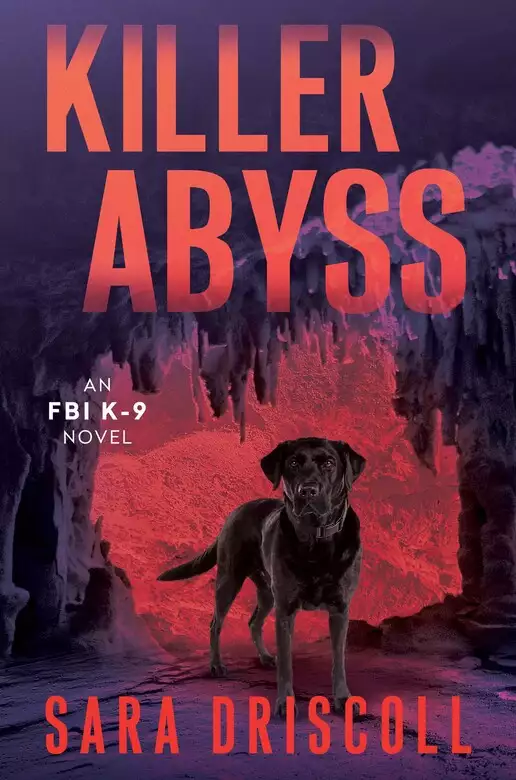
For FBI handler Meg Jennings and her K-9 partner, Hawk, the search for a missing girl leads to the underground caves of Kentucky—ones darker than she ever fathomed.
No descent into the unknown has ever been too treacherous for Meg Jennings and her colleagues in the FBI K-9 unit. They are prepared for anything. But when 14-year old Larissa Whorlow disappears on her way home from school in Nashville, Tennessee, Meg may be proved wrong.
Their only hope is a tracker tag on Larissa’s shoe, worn at her protective mother’s insistence. Unfortunately, the trail stops dead at Mammoth Cave National Park in Kentucky. Meg and her black Labrador, Hawk, are among four teams scrambling to solve a kidnapping that has crossed state lines. All Meg can do is follow Hawk, who’s on the scent of the missing girl—right through a narrow break in a limestone rise and straight into a cavernous labyrinth.
With all communication cut off and miles of undiscovered passages and subterranean rivers to navigate, Meg’s search gets deeper and darker with every uncertain move forward. Then, at the edge of a dangerous abyss, Meg makes a shocking discovery and realizes that Larissa’s vanishing was no random snatch and grab. It’s the work of a serial killer who’s pulling Meg into a terrifying game of hide-and-seek. And the only way out is through the blackness below.
Release date: November 24, 2026
Publisher: Kensington Books
Print pages: 304
* BingeBooks earns revenue from qualifying purchases as an Amazon Associate as well as from other retail partners.
Reader buzz
 Please log in to recommend or discuss...
Author updates
Killer Abyss
Sara Driscoll
June 13, 1:57 PM
Park Ridge Road
Cave City, Kentucky
When the dark closes in, sometimes more than a light can guide you …
“There’s Craig. Finally. I swear he drives like an old lady.” Behind the wheel of their rented SUV, Brian Foster kept his green eyes fixed on the rearview mirror.
Meg Jennings’s gaze shot to her side mirror as a black SUV, similar to their own, pulled off the side of the road behind them, the vehicle coming to an angled rest approximately three-quarters off the asphalt. The vehicle stopped just short of the trunk of a towering beech tree, its branches spread wide across the road, dappling the cracked surface with patches of sunlight dancing below windswept leaves.
Here on the edge of Mammoth Cave National Park, thick forest encroached upon the road, a country thorough fare never meant to be used for street parking. Meg considered it lucky they’d managed to find a place to pull over at all. Otherwise, they’d have had to retreat several miles to the few meager parking spots at the Sand Cave Trailhead, losing precious time hiking back to their mapped starting spot. They weren’t on top of it in their current location, but they were as close as they were going to get in this dense forest.
“You okay getting out here?” Brian asked, interrupting Meg’s thoughts.
She calculated the distance between the passenger door and the scaly gray bark of a wide tree trunk only a few feet away. “A little late to ask that.”
Brian rolled his eyes as he pushed his dark hair off his forehead. “Not a whole lot of options here, especially considering where Lauren parked. If you can’t get out that way, climb out on my side. I’ll get the dogs out of the back seat from here. Everything else we can pull out through the hatch.” He opened his door and climbed out, his tall, broad frame blocking the road momentarily until he sidestepped and slammed the door closed.
Meg opened her door, the bottom of the panel scraping against a thick tree root half buried in the angled bank and surrounded by ground cover. The door jammed, giving her less than a foot and a half, but she slithered through, grateful it was warm enough in June that layered clothing wasn’t required or she’d never have made it through. “Good thing we didn’t stop at the all-you-can-eat buffet on the way here.”
“We had time with Craig taking so long.” Brian pulled two dog leashes from the pocket on the back of the driver’s seat. “Lacey, out.” His black-and-tan German shepherd jumped down to the asphalt while Meg circled the rear of the SUV. Brian snapped the lead onto Lacey’s collar and stepped out of the way as he extended the second leash to Meg.
“Thanks.” She looked into the SUV, where her black Labrador stood in the footwell.
Just seeing Hawk gave her a lift—his brown eyes were bright, and his tail waved high and proud as his weight shifted from paw to paw. He was ready and eager to get to work.
It certainly helped that he was an incredibly dogged and determined partner. When he was on the scent trail, he would push through any challenge, including his own exhaustion. His even temperament also meant he was a comfort to the lost when they were finally found. Though in the most extreme circumstances, she’d seen him shed his mild manner to protect her against any threat.
Her smile was full of love, the same love reflected back to her through his eyes. They weren’t just work partners—Hawk was her heart dog, the canine version of a soulmate. It was the strength of their connection that made them such an outstanding search-and-rescue team.
Today that connection was crucial because a child was missing, had been for a full week. A family was in agony, and the teams would do everything in their power to end the crisis.
“Hawk, out.”
Hawk landed gracefully at her feet, and she snapped on his leash. She rounded the SUV to where Brian was belting Lacey into her navy work vest, with its bright yellow block letters spelling out FBI, just as Special-Agent-in-Charge Craig Beaumont’s dark head emerged from the SUV behind them. He wore a navy FBI polo shirt, beige khakis, and his arms were full of paper maps and a tablet.
Craig’s gaze was fixed past Meg as he waved an arm over his head. “Let’s meet down here!” he called.
Meg glanced over her shoulder to see Lauren Wycliffe—tall and willowy, with her long blond hair weaved into a braid—wave back. Her black-and-white border collie, Rocco, was already in his FBI work vest, while Scott Park and his bloodhound, Theo, were still out of sight.
Craig walked to them. “Sorry for the delay. The National Park Service requested a meet at the Sand Cave Trailhead before we began. I met with Ranger Creswell, the local park representative out of their Law Enforcement Investigative Services Branch—not just a park ranger, but a cop with jurisdiction on NPS lands.”
He set the tablet and the maps down on the hood of his SUV, keeping one hand on them so they didn’t slide or wing into the breeze. “I wasn’t thrilled with the loss of time, but it turned out to be a good thing because he really put some perspective on the difficulty of your search. He also gave me these maps.”
Meg grabbed Hawk’s work vest out of the back of the SUV, draped it over him, and buckled him in. She eyed the paper maps, their edges flapping in the breeze that wound down the country road. “You have a satellite connection for the tablet. Real-time maps aren’t good enough?”
“They’re great for the surface. But he wanted to make sure we knew about the tourist and natural areas we could run into during the search. It’s high tourist time here, and the place is lousy with them. Most of them are a couple of miles away in the area around the Visitor Center, but you might find the odd hiker out this far. Not to mention the cave system itself. Not that it should be relevant, but there are entrances away from the Visitor Center, so he wanted everyone to know what will be around you. He also said if we need anything at all to reach out, and he’ll personally come assist.”
Meg thought back to the white-and-green NPS US Park Ranger SUV she’d seen parked at the trailhead as they’d driven past—the traditional law enforcement Interceptor with the front-mounted steel ram. “That’s nice of him. Not all agencies are that welcoming.”
She strapped her sheathed Smith & Wesson search-and-rescue bowie knife to the inside of her left forearm. Then she swung her go bag over her back, slipping both arms through the backpack’s straps, shrugging it into place, and pulling the tail of her long, dark ponytail free from under it. The bag was packed full of gear, as well as food and water for both human and dog, and while it added weight on long searches, she was used to it.
She and Brian jogged together with the dogs several mornings a week at 5 AM—because they both hated jogging and misery loved company—and they always wore their fully loaded search-and-rescue packs as part of their conditioning. Those painful mornings would give them the long-distance stamina they might need today.
“They know we have tools they don’t, so they’re happy to let us do our thing.” Craig’s gaze swept over the two dogs at his feet before he looked up as Lauren and Scott joined them.
As far as Meg was concerned, Scott and Theo were the ultimate example of a dog and its owner eventually looking alike when they’d lived together for many years. Scott was tall, blond, and lanky, moving with a fluidity that had always left Meg wondering if he had a connective tissue disorder leading to loose joints. Theo—tan except for a black saddle and black on the ends of his magnificent droopy ears—matched his owner’s lankiness, as well as his relaxed posture and expression. Theo was one of the most laid-back bloodhounds she’d ever seen.
In a team where the drive to find the target was a primary function of their job, most would assume Theo was ill-suited to the task. But Scott was always able to get him fired up to work, and once Theo started, he would stay on the job until it was finished—a good thing for all of them, as Theo had the best nose of any of the dogs. He might work a little slower, but he could find and follow the faintest trail.
Beside him, hyperactive Rocco quivered with the need to get moving. Border collies loved to work, and Rocco was always game to dive headfirst into any search. Sometimes Lauren had to temper that tendency, but mostly, she skillfully directed it into an energetic search scheme. Strategically, Craig often paired Rocco and Theo because Rocco’s enthusiasm was contagious, and Theo absorbed it like a sponge. The two dogs balanced each other.
Craig took the dogs’ personalities into account, as much as the handlers’. It was another reason why he often paired Meg and Brian, as much as Hawk and Lacey. Lacey was an excellent scent dog, with as much heart and stamina as anyone could ask, but sometimes she could be a bit anxious in truly perilous situations. At times like that, steadfast Hawk was her best partner, calming and leading her if required.
All four handlers were dressed in jogging or yoga pants, with athletic shirts and hiking boots, had their radios clipped to their waistbands, and shouldered their go bags. Those bags also contained the electronics they might need for the search, including their satellite phones, as their own cell phones would likely be out of range in a wilderness like this.
Meg pulled her cell out of the left thigh pocket of her yoga pants and checked it. “We passed a few farms on the way up here, but this is apparently too far out. No signal. We’ll move to the radios for communication and the sat phones for location.”
“The hill-and-valley terrain is going to interfere, not to mention all the rock making up these hills.” Craig waved his handlers closer. “Bring it in. We only had bare-bones information when we took off from DC, but I got more during the flight. Let me give you the full rundown so you can get out there.” He pulled out a map and pushed the rest of the pile toward Lauren. “Don’t let this slide off.”
“Check.”
Craig unfolded the map and laid it out on the warm hood of his SUV. Well-versed in outdoor briefings, the handlers moved in, securing the corners of the map that fluttered in the wind.
Meg took in the map, quickly finding Park Ridge Road, as she’d been the one navigating with the help of Google Maps on the way here. The park’s more than fifty thousand acres were outlined in heavy red, part of which ran along the road on which they currently stood. The main tourist area of the park—the Visitor Center and the associated Historic Entrance to the caves—clustered with parking, camping, picnic, and hiking areas, as well as the Mammoth Cave Lodge, almost three miles away.
Dotted lines of additional hiking trails lay across Green River to the west and ran south all the way to Park City. But to the east, past Eaton and Houchins Valleys, lay nothing but undisturbed forest. With the exception of Ad-well Spring, northwest of them, and Three Springs, about a mile and a half farther west, all the map displayed was the topographical lines of a region replete with hills and valleys.
Craig indicated a marker on the map a little to the north of their current position. “Last night around six PM, one of the guys who works at the Cave Research Foundation, off Hamilton Valley Road, just to the north of us, headed home, driving south on this road, then east, and then south again to Glasgow. However, once he got back onto the cellular network, his phone reported it had picked up a device on the Find My Device network during his trip home. He didn’t think much of it.”
“You don’t,” Scott said easily. “I keep a tag on my car keys because I’m always misplacing them in my apartment. Makes it easy to locate them using Bluetooth. But I’m on the greater Find My Device network for everyone’s tags using that system when I’m out and about. I get the same report all the time. It’s not a specific message, just that you helped someone find a lost item. Kind of makes you want to stay in the system because you see how well it works. Also gives you a bit of a boost, like, ‘Hey, I did good today.’”
“I’m sure that’s why they do it,” Craig said dryly. “It’s basically positive reinforcement to their own customer base.”
Brian snickered. “Congratulations. You’re officially Pavlov’s dog.”
Scott dropped his hand over Theo’s head, stroked down one long, floppy ear. “Never a bad thing to be compared to a dog.”
“Not in this group. In this case,” Craig continued, undaunted by the banter, “the Foundation guy’s device had picked up a tracker tag belonging to a teenager, fourteen-year-old Larissa Whorlow, who disappeared a week ago while walking home from school in Nashville, Tennessee.”
He flipped open the tablet case and woke the device. The screen displayed a slender teenage girl. She stood near a couch, backlit by the multicolored blur of Christmas tree lights, wearing yoga pants and an oversize red sweatshirt, featuring a black cat wearing a Christmas sweater and a Santa hat with SANTA CLAWS emblazoned above the cat’s head. She wore her long brown hair down over her shoulders, and a shy smile curved her lips.
“This is from last Christmas, but her mother, Charlene, said it’s the best recent picture she has. Larissa has become sensitive lately about having her picture taken.”
Meg glanced up to meet Lauren’s eyes, a look of commiseration passing between them.
“I remember those days,” Meg said. “Teenage girls can be overcritical about their own appearance, from the clothes they wear to how developed they are, especially if they’re significantly more or less developed than their friend group. I went through a period when I didn’t want my picture taken for any reason.”
“Same here,” said Lauren.
“The theory is that Larissa either ran away from home or was grabbed off the street in Nashville a week ago,” Craig continued. “Her mother says it was the latter.”
“Any siblings in the family?” Meg asked. “Sometimes they have a better idea of what’s going on in a kid’s head than the parents.”
Craig shook his head. “Only child.”
“Too bad. Especially when lots of parents think things are okay at home when they’re not,” said Lauren. “Is there a dad in the picture?”
“No. He was killed in a car accident when Larissa was a baby.”
“Next best thing when there are no siblings, then—have they talked to the kid’s friends to get an idea about Larissa’s mindset?”
“They did. And the friends also don’t think she ran away. They said Larissa and her mom had had some arguments lately about her need for independence, but they weren’t majorly at odds. Just regular teenager-parent levels of push-and-pull, as the kid was pulling away and the parent was holding on.”
“Find me a teenager and their parent who don’t occasionally have a dustup,” Brian said.
“Can’t,” Lauren said. “They don’t exist. Even more so in the situation of an only child due to an early tragedy. The mom might have a tendency to hold on tighter. Did they post an Amber Alert when she disappeared?”
“They did, but there were no reported sightings. However, as I mentioned, we have this one additional aspect that opens the door for our assistance. As part of the struggle for independence, Larissa and her mother settled on a compromise. Charlene would back off on the helicopter parenting, as long as Larissa wore a tracker tag so her mother knew where she was at all times.”
“She put a GPS tracker on her kid?” Brian’s voice carried an edge of horror. “I assumed it was on her bag or something.”
Meg fixed him with a sharp look. “Your reaction makes me wonder about what you got up to as a teenager.”
Brian’s flash of a grin was devilish. “Damn straight.”
“My sister-in-law has talked about wanting to do it with her kids,” Scott interjected. “They’re considerably younger than Larissa. But according to Liz, more parents than we might think have been doing it since tracker tags hit the market. Crime stats are down from decades ago, but you’d never know it from the evening news, which scares parents into wanting to know where their offspring are every minute of every day.”
“Well, this mom certainly did,” Craig said. “Larissa was wearing it laced onto her shoe in a decorated silicone case so it just looked like a fun, stylish accessory after she took a set of paint pens to it. It’s a black square with a loop on either side to run laces through.”
“When she was reported missing, did the tracker company help trace her?”
“They did. They’ve been really quick and helpful. The tracker started in Nashville and then got picked up through the Find My Device crowdsourcing system. But here’s the thing—the speed at which the tracker was moving as it was detected by various phones in its vicinity indicated that Larissa was moving at highway speed. She was in a vehicle going north on I-65, right over the state border into Kentucky. But that’s where they ran into trouble, because the signal simply disappeared. Then there was nothing for a full week, until it was picked up last night.”
“She’s been gone a week,” Brian pointed out. “No ransom in the meantime?”
“Nothing, which has only made her mother all the more frantic.” Craig’s gaze touched on each of his team members. “Larissa simply disappeared without a trace.”
Plan: A scaled map based on a detailed cave survey showing passages and prominent cave features in either two or three dimensions.
June 13, 2:08 PM
Park Ridge Road
Cave City, Kentucky
“Except we now have a trace of her,” Lauren stated. “Maybe the lack of communication leans a little into the runaway theory? She might be fourteen, but she could have friends who are older and can legally drive. Or she could have met an adult on the internet and run off with them.”
“That possibility was raised,” Craig replied. “And while her mother could easily have not been aware of something like that happening, her friends, including her best friend, said she hadn’t met anyone online, as far as they knew. They all say this is entirely out of character for her. They think she’s been taken.”
“Her mother must be going out of her mind.” Scott leaned in to study the map, tapping the spot with his index finger where I-65 entered Kentucky and then slanted slightly eastward to kiss the outskirts of the city of Franklin, before sliding his finger northeast to Mammoth Cave National Park. “What’s that? Forty miles from there to here?”
“More like fifty, as the crow flies. Longer on actual roads.”
“How did the tracker go radio silent for all that time?”
“Whoever was driving must have gone off the main roads, where the tracker couldn’t be picked up in those locations.” Craig drew his index finger along a smaller road running east to west. “There are lots of minor regional roads in this area. If we assume she was grabbed off the street, it’s unlikely that person would know she was being tracked. Let’s just refer to this person as ‘he’ and ‘him,’ to avoid tripping over pronouns until we know for sure if the suspect is male or female, but he likely left the main highway once he cleared Tennessee so there’d be less chance of being noticed or later remembered by law enforcement. That also happened to keep him off the tracker grid, network-wise.”
“A lot of farm country in this area,” Lauren said. “Miles and miles of it during the drive down from Louisville. A few larger communities, but not many.”
“That’s if you stay on I-65,” Scott interjected. “Imagine getting off a major artery and using the back roads. Probably very few of those larger communities.”
“Or none,” Craig said, “based on the lack of signal.”
“The signal was eventually detected, though it took a while. Why now?” Meg asked.
“Part of it is having someone in the area who’s on the system,” Scott said. “There may be tens of millions in the country who are on it, but traffic here is few and far between. What gets picked up in Nashville or Louisville or on a major highway is simply going to be too remote here. Not enough people in this area are on the system.”
“That’s a large part of the problem,” Craig confirmed. “The other part is the environment. Just like our cell signals are dead out here because of the environment, GPS signals can be similarly affected. How many times have we driven out for a search in a remote area and our Google Maps live map has become confused as to where we are or which direction we’re going?”
“Too many to count.”
“Right. It’s the same issue here. Dense forest, rock formations, et cetera—it all gets in the way of GPS pinpointing your location accurately. Usually, it’s the combined work of three to four satellites that places you precisely. Think of our drive down here—open road surrounded by farmers’ fields. My GPS blinked a few times the farther I was off I-65. That’s going to continue to complicate things during the search.”
“But it all came together for the Cave Foundation guy if he picked up the signal,” Lauren pointed out.
“That time, yes. With a caveat. He’d been here twice before since Larissa went missing and hadn’t picked up a signal.”
“Was that because there was nothing to pick up?” Meg questioned. “Or because the signal couldn’t be picked up?”
Craig drilled an index finger at Meg. “Bingo. We know she was taken a week ago, and stayed off the grid as far as the tracking system was concerned. But was she kept somewhere and then moved later to this area? Or has the tracker been here all along and no one’s been able to pick it up? It’s a water-resistant model and would withstand being rained on, so it’s not like it’s shorting out. It’s all about where it is that’s causing the trouble.”
“We have a starting point?” Lauren asked.
“That’s where things get a little fuzzy. The signal was picked up at the intersection of Hamilton Valley and Park Ridge Roads, when the Foundation employee turned south onto Park Ridge Road.”
“What’s the range of that particular tracker tag? I know it can vary.”
“Not bad under normal circumstances. The company says this tracker has a max range of up to four hundred feet—”
“That seems hard to believe in this location,” Brian interjected.
Craig held up an index finger to slow Brian. “The company confirmed that. They can’t say what the max range would be in this area, but that detection is through Bluetooth. The problem is actually with the GPS. Remember those three satellites? Part of the problem is that GPS signal is known to bounce off rock, so while the guy’s phone picked up the tracker, where he and his phone were at the time of detection is what’s in question. It’s a phenomenon known as multipath interference. In a system where the time from the GPS origin to the satellite is calculated down to the microsecond; being off by a single microsecond will map the location up to three hundred fifty yards away. A millisecond delay will map it over one hundred eighty miles away. And that’s assuming only one bounce.”
“Damn,” Brian breathed.
“So, our potential search area could be anywhere from two hundred feet to nearly two hundred miles?” Meg asked. “How do we even control for that?”
“We pretty much can’t. It’s the situation we have. That info came from the tracker company, but Ranger Creswell confirmed the issues with signals bouncing around up here. The hills are mostly composed of limestone protected by a sandstone cap, so GPS isn’t particularly reliable and cell signals are simply absent.”
Scott scanned the map spread across the hood. “Where do we start?” He tapped the intersection of Hamilton and Park Ridge Roads and then trailed his index finger down Park Ridge Road. “It could have been anywhere on this road. We could be looking at a two-mile initial range.”
“Take it all the way to Cave City Road, and it looks more like three miles. I’m glad we have all four dog teams, because we’re going to have to spread out.”
“Way out,” muttered Lauren.
“Shoot.” Craig motioned Lauren in. “Hold this corner down? I forgot something inside the SUV.”
When the map was secure, Craig sidled past Lauren and circled back to the driver’s door. He disappeared inside for a moment, then reappeared, holding several zippered plastic bags in his hands.
As he approached, Meg identified what he was holding—pieces of individually bagged dirty laundry. A couple of socks, a shirt, underwear, all black. Craig had arranged for scent items for the dogs. It made her once again grateful they had Craig in their corner, a man who fully understood his teams and how they functioned.
She held out her hand for a bag. “These are from Larissa’s mom?”
“Yes. Dirty laundry, straight out of her hamper, collected with gloves to avoid cross-contamination, and immediately sealed in a zippered bag. The dogs have a big enough challenge as it is. We don’t want them distracted by air scenting some random hiker. This gives them a direction.”
Brian accepted his bag, then studied Meg, who glanced from him to the clothing and back up to him. “What?”
“Everything is black. What was she wearing when she disappeared?”
“Her mom said she was wearing a faded oversize black T-shirt and ripped black jean capris. Black sneakers with the tag laced on.”
“Again, all black.” Meg shifted her gaze to Lauren. “That strike you as odd?”
“Unless it’s a coincidence, and with two outfits that seems unlikely, yeah, a little. These are the most recently worn? For the freshest scent?”
“Those were my instructions,” Craig said. “Laundry off the top for the most recently worn.”
“This looks to me like dressing to make a statement. Possibly to belong to a group.” Lauren’s gaze slipped to the Christmas photo still displayed on the tablet. “A lot can change in six months at this age.”
“A huge amount,” Meg agreed. “What group she hung out with at school won’t affect what we do here. But …”
“I’ll make sure what you guys are thinking gets passed up the line. The case started with the Metropolitan Nashville PD, but once it became clear it had a good chance of being a kidnapping, and a better chance of crossing state lines, they handed the case off to us. Special Agent Robin Thorpe, out of the Nashville field office, is leading the case. She’s who contacted Peters asking for assistance from the Forensic Canine Unit. I’ll make sure she’s looped in.”
Meg knew Executive Assistant Director Adam Peters, of the FBI Criminal, Cyber, Response, and Services Branch, which oversaw the Forensic Canine Unit and thereby the Human Scent Evidence Team, wouldn’t hesitate to send out whatever specialized team a case required, especially when a child was involved. Peters was a hard-ass, but she’d seen glimmers of the human behind the Bureau persona. He’d be in their corner. He’d moved fast, making sure Craig got them to Kentucky with boots and paws on the ground as soon as humanly possible.
Brian nodded in approval. “Great. How do you want us to fan out?”
Craig scanned the vehicles. “Lauren and Scott, you’re up front?”
“Yes.”
Craig turned to the map. “It will be easiest for you to pull out, zip up to Hamilton Valley Road, pull a U-turn, and head south. I want you to pull off here.” He indicated a spot on Park Ridge Road three-quarters of the way back toward Cave City Road. “We don’t have probable cause, and the warrant required to search private property on the east side of Park Ridge, so we’re starting with National Park lands. If we need to get a warrant to expand our searches, we’ll deal with that next. Let’s begin with these areas. Lauren, you and Rocco take this southernmost region.”
He drew a rough square over the area of the park adjacent to Cave City Road. “If Rocco catches the scent and you need to search south of Cave City Road, go for it; that. . .
We hope you are enjoying the book so far. To continue reading...