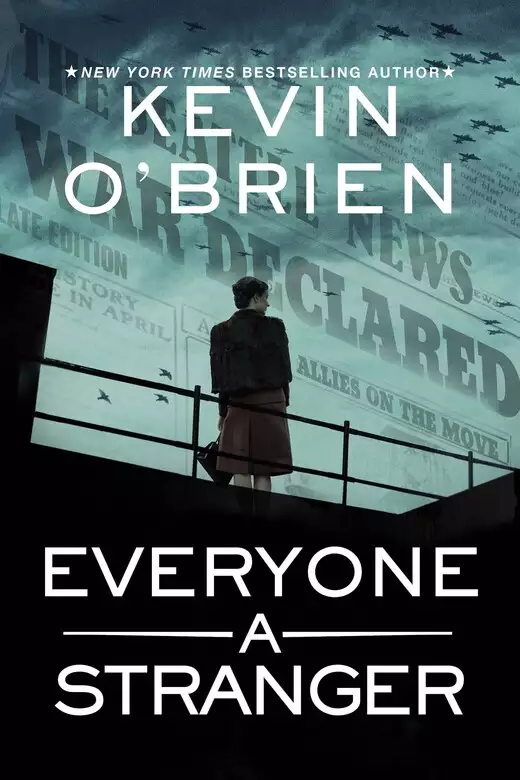
A young war widow is unwittingly drawn into a sinister web of intrigue and murder in this taut, unexpected, masterfully plotted historical thriller set in WWII-era Seattle, where the enemy may be closer than anyone thinks. A crafty, addictive read for fans of The Americans, Anna Pitoniak, Graham Moore, and Elizabeth Wein.
“A page-turning masterclass in storytelling— historically captivating, emotionally rich, and crackling with slow-burn menace.” – JAMIE FORD, New York Times bestselling author of The Many Daughters of Afong Moy
Washington D.C., 1943: Virginia Abrams believed the war had taken all it could from her when her husband was killed at Guadalcanal. One year later, she’s in a dark, unexpected quandary—pregnant and on the run to avoid a ruthless political family that wants to erase all connections between her and the man who assaulted her.
Changing her name, Virginia moves to Seattle to start over. Against her better instincts, she’s pulled into the lives of her new neighbors in an apartment complex—especially Tim, a young boy whose mother dies suddenly in a fall. Virginia fears that her whereabouts have been discovered, and she was the intended target . . .
But there are secrets between the residents too—stormy affairs, mysterious visitors, whispers and rumors. Tim is convinced there are saboteurs among them, hiding in plain sight. Virginia wants to discount his teenage imagination and her own rising paranoia, yet there’s something menacing here . . .
Torn between wanting to help the boy and safeguarding her anonymity, Virginia tentatively begins piecing the puzzle together with the help of some of her neighbors. But now others are dying in an escalating series of “accidents.” No one is entirely who they seem to be. No one can be trusted. And though she doesn’t know it yet, her own life is hanging by the thinnest thread . . .
“I gobbled up Everyone a Stranger, with its ever-expanding sense of danger, its cool evocation of 1940s Seattle, and its indelible cast of characters—both shady and smart.” – JESS WALTER, # 1 New York Times bestselling author of The Cold Millions
Release date:
September 30, 2025
Publisher:
Kensington Books
Print pages:
416
* BingeBooks earns revenue from qualifying purchases as an Amazon Associate as well as from other retail partners.
“I confess to almighty God and to you, my father, that I have sinned. My last confession was three years ago.”
“Why has it been so long, my child?” Monsignor Mundy asked with a hint of disapproval in his tone.
Twenty-seven-year-old Virginia Abrams had been proud of herself for remembering what to say at the start of confession—once the priest had slid open the little door between them.
A lattice across the opening obscured Monsignor Mundy’s face.
Kneeling in the dark, hot, cramped confessional, Virginia started to perspire. She should have known he’d stop her right there and demand an explanation for the three-year absence.
Her eyes had not yet adjusted to the blackness. Only the dimmest light and some shadowy movement filtered through the lattice. It looked like Monsignor Mundy tilted his head to one side.
“Well?” he asked, a bit impatiently.
Virginia nervously touched the black chapel veil on her blond head, and then she folded her hands in prayer again. The chapel veil was a relic from her Catholic college days. She cleared her throat. “Three years ago, I—I married someone who wasn’t Catholic, and I was excommunicated. My husband was in the Navy. He was killed last November at Guadalcanal.”
“And now you want to come back to the Church. Well, young lady, it isn’t that easy—”
“No, that’s not why I’m here,” she said, cutting him off. She immediately regretted it, because he was a very important priest, well-respected—and likely not used to being interrupted. Virginia had spent her entire childhood bowing and scraping to priests. She’d always been afraid of them. She couldn’t help feeling intimidated by this man.
Her mouth had gone dry. “I want your help, Monsignor,” she explained in a shaky voice. “I’m pregnant.”
The priest said nothing for a moment.
Virginia held her breath and imagined him doing the math. Over nine months since her husband’s death, and she was pregnant.
In the silence, she heard the old woman in a pew outside the confessionals, her rosary beads rattling as she said her prayers. Virginia had spotted her earlier—one of a handful of people praying quietly in the vast, shadowy cathedral. Only this old lady wasn’t so quiet, and her murmuring seemed to echo in the near-empty church.
Virginia had made some calls and found out that Monsignor Mundy heard confessions here at St. Paul’s Cathedral from eight to ten on Wednesday nights.
A couple of years ago, it would have been next to impossible getting in to see him. Monsignor James Mundy had been a national radio personality, with his politically charged sermons broadcast every week. He’d spearheaded the Committee for the Common Good, which had been anti-New Deal, anti-Roosevelt and isolationist. A controversial figure, Mundy was constantly denying rumors that he was antisemitic, but the German American Bund and other homegrown Nazi organizations endorsed him. Maybe that was why Virginia didn’t tell Mundy that her husband, Joel, had been Jewish. She wanted the monsignor’s help.
Until Pearl Harbor, Mundy had had a huge following. He’d helped get Ronald Callahan elected to the U.S. Senate in 1940. St. Paul’s had been Senator Callahan’s church, and he’d often been photographed with the high-profile monsignor.
Now that Mundy’s radio show had gone off the air and he’d lost most of his followers, Virginia wondered if he still had some influence over Senator Callahan. She hoped so.
Monsignor Mundy had yet to say anything in response to her admission that she was pregnant. Virginia could now discern his features through the lattice—along with the light reflecting on his wire-rimmed spectacles and the purple sash-like stole hanging down his skinny, hunched shoulders.
“The baby’s father is Senator Callahan’s son, Ron Junior,” Virginia explained, trying to keep her voice steady.
“The senator’s late son?” the priest asked.
“Yes,” Virginia said.
Lieutenant Ron Callahan Jr. had been in public relations, stationed at Fort Myer. Whenever there was a war bond rally anywhere near Washington, D.C., the Army sent the senator’s handsome, charming son to “handle” the various movie stars participating in the events. On their one date back in late June, Ron had explained to Virginia that he provided transportation, food and lodgings for these celebrities, catering to their every whim. He had worked with everyone from Lana Turner to Bing Crosby to Babe Ruth, and often introduced celebrities at the rallies—in front of thousands of fans and potential bond-buyers.
Years before, when she’d been a student at Trinity College in D.C., Virginia had regarded Ron, who attended Georgetown University, as something of a movie star himself. Thanks in part to his high-profile father, Ron Junior frequently had his photo in the newspapers—especially the society pages. He was a much sought-after guest at practically every Washington, D.C. debutante ball—and many in New York, too. He’d been at debutante Brenda Frazier’s nationally covered coming-out bash, and there were photos of him in all the newspapers dancing with Brenda herself. They looked so glamorous together.
Virginia had met Ron at a mixer her senior year, and he’d asked her to dance. “The Way You Look Tonight” had been playing, and he’d held her close. The smell of his cologne had captivated her. At first, she’d been tongue-tied. But after a couple of minutes of Ron the Ladies Man and his self-assured smooth talk, Virginia had become slightly put off.
Or maybe her defenses had gone up because she’d been feeling vulnerable. Shortly after the song ended, he’d gone to get them some punch, and she’d used that opportunity to duck out of the mixer.
Though it had seemed prudent at the time, a part of her had regretted not sticking around.
So, five years later, when they ran into each other at Garfinkel’s Department Store in D.C., Virginia admitted to Ron that she was embarrassed about how their previous encounter had abruptly ended. But Ron forgave her for disappearing. “I was terribly shallow back then,” he told her. “I remember thinking you were the one who got away.”
Dressed in his summer khaki uniform, Ron seemed even more attractive than before. And Virginia recognized that same spicy, musky cologne. This time around, she thought he was sweet and caring. At least, he came across that way when she told him about her husband being killed at Guadalcanal.
Ron said he wasn’t going to let her get away this time and then asked her to dinner the next night. Virginia said yes. It would be her first date since she’d become a widow seven months before. Prior to that, she hadn’t seen her husband for five months. So, that had made it over a year without any kind of physical contact with a man. To have the attention of someone as magnetic as Ron Callahan Jr. was exciting but also a little daunting.
For their date, Virginia broke out her favorite dress—lavender with a matching jacket that had pearl buttons. She had a hat and purse that went with the outfit—very smart.
He took her to dinner at Old Ebbitt Grill, where so many past presidents and politicians had eaten. They had a booth that must have been reserved for VIPs. Ron ordered porterhouse steaks for the two of them. Since the start of the war, choice cuts of meat were a rarity—even in the best restaurants. But Ron had the clout to get whatever he ordered—even if it wasn’t on the menu. The wine he ordered was the best, too. Virginia couldn’t help being impressed, but she also recognized that same old cockiness in him. Anything Ron wanted, he could take. Any woman he desired, he could have.
After dinner, he drove to the Tidal Basin at the southern end of the National Mall and parked. It was a gorgeous, clear, balmy night, and they went for a walk, holding hands. The Jefferson Memorial looked so serene, and cherry blossom petals drifted from the trees. It was easy for Virginia to let down her guard. When Ron gently kissed her, she felt her knees weaken. He bared his soul to her, admitting that he didn’t agree with his father’s politics. His dad had called in some favors to land him the public relations job with the Army. Ron said he knew his work was important for the war effort, but he felt like a glorified valet to the celebrities. He wanted to do more. He’d recently put in for a transfer to active duty. Once again, Virginia was impressed. But she couldn’t help wondering if he was sincere—or if this news about him possibly shipping out soon was just a line Ron told girls so he could get them into bed.
They returned to his Army staff car—an olive-colored four-door sedan with a large white star on each rear door. Cherry blossom petals dotted the hood and roof. Virginia realized it was probably no accident he’d found such an isolated spot to park.
Inside the vehicle, she realized something else: Ron didn’t need to take a girl to bed if he could get her in his car.
He was such a smooth operator that his first few kisses lowered Virginia’s resistance. But she felt his hand sliding under the hem of her lavender dress—then past her knee to the inside of her thigh. Because of the wartime silk and nylon shortage, Virginia wasn’t wearing stockings—so she’d painted her legs like most women were doing for the duration. There was something too raw and intimate about Ron touching her bare skin there. Squirming, Virginia tried to push his hand away. “No, I don’t want that, okay?” she said. “Please, Ron, stop. …”
But he didn’t listen. He didn’t stop.
He grabbed at her panties and started tugging.
“Stop it!” Virginia slapped his face—hard. “What the hell is wrong with you?”
But he merely paused to gape at her with a surprised grin. He let out a little laugh and then went right back to what he was doing.
Virginia struggled and squirmed as he hiked up her slip. She felt him clawing at her panties again and heard them rip.
Grabbing her purse from the car floor, Virginia slammed it against the side of his head.
“Goddamn it!” he howled, recoiling. His hand went up to his temple.
For a moment, Virginia thought he was giving up. She pulled her slip and dress down, and reached for the door.
But Ron grabbed her arm. She thought he was going to yank it out of the socket. He swiveled her around and then hit her hard across the face. Virginia banged her head against the car window. She heard something crack, and her vision blurred.
She heard something else as Ron moved his hand up under her dress again. “You’re not getting away this time,” he whispered.
Then Virginia lost consciousness.
When she came to, everything was a blur—as if her vision and consciousness hadn’t completely returned. Later, she tried to recall what had happened, but only a few things were clear. She remembered how Ron’s warm, wet breath felt in her ear as he lay on top of her after climaxing. And when he pulled away, he did a strange thing. He carefully arranged her dress and slip so that her thighs were covered. Then he gave her a gentle kiss on the cheek. Virginia numbly turned away. She heard him zip up his pants—and then the car motor started.
Virginia remembered feeling so sick, and she must have said something, because at a stop sign, Ron reached across her and rolled down her window. The glass wasn’t cracked. She’d thought maybe it had—after the way her head had slammed against the window.
Pulling in front of her apartment building in Dupont Circle, Ron climbed out and opened the car door for her. He picked up her purse and hat from the floor of the passenger side and handed them to her. Virginia hadn’t realized she wasn’t wearing her hat anymore. It must have been knocked off when he’d hit her.
He shut the passenger door and then took hold of her arm.
Virginia couldn’t believe he wanted to walk her to the door—after he’d just raped her. She gazed at him in shock and disbelief.
In response, Ron touched the side of his face and chuckled. “Boy oh boy, you have a powerful right hook. You’re a regular Jack Dempsey. This still smarts. Maybe next time we can do it without the rough stuff. What do you say?”
Virginia couldn’t say anything. Glaring at him, she jerked her arm free.
She couldn’t get away from him fast enough. She bolted for the front door and raced upstairs to her second-floor apartment, where she fumbled for the keys. Once inside, she locked the door behind her, ran into the bathroom and threw up.
She showered for what must have been at least a half hour. Under the warm spray, she sank down in the tub, wrapped her arms around her knees and cried.
The smell of Ron’s cologne was on her lavender dress. That once-intoxicating fragrance now made her ill. She didn’t ever want to wear the dress again, so she threw it out.
Virginia hoped Ron had been telling the truth about going into active duty. She wanted him to disappear. She wanted to forget him.
But that wasn’t going to happen.
“What makes you so certain that Ron Callahan Jr. is the father?” she heard the priest ask. Through the confessional’s lattice screen, Virginia could see him frowning.
“Because, Monsignor, I—I haven’t been with anyone else since my late husband, and that was over a year ago,” she answered, a tremor still in her voice. “The date with Ron Callahan was my first since I’d become a widow. And he—well, it was going very nicely, but then he—he forced himself on me.”
Monsignor Mundy said nothing for a moment. Then he cleared his throat. “Can you look into your heart and tell me truthfully that you didn’t give him any encouragement?”
“I fought him, and he punched me,” Virginia replied, a bit short of breath as she spoke up for herself. “He knocked me unconscious. Do you seriously think I wanted that?”
Again, the monsignor said nothing. He probably wasn’t used to anyone addressing him in such a defiant tone. After all, this priest had taken on FDR. He wasn’t past ripping apart some knocked-up little war widow who needed his help. But he’d made her mad with that awful question. Look into your heart. …
“And now, I’m pregnant,” Virginia reminded him, breaking the silence.
“Then it’s God’s will. It could be a blessing. …”
With a sigh, Virginia shook her head. “It’s not a blessing if I can’t afford the hospital bills and I have to raise the child on my own. You see, Monsignor, I’ll have to quit my job, and the allotment checks I get after the death of my husband are barely enough to support one person, certainly not two. I need help—”
“What about your parents?”
“They’re no longer in the picture,” Virginia answered quickly. “And as you know, neither is Ron. I’ve tried to appeal to Senator and Mrs. Callahan. I’m not asking for much, just some help with the hospital bills and perhaps some money to get me through the first year once the baby is born. After all, this is their grandchild. They won’t have another. …”
Even as she said this, Virginia considered Ron’s reputation and figured Senator and Mrs. Callahan might already have an unacknowledged grandchild or two out there somewhere.
“I don’t want to make any trouble for them,” she went on, squirming a bit. Her lower back was starting to ache from kneeling too long. “I came here tonight to ask you to talk to the Callahans on my behalf, appeal to them to do the Christian thing. You’re friends with the senator. You have some influence with him and Mrs. Callahan. Please, Monsignor Mundy. Neither one of them will talk to me—or even acknowledge me.”
“And who’s to blame them?” the priest coldly replied. “They’re still grieving the tragic loss of their only son. Ron Junior might not have been fighting on the front lines in some foreign land, but he still died in service to our country. And you’re dragging his name through the mud.”
Ron had been killed two weeks before. He’d played host to James Cagney and Joan Leslie, appearing at a war bond rally in Baltimore. They’d raised over three hundred thousand dollars. Ron—along with an Army private at the wheel—had driven the two stars to Union Station and helped them board a train to their next bond rally in Philadelphia. On the way to Fort Myer, Ron and the private had crashed into a salvage truck making an illegal left turn. The Army private had survived with minor injuries. But Ron had been thrown through the windshield and died before the ambulance arrived.
The story was in all the newspapers. Senator Callahan must have seen to it that each account of the fatal accident included the fact that Ron Junior had requested a transfer to active duty. Mundy had lifted that “died in service to our country” line directly from the newspapers. It occurred to Virginia that the senator—up for reelection in November—probably wanted everyone to think of his son as a war hero. That sort of thing always brought in the votes.
Virginia couldn’t help being cynical. She also wondered if the car involved in that fatal accident had been the same Army vehicle in which Ron had raped her.
“I don’t intend to drag Ron’s name through the mud,” Virginia explained to Monsignor Mundy. “I—I’m just asking for some financial assistance. The senator and his wife don’t need to have anything to do with the baby. They can have their lawyers deal with me. As I said, I don’t want to bother them. But I don’t see any other options.”
“You could put the child up for adoption,” the old priest suggested.
“I thought about that, but I decided not to,” Virginia answered. “To be honest, Monsignor, at first, I didn’t want to have anything to do with Ron or his parents. I didn’t want my child to have anything to do with them, either. But then I realized, if I’m going to keep this baby, I can’t be too proud. I have to think of the child’s health and welfare. If it means that the baby can be born in a decent hospital, and I can afford to house and feed the child for a year or two, then I don’t care who I have to kowtow to. …”
Including some stodgy old priest, she thought. Would he even lift a finger to help her? She still couldn’t tell.
“Monsignor, won’t you please speak to Senator Callahan for me?” she finally asked.
“How can you expect Senator and Mrs. Callahan to believe that the baby you’re carrying is actually their grandchild?”
“Ron didn’t believe it when I called him and told him the news,” Virginia explained. “But then, not long before he was killed, he wrote to me. He said he thought about how he was going overseas soon and wondered if he’d ever come back. …”
Virginia had brought the letter along with her. It was in her purse. She’d figured she would show it to Monsignor Mundy if he didn’t believe her. But she didn’t reach for it yet.
“Ron said he knew I wasn’t lying about the baby. He knew I wasn’t the type of girl who would do that. He even apologized for—for what had happened. Ron said he was prepared to take responsibility for the child. And he’d told his parents as much. He’d told them he was going to write to me. He said I should hold onto the letter—just in case I needed it.”
“What do you suppose he meant by that?” the priest asked.
Virginia bit her lip. “I guess he thought his parents might not believe me. Or maybe he knew they’d stonewall me. I waited a week after Ron’s funeral to call on Senator Callahan at his office. He and Mrs. Callahan had been to a political rally two days before that, some barbecue. So, I didn’t think I would be intruding on the senator while he was still in mourning. Ron had said in his letter that they knew about me—and about their grandchild. I stupidly thought they might actually care. …”
Tears welled in Virginia’s eyes, and she felt her throat close up. It was more out of frustration than anything else. The pregnancy made her emotional about everything. “Senator Callahan left me sitting in his outer office for two hours—and then refused to see me,” she continued. “I kept telling the secretary that the senator knew who I was. She told me I could leave or be escorted out. So, I—I wrote to the senator—and Mrs. Callahan. But neither one of them got back to me. That’s when I decided to ask for your help, Monsignor Mundy.”
She heard him let out a long sigh—and then he whispered, “Get out of my church.”
“Pardon?”
“I said, get out of my church,” he growled. “You come in here, sullying this house of worship, asking me to help you extort money from this dead boy’s grieving parents. You make me sick. You’re no better than a whore. …”
She saw him reach up toward the lattice. The little sliding door slammed shut, and Virginia was swallowed up in complete darkness. Stunned, she didn’t move. Then she heard shuffling in his cubicle, and the door squeaked. After a moment, her door swung open—and he stood there, the bespectacled, stern-looking old man she’d seen so often in past newspaper photos. He was dressed in his long, black cassock—with the purple sash around his neck. The veins on the sides of his high forehead were visible as he glared at her.
“Get out,” he barked once again, stabbing a finger toward the church entrance. “If you really are with child, I pity the poor little innocent who’ll be raised by the likes of you. I’ll pray for your baby. But you, you’re shameless, evil, morally bankrupt. …”
Horrified, Virginia gaped at him and unsteadily got to her feet. As she ducked out of the confessional, she was almost certain he’d take a swat at her as she brushed by him. She felt like a little kid again, cowering in this awful priest’s presence. She darted past him and then turned to look back.
She noticed the seven or eight other people in the vast church were staring at her as if she were a monster.
“Go on,” the monsignor said. His voice echoed within the cathedral walls. “And if you try to make trouble for that poor boy’s parents, I’ll come after you with everything I’ve got.”
Speechless, Virginia swiveled around and ran out through the big, open double doors. The old chapel veil flew off her head. But she didn’t stop to retrieve it. She didn’t look back.
Wednesday—9:18 p.m.
You may consider yourself a man of God, but if “you look into your heart,” you’ll see that you’re truly a horrible person.
That was what she should have told him. Of course, it probably wouldn’t have fazed Monsignor Mundy in the least, considering the jab at his character would have come from someone he’d said was no better than a whore.
Through most of the hot, crowded bus ride from St. Paul’s to her stop in Dupont Circle, Virginia had been trembling. She’d even felt a little sick, which was typical of this pregnancy. A bit calmer now, she walked the two city blocks toward her apartment building.
She decided the way everything had turned out tonight was probably for the best. What had she been thinking going there and begging that miserable priest for help? She didn’t want Ron’s parents to have anything to do with her child. And she certainly didn’t want to be in their debt.
Thanks to the war, there were a lot of widows with children—even unmarried women with children. They managed to survive. Virginia was a secretary at a law firm, and typed sixty-five words a minute. Maybe when her pregnancy started to show, she could switch to another law firm where people didn’t know her. Then maybe she could arrange to do the bulk of her work at home, typing up briefs and other documents. She knew a couple of typists who were able to do that. She just needed to invest in a good typewriter. But of course, since the war had started, they’d stopped making typewriters—along with automobiles, bicycles, strollers, big and small appliances, pots and pans, alarm clocks and anything else that required metal parts. The metal was needed for battleships, planes, tanks and other munitions. She’d just have to buy a used typewriter—if she could find one. It would probably cost her an arm and a leg. Still, it would be a smart investment.
Virginia imagined herself blurry-eyed and exhausted, hunched over the typewriter in her mess of a living room while the baby screamed nonstop. And yet, that beat groveling to Senator and Mrs. Callahan for help. She was almost glad that vile old priest had chased her out of the church.
Monsignor Mundy didn’t really know her—or her situation. He never would have suggested she give up the baby for adoption if he’d known how much she’d wanted to be a mother. Virginia still had a secondhand foldable crib and a box of baby things in her storage unit in the basement of her apartment building. She’d bought them just about a year ago, early in her first pregnancy.
She’d lost the baby in September—while Joel was somewhere in the Pacific. Devastated, Virginia had agonized over having to tell him in a letter. All the magazine articles advised wives and sweethearts to fill their correspondences with good news and little tidbits about home—to remind the servicemen overseas what they were fighting for. Joel had been fighting for his child on the way. Virginia had felt as if she’d failed him—and her country. In the V-mail she’d received from Joel five weeks later, he’d tried to comfort her. He’d told her to hold onto the crib and all her other baby items for after he came back. But in a little over a month, Joel was dead, too.
Virginia couldn’t help feeling as if she were owed a baby.
This, of course, wasn’t how she wanted to have it.
It could be a blessing, the old priest had said. What an idiotic remark. But there was a tinge of truth to it. No one in their right mind would want a baby this way. No child would want this to be the story of his or her origin. Yet Virginia couldn’t imagine carrying her baby full term and then giving it up to strangers—never to see the child again. And she refused to go to one of those backalley “doctors.”
She really had no choice but to keep her baby. And she would have to raise the child on her own—with no help from anyone.
Virginia felt her belly as she headed toward her brownstone. She didn’t really look any heavier than normal, but she certainly felt it.
Taking a handkerchief from her purse, she wiped the perspiration from her forehead. Then she dug out her keys. Looking up again, Virginia noticed a man lurking by the front stoop of her building.
A cigarette dangled from his lips. He appeared slightly older than draft age, maybe in his late forties. Though not much taller than she was, the man was still imposing in his stature—with a strong jaw and a certain haggard handsomeness. From under the light over her building’s front door, his scalp shone through his thinning grayish-brown hair. His tie and shirt collar button were loose, and he had his suitcoat slung over his shoulder.
Once he locked eyes with Virginia, the stranger immediately tossed away the cigarette, put on his suitcoat, and started to fix his shirt collar. “Mrs. Abrams?” he asked.
With a wary stare, Virginia stopped. “Yes?”
“My name’s Lyle,” he said, stepping between her and the front stoop. He straightened his tie. “I work for Senator and Mrs. Callahan. They’ve had a tough time getting ahold of you. …”
“Really?” Virginia asked, incredulous.
He nodded. “Yes, ma’am. They feel bad they can’t be here in person. But they received your letter, and they’d like to help you out. In fact, Senator and Mrs. Callahan want to make sure the mother of their grandchild gets the best medical care possible. They’re hoping you’ll agree to let their family doctor examine you.”
Virginia hesitated before answering. She’d just made up her mind that she didn’t need their damn help.
The man nodded toward the black Cadillac parked in front of her building. “I can take you to him right now, and I’ll have you back here within the hour. The doctor’s office isn’t far. He’s expecting us. …”
“Now?” she asked. This was all so sudden—and unexpected. She glanced at her wristwatch. “At this hour?”
“For the senator, he said that he’d be at his office until after ten.”
Virginia wondered if Monsignor Mundy had had a sudden change of heart. Had he contacted the Callahans for her? If so, that was sure fast. How in the world could they have already arranged this doctor’s appointment for her? Then again, the senator was probably used to having all his demands met quickly.
Still, something wasn’t right. She’d figured Senator and Mrs. Callahan would have wanted to keep this illegitimate grandchild a secret. Yet, here was some stranger—some employee of theirs—talking to her about her condition. Virginia squinted at him. “So—this doctor knows about me? And—and you obviously know, too. Who else knows about this?”
He moved over to the Cadillac’s back passenger door. “The Callahans, their doctor, and I are the only ones who know. Believe me, Mrs. Abrams, this matter is being handled with the utmost discretion.” He glanced around, as if to make sure no passersby were in hearing distance. His voice dropped to almost a whisper: “The Callahans are hoping that you, too, have been discreet about Ron Junior’s part in all this. Have you told anyone about your—situation?”
Virginia bristled at such a personal question coming from this stranger.
“To be honest, the senator and Mrs. Callahan don’t really care who knows th
We hope you are enjoying the book so far. To continue reading...

 Please log in to recommend or discuss...
