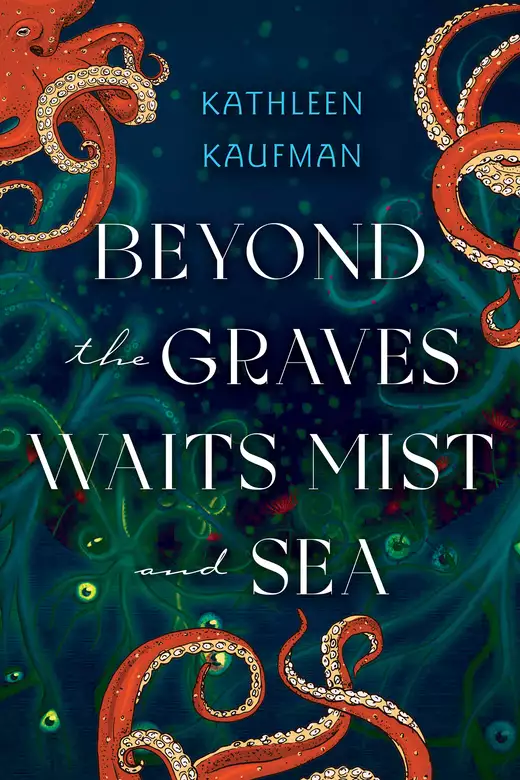
A marine biologist’s search for an undiscovered species of octopus leads her to an isolated island where long-buried memories rise like specters from the deep, intent on dragging her darkest truths to the surface…
From the author of The Entirely True Story of the Fantastical Mesmerist Nora Grey, this hauntingly evocative novel is perfect for fans of Emilia Hart’s The Sirens, Sarah Penner’s The Amalfi Curse, and Adrienne Young.
Twenty nautical miles off the coast of Boston lies Bell Island, shrouded in fog, mystery, and legend. Historically a refuge for women fleeing the hysteria of the Salem Witch Trials in the 1600s and a way station on the Underground Railroad for runaway slaves in the 1800s, the island is isolated and rumored to be haunted by spirits and . . . other things.
It is to Bell Island that microbial biologist Harper Hafdóttir ventures in search of evidence of a new species of octopus, Thalassa, possibly lurking below the swirling water’s surface. Along with her equipment, and her luggage, Harper carries with her the burden of past trauma and vivid, recurring dreams.
Swept up in unexplained phenomena ranging from increased seismic activity and a boat-capsizing rogue wave to encounters with island creatures that defy explanation, Harper looks to the island’s venerated if mysterious mayor for answers. Lady Loreana Bell comes from a single matriarchal line that has ruled the island for 400 years—and seems to have been expecting Harper’s arrival.
It is within the walls of Bell Manor—its gothic grandeur matched only by the intensity of Harper’s deja vu—that she discovers the 1690 journal of a young woman in the grips of a religious cult. As a tsunami threatens the island, Harper finds herself on the verge of a revelation that will ultimately unlock the mystery of her haunted dreams and disclose her true purpose on Bell Island . . .
Release date:
September 29, 2026
Publisher:
Kensington Books
Print pages:
384
* BingeBooks earns revenue from qualifying purchases as an Amazon Associate as well as from other retail partners.
In the summer of 2023, I had the unique opportunity to work and live in Vestmannaeyjar, Iceland. It was the opportunity of a lifetime to volunteer with the Icelandic Orca Project assisting graduate students studying everything from orca and pilot whale interactions to the mating calls of North Atlantic herring.
I lived with the other volunteers in a small flat, walked to the research center in the morning, and spent my days on a research boat looking for orcas, pilot whales, and humpbacks. Other days, I would accompany the students to the lookout on a cliff’s edge, scoping the horizon with high-powered binoculars for any sea creatures that breached the surface.
At night, I would gather around our little table for dinner with my colleagues, and later walk to the Vestmannaeyjar tavern in the light of the midnight sun, and enjoy an ale and the company of the islanders. Later still, Polly, the Norwegian Forest cat that came and went as she pleased, would curl up beside me and sleep while the sky darkened to a mild twilight in lieu of night.
It was at the tavern that I first met Margrét. She was an ageless woman who could have been fifty or one hundred. She had lived her life on Vestmannaeyjar as a fisherwoman. Her face and neck were lined with salt and time, her eyes were bright blue and saw everything. It was Margrét who introduced me to the huldufólk.
Vestmannaeyjar is a volcanic archipelago off the southern coast of Iceland. It is part of the Westman Islands, a series of islands that formed from underwater volcanic eruptions. Vestmannaeyjar itself has changed shape and size due to the Eldfell eruption in 1973. It is a landscape of vast green fields, sharp rock drop-offs, and otherworldly lava fields. Its beaches are full of black grainy sand, and lupines and cotton grass line the hillsides. It’s magic.
It was over an ale one evening that Margrét warned me about hiking in the lava fields. The hidden people live there, she said. They don’t want to be seen, especially by a mainlander, you don’t want to anger them. I laughed. I had heard stories about the elves of Icelandic folklore, and maintain that the Jolakötterin, or the Yule cat, is the best winter holiday story. Margrét’s bright eyes narrowed. I’m serious, she said, keep off the lava fields, stay to the path if you must go at all.
This is how I found myself barely keeping pace with Margrét one early morning when the sun would have just been peeking up over the horizon if it had gone down at all. Margrét could see that my curiosity was just dangerous enough that she would have to show me herself what it was I was to avoid. The lava fields are an alien terrain; a mossy film covers the black rock, porous caverns wind their way through and under the landscape. A dirt path leads you through the maze and if you look closely enough, you can see little offerings that the locals have made to the huldufólk: a bit of sweet bread, a bit of beach glass, an earthen cup filled with a thimble of mead.
As we reached a break in the path, Margrét turned to me and again warned me that I was not to come back to this place on my own, only with her. I nodded. She led me on a narrow line to a series of caves carved by time and wind. Go ahead, she said, go in and see if they’ll speak to you, listen.
I did not meet the huldufólk that day. But as I sat in the darkened space, with only the sound of the distant water and the wind, I felt the immensity of existence. I felt a crushing sense of the size of the universe and simultaneously how miraculous it was that specks of stardust like myself, and Margrét, and Polly the cat could exist alongside eternity.
I’ve never quite recovered.
Maybe that is what the huldufólk are, a reminder that there are things more ancient than is dreamt of in our philosophy.
The sailors and fisherman at the notorious Puffin Bar would add to Margrét’s stories, warning me of the trolls that walk the waterfront. As large as a person, with similar features, the only way to tell their Fae ancestry is by the abnormal size of their hands and their sharpened teeth.
They told me it was good that a cat had become my guardian. According to folklore, cats walk the line between the Fae realm and the human world. They can scare away a troll and stop the huldufólk from playing tricks on visitors, like rapping on windowpanes or blowing out candles.
For a storyteller, Vestmannaeyjar is a feast of folklore and experience. The island is filled with Norwegian Forest cats that do not appear to belong to anyone in particular. They roam where they like, passing back and forth between the veil as they please. The lava fields are home to elves and Fae. The trolls walk the black stone beaches, searching for prey. The people are born of ice and fire, generous of spirit and protective of their home.
Bell Island is my ode to Vestmannaeyjar, a magical place that exists just beyond the mist of the known world. It is a place where one could leave the world and its minutiae behind and lose themselves in the eternity of the midnight sun, and later, the pulsing aurora. We exist in a plane that never seems to stop. The business of everyday living is exhausting, and forces our perspective to cave in on itself. I invite you to join me on Bell Island for this tale, and allow yourself to sit in the darkened quiet and revel in the miracle of stardust.
“It’s a death party … get it?”
Harper buried her head in her hands, her headache only growing in intensity.
“Yes, I get it. And if they didn’t already have an opinion of me, they do now.”
“Relax. All things Victorian are new again, it’ll be fun. I’m also handling the food, and Cesar is going to bring his truck, but get this—only black food, black everything.” Carli looked at Harper expectantly, a half grin on her lips.
“I thought death parties served only white food?” Harper rubbed her eyes and sat back, envisioning all-black tacos and tortas.
“Traditionally yes, but white doesn’t feel near spooky enough. Besides, I’m the only historian in your crowd. Your friends can lecture me on the mating habits of flounder all day, but they don’t know Victorian customs from their elbow.”
Carli looked very satisfied. The invites had already been sent, the party was happening whether Harper approved or not, and truth be told, she did very much approve. She was leaving the loft in Jamaica Plain that she’d shared with Carli through five years of grad school at Okeanos Marine Research Center at Boston Scientific Institute. Harper would board the ferry bound for Bell Island on Monday. The research fellowship had happened fast, so fast Harper had hardly had time to think it through. It had been a long shot; the project, funded through Okeanos, would be the closing note to her PhD, the last study she needed for her thesis. And she was leaving on Monday.
“Alright, so I know you don’t like surprise parties, which is why you get to know about it now. You have exactly five hours to come up with a costume. Everything is set, you just have to enjoy yourself and let everyone drip envy all over you.”
Harper snorted in response. “More like they’ll be buttering you up for my room. You have another year on the lease, you’ll have roommates lining up. You can make some bank on this if you play it right.”
“I admit there are ulterior motives, but I’m in no hurry really. You’re the only roommate for me, although I can charge double what you pay if you keep your trap shut.”
“Consider it sealed.” Harper sighed and stared out the industrial-size floor-to-ceiling windows that overlooked Stony Brook Park. She had met Carli in the dorms junior year at BSI, she was the human equivalent of an electric shock. Her head was in a thousand different places at once, a thousand ideas always brewing. Her thesis on Victorian death rituals had overtaken the loft, and Harper didn’t mind a bit—the black lace curtains, the ornate flower arrangements that showed up from time to time, the elaborate vintage furniture that was patched together with duct tape and hope, all scavenged from estate sales and front yard throwaways. Harper suddenly realized how much she would miss it. She kept her own space austere, blank. You could call it minimalist, but in truth it wasn’t that. Harper had lived her life with a sense of waiting for the next thing to happen, compulsively never allowing herself to set down roots, or create a space for herself. She was sure there was a psychological reason, but that was a science she had little interest in. Her heart was lost to all things that lurked far below the water’s surface.
“I’m off! Text me if there’s anything you need—otherwise, get creative!”
With that, Carli was gone, and Harper was alone in the loft. A wave of nerves washed over her and she realized that she was terrified. Six-month minimum with potential for more. Bell Island, where her mother was born, twenty nautical miles off the Boston coast, ferry in and ferry out—no other way on or off the island. She would be heading a skeleton crew of a research team to study a thing that could only be described as impossible. Her chances of success were minimal, and extremely likely to be panned even if the research showed her what she hoped to see. It was either brilliant or career suicide. Harper had been at BSI since she was eighteen, the same age that her mother had been when she left Bell Island for the University of Iceland. And like her mother, work study and scholarships pulled Harper through the undergrad years, and cephalopods had taken her the rest of the way. She was supposed to have finished her PhD in microbial biology a year ago, but she’d stalled. Her advisor had told her she had one last chance before the current grant she was riding would be pulled. So this was it—the one last chance. And there was a certain irony in returning to an island that her own mother had left as soon as she was able. A nagging whisper in the very back of her brain reminded Harper that it was also where she’d lost her parents all those years before. She pushed it down, silencing the memory. She focused her thoughts on the fact that she’d be living on an island that had made Carli, a few months from finishing her own anthropology PhD, squeal.
“Bell Island? Lady Loreana Bell? Bell Fucking Island???” Carli had screamed when Harper had read her the email from Okeanos. “Do you have any idea what you’re getting into?” Harper had only patchy memories of stories her mother had told her when she was little. Stories that were made for a child, more fairy tale than reality.
Carli could hardly contain herself as she gushed. “The whole island is thought to be haunted for one, but the more likely and historically accurate fact is that Bell Manor was built by spiritualists, who have an actual séance room in the manor, like real-life séances, that they say is still used today.”
Harper swallowed a laugh. “That I will never see from the lab. They can summon all the spirits they like.”
Carli gave her a look of mock frustration. “Regardless, it’s wild. Who has an actual séance room?”
“The Magic Lab out in Roslindale, remember we went to that bachelorette thing last year? Very spooky.” Harper sat back, greatly amused at Carli’s excitement.
“I’m talking real séance room, not one decorated with burlesque Ouija boards. Plus, you have to appreciate the history of the place. It was a way station in the 1840s and ’50s for the Underground Railroad, like escaping slaves from the south would hide away on ships in crates and boxes and shit, and end up on Bell Island, where they’d catch a freight to England, or some people say they just stayed on the island and never left and the whole place is peopled by the descendants of slaves. But not just that, other people escaped to Bell Island too.”
“That is actually interesting. And I’m certainly glad that Bell Island landed on the right side of history,” Harper said sincerely. Her mother hadn’t talked of Bell Island much, at least when it came to her childhood on the island. As Harper had grown older, she’d only heard her parents discuss the research they were conducting off Bell’s coast. Her mother had presented a very clinical view of her hometown. Harper felt her mind wandering, searching for what she had sliced out of her patchwork memories. Carli, who was about to burst from excitement, broke her reverie.
“Not just that but all the way back to the Salem witch trials. There’s even a story of a woman who was accused of murdering her husband in, like, 1820 who disappeared right out of the jail cell and then later, some sailor said she was on Bell Island, but Lady Loreana Bell refused to let the police search for her. There’s this super epic story about her standing up on the rocks outside of the harbor at like ninety years old all ‘You will not pass!’ like Gandalf or some shit.”
“Take a breath.” Harper had laughed. “I’m living in the village, not at the haunted manor, with three other strangers. I will be on a boat, listening to ultrasound waves at coordinates that were documented fifteen years ago and taking water samples for DNA analysis. From what I hear, the locals really hate this, and I will likely not be welcome at the one, yes, one pub on the island or at the one, yes, one, movie theater that shows one, yes, one movie. That is one thing my mother talked about—the movie theater showed Die Hard for a solid year.”
“Your mother had to have told you more than that about Bell, at least a little, right?” Carli grinned uncertainly. She knew the uneven terrain that was Harper’s memories.
“I was really young. I don’t remember much beyond a few stories and knowing intellectually that was where she was from. She had pictures, I remember those, but they didn’t look dramatically different from the island I grew up on.”
“There is absolutely nothing you can do to make this any less amazing than it actually is,” Carli said with undeterred enthusiasm.
That had been Tuesday, and every day since she had been planting new and interesting facts about Bell Island for Harper, in hopes that her nerves would turn to excitement. Now it was Saturday and evidently there was a going away/Victorian death party happening in just a few hours. Harper pulled herself off the couch and went to search for a costume. How was she most likely to depart this world? Carli’s macabre sense of humor was the opposite of Harper’s dry, and even cynical outlook; she would miss it. Funny how even from the moment she opened the acceptance note, she felt like this was a final goodbye. Not a temporary assignment, not a footnote, but a final note, a closure. It was her nerves, she thought distractedly while looking around her space for anything that could be turned into an impromptu costume. By all logic, she would be back to defend her thesis and by this time next year—bam, doctored and done. But this felt different, it felt big. She’d told Carli as much, and she’d leaned in and whispered, “Maybe you’ll run off to Bell Island and become one of the lost island spirits, like The Tempest. …”
Harper had laughed. “That was a shipwreck for one, and you know how I feel about small towns.”
“Yep, Shirley Jackson creepy. Your mother must have told you something about growing up there? School? Trouble she got in? And your parents were there for research together, right? On Bell for about a year?” Carli had asked.
“They went back and forth from the research center on Vestmannaeyjar to Bell for a couple of years. I remember their research more than anything about the island itself. I just don’t remember a lot of details. She might have shared more, but I was young, and …” Harper trailed off, the gaps in her memory blocking any memories that might exist.
Carli had nodded empathetically. “I know, I get it, I don’t mean to push.”
Harper shook her head. “You’re not, really it’s okay, I just don’t remember much. I know I was in boarding school in Grindavik while they were gone, and then after everything happened. … But when I had the chance, I don’t think I ever asked, I was a kid.” Harper had found herself lost in the fog of her Icelandic childhood, a faint memory of the chill of the air and the ferry through the Westman Islands.
But now Harper found herself thinking back on that conversation. Even though she would be realistically a ferry ride away from Boston, there was a finality to this that she could not explain. She could probably even get her room in the loft back at the end of all this, but a persistent nagging at the back of her consciousness kept whispering that this was the last time she’d live here, the last time she’d live in Boston proper at all. She had no one to say goodbye to, just Carli and the others from the bio department who were theoretically coming to this party tonight. Her parents had been gone for years now. Harper had been an orphan for all of her adult life, no ties and no complications. It was exciting, she supposed, yes, exciting, not terrifying. How was she most likely to depart this world? Harper sat on her platform bed with its plain white comforter and looked around her space. The only indulgence she had allowed herself in terms of décor were the cephalopod models and stuffies that lined a single shelf, keeping space next to academic books and notebooks.
“It’s not unlikely,” Harper whispered to herself, and got to work.
“I’m a peanut. C’mon, you get it, right? ’Cause I’m allergic to peanuts?” Art laughed and held his arms out. The brown paper grocery bags that he had taped around his midsection and legs looked more like he was likely to exit this world from a trash compacting accident.
Harper snorted her drink into her nose at his expression. “I can see it now, and to think I was afraid my costume would be too obscure.” She spun around, the octopus models and stuffies that she’d attached to fishing line and hung from her shoulders and arms sailing around her.
“You predict you’ll be eaten by the kraken?” Professor Kallen said with a smile on his face. He had been her advisor for most of her PhD now, and was the one who had recommended her for the Bell project.
“It’s not unlikely. After all, isn’t that the point of all this anyhow?” Harper replied with mock curtness. “And what may I ask is your predicted fate? You look exactly like you do every day.”
Professor Kallen held a glass up in a toast. “I didn’t need a costume to bore everyone, including myself, to death. Salut!”
“Salut!” a chorus of voices yelled in response. Despite herself, Harper was having fun. The loft was a true Boston miracle, the odds of finding this space and it having affordable rent was an actual miracle. It was built for parties—exposed beams and pipes, brick walls, factory-high ceilings, and floor-to-ceiling windows that were a beast to clean but gave the space a Jonathon Larson Rent kind of aesthetic. The room was packed, the bio department and a handful of Carli’s anthropology friends in attendance. As Carli predicted, there was a fair amount of envy dripping but also trepidation. Profession Kallen had pulled Harper aside with a look of worry on his face.
“Harper, I know I pushed you into applying for this program. And I know your parents were responsible for the original research that started the project on Bell Island, which makes you a perfect candidate for this. But, are you sure?” He paused, looking for the words. “I mean, I know you grew up on a tiny island, maybe you’re acclimated for it, but Bell is very isolated, and six months is no joke. You’ve done your homework on the place, I assume?”
Harper nodded. “Vestmannaeyjar. That was the tiny island. And yes, I’ve done my research. And what you don’t know is that my mother was actually a native Bell Islander. She survived, so will I. Maybe there’s some sort of legacy status that will earn me island street cred.” Harper grinned and sipped her drink. “Carli is flipping out, so I know it’s haunted, and a place for escapees from all walks of life. I know it’s super tight-knit and I cannot expect a warm welcome.”
“To put it lightly.” The professor looked around checking for eavesdroppers. “I didn’t know your mother grew up there, please pardon my ignorance.” Harper waved away his stricken expression. A small wave of relief washed over his face and he continued. “Read the field reports from the team fifteen years ago, the one whose research you’re picking up.”
Harper frowned. “I’ve scoured them. I had to for the application.”
“Not the research—I know you’ve probably memorized all the science. I’m talking the personal notes. They’ll be an addendum to the original field reports. They’re, um, interesting. The locals were not happy to have researchers on their island, and the skipper for the team, a Florence Manning, I believe her name was, was actually assaulted.”
Harper sucked her breath in. “Not …”
“No, not that kind of assault, thank God, but roughed up. Evidently the local sailors took aim with a female boat skipper. She left the project early. You should also take a look at the records of the hurricane that knocked the whole project off course. Hurricane Audra. Anyhow, I don’t say this to scare you, but just prepare yourself.”
Harper had begun to hear her own heart pounding in her ears. “I lost my parents in that hurricane. It did a lot more than just ruin a research project.”
“Of course, I’m so sorry, I don’t mean anything …” He had flushed and looked genuinely horrified.
Harper had waved his apology away. “Please, don’t apologize. And don’t worry about me. I can handle myself.”
He’d nodded and wandered off, a glass of gin in his hand. Harper had taken a shot of something overly sweet with her research assistants, twins who were dressed in matching overalls with matching train tracks painted on the front. They’d excitedly told Harper they were leaving for a research project on an Omaha farm near a train track, studying soil levels or some such. Evidently the leading cause of death in this nothing town was death by train. Harper was beginning to count her blessings. Hostile villagers sounded better than killer trains.
Harper was standing by the window surveying the room when Carli whispered in her ear. “Don’t hate me.”
“Why would I hate you?” Harper wrapped her arm around her waist. The liquor was in her head; it didn’t take much, but the anxiety balloon that followed her in everyday life was now floating ten feet above her head and she felt light as air.
“And what possessed you to do that?” Harper closed her eyes and the room shifted slightly to the right.
“It was super awkward not to for one, but also if you really aren’t coming back to Boston, you shouldn’t leave it like this.” Carli kissed her cheek, breath smelling of bubblegum and sugar, and disappeared.
And there she was.
Leia.
She had just entered and her short hair was worn natural and close to her skull. Her skin caught the light from the hanging Edison bulbs, making her a perfect shade of caramel. Harper caught her breath, she always did when Leia entered a room. She was wearing a long black dress with blunted syringes hanging from the sleeves. Boston University School of Medicine done, Leia was due to start her residency in the fall. They’d have had to break up anyway; Leia would have been assigned somewhere else, and Harper wouldn’t have been able to follow and even if she did, how totally pathetic was that? And they’d have broken up anyway, Harper repeated to herself as if saying it over and over made it more true. It was good that Harper did it when she did, even though at the time it had nothing to do with residencies or Bell Island, it was just stupid fear and never knowing if she’d be able to hold it together long enough to be who she wanted to be when they were together. And now she was here standing in the doorway and Harper was frozen in place, grateful that the rambling monologue was raging only in her head and not coming out of her mouth.
Leia saw her and smiled a mouthful of perfect white teeth. As she crossed the room, Harper saw looks follow her. Her team had known about the breakup; they’d put up with Harper slamming cabinet doors until it had subsided into crying because the coffeepot was empty and her chair had been moved. Now they were grateful that Harper was back to being quiet and moody—in other words, normal.
“Hey.” Leia was standing right there, inches from her, a glass of red wine in her hands. “You predict you will die by octopus attack?”
“Octopus only attack when defending themselves, so I hope to join in their fight for justice.” Harper let herself smile. “And you are afraid that you will be subject to a thousand vaccinations and perish from injection-site swelling.”
“Exactly.” Leia raised her glass and as Harper clinked her cup to her, their fingers lightly touched.
“Glad you came,” Harper said.
“I’m happy for you,” Leia replied, her eyes never breaking contact. She was good at dispelling all the nonsense small talk.
“I’m scared,” Harper said through a lump in her throat.
“That’s okay. What you’re doing is scary.” Leia leaned in until her lips were grazing Harper’s ear. “You are more than you ever give yourself credit for.”
With that, she turned and sauntered off into the crowd. Harper slumped onto the high-backed faux Victorian fainting chaise. “Jesus,” she muttered.
“Nope,” replied Carli, who had appeared from seemingly nowhere. “Just me, but you did good.”
“What was I thinking?” Harper whispered. “She’s perfect.”
“Probably,” Carli said, sitting next to her. “But she won’t always be, and neither will you. Personally, I’m hoping for a Before Sunset magical reunion after you return from Bell Island and after the good Dr. Leia becomes the leading thoracic surgeon in Philly, or Maine, or LA, or wherever you meet again.”
“I’m going to miss the hell out of you.” Harper wrapped her arms around her friend.
“I know.” Carli leaned her head on Harper’s shoulder.
A surge of movement on the other side of the room broke their brief reverie.
“Jesus! What the fuck??” The crowd spilled back, nearly knocking over the table of black bean tortas with black Hungarian peppers. Effectively spooky as promised but far too spicy for Harper’s taste.
“What the actual hell is that?” Art, wrapped in his paper bag peanuts, was staring at something on the window, a small crowd forming behind him.
Harper ran over, catching her balance as she stood. Stuck to the glass from the outside was an alien creature about the size of a quarter, its gelatinous body pulsing against the glass, impotent stingers hung from its periphery; inside the milky body that seemed to emanate with ghostly light, four opaque pods swelled and deflated in a sort of controlled panic. Harper opened the sliding door to the small patio as the party stared at her and the creature with amused horror. Harper regarded the visitor, then called through the open door.
“Get me a towel,” she called, keeping her eyes on the creature. Someone placed a hand towel from the drink table in her outstretched hand. Harper could feel the creature struggling for breath, could feel its fear and disorientation. The eyes on the other side of the glass faded away, the stars overhead went black. Of all the universe, it was only Harper and this fearful monster. With borrowed certainty, Harper reached out and, making sure to keep her fingers on the slick jelly of its body, pulled the creature off the glass and onto the towel in her waiting hand. Its energy changed, it was startled, and she felt a pulse emanate through her body even though the stingers lay dormant on the towel’s surface.
“Craspedacusta sowerbii. Freshwater jellyfish,” she whispered. “Where did you come from? I bet a bird wanted you for their dinner and you wiggled your way out of their beak.”
The crowd had largely gone back to their previous activities, only a few crept closer to peer at the creature in her hand.
“You’re seriously creepy, Harper,” Art said with a hint of admiration in his voice.
“I try.” Harper smiled, staring at the creature. “You know, for a bunch of biologists, I expected a bit less squeamishness.”
“I study herring. Herring. Herring without venom and tentacles,” Art said, leaning closer.
On Harper’s right, Leia’s voice drifted on the air; the creature seemed . . .
We hope you are enjoying the book so far. To continue reading...

 Please log in to recommend or discuss...
