The beginning isn’t always obvious or easy to pinpoint. Because after, when we reach back into the past, we find things had happened before the beginning. Maybe every story should come with this warning about its beginning.
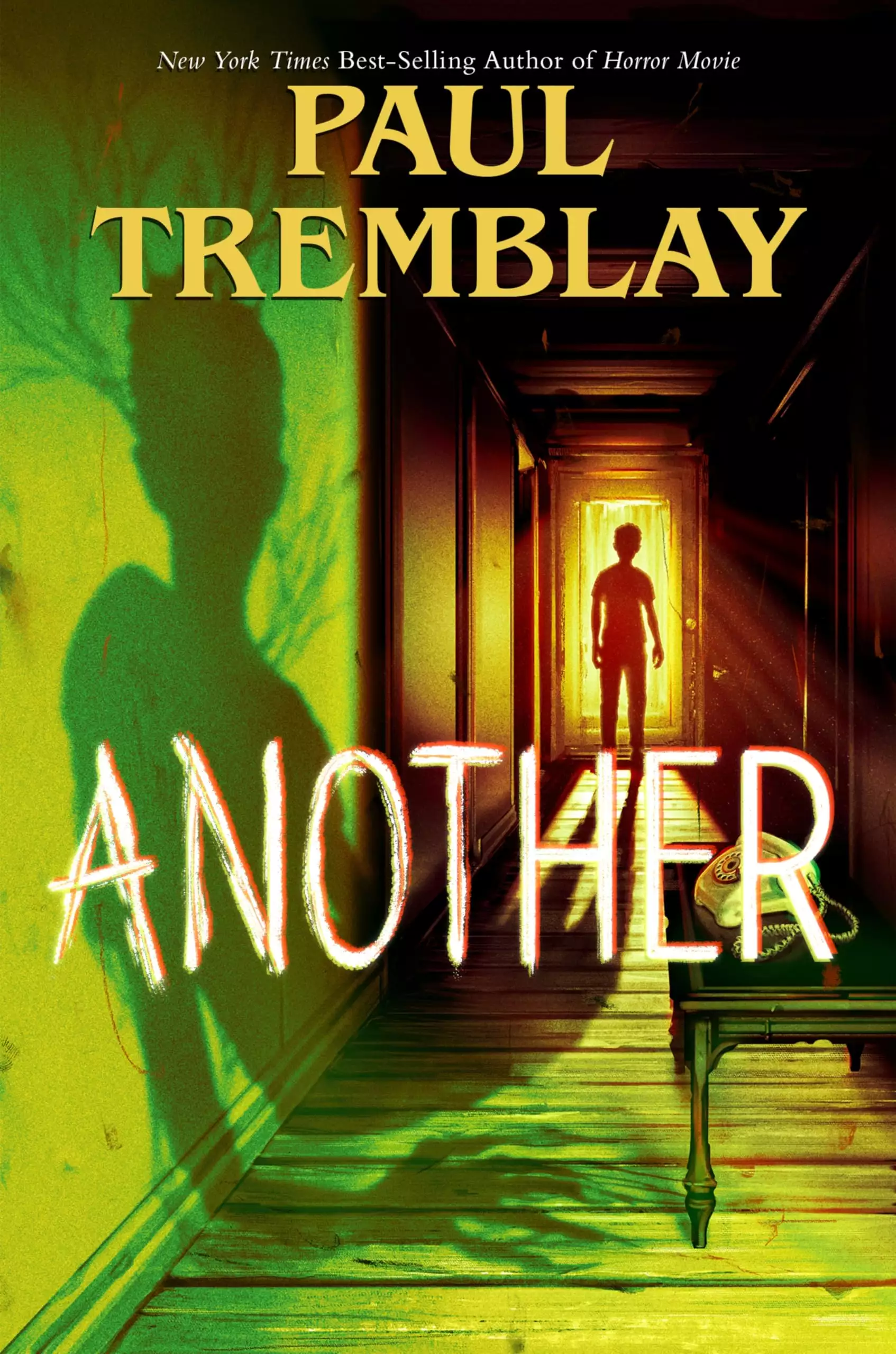
But let’s say this story began with an antique phone and an unexpected call.
“What the heck is that thing?” Casey Wilson asked.
He had come downstairs from his bedroom to grab a fistful of pretzel sticks or maybe Goldfish crackers and found his parents in the kitchen oohing and aahing over some weird-looking hunk of plastic with a curled, squiggly cord attached. Mom had bought it at an antiques store.
Dad laughed and asked Casey to guess what it was.
“Ummm—” He spied a handle on top that looked like the call symbol on his cell phone. “Is it an old-timey phone or something?” Casey asked, then opened and closed his fist three times.
“Correct!” Mom shouted. “It’s a rotary phone.”
It was an off-white, eggshell color, and it had the look of something that was squishy even though it wasn’t. Mom and Dad pointed out the phone’s parts to twelve-year-old Casey. The base was squat and rounded, reminding him of an elephant’s body without the legs and head and trunk. Sitting atop the base and connected by a curlicue cord was the handheld receiver. At each end of the receiver were two circular cups that held speakers, one for listening and one for talking into. Casey was able to figure out that part of it.
The part he didn’t know what to do with was the phone’s dial. There weren’t any buttons to push. Instead, there was a plastic disk attached to the front of the base. Near the outer rim of the disk were small, evenly spaced, circular holes. The holes corresponded with the numbers 0 through 9 that were printed on the phone’s base. That disk thing with the holes was the dial.
Mom explained that to call a number, first you had to lift the receiver off the base and listen for a droning sound she called a dial tone, then you had to put your fingertip into the disk hole next to the first number of the phone number, then with your finger rotate the dial until you hit the “finger stopper thingy” (that was Dad’s not-helpful addition to the instructions). When you removed your finger, the dial spun back into its original starting position, and you had to do all that all over again for the next number, and the next, until you dialed all ten digits.
Much to everyone’s amusement—Dad’s especially—it took Casey four tries before he successfully dialed Mom’s cell phone number correctly. But the weird old phone worked somehow.
After Casey was finished with dialing, his fingers felt dusty and gritty. He jokingly asked if anyone had ever cleaned the thing in this century.
About a month later, on the Wednesday morning of April vacation week, the antique house phone rang, which it shouldn’t have, because the ringer switch at the rear of the base had been turned off, as far as Casey knew.
When Casey had asked Mom and Dad why the weird old phone was turned off, they’d told him the only calls the house phone got were spam or robocalls. Not robot calls, unfortunately. Who wouldn’t want to talk to a robot? When Casey had asked his parents why bother having the weird house phone if we leave the ringer off, they’d told him the phone was only for emergencies. When Casey had asked what kind of emergencies, his eyebrow and upper lip had twitched, and his parents sensed Casey was imagining the worst kinds of emergencies, and they’d told him
it was nothing to worry about, but if they lost power during a rainstorm, or a cell phone tower went down (Casey had imagined red skies and giant metal towers bending, folding, and crashing to the earth), they could still make a call because that phone didn’t need electricity or cell service to work. When Casey had asked who we would call, then, they’d changed the subject.
The weird old phone sat like a gargoyle on a small end table between two plush chairs in a section of the kitchen Mom and Dad called the sitting space. Casey didn’t know why everything had to have a name. The kitchen and dining room formed an L, with the sitting space as the L’s elbow.
Mom used to go to an office every day, but since the start of the pandemic, she had worked from home, hunched over a small laptop at the dining room table. She wore chunky headphones during meetings, and when it was her turn to talk, she talked loudly. Casey didn’t think she knew how loud she was.
The other unusual part of the weird old phone ringing at all was that it sounded wrong, or broken. The ring wobbled, changed from low to high volume, with spaces growing between the trills. It was like the phone was sick, somehow, from disuse. Or maybe it had always sounded like that. Either way, Casey hated the ring, and his stomach got that nervous feeling he recognized but would never get used to. Mom answered after the third ring.
“Hello?”
Casey was in the TV room at the other end of the house watching Demon Slayer. (Naruto was his other favorite anime.) Casey pressed pause and walked down the hall to the kitchen and listened to Mom’s brief one-sided phone conversation.
“Yes, this is Casey’s mom.”
“Can I ask who’s calling?”
“Well, I think so.”
“Let me ask him.”
Mom cupped a hand over the mouthpiece, quickly rubbed her nose as though it was itchy, and asked Casey, “Do you have anything going on this afternoon?”
Casey, who was now leaning on the kitchen counter, shook his head. Mom didn’t have to ask. She knew he didn’t have anything going on.
Mom returned to the phone and said, “Yeah, he’s free
e you later this afternoon, then.”
“Yes, goodbye.”
Mom hung up, turned the phone around, and toggled a small black switch back and forth while mumbling, “I thought we’d turned it off.”
Casey asked, “Who was that?”
Mom placed the phone back in its spot, passed her hand along the top of the phone’s table, rubbed her fingers together, and muttered a complaint about pollen being everywhere.
ey, yeah, hi, sweetie.”
“Who called?”
Mom tilted her head and didn’t say anything for a beat, as though she had already forgotten who was on the phone, then said, “A father of one of your friends. He wanted to know if his son could come over later.”
“Oh.” Casey cleared his throat once, then twice. He didn’t have to, but the urge to do so was overwhelming. After a third throat clearing, he added, “But who?”
“Um, wow.” Mom laughed at herself. “I don’t know. I don’t think he said his name. It was a little hard to hear him. The line was, um, staticky.”
Mom rubbed her itchy nose, then laughed that everything-will-be-fine laugh of hers and wandered back over to her workspace.
Upstairs, Dad’s heavy feet—the only part of him that was heavy, as he was as tall and thin as a telephone pole—clomped from their bedroom to the top of the stairs. He worked from home, too, squished into a cramped desk huddled in a corner of Casey’s parents’ bedroom.
Dad called down, “Who was that?”
Casey thought Dad liked the way his voice sounded amplified in the stairwell.
Mom said, “A friend of Casey’s.”
Casey spent the rest of the late morning and early afternoon drawing and doodling anime characters in his sketchbook while trying to figure out who would be coming over his house in the middle of April vacation. Was this a setup to a cruel joke? Who had or would use his landline phone number? No one had messaged Casey’s cell phone. Mom and Dad had bought him his first cell phone when he had started sixth grade in September. He had been the last of his classmates to get one.
Casey checked the social media apps his parents had once made him delete. Not that he was expecting anyone to message him. The messages from friends had stopped shortly after the Zoom Incident. That was what Dad called it, even though his teachers used Google Meet and not Zoom.
At the start of his sixth-grade year, Casey’s school had adopted a hybrid learning calendar in response to the ongoing pandemic. On Mondays and Thursdays, Casey went to school with half his classmates, and the other half were online. On Tuesdays and Fridays, he was home and online while the other half of his classmates went to school in person. On Wednesdays, everyone was home and online.
The Zoom Incident had happened on the Friday before Halloween, which somehow made it worse because his favorite holiday was so close. Casey couldn’t help but feel like if he’d just gotten through that Friday, the incident might not have occurred.
His parents and teachers treated what had happened that Friday as the beginning of “his troubles” (another Dad phrase), but this was yet another story that started before the beginning.
Back when the pandemic first struck, the switch to online learning the spring of his fifth-grade year had been okay at first. The teachers hadn’t expected much in terms of schoolwork from the students, and meeting online was sort of fun, even exciting initially. Yeah, a big scary thing was happening, but it was like everyone in the world was getting snow days off at home. But that fun snow-day feeling went away quickly and was replaced with dread.
In the moments before logging into an online class, Casey’s heart pounded in his ears and his mouth went dry and he fantasized about shutting off the laptop or taking out its battery or telling his parents that his teachers canceled classes for the day. Casey left his camera off until his teacher asked that all students turn their cameras on. He didn’t like looking at himself, and he was sure his classmates were staring at him and smiling mean smiles.
Then the summer came, and despite still being stuck at home, most of the time he could do things outside, and his parents talked about bubbles and pods of people who were allowed to visit and play. Casey’s older sister, Ally, who was getting ready to go to college, spent more time with him than usual. The usual Ally stayed in her room with the door shut or ate at the kitchen counter with her earbuds in, and if you tried to talk to her, she’d give you a look that could laser beam through a wall. But that summer Ally took Casey for rides around town or to get ice cream, and she told him which middle school teachers were her favorites and which ones she hoped Casey didn’t get. When Ally was home, she let Casey into her room and they watched One Punch Man on her laptop.
The summer ended, and September came in like a big storm cloud. Ally was hundreds of miles away at college. Casey was going to the
middle school in person two days a week. He’d never minded going to school before this year, but now he dreaded it almost as much as he dreaded online learning.
Everyone seemed to have grown bigger and older than he had. The school was big, too, and the schedule of bells and when a class started or ended and what was considered the passing time between classes was confusing. The fear of being late or being in the wrong class was almost as bad as his fear of catching and bringing home the virus.
Casey didn’t think any of his friends and classmates felt the same way, the boys especially. Most of them made jokes about everything. Those boys pulled down their masks and opened their mouths for “whale breaths” (as Dillon called them), and they fake coughed and sneezed on kids when the teacher wasn’t looking, which was most of the time because the teacher had to make sure the kids at home were projected onto the Smart Board screen at the front of the classroom.
Sometime that fall, Casey felt the first itches, the first twinges of his facial tics, starting with his mouth. He had a blue hospital mask over his mouth and nose, but he was convinced that people could see the corner of his mouth twitch up, like an eager student raising their hand. Once, while his lip was twitching, a teacher asked Casey what he was chewing and said, “There is no food or gum allowed, especially now,” and his stressing of the word now made the twitching worse.
On the Zoom Incident Friday, Casey’s English class was wrapping up their Halloween unit. Earlier that week they had read, discussed, and written about two old stories by Shirley Jackson, “Charles” and “The Lottery.” Many of his classmates had complained the stories weren’t scary, and they had wanted real ghost stories like the ones they watched on YouTube.
For that Friday class, everyone had been assigned to read three stanzas from Edgar Allan Poe’s poem “The Raven.” Because it was Friday, it meant that Casey was home and online.
The order of readers was alphabetical. Casey’s turn to read wouldn’t be until the very end because of his last name, Wilson. His nervousness and anxiety were at a boil by the time it was his turn to fill the big screen in the classroom and read. He sat at the small desk in his bedroom, and maybe the worst part was that his room no longer felt like a safe place. ...
We hope you are enjoying the book so far. To continue reading...
Copyright © 2026 All Rights Reserved

 Please log in to recommend or discuss...
