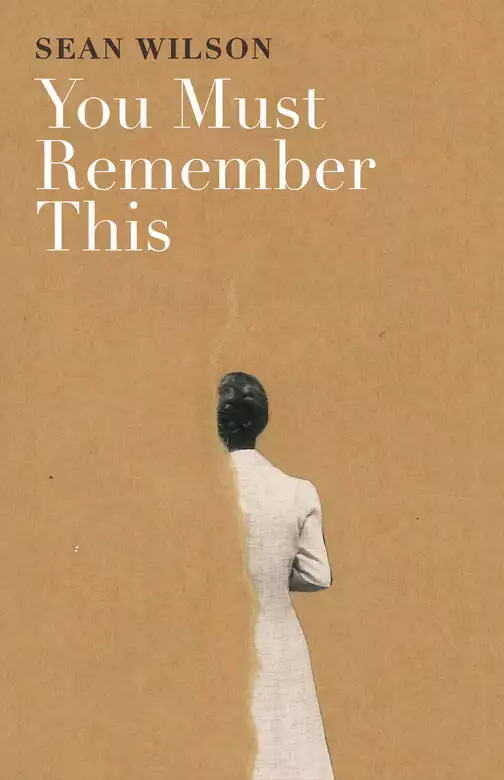
Grace can't settle. She can't shake the feeling that someone is missing. You Must Remember This is an eloquent jumble of a family story, as experienced by Grace, an elderly woman with dementia trying to get her moorings in a worsening storm. It contemplates the perils of remembering and forgetting, making your own way in the world and how we seem bound to repeat the patterns of the past. Most profoundly it's about sensing what it's like to live on while your faculties dim, and about finding peace.
Release date:
January 28, 2025
Publisher:
Affirm Press
Print pages:
176
* BingeBooks earns revenue from qualifying purchases as an Amazon Associate as well as from other retail partners.
They look like torches. The lights on the horizon seem to spring from the ground, spread across the blackness and rush past her. It’s as if children, hand in hand, running at an impossible speed, are holding them out to light their way.
The lights remind her of the torches they used to keep in the back shed at the house, the ones she would keep stocked with batteries that were thick as thumbs. She would search for them only when the power went down, fumbling her way out to the shed in the dark, searching for the padlock in the moonlight.
The lights are so bright, Grace has to squint to stop her eyes from aching.
She remembers a game. In her mind, she sees a boy standing beside a brick letterbox on a suburban street. The boy is holding a torch, swinging it wildly, left and right, up and down. The torch is a beam, a searchlight. The boy is moving the light over tree after tree, bush after bush, and his other hand is on the letterbox, palm flat to the brick.
In the memory it is dusk and the sea breeze is mixing with the heat still rising from the bitumen, weaving hot and cold in the air. There is a base level of sound, wide and low as grass. It is the chirping of cicadas. Deafening, maddening if you concentrate on it for too long. The sound is interrupted by the giggles of the other children hiding somewhere behind gum trees and lantana bushes and then: a shout. The boy is calling out the word they’ve been waiting for, a call that comes when the torch catches a pale limb, a turned cheek. Spotlight.
She can’t place the memory. She is unsure if she saw it as a child, running from bush to trunk, catching her breath in gulps, trying not to give herself away. Is that her, walking home, skin covered in the pink marks left by sticks and thorns, hoping they would disappear before her mother could find them? Or is she grown? Is that her watching from the kitchen window, hands moving suds over plates, knives and cups in the sink? Is that her watching the clock on the wall? Is she looking for the time when she will have to call a child back inside to wash their face, brush their teeth?
The lights she sees now, the ones in pairs, seem to lift and fall as they move past her. The sound that goes with them, as the lights get closer, is nothing like cicadas. This sound is unnatural, the urgent call of something familiar yet foreign. It is a call she knows but not one of bodies, of wind. It is the call of machines.
Grace looks down and sees cream slippers streaked with dirt, sees the edge of a cheap, light-blue nightie. These are her slippers, this is her nightie. Grace is walking in a valley, wide as a dried-out river, following a white line. Next to the white line, stuck down at intervals, are objects, about the size of a saucer but the wrong shape. The objects glow orange when the light passes them and she looks ahead and sees the white line stretching into the distance, a dull path fading into darkness. There is a beauty to this line, in the care taken to mark it, to keep it perfectly straight like a single brushstroke applied by a painter on canvas. Bold, deliberate.
She wraps her dressing-gown tight against her body. There is a chill in the air. That must be why she put on the gown, although she can’t remember it. She can’t remember putting it on and she can’t remember leaving the house – or waking up, for that matter, if she’d been asleep before she came here. Was she watching television? Was it some tedious American drama with handsome men and thin women that bored her into walking out? She can’t remember closing the door or walking down the driveway. She can’t remember the steps that brought her here, beside the white line and the moving lights.
It must be late. There is dew on the leaves of the trees and the moving lights catch it for a moment, making the invisible luminous before sending it back to darkness. She reaches out, runs her hands through the leaves, takes the dew from them, lets it cover her skin. She can feel it seep into her dry, cracked fingers.
There is a bridge ahead, spanning the two sides of the valley. It is a thin walking bridge with a wire fence on top like a long, upturned basket. Grace has seen this bridge before but not from this angle, not at this pace, and not while out walking. Wide signs hang below the bridge, but there is no message, only a sheet-metal grey dented by rivets.
The lights keep coming. She blinks and they’re still there, the memory of them burned behind her eyelids. Grace moves away from the lights, walks closer to the trees, where it isn’t as bright, but she can’t get away from the noise. She presses her hands to the sides of her head, covering her ears. Even with her hands over her ears, she hears the strange and unnatural calls.
She drops her hands and looks at her palms, at the soft and wrinkled skin. When did they start changing? They haven’t always looked like this. She has always cared for her skin, rubbing butter on the parts visible to the world whenever she could steal some away from the kitchen, whenever her mother’s attention was elsewhere. She would take slivers at a time and hurry to the bathroom, rub the butter slowly on her skin. When her mother noticed something in the house was missing, it was clear to everyone that someone was in for it. Her mother’s eyes would narrow, her nostrils would flare. She would begin by asking questions. Her tone was polite, but there would be an insistence in her voice. Her mother’s voice was a net, floating innocuous in the water, moving with the currents, but ready to become a trap.
There is a new sound, carried on the wind from somewhere nearby. A screeching sound, a wail. Grace can almost recognise it: a sound that goes along with skidding and spinning, a sound of something wrong.
The torches, two at a time. The bridge, the trees, the white line, the sounds. They are connected, Grace can sense it, but the whole is lost to her. The parts are there, laid out on a table, ready to assemble, but she can’t join them. The part that connects them is missing, the glue, the tape.
Why is she out walking? There must be a reason.
A shiver travels up her spine and settles at her neck. Someone is missing. She feels it, the absence, the rush of air, a vacuum forming inside her. Is that why she left the house? Is that why she went out walking tonight, in this strange valley? Is that why she is out here, by the dew-soaked trees? Is she trying to find someone?
She hears another sound coming from above, beside the flecks of stars. It is a whipping of air that eclipses all other sound, eclipses Grace’s voice as she screams at the sky. The sound comes with a light, brighter than all the others, shining high above her, shining down like a second sun, a second moon. The light stays on her as the sound grows louder, as it gets closer, and Grace’s delicate, white hair peels from her face, and the light and fast-moving air consume her.
7
The funeral home is a squat, brown-brick building on the edge of an industrial part of town. Cars roll by on the main road, on the other side of a ragged lawn, and discount shops, furniture stores, tile warehouses and nurseries line the streets nearby. The sky is overcast, the wind is strong. Old gum trees line the edge of the car park and seem to shiver in the wind, their leaves like prickled skin. Two crows pick at some rice scattered in one of the car-park spaces. Grace locks her car and walks to the entrance.
People stand together in small groups, some wearing black, others in navy or another dark shade. They shift their weight from one leg to the other and lean on the brick walls and smoke cigarettes. Grace recognises one man, although she can’t place him. When the man sees her, his eyes narrow and, after a moment, open wide.
‘Grace,’ he says. ‘Over here.’
The man holds a walking frame. He moves towards her, shifting the frame and dragging his feet behind. He stoops as he goes, as though there is a low ceiling above him. Grace knows this man.
‘Arthur,’ she says. ‘Is that you?’
‘In the flesh.’
Arthur stops in front of her and wheezes, catches his breath. He is bald but for a ring of delicate hair near his ears and above his neck. There are deep wrinkles on his face like grooves in wood and Grace thinks of the counter at the old pub where her parents used to spend their evenings. Arthur would always be there, behind that counter, waiting for an order, waiting to collect the money.
‘We go back many years. More years than I can count in this old head. I was sorry to hear the news.’
‘Thank you,’ she says.
Arthur’s eyes are like frosted glass. This man who spent so many years pouring drinks for the neighbourhood. He witnessed the celebrations and arguments, the flirtations and frustrations. He saw the range of the old neighbourhood, as people came in to celebrate or commiserate or forget.
‘It’s good to see you, Arthur. It’s been so long.’
‘Not many of us left.’ Arthur clicks his tongue and shakes his head. ‘I’m still holding on. It was probably all those years leaning on the bar. Not as many miles in these legs.’
He reaches down and pats one leg. Grace glances at her watch.
There is the sound of soft piano coming from the speakers. She can see a table in the foyer with two small stacks of pamphlets, and elsewhere there are flowers and heavy drapes and warm lights. A man stands to one side, slightly stooped and dressed in black.
‘Grace,’ he says, smiling weakly, no teeth. ‘This way, please.’
Inside, there is no cross or altar and there are cushioned seats, not pews. She approaches a short path cutting through the rows and sees a coffin topped with yellow and white carnations. White for luck, yellow for disappointment. Next to the flowers is a photograph of her mother, Annie.
The man is speaking softly to Grace, leaning in close to her ear. ‘When everyone has taken their seats, I’ll stand and make my way over to the lectern. I’ll read out the words about Annie’s life and then you’ll speak. Take your time. There are tissues up there.’ The man turns and shuffles towards the door, leaving her in front of the coffin.
After she got the phone call, after the hospital and the paperwork, Grace made her way to her mother’s house. The hospital had given Grace the address, and keys, of a small duplex with roses out the front and a lawn dotted with clover. She might have driven past it on any given day and would never have known her mother was inside. Grace let herself in and walked around. There were cups in the sink, magazines by the television. There were candles and indoor ferns and an ashtray. She stood in the middle of the living room and tried to imagine her mother making tea, watching television, reading the newspaper.
She found the photographs in the bedroom, in an album tucked away in the closet. There were old images of Annie’s family that Grace had never seen, pictures of people in uniform, or posing at beaches. There were photos at church, on old city streets, inside cars, in parks. Flipping through the album, she found the photo she needed. It was of Annie, aged around seventeen, taken on black-and-white film. Annie’s hair was pinned back and her eyes were bright. S. . .
We hope you are enjoying the book so far. To continue reading...

 Please log in to recommend or discuss...
