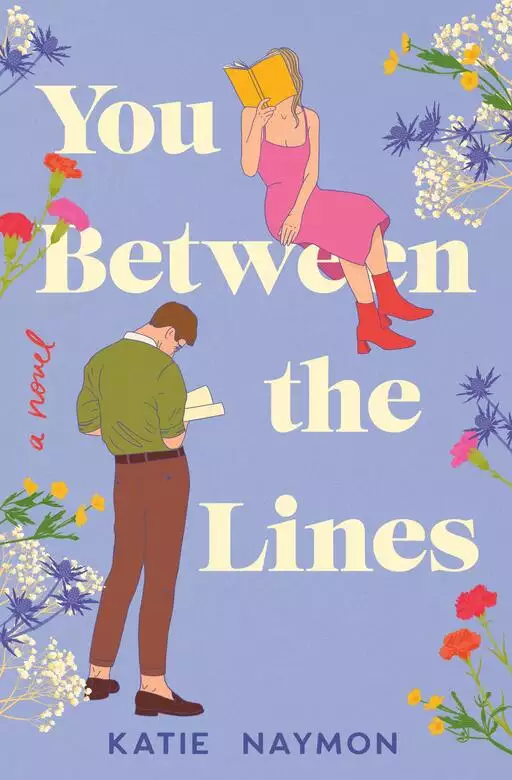
A former sorority girl starts a prestigious poetry MFA program only to discover that one of her fellow grad students is her high school crush-turned-nemesis—who can't stop writing about her.
No one’s more surprised than Leigh when a prestigious MFA program in North Carolina accepts her. A former sorority girl, Leigh’s the first to admit she knows more about the lyrics of Taylor Swift than T.S. Eliot, and she’s never been able to shake the “all-style-no-substance” feedback her high school crush made in their poetry workshop. Bad enough that her tattooed, New Yorker tote bag-carrying classmates have read all the right authors and been published in the country's leading literary journals, Leigh's insecurities become all too real when Will, that same high school crush-turned-nemesis, shows up at orientation as a first-year in the program, too. And now, he’s William, exactly the kind of writer Leigh hates, complete with his pretentious sweater vests and tattered Moleskine.
Leigh’s determined to prove herself—and William—wrong by landing the program’s highly-coveted fellowship. But Will’s dead-set on it, too, and in a small cohort, they can't keep apart for long. When Will submits an intimate poem (that's maybe, probably, definitely about Leigh) to workshop, they’re both forced to realize there’s more to the other than what’s on the page. And what’s between the lines may be even more interesting.
Release date:
February 18, 2025
Publisher:
Grand Central Publishing
Print pages:
336
* BingeBooks earns revenue from qualifying purchases as an Amazon Associate as well as from other retail partners.
WHEN I RECEIVED THE ACCEPTANCE letter to the Perrin MFA program four months ago, my first thought was I am an unbelievable scam artist. I am the Anna Delvey of poetry. The Tinder Swindler of graduate programs. I am that guy from the NXIVM documentary. Equally good hair, significantly less dangerous.
But the letter is still here—shiny and shocking and addressed to me, Leigh Simon, no typos. It’s not a mistake. I’m sitting in my new apartment in Perrin, a suburb near Asheville, filled with IKEA furniture and some remnants of undergrad, driven down by my dad all the way from Ohio. And in an hour, I’m going to the Welcome Barbecue.
Mom couldn’t come to Perrin. She was scheduled for some urgent surgeries she couldn’t get covered. I’m not sure how pleasant it would’ve been in the car with her and Dad, anyway, or if they would’ve even taken the same car.
I applied to Perrin on a whim. When my parents’ fighting escalated last year, I picked up the proverbial pen for the first time since college, processed my emotions through words, and submitted a poem to Goldfinch Review, which (shockingly) published it a few months later. That bit of external validation led me to consolidate my old college poetry and submit applications to a handful of MFA programs. Maybe someone took pity on me or the competition was particularly low this year, but the Perrin English department took a chance.
But even after getting the acceptance letter, I didn’t think I’d actually enroll. Up until two days ago, I was living in Boston, (over)working as a copywriter for the ad agency Coleman + Derry, writing manifestos for a diaper company while clients questioned whether I was an intern instead of a twenty-seven-year-old mid-level copywriter. It took one bathroom breakdown and an impromptu panic attack for my manager to recommend, nay, insist on therapy. And I’m the kind of girl who aims to please.
Bridget, my therapist, has an Anna Wintour bob and a collection of chic sweater-vests. During our session, she suggested that my parents’ separation a month ago might have played a role in my burnout, but that’s clearly not the case. I told her it had to do with taking something I loved—writing—and turning it into something I hate—also writing.
“I hate the clients and half my co-workers,” I said. “I thought going into advertising meant I’d get to be super creative, but there are always parameters. Restraints. Budgets.”
“That’s got to be really frustrating as a creative person.” Bridget’s chin teetered on her knuckles, absorbing every word like I was the most important person in her life. I desperately wanted her to invite me to brunch.
“It makes me hate writing. There’s so much pressure around it now. I can hardly look at words without self-editing them through a client’s eyes. It’s a creativity-killer. But what choice do I have? I’m not good at anything else.”
Bridget looked at me, bemused. “How do you know when you’re good at something?”
“When someone else tells me I’m good at it. Is that bad?”
She scribbled in her notes and offered a feline smile. “I don’t know. Is it?”
Damn you, Bridget.
She then asked what I’d do if I wasn’t copywriting. The only thing I could think of was still writing. But not for clients. Just for myself. I studied creative writing in college because I liked making words breathe—and because I couldn’t imagine studying anything else. But then I pivoted my attention to copywriting instead of attempting the scarier kind of writing, the kind where you spit yourself out on a page and lay yourself bare for strangers to dissect.
“Copywriting’s an art, for sure. But I’ve never been attached to it in the same way,” I told Bridget.
For a billboard or a digital ad, you have to sculpt a sentence until it’s crisp. Strong. Weight bearing. Until it’s sailor-knot-tight, black-and-white, with no underbelly of feelings that could be misinterpreted.
“Maybe you’re ready for the underbelly now,” Bridget said.
I told her I’d gotten into an MFA program but wasn’t sure I should go. She politely informed me she couldn’t tell me what to do (I, obviously, had asked) but that I could pretend to make a decision and then do a body scan to determine what choice felt better “in my body.”
Obediently, I sat in front of her, eyes closed, envisioning one life stuck at Coleman + Derry, constrained by pencil skirts and too-high expectations, and another at the MFA program—an easy excuse to quit my job without looking weak; a chance to fall in love with writing again. Bridget hypothesized that maybe I was going through life making decisions using my head over my gut; that maybe my gut should have a bit more say.
As I stand in front of my mirror in Perrin, North Carolina, applying makeup to look as hot as possible in front of my new classmates, you know which option won out.
But Bridget offered some departing advice before billing me an ungodly fee and scheduling another session:
“Leigh, I think you need to be careful not to fall into the old patterns you’ve created for yourself over the last twenty-seven years. The chasing validation, the people pleasing. If you decide to go, hunker down and enjoy it. It can’t be a competition. It can’t be for other people. Just for you.”
It’s her words now that strum over my body, jostling my fingers as I apply mascara in the mirror. I’ve taken the leap to pursue the writing career I’ve always wanted, and I’m pushing everything that happened in high school and college behind. This is my blank slate.
And there’s something important at stake: What to wear on the first day of grad school?
I’ve thought a lot about this. Made the Pinterest boards, devoured the university Instagram for clues on how students dress. Mapped out three distinct options—three different moods to evoke as I begin a new chapter of life where no one knows me.
I considered going full poet. All-black, eyeliner, definitely no bra, thrift store top, some sort of satchel. Or I could dress incredibly casually, as if this MFA First-Year Welcome Barbecue is nothing to me. A blip on a full social calendar, a common occurrence out of a schedule of readings, informal workshops, art gallery openings, et cetera. That would call for wide-leg jeans, a black tank top, Birkenstocks, maybe lipstick. Model off duty, French girl, New York girl—something like that.
But I go with option three, which hinges on a never-before-explored concept in my twenty-seven years of life: being, with no agenda, myself. A Taylor Swift–enthusiast sorority-girl Ohioan entering a Master of Fine Arts program. In poetry.
In other words—a seersucker dress and sandals. I’d texted my best friend Gen a photo of the outfit an hour earlier and received enough flame emojis to fill up the screen.
Armpit-sweat-stained in mid-August, I stand outside the one-story brick house calculating the appropriate amount of cleavage to wear to a party of overeager, neurotic writers who are about to name-drop all over me. After pushing up the off-the-shoulder neckline of my dress, I ring the doorbell. Within seconds, it opens.
“Why, hello!” booms a red-cheeked bald man with translucent acetate glasses and a polo shirt, looking more like a rich golfer than the longtime director of the Perrin MFA program.
I haven’t seen Professor Daniel Kitchener in months. Not since the video call where he went over my funding options after I accepted the offer of admission. But he remembers me, no doubt, because—
“Leigh? The Leigh Simon? Poet of Cleveland?” His voice carries all the gravitas of a sixty-four-year-old novelist and National Book Award winner—deep, rich, buttery. The croissant of voices.
“That’s me,” I confirm, ignoring a deep-seated urge to curtsy.
“We’re just delighted to have you.” Daniel steps aside to leave room for his wife—Sharon, a professor of art history at Perrin—who materializes next to him holding a glass of something bubbly.
“I’m delighted to be here!” I chirp. I walk into the house after the Kitcheners and check myself out in the mirror above a tasteful side table. I am positively dripping. Maybe I should have worn black.
“We’re still waiting on some more, but we’ve got a handful of each genre so far. A few poets, a few prosers.” Daniel leads me down a hallway and into the living room, which has one focal wall of shelves, filled to the brim with the tattered spines of books I’ve probably never heard of, family photos, antique clocks. And in front of it are five first-years, mingling.
This is the moment of truth. I majored in English but never found much in common with the other students. On-campus readings and student literary clubs seemed to attract a certain type—the tattooed, the pot smoking, the ones who brought books to parties, the ones with ill-cut bangs and nose rings and an aversion to neon. They didn’t seem much impressed with me, either. So I didn’t try to make friends with my Intro to Fiction & Poetry classmates. Instead, I rushed a sorority and tasted beer for the first time, liking how something so bitter could be so easy to swallow. With the Greek system, I got a built-in family—the perfect antidote to my only-child existence. Back then, an arbitrarily assigned “big sis” was more appealing than a book.
“Everyone, everyone, allow me to introduce you to another fine poet.” Daniel extends his arms as if he’s a celebrity talk-show host. “Leigh Simon of Cleveland, Ohio!”
I’m reminded of the time at sophomore-year summer writing camp when we sat in a circle in the grass, introducing ourselves with epithets that started with the same letter as our first names. I said, “Legendary Leigh,” like the first word I thought of hadn’t been lonely.
The group smiles politely and I shake hands with everyone as Sharon Kitchener presses a flute of sparkling wine into my left hand.
There’s Wiebke—a thirty-year-old German fiction writer who’s spent the last ten years in New York: loose handshake, light accent, smells amazing. Then Hazel, a twenty-seven-year-old poet from Portland, dressed in all-black with chunky loafers and an eyebrow piercing. I meet Morris, a scruffy-cheeked and blazer-clad fiction writer from Brooklyn with a pack of cigarettes in his pocket. I’m pulled into a hug by Southern-drawling Athena, another fiction writer, fresh out of college judging by her UNIVERSITY OF FLORIDA T-shirt. Lastly there’s Kacey, a Texan poet in ripped jeans with a warm, toothy smile. This year’s cohort is five poets and five fiction writers—and we’re waiting on more to arrive.
Hazel speaks first, and I see she’s gone the full-poet-outfit route, no bra included.
“So, Ohio—cool! I’ve never been,” she says, as if Ohio is Luxembourg—someplace random and far away that you know exists but will never have a reason to visit. But less rich.
“You’re hardly missing out,” I quip, my standard boilerplate response, which reliably gets a chortle from our New Yorker, Morris.
“You’re the second Ohioan in the cohort, actually,” Hazel says. “Daniel said there’s one more. Maybe you’ll know each other.”
I stave off a snort. It’s a big state. “Maybe!”
The small talk continues, and more students appear. Houston, a handsome six-foot-four fiction writer from Chicago—you can already tell he’ll be trouble. Christine, a North Carolinian fiction writer in a periwinkle maxi dress with a bulging satchel. Jerry, a twenty-four-year-old poet who appears to be suffering immensely at the intense back-and-forth of names, ages, locations.
But it’s nice. Despite the mental work it’s taking to smile, to nod emphatically at other people’s introductions, to find the exact time to look away and grab a potato chip, it’s nice to be with a group of writers. People who actively want to be here and aren’t just fulfilling a college requirement.
Ideally, though, it would be an environment free from pretension. Maybe that was too much to ask for.
“I actually didn’t even apply to Iowa,” Hazel says, gulping wine, to the small group around us. The fiction writers self-segmented and are standing by the unlit fireplace, leaving me alone with the poets. “I just feel like it’s overhyped.”
Kacey shrugs. “I have a close friend there in fiction now, and she absolutely loves it.”
“Oh, sure. But it’s still in Iowa,” Hazel says.
“Yeah, location’s important, but I was drawn to Perrin for the opportunities outside of class,” Kacey continues, while I have absolutely nothing to add to this conversation. “I really want to teach Intro to Fiction and Poetry to freshmen next year. Not sure if I want to be an editor of the lit journal.”
Our MFA is fully funded, thank god, due to every student getting an assistantship or editorship, which they complete alongside their studies. In the second year of the MFA, we can apply to be an editor for the university’s literary journal or teach undergraduates. In addition to that, two writers are offered a prestigious fellowship with a famous visiting professor, which could be very interesting depending on who the visiting professor is.
“Oh, Perrin’s got a great lit journal,” Hazel says. “Personally, I’ve been published in Ploughshares—”
“So is this everyone?” I interject. The poets slowly reintegrate with the larger group.
“We’re missing the final poet,” Athena says, twirling her black hair around her finger.
“The Ohioan.” Hazel nudges my shoulder. “Maybe this is him?”
I see him in the hallway first, shaking hands with Daniel and Sharon, handing them a bottle of wine. I can’t make out his face from where I’m standing, but his silhouette is striking. And there’s something familiar about him. He’s tall and broad-shouldered and is wearing a loose button-down shirt with rolled-up chinos, loafers with no socks. His hair is wavy and light brown, a lock hanging in front of his forehead. He looks put together enough to be a professor. Did Daniel invite professors, too?
Within seconds, he’s in the living room with the rest of us, and something in my stomach drops low, then lower.
“Finally, we are complete!” Daniel announces as the walls close in on me. “Friends, I am pleased to introduce our final poet—William Langford of Cleveland!”
Will starts making the rounds, introducing himself and shaking hands. The air’s been sucked out of the room, the scene playing out in slow motion, my ears clogged like I’m underwater. As if from far away, I hear his voice—deep, like honey, trickling over my skin.
He’s in front of me now, and because for the last minute I have been stick-figure-still, I can sense the entire room watching us, trying to decipher what’s going on behind my eyes. He extends a hand, then suddenly, as if someone poured ice water over his head, jerks it back to his side and stares at me in disbelief.
“Oh! Hi!” he says, and I cannot begin to imagine the flush my face is betraying me with.
“Will?” I hear my voice, pitched higher with the cadence of a question. But it’s not a question. Not really.
THE LAST TIME I SAW Will Langford was an accident.
He was always supposed to stay in the high school section of my brain, where I keep disappointing math grades and embarrassing prom photos. But I saw him by chance four years later, when I went to Middlebury to do a summer program and he was moving out after graduation.
Then that was supposed to be the last time I saw him. If it were up to him, at least.
But he’s here now, at Perrin, in front of me, taller than I remember. Not that my memory is trustworthy. In the last six years, I’ve replayed the last time I saw him so many times that the memory is both crisp and blurred. My mind never knows what to do with it.
He looks tired. Crow’s-feet, faint under-eye bags. He smells like how I remember—some uniquely him medley of spice and salt and musk.
“Do you guys know each other?” Hazel blurts out, watching our strange, strained interaction.
Will’s jaw muscle tightens just a hair, then releases. “Yes—”
“We went to the same high school,” I say quickly, though I wonder how he would’ve put it had I let him finish. Social decorum may dictate that now would be a good time to give him a loose hug in lieu of a handshake, but I can’t make my body do it, and he clearly isn’t going to initiate contact, either.
Will nods and looks me dead in the eye, his own wide and puncturing. “It’s been, what? Six years?”
Six years, two months. I say “Yes” instead.
The group moves on, chatting among themselves once again. Will stays in front of me and I feel the urge to touch him, just to prove he’s neither ghost nor myth.
“I didn’t know you would be here,” he says.
Obviously. I haven’t kept up with Will, and frankly, I haven’t wanted to. I was never his friend on Facebook, didn’t follow him on Instagram. Standing before me now, he has the same expression he did six years ago, when he abandoned me on a sun-drenched sidewalk in Vermont: cold and unwavering.
I laugh. “I guess we haven’t really spoken since Middlebury.”
He grimaces, which satisfies me. “I saw your poem in the Goldfinch Review last year.” His eyes leave mine to drift to my feet, my hips, my mouth. I feel the movement like the crash of a wave.
“Yeah, well… that was just sort of a random piece I sent out.”
He nods and looks at me searchingly, as if waiting for me to say something else. I don’t.
“But you’ve been well?” He angles his body away, glancing around the room as if begging for someone to save him.
“Yeah, great.” I twist the stem of the wineglass between my fingers. “And you?”
He opens his mouth, then hesitates, and I see something brewing behind his cold gaze, some sort of energy in his body that makes him flex his hand, purse his lips. But then he stands up straighter and becomes more looming than ever.
“I’ve been good.” And that’s that.
I desperately need an excuse to leave this conversation. Luckily, Sharon Kitchener opens the door to the deck and ushers us outside, where Daniel grills peppers and chicken breasts, the smells of paprika and fresh-cut grass intermingling in the day’s heat.
Will leaves my side to grab a beer. Within seconds, Kacey is next to me, whispering, “He’s very attractive,” turning to make sure he’s not there. She says it conspiratorially, as if we’ve known each other for years and she wants to gossip. My stomach tightens, but I also very much want to make a friend, and Kacey’s willingness to confide in me so early is a good start.
“He’s okay,” I whisper back, and she snorts as if I’ve said something inconceivable.
Outside, on the patio, Daniel’s backyard is glow-glazed with early evening. I want to see if Will is looking at me, but that would require looking at him, and I won’t give him the satisfaction. I try to concentrate on the group of writers in front of me—Wiebke, Athena, Christine—but I’m too distracted. A strange tension in my chest threatens to bubble over.
Daniel sets down his spatula and claps. Everyone quiets. “Well, friends, I am just so impressed with this cohort of fiction writers and poets. So, so many talented writers apply to our program every year, and you should feel very proud to be here. We’ve selected you based on your work and the fierce intellectual curiosity you demonstrated in your personal statements, and we’ve tried to create a diverse cohort with diverse styles.”
I eye the group, but Will, several feet away from me, stares straight at Daniel.
“I hope the next two years are those of great development and growth, both as writers and as humans. The people standing around you today are the ones who will push you, elevate you, learn with you. By the end of this program, I hope you emerge with work you are proud of, as well as relationships that will define your artistic and personal lives.”
We all offer one another shy smiles.
“So with that, please enjoy tonight—we have plenty of wine, plenty of beer, and in about an hour, the second-year cohort will join you for even more merriment.” Daniel claps again and raises his own glass. “To a year of growth and lots and lots of writing!”
We all raise our glasses and cheers. And that’s when I notice Will is looking at me.
It’s 8:00 p.m. and I’m buzzed on wine. Everyone else is, too, and our conversations have finally pivoted from the other MFA programs we were deciding among (Hazel wants everyone to know she almost went to Michigan; I share with no one that this was my only option) to the writers we admire, which is only nominally better. I imagine it will take another round before everyone relaxes and stops talking about writing.
Kacey is the best friendship bet so far. She reminds me a bit of Gen, a bit of my sorority clique at Tufts. She doesn’t seem to have the natural pretension the others have. In her ripped jeans and tank top, she looks more like a camp counselor than a poetry student.
But I’m not sure about the others. They all want to talk about poetry and writing. I want to talk about the food we’re eating, maybe the logistics of our schedules, the cities we’re from, how nervous I am about the MFA. How I hope they’re nervous, too.
“So what kind of poetry do you like?” Hazel asks. It feels like a trick question, and I’m not sure how to answer. Beyond what I was assigned to read in college, I didn’t really read poetry in my spare time. The rare times I went looking for it, I enjoyed online lit mags with more experimental, pop-culture-focused poems. The only poet whose body of work I really know is Erica Go. But I’m certainly not about to announce that on day one.
“Oh, I read a bit of everything.” I volley it back to her. “What about you?”
She rattles off five or six names. I’ve only heard of one of them (Ocean Vuong).
Christine, the fiction writer from North Carolina, joins the conversation and tells us she writes in a surrealist style, like a recent short story about a woman giving birth to a fish that won a prize at a small literary journal.
“It’s less about the fish and more about the mother’s capacity to love her child,” she adds.
“Wow, that’s really interesting,” I say, like an idiot.
Across the backyard, I see Will talking to Wiebke and Morris. I imagine they’re discussing all the fancy journals they’ve been published in, the fellowships they’re going to get after the MFA, the famous writers who wrote their recommendations.
But the low din of voices and indie music is soon cut by a ruckus in the house. And out comes a group—the second-years.
“Hey y’all!” drawls a girl with thick purple-rimmed glasses and an arm covered in geometric tattoos. “We’re here to pick up the first-years and take you to my apartment for a cozy little after-party!”
There’s about five of them there, and they all look to be around the same age range as us—mid-twenties to early thirties. One man is very handsome with cornflower-blue eyes and long blond hair he’s tied in a bun on top of his head. He makes brief eye contact with me, and my stomach fizzes.
We say goodbye and thank you to the Kitcheners and are then led three blocks away to the girl with tattoos’ apartment. Her name is Penelope and she’s a twenty-five-year-old poet from Boston. Her apartment is significantly less nice than the Kitcheners’ house, but it is indeed cozy and has a cooler full of Pabst Blue Ribbon. A record player spins something I don’t recognize, and North Carolina’s humidity has our faces dewy.
Will talks to the guy with the blond bun and a tall, lanky girl with a mullet and an angular, modelesque face. I sit next to Hazel, Penelope, and Kacey in the living room. And for the first time all night, I’m able to take my time looking at Will.
He stands with all his weight on one leg, shoulders leaning against the door of the kitchen as if he can’t balance on his own, his chest oriented toward the living room. I watch his lips tug upward. I watch him chuckle. A sliver of dark chest hair peeks out from where he’s unbuttoned his linen shirt.
Across the room, his eyes meet mine and his entire expression calcifies like stone. My immediate urge is to look away, but as if to test him, or maybe myself, I stare back. He breaks away first, and I feel immense satisfaction.
“Leigh?”
I jump back into consciousness. Penelope stares with a kind smile. “Sorry.” I force a laugh. “I’m definitely feeling the wine. I’m going to get a cup of water, actually.”
She points to the kitchen. “Cupboard above the sink has cups.”
“Great, thanks.” I walk toward the kitchen, passing Will and the two second-years, careful not to look at any of them.
In front of the sink, I steady myself and drink two cups of water in a row.
“Whoa, slow down there.”
I turn, and it’s the guy with the bun, grinning. “Too much wine,” I say, extending my hand. “Don’t think I’ve introduced myself yet. I’m Leigh.”
He shakes it, and his blue eyes are pretty enough that I feel self-conscious looking for too long. He must know they’re pretty, from the way he smiles.
“August. Let me guess. You’re a… poet?”
“What gives it away?”
“Poets always get drunk first at MFA parties.” A pearl of sweat forms above his lips.
“So you’re a poet, too?” I smirk back.
“Yes, but I must say, after a year of this, I’ve gotten better at holding my liquor.” He takes a sip of PBR and leans forward, smelling like tobacco. “I think it’s time for shots,” he whispers. Turning his head from me, he cups his hand around his m. . .
We hope you are enjoying the book so far. To continue reading...

 Please log in to recommend or discuss...
