Richard Halifax made a name for himself as a world traveler for the stay-at-home crowd. He was the swashbuckler of the Ladies’ Home Journal, Don Quixote of the dining hall, Lord Byron of all dreamy-eyed schoolboys. Neither a poet nor an explorer himself, he brightened the annals of adventure by following in the footsteps of the greats, adding a fresh coat of charm and, as many critics observed, a good deal of manufactured drama and drollery. Wherever he went, Halifax always found himself “in a tight spot,” usually of his own making, which he met with Midwestern cheerfulness and the breeziest of styles.
Halifax was born on February 11, 1900, in Kansas City, Missouri, where he attended the Country Day School. After studies at Princeton, he stowed away on a steamer to Rotterdam and tramped his way across Europe and Asia. This became the subject of his first book, in 1925, Romance by Rucksack, and the beginning of his career on the lecture circuit. More trips and books soon followed. The Glorious Wanderer (1927) retraced the odyssey of Homer’s eponymous hero. The Magic Carpet (1928) chronicled his journey across the deserts of Africa, the Near East, and America in an open-cockpit airplane. The Glittering Kingdom (1929) found the writer trekking through the ruins of Indochina and Siam, while that same year Steppe Lively! recounted a train journey across the Soviet Union.
In 1930, in the first of a series of trips titled “Paths of the Conquerors,” Halifax walked Cortés’s route from Veracruz to the ancient Aztec capital of Tenochtitlán. There he met the Mexican painter Diego Rivera, who joined him on the next leg, by car, to the Panama Canal, where, after securing permission from the U.S. naval authorities, Halifax swam the channel.
Halifax was always in search of a good swim and even better stunt, stripping down in picturesque ports and diving in while the press watched from ashore. During one such feat, while he was attempting to mimic Byron’s splash across the Hellespont, several papers reported him drowned. Three days later, the author-adventurer surfaced in a Turkish fishing boat, where he was photographed grinning at news of his own demise.
The anecdote was indicative of Halifax’s charmed life in that period. During the worst years after the Wall Street crash, he lived the high life in San Francisco, emitting a steady stream of exotic
hijinks for those who could only dream of travel—let alone climb Mount Fuji in the dead of winter, ride an elephant across the Alps, or be feted by a seven-foot-tall Arabian king at Mecca, just before trying to sneak inside the gates. His 1934 Codex of Wonders, a compendium of world marvels for young readers, was a New York Times bestseller for nearly two years and spawned the Dicky Halifax Junior Adventurers Club, a newsletter subscription service that put the author in direct communication with his legion of pint-sized admirers.
But by 1937 hard times caught up with Halifax. A novel home on the cliffs of Laguna Beach drained his wealth, a stint in Hollywood led to a box-office flop, followed by rumors of missing funds intended for the doomed Spanish republic. Halifax went to the Orient, splitting his time between Bangkok and Shanghai. But rather than chronicle heroic swims or elephant rides, his dispatches told of Japanese atrocities and air raids.
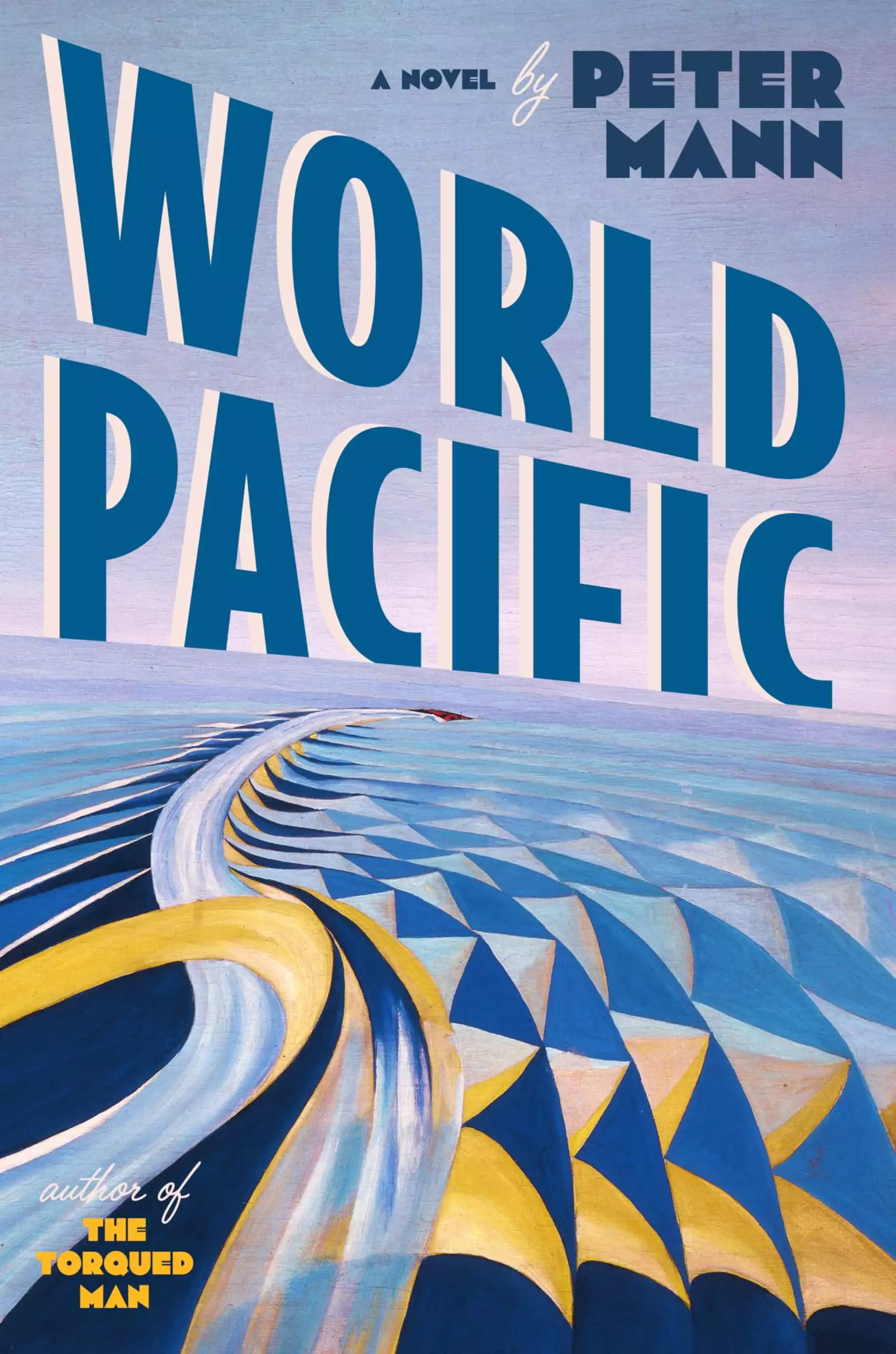
In 1938, Halifax announced he was preparing for his greatest adventure yet: an ocean crossing from Hong Kong to San Francisco on his custom-built junk, the Soup Dumpling. She was to have been exhibited last summer at the World’s Fair on Treasure Island as part of its “Pageant of the World Pacific.” To raise funds for the voyage, Halifax, ever the entrepreneur, sold a package of Junior Adventurers Club subscriptions that, for the price of five dollars, would send his young readers letters written aboard ship and mailed from ports of call en route.
On May 27 this year, the SS President Coolidge received a radio transmission from the Soup Dumpling, its position some five hundred miles west of Midway Island. In what would prove to be the author-adventurer’s final words, Halifax reported that a typhoon had struck the ship: “Gales . . . squalls . . . bunks soaked, lee rail underwater . . . having whale of a time . . . wish you were here instead of me.”
How could you? I don’t understand. Of course the world is a disaster, your own life a ruin, and the future without hope. But to Werther yourself right out of existence? What a horrible cliché. You always wanted to free yourself from Father’s shadow, but now look where you are. No doubt tomorrow’s papers will report that Son of Germany’s Greatest Living Writer in Exile Was Not Up to the Task.
I’m so angry, I could pull those tubes right out of your throat. That would give the newshounds a better headline: Daughter of Germany’s Greatest Living Writer in Exile Murders Twin. Sounds like a story out of the High Priest’s own corpus: early middle period, when incest and sex-murder were all the rage. Sickly, fine-boned brother arrives in fleshpot metropolis, reunites with his likeness in feminine form (though let’s be honest, I’m far manlier than you could ever hope to be), whereupon they bathe in blue waters, sun themselves on the cliffs, and, after he cries on her shoulder about the last mean boy who broke his heart, the two fall quite naturally into the embrace they first knew in the amnion. Brother, tormented by guilt, swallows his suitcase full of chemicals, which doesn’t quite do the trick, until hysterical sister comes to finish the job. I call it “The Geminicide”—doesn’t that have a nice ring to it? The Viennese would have eaten it right up.
Of course, that’s a story for a world that no longer exists. And the real one of today is so much drabber: Penniless brother and hopeless drug addict, having destroyed the last shred of patience among family and friends in Los Angeles, flees to San Francisco and calls upon sister, whom he’s neglected for the better part of three years but who surely must pity him enough to throw him some bread. When she refuses—only because she knows every cent will go straight into his veins—he says he’s only one unmet fix away from offing himself. She calls his bluff, tells him the meat cleaver is in the top drawer on the right, that he’s welcome to borrow it but could he please wash it before bringing it back? The next morning she gets a call from the manager of the St. Francis Hotel, saying Mr. Heinrich Rauch was found in his room unconscious and rushed to Mount Zion in an ambulance.
Of all the stories we could have lived together, Eiko, why this one? With me stuck in a hospital room, seeing your sallow form laid out, listening to the precarious beep of your pulse. We should be at Treasure Island right now, looking at my painting in the new exhibition, winning prizes at the shooting gallery (me for accuracy, you for consolation), and licking ice cream cones like real Americans.
You always say it’s harder for the sons of great fathers than it is for the daughters. But that’s only because nobody expects, let alone recognizes, anything of merit from the daughters. So how exactly is that less of a predicament? I suppose you’ve tried to win that argument here with this ridiculous act of desperation. “See, Ildi, it really was too hard for me!” To that I say, in my best American accent, horseshit. You didn’t have to become a writer. You didn’t have to become a drug fiend. And you surely didn’t have to become such an exasperating prima donna who, blinding yourself to everyone who loves you, swallowed those pills. Don’t you realize that if you end the story this way, you don’t get to tell any others? Please wake up so I can scream at you.
I went to get your things from the St. Francis today. Glad being broke didn’t stop you from springing for the suite for the last six weeks.
Pretty high-tone for one of the self-proclaimed “Lumpenproletariat of Literature.” When Monsieur Gaurin presented me with your bill, I thought I was going to have to make a run for it. Thank God he’s the last of San Francisco’s old-world hoteliers and didn’t expect payment upon departure. You’ll be glad to know I’ve forwarded the bill on to the High Priest.
Wish I could be there to see his eyes pop when he sees the tally. Though I doubt Mother will even mention it—wouldn’t want it to interfere with his work, especially now that Father thinks the fate of Europe hangs on his prose. He was out for his constitutional when I called to break the news of your trip to the underworld. I told Mother, who insists it must have been an accident, that you’re stable and that you will eventually wake up; we just don’t know when. That’s what the doctors have said, more or less. They have also said that you may remain in “a chronic vegetative state of indeterminate length” and suffer “permanently impaired brain function.” These I did not share.
And, yes, I found your note. Witty and impeccably typed, even as you board Charon’s ferry. I grant you, the world is not a pleasant place to lay over right now. That little black spider, hatched in our own rotten garden, will soon ensnare all of Europe, if not the world. But this is what makes me so furious with you, why I stand before your action uncomprehending and seemingly without pity. While others are interned or shot or run down by tanks, you, one of the lucky ones, take your precious gift of life up to the twelfth-floor suite and, surrounded by the splendor of the Pacific, try to cash it in. Why?
You’ve always said you feel called to death, whereas I am called to life, but I don’t think you understand death in its brutal simplicity. You seem to regard it as some kind of realm or state of being, when it is simply a negation. The fall of a blade, the flip of a switch, the crushing of all into dust. That is death and nothing more. And you have not yet earned it. I must say, it’s easier to argue with you in your unconscious state. You can’t disagree with me or call me an aloof aesthete or a manly giantess. Though I wish you would, because the silence of your acid tongue makes me fear you are not there at all.
But there’s something else—something I don’t understand. And I need, above all, to understand you. You said in your note that, despite how it looks, it wasn’t Hitler or his war, it wasn’t the loss of your homeland and years of exile, it wasn’t your literary failures or the towering shadow cast by Father
and his public contempt for your work, it wasn’t even your crippling dependence on drugs and booze that made things unbearable. It was the pain of lost love. Love!
Yet not three days ago you were telling me about that Croatian tennis player, laughing at how boring he was and that the only thing you’d miss about him was how marvelously he filled out those white shorts. Surely it wasn’t the souring of this little fling that made you want to throw yourself overboard, and in any event I believe his name was Marko. How, then, am I to understand the parting declaration of your note? I just can’t bear to live in a World without Dick.
Assuming you were talking about a man and not an appendage—your appallingly German habit of capitalizing nouns in English has complicated things—I have only one question for you: Who the hell is Dick? ...

 Please log in to recommend or discuss...
