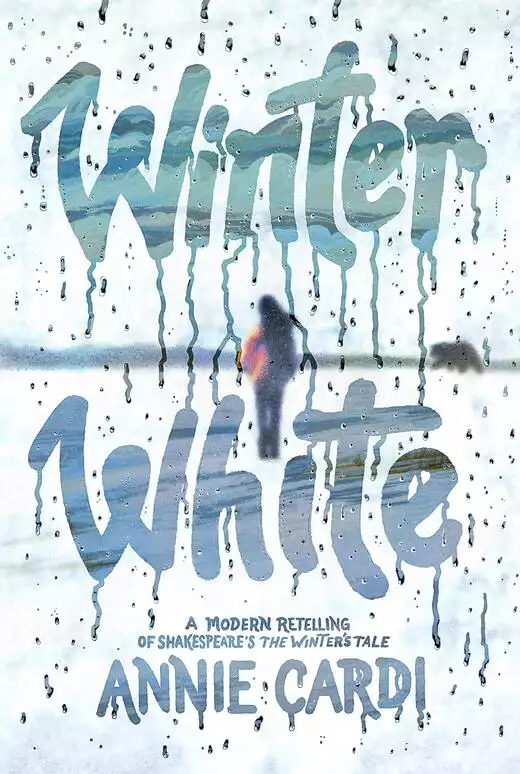
A bold and authentic reimagining of The Winter’s Tale full of tragedy, triumph, and forbidden romance—perfect for fans of Sabaa Tahir, Kathleen Glasgow, and Sarah Dessen.
Pia and her brother, Max, live on an isolated farm in rural Maine, and it’s the only life they remember. Their father says the only way for them to stay protected is to stay on the farm. Pia doesn’t question it. Pia’s entire world turns upside down when her father breaks his leg, and she must be the one to venture into town to make farm deliveries. And then she sees him. Felix, a boy who is both a stranger and somehow familiar, makes her question everything she thought she knew about herself, her past, and her family. But no matter how she feels about Felix, she must always obey her father, above all else.
But Pia's feelings are too big to ignore, and the more she engages with Felix, the more she begins to see that there’s promise for her beyond the isolated world to which she’s grown accustomed. And the more she dreams about a better life, the more she wonders if her father is telling the truth about their family’s past. Pia knows her father and his friend Anthony are hiding something, and soon Pia must reckon with the damage her father is doing to their community and the damage he has done to their own lives.
Winter White is an astonishingly told and searingly authentic reimagining of Shakespeare’s The Winter’s Tale for fans of Sabaa Tahir, Kathleen Glasgow, and Sarah Dessen.
Release date:
January 27, 2026
Publisher:
Union Square & Co.
Print pages:
272
* BingeBooks earns revenue from qualifying purchases as an Amazon Associate as well as from other retail partners.
Dad and I go to town twice a year to get supplies—once in the spring and once right before winter. It’s the only time he lets me go with him, an extra set of hands. I never know exactly when we’re going. As soon as the mornings get cold and frost appears on the windows, I play a game with myself: Today’s the day, no, today, today. Most days I’m wrong, and it’s the same thing as always—tend the garden, clean the coop, do schoolwork, make sure Max has done his chores and schoolwork. But I know that twice a year, I’m going to wake up and it will be today.
It’s a Wednesday morning when Dad comes out of his room, buttoning up his flannel shirt, and says, “Pia, get ready. We’re leaving in five minutes.”
I’m dressed and my hair is brushed and my boots are on and I’ve got the bags by the door. “Ready,” I tell Dad, handing him a travel mug of coffee, black with one spoonful of sugar, just the way he likes it.
He raises an eyebrow at me as he takes a sip. “You planning to go anywhere?” he asks.
I shrug, trying to look casual as I grab my own travel mug (milk, no sugar). “It’s good to be prepared,” I say.
Max wanders into the kitchen, hair sticking up and still in his pajamas, followed by our border collie, Chloe, who’s pleased that all the humans have been rounded up for the morning. When Max sleepily rubs his eyes with the back of his hand, he looks way younger than his nine years. “Can I come?” he asks, even though he knows what the answer will be.
“Not until you’re older,” Dad says.
“I’m older than I was last spring,” Max argues, sliding into a chair at the table.
But Dad narrows his eyes. “Don’t be a smart-ass.” Max freezes in his spot, and Dad continues, “While we’re gone, you get the eggs and feed the chickens and let the sheep out. And make sure your math is done.”
“Yes, sir.” Max sighs and goes to make himself oatmeal for breakfast.
While Dad’s in the other room getting his boots on, I lean over to Max. “I’ll get you something from town,” I whisper.
He brightens, a smile spreading across his face. “What?”
“I don’t know, I haven’t gotten it yet.” I ruffle his hair, making it even messier. He shoves my hand away. Even though he looks like a little kid in his pajamas, it’s obvious that he’s grown over the past few months. He’ll need new clothes, new boots, maybe a new pair of gloves before it gets too cold. More paper and pencils, too, the kind that are good for drawing. Dad thinks it’s a waste of time, but Max loves making his own comics, and it keeps him occupied during the long winter months.
“Pia,” Dad calls. “Time to go.”
Max slumps against the counter. “Have fun,” he says glumly. Chloe noses him gently, and he leans down to pet her soft ears.
“Be good,” I tell my brother. He gives me an overly enthusiastic grin, and I mess up his hair again.
I’m halfway to the door when Dad calls to Max, “Anthony might come by and leave some tools for me in the shed. If he shows up while we’re gone, unlock the door for him.”
Through the kitchen doorway, Max and I share a look. Anthony is Dad’s friend from way back, and he’s always borrowing stuff or bringing things over. He’s never caused any trouble, not really, but he laughs too loud and stares too hard and always makes me feel like I’m a twig about to snap under his boot. I don’t love the idea of Anthony dropping stuff off when Max is here alone, but I don’t argue.
“Okay,” Max says.
Dad must not be convinced of the confidence behind Max’s “okay” because he asks, “You remember where the keys are?”
“In the empty rat poison box under the sink behind the trash bags,” Max recites. It’s one of Dad’s rules—don’t touch the keys unless he tells you to touch the keys, and make sure you put the keys back exactly where you found them. Max and I have known this since we were old enough to know not to swallow small objects.
Dad pauses, like he was expecting Max to have forgotten where the keys are and now doesn’t know how to respond. Finally he says, “Make sure you put them back.”
“I will,” Max says.
Dad leaves to go start the truck. I linger in the door a second longer and tell Max, “Be careful,” before following Dad into the cold morning air.
It’s a thirty-minute ride to town through winding switchbacks and narrow roads where we rarely see another car. The morning sky is a sheet of gray, and I drink my coffee to keep warm while the heat in Dad’s old truck struggles to start. On the radio, the Rolling Stones sing about missing someone.
I imagine Max back at home, scattering feed for the chickens and waiting for Anthony’s busted Chevy to drive down the long, dirt road leading to our house.
We should have taken him with us. Now that he’s a little older, he’s not as much trouble going into town. He could even be helpful. Dad may still think of him as some little kid, but he’s been a lot better about his chores and even his schoolwork over the past year. I clear my throat and try to sound casual when I bring it up.
“You know, Max could have helped out,” I say, “if we’d brought him. He could have climbed up on the truck to help you tie things to the back—”
But I shut my mouth as soon as I see Dad’s grip tighten on the steering wheel, his eyes dark even though they never leave the road. “What did I say?” he snaps, voice as sharp as cold steel. “Are you second-guessing me?”
“No, sir,” I say, my body freezing like a deer that’s heard a branch snap nearby.
“You think you know more than me?”
“No, sir.” My voice is small and brittle. I keep my eyes on the dashboard. “I’m sorry.”
He breathes in and out sharply through his nose, and for a second, I’m not sure if he’s going to yell at me or worse. Then a dark shape moves into the road. Dad shouts, “Shit!” and hits the brake hard. Tires squeal against the pavement, and we stop short, several feet away from a black bear walking coolly across the street.
We’re fine, but my heart is still beating fast in my chest, and my brain foolishly makes it a joke: Why did the bear cross the road? To get to the other side. I’ll tell Max that one later, and he’ll roll his eyes.
“Should be getting ready for hibernation,” Dad mutters at the retreating figure of the bear as it disappears into the woods, “instead of almost killing us. Must have some kind of death wish.”
“Yeah,” I breathe, although I’m not sure what exactly I’m agreeing with.
Town is Whitfield, and it’s less of a town than it is a few intersecting streets with a blinking yellow light in the middle. But there’s a hardware store and a market and a dollar store and an auto repair shop.
And a library.
Before he heads to the hardware store, Dad gives me money for some of the things we need from the market—canned beans and soups, jugs of distilled water, dried fruits, sugar, flour. Bags of coffee are on sale, which means I have a little cash left over. Enough to buy something for Max, at least. I stop by the dollar store and find a sketchbook and a pack of drawing pencils. Real art ones, too, not just the kind we use for our schoolwork. Dad would say it’s a waste of money, but I can’t help getting something for Max while he’s stuck at home. I tell myself these things are so small, so inconsequential. It doesn’t count as breaking the rules, not really.
Even so, when I put everything in the truck, I make sure to hide the art supplies under the passenger seat. Dad’s still not back yet.
Which means there’s a little time left for the library.
It’s a small building, brick and undistinguished, with a fading WHITFIELD BRANCH LIBRARY sign out front. But my heartbeat quickens as I head inside. Even though I go twice a year, I recognize the smell—old paper, lemon-scented cleaning supplies—right away. It’s what I smell when I fall asleep at night.
The first year Dad brought me along to town, when I was twelve, there was a big sale on the library lawn. It was a bunch of books people had donated or old copies the library was weeding out. Lots of paperback romances, the same copies of To Kill a Mockingbird or The Great Gatsby or The Heart Is a Lonely Hunter sitting on shelves beside each other. But it was the best thing I’d ever seen. So many books, all priced at fifty cents or a dollar. I was supposed to be buying things at the market, but I’d meandered around the tables until Dad came over and hissed at me to get back to the truck. Even though he was mad at me for wandering off, I’d promised myself I’d go back the next time I was in town.
I don’t have a library card, and we’re not in town frequently enough for me to borrow things and return them on time. But the library has a small rack of books for sale—a miniature version of the big sale outside that one time. I stride over and scan the titles: fiction and nonfiction, historical and sci-fi, biography and self-help. After the drawing pad and the pencils, I have a couple of dollars left, enough for one or two books. Small ones that Dad won’t notice tucked inside my coat pocket.
“Finding everything okay?” a woman asks. She’s tall and thin, with a pointed nose and teeth that are a little large for her mouth. She comes over with a stack of books and starts adding them to the rack.
“Yes, thank you,” I say politely.
She smiles and starts to go back to stocking the books when she looks at me. “I’ve seen you before, haven’t I?”
I stiffen. This is another one of Dad’s rules—don’t draw attention. There’s no way she could remember me. I’m here twice a year for maybe fifteen minutes at a time. But I smile politely and say, “Maybe.” It’s safer not to commit one way or another.
“I’m one of the librarians in the teen room,” she continues. “Have you come by for any of our programs? We have a craft meetup twice a month and movie nights every so often.”
I imagine other kids my age hanging out in the library, crocheting or beading friendship bracelets, laughing together and eating popcorn in front of a big projector screen. It’s stuff I’ve read about but never done. “Probably not,” I tell her. “Mostly I come in to look for some books.”
“Anything in particular?” she asks.
I should say no. I should tell her I’m fine, that I’m just browsing. But she looks so enthusiastic, like she truly wants to help. Like maybe she likes reading, too. Like she’s the kind of person who reads on the bus, gets lost in a story, and finds she’s missed her stop, but it’s worth having to walk the extra half mile home because of how the book ended.
“Something a little sad?” I suggest.
“I like something a little sad, too, when the days are getting shorter.” She purses her lips together in thought, then says, “Have you read this one?” She pulls a book from the rack and hands it to me. The cover is a photo of a girl’s face, partly obscured by thick black letters reading Never Let Me Go.
“I haven’t,” I tell the woman and run my thumb over the pages, tattered but softened from wear.
“There’s a movie, too,” she says. “It’s a nice adaptation. But I like the book even better. It’s literary, with a sci-fi slant. Very good, very sad.”
I peek inside the cover to see $1 written in pencil. When I pull a dollar out of my pocket to put in the donation bin, the woman stops me. “Keep it,” she says. “We have a couple of extra copies from when the adult book club at the regional library read it last year.”
I pause, the dollar bill clutched foolishly in my hand. “Are you sure?” I ask. Dad always says that nothing’s for free, not really.
But the woman nods. “Don’t worry about it,” she says and slides a few more books onto the rack.
I pocket the money and hold the book close. It’s not a book Dad would approve of, but I imagine reading it under the covers at night or in the barn while Dad’s out. I’ll shove it under my bed, behind my summer clothes with the other books Dad doesn’t know I have.
“I’m Jennifer Shepherd, by the way,” she tells me and looks at me expectantly.
Of course Dad’s right. Nothing’s free. But I smile and say, “Emma.” It was the most popular name around the time I was born, which makes it safe to tell her. There have to be a dozen Emmas within a fifty-mile radius.
“Nice to meet you, Emma,” she says. “Come by the teen room sometime. I can give you a flyer for our programs for the month.”
“Thanks,” I say, even though I know I’ll never go to craft meetups or movie nights.
She adds the rest of her books to the rack and walks past the front desk, disappearing into a back office. I pretend to browse the for-sale books for a moment longer in case she appears again. In case she thinks anything is wrong and tries to call family services. Nobody wants to mind their own business is what Dad says.
I slide the book into my bag and head to the door, making sure not to walk too quickly. I shouldn’t have taken the book. I shouldn’t have talked with the librarian at all. Dad will find out, get pissed.
It’s fine, I try to reassure myself. She didn’t actually recognize you. And even if she did, it’s not like you’re going to see her again for at least another six months.
Which should be a relief, but instead I feel a pang of sadness, tiny cracks etching through a sheet of ice.
I’m back at the truck a scant two minutes before Dad. When he looks at me, I feel like he can tell that I have a book in my bag, one I didn’t have to pay for. That I talked to the librarian who seemed to recognize me. But he only asks, “Got everything?”
I gesture toward the bags of groceries and supplies in the back. “Yep, everything on the list.”
We get the rest of our things loaded in. I look around at the street, a few people walking on the sidewalks, heading into the convenience store or the market. A block up, someone’s pulling into the auto repair shop with a dented fender. At the coffee shop, two old women in wool coats are laughing so hard, they’re holding on to each other’s arms to stand upright. It’s all normal stuff, but I wish I could take a picture of it all to keep with me over the long winter.
“Let’s go,” Dad says and swings himself into the truck.
I take one more look down the road before climbing into the passenger seat. The truck rumbles to life, and the radio plays the Bangles covering Simon & Garfunkel.
We slow at the blinking yellow light, Dad glancing in either direction for oncoming cars. I turn toward the convenience store, a guy just leaving. He’s my age, maybe a little older. Tall with unkempt brown hair and a sharp jawline. Broad shoulders under a hoodie that’s not warm enough for the weather. Jeans and hiking boots. He pulls his keys out of his pocket, and then he looks up and sees me, and there’s a flash of recognition. I don’t dare to blink, because I know him, even though there’s no way I could actually know him. My heart thuds in my chest because, the way he stares back, I think he knows me, too.
Then Dad turns the wheel, and we’re going around the corner. And until we’re out of sight, the boy and I keep our eyes on each other.
Remember me, I think, as if I could tell him, as my father and I drive back into the woods.
When we get home, Anthony’s car is parked in front of the house, half off the dirt road we call our driveway and half on the grass. Dad doesn’t say anything as he parks behind Anthony, and we unload things from the truck. I follow Dad inside, lugging bags of canned goods, and there’s Anthony standing in the kitchen, leaning against the counter with a bottle of beer in his hand.
“Hey, Leo! Welcome home,” he says, then takes a swig. “These are for anybody, right? You want one?”
I drop a couple of bags on the counter next to him. “Don’t help or anything,” I mutter.
“Nice to see you, too, Pia,” he says. He gives me a toothy smile, but with his sharp features and cold eyes, it feels more like a sneer.
Dad sets down a couple more bags. “You get everything?” he asks Anthony.
Anthony heaves a sigh. “All business—what the hell, man?” He takes another swig. “Of course I got everything. Have I ever let you down before?” When Dad raises an eyebrow, Anthony continues, “Not professionally. I take my work seriously.”
Dad seems unimpressed, but he doesn’t argue. Instead he opens the fridge to get himself a bottle, too. He cracks off the top on the edge of the counter and takes a long drink.
“Where’s Max?” I ask Anthony coldly.
Anthony shrugs, managing to look both offended and annoyed. “The barn or something? I’m not his babysitter.”
I half expect Dad to stop me as I head out the door again, tell me to put everything away before rushing off. But he and Anthony are talking in low voices and ignore me as I leave. Outside, the wind bites my skin through my coat, and I have to wrap my arms around myself as I stride toward the barn.
Inside, it’s quiet aside from the soft clucking of chickens from their coop. One of the barn cats, a gray tabby we call Blizzard, lounges on top of a bale of hay, tail twitching lazily as he watches me. “Max?” I call.
“Hey.” I hear his soft voice and find him in the sheep pen. He’s refilled their water and swept away the stray hay and even cleaned the stall mats. Dad will be pleased.
“Nice job,” I tell him.
“Thanks,” he says flatly, not looking me in the eye. He didn’t even ask about what I got him from town.
“What is it?” I ask, my voice tight.
He shrugs, climbing out of the pen and swinging down beside me. He still doesn’t look at me as he reaches over to Blizzard, who lets Max rub his back. If I tried that, Blizzard would bite down in a heartbeat.
“Max,” I say. “What happened? Was it Anthony? Did he hurt you?”
Max waves me off and keeps petting Blizzard. “He was just being a dick,” he says. I stay quiet, my stomach still clenched, and Max continues, “He was asking me if I was old enough to like girls yet, and he had pictures on his phone he wanted to show me.”
Anger crackles through me. “What kind of pictures?”
Max brushes me off. “Stupid stuff. I didn’t really look. He laughed and said I’ll want to look before I know it.” He grimaces, and I know that he’s thinking about whatever glimpse he got from Anthony’s pictures.
For fuck’s sake, Anthony. I’m going to kill him.
Except of course I can’t do anything. He’s Dad’s friend. They’ve known each other forever. This was Anthony’s family’s farm way back, before we moved to Maine. I can’t hurt him. I can’t stop him coming over here. I can’t stop him being an asshole.
“What if we train Chloe to bite him?” I ask.
A smile quirks at the corner of Max’s mouth. But he says, “Dad would get so mad at her.”
“Not like a really bad bite,” I clarify. “A little one. A nip. Like he’s a rogue sheep or something. Get him back in line.”
Max grins as he scratches Blizzard under the chin. “Only if you can train her to bite his butt.”
I laugh. “We can totally train her to do that.”
Max continues with his chores, a little brighter now, and I join. But I’m still burning inside. I know Dad and Anthony are in the house, talking and laughing, and even if I bring up the pictures with Dad, he’ll only say, Anthony was just messing around, Max is getting to be a man, you can’t baby him.
I remember when Max was a baby. We’d just moved to Maine, and Dad was fixing up the farm, so I spent a lot of time watching Max. He’d lie on his stomach, and I’d hold up mirrors for him to look at, toys for him to reach for. When he cried, I’d change him or warm a bottle for him. Sometimes he only wanted to be held, and his little head would rest on my shoulder, getting heavier and heavier with sleep. Shhh, shhh, I’d murmur. It’s all right, I’ve got you. I was only seven, barely more than a baby myself, and had only played with dolls before then. Max was real, and the way he smiled at me, the way his little hand grabbed my finger—I would do anything for him.
I know that Dad’s right. Max is getting older, and he’s not a baby anymore, but I still want to hold him and tell him it’s going to be okay.
That night, after I wash, dry, and put away the dishes from dinner, I tell Dad I’m going to study in my room for a while. We’re homeschooled, but the state never really checks on us, so it would be easy to not do any schoolwork. A lot of people don’t take it seriously, Dad says. I wouldn’t know, since we don’t hang out with any other homeschool kids. But he’s hardcor. . .
We hope you are enjoying the book so far. To continue reading...

 Please log in to recommend or discuss...
