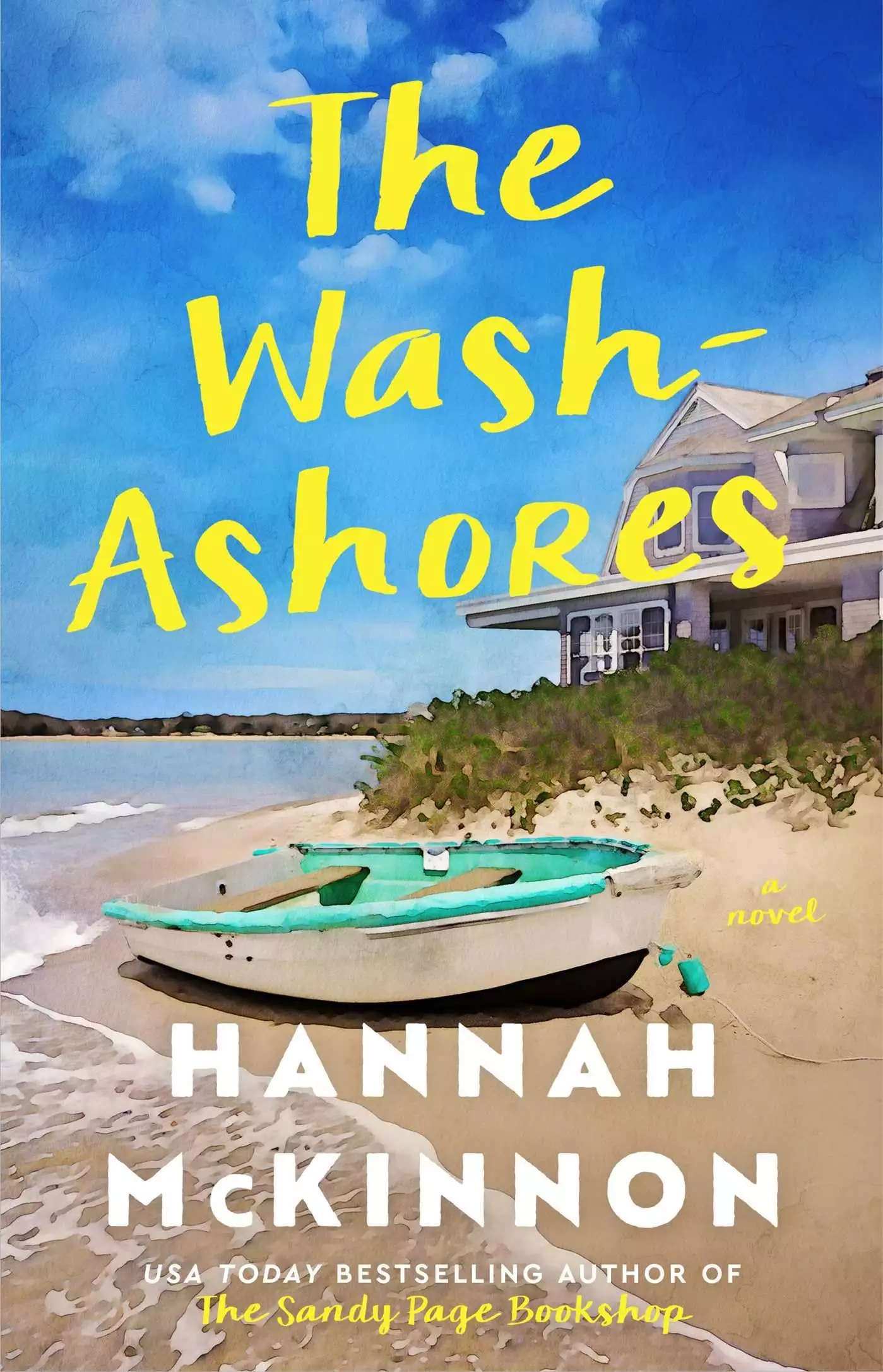
With only one summer to get everything right, one woman finds herself fighting to hold together the one place that's always felt like home with the people who have become like family, in this summer novel from the acclaimed author of The Sandy Page Bookshop.
Thirty-year-old Holly has ‘inherited’ the Cranberry Inn from her grandmother, Francine. Only Francine is not dead. At least not yet. And she’s not fully convinced the Cranberry Inn is the right fit for Holly; it’s showing its age and it’s so much work. Besides, she has an offer from a developer that she’s not sure she can turn down. Unsure what to do, Francine decides she cannot let Holly take over without a ‘dry run summer’. As Francine tries to sequester herself to the sidelines, Holly finally has the chance to prove herself to her grandmother, her returning guests, and herself. And time is of essence because this summer they are hosting the Whitmans, a prominent New York family who expect no less than perfection for their only daughter’s summer nuptials. A move that Holly is convinced will boost the inn’s revenue and steer it back on track, so that her grandmother won’t have to sell.
If that weren't enough, Ben is back for the summer. Ben’s family has summered in the house next door to the Cranberry Inn as long as Holly has been spending summers with her grandmother. Only Holly hasn’t seen Ben in several years, and she’s not sure she wants to. The way they left things was like a conversation unfinished, and one that Ben seems interested in revisiting.
With a wedding looming and a bride hedging and a staff feeling adrift, can Holly pull everyone together to ensure that the Cranberry Inn will survive another summer?
Release date:
June 30, 2026
Publisher:
Atria/Emily Bestler Books
Print pages:
336
* BingeBooks earns revenue from qualifying purchases as an Amazon Associate as well as from other retail partners.
1. Holly Holly From her perch on the dock Pleasant Bay shimmered in the evening light like the pearly-pink inside of an oyster shell. Holly dangled her feet over the water. Beside her, Bruce settled onto the wooden planks with a sigh, and she rested her hand on the dog’s broad soft head. Not far out, sailboats bobbed at their moors. Along the shore a handful of clammers bent over the shallows with their rakes and buckets. The scene was at whole odds with the knot of nerves in her stomach.
She glanced back at the steep wooded trail she’d just come down. At the top of that trail, nestled among the pine trees, sat the Cranberry House Inn. Her grandmother’s inn, now hers. Sort of. The inn she’d inherited; only Francine hadn’t died. Yet.
“Just pretend I’m dead and gone,” Francine had said with a shrug. “It’s the only way to find out for sure.”
“You want me to pretend you’re dead?” It wasn’t the first crazy idea her grandmother had come up with.
“Unless you can think of a better way to do this.” Then, as Francine fiddled with a vase of hydrangeas Holly had just painstakingly arranged, pulling out one stem, then another, before yanking out the whole bouquet and swapping the vase altogether, “You won’t even know I’m here. I promise!”
Holly had winced. Taking over the inn was everything she’d worked for. It was one reason she’d gone to grad school for her MBA, and another reason she’d come back; but the ultimate reason was the connection she felt to this old house, and its bittersweet history that had started long before her own young life had.
Built in 1853, the Victorian had lived many storied chapters before Holly’s grandparents had turned it into an inn. Growing up, Holly had loved listening to her grandparents’ tales about the house’s past. She knew all its iterations the way one knows one’s own ancestral heritage. By then her grandfather had accrued several artifacts that had stayed with the house, discovered and kept by one owner and passed down to the next. They were stored in an old trunk in the foyer, locked for safekeeping like a treasure chest. Inside the trunk was an accounting ledger from a shipbuilding business dating back to 1850, written in calligraphy. A box of black-and-white photos that had been left behind in the attic by cranberry boggers. A crackled hand-painted sign that read CRANBERRIES, 10 CENTS A BOX found in the attic of the small barn that their gardener, Oliver, now stored equipment in. And, most haunting to Holly to this day, a single dusty white patent leather child’s shoe with ribbon ties, found in one of the walls years ago when the electricity was updated. Even as a girl these artifacts felt sacred to Holly, and each time her grandfather unlocked the trunk and lifted its creaky lid, she held her hands out with reverence to receive each article one at a time. He never had to tell her to be careful.
Originally, the house belonged to a merchant in the shipbuilding industry, Josiah Spicer, who specialized in clipper ships. Known for their sleekness and speed, the ships came to be in sudden demand on the global market in the 1850s. As his wealth accrued, the merchant desired a stately home close to the shipyard in town, but his wife, Anna, a nature enthusiast who preferred privacy for their family, fell in love with the view from the cliff and convinced her husband to build the family home there. The location on Pleasant Bay allowed him to easily travel across the cove by boat to the shipyard. Of the five children the merchant and his wife had, their last, and only daughter, Adeline, had died at a young age. Holly had long wondered if the little shoe belonged to her. Stricken by grief upon her death, the merchant and his wife commissioned an artist from New York to come paint a beautiful fresco on the parlor wall of a little goldfinch fluttering above a sea of pale pink clouds. Faded by time and flaking away from the plaster, only remnants of the fresco remained; still, it was Holly’s favorite detail of the house.
After the merchant passed away and his wife went to live with a son in Boston, the house was acquired in 1890 by an enterprising local cranberry farmer. Captain John Harwich, a retired fisherman, had witnessed the rise of cranberry bogging up and down the arm of the Cape, and by then had bought up almost fifty acres for farming. The marshland across the street from the inn was among them, and when the grand house went up for sale he employed some of his riches to scoop it up. Eventually the house was passed down to his son. By then, the family had planted many bogs, from Dennis to Chatham to Orleans, as the peat soil and coarse sand along the coast provided optimal growing conditions. Business boomed and Harwich found himself building bog houses along the outskirts of his farm properties to house his workers, including an influx of Cape Verdean immigrants fleeing famine. By then, the Harwich family were leaders in the cultivating business, and the big house became known as the Cranberry House. Photos from that period showed the windows, moldings, and trim work painted a deep red. By the time her grandparents stumbled across it on a visit to the Cape, the old house had been empty and for sale for some time. Both locals and summer people thought it too big and in need of too much work to make it a sound investment for a private residence. At that point, it was destined to be torn down and the property divided. Fixing it up and turning it into an inn had been Holly’s grandfather’s enterprising idea. Back then he was young and strong and stubborn, and what he lacked in funding he had ample supply of in the manpower from friends and family. Holly had long loved the story of how her grandparents brought the old house back to life and, in doing so, started their own new chapter. Turning it into her own next chapter felt right; if only she could pull it off.
The truth was, this was not just a trial-run summer for Holly’s management skills. She knew her grandmother needed convincing that taking over the Cranberry House was a good fit. Because if there was any doubt, an envelope with a lucrative offer from a local developer was tucked away in her office desk. “Don’t worry about that nonsense,” her grandmother had insisted when Holly first stumbled across it, batting her hand at the air as if shooing away a nuisance fly. “I told that Mr. Sullio I’m not interested. By now he’s probably found some poor other old house to tear down and turn into condos.” Here she’d grabbed Holly’s hands and squeezed them. “You are the future of the Cranberry.”
How Holly hoped that was true. It wasn’t just about her ability to take over; the inn needed to make more money and fast if it was to survive. And she had this summer to turn things around.
Now, feet dangling over the water, she felt her breath begin to steady as her gaze traveled along the shore. The cove, shaped like a horseshoe with a barrier island on one side, held a small sandy stretch of beach at its center, flanked by gentle slopes on both ends. The arms, her grandmother called them. “It’s like the sea snuck in to meet the land, and the land wrapped her arms around it.” Francine wasn’t alone in her romanticism of the place. There was something about this bay, beyond its ice age origin. Beyond the Nauset tribes that first fished its waters and inhabited its shore. Holly had felt it even as a young girl, and she felt it still: a connection to the wild grasses and the leggy shore birds and the brackish water that stretched beyond her own small history here. Its grandeur was not obvious, unlike the roaring surf of the National Seashore or the towering dunes of Wellfleet, to the north. Here the cove was snug, the beach slight. Its placid face proffered ripples more than waves. That suited Holly just fine. “Pleasant Bay speaks in whispers,” Francine told her as a child. “If you listen, you’ll catch what she’s saying.” At that gentle hour, the only sound was that of the gulls and the lap of water against the hulls of the boats. It was why Holly had come down here, to listen.
Since returning to the Cape three months ago, almost every moment had been consumed by renovation on the inn: restoring the floors, painting the rooms, ripping out old carpet, much of it done by herself and the staff. The timing before the summer season was tight, and the budget even tighter. Between the work and the worry, Holly’s body and mind ached in unison. Sitting on the dock with Bruce forced both to still; it was also where the memories seeped in.
How many summers had she spent traipsing along this shoreline with young friends, crab net in hand? And later, hunkered around bonfires with other teens, beneath August skies flush with meteor streaks? This was where Holly learned to swim the first time she came to stay with her grandparents, a visit that turned into an annual trip to the Cape, summer after summer. It was the beginning of her second self, whose skin she lived in only from June to August but somehow sustained her the rest of the year she was away. A girl marked by the bay, with a freckled nose and sun-streaked hair, who fearlessly boated and biked and swam with a pack of other summer kids, so unlike the shy, quiet girl who returned to school in New York each September. It was why she was back here now, not just on the dock at this early hour, but back in Chatham, this time to stay. If only she could make it work.
Her mother, Claire, thought all of this was a terrible mistake. Unlike Holly, she harbored little sentiment for Pleasant Bay or the inn, despite the fact it was where she’d met Holly’s father on a summer trip of her own. The inn and the Cape were where he’d grown up, and Claire did not possess the same visceral connection to the area that Holly and her father had shared. She worried that the loneliness of a long offseason would be hard to live through, its isolation not healthy for a thirty-year-old young woman looking to shape her future. She also worried the toil of running an inn would prove too much. Holly knew her mother’s worries held water: the winters here were long and quiet. She also knew they did not end so much as shatter, with the arrival of Memorial Day, as an urgent trail of traffic snaked up the mid-Cape highway signaling the incoming tourists like locusts. “They will suck the life out of you,” Claire warned her daughter. “The clients get more and more demanding each year. Why do you think Francine is retiring?”
“Guests,” Holly gently corrected, as her grandmother insisted they think of them. “And probably because she’s eighty. It’s a miracle she’s kept working this long.”
“It’s Yankee stubbornness is what it is.” Holly could sense her mother checking her watch. Claire’s phone calls were like this: crisp and brief. Data shared, calculations made, projections offered. It was the same way she ran her accounting firm in New York. Holly knew her mother loved her, but the two were made of such different stuff. In private moments, she wondered if her stuff came from her father. But that was a subject not to be brought up, despite the years he’d been gone. It was just too painful.
“You’ve got a master’s degree in business,” her mother reminded her.
“Exactly. Which neither Franny nor Poppy ever had. Between my degree and all my summers spent here, how can this venture not be a good fit?”
Her mother sighed. One trait they did share was a propensity for exasperation. “I hope you know what you’re doing. You can always come home if you don’t.”
That was what her mother had never grasped and Holly didn’t have the heart to tell her; their tidy life in the New York suburbs had never felt like home. Not like the Cape did. Here is where Holly’s memories ran deepest: it was where she’d learned to sail a Sunfish. Swim with the tide. Fall in love with Stephenie Meyer’s books. Fall in love with a summer boy. Learned to drive Poppy’s truck up and down Route 28. Had the longest relationship of her life so far—with a summer boy named Ben. And years later, said goodbye to that same summer boy, whose memory chased her. She glanced across the bay in the direction of Ben’s house, a wave of sadness coming over her: it was still there, even if he was not.
Holly tucked her knees beneath her chin and hugged them tight. The last time she’d seen Ben he had told her he was getting married. It was the last time her heart had been broken. It was also their goodbye. Holly shook her head at the memory. That was what her mother didn’t understand. The most important hellos and goodbyes of her life had taken place here. That sense of home would never change for Holly Goodwin.
When Francine had called her at NYU that fall, just before graduation, Holly understood why before her grandmother even spoke. It was a quiet understanding they’d always shared, the wish that the inn stay within the family. It was part of the family, after all. A family made smaller when Holly’s father died suddenly in a car accident when she was only twelve, and again, when Poppy passed two summers before. Now, it was just the three women who made up the family; three generations of stubborn, strong-willed women who’d borne more than their fair share of loss.
Through those losses the Cranberry House had been there, but like them, it had not gone unscathed. For years her paint had been peeling away from its decorative trim. Each summer her porch steps had a little more sag in them. “Just like my back,” Francine liked to joke. But the roof was no joke, and something Francine muttered about when she didn’t think Holly could hear. Then there was the interior; elegant as it was with its original architectural details, it needed a serious spruce. When she arrived in January, it had taken Holly a month just to convince her grandmother to rip out the tired carpets. An overdue update to operations proved to be a whole other matter. Francine still used a guestbook with pen and paper. Email had been an affront enough; she balked at online reservations and spreadsheets for accounting. God forbid entering the realm of social media. It was one thing for time to stand still on the bay, Holly tried to explain to her grandmother; it was another to operate like dinosaurs.
Now, after months of toil, they were ready to open for the season. Each of the ten bedrooms was luxuriously made up, the grand four-poster beds donned in crisp Egyptian cotton and the marble bathrooms gleaming. Downstairs, the original walnut parquet floors were polished. Fresh-cut hydrangeas filled the vases of the lobby, and piano music tinkled softly in the background. Behind its swinging door, the kitchen would be humming as Greta whisked cranberry scones from the oven and set out ramekins of honey butter and gooseberry jam with tiny silver spoons. Just outside, Oliver would be whistling as he watered the vegetable gardens and filled baskets with produce for their new farm-to-table menu offerings. Already the bean bushes and pea trellises were bursting with fresh greenery, their vines laden with heavy pods and string beans. Rows of romaine and radicchio lined the raised beds like little leafy soldiers, each procession dotted with marigolds to organically keep pests at bay, with garlic and leeks as backup. Holly knew the heirloom tomatoes would follow, always a guest favorite. Linus, her uptight assistant manager, would be at the reception desk going over reservations one last time in his latest summer suit, reserving his dazzling smile for the guests despite Holly reminding him the staff could benefit from it as well. Everything was ready and everyone was in place. All, except for her grandmother. Francine was shored up a few miles across town at her friend Bee’s house, and God willing, there she would stay. This was her idea, after all. Now it was Holly’s turn.
Holly glanced back at the wooded trail. Tomorrow morning, the Cranberry House would open its historic doors to the first guests of the season. The grand old house would sigh happily, just as Holly and Francine did at the start of each summer. The screen on the front door would slap gently closed behind each arrival, ushering them into its cozy vestibule the way her grandmother used to welcome her. Into its cool Victorian chambers awash in soothing blue and white tones, where cocktails were served before dinner in the parlor room by the fireplace. Where the chess table stayed set up by the bay window just waiting for players. Where the salt air breeze rippled the curtains, and windows stayed open all night. Time stalled at the Cranberry House and little changed, except for this season. This season Holly was at the helm.
Now, in the last throes of sunset, Holly inhaled the sharp scent of salt air. She scratched the thick brown fur around Bruce’s collar, rousing him from his slumber. “Come on, boy.”
We hope you are enjoying the book so far. To continue reading...

 Please log in to recommend or discuss...
