Chapter 1
2021
“Are you scared, Mama?”
She didn’t look back at the children, eyes searching the slope ahead. “Do I seem scared?”
“Yes.”
“Hm. Well, in a way I am. But sometimes it’s smart to be afraid. You see that?” She pointed uphill with a ski pole to where windblown snow at the mountain’s ridge formed a lightly undulating overhang. “Traveling below cornices is risky. And what do you think made this clearing?”
“An avalanche,” Bonnie said, then under her breath added, “obviously.”
“All right, little miss. Let’s think it through. Does it look like it slid a long time ago? Recently?”
Zach rolled his eyes, thwacking his pole into the powder at the foot of the tree beside him again and again. He’d recognized the other car at the trailhead, the one that meant those were Jack, Sam, and their mom’s tracks going straight ahead through the steep meadow. Which meant Jack and Sam were probably already at the hut, playing, eating, having fun. Not waiting like timid rabbits at the edge of the tree cover. The other mothers and their children could be on the way by now, too, might even catch up, which meant Zach wouldn’t get to be one of the first to arrive at the hut, wouldn’t get to choose the bunk he wanted, a spot with the bigger kids instead of with his sister and the other children who were seven, or even younger.
“I guess an old avalanche did that,” Bonnie said.
“You guess?”
Zach threw an arm out toward the trail. “It’s no big deal, Mom. It’s safe. Look! They already crossed.”
His mother’s smile changed to a tense line. “When you want something to be true, Zakky, that’s when it’s most difficult to actually see what’s there.” She pressed a mittened hand slow and hard along her brow bone, the same way she did when she woke with a headache and asked for quiet, please, just a little quiet this morning.
Of course, that was almost every morning.
“Jack and Sam already tested it, Mom. You can see that literally nothing bad happened. It’s not even all that deep!”
“That doesn’t mean it’s safe. A slide isn’t always triggered by the first person on the snow. The pressure, the tension, can build, until—” She clapped her mittened hands together in a woomph, then scanned the meadow. “Appearances are more deceiving than anyone likes to admit. So. Look again. Tell me what you see.”
“Seriously?”
“Yep. Seriously. You, me, and Bonnie? We’re responsible for each other.”
Their mother crossed her arms. Maybe her exasperation was genuine, maybe she was just trying to appear commanding, but to Zach the gesture seemed silly, uncoordinated, her ski poles sticking out at awkward angles. When Zach met Bonnie’s eyes, his sister’s dismissive shrug, the lift of her lip, said of course Zach was right, of course their mother was overreacting, wasn’t an authority, not a real one, and they eased together into the familiar groove that classified her as embarrassing
and illogical.
Zach’s expression darkened. “You’re so dramatic, Mom.”
Grace recoiled slightly, her stern expression splintering into hurt.
He turned away as if he might be able to hide from his immediate regret over this petty cruelty. But Zach felt the strange power of the word, too, the way it pinned her, cut her down until she was so small he felt he could pluck her away, throw her aside easy as a stray hair. Why was it that his mother, the person he loved most aside from Bonnie, frustrated him more, made him lash out more, than anyone else? Even her pained softness scratched at him like a frayed wire, leaving a patch of red irritation behind in a way her anger never could.
It was her fault. She was so annoying. And she didn’t fight back. Didn’t stand up for herself.
Zach peeked back at her stricken face and felt his shame return. He didn’t want to fight, not really. Didn’t want to be another person who made his mother look that way. He forced himself to focus on the vast, open expanse of snow, peaceful and clean, touched only by the line of tracks. Although the triangular shape of the meadow meant that the space had been cracked open by an avalanche, his sister had been wrong to think it was old damage. The crunched remnants of broken trees, branches, and roots littered the bottom of the slope, their innards still yellow at the breaks. Only a few thin, young trees poked up through the meadow’s cover; the ones that had been small enough to bend without breaking under the avalanche’s assault. Though not even the saplings had survived intact; their uphill sides had been stripped of branches.
“There’s been a slide pretty recently,” Zach offered without looking at his mother. “Maybe there was even more than one avalanche with the way the little trees have their branches gone? And it looks like the wind has blown some snow. To make the cornices?”
His mother accepted this change in him with a
thoughtful nod. “What does that tell you about its safety?”
Zach cleared his throat to clear away the self-reproach that rose like bile as he looked past his own impatience to see the latent threats in the cornices, the steepness, the fresh avalanche path. What had he expected? That his mother insist they were too special for the rules of nature to apply? For her to somehow change the facts of the trail ahead as if she were all powerful?
No. She was only his mother. She never pretended to be anything else.
“When we checked the avalanche report this morning, it said low risk. So that’s good. And there hasn’t been a bunch of freezing and thawing. No big storms lately, either. So it probably slid earlier this winter. And the snow has built up slowly.”
“That’s well thought out, Zakky.”
He straightened at the grown-up feeling swelling through his eleven-year-old self at the acknowledgment, at her treating him like a peer.
“Bon-Bon, would you say there’s a lot of snow piled up or a little?” Grace again pointed at the cornices above.
Bonnie squinted uphill. “Not so much.”
“Yeah, I agree. What do you think our next steps should be?”
Zach and Bonnie looked to each other. The girl shrugged, so it was Zach who spoke.
“Well, um. There’s still some danger with the cornices? And the steepness. So I guess we could dig a pit, maybe, to check on the snow layers. Then if that’s okay, maybe we go one at a time?”
Their mother nodded. “Smart. Take a little peek at what the mountain might be hiding, huh? Won’t take long. The snow’s not deep, but you’re right, Zakky, at this pitch there’s always a risk. Obviously”—Grace winked at Bonnie as she imitated her tone, then jutted her chin toward the tangle of shattered trees downhill—“given we can see it already slid. I’ll show you a trick.” Grace lay a ski pole down in the snow at her feet, leaving behind its impression, then put the tip of one
pole at the uphill point of the mark, the tip of the second pole at the downhill point, and brought the poles’ handles together. “You see this? How it makes a triangle? Each side the same length? And you see how this downhill pole, here, leans out away from the mountain a little? That means the steepness is more than thirty degrees. And between thirty and forty-five degrees is where most avalanches happen. Not all, but most. And if I let this pole here kind of hang”—she held its handle lightly, letting gravity pull it plumb—“see how the tip goes past the mark in the snow? I’d say it’s probably around…thirty-five degrees? So, worth doing a pit. Like Zach said. Let’s find a safe spot to dig. And Bonnie, how about you try practicing the triangle trick while Zakky and I make the pit?”
Zach and his mother assembled the shovels strapped to the sides of their packs, Grace talking Bonnie through equilateral triangles, what an angle was, how the technique only gauged a small part of the slope, so it was important to make sure you chose a representative spot to measure, the difference between “degree” as in slope, and “degree” as in temperature. When they reached dirt about two feet down, Grace had Zach run his mittens over the shovel-cut side of it, polishing the snow smooth and flat to reveal the layers of different storms, which she traced with a finger, explaining the cycles of the weather, the way snowfalls could knit together peacefully, how a line of hidden weakness could grow the tension, erupt in violence, sweep everything back to begin the cycle anew.
In the pit, she tapped her shovel blade on a column of snow with the butt of her hand, compressing it.
“About as good as you could hope for,” she said. “See how it’s staying in place? Solid?”
“Does that mean we can cross?” Bonnie asked as their mother stepped out of the small pit.
“Yep.”
happy, too. But it’s always best to be sure. And the very hardest thing is when it isn’t okay. When it isn’t safe. Or at least isn’t as clearly a safe result. You have to be willing to throw away all the work you’ve done and walk away. And that—having to leave it all behind, all you thought you were going to do, just to be safe, without knowing if anything bad would’ve happened at all, that’s very difficult, that’s very…brave, that’s…”
Words trailing off, their mother’s eyes went distant, as if focused on something beyond the mountains, through them. And whatever she saw there caused her shoulders to slump, pulled down the corners of her mouth, the edges of her eyes, rounded her back, signs of a gravity Zach wasn’t used to seeing in her out here.
“So we can go?” Bonnie asked. “Since you aren’t afraid now?”
“I’m always afraid,” Grace said, her arm tightening around Bonnie, and she wasn’t speaking to her children, not really, still looking away, looking beyond them.
Bonnie squirmed. “Ugh, no more hugging, Mama.”
Grace released Bonnie, dazed. “Sorry, was that too much? Sorry, I was…zoning out.” She bit down hard on a lip, making Zach cringe, because he did the same, didn’t he? Bit the inside of his cheek, tore and picked at his cuticles, pulled the fine hairs at his nape, letting his anxious mind make its mark on his skin until the hurt of it focused him away from more difficult things.
Bonnie narrowed her eyes at their mother. “Mama, can I ask you a question?”
Zach saw a familiar, resolute mischief flit through his sister, and felt an anticipatory lift. He admired it, even envied it, Bonnie’s power to instantly assess a mood, her ability to diffuse things, to knock them onto an altogether unexpected track you never knew you needed.
But Bonnie’s tone was serious enough that Grace’s attention snapped to her daughter. “You can ask me anything. Always.”
“What’s the difference between broccoli and”—the girl paused to be sure her final word, heavy with earnestness, hit just right—“boogers?”
Their mother coughed out a surprised laugh, pulled back from wherever she’d gone, pulled back fully to her children. “Oh no! Do I even want to know?”
“The difference is”—Bonnie pointed to her brother—“Zach’ll eat a booger.”
“Eeew,” he snorted, giggling, grateful. “You are so gross.”
“I’m not the one in a joke about booger eating. That makes you the gross one.”
Zach affectionately shoved Bonnie with an elbow.
“All right, all right,” their mother said, smile so bright now it warmed them, both children leaning toward her like growing things tracking the sun. “Let’s do a beacon check before we go.”
They unzipped their coats, fished out the avalanche beacons clipped to their waists, verified that all were transmitting the signal that would allow them to be found if buried, had enough battery, before zipping back up again.
“Can I be first?” Bonnie asked, knowing you always crossed an avalanche path one by one, so that if you were taken there’d be someone left to find you.
A hitch of hesitation, but seeing the way Bonnie’s need to prove herself shone in her large, pleading eyes, their mother said, “Sure, Bon. Go ahead, big kid.”
Zach and Grace stood side by side in the trees, watching Bonnie’s little figure steadily make her way.
“She’s so small,” Zach said.
His mother’s brows were knit, eyes fixed on Bonnie. “Mmm. A big personality in a tiny package all right.”
“You look—are you—worried?”
“A little bit.”
“But we checked everything.”
avalanche courses way back when had a saying. ‘You take the first avy course, it convinces you to do the second. You take the second, you know enough about the dangers you decide to take the third. And if you take the third, you never go into the backcountry again.’ ”
“Why?”
“Because by then you’ve learned you can do everything right, and things can still go wrong.”
“But you’ve done all those classes. And you still come out here. With us.”
“Well, that’s true. But—I have to come here, Zakky.” She put a gentle hand on his shoulder, as if steadying herself. “There’s things you can control here, more than other places. And when it comes to what you love…it’s worth some risk, don’t you think?”
Bonnie had reached the other side, and waved a pole to signal it was Zach’s turn.
Zach thought about all his mother loved, about risk. He slouched out from under her touch and said, “Maybe it’d be better. Safer. To just—not.”
“Oh,” she said, and he felt her eyes on him, felt her concern, heard her voice wilt. “I hope that’s not what you think, Zakky. I hope—I hope that’s not the lesson. Though maybe you’re right. If you love someone who doesn’t love you back, I mean.”
He didn’t answer, didn’t look at her, just began skiing across the meadow. Zach tried not to focus on the cornices above, the knowledge that no matter how cautious he was, how good and right he might be, all these things he loved might fracture, might suffocate him. Might suffocate all of them.
When Zach glanced over his shoulder, his mother stared from what seemed very far away. On her beautiful face he read helpless worry, but there was pride there, too, at witnessing her children capably travel forward through a dangerous world without her.
Zach turned ahead, and kept moving.
Chapter 2
One Year Later
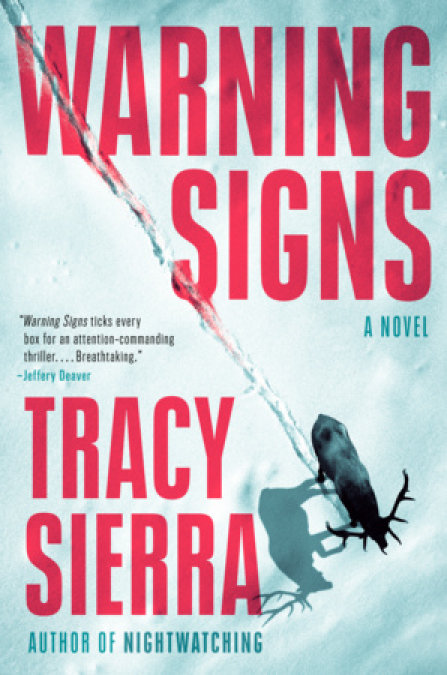
The elk lay curled on the snow, its light brown back facing the boy. Zach stared through the haze of his frozen breath at the antlers extending above the animal’s bulk. He had never seen an elk asleep before. Had never stumbled across any wild animal asleep. Though of course he knew animals must sleep. Must spend much of their time, just like he did, vulnerable.
Zach glanced over his shoulder toward the trail where his father waited just out of sight for him to do his business in private. The sun hit his eyes and he sneezed, whipping back to see the elk’s response.
Nothing. It might be hurt. Or dead.
Driving over Independence Pass in the fall, his mother had spotted a distant elk herd and pulled over. They’d passed the binoculars she always kept in the car back and forth between them, watching two bull elk clash as the cows and calves they fought over either disinterestedly grazed, or were forced to hurry out of the way to protect themselves.
Thinking on that violence, Zach pictured the elk rising, tossing its head. But as he edged in front of it, what he saw was so distant from all he knew that all previous experience was whisked from his mind, useless, and he blinked slack-jawed at what lay there, trying to understand.
From shoulders to snout, there was only bone. The elk’s spine lay neatly on the snow, extending out from mottled red and brown muscle where the neck had met the chest, bloodlessly cut as though cauterized. The vertebrae rested in a precise and graceful arc that ended at the animal’s stripped skull. The boy’s eyes tripped over the seven points on each antler, their weathered brown contrasting jarringly with the whiteness of the peeled skull. All the exposed bone—from the rungs of the spine to the inside of the head visible through the vacant cavity of the one-time nose—appeared almost antiseptically clean. Slick square teeth sat secure and yellowed in matte, pale jaws, interlocking into a tidy rictus smile.
Together with the contradiction of bright scrubbed bone protruding from intact muscle, Zach immediately saw other paradoxes that made his breath shorten, his stomach twist. There was no blood. No tracks traced around the animal’s head and neck, not even its own. The body, the bones, rested as if on display. A fresh earth smell, similar to the scent of the atmosphere before an electrical storm, flared then faded as the wind blew the body’s scent toward him, its appeal disorienting.
Everything about the elk was foreign and unfamiliar, except for the fact of its deadness. The absence of life was so universal in its natural unnaturalness that Zach immediately thought of his mother. The eye sockets stared so evenly past him, so reminded him of the way his mother’s eyes had gazed through and beyond him, that he instinctively covered his face to hide the unsettling sight of the overclean bones.
“Daddy?”
He cringed at the childlike word, but there was only silence. He tried again, correcting himself. “Dad?”
The angle of the wind, the odd acoustics of the winter forest, let Zach hear his father mutter low, “Son of a bitch, what now?”
could be flipped inside out. Flip one way, pink, fuzzy, and smiling. Flip the other way, green, slick, and glowering. As he changed the octopus back and forth, switching Outerself to Underself, Zach had thought only of his father. Impossible to know which was the true face, which was the inside-out one. Did it even matter if it usually smiled, soft and comforting, when you were aware of the furious, slippery thing forming its innards?
“What is it?” Bram called out.
“Can you come here? Please?”
Zach clenched his hands into fists in his mittens, fingernail tearing at the cuticle of his thumb.
“Just has to make me come to him,” Bram said, talking to himself again.
Zach heard his father leave the trail they were following to the backcountry hut, the sound of his inexperienced wallow through the powder distinctive. He winced at Bram’s stream of muttered irritations over the way Zach was interrupting his progress uphill toward his all-important goals.
Maybe the absence of elk brain, the winding away of veins, the plucked eyeballs, the vanished heft of scraggly neck mane, the evaporation of flesh and sinew and life itself, would be enough to prevent his father going to Underself, crossing arms and squinting down at the boy with an exhalation of disappointment.
“Now what is the big—”
Bram paused where Zach had first spotted the elk, not yet positioned to see the strangeness.
“Dead?”
Zach nodded.
“Did you touch it?”
Zach opened his mouth but instead of speaking he shook his head. He saw himself as a fish thrown on a bank, mouth silently opening and closing. He was sure he appeared as stupid as his classmates did when they imitated him trying to say something, anything, when he was nervous.
“You gotta be able to speak up, kid, or else people will walk all over you.”
Zach kept his eyes on the elk as his father approached. The plates of its skull fit together like puzzle pieces, the thin lines between them like the rivers tracing through the topographic maps his mother had taught him to read.
He balled his hand inside his mitten, the nail of his index finger ripping the corner of the cuticle from his thumb. He folded its bloodied stickiness into his palm. Squeezed.
Bram stopped short, shocked to momentary stillness at the sight of the full body. “Holy shit,” he said flatly, then moved closer.
Zach’s shoulders relaxed as his father’s taut irritation dissipated into interest. Bram squatted down and poked at a piece of the whitened spine with the metal tip of his ski pole, knocking a vertebrae askew, then prodding the furred body, the skull. Zach backed away at seeing the perfection of the bones’ alignment set off-kilter, recoiling at his father’s interference for reasons he couldn’t quite assemble.
“The hell?” Bram said as he jabbed, his sharp gaze now judging and evaluating only the elk, in a way that allowed Zach to speak with no hitches or hesitation.
“What could have killed it? Done all”—Zach looked over the split body, the precision of the cut chest muscles—“this?”
Bram stood. “Maybe the back was under snow, but the head and neck got eaten by something? It’s been warmer last month or so. Could’ve melted, I guess?”
“There’s no tracks,” Zach said.
Bram’s gaze swept over the snow, then up to the sway of the pine branches and aspens rimming the clearing. “Birds must’ve picked
it clean.”
Zach frowned. Could birds have fished out brain and tongue and meat? No trees cast shadows across the elk that would have led to uneven melting. And how could anything, even birds, have left the snow bloodless?
“It doesn’t smell bad.”
“True.” Bram agreed. “Probably still frozen.” He jutted his chin toward the animal’s tail. “The back leg’s different. Something was at it for sure.”
Zach had been too occupied with the bright white bones, the strangely surgical appearance of the sliced neck, to notice the leg. But as he moved next to Bram, he saw that his father was right. The back right leg lay askew, its skin and muscle torn and gnawed. Yet despite the leg’s more visceral appearance, it struck Zach as somehow less disturbing, but more explicable; the expected signs of a carrion scavenger. Near the tail there were even depressions that might have been prints, windblown or melted at the edges beyond recognition.
“But the head, and the neck? It’s—don’t you think it’s—not right?” Zach asked.
They stared down at the meticulousness of the cut chest muscles, the scrubbed vertebrae, the way even the pin-width lines between the skull’s plates were scoured clean and bloodless.
“Doesn’t really matter what happened,” Bram said. “But it’ll be a great story to tell the guys—outdoor danger and all that. And tell you what, on the way down we’ll take the skull and antlers with us. ...
We hope you are enjoying the book so far. To continue reading...
Copyright © 2026 All Rights Reserved

 Please log in to recommend or discuss...
