One
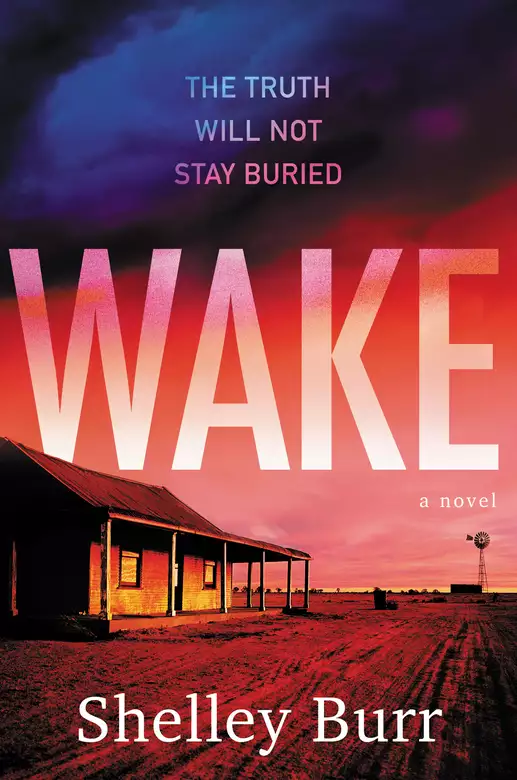
I LIVE IN that house you’ve seen on the news. We painted it robin’s-egg blue the summer I turned sixteen, but in your mind it’s white. Two little pink bikes lean against the veranda, and one wall glows blue with the reflected light of a police car. They use the same picture every time there’s “news.” It’s not worth the expense to send a photographer out to get a fresh one. Not when they want the two little bikes and that streak of blue.
Nobody wants to see proof that one of those little girls grew up.
* * *
The sign above the door to the combined general store and post office read PLEASE KEEP CLOSED—AIRCON RUNNING in slanted handwriting, but if the AC was going it was losing against the hazy late-summer heat. Mina remembered the blast of cold air when they pushed open the door as kids—usually when their mother, worn down packing a dozen errands into a single trip into town, agreed to stop for an ice cream. Either the air conditioner had grown too old, or electricity prices too high, or Mrs. Gilligan had hit that age where skin stretched over bone and the hottest day was too cool for comfort. Mina supposed she could ask, but when you asked people personal questions they felt comfortable asking them back.
“You here for your delivery, darl?” Mrs. Gilligan asked.
The General was closer to a convenience store than a supermarket, but it was still the only place in Nannine to buy groceries. Minda had felt awkward the first few times she turned up to collect a package that was clearly a bulk load of dry goods and cans. But Mrs. Gilligan had never commented, never even gave her a sideways look.
Mina preferred the people who did comment. At least when a person sniped to her face, she knew exactly where they stood. The ones who seemed nice could stay a question mark forever.
“It’s in the back,” Mrs. Gilligan said, pushing herself up off the stool. “I’ve checked the attached invoice, and there are a couple of items missing.” She slid the invoice across the counter. “I do have these all in stock, at the moment.”
Mina skimmed the list, hoping it would be the junk food she’d added on impulse. Or the batteries; they could wait another six weeks. But no. The missing items were vital. The canned beans. Two out of the five bags of dried lentils. And the ground cumin.
She drummed her fingers on the counter, doing the math in her head. The cumin was the key to a lot of recipes, particularly the deep pantry rummages she leaned on in the last days of her grocery cycle. Some days she was nearly out, but couldn’t face the trek into town. Those days had made her an expert in the sort of cooking that would have made her great- and great-great-grandmothers proud.
The door opened behind her, and a man shuffled in. She studied his warped reflection in the glass door of the cigarette cabinet. He was tall and broad, wearing a black pullover and cargo pants despite the heat. He had a black knitted cap on, but what she could see of his hair was blond, with the fuzzy texture that might be curls if he used the right conditioner. His face was unfamiliar—an unusual quality here. Nannine was a barely populated town in Central New South Wales, far enough off the highway that no travelers passed through searching for hot pies and public toilets. The seasonal workers at the surrounding farms were all in place by this point in the year.
Mrs. Gilligan straightened her posture, looking at him with an open curiosity that meant Mina wasn’t out of the loop on any gossip. He was a new face, and that sent anxiety slicing through her gut.
She walked away from the counter with quick steps. She kept her eyes on the lowest shelves as she passed the man, as if she were fascinated by the cheapest available floor cleaner.
Even though she rarely shopped there, she had the layout of the store, and the location of all her typical items, memorized. Three aisles, six shelves, and a row of fridges and freezers at the back. She was conscious of the man as she moved about. He drifted from one side of the store to another, throwing items in his basket with barely a glance at the shelves. Every time he passed the end of an aisle she was in, he turned his head and swept his gaze over her.
That was normal, she reminded herself. If he was new in town, he would have no idea what was where in the store. And it was human nature to turn and look at the only other person in the vicinity as you passed.
It was normal.
He wasn’t watching her.
She grabbed the bag of cumin off the rack and threw it in her basket, her arm whipping out like she was trying to snatch a live bird from the air.
An anti-shoplifting mirror hung from the ceiling, and in it she saw the man come to a stop at the end of her aisle. He examined the display of chips in front of him, but flicked his eyes to the side, once, to look at her.
She planted her feet and stared down at her basket, dragging in a deep breath. He wasn’t the first person to watch her, but this was the first time one of them had shown up in public.
He was waiting for her, waiting until she pushed past him on her way back to the checkout. How long could the two of them stand there, pretending to be interested in their respective displays?
“
Sweetheart,” Mrs. Gilligan said, her voice warm and low.
Mina startled, her groceries rattling in the basket. Her hyperawareness had been focused on him, so she hadn’t noticed Mrs. Gilligan circling around to come the other way.
“Can you get that can of tinned peaches off the top shelf for me? Save me grabbing the step stool.”
With her chin, she indicated a shelf where some customer far taller than the diminutive Mrs. Gilligan had changed their mind and abandoned the peaches among the condensed milk. She smiled, the message clear in her eyes. I see you’re upset. Don’t forget I’m here.
Mina smiled back. Say what you want about small towns, but if you’re one of theirs they know when to huddle up and raise the shields.
As Mina passed her the peaches, Mrs. Gilligan grabbed them with both hands, squeezing Mina’s fingers between the cold metal and the warm skin of her palm. “I’ve already rung those couple of items up,” she said. “I had the codes from the invoice. Want me to put it on your account?”
Mina didn’t have an account. The General didn’t do accounts; they’d phased them out long before Mina was born. “That would be lovely.”
The street outside was washed with sunlight, but so empty. The handful of parking spots in front of the General had been occupied, forcing her to park up the street in front of the pub. There was no sign of the car owners—the pub and the takeaway wouldn’t open until eleven, and all the shops in between were long closed. That meant they had probably parked there and left on the train when it passed through on Friday. Nobody parked in the train station car park tucked behind the row of shops, unless they actually wanted to come back to find their car stolen or stripped down to its frame. Everyone knew any vehicle left there would be unattended for at least a week.
Nannine had sprung up to serve farmers bringing livestock to the saleyards and grain to the storage sheds, but now the family farms were disappearing. Fewer people brought loads through, and with the saleyards closed most of them kept going to the next town. The cargo trains blew straight through. The town had faded back to a few essentials, and its primary industry now was stubbornness. Mina felt keenly every window she passed with the curtains drawn or newspaper taped inside the glass.
She considered the petrol station on the other side of the wide road. There would be someone behind the counter there, and a camera to boot. But she dismissed the thought. She was being silly. She didn’t need witnesses; she just needed to walk a handful of meters to her car.
She walked fast but didn’t run, her keys clutched in her palm with the longest and sharpest of them peeking between her middle and index fingers. Running would be overreacting. Running would be hysterical.
The man had no such qualms. His feet slapped against the pavement, and her heart froze.
“Excuse me,” he said, his voice surprisingly soft. The gentle tone jarred against the havoc he was causing inside her.
She came to a stop in front of the old bank building. It was the most beautiful building in Nannine, a classic colonial boomtown folly with sandstone arches and two columns holding up a lintel bearing the date 1871. The windows were covered with wrought-iron bars, and the enormous wooden double doors were bolted shut. The branch was long closed, the tellers all laid off, but the ATM still worked, tucked into a shadowed corner.
“There’s a camera,” she shouted. “You’re being filmed.”
“Um . . .” He stopped, looking back down the street as if replaying his actions. “Actually the camera only comes on while a transaction is in progress. But if you want to swipe your card, I can wait.”
She wavered. Digging for the card buried in her bag meant taking her eyes off him and occupying both of her hands. Making herself vulnerable.
“Are you Mina McCreery?”
“You know I am,” she said.
She’d forgotten her groceries, she realized, feeling so tired. She’d fled with her handful of items and left the actual order she’d come for sitting in Mrs. Gilligan’s back room. She needed to go back.
“And Evie McCreery was your twin sister?”
“Evelyn McCreery,” she snapped. Mina was happy to accept an alternative to the mouthful of “Wilhelmina,” if only as a defense against “Willie,” but Evelyn stood firm. “Evie” was an invention by the press, saving space in their headlines and upping the “cute” factor.
“I’m sorry,” he said. “I actually knew that.”
Of course he knew. She bet he knew enough about her to fill a notebook. And enough false information to fill a second one. Meanwhile, she didn’t even know his name.
“Who are you?” she asked.
“I’m Lane,” he said, pulling out a wallet. “Lane Holland.” He flipped the wallet open to show her his driver’s license. “I specialize in cold cases.”
“This isn’t a police badge,” she said. She reached out and took the wallet. A flicker of surprise crossed his face. She doubted many people crossed that boundary, but social mores could suck her dick.
The license was real, as far as she could tell. The address was in Byron Bay. If he’d driven all the way from there to talk to her, he was going to be difficult to shake. She tilted it, and found no sign of scratches or discoloration that would show he had doctored the name. The picture had the same light hair, dark eyes, and solid jawline as the man in front of her.
“I’m not with the police,” he said. “I’m a private investigator.”
She tossed the wallet back. “I see. So do you already have a book deal? If you’re planning to shop one around, you’re shit out of luck. There are already two books being pushed out in time for the twentieth anniversary; nobody’s looking to buy a third one.”
“I’m not writing a book,” he said. “I want to lay some ghosts to rest.”
“And what makes you think my ghosts need your help?” she asked.
“I have, if you’ll forgive me for bragging, quite a record of closing cases everyone else has given up on. You might be familiar with the Tammie Peterson case in Walgett? Or the murder of Bronte and Regina Fermin in Albury?”
She hadn’t heard of either of those cases. That softened her opinion of him somewhat. Fame seekers didn’t chase after cases that even she, with such a vested interest, had never heard of.
“Three girls,” she noted, and let the implication hang in the air between them. “All children?”
“That’s my specialty, yes,” he said in a tense, clipped voice. “I have a younger sister.”
Mina bit back an “ugh” at the cliché. “I suppose you’re interested in the reward,” she said with a sigh.
“I won’t turn it down,” he said. “This is my profession, I need to eat.”
“Best of luck to you, then,” she said. She pushed past him, walking back toward the General.
“Please,” he said, drifting behind her like a balloon she was pulling on a string. “I know how much you value your privacy.”
“Obviously you don’t,” she said. She shifted her keys in her hand, pushing the sharp one to once again rest between her fingers like a talon.
He glanced down, eyes drawn by the movement, and fell back but continued to shadow her. “That’s why I can help you. Don’t you want peace?”
“I’ve found peace,” she snarled.
She pushed through the door, and let it swing closed between them.
We hope you are enjoying the book so far. To continue reading...
Copyright © 2026 All Rights Reserved

 Please log in to recommend or discuss...
