'A powerful debut with plenty of northern soul . . . it's these untold stories that need to be on the page - now more than ever' BENJAMIN MYERS, Guardian
'A spirited and heartwarming portrait of a fast-dying community, and the dogs are wonderful' FT
'These hands,' he said, and spread the paira them out wide so we could see the callouses and the little lines of coal dust underneath his skin; 'these hands were made to pick out summat precious from somewhere that doesn't wanna give it up.'
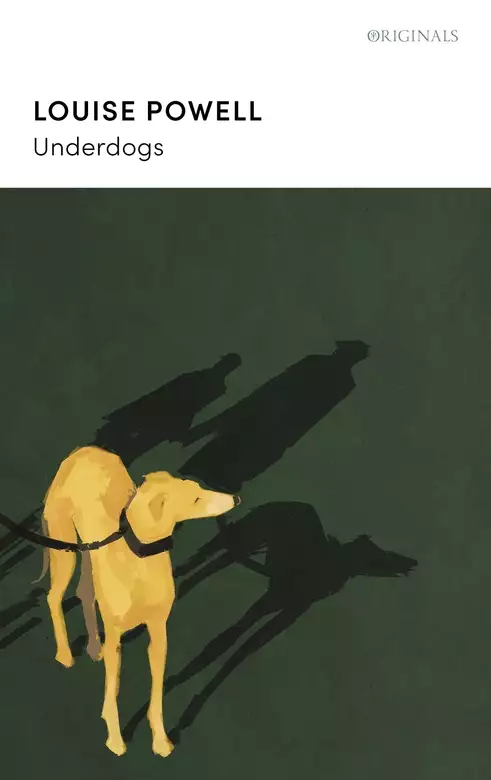
County Durham, 1998. The pits have closed and jobs are hard to come by, but charismatic ex-miner Bertie has a plan. He runs an underground gambling ring at the local dog track which offers down-on-their-luck blokes a way to turn their life around.
Reg's ten-year-old son George knows his dad hasn't been the same since Mam died, and the letters with scary red type that keep coming through the door can't be good news. So when Bertie offers Reg and George the chance to race Goldie, a beautiful fawn greyhound, they jump at the opportunity.
To succeed they'll need to learn how to navigate the larger-than-life world of the flapping track, all while dark secrets from Bertie's past threaten to unravel the operation. Do Reg and George have what it takes to pull off the gamble of a lifetime?
'A love letter to a disappearing community' Service95
'Beautiful, heartbreaking, uplifting, funny . . . At times my own heart was racing as if with the dogs . . . a story of love, of loss, of hope; of life and how to live it even when the chips are down' JENNY KNIGHT, author of Wild Moon Rising
'Told with a full-blooded voice that is as quick and alive as the hounds that fill its pages, Underdogs captures a forgotten way of life in a forgotten part of England with rare honesty and wit ' SCOTT PRESTON, author of The Borrowed Hills
Release date:
July 2, 2026
Publisher:
John Murray Press
Print pages:
272
* BingeBooks earns revenue from qualifying purchases as an Amazon Associate as well as from other retail partners.
Time was, ya could ask anyone east of Durham where to find work, and they’d tell ya, ‘Easington Colliery.’ They didn’t mean the pit that give the place its name, mind; that was five year gone be nineteen ninety-aight. They meant this red-brick terraced house with cream lintels, a scrubbed step and two hangin baskets fuller violas. And what they really meant was the bloke who answered the knock to his green door.
Thin as a greyhound he was, with blond hair gelled back from his high forehead. Grey eyes that went platinum in bright light and cheekbones sharp enough to cut diamonds. Always clean-shaven, with this pointy jaw that shone with the sorta aftershave ya can only buy from Fenwick’s. He’d a pug’s nose but a wolf’s teeth, and two fangs were plated with gold. Twenny-four carat; just like the crucifix that hung from his veiny neck and the sovereign rings round every finger. He’d a royal-blue jumper over a starched white shirt and jeans that clung to his bony legs; brogues that glowed how coal does in a fire.
Bertie, this bloke’s name was; and everybody knew it.
I’d just gone ten year auld the day that I met Bertie. Well, I say ‘day’, but it was half five in the mornin and it was Januree, so really it was night. Proper stinker of a night, an all: wind that come from Siberia to turn the minin terrace into a ski slope. ‘Wish I coulda left ya in bed, George,’ me dad said while we hauled ourselves up the hill be lamp-posts and window ledges; but I telt him I was used to early mornins now. Cos this was the fifteenth in a row that’d seen us on this street, chins in our fleeces and eyes peeled for two hangin baskets.
Which swang either side of a green door, same as every other mornin; but where before they’d been fuller purple violas, now there were loadsa yeller ones. And it was one big gasp that me and me dad did, while we gripped each other’s hands. As that silent terrace seemed to echo with heavy breaths and poundin footsteps; men’s palms and fingers and nails that strained for the knocker that I pulled me dad towards. So quick, he almost tripped over his laces; but he caught the brass greyhound just in time.
And we found ourselves inside this kitchen with walls the colour of pound coins. Two L-shaped rows of cupboards that coulda been made of gold ingots, with cast-iron greyhounds’ heads where normally there’d be a handle. This marble worktop, a silver sink and a splashback that looked to have been tiled with diamonds; more diamonds in the leaded window to the left of the closin door. It’d been varnished gold, of course; so had the sanded floorboards and the four chairs round the kitchen table that Bertie brung them baskets of yeller violas towards.
But he never walked: he strutted. Head held high and chest stuck out, so ya couldn’t miss his gold. How it grew in his hair and capped his teeth; the way it dripped from his neck and covered the finger he pointed at me dad. ‘Sit,’ he said, how ya would to a dog; and me dad buckled on to a chair. All shadowed eyes that stared at his trainers; paystee skin nicked with shavin cuts he’d stuck scraps of bog roll on. And forgot to take off before he’d knocked on the door; so I leaned in and peeled em all away. Then clenched me fist that tight, I could pretend I felt the pain of clickin bones; when really, it hurt to know that me dad’s skin didn’t glow like Bertie’s.
‘Gonna introduce yaselves, then?’ he said; but it was all me dad could do to keep his breathin steady. It had a habit of speedin up whenever someone asked him summat; so I was the one that said, ‘I’m George and me dad’s called Reg.’ And I squeezed his yeller fleecy arm in its usual place, and smiled as if I wasn’t also havin to remind meself to breathe in through me nose and out through me gob. As if the blond bloke I turned to was just another neighbour who wanted to know if we’d seen their missin cat; not this king who had the power to change our lives.
‘Them yeller violas in the baskets mean ya’ve gorrer job gannin,’ I said, then gimme dad’s arm another squeeze. And another, and another, till he whispered, ‘Please let me have it!’ And pulled this piece of cardboard out his pocket: the blank side of a box of No Frills teabags. Or at least, it’d been blank till I’d borrowed one of the school’s handwritin pens and spent the night helpin him to write the CV that I put in Bertie’s ringed hand. He jabbed the name of the factory where me dad had worked and said that he’d heard the gaffers there had liked to crack the whip. But once I’d give his arm another squeeze, me dad said that he’d enjoyed the graft; and Bertie’s lips bent upwards so his gold teeth shone through.
And his smile only grew when he read the first of me dad’s references: this typewritten page from five year back that was packed with praise that Bertie repeated. ‘Reginald is an impeccable timekeeper who respects authority,’ he beamed as he read out; but his face fell when he seen the second letter. Shoulda been headed with me dad’s auld school crest; but instead there was the logo of the bank. Red to match the ink that run across the page as me dad rasped, ‘Help me!’ And though I knew I needed to squeeze his arm, I could hardly make me fingers twitch when I seen Bertie’s gritted teeth and narrer grey eyes. His gold hands tightened round the letter and held it too high for me to read; and I couldn’t clear me throat to say there’d been a mix-up. That me dad musta brung the wrong letter be mistake; but I’d barely had the thought when Bertie balled the paper in his fist.
And made as if to shot it at me dad; but then he dropped his hand and sighed, ‘I’ll start ya this mornin.’
2
So it was that me and me dad found ourselves sittin at Bertie’s table. Packed tight with dinnerplates, it was: these gold things piled high with fat brown sausages and crispy bacon. Fried eggs with double orange yolks and scrambled ones soft enough to kip on. Hard-boiled eggs as big as me hand; omelettes the size of me head. Fried tomato halves and rounds of black puddin gone caramel from the hot oil. Fresh white bread all soggy with drippin; toast as gold as the plates cos of the butter. Every kinda berry in crystal jars of jam and sugar cubes in gold-edged wrappers. The teapot was gold an all, with six painted greyhounds runnin up its spout; and there were more of em racin over the gold saucers and cups that Bertie poured our tea into.
‘Get stuck in,’ he said. ‘Ya gonna need ya strength now ya workin for me.’ And while me and me dad filled our bellies, Bertie filled us in on how his business worked. ‘I’ve not always made me money outta greyhounds,’ he said, ‘but I cannot remember ever bein without a dog to run.’ Not at places like Brough Park or Sunderland, mind; them tracks had to follow the National Greyhound Racin Club’s rules. ‘Nah,’ he telt us, ‘I run me dogs at the independent tracks.’ Or what people liked to call the ‘flappin’ tracks, after the rags the blokes of his grandad’s time had liked to wave at the dogs when they raced.
Cos his grandad had kept greyhounds, and his dad; and every other bloke that side of the family. But it was just a bit of fun, cos they all got their wages be workin down the pit; so when Bertie got took on at fifteen, he had nee reason but to think he’d be there till the duration. Then that Michael Heseltine come along and give him reasons, big fat reasons called pit closure and redundancy. Nearly three decades of hard graft, he’d give; and what did they expect him to do after that? Sit round all day pushin pens or puttin cherry after cherry on top of a conveyor belt of cakes? ‘Fuck that! These hands,’ he said, and spread the paira them out wide so we could see the callouses and the little lines of coal dust underneath his skin, ‘these hands were made to pick out summat precious from somewhere that doesn’t wanna give it up.’
So he thought about gannin to the doctor and tellin him all about his chest. The three bouts of bronchitis that come round with Bommie Night, Christmas Eve and Valentine’s Day. The half-pint of black phlegm he hawked up off his lungs every mornin; how he always had to stop twice on his way back up the terrace. It was a truth that all his mates were tellin, and gerrin put on the sick for; so why not him? ‘It wasn’t Incapacity Benefit,’ he said. ‘It was compensation off them Tory bastards that’d forced us into this position.’
Bertie woulda claimed it an all, if it hadn’t been for this bloke at the dog track. All dressed up in double denim, he was, with a corker of an aighties mullet; but it wasn’t his style that made Bertie look, it was his hand. Cos the palm was pointin up, and it was stacked high with this wad of notes. Blue fivers, orange tenners, purple twennies and red fifties all mixed up and shinin like a tin of Roses, only these hadn’t come from Father Christmas’s sack. These had come from this red leather satchel with CAN YOU BASH BAZ THE BOOKIE? stamped on in big black letters.
‘But to me,’ Bertie said, ‘it read Gold Mine.’ So insteada gerrin signed on the sick, Bertie signed on the dotted line for four greyhounds, and used a chunk of his redundancy money to bet with. And it wasn’t long before he brung up nuggets from his new mines: one hundred and fifty from Baz’s satchel, a hundred from Roland’s, forty from Richie’s and seventy outta Alan’s. Three hundred and sixty quid he won off his first dog, four hundred off his second – till he was earnin more from gamblin than he’d ever earned down the pit. The more he won, the more dogs he bought, and the more dogs he bought, the more he won. It was a perfect circle of the richest seams – till the bookies come together to block his way.
They just snapped their satchels shut one night and said, ‘We’re not takin any more bets from you on any of your dogs.’ They’d nee choice but to take a couple of Bertie’s reet hooks; woulda had to take a load more if the other blokes hadn’t grabbed holda him. Five musclemen it took to drag him off; another three to keep him off. Not that they were stickin up for the bookies, mind; they just didn’t want nee scrappin when there were bairns and lasses about – and they weren’t the only ones who felt like that. ‘Ya either save it till there’s only blokes around, or take the fight outside,’ said frail auld Nigel who ran the track. ‘Now get yaself off home and divvent be comin back here for a month!’
It was a month alreet: a month of Sundehs. Twenny-aight days of Sabbath quiet mixed with torment straight from hell. Burned Bertie up, it did, to think of how the bookies had got one over him; set him pacin like a restless spirit up and down the kitchen. There was lino on the floor then: silver, with two rows of worn-out white. Wore him out an all, the thought of replacin it; so he give one of his mates a bell and asked him to rip it up for him. Just about to kneel down near the sink, his mate was, when one of the greyhounds come runnin up to greet him; give him these big, sloppy licks that could fool anyone into thinkin he wasn’t Bertie’s dog at all.
‘Gerrin there!’ Bertie shouted; not at the dog or his mate, but the Eiffel Tower fuller lightbulbs that’d just come on in his head. Made him see that even though them bookies could pack in takin bets on his dogs, they couldn’t stop takin em on everyone else’s. All he had to do was ask his mate to take that greyhound to the track, and gerrit marked up to run under his mate’s name. Get him to enter the dog to run at the first meetin he was allowed back, then show them bookies that he’d found another route to the gold mine. And all of a sudden, his month’s barrin wasn’t a prison sentence: it was a countdown to the biggest payday he’d had in all his life.
Cos he didn’t get the one mate to take a dog to the track; he got three of em. And this time when Bertie run up to the bookies, it was to hit them in the satchel. They haemorrhaged fifty-quid notes; spewed twennies, tenners and fivers all purple, orange and blue like fresh bruises. Them same aight musclemen who’d held his arms behind his back were pumpin em up and down cheerin to see the bookies take a hammerin; and even Nigel who ran the track said, ‘I knew ya’d work out how to batter em without usin ya fists,’ and give him this big smile.
Bertie’d worked summat else out, an all: nee bookie was ever gonna lay big odds on a dog ‘owned’ by his three mates again. But he’d loads more greyhounds, and knew loadsa lads who were up for doin what his mates had done. Aighteen month it took, to get through his list of people; but all that time, he was drawin up another. Nee names on this one, and just the one category: blokes who were down on their luck.
‘But your luck,’ Bertie said to me dad, ‘it’s changin.’ And before we could do so much as swally our bacon, he whistled in this greyhound that looked to have been made of pure gold. Twenny-four carat, with a nose that was made of ebony and diamonds for teeth. There were muscles bulgin out her neck and chest, but I coulda fit me hands round her waist. And where her front legs were straighter than a ruler, there were curves in her back ones that made me think of circles. Nee wonder: her tail was makin that exact same shape when Bertie stroked the fur around her shoulders.
‘Cos today,’ he said to me dad, ‘ya gonna take this fawn bitch to the track and get her marked up to run in ya name. Then Thursdeh, ya’ll take her to win her first proper race – and gerrer quarter of whatever I end up winnin off me bet.’
3
So it wasn’t ya usual sorta job; and it wasn’t ya usual sorta directions me and me dad had to follow to get to the dog track that same mornin neither. These were the days before Tom Toms and Google Maps, when other people telt ya how to find somewhere ya’d never been before. They’d give ya this list of lefts and pubs and reets and road names it was nigh on impossible to remember. But I’ve never forgot how Bertie telt us to find the track: ‘Turn on to the road with a white pub on its corner; the bitch’ll scent the other dogs from there.’
‘D’ya reckon that’s the one?’ me dad asked as he carried me on his shoulders to this white pub at the reet arm of a crossroads; but it was Goldie that answered. ‘Goldie’ was the bonny fawn lass who’d first drew our eyes in Bertie’s kitchen, and now she was at it again. Stood to attention like a soldier, she was: gold lugs pricked in salute at the blackboard on the pavement. It had this chalked-on clock with a smiley face that meant that Happy Hour was at two – though ya’d reckon it’d already started from how Goldie’s tail wagged when me dad telt her to walk on.
She didn’t walk, though: she jogged straight past the pub and along the path that sloped downover. There was this row of bungalows built high off the road, all white UPVC doors and bow windows with them little leaded roses that always made me dad say, ‘Aren’t they bonny?’ Now normally when I answered ‘Aye’, I meant it; but this time I didn’t. Cos the cold had made the windows steam up with condensation and turned them leaded roses into bloody pupils starin outta big square eyes. Reet the way down the slope they watched us; not that me dad or Goldie took any notice.
They were too busy playin Tug of War with her lead: him with his hand wrapped twice in the leather, her with her bull’s neck threaded through a thick collar. He’d bend at the elbow to pull her back, then she’d claw at the ground till he swang his arm forward. Sounds a bit violent when I put it like that; but Goldie’s tail was gannin like the clappers and me dad was laughin the sorta laugh I thought he’d lost with me mammy. Proper belly laugh, it was; and the knot in me own undid itself the second that laugh started. Freed me up to look back at them bungalows, and see the evil eyes had turned back to bonny leaded roses.
So I started to smile while we went up the tight bends; didn’t even flinch when Goldie did this whine. Not a sad whine, or a hurtin whine; it was the sorta whine three-year-auld lads do when their mates are in the middle of a game of footy and they’re stuck waitin for their nana to finish doin up their laces. ‘Howay, I’m missin all the fun!’ Goldie was sayin in dog language. But like a short-sighted nana, we couldn’t see where the fun was – till we were reet on top of it.
Through a gap in the traffic and some wood gates was this big square of gravel packed bumper to bumper. There were red Transit vans with plumbers’ names stuck on; silver Hondas what had more dents than a reduced tin of beans. Blue Fords with binbags taped over back windows and green Jags with velvet headrests. White Nissans with extra-large exhausts and black bonnets on yeller hatchbacks that made me wonder if whoever drove the car kept bees; and this buzz went through me body when I looked from the cars to the people.
There were auld dears in Deidre Barlow specs and pleated skirts straddlin black greyhounds while they polished their collars with a spat-on ball of bog roll. Auld blokes in checked flat caps and long navy coats liftin fawn dogs outta car boots. Women with bottle-blonde hair greased back in buns, who clipped leads on with one hand and wiped their babbies’ runny noses with the other. Baldy fellas in sweatshirts and jeans who puffed away at fags while they buttoned up their greyhounds’ coats. Lads in skin-tight tracksuits with three strappin brindle dogs in each hand, but breath enough to whisper to the lasses. Neon pink, them lasses went, till they matched their tracksuit tops and the hands that rubbed summat into their greyhounds’ muscles. Summat their little brothers and sisters squirted from a spray bottle – while their mammies kept an eye out.
‘That’s enough,’ said one; this well-built woman with a blonde bun, a cream puffer jacket and hands like bin lids. It was nee surprise her little lad give her the bottle straight back; neither that me dad give a start when she seen him starin and said, ‘Liniment.’ Well, I say that she said it, but really she shouted, over all the car boots slammin, the dogs yelpin and the people yellin ‘Hiya’ to one another. ‘Liniment,’ she shouted, while she shook the bottle of the browny-yeller stuff. ‘Loosens the muscles up before they run, y’kna?’ Summat in our faces musta telt her that we didn’t; neither that we’d nee idea where we had to be. ‘Need to take the bitch down there, lads,’ she said, then pointed at this set of steel gates.
We were a little way off em when Goldie span to face the way we’d come, takin me and me dad with her. ‘S’alreet lass,’ he said, thinkin she’d turned cos she was scared, but I could tell she’d sensed summat. Cos her lugs were up and her eyes were glued to the gap in the fence she’d pulled us through. It was me dad that did the pullin now: gentle on her lead. ‘Howay Goldie, don’t show us up,’ he said out the corner of his gob; but lookin round, I seen that there was nowt to be embarrassed about.
‘The other dogs’re doin it as well, Dad!’ I said, though not as quiet as I’d meant to; cos the woman with the liniment looked over.
‘Aye,’ she said. ‘They know Bertie’s comin.’
Not on foot, like we had: he come in this big gold sports car. There was a gold greyhound hood ornament on its bonnet, and two more gold greyhounds where there’d normally be door handles. The sorta blacked-out windows I’d only ever seen in fillums; and Queen’s ‘I Want It All’ was playin that loud ya’d reckon we were at a concert. I had to pinch meself to check that what I seen and heard was real; and I give meself another nip when them car doors opened. Cos they didn’t swing sidewards, like all the doors I’d. . .
We hope you are enjoying the book so far. To continue reading...

 Please log in to recommend or discuss...
