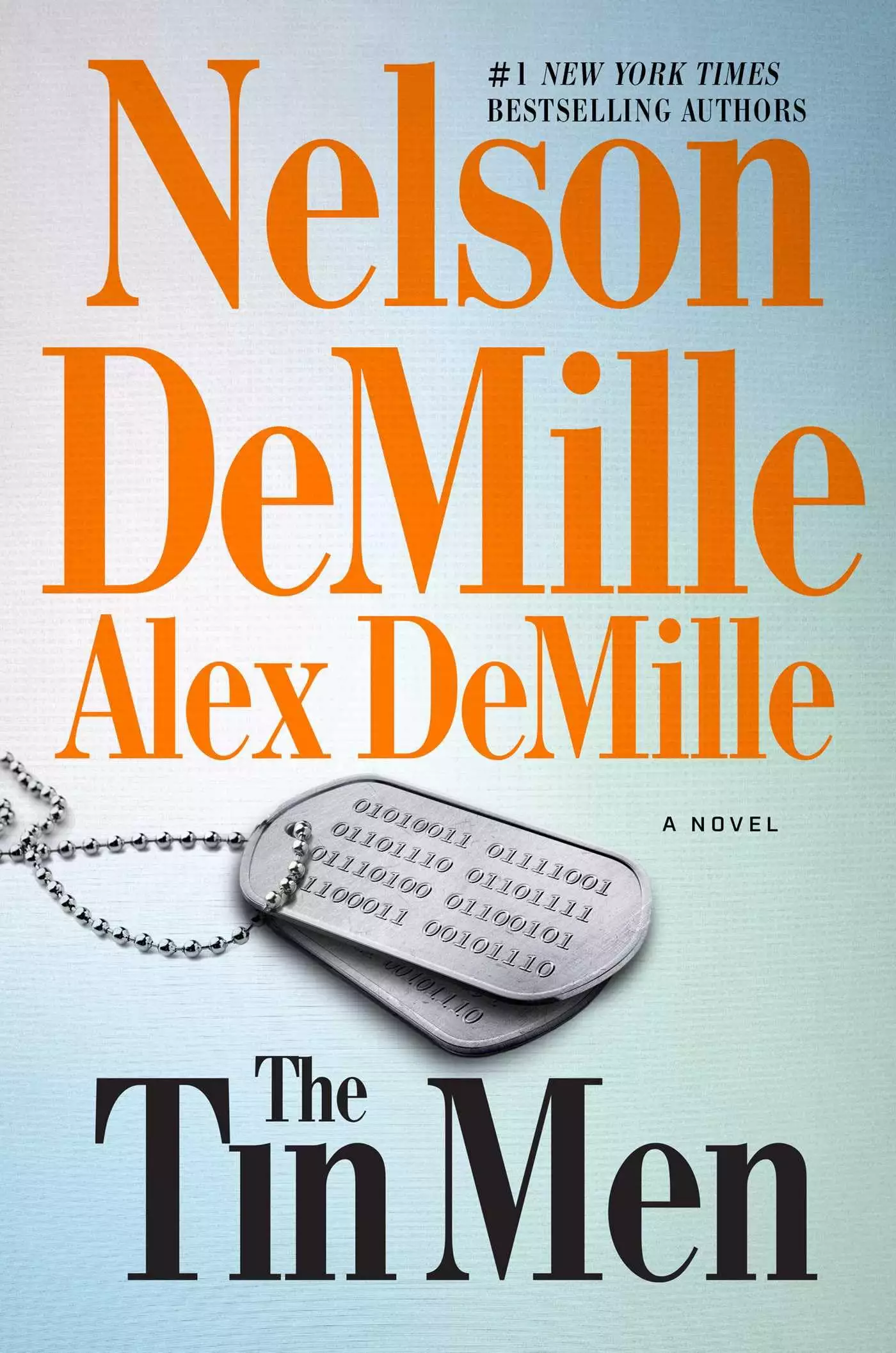
At a top-secret Army training facility in the Mojave Desert, Special Agents Scott Brodie and Maggie Taylor plunge into a deadly web of military suspense, AI technology, and robot soldiers as they unravel the shocking murder of a senior scientist in this gripping thriller from New York Times bestselling authors Nelson DeMille and Alex DeMille.
Army CID Special Agents Scott Brodie and Maggie Taylor team up for their toughest assignment yet as they are dispatched to Camp Hayden to investigate the death of Major Roger Ames, the chief scientist in charge of the top-secret war games being conducted between a platoon of Army Rangers and a fleet of “lethal autonomous weapons.” Brodie and Taylor find themselves at ground zero of the next generation of warfare, and must untangle the complex web of alliances, animosities, and secret agendas among the men and women of the isolated facility.
In a place cut off from the world and exposed to the harsh desert elements, everyone is a suspect—from the zealous camp commander who pushes his men to the limit, to the Rangers slipping into madness due to isolation, grueling training, and rampant abuse of performance-enhancing drugs, to the late Major Ames’s own research colleagues. Brodie and Taylor must uncover layers of deception to find the hidden hand behind the murder of Major Ames, and the real purpose of the activities at Camp Hayden and its terrifying arsenal of next-generation weapons.
This gripping thriller, the final novel from the legendary Nelson DeMille, coauthored with his son Alex DeMille, is a masterful blend of suspense and cutting-edge technology. It is a page-turning and thought-provoking exploration of the implications of AI in modern warfare and is a must-read for fans of military thrillers.
Release date:
October 7, 2025
Publisher:
Simon & Schuster
Print pages:
384
* BingeBooks earns revenue from qualifying purchases as an Amazon Associate as well as from other retail partners.
Chapter 1 CHAPTER 1 BRIGADIER GENERAL STANLEY DOMBROSKI HUNG up the phone and listened to the sound of his own breathing, and of the rain beating against the windows of his second-story office. He recorded this moment in his mind, thinking he might want to recall it someday.
He rose from his desk and looked out the window. The heavy downpour pelted the flowering dogwood trees that lined the strip of lawn beside the United States Army Criminal Investigation Division headquarters in Quantico, Virginia.
The spring rains had started early this year, and come on stronger, and would not let up. At least, that was how it felt. But maybe the weather was just the weather, as it had always been, and the thing that was changing was Stanley Dombroski.
This might not be a homicide, Stan. This might not even be a crime.
The phone call had come from his boss, Major General Stephen Hackett, the Provost Marshal General, who was the commanding officer of the Army Criminal Investigation Division and the Army’s top law enforcement official. Stephen Hackett generally did not hand down assignments personally, and Brigadier General Stanley Dombroski was no longer supposed to be directly overseeing cases either. But this was something different. Something big. The rules of rank and responsibility did not apply.
Dombroski walked to the window, where he caught his reflection in the rain-streaked glass, and the glint of the general’s star on the shoulder loop of his green service uniform.
Getting older had its perks. And the promotion to general that he thought would never come finally had. The pay raise was nice, but he lived modestly and hadn’t needed it. What he had needed was the respect and recognition that was owed to him.
He’d finally gotten that five months ago, after he’d taken a big swing on a high-profile homicide case in Berlin. From the point of view of the higher-ups in the Pentagon, it was supposed to be a rubber-stamp job. Let the Germans do the work, nod along, and say danke schön. It was their jurisdiction anyway, and the case looked pretty open-and-shut.
But something inside General Dombroski—then Colonel Dombroski—told him not to follow the script. It was probably the same qualities that had led his wife to leave him: arrogance, paranoia, and a pigheaded will. The good stuff.
So Dombroski had assigned the Berlin case to two CID special agents who he knew would follow the truth wherever it led, which in that instance was into the deepest abyss of human evil.
We’re on the bleeding edge here, Stanley. We need to get this right.
Getting it right meant getting the truth, and in this case, the truth might be dangerous. This was not the time for safe assumptions, or half measures, or ass covering.
He walked back to his desk, picked up the phone, and punched a number. It rang once, and then Special Agent Scott Brodie said, “Good afternoon, General.”
“Scott. Are you at HQ?”
“Yes, sir. Ms. Taylor and I are in our office having a working lunch.”
“I need to see you both in my office now.”
“Yes, sir. Can I bring you some chicken lo mein?”
“No thank you.” He added, “I’m going to need you to clear the decks, so think about who can inherit your caseload.”
“With pleasure, sir. I look forward to our new assignment in an interesting and exotic locale.”
“Prepare to be disappointed.”
“Yes, sir.”
Dombroski hung up. Turning down carbs was a relatively new habit of his, but it was already earning dividends.
Chief Warrant Officers Scott Brodie and Maggie Taylor were two of the most talented and hardworking special agents in CID. They also had intense personalities, problems with authority, and a tendency to strike out on their own under dangerous circumstances, without regard for personal safety or legal jurisdiction. For Stanley Dombroski, assigning Brodie and Taylor to a big case with vast national security implications was never an enjoyable experience as it unfolded, but once it was over, it always felt like it had been the right choice. Kind of the inverse of eating chicken lo mein.
He watched the rain as he waited for his agents to arrive. He could see only the outline of this thing, the bare facts given to him by General Hackett. But it didn’t look good, and no amount of wishful thinking would unring that phone, or undo what was being done by the military’s top scientists and engineers in the name of progress and preparedness.
The road to Hell was paved with good intentions, and General Stanley Dombroski feared that the Army’s best and brightest were out there laying the asphalt.
We hope you are enjoying the book so far. To continue reading...

 Please log in to recommend or discuss...
