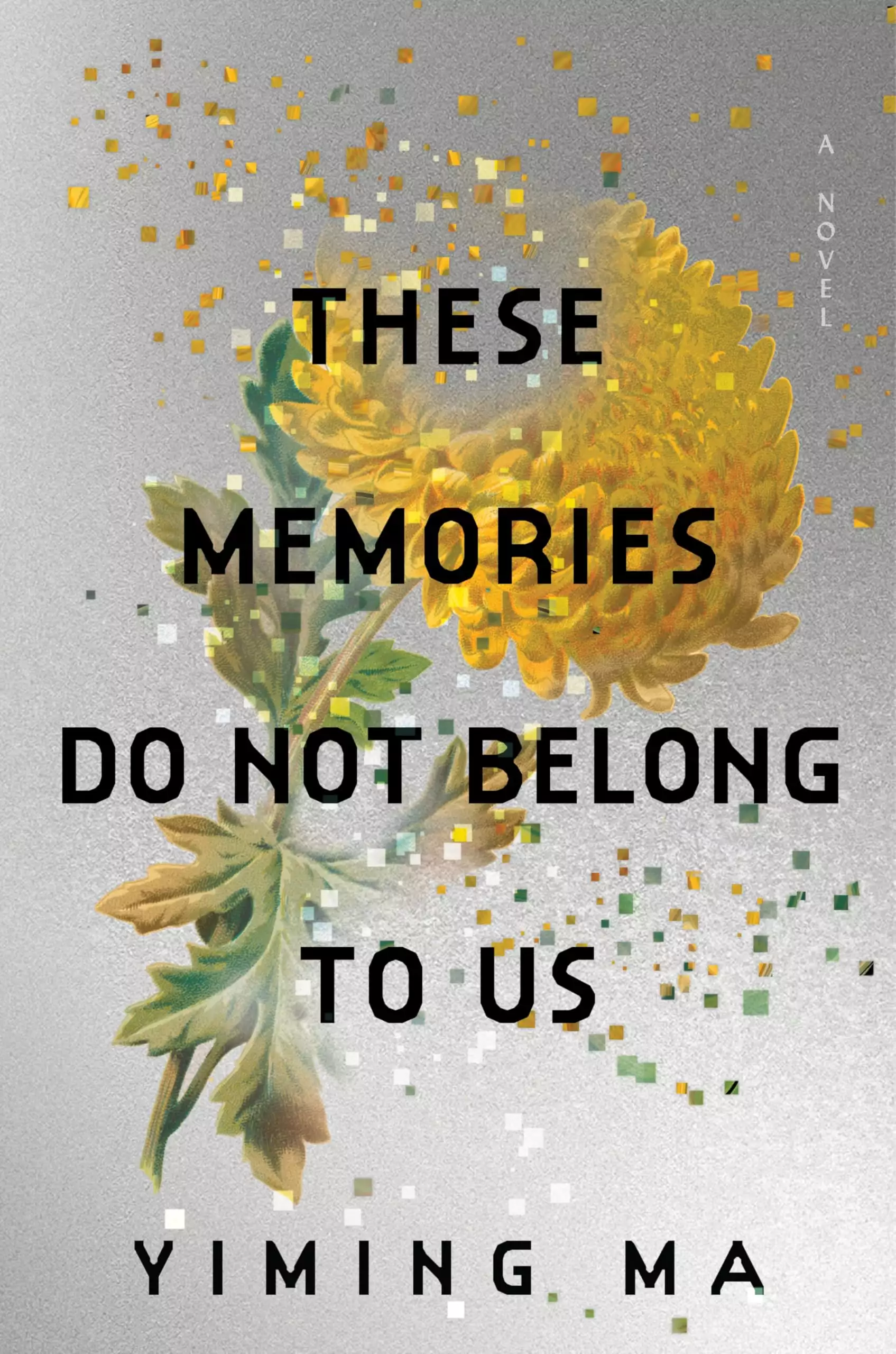
When I was a boy, my mother used to tell me stories of a world before memories could be shared between strangers. Although all the stories took place long before she had been born, it was easy to believe that she had witnessed them firsthand. Her lips would tremble, her voice rising with excitement. Wistfully, she would describe a time when our ancestors shared their thoughts using nothing more than words, such a primitive tool to allow others to experience their most vivid, personal memories.
Some of the Memory Epics from which she drew her stories must have been censored already by the Party. Any loyal patriot would have deleted these memories—for instance, the tale of an armless swimmer during the Cultural Revolution, when citizens still raised children with disabilities. Or the meta-creational Epic revolving around the Incineration of Ri-Ben, a military campaign that our youth no longer study. Why keep any of them, if they might put us at risk of the Party’s wrath? Had one of our neighbors reported us, our family’s entire collection of memories might have been confiscated, and not only the ones we should have known to hide.
Since I was a child, I accepted that my mother was not an ordinary woman, not least because of her choice to raise me alone. Late in life, she decided that she wanted to be a mother, and she had refused to allow the absence of a suitable partner, or the downgrading of her social credit score, to stop her. I’ve always thought that one Qin proverb epitomized her fearlessness: even if the sky collapsed, she would use it as a blanket to warm her body. So why would the memories stored in such a woman’s Mindbank be any less remarkable? Since the devices are directly installed into the hippocampi in our brains, I like to think of her Mindbank as simply the extension of her mind. Still, my mother was careful never to send any sensitive memories to my Mindbank, to avoid unwanted attention.
Now that I reflect on that precious time together, perhaps that was why she told me all those stories via voice in the privacy of our bedrooms, back when we were permitted to stop our Mindbanks from logging data at home, and away from any neighbors who lived in our Tower.
All my life, my mother had tried to protect me. So why would she risk everything by leaving me such a dangerous inheritance?
—
IT IS HARD TO IMAGINE a world when mindbanks did not exist. After all, none of the prosperity we enjoy in Qin would be possible without their invention. Before Mindbanks, every military scientist conducted their research in solitude. The only way they could collaborate was via voice or trading words across physical screens; think of all the meaning and nuance lost in every exchange! When the first Mindbank prototypes were tested by the military, our rate of scientific innovation began to accelerate exponentially. Without them, it is doubtful whether Qin would have been able to defend itself against the Western powers that oppressed our ancestors, much less crush our enemies once and for all in the War.
Mindbanks made Qin into this great empire. So it is natural that for most of my life, I could not comprehend my mother’s distaste toward Memory Capitalism: the buying and selling of Memory Epics that represents the bedrock of our economy.
Once, when my mother casually asked what memories had been recently assigned for my education, and I proudly recited a patriotic passage as my answer—she laughed so loudly that I worried she was unwell. To my surprise, she stood and squeezed my shoulder, whispering in
my ear words that sounded as if they’d come from some forgotten historian: that the Party’s greatest triumph lay not in any scientific breakthroughs but rather its understanding that we all share a deep longing for social harmony, even at the cost of remembering our true histories.
What did she mean? This happened only a few days before the Gaokao exam, which would determine my future. I can still recall my confused silence, not quite comprehending but reluctant to ask her to clarify for fear of prolonging our memories of the conversation. It was around this period that the Party mandated that every Qin citizen keep their Mindbank streaming at all times, reassuring us that the data would be used only to improve the quality of entertainment, rather than for surveillance. Naturally, the Party believed in protecting the privacy of its citizens.
Another time in my youth, I asked if my mother might allow me to explore her Mindbank, and to my surprise, she refused.
What if I told you that some of my most-accessed memories belong in the Criminal Archives? my mother said. Would you still want to see them?
I drew back, stung. Walking away, I assumed that her response had been sarcastic because she wanted her son to work hard to build his own wealth of memories. It wasn’t until ten moons ago that I revisited that conversation—on the day my mother breathed her last, and her Mindbank transferred to me her entire collection of Memory Epics. Including those that had inspired the bedtime stories from my childhood.
For a long time, I did not dare open my inheritance. Irrespective of the fact that the memories had been sent automatically, the Qin estate laws had recently been revised so that all passed-down assets would be stored and eventually reviewed by the Censors. Once processed, if any part of
the inheritance became flagged by the Party, who knew what punishment would descend upon me? But when I ultimately entered the memories, compelled by the grief of losing my mother and the guilt of avoiding her final gift, I was stunned by what I found.
Certain memories were so corrupted during the transfer that my Mindbank restarted upon trying to access them. But the stories she did successfully send reflect the very journey of how Qin became the glorious empire where I and my fellow citizens live. And despite their illicit nature, and my shock that my mother would possess such a collection, I could not resist.
I proceeded to experience every single memory.
The Party may not want us to remember our past. But this history is too important to keep hidden within my family. Given the imminent advancements in Mindbank technology, I would not be surprised if the rumors are true and the Party will soon be able to search across all devices and delete any seditious memories, even if they were never uploaded onto any public Cloud. It is a matter of time before my inheritance undergoes its scheduled review by the Censors; surely then, the Red Guards will arrest me and confiscate my mother’s stories once and for all.
What will be left of her then? Will I even be able to remember her? Growing up, I never met my biological father, so my mother was all I had. I rarely misbehaved, wanting to be a good child to make her proud. Perhaps I still harbor such desires, even after her death. I never want to forget the warmth of her voice, the tenderness with which she used to sing me to sleep whenever her stories excited me too much to rest.
No, I cannot bear living without her memories. So before that day arrives, I invite you to experience her stories. Even if the cost of sharing these truths is my freedom.
—
entered these memories and assumed the same risks I have. My decision to release these Memory Epics on this unencrypted Cloud, for every Mindbank to access, stems from my belief that it might have been my mother’s wish as well. She taught me that certain stories were too valuable to hoard as wealth, the way powerful families did to preserve their assets and influence across generations; rather, we have a collective duty to share them freely for the good of our society.
Should you decide to enter, do not be afraid to engage with these stories in any order. Embrace your freedom: there is no need to reproduce the precise cadence in which she told them. Some Memory Epics, created before the War using obsolete technology, may appear more fantastical than the ones that came later, especially those adapted from spoken or written histories. Still, I marvel at the infinite permutations of Memory Epics, as each story transforms and optimizes itself for every unique Mindbank. My hope is that the memories faithfully represent the stories of ordinary people—before, during, and after our society was irrevocably transformed—as we each sought our own ways to survive.
The last memory was drawn from my mother’s own life, the only tale in this collection that she never shared with me via voice. Although I gently ask you to leave her story for the end, I know I have no right to dictate your path forward.
None of these memories belong to me anyway. Not anymore, and never again.
PATIENCE AND VIRTUE AND CHESS AND AMERICA
Before the Qin-American orphanage opened its doors, the building had been a private school for children in what used to be Washington, DC. When the cherry blossoms bloomed every spring, the school’s phones would begin ringing off the hook, overwhelmed by the wealthy, mostly American-white parents calling in favors to get their children admitted. It did not matter to these parents that the neighborhood where the school was located was not fully gentrified, that gangs pushed pills a few streets away, for as long as ex–Navy SEAL guards were still hired to inspect every car passing through its gates, what cause did they have to worry?
Hao was eight years old when he first stared at the brick behemoth of a building that swallowed up the entire block. Late for a meeting, his father had asked their driver to drop him off in front of the school’s dark gates, oblivious to the security procedures for new students. By the time Hao managed to get seated in history class, the first lecture on the French Revolution had already ended.
He was seventeen now. Although he had already earned his Qin driver’s license, not long after the country had renamed itself to honor China’s first emperor, his father still demanded their driver escort him everywhere. Hao had argued that the streets were largely devoid of American-whites now, especially adults, but his father had silenced him with a look. In that withering glare, Hao saw the entirety of his father’s derision:
What do you know? You have not been there for three years.
It was true. His father had flown them back to Qin a month before the War started. When Hao left, the city was still Washington, DC, and the country was called America without anything before its name. Land of the free, home of the brave. At least the new Qin colony had been permitted to keep most of its flag with the stripes, although the fifty white stars had been replaced with five yellow ones.
As his driver pulled into the parking lot, the boy realized that the school’s tall and once-intimidating gates had been removed. What happened to the SEALs? Had they been replaced with AI security? On their drive, Hao had been astonished to see rampant weeds sprouting from the cracked roads, next to blocks of homes with boarded-up windows, paint peeling from their walls. He shook his head, reminding himself that there was little reason to make such investments in security anymore; the building was no longer an overpriced liberal arts haven.
Who would stoop to stealing from orphans, especially American white ones?
The car fell silent as the driver turned off its antiquated diesel engine using a steel key. Hao messaged him to stay behind in the car via his new Mindbank, recently installed in his right temple. Pushing open the bulletproof door, he stepped outside the car and instantly found himself overcome by the sight of his former school. For six years, he had climbed that flight of steps leading to the grand archway rimmed with gold. Above the entrance, the ostentatious plaque inscribed with the school’s logo was now covered by a plastic banner featuring the orphanage’s name in Qin characters.
Hao blinked. A dead pigeon lay on its side on the bottom concrete step, its neck coated in dried blood. He stared into its vacant eyes. Before he could kneel to take a closer look, an elderly man and a middle-aged woman in gray robes emerged from the brick building.
They used their voices to greet him, reminding Hao that few citizens had access to Mindbanks in this colony. “What an honor, sir.”
of Qin, Hao straightened his back and nodded. “No need to bow,” he said calmly. He ascended the steps as the woman scurried past him to dispose of the bird, muttering apologies under her breath. Before she could reach the pigeon, the headmaster had already begun recounting the orphanage’s latest achievements. ...
We hope you are enjoying the book so far. To continue reading...
Copyright © 2026 All Rights Reserved

 Please log in to recommend or discuss...
