
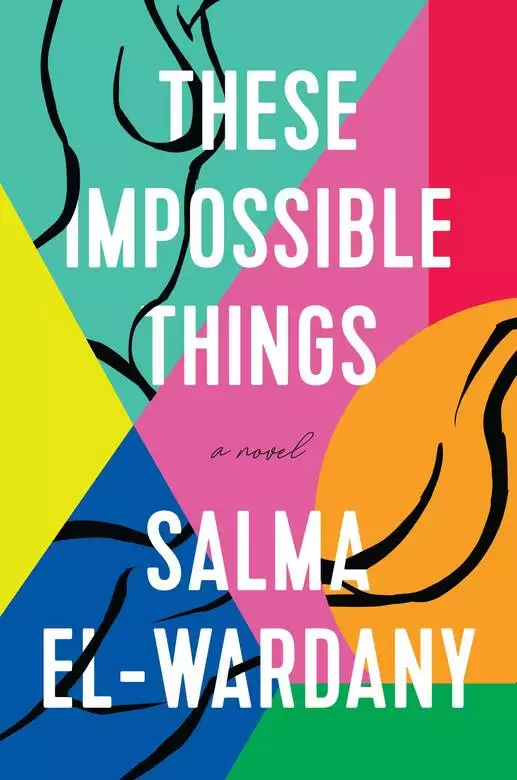
These Impossible Things
- eBook
- Paperback
- Audiobook
- Hardcover
- Book info
- Sample
- Media
- Author updates
- Lists
Synopsis
'Captures the fierceness of female friendship' BETH O'LEARY | 'The essential book on sisterhood' NIKITA GILL
Shortlisted for the Diverse Book Awards 2023
Three women. One life-changing friendship. One chance to stop it all falling apart . . .
Jenna, Kees and Malak have been friends for years: the three of them together against the world. But when one night changes everything, they're left adrift from one another as their lives take different paths.
Encountering new milestones and heartbreaks without each other's support feels increasingly difficult--in the wake of heartbreaks, marriages, new careers and new beginnings, they need each other more than ever. Will they be able to forgive each other in time?
These Impossible Things tells the story of three British Muslim women reconciling love, loss, womanhood, faith and how we navigate the bumps in life that can feel impossible to overcome.
READERS LOVE THESE IMPOSSIBLE THINGS
⭐⭐⭐⭐⭐
'Absolutely loved it and couldn't bear to put it down!'
⭐⭐⭐⭐⭐
'This book has left me speechless'
⭐⭐⭐⭐⭐
'A cross-cultural celebration of friendship, without being saccharine and clichéd'
⭐⭐⭐⭐⭐
'I genuinely do not know what I will read next because I wonder what else might make me feel as seen and understood as these pages'
Release date: June 7, 2022
Publisher: Grand Central Publishing
Print pages: 416
* BingeBooks earns revenue from qualifying purchases as an Amazon Associate as well as from other retail partners.
Reader buzz
 Please log in to recommend or discuss...
Author updates
These Impossible Things
Salma El-Wardany
Malak lifts her head from her books to stare open-mouthed at her friend.
Jenna is lying on her stomach, elbows up, chin resting on her hands, with a look on her face that suggests the question is a serious one.
“Surely Muslims can have birthday sex too,” Malak replies.
“That’s not what I mean,” says Jenna, with an air of exaggerated patience.
Malak is saved from having to say anything as Kees, who has given up studying and is lying next to Jenna, attempting to have a nap, snaps, “Well, she obviously doesn’t know what you mean, Jenna, because that’s a fucking ridiculous question.”
Jenna’s only response is to roll her eyes before turning back to Malak. “You do know what I mean. For example, what do you and Jacob do on Eid day? It’s a day of celebration and he’s always really involved.”
Before Malak can answer, Kees interrupts again, snorting with laughter. “Yeah, and by celebration they mean go to the mosque, pray, and eat food with your family, not gag on the end of your boyfriend’s dick.”
“Oh Jesus, give it a rest,” says Malak, finally intervening by throwing her empty water bottle at Kees. “She’s not asking you. Go back to sleep.”
Kees mutters something not designed to be heard and lays her head back down, the sun resting perfectly on her face.
Malak turns to Jenna, who’s waiting patiently for her answer. “Babe, you haven’t even had sex yet. Eid isn’t for ages and, not that I like to point out the obvious, you’re not even with anyone. Unless there’s something you want to tell us?”
Kees opens one eye, lifts her arm off her face, and tilts her head up off the grass in interest.
“Obviously not,” replies Jenna. “I’m just wondering.”
“About what?” asks Jacob, who has just arrived, throwing his bag down onto the grass before peeling off his jacket and immediately lying down to rest his head on Malak’s lap.
Kees groans and lies back down.
“Whether Eid sex is a thing,” replies Jenna.
“Of course it is; Malak and I have had sex on Eid loads of times.”
Jenna sits up in indignation. “Ha! You see, it is a thing.”
Malak sighs. “He’s not even Muslim, Jenna.”
“And you’re a virgin,” says Jacob, frowning in confusion.
“Yes, thank you both for pointing out the obvious,” replies Jenna, elaborately gesturing with her hands for what, Malak imagines, is dramatic effect.
“Well, if you will ask stupid questions…” murmurs Kees.
The sparring swirls around Malak and she pauses to watch Jenna and Kees. Wonders if this is how mothers feel when they stare at their children: frustrated but flooded with love.
The last to join their group is Harry, Kees’s boyfriend, who bends to kiss Kees on the lips the way you do when no one is watching—softly and with a slight pause—before turning to Jacob. “What happened? I was waiting outside the library for you.”
Jacob sits up with a guilty look on his face. “I’m sorry, mate, I meant to message you to say I’d just meet you here. I came out of the library and saw you chatting to some of your rugby friends and didn’t want to disturb you.”
Harry narrows his eyes. “You just didn’t want to talk to the lads, did you?”
Jacob grins and lies back down. “Absolutely not. Sorry, mate.”
“What were you all talking about anyway?” Harry asks, moving the conversation along, satisfied with the answer he’d known he’d get.
“Well,” replies Jacob, “Jenna wants to know if Eid sex is a thing.”
“Have we ever had it, Keesy?” Harry asks, looking at her.
“It’s not a thing, Harry,” sighs Kees. “Plus, when have I ever even seen you on Eid? I’m always captive to the human samosa-making chain my mum insists on every year.”
“Shall we make it a thing this year?” he asks.
“I’d like to direct your attention back to the samosas, Harry.”
“Well, I could come and help make them. Your mum would love me,” he replies with a grin.
They all laugh and he looks slightly hurt before muttering that he’d like to try. He lies down next to Kees, who works her fingers through his hair with one hand while she reaches for his hand with the other.
Jenna’s phone pings loudly, breaking the sudden silence. Her face lights up and Malak smiles.
“Jenna,” she says, “who are you messaging?”
“Ahhh, I thought you’d never ask.”
They turn their attention to Jenna, which is how she prefers things. She doesn’t need the afternoon sun on her to shine.
Malak knows women who hate hanging out with their friends’ partners, but, for Jenna, it’s two extra pairs of eyes and a willing audience for performances she has been putting on her entire life. Ever since she marched up to Malak and Kees, huddled in the corner of the playground of weekend Islamic school, and suggested faking sickness to get them all out of class, they had been watching her. Even at seven years old, Jenna was exceptional. As she had cried in pain, hysterically insisting she needed Malak and Kees by her side while she waited for her parents, effectively getting them all out of class, she had cemented the three of them as inseparable. Even life decisions, like what university they would attend, had been made as a group, ensuring that their small circle never broke. The boyfriends that had arrived were merely fourth and fifth wheels to Jenna, as well as extra people to practice on.
“So, he’s called Mo and I met him online, obviously,” begins Jenna, seamlessly slipping into her performance.
“Let me guess,” interrupts Kees, “he’s a doctor?”
“Not yet,” replies Jenna, “but he will be when he graduates. Anyway, shut up. I’m studying to be a doctor.”
“That’s your first problem,” snorts Kees.
“Kees. I’m trying to tell you about the man who could, potentially, maybe, perhaps, be the love of my life, not to mention the sixth and final addition to this group.”
Before Kees can respond, Malak interrupts. “Ignore her, Jenna. Continue.”
Jenna tilts her head in gracious acknowledgment, every movement a calculated flair, and continues. “He’s six three. Dark features. Very beautiful. He’s got a jawline that makes you want to lick his face for days. Big hands. You know how I feel about big hands!”
They all nod.
“He’s toned and muscled, but not beefy, which is good. Clearly looks after himself and eats well. Oh and impeccable fashion sense! Not a scruffy white sneaker in sight.” With a raised eyebrow she looks across at Harry’s and Jacob’s sneakers, which are white and covered in marks.
Jacob rolls his eyes in unison with Harry.
“Other than his clean shoes and lickable face, does he have any other qualities perhaps?” asks Malak. She has more patience for Jenna’s love life than Kees does. Maybe it is the way Jenna so firmly believes that she’ll get what she wants in the end. It gives her hope about her own situation with Jacob.
“Well, I only met him yesterday, so I haven’t really had time to find out.”
“Wait a second,” says Kees, interrupting again. “Weren’t you supposed to be going on a date with Saleh yesterday? I thought he was still the front runner?”
“Ah!” says Jenna. “Well, I was running late for our date and he got annoyed and left. I thought he was joking but I turned up and he’d actually really left. How rude is that? Mo was around and so I messaged him to come down instead because I’d matched with him earlier that day and I didn’t want to waste a full face of makeup or my outfit.”
Malak groans. She knows where this conversation is going. Kees has sat up and is staring at her friend.
“How late were you, Jenna?”
With a raised eyebrow and a shrug that shows no remorse, she says, “Two hours.”
The boys howl with laughter and she grins at them. If ever there are two people Jenna can count on to be a diligent audience, it is Harry and Jacob.
Kees, with her regimental appreciation for efficiency, and having been on the receiving end of Jenna’s bad timekeeping, isn’t laughing. “Why are you incapable of comprehending the basic principles of time, Jenna?” she asks.
“I wasn’t even that late,” argues Jenna.
“No, you weren’t. At that point, you’d just failed to show.”
“It goes against nature for me to be on time,” wails Jenna as she picks up the bag of grapes that sits with the pile of snacks in the middle of their circle and begins stress-eating.
“How does that make sense?” asks Kees.
“Well, I’m Arab, aren’t I? We have a genetic inability to arrive at any one place at the given hour. Even though we do try, it’s actually physically impossible because we’re going against biology.”
“Excuse me?” scoffs Kees.
“Yes, babe,” sighs Jenna with exaggerated patience as she passes the grapes to Jacob to free her hands up to make her point. “Look, each Arab country has varying degrees of lateness, and the Palestinians are some of the very worst. If you’re from Syria, you might only be an hour late to any given event. Seeing as Turkey is half in Europe, they have quite a good grasp of time and are never more than half an hour late. If you’re from Sudan, you’re bound to be at least three hours late, and as you get to Egypt it gets practically impossible because to them time isn’t a real thing, just an illusion. They’ll turn up four hours late and consider that punctual. Because Palestine shares a border with Egypt, all that lateness just rubs off on us, so we too are always late. So actually, me being two hours late is technically early, so I honestly don’t know what his problem was.”
Kees stares at her in disbelief, questioning both Jenna’s thinking and her own choices which have led her to be friends with someone who would employ that kind of logic.
“That’s the stupidest thing I’ve ever heard. Malak, can you talk to her?”
Malak has been desperately trying to control her laughter but also to stay on the sidelines of this argument. Jenna, in full actor mode, is mostly entertaining because it annoys Kees so much. Diplomatically she says, “But you’re half-British, Jenna.”
“So?”
“So, according to your geographical allocations of lateness awarded to each country, your British efficiency should count for something. Seeing as the English are always early, the British and Palestinian should just cancel each other out and technically you should be bang on time to everything.”
Kees shoots her a skeptical look.
“Ahhh, I’m afraid it doesn’t work like that,” sighs Jenna mournfully, flopping onto the grass next to Harry. “The Arab gene is dominant and so it overrules the British desire in me to be on time. Truly it does. I’ve tried over the years but alas, it’s out of my hands. You can’t fight the genetics God gave you.”
“But your mum is English,” laughs Malak. “They are the genetics God gave you.”
“I know,” Jenna adds, “but after seven years in Palestine, all the Arab ways seeped into her, like osmosis, and now she’s barely on time to anything.”
“You’re an idiot,” says Kees.
Jenna is unfazed.
“But Saleh is Jordanian,” says Malak, adamantly trying to work to Jenna’s logic. “They share a border with Palestine, so how come he didn’t understand the genetics theory and wait for you?”
“I know,” exclaims Jenna, leaning up on her elbows in indignation. “That’s what I thought, but that’s what assimilation will do to you. He’s a traitor to his kind and if he wants to play the colonizers game, that’s on his shoulders.”
Even Kees grins at this as Malak continues to egg her on.
“Again, one side of your family is British. Doesn’t that make you the colonizer?”
“And yet here I am. I’m basically the entire resistance at this point.”
“Not up for dating a British boy, then? Look at Harry and Jacob. They’re way better than some of the weirdos you’ve made us meet.”
Jacob reaches for Malak’s hand and kisses it lovingly. “I’m sure that was intended as a compliment, baby, but you really should work on that.”
Harry nods in agreement. “We’re not royalty, but I think it’s fair to say we’re a little higher up the chain than some of Jenna’s dating misfits.”
Malak waves them both quiet. “Oh, shut up. Jenna knows what I mean.”
“I do.” Jenna nods. “But if there’s any way you think I’m ending up like you guys, you’re mad.”
“Hey!” laughs Jacob. “Harry and I aren’t that bad.”
Jenna reaches for Jacob’s hand, giving it a quick squeeze, her face suddenly serious. “You’re two of the best men I know—my favorite, in fact—but you’re still not Muslim and you’re still white, and no matter how great you are, it won’t make you less white and more Muslim, and I see the way it splits the four of you in half. I see the way you all love each other and it still doesn’t make a difference. You love in secrets and whispers and in made-up university trips just so Kees and Malak can spend a weekend with your family. Then they go home to parents who don’t even know your name. So yes, you’re the best of men, but I won’t condemn myself to fall in love with someone I can never be with. My mum would kill me if I brought home a non-Muslim.”
And just like that the laughter disappears, the boys sink back against the women they love, their hands reaching to fill the spaces words can’t.
The silence lasts a minute before Malak quizzes, “But your mum wasn’t Muslim when your dad brought her home, surely she’d understand better than most?”
Jenna rolls her eyes and shrugs. “Osmosis, babe.”
Kees, who no longer wants to think about being in love with someone you can’t bring home, leans up and says, “I’d like to remind you, Jenna, that you once went out with a man named Mohanned and all your friends called him Mohammed because they couldn’t grasp the difference, and who wouldn’t look you in the eye because he thought it was disrespectful, and then proceeded to wear gloves every time you went on a date just in case your hands touched and he went to hell. So you don’t have that great a deal either, babe. You spent that whole relationship feeling like a leper and staring at the top of his head while he stared at your shoes. Hardly a recipe for romance.”
Their laughter split the air and, in a heartbeat, lightness was back. It’s always easier to laugh about things than to cry about them.
The afternoon stretched out ahead of them and the heat made Malak drowsy. It was a cruel paradox to be bent in study during the summer months. She had gotten used to long summers and no responsibility during their undergrad years, but graduation had come and the prospect of leaving while Jenna completed a longer course and Kees stayed on for grad school was more than she could stomach. And so she clung on to the halls of academia in the form of a Masters, ensuring that their circle remained unbroken for one more year. Sometimes she recognized that they were all existing in a perfect moment and, eventually, it would have to end. Other times, it felt like it would always be this way.
This was one of those times. Bodies sprawl across the grass. Laughing away fears too big to talk about. Jenna’s theatrics making them feel okay about the things they weren’t actually okay about. With summer unfolding before Malak, the heat hazing her vision into dreams, everything seemed so possible. The smell of happiness clung to everything. The precipice and threat of change, of responsibility and full-time jobs, was too many tomorrows away to think about today. She yawns and feels her eyelids meet, her body sliding down to join Jacob’s on the grass. Kees continues to argue with Jenna, practicing to be the lawyer she is training to become. A handful of blossom drifts over their heads while weathermen report on record-high temperatures. The city has never looked better and the university buildings that sprawl across every corner shine white in the sun, their spires resting across a perfect sky. In the suburbs, a woman stares at the view while rocking a newborn baby who has finally stopped crying and believes, for the first time, that she can do this. Two streets away in a bakery a couple of strangers meet for the first time; later they will tell their friends that maybe you can fall in love at first sight. Students work from corner tables in coffee shops, each one believing that the rest of their life is just about to start. Mo takes his latte from the barista and smiles at his phone. He feels more like himself than he has in a long time. Four blocks away Saleh stares at the woman he’ll marry one day and is ecstatically happy that his date didn’t show up last night. A cleaner gazes out the window at the group of friends on the grass and is excited he’s saved enough money to fly his children to him. The breeze slowly makes its way through everyone and they all believe in utopia, at least for a moment. Malak smiles to hear the bickering around her and hope is full and round in her mouth. She can almost taste its sweetness, which is why, later that night, when Jacob leaves her and utopia becomes a mere philosophy to be scoffed at, it sends a jolt through her so sharp that, for an instant, she could swear her teeth shattered.
Kees goes home for the weekend and tries to pull the sins out from between her teeth before she gets there. Tries to be the fever dream her parents had imagined when they sat in their village on their wedding night and England was just a story Grandma used to tell between mango stones and pumpkin seeds.
She has her grandmother’s hands. Big and weathered, and no matter how much cream she smooths into her lifelines, her life doesn’t get any softer. The women in this family are made of hard things.
She walks the forty-five-minute journey home instead of taking the bus because she needs time to find the version of herself that will please her mother the most. The one that will keep the family whole and bright-eyed, free of any shame that could cloud them over. The version of an eldest daughter that will keep the family chin high above their chest.
Her long hair swings with the wind and is freer than she feels. Her brown skin still smells like the almond oil Umee used to rub into it, even though at least two blood moons have passed since she last sat at her mother’s feet and Kees feels harder than she used to. It’s also getting increasingly difficult to find the right version of herself to bring home.
She manages to find the correct one somewhere between the park and the laundromat around the corner from her childhood home. The Kees that got stuck in time, somewhere between the ages of eleven and sixteen. They were probably the years she was exactly, wholly, and totally everything her parents wanted her to be. Diligent. Studious. Ambitious. Serious.
She is still those things, but other sides of herself have crept in over time. Rebellious. Loving. In love. Sexual. Things that you don’t talk about around the dinner table or even within the four walls of a home that has wrapped itself in silence.
Some people are careless with words. Use them often and recklessly. Throw them around as if they’ll never run out. In this family, words were the last grains of rice at the bottom of the bag. The scraping out of the butter dish. They were just like the pennies her parents carefully and covertly collected every month in the hope that they would eventually turn into a bigger pile of money that could save them all. Kees didn’t know if the words they were saving would ever come out, and how maybe, if they had used them more often, they wouldn’t need saving in the first place.
In this house, things were said differently. There was a mug of tea that was always waiting for her father. It said, here, I love you. The family meals that were always on the table said, here, we care about you. To ask how you were was to complain that you’d been in the bathroom too long. To say I love you was to shout that you didn’t look both ways when crossing the road. Love came under the guise of anger and rough voices, which didn’t make it less loving, it just held a different shape.
Kees turns her key in the lock and steps through the front door just as her father steps out of the sitting room to greet her. His armchair is perfectly positioned to watch both the latest drama coming out of Pakistan on the television, and the gate to their home. He’s watched all his children come up that garden path as they were growing up and knows exactly how long each one takes from street to door.
“Beta, how was the journey?” he asks, as she bows her head for his hand to rest briefly on top. With her books tucked under one arm, she leans in and puts her other arm around her father in an awkward hug. He never likes it. Always breaks away as soon as possible but she does it anyway.
“It was fine, Abaji. The first train was canceled, as usual.”
“They need to put someone better in charge of running the country and maybe the trains would be on time.”
“I agree,” she replies, laughing. “I think you should run for prime minister in the next election. I’ll be your campaign manager.”
Her mother walks out of the kitchen and catches the last sentence while catching her daughter in a hug. “Bilquis, stop filling your father’s head with politics. It’s bad enough he goes to the council meetings every month. You’ll be getting him to run off to Westminster soon and then where will the family be, huh?”
Before Kees can answer she catches her sister’s eye, who is walking down the stairs to greet her, and they both roll their eyes behind their mother’s back.
“In a better position with more money, Umee. That’s where we’ll be if Abaji works in government,” interjects Saba, who pulls Kees to her in a hug.
“Are you ready? She’s about to go off on one,” whispers Saba, giggling in her ear as she squeezes her.
Before anyone can answer, Kees’s younger brother opens the front door, hitting their father on the back, which earns him a swat around the head from their mother. “Hakim, be careful with your father. Why are you always stomping around like a buffalo? You’ll kill him and then he’ll never be prime minister, heh.” She marches off to the kitchen muttering about politics and how it always ruins the dinner.
Kees laughs at the confused look on her brother’s face.
“Are we talking about Abaji going into politics again?” asks Hakim.
“Of course we are,” replies Saba. “Kees is home, what else would we be talking about?”
“Hey, I didn’t even start this,” laughs Kees, “Abaji brought it up.”
“Give it a rest,” groans Hakim while mouthing a swear word over their father’s head.
Itasham knows his son too well and automatically turns to clip him over his head. “Don’t swear, Hakim.”
Kees laughs and pulls her brother into a hug. “When did my little brother get so tall? Stop growing up so fast.”
Hakim groans again and pulls himself quickly out of her embrace, but not before squeezing her hand and grinning in a way that says he’s glad she’s home. It’s been six months since she’s been back, which isn’t that long, but it’s too long, given that she only lives an hour away, and the familiar guilt begins to take its place in her stomach.
Saba reaches over and gives him a third clip around the head, just because their father is standing in the middle of them all and it’s one of the few opportunities she has to do it without getting a harder punch back from her younger brother; Saba is one to always take an opportunity when she sees it. In typical fashion, Hakim shouts for their mother, which earns him another hit from all three of them, who tell him to stop being a mummy’s boy. A further yelp from Hakim sends their mother charging into the corridor to deploy orders, reminding them that at this rate no one will eat if they don’t make themselves useful.
The prospect of not getting fed within the next half an hour is a sobering one and they all rush to help. Hakim gets each person’s drink preference out of the garage without having to ask what anyone wants. Saba pulls plates from cupboards. Her father begins to clear a space on the floor and Kees smiles. In the moments between her father’s aspirations, her mother’s scolding, and the teasing of siblings, Kees wonders how a person is expected to choose between family and love. As if the two things were mutually exclusive. As if they weren’t born of each other and part of the same breath. She begins to think about Harry but before she has time to feel heavy, her father is at her arm, guiding her into the kitchen and asking her opinion on the latest speech from the Labor Party conference and what’s the insider gossip.
“Abaji, you know I just joined online. I don’t have direct access to the MPs and I definitely don’t have time to attend the actual conferences.”
As usual, her mother insists that Kees makes the roti when she’s home and although she never says it, she’s glad. She washes her hands, rolls up her sleeves, and begins rolling out the dough between her palms. She’s been doing this since she was ten, when she begged to be allowed to make the roti for the family, standing up on a stool as her mother taught her how to roll the perfect circle, slap it between her hands, and then put it on the flat pan to cook before throwing it on the open flame to puff up. This is a dance she’s been doing all her life.
In these light balls of dough is a heavy tradition of women who have come before her. Each young girl craning her neck around her mother’s quick movements and flashing gold bangles as they learned how to make the family bread. Her mother once stood just like this with her mother and her mother before her, and in the passing down of something so simple, Kees has always found great comfort. She likes to think that somehow, even in the smallest of everyday tasks, she is connected to tribes of women who have all kneaded dough and silently folded love into their families.
It’s also the time reserved for Kees and her mother to chat about the day. Saba has never been interested in making roti and Hakim was never asked, and so the half hour before dinner is their time.
She makes the roti now without thought. It has long since become muscle memory, each turn of the bread stamped into her ligaments so that even when she forgets, even when she’s tired, the bread is still made perfectly round.
Her mother takes her chin in her hand and turns it to face her. “Beta, you look tired and skinny. Why aren’t you eating?”
Kees laughs at her mother’s sternness and wonders why anyone in this family can’t just say, “I’m worried about you.”
“I’m eating so much, Umee. All I do is study, which means lots of revision breaks, which means snacks.”
“Snacks, eh? I’ll make some proper food this weekend for you to take back.”
Her mother makes this statement as if she had planned to let her daughter go back to university without a bag full of curries ready to be frozen.
“Okay, Umee, that would be nice.” There is no point in telling her mother not to go to the effort, because she’ll always go to the effort. Plus, she’d be stupid to try to refuse her mother’s cooking. It’s better than the beans on toast she’s been eating recently.
They all eat together, food laid out on a cloth on the floor, and talk about the things that mean something but also nothing. Who’s getting married and what happened at the mosque. As usual, as soon as the meal is over, Kees’s mother packs curry into old margarine tubs, wraps roti in tinfoil, and sends Hakim with the food parcel to the next-door neighbor, Mrs. Carson.
The house is quiet as Kees sits on the bed in her childhood room, staring fondly at the Bollywood posters on the wall. They’re the dreams of a different life when she and Saba used to practice the dance routines from the films and reenact scenes in the garden.
She makes sure the door is closed before calling Harry. He picks up on the second ring.
“Hey, baby,” he says, a weariness in his tone. She’s back home and that’s often the same thing as going back in time. The rules of your adult life, the days and nights spent away from your mother’s hip, suddenly fade and you’re somehow reattached to her, as if you never left. Sometimes that’s a comforting thought but mostly it’s suffocating and sad. Like time will never move on for you.
“Do you think they’ll get back together?” she asks.
She’s already asked him this question numerous times over the last few weeks and knows there is no good in asking it again but still can’t help it and here, back in the family home surrounded by her family, it feels even more urgent.
He knows that this question isn’t really about Malak and Jacob. It’s about him and Kees and whether they’ll make it. She’s asking if he’ll accept her enough and if she’ll compromise enough and if, against all the odds, they can love each other.
He gives her the only answer he can and says he doesn’t know. Because he doesn’t. And in moments like these, there isn’t much else to say.
She can hear Saba running up the stairs and so she quickly ends the call, throwing her phone across the bed like a thief caught stealing.
Her sister runs into the room and jumps on the bed next to Kees.
“So, can I tell you something?”
“I’ve got a feeling you’re going to anyway,” Kees replies, grumpily. “And why are you sitting on top of me? You have
We hope you are enjoying the book so far. To continue reading...
