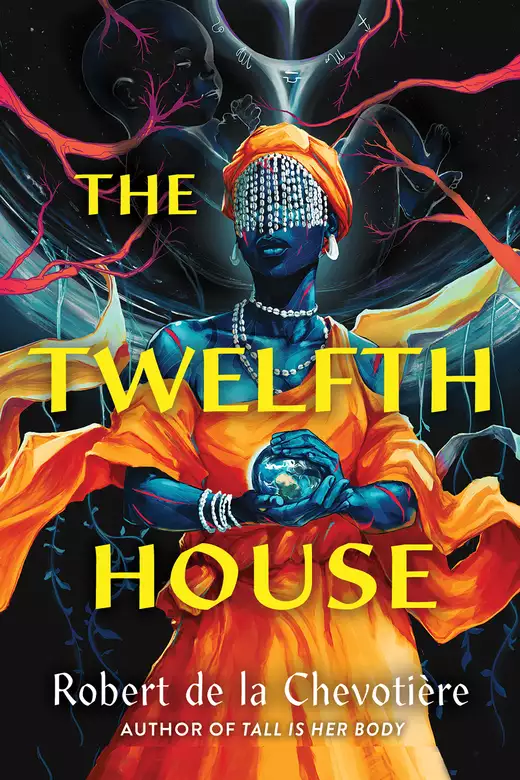
In the aftermath of Haiti’s independence, the vengeful unborn spirit of a child named Etta draws her father from the Bight of Biafra onto a slave ship bound for the harshly colonized Caribbean island of Dominica in this lush historical novel infused with magical realism and rooted in West African mythology for readers of Ta-Nehisi Coates’ The Water Dancer and River Sing Me Home by Eleanor Shearer.
1794, Benin, Africa. Bako is one of 162 men stolen from their homeland. After a harrowing voyage across the sea, penned like livestock, and enduring brutal beatings, Bako survived when many of his fellow countrymen did not. On the Caribbean island of Dominica, he is sold to William Blackwell, sentenced to a life of forced servitude on a sugarcane plantation. Rechristened Ivan, his true identity and defiant nature cannot be tamed. When an indigenous Kalinago woman named Mary is threatened by Blackwell’s cruel son, Bako fights back, escaping with her into the mountains—where she will give birth to their daughter.
Etta is an ogbanje, an unborn soul, trapped in a cycle of conception and death in the wombs of one family. She is not of this Earth, existing among the stars, bearing the names of Queen Mother and Iyoba. A gifted siren, her voice unleashes ethereal songs that consume listeners with fear. Her desperate desire to live compelled Bako into the hands of his captors—and his fateful meeting with Mary. They are but vessels brought together to ensure Etta’s birth into the mortal world.
But Etta bears the physical scars of her many spiritual deaths. The Kalinago do not accept her into their clan. Her father suspects the truth of his daughter’s origins. And the landowners and tradesmen who enslave Etta’s people will feel her wrath as she compels rebellions, the one within, the gravest.
Release date:
August 25, 2026
Publisher:
Erewhon Books
Print pages:
288
* BingeBooks earns revenue from qualifying purchases as an Amazon Associate as well as from other retail partners.
What became clear to them was that another coffin would have to be made, and two burials happen the next day. As for me, I began to worry that perhaps the long night was better left in darkness, that it was better to let deaf men sleep, for their savagery was infinite. I wondered then if I had caused all of it, but in truth, it did not matter. It was the sort of fate that even I could not see nor have imagined. So, I did the only thing I could have—I sang. But they did not hear my song. To them, who had just witnessed a hanging, what they heard was an unfamiliar whistling through the trees, an unusual sound at a ghostly hour, the devil himself rising to meet them. Sleeping birds abruptly awoke and took flight in the night, their flapping wings crashing against the silence of a moonlit sky’s sombre hue, unlike the men who stood in fright, planted like the whitewood tree, from which their friend’s lifeless body hung.
I was not born yet when I watched my father walk the beach in Dahomey for the last time. I had willed him into the ire of hell, and no star, no matter how luminescent its dust, could protect him. He kept looking over his shoulder to where the sand met the trees, his hands bound in front of him, expecting that his father and brothers would appear, hoping it was just a dream and not his worst nightmare come true. No one appeared. A day earlier, he had sheltered in his father’s obi, that part of the compound where guests were entertained, as the seasonal dusty harmattan winds rolled through his village.
“A harmattan will not stop thieves,” his father had said. “Our neighbours are selling us to these white men. They betray us for the price of gunpowder and trinkets.”
He remembered his father’s face, forlorn with sunken eyes, as if the old man foresaw what was to come, asking him to heed the high bushes and stay clear of the savannah. His father’s voice came back to him, echoing loudly in his mind: Make no mistake, Bako, the enemy is already here minding this very same cloud of dust. He was momentarily lost in reflection, then coming back to himself, strained his eyes harder towards the trees. He wished for the shadows to take on life forms and step out from the thick bush and vegetation. He could not imagine how he had been captured, how just a few days before as he hunted birds, he foolishly followed the drumming of a woodpecker, only to realise it was a ruse. He had been led into the forest and pounced upon by men from another village.
The closer to the water Bako got, the more agitated his movements became. He looked back, thoughts of his family desperately infiltrating his mind—his father and mother, brothers and grandparents—wondering if he would ever see them again, knowing that those taken disappeared, never to return. He thought of the Evil Forest where the Ogbanje that came out of his mother’s womb lay. It came out of his mother the same day he did. The spirit child had the body of a girl, but stillborn. His father had lain it in the Evil Forest, and left it there to rot above ground, for it was too much of an abomination to enter the earth. I could do nothing but sing for Bako. I knew he could not hear me, but I sang anyway. I sang the same way our ancestors did, the pain of our souls reverberating from under our feet. The song shot through the tall grass and made its way up the coconut palms and carob trees. It was strong enough that even in the distance, he saw the leaves tremble and heard them clap in verdure oration.
He was my father—and my brother, and one of one hundred and sixty-two taken aboard the Duke of York that day, another of the ever-growing number of equatorial blood drained from our land. When the ship sailed out of the bight, all that remained on the beach were the wooden holding cells and a trail of sand leading from the tree line to the water. The trail had been beaten by multitudes of chained Black feet, as if the sand were fufu beaten by a pestle. In the afternoon hour, the sky was red, the water a shade of lavender, the ocean’s salt a pungent, acerbic bitterness. I honoured him with a fire that night. I honoured all of them with flames open to the house of fire in the sky. It was as much selfish gratitude as it was a plea for forgiveness to the spirit of my ancestors. It was also the start of the revolution—the beginning of the end—God’s bits of wood burned that night.
ENGLAND, 1773
William Blackwell was twenty-one years of age when he sat on a pier in London and wondered with all the joy in his heart how life would be in the New World. As his lanky legs dangled off the dusty pier, he looked out over the horizon, fantasising about a new life filled with adventure and unbound wealth. It was hard for anyone to read William’s face, as he had a disaffected facial expression. The dark hair on his head and face made this even less possible. Unless he laughed or smiled, it was impossible to see his joy. That day, however, he smiled for the entire city to see. Nothing could quell his joy, not even the supposed dangers of the New World, the first being the Atlantic crossing itself.
He did not fear the ocean, having always felt at ease near it. There was something about living near the water that brought joy to William’s spirit, as if the water itself called him home. It was then no surprise that in King George III’s continued expansion of the British empire in the Caribbean islands, that William sought a seat at the monarch’s table, feeling it was his duty to give to king and country, while taming the seas. He had romantic notions of building a life in the New World, where he would govern with might and have dominion over much of the crown’s land. He regaled in these thoughts, his excitement unable to remain contained. He walked the pier, joyous, nearly skipping with each step, humming to passersby. It was then he ran into his friend, Aldyne Browne, a compatriot who would also board the same vessel as he to Dominica.
“I’ll be damned,” said William. “Had I known, I would have recouped my money.”
William and Aldyne laughed, for that is how they were between them—old friends with a penchant for laughter. Aldyne was an exceptionally tall man, so much so that he had a slight curvature to his back. His eyes were sunken into his long face, his hands the size of banana branches.
“You will be damned if you don’t put a baby in Margaret’s belly before you go. If another does it for you, you will regret this moment and this voyage,” said Aldyne.
“As long as you’re on that boat, I have nothing to worry about,” laughed William.
The two were happy, each eager to do their part for their country. But as much as they wished to mark their presence in whatever part of history they deemed important, they were, remarkably, such different men.
A few weeks prior, the two were at Aldyne Browne’s dye-making shop, where he had invited William to observe how dyes were made. During that visit, they talked about many things and discovered a stark difference between them. Mainly, Aldyne talked about his wife, Gloria, and how happy he was to take her and their newborn daughter, Charlotte, with him on his voyage to Dominica. Like William, he wanted this new life to reflect his ambition, one that was rooted in family values, decency, and progress. William’s ambition, however, was more selfish. He had no intention of taking his wife, Margaret, with him. In his mind, he could have a wife and possibly children in the Old World and take African and native concubines in the New World. If Margaret bore him children, he would have been content to see them on occasion, when he returned from domesticating slaves and natives on foreign soil. It was not until Aldyne Browne mentioned the possibility of Margaret being with men other than him, that William felt the need to take her with him across the sea.
“Imagine if we are both there. Our wives could be friends, and our children could grow up together,” had said Aldyne.
“And all that African labour. I hear they are made to work, from sunrise to sundown, what else could we need?” William had said.
The two men locked eyes that day. Their discussion of slaves caught them by surprise, each realising for the first time that the other felt differently about the matter.
“African labour?” asked Aldyne. “You mean slaves?”
“Yes, what else would I mean?” asked William, a puzzled look on his face.
Aldyne’s stare softened, realising that he was one of the minority who protested slavery. He sat on a bench outside of his store and lowered his head.
“My spirit would not let me rest if I kept people in bondage under my servitude,” said Aldyne. “I don’t subscribe to it here, and I will for sure not do so over there.” Aldyne paused to look at his friend whose face, despite being inexpressive, conveyed disappointment. “Why would you want to own another man?” asked Aldyne.
William shook his head. “My friend,” he said, “the world is changing. I am changing with it. I thought you wanted that too.”
“I do. But I must still face judgment someday,” said Aldyne.
They continued talking, their elation replaced with the drudgery of morality. Despite their difference, they remained good friends. When they left each other’s company on the pier, William continued walking until he arrived at the Standlich, the three-mast ship on which he would eventually sail. He stopped in adoration, looking at it in a way that seemed to tie their fates, his to Dominica, the ship’s to an ocean grave.
DAHOMEY, 1794
I watched him on his perilous crossing, the Atlantic devouring Black bodies like chocolate morsels in hungry mouths. As tragic as his circumstances were, his skin glowed in the night. For several weeks, I watched him lying there, chained to his countrymen in the dark belly of the Duke, breathing air as stale as a covered latrine, where even a candle could not stay lit. When he was brought up for air and forced to dance, I watched him. When the ocean’s salt water was thrown against his back, I watched him then too. Many of his clan perished, some through disease, and some at the hands of the crew and their insufferable captain.
Captain Tyrell Edwards was a thick, tall, and muscular man, his red hair pulled back in a ponytail under his hat. He embodied maleficence, unscrupulously managing his ship with force and fear. His eyes were a cold, near vacant, demonic blue, with nothing but a particular evil stoicism permanently painted on his face. He talked like someone who had sand in their throat, always in a low growl. He had a slight limp and walked with a large wooden baton for a cane, which he used to prod people in the hips if ever he felt they were in his way.
My father lay chained to his countrymen when suddenly a latch was opened, and like every other time, sunlight rushed in. Sailors came down, clutching their noses, and inspected the cargo. My father was chained to people on either side of him—a woman on one side and an older man on the other. The man had passed away in the night, so when the sailors approached to retrieve him, they were forced to temporarily unchain my father’s hand. It is then that he grabbed the sailor with his free hand, holding the man’s head between his biceps. He held on tightly, despite the latter flailing and punching at my father. It took the other sailors to come over and help free their fellow crew member. All the while the hold of the ship exploded in ghastly cries. One by one, the Africans started crying out in some sort of desperation to be free. When the man was freed from my father’s grip, he and the other sailors punched at my father several times before taking him and the deceased up to the main deck.
The captain appeared, his eyes burning a devil-blue at my father’s insurrection. “There is always one,” he said. “They always test me, but they don’t know who I am or what I can do.”
He ordered the men to throw the deceased overboard and then approached my father. He looked him in the eye and took his stick and poked at my father’s face. My father did not break his gaze. The captain had the sailors tie him against one of the masts and ordered my father given ten lashings, not too many as to not damage the merchandise, after which he ordered his men to bring up the rest of the cargo.
As each batch of Africans came up, they saw my father standing there, tied to the wooden mast, his back bleeding. Salt water was thrown at the Africans as whips crashed at their feet. They were ordered to move their feet, and when they did not understand, the whips cracked repeatedly, forcing them to move around.
“Dance for your masters! Dance!” yelled the crew.
Before they were brought back to the hold, the sailors threw salt water on my father. The Africans watched him wince in pain as they went down, but the message had been transmitted, and these rebellious acts would not go unpunished.
When my father was brought back down to the hold to join the others, he was laid on his back and chained again to the woman on one side, and on the other, this time to a floorboard. He lay there, wet like the others, except that his back was burning from the open wound and salt water. The only blessing there, and despite the crew thinking the salt water would have caused him more pain, was that it offered healing instead. It is then that I sang again, to remind him I was still here, to tell the captain and his crew that my people were still people and would never be less than.
“Don’t be afraid,” said the woman who was tied to him. “None of you be afraid. This is the Queen Mother protecting us, reminding us to remember ourselves, who we are, and where we come from.”
“Queen Mother, we see you!” they chanted in unison. “Queen Mother, we are grateful.”
My father repeated those words to himself long after the hold had stopped in unison. But he could not stop. He had to continue. He had to force himself to believe that wherever he was going, he would survive and be safe.
One late afternoon, the ship finally reached Dominica’s Woodbridge Bay. Only the captain and a handful of the crew rowed to shore. The air was still and certain noises, like that of the blacksmith, could be heard from the boat. On shore, however, the nine-hundred-foot distance from the ship was not enough of a barrier to tame the rank smell emanating from it, the horror itself still buried in its hold. The rest would not deboard until the early morning, at which point, they walked the two kilometres into the capital, Roseau, where the men were separated from the women and children, and then, the children from the women.
Once separated, they entered the Barracoon building, a long, two-storey edifice where they were held until auction time. Captain Edwards watched patiently as each man, woman, and child entered the Barracoon, noting each one in his ledger. When my father walked past him, he did not like that my father looked him in the eye. He tightened his lips as he watched my father pass by, and jotted in his notebook: Male, 20 years, likely. When the profiling was done, he wasted no time picking his first batch of seventy Africans for auction, my father being one of them. Captain Edwards ordered some of his crew to take the ones picked to the back of the Barracoon building to prepare them for sale. Once there, water was thrown violently against their Black bodies. They were scrubbed down like animals before a sale and then greased with palm oil—an attempt to cover any blemishes or wounds. Once ready, they marched to the market square.
It was there, behind the Barracoon building, that the captain himself struck my father. He dared to stare at the captain again, and this time, the latter would not have it. I watched the giant baobab tree of a man brought down to his knees. The captain had struck him in the face before ferociously planting the blunt end of his walking stick in my father’s stomach. He started bleeding from the mouth. His bleeding was not an unfamiliar sight to me, as I had seen him bleed many times over the years: like the time, a few weeks before he was captured, when he lost his balance horsing around with friends and smashed his face on a rock, leaving a small gash over his brow. I watched as blood poured from his face and pooled under his chin. I watched as it fell onto his torso, his chest so full and wide, his abdomen, laid out explosively in an elegant symmetry down towards his navel. Another time while still in his village tapping palm wine, when, not a boy anymore, but still barely a man, he cut himself on the tapping knife, as he shaved the soft core of the palm tree. And another time, when he was a small boy and fell from the low-hanging papaya tree outside his father’s obi and busted his face on the hard ground, blood spilling as he ran to his mother.
Seeing him there, doubled over in pain, was a different kind of sight. He bled at the hands of another, his hands bound in front of him, his feet shackled at the ankles. I wanted to lift my father up and raise him from the ground before he suffered a backhand from the captain, who proceeded to grab him by the jaw and throat and stand him back up to his feet. The captain held on to my father’s hair, savagely tilted his head back, and shouted obscenely at him. The other Africans looked on in disgust as the captain’s thick arms, full of wiry copper hair, rubbed into my father’s face. They looked on as the captain, showing the other end of his walking stick, jagged, with what looked like broken and molten glass, rested it on my father’s bare shoulder. In his cruelty, the captain paused to catch his breath, then, holding the stick firmly in his right hand, as if in a ceremonious ritual, pulled down slowly on it, tearing through my father’s flesh. Razor thin lines of blood rose to the surface of my father’s skin, but he said nothing and did nothing. Instead, he met the captain in his own silence, eyeing him until he was done with his savagery.
My father kept his gaze steady. The captain, ready to hand him another blow, stared back, and instead shook his head at my father’s intense leer before walking away. It was a long glare, one that followed the captain as he made his way back inside. It was too long a stare, but one that stood for so much. It was a strong-willed, determined, revolutionary stare, African in all its tenacity. In that moment, I wanted to believe my father understoo. . .
We hope you are enjoying the book so far. To continue reading...

 Please log in to recommend or discuss...
