Prologue
The Atlas of Lost Things (2015)
Imelda Sparks was alone and exhausted in the wilderness of Nevada, and she had never been happier.
She perched on a rock at the edge of the hiking trail, dropped her shoulder bag to her feet, and pulled out a bottle of water. The evening sun was a rich orange smear just above the horizon, and the sky over the Great Basin Desert was slowly turning the colour of candy floss and peaches. Thunderclouds towered up from the flat brown ground in the distance like smoke from campfires and Imelda thought the view was one of the most beautiful she had ever seen.
She glanced down past her feet to where the hillside dropped away steeply. The bottom of the gully was a pool of shadows that was slowly rising up towards her. Soon it would be too dark to have any chance of finding what she had come looking for, maybe even so dark that the hour-long hike back to the car would become treacherous.
“Stupid,” she muttered. She slid her water bottle back into her bag and her hand brushed the flower that Magda had cross-stitched into the canvas flap all those years ago. Imelda wondered how Magda had spent her day back in London. Probably work, and then an evening writing. Magda wanted to be a novelist and that seemed to demand all of her time and attention. Imelda worried sometimes that Magda wasn’t leaving room in her life for friends or for love, but her daughter had always known her own mind, even as a toddler. Imelda smiled as she remembered Magda at a much younger age, stomping around the house and pretending to be a dinosaur long after she’d been told to go to bed. That happy memory faded as Imelda turned her eyes to the distance and saw the sun flattening at the bottom as it touched the horizon.
“Come on, get on with it,” she muttered to herself.
She removed a square of paper from her back pocket and unfolded it to study in the golden-pink light. It was a hand-drawn map, with sketched lines in black ink that detailed Imelda’s surroundings, and a scribbled star in the centre of the page indicating the location of the lost thing—like an X marking the spot in some movie-prop treasure map. The sketch had changed since Imelda had last looked at it fifteen minutes earlier; the image on the paper shifted constantly, in fact, because this was not an ordinary map. This was The Atlas of Lost Things, a guide to lost magical artefacts.
The Atlas had already taken Imelda on a journey across Europe. She had found the worn gold coin in a small museum in Bavaria, the crucifix in a cluttered antique shop in the Trastevere neighbourhood of Rome, and the blue carnation, which Imelda had retrieved only a couple of days earlier, in the lapel of a wizened bulb-grower working in the tulip fields east of Amsterdam. After Imelda had obtained the flower—which had taken some gentle persuasion and a generous financial donation to the old man—the Atlas had shown her that another lost thing could be found in the Nevada desert, in the United States. She had jumped on a flight at Schiphol, rented a car at the airport in Las Vegas when she had arrived earlier that day, and then she had driven for four hours out into the wilderness, north along Highway 93, before turning west onto the mountain trail.
As Imelda peered at the Atlas now in the low light at the end of the day, her vision blurred with fatigue. Her neck was stiff from the hours behind the wheel, and the throbbing in her knees and lower back made them grumpy companions, spoiling the hike with incessant complaints.
She shook her head to clear her vision and focussed on the Atlas. The lost thing was near, perhaps only a few feet away from where she
was perched. If she could find it quickly, she could be on her way back to the car before all the light drained from the day. She closed her eyes, anticipating a couple of nights of luxury in an expensive hotel back in Vegas, a big bath of bubbles and a tray of room service food.
“That would be lovely,” she murmured.
She was tired, she knew, not just from an hour of walking on sixty-year-old legs, but from three months of travelling and adventure. Imelda had always had an easy life, the child of wealthy (if absent and occasionally problematic) parents and an adulthood spent working as an artist, living comfortably off her inheritance while painting landscapes and portraits with some modest success. When Magda had come along—unexpectedly, when Imelda had been in her mid-thirties—Imelda had focused her energy on being the sort of parent that Imelda herself had never had: present, attentive, and loving. But Magda was an adult now, and increasingly Imelda had found that she had more time to herself than she knew what to do with. That was why three months earlier she had relished the idea of going off on a big adventure by herself in search of lost things.
And it had been an adventure, and a successful one too. For she would be going back to Frank with items to add to the Society collection. Including, she hoped, whatever she might find on the hiking trail.
“If you get on with it,” she murmured, “instead of standing here daydreaming.”
She studied the Atlas once more and it showed her that she was now standing directly on top of the lost thing.
“But that makes no sense,” she muttered in confusion, rotating the paper in case she was misreading it (easily done with a map that changed constantly). She stood up and pivoted on her heel, running her eyes over the hillside and the boulders, the bare ground that surrounded her, all of it now washed in a thin, colourless light. “It was right here.”
The coming darkness was a threat that Imelda was trying to ignore, but thick shadows were crouching in corners like animals, waiting to pounce as soon as the sun was gone. She was running out of time.
She exhaled in frustration, ignoring the sinking sun, and tried to make sense of the Atlas, but the lost thing had moved again and now appeared slightly behind her and to the right. Was it in a stream maybe? Or
floating in the air on thermals? How could it be moving? She sighed in frustration and kicked a small rock, sending it flying out into space before it dropped and bounced its way down the hillside into the gully.
“I don’t have time for this,” she exclaimed to the sky.
She glanced up to the hillside, scanning back and forth for answers or inspiration but seeing only more rocks and scrub and boulders. And . . .
Someone is watching you!
Imelda gasped in surprise, a hand going up to her chest as her heart performed an impromptu drum fill. There was a stranger on the hillside, a man, only three or four strides up from the trail. And he was watching her.
What on earth?
The man was entirely motionless, squatting down with his arms around his knees, but he was facing Imelda and she could tell—she knew—that he was watching her.
That he had, in fact, been watching her the whole time she had been perched on the rock.
Imelda’s scalp prickled, warnings and worries running through her mind.
Why wouldn’t he let me know he was there? Who does that?
When it became obvious that Imelda had spotted him the man stood up in one quick movement. He was wearing old blue jeans and a brown waxed overcoat over a checked flannel shirt and a T-shirt, a faded blue baseball cap on his head. He stood motionless for a moment, the breeze flicking the collar of his shirt, his arms out slightly from his body as if he was deciding what to do.
Watching him, Imelda felt uncomfortable in a way she couldn’t identify. It wasn’t just her unease that this man had been observing her, it was something else, something she couldn’t put her finger on, something about the way her eyes and her brain felt when she was looking at him. The only thing she could think to compare it to was seasickness, but that made no sense at all.
“I wasn’t doing anything,” the man said suddenly, his voice almost a whine. “I wasn’t watching you.”
Yes, you were. That’s a lie. The first thing you’ve said to me is a lie.
“That’s okay,” Imelda replied, careful to keep her
voice neutral.
Her eyes flicked away to the ground and her mind conjured the memory of an encounter many years before, when she had been a much younger woman alone in an Underground station in London at the end of a long night on the town. A homeless man had been there that night and he had been charming at first, a happy drunk sharing a joke with Imelda. But then, in one shocking moment, he had changed. Imelda could still picture how his smile had instantly become an aggressive sneer, how for no reason, because of nothing she had done, he had suddenly attacked her for the money he had assumed she was carrying. He had charmed her into lowering her guard and then he had beaten her, only relenting when the rush of air and the screech of brakes signalled the arrival of the train. Imelda had never forgotten how vulnerable and weak she had felt that night, lying in tears on the platform as her attacker had fled. Now, on the trail with this strange man who had been watching her and who made her feel seasick, that same horrible vulnerability chilled her to the core.
You’re alone and an hour from the car and it’s almost dark. And there’s something not right about him. What a mess you’ve got yourself into, Imelda.
The man spoke again: “I was here before you.”
Imelda nodded, trying to be agreeable and calm even as adrenaline coursed through her. “Yes,” she agreed. “I know. I’m sorry.”
The man took three awkward, scampering steps down the hillside and came to a stop a few feet in front of her. Imelda moved backwards in response, trying to judge his intent even as her whole body implored her to turn and run.
Turn and hobble, maybe. You’re not going to run anywhere in your condition. You can’t outrun him, can you?
Beneath the cap the man’s face was long and thin, tanned and weather-worn, as if he spent a lot of time outdoors, and his dark eyes kept moving, never settling anywhere and avoiding meeting Imelda’s gaze. She thought he was younger than her, maybe only just into his forties, but it was hard to be sure. The hair beneath his cap was brown, though, with no hint of grey, and he had stubble across his cheeks. There was nothing specifically wrong with the man—if anything his features might have been considered objectively handsome.
And yet . . .
ithout her knowing. What might he have done if she hadn’t noticed him? And why was he out here in the wilderness at sunset by himself?
“I wasn’t watching you,” he said again, eyes meeting Imelda’s and then darting away.
He has a shifty look. That’s what that is. Shifty.
“I believe you,” Imelda lied.
The man dropped his gaze to Imelda’s bag where it sat on the ground like a half-deflated football. Then he ran his eyes slowly up and down her body, dispassionately, like a dressmaker assessing an outfit on a model. Imelda shivered, her mind working furiously against the overpowering seasickness, trying to understand what it was that was upsetting her sensibilities.
He has the lost thing!
The answer came out of nowhere, immediately making sense of the world. The Atlas had led her to a lost thing somewhere nearby, and the man had been there the whole time. He had to have it, perhaps in one of his pockets. It had to be the lost thing that was making her feel so unwell.
But that answer led to other questions, other things to worry about.
What thing does he have? What might he do with it? What might he do to you, Imelda?
Imelda took another step backwards, wary of an unknown lost thing in the possession of this odd man. She would pick up her bag and make her excuses and then be on her way. Yet the man’s eyes narrowed as she moved and that simple change in his expression, like a cloud passing over a sun, multiplied her discomfort. It was too much like the change she had seen on the face of the homeless man in the Underground all those years ago, too much like the moment before his attack.
It’s happening again!
Panic exploded out of the restraints she had tried to bind it with, and all rational thought shattered into pieces. Her body made decisions for her, taking two hurried steps backwards towards her bag. On the second stride her foot found only empty space where there should have been solid ground.
Shit!
She realised her mistake immediately and a gasp escaped her. She was suddenly off-kilter, leaning backwards with nothing to counterbalance her. Her arms cartwheeled automatically, seeking purchase, and The Atlas of Lost Things fluttered out of her grip, flapping in the breeze like a baby bird trying to fly. The man’s eyes and mouth widened in surprise. He darted forward, just as Imelda felt herself tipping backwards beyond the point of no return, and grasped at her with thick, dirty fingers as if trying to catch her. Imelda found that she hated the thought of him touching her, even if it was to stop her falling. His fingers made contact, scraping her clothes and catching on the crucifix that was hanging from its chain, the crucifix she had found weeks earlier in Rome. Imelda felt the chain bite into the back of her neck as it took her weight and relief and disbelief washed over her. Then there was an audible snik as the chain snapped, and Imelda was released into the air, tumbling out of the light and down into the shadows of the rock-strewn gully.
A memory came to her: an image of the last time she had flown, many years before, Magda smiling beside her in the air. Then the back of Imelda’s head smashed into a boulder twenty feet down the hillside and she was dead instantly.
She would stay that way for almost two years.
Part One
Adventure in the Electric Light
Magda Sparks’s Favourite Place (2025)
Magda Sparks’s favourite place was to be found at 114 Bell Street in London’s Marylebone, in an unspectacular four-storey Georgian townhouse that was identical to many other buildings on the street.
The ground floor of the building and the two floors above were occupied by a secondhand antiquarian bookshop called Bell Street Books. In these rooms the walls were lined with shelves from floor to ceiling, and bookcases sat on the old wooden floorboards wherever there was space. Books were squeezed into every available corner: hardbacks and picture albums, paperbacks with yellowed pages and cracked spines, and even vintage comics, their colours faded with age. The shop was more book than brick, and all the better for it in Magda’s view. She had spent many hours in happy solitude in Bell Street Books, discovering long-forgotten novels, sometimes with handwritten notes in the margins or on the title page, faded ink and pencil marks from people long gone. But as much as she loved the shop, Bell Street Books was not the reason that 114 Bell Street was Magda’s favourite place in the world.
The top floor of the townhouse had been converted into an apartment where the owner of the shop, Frank Simpson, had lived alone for as long as Magda had known him. Frank was the closest thing Magda had ever had to a father. Magda was, as her mother, Imelda, had once told her, the beautiful product of a decidedly average and anonymous drunken dalliance, and she had been raised solely (and entirely successfully, in Magda’s view) by her mother. But Imelda had always loved books and she had frequented the shop often during Magda’s childhood, seeding Magda’s own love for books at a very young age. There had been many weekends when Imelda had taken Magda for cakes and milkshakes at a nearby café, or for ice cream in one of the busy parlours in Covent Garden, where they watched the tourists, and then afterwards they would head to Bell Street so they could both pick up some new books. Frank would be there, shelving books or reading in his chair behind the old writing desk he used as a counter. His face would light up whenever Magda and her mother appeared, and he would bounce Magda on his knee and call her Sparks because of her bright red hair, or delight as she clattered around the shop in search of picture books and comics.
“Bookshops shouldn’t be quiet and sombre!” he would pronounce, if ever any of his customers tutted or frowned at Magda’s ebullience. “This is not a library! We are a place of stories and adventure, and children should make noise if they want!”
Sometimes Magda and her mother would visit Frank in his apartment and Frank would give her cake or chocolates from a cupboard he always referred to—with a secret wink just for Magda, or with a twinkle in his eye—as Magda’s magic pantry. In later years when Magda was studying law at university and living in student accommodations, she would visit weekly and she and Frank would catch up, the radio playing in the background while they ate and chatted or played board games. Frank lived alone, but his apartment never seemed to be a lonely place—it was comfortable and welcoming, with table lamps that threw honey-coloured light into the corners and soft seats that felt like a hug from a friend when you sank into them. The apartment had dormer windows that afforded a view of the rooftops of Marylebone and Magda remembered sitting in those windows as a young girl, watching the world below, the strawberry-coloured tops of double-decker buses cruising past on
nearby streets. She had formed many happy memories in Frank’s apartment, as a child and as an adult, but even this was not why 114 Bell Street was her favourite place in the world.
Hidden away out of sight with no outward signs of its existence, there was a basement beneath Bell Street Books. At one time, in the Georgian and Victorian eras, this had been the space where servants had lived, working long hard hours for the wealthy Londoners who occupied the upper floors. In the first part of the twentieth century, the ground floor of the building had become a tailor shop, and the basement had been converted into a storeroom for fabrics and wool and offcuts. And then, when the tailor shop had become a bookshop in the middle of the century, the basement had become something else entirely, and it was the basement of 114 Bell Street that was Magda Sparks’s favourite place in the world.
Because this was a place where an incredible secret was kept within its walls, a place of mysteries and magic.
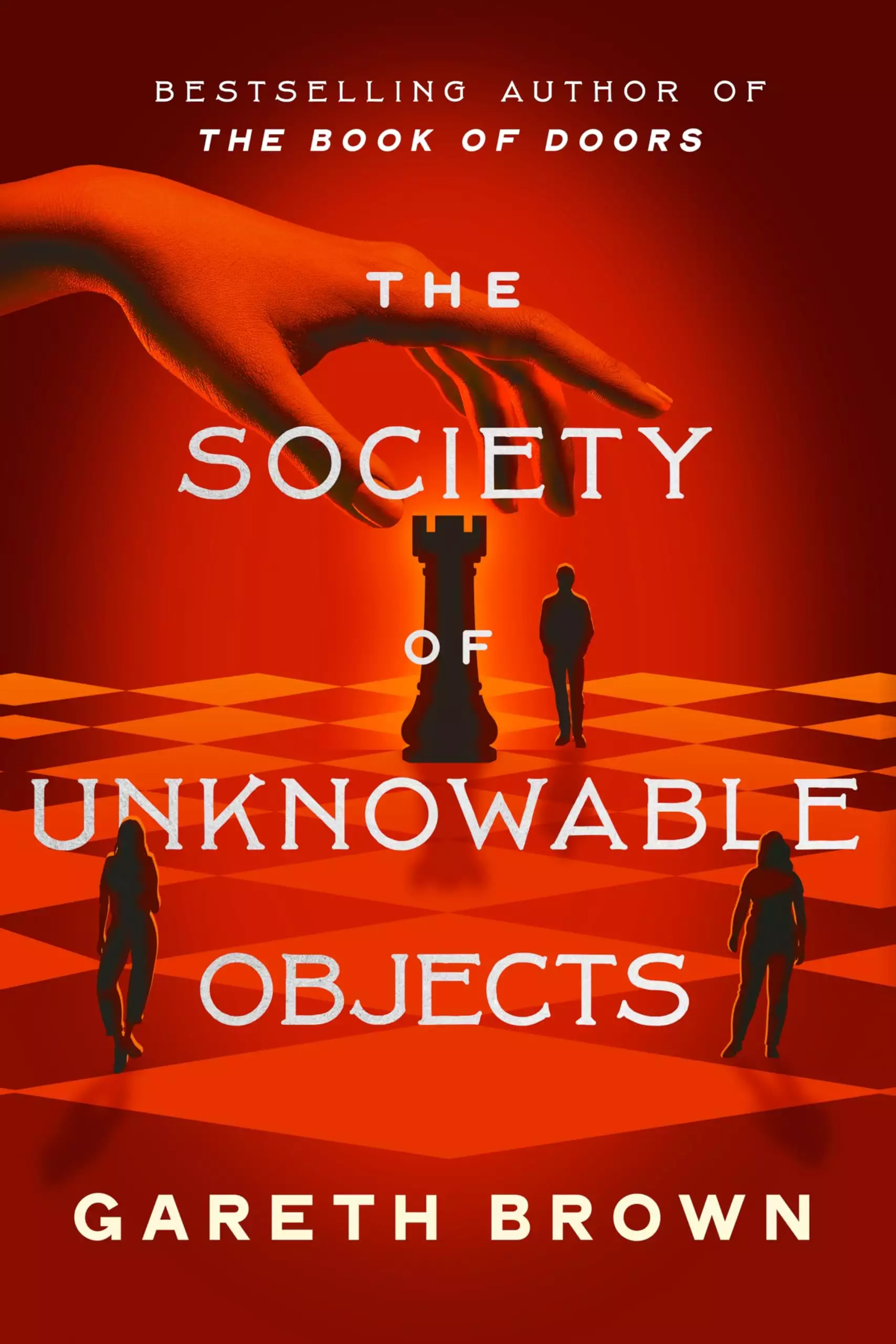
This was the meeting place of the Society of Unknowable Objects. ...
We hope you are enjoying the book so far. To continue reading...
Copyright © 2026 All Rights Reserved

 Please log in to recommend or discuss...
