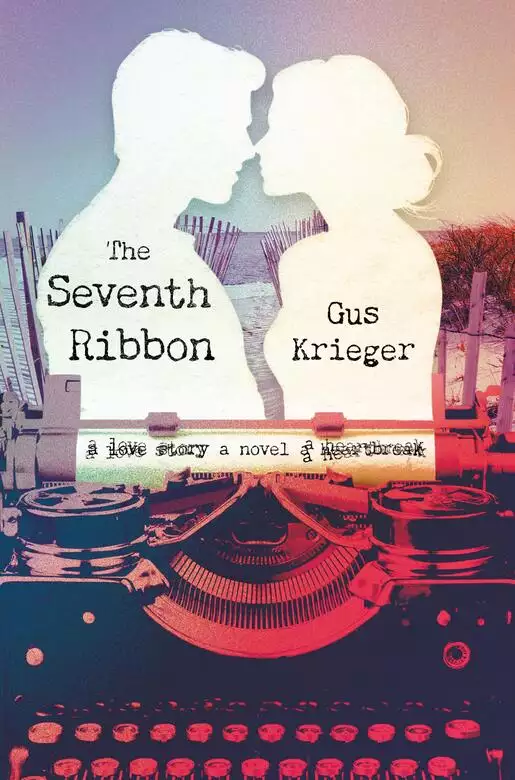
A moving, whimsical debut love story of ‘what if’ about a grieving widow who attempts to rewrite her past with magical typewriter ribbons to try to save her husband from his unfortunate fate, for readers of In Five Years and Me Before You.
Alone in her snowbound oceanfront cottage, Caroline Ora mourns the loss of her beloved husband Forest, killed earlier that year in a violent hit-and-run. Once a celebrated poet, Caroline now spends her days drowning in grief… until an unlikely discovery changes everything.
Buried deep in her attic in a dusty wooden case, Caroline finds several ancient typewriter ribbons. Spontaneously using one to write a story - a simple “what if” wherein her anguish has loosened its grip - Caroline wakes to find it’s miraculously come true.
Moment by moment, word by word, Caroline sets about rewriting her life, resurrecting her husband through ink and memories. But as the lines between fiction and reality begin to blur, Caroline learns that every wish has its cost, and every miracle has its reckoning.
Riveting, funny and heartbreaking by turns, this is an inventive and unforgettable love story.
Release date:
October 27, 2026
Publisher:
Grand Central Publishing
Print pages:
320
* BingeBooks earns revenue from qualifying purchases as an Amazon Associate as well as from other retail partners.
Six months since Forest died. Three weeks before I saw him again.
The tenth glides past like a leviathan each month, the terrible anniversary coming and going, sinister, indifferent. This morning, I’m standing on the back porch of our cottage, staring out at the snowy sand, the colorless sea. The chill off the water pierces my layered socks, my fleece pajamas, my robe and scarf. The coffee mug I hold is empty; I don’t know when it happened.
I turn and enter our house. My house.
The heavy glass back door slides shut, locking me inside. My phone buzzes.
It’s impossible to know how those nearest and dearest will respond following the sudden, violent death of one’s spouse. Both my parents were gone. I’d remained in touch with no more than a handful of blood relatives. And though my social life was far from comprehensive (that had been a Forest specialty, one of so many), there was still an unmistakable sense of migration. Of scooting away from the widow, lest her situation become contagious.
Shelby Saines remains the shining exception, and her routine check-ins have, over these past few weeks, gradually become threats to get me out of my cottage, to take me out.
I answer my phone, and her greeting is chipper, immediate.
“Caroline! You picked up! How are you?”
“Fine.”
“Uh-huh. Guess what? I’m coming to Truro!”
My rote detachment shatters. I implore her, Please, no, not today, not tonight, not now. The house is disastrous, I haven’t washed or groomed myself in weeks, I cannot conceive of navigating the claustrophobic presence of Other People…
Shelby, polite, listens before reminding me she once carried a throw rug, heavy with my vomit, through our labyrinthine college basement before finally finding an oversized garbage bin and “There’s nothing you could do at this point to make me stop loving you.”
I continue to protest and eventually yield.
Three hours. She’ll be here in three hours. We’ll eat, we’ll go for a drink in Provincetown, she’ll stay over, it’ll be nice. Assurances I cannot grasp.
Okay, then, I think. Tidy up. Start there. It’ll make you feel better. Less ashamed.
My eyes fall to the Erika Model S typewriter on the dining table, untouched for so long. I used to be in love with these machines and owned a half dozen, an assortment of heavy secondhand junk that had become something of a legitimate collection. I’d attempted to transcribe my most recent piece of poetry here and had managed three lines before realizing I was putting the final touches on the poem I’d begun on Forest’s final day. My weeping had blossomed into a full-blown panic attack, but still I’d continued sitting, pecking at keys until, in a rare moment of mercy, the machine’s ribbon had run dry. Clack. No more ink.
Tidy up.
I start slowly, taking out the boxes and bags my food has arrived in these many weeks. I load the dishwasher for the first time in memory, straighten up the den, and—a particularly grand accomplishment—make my own bed, though I rarely sleep there anymore.
It’s nearing a time a normal person might be hungry.
I contemplate the Atkins nutritional shakes in my fridge, certain I still have one or two. What did clinically depressed young widows do before the gig economy, before delivery apps? It’s then the doorbell rings.
Jesus, no…
I move my finger to my phone and tap. Three hours since our call. Shelby’s here.
“Coming.” The word catches, so I try again, calling out, lilting: “Coming!”
Opening the cabin’s front door, I adopt a cheery expression so false I feel as though I’m smeared in harlequin greasepaint.
“Hi!” I exclaim.
Later, Shelby puts away the groceries she’s brought while I lean against my tile countertop holding a second mug of coffee, having brewed another pot to honor her arrival. She’s talking a mile a minute, and I’m not sure how much of it springs from genuine habit versus attempted distraction. Moving back and forth between the fridge and the pantry and her reusable cloth shopping bags, she’s making quick work of the comfort food she’s so kindly provided. A distant part of me catalogues this woman’s profound loyalty, so far beyond that of even my own extended family, and simply aches.
Shelby owes me nothing: I never pulled her from a burning building, never paid off a precarious debt. She was simply one of a half-dozen classmates in a Philosophy of Mind study group freshman year at Bertier College. Once the course had ended and the group had dispersed, we found ourselves maintaining our Thursday night rendezvous at South Whitney Pizza, meeting to laugh and drink and talk until they turned out the lights. That we’d found our way to such present disparity—me in my doldrums, her successfully running the events company she’d inherited from an ailing boss—had not altered our decade-long bond in the slightest.
Finishing up the groceries, Shelby releases a satisfied exhale, puts her hands on her hips, and turns to me. She’s careful to appear neither exuberant nor downbeat.
“So. How are you?”
I summon my best low-stakes self-deprecating expression—Meh—and shrug, indicating our surroundings. “How do I look?”
Shelby ignores this. “You still up for dinner? Going out?”
I stare. “I don’t know.”
“Mac’s will be open. You like it there.”
“Yeah. I don’t know. Maybe.”
Shelby appears close to fabulous in a fitted striped charcoal sweater, complete with boots and leggings beneath a plum-colored coat, which now hangs on a peg beside my wall of typewriters: three floating shelves my husband installed the summer before (a Poetry Shrine, he’d called it, beaming). Shelby knows that if she put in this extra effort, I’ll at least have to meet her halfway. She moves closer, and I realize with dismay she’s scrutinizing my face, a face that is several different modes of woolly. “No no no no no,” she says.
Minutes later, I’m seated atop the primary bathroom’s closed toilet seat lid, Shelby taking a pair of tweezers to my eyebrows as she indexes my daily routine.
“You eating enough? Getting any exercise?”
“I eat when I’m hungry. I try to get outside at least once a day.” The latter is a lie.
“Uh-huh. Doing any writing?”
“No.”
“Typewriter still have you spooked?”
“Kind of.”
“Are you out of ink ribbons, from before? I wanted to bring some with the groceries, but I didn’t know what kind you needed. It’s kind of a, you know, specialty item.”
“It’s fine. You’re nice.”
“Girl’s got an expensive-ass MacBook and still insists on typing like a penniless Parisian poet,” Shelby murmurs good-naturedly, tsk-tsking.
A silence falls. The skin of my forehead is thrumming like an anthill: I haven’t taken tweezers to my eyebrows in months. Shelby continues her work another moment, then ventures something a bit more direct. “What are you thinking right now?”
Her tone is so flat, I answer without forethought.
“I’m afraid I’m not grieving right.”
Shelby pauses, leans back, gives me a meaningful look.
“All right, we’re gonna have to dig into that.”
I sigh. Shit. What do I mean?
I start with my having been in the room when my mother received the news regarding my father. I was seven. It was lunchtime, and Dad hadn’t come home the previous night, which tragically did not warrant immediate alarm in and of itself. I was having Honey Nut Cheerios, one of the few foods I’d touch at that age, as I secretly considered it dessert and was amazed it constituted a stand-alone meal. The landline rang—our corded telephone, slightly anachronistic, cheap, functional—and my mother had answered, her body going stiff as she asked whoever held the line’s other end to please repeat themselves. Despite everything that man had put her through, put us through, what followed was a perfectly expressive howl and collapse, suffused with terrible beauty.
I’d never come close to such outward histrionics, even at my lowest.
“That sure as hell doesn’t mean she did it right and you’re doing it wrong,” Shelby says. “It just means she went explosive, you went implosive.”
I nod. “I guess. It’s more than that, though. You hear stories, read articles. Women who lose their entire families in freak accidents and are back on the assembly line a day later, stamping widgets, no wallowing. All of them suffered and managed and continued. But I’m… I’m just broken into a hundred pieces. Why… why can’t I…”
I don’t know when I started crying.
Shelby puts her hands on my shoulders. “Hey,” she says, stern. “You’re a not-even-thirty-year-old woman who went through one of the worst things a person can go through. Forest was the first man you were ever happy with. The first person I saw open you up, get you to really enjoy things. And he was nuts about you. The way you made him laugh. It was… so obvious and so adorable. And those kinds of connections aren’t guaranteed. You were just two perfect orphaned halves who happened to find each other. And then he was ripped away. It’s fucked. Meaning you have about a million reasons to act however the hell you please, okay?”
I nod, still crying.
Two perfect orphaned halves who happened to find each other.
“C’mon,” Shelby says, slapping her palms against her knees. “Get your ass in the shower. We’re gonna go eat oysters and hamburgers and laugh and get drunk.”
Later, my friend helps me coordinate an outfit, and I glimpse myself in a hanging mirror. Product-laden hair, made-up face, clean sweater, dark jeans. My gaze lingers: I haven’t seen this presentable, pleasant-looking woman in months.
Reflexively, Shelby removes her phone, angling its front camera so both of us appear within its lens. “Smile!” she says. Eyes down, my kneejerk thought escapes my lips, a truth I at once regret articulating: “If I ever smile again in my life, it’ll be a fucking miracle.”
Shelby pockets her phone.
Mac’s is quiet compared to the summertime, but there’s still something of a small crowd, snowy roads be damned. Shelby and I nab a corner table, and she orders, quote, your second-cheapest bottle of champagne, insisting we’re celebrating.
“Celebrating what?”
“Us, out, here,” she replies.
There are oysters and then there are hamburgers, and the champagne gives way to a frosty carafe of pinot grigio, then a second. I somehow manage to go for minutes at a time without thinking about my situation, why we’re here. Some of the food, I taste. Some of the alcohol loosens internal knots. I laugh at one of the server’s silly jokes (“What did the pirate say when he turned eighty? Aye, matey!”). An evening of normalcy seems more than possible—it seems to be happening.
Then we’re talking about how much Shelby loved a particular film she just saw for the first time, and she muses, “I never got to thank Forest for the recommendation.”
And I find myself sobbing.
It comes without prelude. One moment I’m smiling, the next my head is on the table and I’m doing everything in my power to avoid wailing so loud I scare our fellow patrons. Shelby is on her feet, moving to sit next to me, rubbing my back, waving away the looks of concern from all nearby. “We’re fine, we’re fine,” I can hear her whispering.
We stay like this for a time, and when she leans in to suggest, “Time to go home?” I snap upright, swiping at the salt water on my face, insisting, “No, nope, nuh-uh. I want to go to a bar.” Shelby nods. We pay the check and spill into the cold night. I haven’t stood since we started drinking, and after months of default sobriety, the flat and the bubbly hit me hard.
“What’s open right now?” I ask, striving for cheery, grazing manic.
Shivering, Shelby checks her phone, finally pointing in the direction of an adjacent street. “Sixteen-Twenty!” she declares with a hint of triumph. “That way!”
We walk for so long that, more than once, I think one of us must have made a mistake. Then we spy the bar. It might be the lack of off-season options for townies like us, it might be my own altered sense of what qualifies as busy, but the indoor/outdoor area of this establishment looks packed.
Shelby squeals with surprise. “Par-tay!”
We make our way inside and up to the bar. She orders a house white and asks what I’m having.
“Mojito,” I answer, my dependable good time drink, long ago.
We collect our order and take up positions against a nearby wall, sipping and talk-shouting above the music, our surroundings dark but warm, anonymous but familiar, and I suddenly understand the appeal of such places in ways I never have. I finish my drink.
“I want attention,” I say.
It’s a euphemism Shelby and I developed sophomore year of college. “Hoping for some attention?” we’d ask each other on various notable evenings. “Got that attention!” upon returning to the apartment, heels in hand, the following morning.
“Yeah?” Shelby asks now, managing her tone admirably.
“Yeah!” I shout in response. “Maybe let’s dance?”
We make our way to a centralized location alongside a dozen others, young and old, swaying and gyrating. We’re there for two songs before someone younger than me approaches, tall and scruffy, smelling of salt.
“I gotta pee!” Shelby shouts, disappearing.
The guy pivots in my direction and after we’re dancing with sufficient nearness, he leans forward, close enough for his whiskers to brush my cheek, and asks in a voice unexpectedly soft for his broad frame, “Can I get you a drink?”
I pretend to consider. “Mojito!”
Later, we’re at the bar and my glass is mostly ice and he’s making small talk about his work as a processor at the docks. His name is Pete. I’m trying to look interested but I’m self-conscious because he keeps looking away, intimidated by or unfamiliar with all this direct eye contact.
“Yeah. Uh-huh. Wow. That sounds interesting.” I might be interjecting too much.
Shelby is off in a corner, scrolling through her phone and making sure I don’t need rescuing. Blearily, I wonder how the night might progress when a brilliant thought strikes my sodden mind, the revelation so spot-on I can’t believe I didn’t think of it before. I’m going to leave this up to him. If he suggests swapping numbers and parting ways, we’ll do that. If he wants to make out on the dance floor till closing, we’ll do that. If he wants to lead me out to the parking lot and fuck me in the back seat of his Miata, I won’t say a word.
I make a show of checking the time on my phone.
“Ugh,” I say exaggeratedly. “I should get outta here.”
“Yeah?” Pete says, surprised, having thought this moment would never come.
“Yeah,” I say, meeting his gaze, daring him to do something.
“Wanna come back to my place for a bit?” he asks, sounding so authentically casual I feel a wave of true admiration. “I have beers?” he adds with unnecessary upward inflection.
“Beers,” I muse, making a thinking face.
“Yeah.”
“Okay, lemme settle up. I’ll meet you out front.”
With great focus, I inform Shelby of my decision, slurring only twice. Unconvinced, she triple-checks that this is what I want, what I think will be helpful, right now. Using small words, I manage to convey that, as ambivalent as I’ve been to the idea of tomorrow, I’ve never been more so than I am right now. To hell with careful decision-making. Careful decision-making led me here.
I give Shelby my keys and tell her to meet me at the cottage and she says she’ll leave her phone on, to call her if I need advice or a ride or anything at all. I agree and before I know it she’s gone and I’m walking arm in arm down Commercial Street with Pete.
He’s continuing to make small talk, pointing out little landmarks here and there. Once it’s quiet and there are no other pedestrians in sight, he stops and reaches into a jacket pocket.
I stare. My former self might have been fearful.
I’m not, now. I’m barely anything at all.
Pete removes a small flask.
“Want some?” he asks. “Root beer schnapps.”
Much later, we arrive at his place: a one-room efficiency on the same property as a larger house belonging to someone or someones I don’t ask about. We get inside and everything feels damp. He starts to ask about beer, what I’d prefer, bottle or glass, and I lunge at him, hungrily, tongue probing, kissing, something like kissing. He excuses himself and I begin clumsily tugging at my clothes, removing them, blundering toward his hastily made bed and lying atop his comforter. Somewhere, a toilet flushes. Pete emerges, looking surprised, then pleased. He removes his shirt.
Come, I gesture. Obligingly, he lies on top of me. We continue the kissing charade as I reach for his belt buckle.
“Are you on birth control?” he asks.
I’m five years into a six-year IUD: details I’ll spare him.
“Yeah,” I say.
Moments later he’s inside me, thrusting, grunting metronomically in his soft voice. If everything was different, I think, I might be enjoying this. Am I enjoying this? I’m letting out the occasional moan, so my body must be pleased in some vague way. The rest of me, however, remains outside, observing, ruminating on my choices, my luck, my Forest, dead, burned to ash in a commercial furnace before he could rot in the ground. His remains scattered beyond the lighthouse, where we’d both gone so often, where I’ve not ventured since. Me here now, beneath this stranger, the two of us deriving brief, superficial gratification from a place just short of anonymity. I experience it all simultaneously, my mind barricading myself from myself. Pete abruptly orgasms, clutching at my hair, withering inside me. I charitably moan in turn.
I stare at the ceiling. It’s stucco, stippled, and I see the outline of a top hat in its countless scattershot dots. I wonder if I would have seen it on a different night.
If Pete just gave me an STD, I think, maybe I’ll die. Problems, solved.
A panting silence and he rolls onto his side, finding my profile.
“You still want a beer?”
I manage to dress and exit without making things too uncomfortable. Pete, sleepy, inebriated, seems hurt I’m not lingering. I’m tempted to remind him he doesn’t know where I’m from or what I do or the first letter of my last name and we’re probably not fledgling soulmates. Instead, I tell him what a nice time I’ve had and kiss him and leave.
The yard surrounding the efficiency leads to a narrow beach, and I take off my shoes and walk in the cold sand until my feet are stiff and purple. I’m not yet sober and when I finally wander back toward Commercial Street, I’m only just beginning to think about the logistics of calling a cab, of getting home. The town has gone to bed and I’m the last woman on earth. I’m still barefoot, the air is maybe thirty degrees, the shoes in my hand are a pair I owned before meeting Forest, and they suddenly repel me. I set them down on the sidewalk, certain some local drag queen with small feet will find them and love them in ways I never could.
I’m reaching the town center and can feel nothing below my calves and am wondering if this might be worrisome when, a genuine miracle, I spot a burgundy sedan. Idling, lights on, “Cape Cab” decal along one side in a plain, unlikely font.
I bridge the gap. The old man behind the wheel gives me a cockeyed stare.
“We know each other?” he asks.
He’s entirely unfamiliar. I shake my head.
“Ya sure? The shuttle stop, the bench? Summer?”
Again, I shake my head, the cold beginning to make me dance in place. I ask this person about a ride: He informs me it’s past his shift and he was just about to punch out. I offer him all the cash I have—a hundred dollars, seeing as how Shelby insisted on paying for dinner—and, after another considered moment, he relents, saying he’ll do it for twenty.
We drive down Route 6 in silence.
As I’m exiting the cab, the old man hands me a business card.
“Hey, Bright Eyes,” he begins, rendering me surprised, charmed by the nickname.
“Don’t make it too regular,” he continues. “But if you’re ever in a similar pickle, give a ring.”
I make a show of nodding solemnly, the young girl brought before the principal.
My cab departs and both my feet are on the porch by the time I remember I’d given Shelby my house keys. I’m attempting to puzzle out how to enter without waking her when the knob of the front door turns and there she is, sleepy-eyed, blinking back streetlights. My expression is awkward. I shuffle inside.
“Have fun?” Shelby asks genuinely.
“Sure,” I reply.
And why not? Nothing terrible happened.
“Where the hell are your shoes?” she asks, a bit more awake.
“It’s a long story,” I say, my stock response for short, uncomfortable stories.
“I turned down the bed for you,” she murmurs, starting to walk off.
“Hey,” I say, a little too sharply, causing her to stop and turn.
“Sorry,” I continue. “I’ve just been… sleeping on the couch. You can take a loft bed.”
She nods, not questioning this, bless her.
We retire to our respective quarters. I remove my jeans and sweater and swaddle myself in my oversized comforter and collapse onto the sofa. After some time, feeling begins creeping back into my calves and feet. It’s still December in New England, meaning the sun won’t begin to show itself for hours, and I realize I’ve never once been conscious for an actual sunrise these past six months, despite my unpredictable bouts of terrible insomnia. I’m wondering why this is, what it might signify, as I surrender to sleep.
I dream of Forest, and the first of his final days.
My husband and I had risen in advance of our alarms. We’d dressed and brushed, made chitchat, discussed dinner. It was summertime, and he’d been determined to put together a peach salad, some equally seasonal dessert. We’d kissed each other goodbye, him bound for the office, I for everywhere and nowhere, the perpetual freelancer.
Gathering my things, I’d been surprised to find him lingering inside, framed by our open front door.
“Everything okay?” I ask.
“Yeah,” he replies, his remarkable chestnut eyes distant. “Just feel like… I dunno. Like I’m forgetting something.”
We’ve been together for five years and married for two: I know better than to press. “Good luck, then,” I say, kissing him goodbye a second time. He gives a small nod; we exchange horribly perfunctory I Love Yous.
The AP English exams were last month, meaning things will be light until August, summer school kids only, and today I don’t have any students on my Brighter Minds calendar until after noon. Almost automatically, I grab my computer bag and leave our home behind, treading the narrow asphalt ribbon to the Top Mast Café for my weekly coffee and blueberry muffin.
Suspended just here, I stand in awe of my own impossible innocence.
The next time I’m allowed a brief, fragmented glimpse of Forest Richard Ora, he’ll be no more than a list of forensic details. Glossy images, lifeless.
In these dreams, sometimes it’s different. I can never change our conclusion, but stepping across that threshold, sometimes my cells ignite, and I leap back inside, drawing Forest to me, running my hands across his broad chest and shoulders and saying, I. Love. You, a talism. . .
We hope you are enjoying the book so far. To continue reading...

 Please log in to recommend or discuss...
