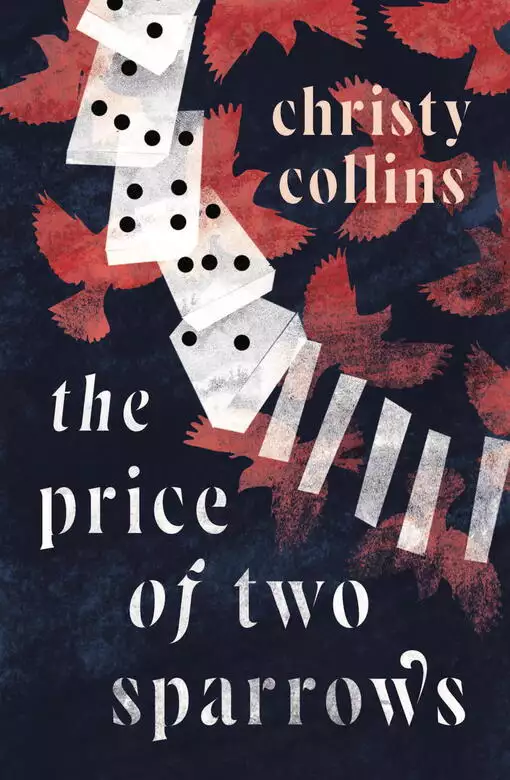
Heico is an ornithologist fighting a losing battle to protect the birds in his beachside suburb. When a journalist asks for comment on a planned development, Heico exaggerates his reports on how many migratory birds use the site. Soon it is revealed that the proposed building is a mosque, and he finds himself embroiled in community resistance to the project. Still, he refuses to back down. Nahla, Heico's house cleaner, is trying to find her place in a new country and a new marriage. Isolated and lonely, she sees the mosque as a symbol of what she hopes to find in Australia: community, familiarity, acceptance. But as resistance to the project intensifies, she must summon the courage and the language to claim her space in this new life. Piercingly clear-eyed and deeply insightful, The Price of Two Sparrows explores what we hold sacred and why. It delicately picks apart questions of community and prejudice, religion and nature in the modern world. This is a beautiful and thought-provoking debut from an award-winning Australian writer. ‘A beautiful and timely literary flight.' KATHERINE JOHNSON ‘A deeply empathetic novel. Collins has created something special here.' TONI JORDAN
Release date:
January 27, 2021
Publisher:
Affirm Press
Print pages:
230
* BingeBooks earns revenue from qualifying purchases as an Amazon Associate as well as from other retail partners.
A PLANE crashes into the Red Sea killing all 148 people on board.
ON NAURU, thirty-three detained asylum seekers suspend their month-long hunger strike after plans are made for an Australian medical team to travel to Nauru.
AN ETHANOL explosion occurs in Port Kembla near Sydney.
PRIME MINISTER John Howard calls for a sporting boycott of Zimbabwe.
NASA’S TWIN spacecrafts Spirit and Opportunity land on Mars.
It had been more than forty degrees for three consecutive days: a heat wave that crammed the roads to the beach with slow-moving traffic and had tourists spilling greedily out of ferries, clutching towels and buckets and beach bags and the upper arms of small children in brightly coloured hats.
A squabble of silver gulls dipped and soared on the thermals, and below Heico Brandsma was in the coastal sand dunes in the estuary, rescuing birds from heat exhaustion as they fell from the trees. A cast of kestrels circled above, but Heico didn’t need to look up; it was forty-two degrees, and the birds that most needed his attention were likely to be on the ground.
The estuary thrummed with birdlife. At this time of year there were sandpipers, godwits and greenshanks; plovers, tattlers, turnstones and curlews; whimbrels, shearwaters and red-necked stints. The shorebirds fossicked in the shallows for food. For the migrants it was another day in a lifetime of summers, and their bodies knew to prepare for their next journey long before their instincts stirred them, once again, to venture north.
A sanderling lay in Heico’s path in the full heat of the sun, dark bill open, pale grey feathers ruffled, panting. ‘Here,’ Heico said, softly gathering the small bird in his hands. She fluttered a weak resistance until he placed her on a damp towel and offered her a little water from a glass dropper, shading her from the sun with his palm.
The ute was two hundred metres back, at the road. He had set up a mist machine and some water troughs in the shade nearby. There might even be some ice chips still in the esky on the front seat. He spoke to the bird as he walked, reassuring her that the mist would soon have her feeling better.
Despite the heat, Heico was glad to be here – the air and sun and wild blue light in the estuary seemed to clear his head. Back at the office, he had left the graduate students and support staff – those who weren’t off on holidays to Cuba, New Zealand or Vietnam – draped over their swivel chairs reassuring each other that it was much too hot to work. And all along the coast, birds were falling from the sky.
It was the following afternoon when a journalist called. He wanted to ask about the impact on the migratory shorebirds of the new development that bordered the sanctuary. It was the first Heico had heard of it. He frowned and asked for the street address. ‘Near the national park? Can you give me an hour to look at it? Call me back and I’ll have something for you.’
Heico knew the site: a clear space beside the through-road in an area that he thought had been zoned for an upmarket family restaurant a few years back. He called Imogen into his office and asked for a map of the site and the surrounding area showing all the tagged birds. As he spoke, she toyed with her bracelet, rotating it slowly around her wrist.
They had been tracking the birds for a few years. The Curlew Project, they called it, though it monitored the migratory paths of a handful of different species that used the coastal dune areas in their seasonal migration. Heico hoped to secure funding to expand the project over the next few years to include cooperation with partners in Beijing and more resources here in this office: new equipment and extra personnel.
Imogen brought in her laptop and opened several years’ worth of GIS images. Each tracked bird’s data could be extrapolated to show the probable migration patterns of their entire group. ‘I can average them out over any time period …’
He shook his head. ‘It’s for a newspaper. No one will be able to read the GIS images anyway. Give me the last twelve months, I guess.’
‘You’re the boss.’ She gave a long, slow blink, and pushed herself up from her seat in a way that reminded him, for some reason, of a baby giraffe. At the doorway, she turned back toward him. ‘I’ll have the file ready to email in twenty minutes.’ She swanned through the open-plan pens outside his office, but he wasn’t watching anymore.
Imogen had told him once, at a Christmas party, that she thought the other women in the office made too little of themselves. He’d shrugged. He had had too many drinks by then but he knew now that he should have said something in their defence. These sorts of discussions were dangerous territory. You could lose your job, especially in a ‘satellite office’ like this one. The suits in Canberra would put a woman in. There were a couple knocking at the door – two of the objects of Imogen’s comment in fact. Fiercely competent women whose loyalty to him might prove thin if the circumstances were right.
We’re here for the birds, he reminded himself, the rest is distraction. He picked up the phone and dialled Imogen’s extension.
‘Couldn’t bear to be without me?’ she answered.
‘Overlay them all on one map,’ he said.
‘Sorry?’
‘Do one map with all the migration trajectories since we started tracking and include the extrapolation data.’
She was silent for a moment. ‘I can average it out …?’
‘Just put it all on the one map.’
‘Sorry, is this for a journal article?’
‘It’s for the newspaper.’
‘They’re not going to have a clue what they’re looking at. It’ll look like thousands of birds visit this one tiny stretch.’
‘Precisely,’ he said. ‘Give the developers something to think about.’ Heico hung up before she could respond. He swivelled on his chair to stare at the scrub outside his office window.
~
Heico worked late, but it was still full daylight when he left the office. The building had been constructed quickly and cheaply and it still had a temporary feel almost a decade later. The metal stairs at the entrance clanged beneath him as he headed for the bike rack.
There was a track that took him most of the way home alongside the creek that flowed into the estuary. It took a little longer but he preferred the bike track when he had time; it helped him leave the workday behind. This evening the metallic blue-black welcome swallows cruised acrobatically to feed on insects, displaying perfectly fanned wings, their pale breasts as light as sky, tails forked like Japanese kites. The need to protect the birds’ habitat seemed self-evident to Heico. He was surprised when people he met socially thought otherwise. The ‘yes but’ crowd: otherwise intelligent individuals who were surprisingly cavalier when it came to the trade-off between bird species and jet skis, restaurant developments or even a favoured cleaning product. And then there were the people who never seemed to see the birds at all. Bird blindness, a malaise frightening in its specificity and completeness.
Moments later a flock of flame-red robins began darting about in search of food. Their tinkling trill was said to sound like ‘you-may-come-if-you-will-to-the-sea’, as a university friend had informed him on a field trip. Despite their name they were not robins at all, taxonomically, but red-breasted flycatchers. The euro-projection of it all was amusing if a little disheartening, then as now.
He’d noticed it, too, on the birding trips he’d led in his first years out of university. It was still hard for people to really see the birds around them when their imaginations were full of England’s calling birds, turtle doves, French hens and that partridge-in-a-pear-tree. Migratory shorebirds that arrived for the Australian summer were said to be ‘wintering’, so that the world’s orientation was forever fixed and the seasons here were upside down.
Heico had expected Eliza to be home by the time he got there, but it seemed she too had decided to work late. The house was quiet, in the way of summer evenings, when nightfall came late and the darkness felt fragile and brief. He could hear the neighbours washing the dishes and putting the children to bed. Woolf (‘as in Virginia,’ he’d explained a thousand times since Eliza had brought the beagle over from the States) was bored, trailing around Heico’s feet, wanting to be walked. He changed his work loafers for running shoes and grabbed the leash.
Their street was the kind where growing families and growing real estate prices had filled backyards – sometimes completely – with new-build kitchens, rumpus rooms and once-glorious sunrooms where the sunlight had since been compromised by all the neighbours following suit. Heico and Eliza had one of the few remaining backyards: a patch of concrete crowded on all edges with a motley assembly of pot plants. In the middle were a cast iron table with two matching chairs that they would reposition either to catch the sun or avoid it, and a freestanding bird feeder that Eliza had given him.
Recently Eliza had begun to work longer hours at her office job in the city. Perhaps tonight she’d stayed for Friday-night drinks with her colleagues. She had been ‘pre-law’ when they met, having, until then, only ever dreamed of being an attorney, but she had stayed in Sydney – to be with him – after a year-long student exchange. It was her final year in any case, and she was restless, she’d said, and ready for an adventure or two. She had graduated in absentia, to her father’s disappointment, and she hadn’t returned to attend law school. Instead she’d taken temporary jobs while Heico did his Masters: a debt he could never repay and to which she never alluded, and silence alone was a generosity he wasn’t sure he himself would have been capable of. Now she worked in marketing for a multinational electronics company who apparently liked their employees to be bright, energetic and to work until they had dark rings under their eyes and fell asleep against the window on their train ride home.
He made tea in anticipation of her arrival. He selected the ‘I love tits’ mug he had brought back for her from the British Ornithological Society conference. It had made her laugh when he gave it to her, but she never seemed to use it.
But when Eliza arrived she was tired, she said. She leaned in to kiss him. She’d had a few glasses of wine but she accepted the mug of tea with a smile. ‘I think I’ll take it upstairs, if you don’t mind?’ She loosened her dark hair from its bronze fastener, gathered her work shoes from where she’d slipped them off and headed upstairs to the bedroom.
He had wanted to tell her about his day, about the journalist’s request, and about how Otto had called and asked for a map of every bird nesting in the sanctuary. Heico had laughed, thinking it was joke.
‘Impossible,’ he had told his boss.
A silence followed.
‘What’s it for?’ Heico asked. ‘Maybe I can pull together some rough numbers.’
‘Alina wondered,’ said Otto. ‘I’ll tell her it’s not possible.’
‘If we had more resources …’
‘I know,’ said Otto. ‘Maybe when the next round of grants comes through.’
By the time Heico had brushed his teeth and got into bed beside her, Eliza was asleep.
~
When he woke up, Eliza was already downstairs making breakfast. She pouted when Heico appeared in the kitchen. ‘I was going to bring it to you.’
‘I can go back to bed …’
Woolf was nuzzling at her bare legs and she leaned down to feed him a piece of sausage.
‘It’s not the same.’
‘Sure it is.’ Heico grabbed the paper from the front door and went back upstairs to browse the sports section in bed.
Eliza was reflexively generous in her cooking, as in everything. He put it down to the abundance of her American childhood. She made him bacon, though she herself never ate it, and she didn’t see anything strange in serving meals neither of them could finish.
Eliza came into the room, passed him the breakfast tray and climbed into bed beside him. Woolf settled on Heico’s side of the bed and watched him expectantly.
‘What did I do to deserve all this?’
She smiled at him. ‘I’m just fuelling you up to save the world.’
‘But it’s the weekend,’ he said.
‘Well you can have two days off but then back to the world-saving for you.’ She picked up the newspaper, folded it and put it aside.
‘You’re not having anything?’ Heico asked.
‘I had some yoghurt. I’ve been up for a while.’ Her eyes were far away.
‘Everyone okay?’ he asked. Her sister, Ruthie, sometimes called on a Friday afternoon to kill time at her dead-end job – waking Eliza at six or seven on Saturday morning.
‘Mostly,’ she said, settling back. For a moment she looked up at the ceiling.
When she’d first decided not to return to Boston fifteen years ago she had seemed happier and more alive, free of her family and friends and of some old version of herself that she seemed to have tired of. In the early years her temporary visa stopped her from getting stable work, and she had volunteered to help keep the dunes free of invasive weeds. The time spent in the sun, meeting people and learning to distinguish native plants from the yellow fireweed, the clusters of lantana flowers, the plumes of Mexican feather grass and the orange hawkweed, seemed to make her stronger and more self-contained. Later she had joined an amateur theatre group, composed entirely of expats, to make friends. They always cast her in roles louder and harder than she herself was, and Heico found it unsettling to watch the ease and entirety with which she could inhabit someone else’s psyche.
‘Tell me something I don’t know,’ Heico said. It was an old game they had once played on long road trips.
She frowned for a moment, then her features lightened and she smiled. ‘I think I’m in line for a promotion. Liana’s moving to Hong Kong and I think, maybe. She’s got a proper office with actual artwork on the wall and—’
‘That’s so great.’ He lifted the tray off his lap and put it on his bedside table so he could wrap an arm around her. ‘You deserve it. Wow, you’re really smashing those glass ceilings!’
She laughed. ‘I don’t think it’s a glass ceiling if a woman had the job before you.’
He retrieved the breakfast tray from under Woolf’s watchful gaze and gave him a piece of rind for his patience.
‘Tell me something I don’t know.’ Eliza echoed the request.
He paused, thinking. ‘Pass me the paper?’
Heico pushed the tray away a little to make room, unfolded the paper in front of him and he flipped through the pages until he spotted the article about the bird sanctuary. He pressed it open and passed the paper back to Eliza.
She scanned silently for a moment. ‘You’re famous!’ she said, stabbing her finger at his name.
‘Ah,’ said Heico, ‘so this is what fame feels like.’ Still, he leaned over to look at the article. The image they’d supplied was reproduced at the top, and several direct quotes from him had been included.
‘Like I said: saving the world,’ Eliza said.
Heico shook his head and smiled. ‘I think it’s supposed to be sunny today,’ he said. ‘Shall we go to the beach?’
Behold! Abraham said: ‘My Lord! show me how thou givest life to the dead.’ He said: ‘Dost thou not then believe?’ He said: ‘Yea! but to satisfy my own understanding.’ He said: ‘Take four birds; tame them to turn to thee; put a portion of them on every hill and call to them; they will come to thee (flying) with speed. Then know that God is Exalted in Power Wise.’
Qur’an 2:260
The Imam preached love of our neighbours from the minbar. ‘Do good,’ he said, ‘to your parents and kinsfolk, to orphans and those in need, neighbours who are near and those who are strangers, the companion by your side, the traveller and the slave.’ He paused and looked around at us; the words were so familiar there was no need to elaborate. ‘And remember that you do not have faith unless you love for your neighbour what you love for yourself.’
Some years earlier, the city council had given us the use of the community centre for our Friday noon prayer. We came, religiously at first, Islam still the steady beating heart of our lives. We conducted our ablutions and prayers. There was the Friday ṣalāt and the long cycles of fasting and celebration. Later, perhaps winnowed out by the pull in every other direction, our attention began to drift back to office papers and email inboxes.
We would arrive to find that the Friday-morning crèche workers had gathered up the toys and unfurled mismatched carpets for us at just the right angle to the mihrab, so we could face the Ka’ba along with our brothers and sisters around the world. Afterwards we rolled up the carpets and stored them under the stairs as we’d been shown, in an equal gesture of goodwill.
But we dreamed of a mosque where the carpets would not need to be rolled away, with a kitchen where meals could be prepared and we could eat together, and a space where our young people could meet one another and talk. We wanted a place where we would not be looked at as strangers. A place that was an extension of God’s world all around us, built in His honour. A place to gather; a place where we could pray and break fast with one another.
After prayer we stood in groups for a few moments to talk about the world, our work and the word. Our younger brothers were frustrated with waiting for the mosque plans to be approved, and who could blame them? Many of them had never, in their whole lives, been members of a mosque community. Their parents had gathered in shopfronts and private lounge rooms – and now the community centre – to meet for Friday prayer. Makeshift spaces were the only ‘mosque’ they’d ever known.
Some of our sisters unwound their headscarves as they left the centre, their heels clicking as they headed for their cars. Others leaned their covered heads together conspiratorially, children around their feet and balanced on their hips. They shared stories about local doctors, fruit stores, the butchers who sold halal meats. Perhaps they’d brought pan-fried bread for their husbands to eat on the way back to work. Or perhaps the husbands would have to search in their glove boxes for dates or a muesli bar, or some loose change so that their colleagues could grin and say, ‘Junk food again?’ as, lunchtime over, our brothers folded themselves back behind their desks, back into their workaday lives.
Sometimes we used the community centre to hold meetings, and occasionally the bureaucrats from the council came to speak to us. They placed their shoes on the shoe rack; the women covered their hair with patterned scarves. They bent their heads as if afraid the roof of the community centre was too low. They seemed relieved when we laughed at their jokes.
‘Speak to your families in English,’ they said. ‘Vote in the council elections,’ they said. ‘Make sure your children wear their bike helmets and teach them how to swim.’
For me, the children were the joy of it: created as lights, they were eccentric, wide-eyed and curious; forever between and before everything; each a true blessing for their community. And they asked questions that their parents never would. Sometimes, at the Friday prayer, one or two of the young boys would come to pray beside me and this – most days – was reward enough.
The call to prayer came early in the summer months. The first light breached the horizon before six and here, so far from the mountain home where Nahla had grown up, the call was not the sound of the Muezzin (her grandfather’s brother when she’d been small, and later an uncle) but the sound of Youssef’s digital alarm clock, harsh and electronic, rousing them from sleep to wash and then pray before the long day began.
Nahla did not mind the early mornings because they allowed time – after the prayer but before Youssef had to leave for work – to linger over tea as the light rose to reach through their apartment window, high above the ground.
‘People weren’t meant to live this far from the earth,’ she had said to him not long after she had first arrived. He had laughed and then, seeing her face, he had stopped and asked her if she was uncomfortable.
She had lied, to cover her foolishness: ‘No, of course, it’s only that I’m not used to it.’
His face had softened in concern.
She had not mentioned it again and now she had grown accustomed to it. All except the strangeness of the elevator – a windowless box – too narrow to be comfortable if another person crammed in beside her with their bags of groceries; too sterile to feel like anything more than a metal coffin if she was alone.
It was silly of course. Tall buildings were everywhere in this part of the city, and she was grateful for the comfort of Youssef’s home with its many gadgets – shiny and rounded, designed to suggest a future she wasn’t convinced had yet arrived – and the way the outside temperatures could be made irrelevant with the touch of a button.
He never lowered the window shades against the heat outside. She, from habit, still did, though the ai. . .
We hope you are enjoying the book so far. To continue reading...

 Please log in to recommend or discuss...
