Prices may change without notice. Check price before purchase.
Share
Book info
Sample
Media
Author updates
Lists
Synopsis
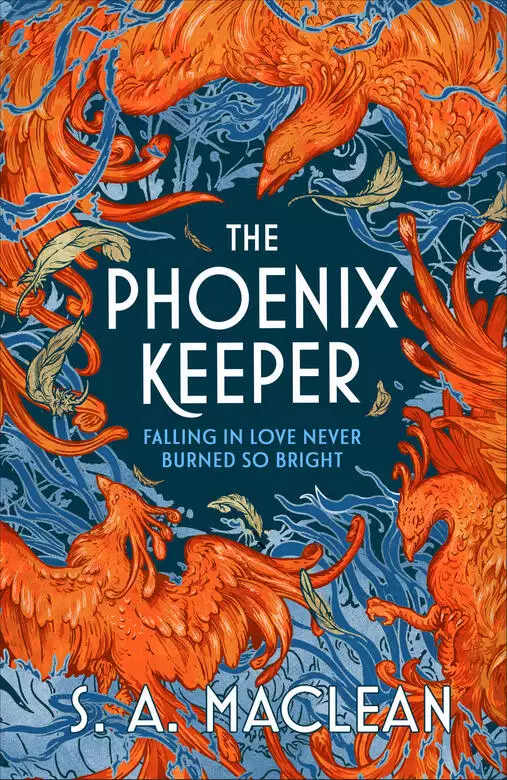
As head phoenix keeper at a world-renowned zoo for magical creatures, Aila's childhood dream of conserving critically endangered firebirds seems closer than ever. There's just one glaring caveat: her zoo's breeding program hasn't functioned for a decade. When a tragic phoenix heist sabotages the flagship initiative at a neighbouring zoo, Aila must prove her derelict facilities are fit to take the reins.
But saving an entire species from extinction requires more than stellar animal handling skills. Carnivorous water horses, tempestuous thunderhawks, mischievous dragons... Aila has no problem wrangling beasts. Inspiring zoo patrons? That's another story. Mustering the courage to ask for help from the hotshot griffin keeper at the zoo's most popular exhibit? Virtually impossible.
Especially when that hotshot griffin keeper happens to be her arch-rival from college: Luciana, an annoyingly brooding and insufferable know-it-all with the grace of a basilisk and the face of a goddess who's convinced that Aila's beloved phoenix would serve their cause better as an active performer rather than as a passive conservation exhibit.
With the world watching and the threat of poachers looming, Aila's success is no longer merely a matter of keeping her job...
She is the keeper of the phoenix, and the future of a species now rests on her shoulders.
There's just one thing she has to remember: she is also not alone.
Against an epic fantasy backdrop teeming with all your favourite mythical beasts from dragons and unicorns to kelpies and krakens, The Phoenix Keeper combines the fierce joy of cozy fantasy kings TJ Klune and Travis Baldree with the soul-restoring romance of queer icons Alice Oseman and Casey McQuiston.
Release date:
August 13, 2024
Publisher:
Orbit
Print pages:
400
* BingeBooks earns revenue from qualifying purchases as an Amazon Associate as well as from other retail partners.
Aila Macbhairan’s favorite time at the San Tamculo Zoo was early morning: cool, quiet, and—best of all—not a person in sight.
In the pre-dawn, an eggplant-purple sky hung over city streetlamps silhouetted with palm trees. Bird keepers worked the earliest shifts, their peckish charges awake at first light.
Aila swiped her ID card at the staff gate, then crossed the entrance plaza, hunched beneath a backpack of blue canvas and cartoon animal patches, work boots tapping terracotta bricks engraved with donor names. A bronze statue of the zoo’s peacock griffin mascot stood sentinel in the fog, metal wings spread wide, back brushed gold from millions of visitors clambering up for a photo.
Already, the air warmed. Salt from the rocky coast of Movas mixed with asphalt, hay, and old popcorn, though not a kernel or crumpled cup strayed into sight. For a fleeting time before the gates opened, Aila enjoyed immaculate concrete paths, the main avenue of silent speakers and dark gift shops stuffed with everything from dragon plushies to candy cockatrice eggs, to those insufferable plastic toys that twirled with light-up phoenixes at the press of a button.
The shriek of an archibird sliced the quiet. Aila smiled, the zoo rousing to greet her.
Off the visitor path, hidden behind a screen of shrubbery, golden light spilled out a doorway. Inside, beige walls sported framed news articles and a bulletin board with flyers for the employee potluck, an advertisement for guitar lessons, a strongly worded note against storing unicorn deworming medicine in the human food fridge. Filing cabinets sprouted crowns of charging radios and protocol binders.
“Morning, Tom,” Aila greeted.
From his corner desk, the middle-aged staff coordinator grunted in acknowledgement. He had brown and sun-weathered skin, a jaw patched with uneven stubble and a black uniform polo ironed to perfection. While he sipped his coffee and scrolled on his phone, Aila logged in at the computer, then clipped a radio to the belt of her cargo pants.
“Have a good day, Tom.”
He grunted farewell.
Aila got along well with Tom.
Back into the budding dawn, a fog-muted sunrise filtered through leaves of eucalyptus and cypress. Aila’s path cut through a food court and past the endangered species carousel, a menagerie of prancing pegasi and snarling dragons. During a school trip in third grade, four of Aila’s classmates waged war over the coveted unicorn mount, ending in pulled hair and several detentions. She’d watched the skirmish from her lone perch on the carousel’s thunderhawk, safe in a cocoon of resin wings and electric blue paint.
Beyond the entrance attractions, the walkway branched into narrower arteries. At Aila’s passing, the yellow-finned caiman flicked open an eye, scales glittering with magnetized gold dust and tail dangling in his lounging pool. A pair of gilded swans honked a plea for handouts, trails of bioluminescence swirling the dark water in their wake. Ahead, a domed aviary rose from within the trees, panels of tempered glass ribbed with heat-resistant steel.
Aila’s heart soared with it.
She’d collected her first poster from the San Tamculo Zoo at eight years old, a stylized print of the most stunning creature in the world: the critically endangered Silimalo phoenix, ruby wings spread in flight, tail swirling into flame. The prized possession held a place of honor on her bedroom wall throughout high school. It traveled with her in a packed sedan to Sagecrest College, the premier zoological school in Movas, motivation as she crammed her way to a degree in magical animal science. The edges crinkled yellow on her cubicle wall as she finished her apprenticeship at the Fablewings Rescue Center across town, as she poured her heart into the San Tamculo Zoo job application, then sobbed like a wrung sponge when the offer letter arrived.
Now, phoenix keeper Aila floated to work each day like a dream, eyes sparkling on the glass of her aviary.
Her jungle trees and concrete paths.
Her flock of birds chittering at the dawn.
Head held high, she mounted the slope to the World of Birds aviary and twisted a key into the outer lock, crossed the antechamber, then pressed the inner door to start another wonderful day of—
Her shoulder stalled against the push bar.
She planted her boots and shoved, but the door refused to open. From the other side of the steel mesh came a wry cackle. She looked up, glare settling on a stocky gray archibird—one of the more mischievous species under her care—peering down at her from behind a wide-leaved vine. He tilted his head, a crest of azure feathers raised to a rakish angle.
“Ha, ha,” Aila said. “Very funny, Archie.”
He replied with a puffed chest and a throaty sound like a deflating rubber chicken.
Aila shoved the door again, attempting to dislodge whatever twigs Archie must have jammed into the lock. Archibirds, native to the tropical islands of the Naelo Archipelago, had been hunted to near extinction in the wild. Some days, she understood why their beleaguered human neighbors did it. The feathered fiends obsessed over gathering shiny jewelry, light bulbs, bolts out of car hubcaps.
With gritted teeth, Aila strained against the push bar until her shoulder ached. No rattle of dislodging sticks answered her efforts. She gripped the metal mesh, craning to see the prankster’s handiwork—then gaped at the glint of a metal rod jammed into the keyhole.
“Archie… you’d better not have torn apart your new enrichment item!”
She’d discovered the design for the swiveling mirror toy in a journal article, had labored over the construction in her free evenings for over a month. Fastening all the tiny pieces together with a soldering iron burned a couple of fingerprints off, but when she’d brought the toy in to work the day before, her reward had been Archie hopping and hooting like a mad bird.
Sneaky little con artist.
Above her, wings flapped. When Aila looked up, Archie froze on his perch, beady black eyes locked with hers. Another metal rod glinted in his beak.
The aviary had three entrances.
The moment Archie took flight, Aila set off at a sprint.
Her boots pounded concrete, frizzed auburn hair bouncing in her ponytail, backpack weighing her down like a turtle shell. The path around the aviaries curved past a slushie hut with a thatched roof and mannequin parrots, a garden of spiky cycad trees, several exhibits with animals locked in their overnight enclosures. Aila huffed up a flight of stairs and hit the aviary door at full force, fumbling for her key while the archibird landed against the inner screen.
“Don’t you fucking dare, Archie!”
Two exhibits over, a three-faced marmoset mimicked back, “Don’t you fucking dare, Archie!” followed by a whooping laugh.
Aila twisted the key in the lock. As she stumbled across the antechamber, Archie jammed the metal rod into the inner door, feet latched on to the mesh and body wrenching for torque. She hit the push bar and shoved as hard as her pale, skinny arms could muster.
It didn’t budge. With each shove, the metal rod rattled in the lock.
Aila slumped against the door. Inside, Archie hopped along the ground, his triumphant cackles drawing a flutter of other birds peeking from the canopy: the translucent wings and purple feathers of the pixie wrens, the judging white eyes of the screaming mynas. The interior of the aviary was humid, hot, dense with wide-leaved cecropia trees and pod-bearing tamarinds to model a more tropical forest. As Aila pressed her cheek to the mesh of the door, the tang of moist soil and treated water thick in her nose, Archie poked through to nibble her fingers.
Nice going, Aila. How was she supposed to be a world-class zookeeper if she couldn’t outsmart a single archibird? A single door?
“Aw, gee, Archie. You got me.” Aila snapped her fingers in defeat. Could the archibird understand her? Logic said no, but considering what ratio of her conversations occurred with animals, she had to believe they got something out of it.
She backed away from the door. Archie watched with head tilted, a confused rise to his crest. Feigning indifference, Aila slumped down the stairs and out of sight behind a screen of giant Renkailan reeds with feathery cream tips.
Stealth mode: activate.
As quietly as heavy work boots allowed, she snuck toward the third aviary door, shielding herself behind vegetation. She hopped through a garden of topiary pruned like flying birds. Flattened herself to a photo booth whose white LCD screen glowed eerily in the growing light.
The glass aviaries formed a central hub of the zoo, surrounded by sections themed after regions of the world. On this edge, the path cut through a forest of bamboo with stalks thicker than Aila’s arm, native to Fen, their neighbor across the mountains to the north-east. Food shops were painted in a smooth gray with red trim, the plaza shaded by wooden pergolas dripping purple and white wisteria, feeding onto a low stone bridge across a pond. Not a bad place to relax, sans the screaming children who’d flood the grounds in a few hours.
She approached the main exhibit—a maned dragon in her own dome of ever-flowering cherry trees. Though the enclosure limited the dragon’s ability to alter barometric pressure beyond the glass, a low fog clung to the ground, buckets of umbrellas on hand for any guests caught in an unexpected drizzle. In the plaza beside the exhibit, Aila ducked for cover within a giant replica dragon egg. The tourist trap consisted of jade resin, its hollow interior an invitation for tacky photos. Her nose wrinkled at the smell of shoes and stale waffle fries. Peering past scratched graffiti and the informational placard, she could just see her aviary door around a curve in the path.
In the canopy, Archie fluttered to a perch, bobbing his head as he searched for her, another metal rod in his beak. Waiting for a witness to his scheme? Your love of theatrics will be your doom, my friend. If Aila could get the door unlocked before he noticed her—
“Morning, Aila!” came a cheerful voice behind her.
Aila yelped and banged her head on the roof of the egg. Hand pressed to her far-too-easily-startled heart, she spun a glare on her betrayer. The woman stood tall in a black keeper’s polo and work jeans, skin dark umber and hair gathered into a bun of slim braids beneath her cap, carrying a box of bird food pellets. Just Tanya. Aila slumped in relief. She’d have died from embarrassment if that gorgeous hunk of a dragon keeper found her skulking around his exhibits.
Or worse, that judgmental witch from the griffin show. Aila would never live it down.
“Shh.” She pressed a finger to her lips. “Not so loud!”
Tanya crouched beside Aila, balancing the box on her knees, ink-dark eyes scrunched to that patronizing angle reserved for misbehaving animals, obnoxious human visitors or, in this case, college roommates.
“What are we doing this morning, Ailes?” Tanya matched the conspiring tone.
“I need you to distract Archie.”
“Archie?” Tanya lifted a penciled brow. “You letting that bird push you around again?”
“He dismantled the new toy I built him!”
“Mm-hm.”
“Got the metal dowels loose somehow and jammed them into the doors! Do you know how long it took me to solder all those pieces?” Aila flexed her fingers, recalling the toil.
“You’re talking about that contraption with all the shiny metal bits?” Tanya clicked her tongue. “Girlie, what did I tell you when you brought that thing in here?”
Aila frowned and studied the squishy ground, a mat of recycled rubber dyed jade and gold to mimic maned dragon scales. A clever use of resources, though she could do without the smell of all the children who rolled around on—
“Ailes.”
“Right. Right! It was a bad idea. OK?” Aila slumped until her backpack hit the wall of the egg. “I just wanted to do something nice for him.” As much as Archie could be a little shit, he was her little shit. Who could say “no” to that adorable, scheming face?
Tanya grinned, amusement dancing on high cheeks. She booped Aila’s nose with a manicured blue nail. “Don’t you worry, Ailes. You know I’ve got you.”
She stood, her box of bird pellets rustling as she shuffled it back to a comfortable spot in her arms. As Tanya strutted down the path, she called out in a singsong voice, “Oh, what a lovely morning. And me, all alone with my big, exciting box of bird food! I hope there aren’t any devious archibirds lurking up in the trees.”
Aila grinned. She didn’t have many human friends—too shy in grade school, too bookish in high school, too much of a barely contained ball of anxiety in college (and most days thereafter). How she’d lucked into a friend as stellar as Tanya was a cosmic wonder.
Peeking around the egg, Aila spotted a flutter of wings in the aviary. Archie took the bait, off to get a closer look at Tanya and her box.
Time to strike.
Aila sprinted for the door. As she ran, keys flashed in her hand, ready when she hit the lock. A jam. A click. Victory smelled like damp concrete and bird droppings as she lurched across the antechamber. Archie landed on the inner door in a panic of wings and croaks. Metal flashed in his beak. He gripped the mesh and angled the rod, thrusting down as Aila collided with the push bar.
She shoved. The door flew open, Archie squawking in retreat.
Momentum was a son of a bitch. Aila enjoyed her fleeting swell of triumph before losing her balance, flying forward into the aviary and toppling belly-first onto the pathway. Limbs sprawled, chin stinging from a scraped jaw, she accepted the embrace of cold concrete. Humid air stuck to her skin. Leaves rustled in the broad-leaved trees arcing toward the glass, in vines of pepper bushes and vanilla orchids encircling mossy path railings.
Aila grinned. She did it. She beat that conniving little—
A splat of bird poop hit her cheek. Son of a bitch.
She wiped the goop clean with a groan, careful not to smush any near her eyes or mouth, dripping a huge glop onto her work polo. Archie landed beside her and hopped a circle, chest wheezing, delighted with their game.
“You’re lucky you’re cute, Archie. Please tell me you realize that?”
Archie cocked his head, eyes beady. Shoot. Aila couldn’t stay mad at that.
As the chaos subsided, the aviary fluttered to life. Purple pixie wrens hopped the branches, fluttering their dragonfly wings. A cinnamon bird peeked from behind a cecropia leaf, twirls of spiced bark accenting his tail. A pair of vanishing ducks waddled up from the pond, white tails shimmying in time with inquisitive quacks. From his neighboring aviary, the six-foot-tall Movasi thunderhawk landed on a perch, his crest sparking, beak clacking in annoyance at all the hubbub.
Despite her scrapes and the remnants of bird droppings clinging to her cheek, Aila laughed. She couldn’t imagine herself anywhere else.
Archie squawked and flared his blue crest.
“Of course. I’ll be right back with your breakfast. Don’t break anything else? Please?” Aila hopped to her feet to start her morning routine—for real, this time.
After unblocking the doors and confiscating the pieces of Archie’s toy (to his vocal displeasure), she finished her trek to the heart of the aviary complex. There stood another glass monolith, heat-tempered using powdered dragon scales, attached to a building of red stucco and gilded pillars. A pergola arched over the path, shaded with grape vines and olive trees. Above, a metallic art piece depicted a fiery bird in flight, flames flickering from gas valves in the tail.
The Silimalo phoenix.
Aila would never forget her first visit to the San Tamculo Zoo, eyes so wide on those vivid colors, those mesmerizing feathers. She forgot how much she hated school field trips. She forgot about holding back tears when none of her classmates wanted to sit with the nervous, quiet girl who kept to herself at lunch. Other visitors fawned over the gaudy tricks in the griffin show, the teeth of the diamondback dragon or jewel-headed carbuncles at the petting zoo, but what were all those theatrics compared to this? Something unique. Something vanishing. Hunted to extinction in the wild, Silimalo phoenixes lived on thanks to a coordinated breeding program across the world’s zoos—from the pegasus-studded grasslands of Silimalo to the rocky plateaus of Movas, to the vast sand dunes of the Renkailan desert.
Of course, when Aila was younger, San Tamculo’s phoenix breeding program was the best in Movas. A jewel of species conservation. These days… not so much.
The public façade of the exhibit sparkled—the well-trimmed grape vines, the wide observation window. But upon entering the back keeper complex, Aila was met with faded orange walls. Metal counters were piled not with chirping fledglings, but boxes of food pellets that didn’t fit in the main storage room. Cream linoleum, clean glass, but quiet. Too quiet. These facilities hadn’t bred Silimalo phoenixes in over a decade. Since their last male passed away from old age, there’d been no compatible birds available to transfer within the conservation network, either from their Movasi sister zoos or farther abroad.
“Good morning, Rubra,” Aila greeted, soft as a mother rousing her child from bed.
The female phoenix perched alone in a metal aviary, preening. She resembled a large red pheasant. Plumes of gilded crimson bobbed on her head as she ran an obsidian beak over her wing feathers, a sunrise gradient from red to tangerine to gold. Her tail was striped gold and ruby, nearly twice the length of her body, two straight central feathers and another pair curling on either side, the full lengths of them alight with perpetual flame.
The phoenix lifted her crest and gave a high-pitched chirp.
By all the skies and seas, Aila’s heart cracked every time.
She slipped on a fireproof glove covering fingertips to shoulder. When the cage door opened, Rubra hopped onto her keeper’s hand and fluffed her feathers in a puff of red down and a whiff of woodsmoke.
Careful to keep open flame away from her clothing (not always successful, as evidenced by a few old singes on her cargo pants), Aila walked Rubra to an observation window overlooking the public exhibit. While the phoenix preened on her glove, Aila pulled a laptop from her backpack, set it on the counter, and navigated to the bookmark she visited a dozen times a day. Maybe two dozen.
A video feed popped up on the screen: live footage from the second largest zoo in Movas, a few hours down the coast in Jewelport. Center frame, a pair of Silimalo phoenixes roosted on a nest of charred branches.
“Look, Rubra,” Aila whispered. “They should hatch any day now!” A shining achievement for any zoo. Watching the progress filled Aila with equal parts overwhelming joy and crushing envy, doubly so when Rubra pecked at the phoenixes on the computer screen.
“Don’t worry, sweetheart.” Aila stroked the bird’s back, feathers warm as a hearth. “I’ll find a partner for you one day. I promise.”
On the wall above her desk hung a yellowed phoenix poster, the same one she’d carried with her since she was eight. Through college. Through apprenticing. Aila leaned against the counter, phoenix on her arm, scrolling through the video chat box to catch up on the latest highlights. Rubra watched with head cocked, a melancholy trill in her throat.
“I promise,” Aila told her again.
Same as she did every day.
Three hours remained until the front gates opened and flooded the Sam Tamculo Zoo with patrons. Aila had an army’s worth of tasks to prepare her exhibits before then.
Her laptop stayed open to the Jewelport Zoo live cam, inspiration in the form of cute birds and childhood dreams. She set Rubra on a metal scale and checked her feather iridescence against a chart on the wall—crimson values only a nine out of ten today, but a papaya snack would boost those carotenoids. Some keepers found rote routines tedious, but Aila reveled in the satisfaction of filling numbers into a logbook. At a tap of her fingers, Rubra hopped back to her glove, rewarded with a juicy grape she crushed in her beak.
With check-in complete, Aila released Rubra to her public exhibit. The phoenix glided over a scrubby hillside and landed in an olive tree. The plants, like the bird, were native to Silimalo, the other side of the world from arid Movas, across the Middle Sea, on the western arm of the continent. These particular trees came from a Silimalo specialty nursery down the street.
Dawn light filtered through the glass dome, each panel outfitted with sensors and venting mechanisms to maintain the perfect temperature and humidity. State of the art. Yet no amount of fancy climate control technology guaranteed success at breeding captive Silimalo phoenixes. Somehow, the birds knew when they weren’t in the right place.
The Silimalo National Zoo had the greatest success, their phoenixes content in a climate of mild winters and arid summers shared by few other regions. Movas was such a place: the same latitude, the same west-facing coast, the same scrubby biome. Another stretch of scrub in the southern hemisphere, on the west coast of Renkaila, participated in the breeding program, but hadn’t produce a clutch. The two premier zoos in Movas—San Tamculo and Jewelport—were the only institutions to have successfully bred Silimalo phoenixes outside their native range.
Then, San Tamculo’s birds passed away from old age—right as Aila was applying to college, mind you, causing a real jab of urgency for those personal statement essays. With so few phoenixes in the breeding program, Rubra barely got transferred, and the carousel of genetically optimized bird pairings limited the pool of male partners. A whole legacy, ended by administrative red tape.
Enter: phoenix keeper Aila. Here to kick butt, scrub aviaries, and revive the phoenix program from the ashes. If only she could get that second bird—three straight years of transfer requests, denied. Who’d take that gamble on an untested keeper and a defunct facility?
So Aila had to prove herself by doing a kick-ass job at everything else.
She cleaned Rubra’s back aviary from floor to ceiling, collecting any molted feathers to dispose of according to International Magical Wildlife Service protocol (lest the plumes end up on the black market as longevity tea or chintzy cold remedies). Charred perches, Aila replaced with fresh olive foliage. Metal held up better against flame, but Rubra loved playing with leaves.
Though the Silimalo phoenix starred on her route, Aila oversaw several neighboring exhibits as well. Next stop, she returned to the World of Birds aviary, largest after the trio of dragon domes. With a high-pressure hose, she attacked the concrete paths and decorative rocks around the ponds, clearing every speck of bird poop that would be right back again tomorrow morning. Skies and seas forbid any visitors witness something so unsightly. On hands and knees, she raked leaves off the circulation outlet for the waterfall, emerging with mud beneath her nails and twigs clinging to her clothes. Clean zookeepers weren’t doing their job right.
Food time. Aila dipped into a keeper kitchen and returned with arms laden. Into the pond went bowls of bird pellets and chopped fish for the vanishing ducks—native to wetlands of the tropical Pennja savannah, to the southeast—and, yes, Aila still jumped whenever they materialized beside her, thanks for asking. Fortunately, their teleportation was only good for causing heart attacks, not phasing through anything solid. They fluffed their white cheeks and cinnamon bellies, whistling in delight as they dug into breakfast.
Next, a hike up the hill, swatting aside leaves as worldly as the animal residents: giant gunnera from the Pennja sub-tropics, aromatic cinnamon from the Ziclexian rainforest. Aila set bowls of fruit and mealworms into strategic feeding stations viewable from the public walkways.
The next residents hailed from Renkaila, even farther south than Pennja, the lower tip of the continent. The purple pixie wrens, native to Renkaila’s western shrublands, descended first, their gossamer wings fluttering like dragonflies. A sprinkle of magical dust from their feathers sent several pieces of fruit levitating, safe out of reach of other beaks.
Next, the pair of screaming mynas perused the offerings, large brown birds with eerie white eyes and yellow wattles. In the thicker forests of Renkaila’s east coast, superstition said the myna’s human-like shrieks predicted death. Others claimed they mimicked the voices of deceased loved ones. For Aila, the birds were a nuisance, the source of too many calls to zoo security when patrons mistook them for people screaming bloody murder.
Once the rowdier crowd departed, a mouse griffin slunk out of the leaves. One of the aviary’s most far-from-home residents, mouse griffins skulked the wide temperate forests of Ozokia, all the way on the southern continent. The palm-sized creature perched with rear mouse paws and front talons, wings of pastel blue and yellow, bird head marked by a comical white eyebrow. Aila offered a chunk of mango the size of her pinkie. Can’t let the extroverts get all the good stuff. The mouse griffin squeaked, snatched the fruit, then fluttered off.
With paths cleaned, birds fed and waterfall switched on to a roar, the aviaries were ready for visitors. At least, Aila’s exhibits were. Tanya handled the other half of the aviary complex, laying fish out for the Ozokian kingfishers and buckets of shrimp for the mirror flamingos.
Aila returned to the concrete path to find Archie perched on a railing, blue crest raised, cheeks puffed. Someone wasn’t pleased about losing his latest toy.
Let him pout. Aila knew this game.
She pulled a shiny metal screw from her pocket, the last remnant of her doomed enrichment item. The threads were chunky, too thick to fit in any door mechanisms (she’d double- and triple-checked). Archie’s feathers flattened, his neck raised in rapt attention.
“Are you going to behave now, Archie?”
The Archibird squawked and hopped from foot to foot.
“No stealing cell phones from visitors?”
A puffed crest, then another squawk.
“No pooping on them, either?”
This wheeze was less enthusiastic, but honestly, if Aila could vent her frustrations against the general public that easily, wouldn’t she be tempted?
She offered the screw. Archie snatched it in his beak and flew off in a blur of gray, hooting in delight. As he dipped into the forest understory, Aila leaned over a mossy railing to view the clearing below. There, Archie landed upon his masterpiece, the instinctual calling of every archibird: a tower composed of every shiny object he’d collected.
The Naelo Archipelago lay along the equator, a collection of tropical islands arcing across the Middle Sea, starting off the coast of Silimalo and nearly spanning the distance to Movas. Archi-birds originated in the islands’ coastal mangroves. As cities grew, the birds found urban life remarkably to their liking, treasure troves of shiny objects to pilfer for their towers.
In the wild, archibirds attracted mates with the dazzling constructions (taller towers were, obviously, sexier). Thanks to the tranquil lifestyle of captivity, Archie had spent years raising his tower to over six feet tall. Some pieces were rewards for good behavior: brass buttons, metal sheets, assorted screws. The addition of jewelry, sunglasses, and cell phones produced no shortage of complaints from guests, but hey: they should have read the warning signs before entering the aviary.
Archie rolled the screw in his beak, coating it with spit—a physics-defying spit stronger than any human-crafted industrial adhesive. When he placed the metal piece on his tower, it stuck as if welded. Delighted, he perched atop his throne and hooted.
Aila smiled. If she could give him the cell phone of every visitor to the zoo, she would.
One hour left until opening. One exhibit left to prepare. Though Archie was a scheming menace, his small bird body precluded him from posing any physical hazard.
The kelpie, on the other hand…
Beside the aviary domes, a pocket of dense fog clung to weeping fir trees, persisting even as the Movasi sun rose hot overhead. The air hung thick, stale, peat-scented like a pocket of real Vjari moor, transported from the sub-polar expanse of boreal forest that crowned the northern continent. She approached the exhibit from a side entrance hidden by bracken and sculpted rocks. Here was the only non-avian charge on her route, assigned partly due to proximity, partly because no one else in the zoo wanted it.
Aila preferred a carnivorous horse over other people most days.
She unclipped the radio from her belt. “Entering kelpie,” she reported, standard protocol for any exhibit with a dangerous resident. In the coordinator’s office, Tom would scribble down the time. If Aila didn’t report back after a while, well… it would be too late, but at least they’d know where to find her body.
When Aila started this route three years ago, stepping into the kelpie exhibit left a skip in her heart. Now, it was just a matter of diligence—and many checks to the gate locks. The main metal gate lay submerged in water, a barrier between the pretty public exhibit where the kelpie spent her day, and the back enclosure where she slept at night. Modular exhibits let Aila work in one section without fear of fangs looming over her shoulder.
Mist eddied at her a
We hope you are enjoying the book so far. To continue reading...

 Please log in to recommend or discuss...
