'STARGAZING is the story of a happy family plunged into an unexpected drama: it's poignant, warm, and unpredictable. I enjoyed it hugely.' JULIE COHEN 'A warm and touching family drama exploring serious issues like family breakup, domestic abuse and falling for the right person. Moving.' LAURA WILKINSON 'Beautiful . . . with heart' TRACY REES
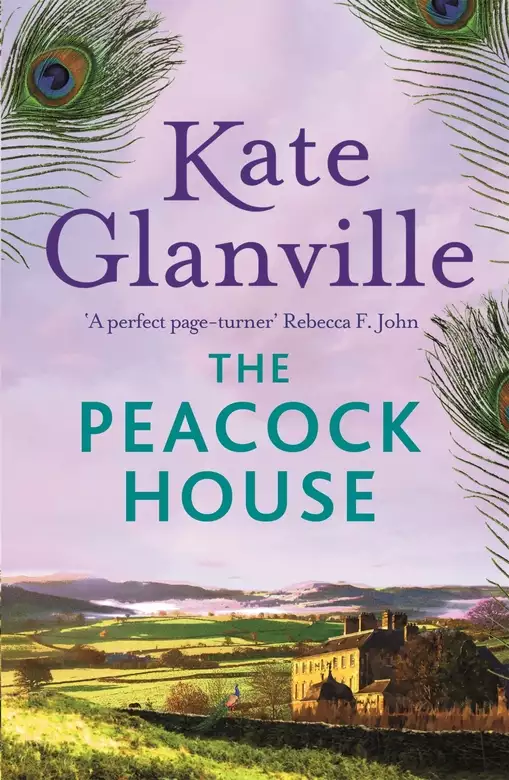
1943 Evelyn dreams of escaping Vaughan Court and the loveless marriage that led her there. Then, at the height of the Second World War, a single moment changes her life and tethers her to the house for ever.
2016 Decades later, life has given as much as it has taken from Evelyn. Although a bestselling author, Evelyn still cannot escape the painful hold of the past.
Aspiring journalist Bethan hasn't been back to Vaughan Court since she was a little girl. But the opportunity to interview her grandmother's oldest friend - the Evelyn Vaughan - leads her back to North Wales. As Bethan learns about Evelyn's life, she realises the ghosts of the grand house are yet to be laid to rest. And soon she's determined to uncover the secrets hidden within . . .
Kate Glanville returns with a poignant and heartwarming story of love, family and friends, set in the stunning scenery of North Wales. Perfect for fans of Rosanna Ley, Karen Swan and Santa Montefiore.
Readers love Kate Glanville's captivating novels:
'This is a wonderful, entertaining and gripping read that I cannot recommend enough *****' Reader Review
'A lovely heart-warming story, could not put down *****' Reader Review
'The best book I've read all year *****' Reader Review
'An enchanting and captivating novel *****' Reader Review
(P) 2021 Headline Publishing Group Ltd
Release date:
September 9, 2021
Publisher:
Headline
Print pages:
352
* BingeBooks earns revenue from qualifying purchases as an Amazon Associate as well as from other retail partners.
Dismal. It was the only word that Evelyn could think of.
Dismal, dismal, dismal – it ricocheted around her head as she stared out of the bay window. The rain ran in unrelenting tears down the diamonds of glass and the wind moaned through the gaps around the ancient frame.
Outside there was a world of nothing. The garden had completely disappeared into the thick, grey mist. It was hard to imagine the view; the sea in the distance, the mountains that swept down to the shore, the rooftops of the houses that clustered around the crescent bay.
Evelyn turned and looked around the enormous bedroom; it was much too big for the mean little fire that crackled in the grate.
Flopping down onto the eiderdown she stared at the ornately plastered ceiling. Its Jacobean swirls reminded her of a wedding cake. There had been no cake at her wedding to Howard, rationing had made sure of that. The war had also made sure there had been no white satin dress, or trailing bouquet, though she wasn’t sure the war could be blamed for the lack of other things a bride expected.
It had been two years since her wedding day, nearly two years since she had been banished to the land of rain and rocks and shrouding cloud. Two years, Evelyn whispered and saw a chilly puff of air escape between her lips.
This would be her second Christmas in Wales, in the huge house, with only her mother-in-law for company at the dinner table. So different from the boisterous Christmas dinners at Wilton Terrace where there had been jokes and riddles, and indoor fireworks, and endless bottles of champagne from the cellar. There had always been a huge fir tree in the hall, soaring up through the stairwell; Evelyn and her brother and sister had to stand on ladders to decorate it. At Vaughan Court they didn’t have a tree.
‘They are unpatriotic!’ Lady Vaughan had declared when Evelyn had dared to suggest they put one up in the drawing room. ‘We will take no part in Germanic traditions at Vaughan Court.’
She wondered if Howard would come to visit this year. She doubted it. His work in Whitehall was much more important than a wife, especially when he had everything he wanted in London. She tried not to think of the letter; the swirling writing, the sickening scent of violets, the words that had suggested an intimacy Evelyn had no experience of. Instead she glanced over at the jumper she’d been knitting; her mother-in-law had suggested it as a gift for Howard.
‘It will give you something to do,’ Lady Vaughan had said.
The colour of the wool was hideous, it was all that they had in the town.
Evelyn closed her eyes and wished for something to happen, anything, anything at all, as long as it was something more exciting than the life she had.
She opened her eyes at the sound of the rain beating harder against the windows. The moaning of the wind grew louder, more like a howl, and then a roar. She sat up. The windowpanes started to rattle in their leaden frames and for a moment everything seemed to darken, as though the shadow of some colossal beast had passed by outside. Then there was a bang, an explosion. The whole room seemed to shake; Evelyn thought the windowpanes might shatter. Jumping up from the bed she tried to crane her neck to see from the window, but everything was fog. She heard shouting below her. The boys.
A crash, there’s been a crash on the mountain.
Without even stopping to think she wrenched open the bedroom door and ran. Racing down the long corridor, she had no time to scowl at the beastly portraits, the Persian rugs slipping beneath her feet. She almost tripped as she took the steps of the marble staircase two at a time. With an ungraceful skid she crossed the black-and-white-tiled hall and pulled at the heavy oak door until it opened and she was outside.
The rain had turned to sleet, slivers of ice pricking at her cheeks; her hands were already turning numb. Ignoring the cold, Evelyn ran around the side of the house. The boys were smudges ahead of her, already scrambling up the steep path.
Peter, Billy.
She called their names and set off as fast as she could, following them upwards, clambering over rocks and boulders. The smell of smoke was thick on the wind and high above her on the mountainside something was giving off a ghostly glow.
March 2016
Vaughan Court
She could see a lot of dust. She wondered when she had last swept under the dresser. Why would she have swept under the dresser? Who would ever have been able to see the dust unless they happened to be lying on the cold flagstones of the kitchen floor, their face turned at such an angle that they could see the accumulated dust beneath the dresser.
In the gloom she could make out several fragments of broken china and a wizened apple. There were some little bits that she hoped were ancient raisins and not rat droppings, and a marble that had probably belonged to Robert. He had loved marbles; he’d kept his collection in a big glass jar. He would have been upset to lose such a beautiful one; Evelyn thought she could even remember the search. Why hadn’t she thought to look beneath the dresser? Too busy probably. Fifty years ago she had been very busy, constantly juggling: the house, the garden, her writing, the charity, the school. And Robert and Howard had both, in their different ways, required a lot of her time.
Now Evelyn had a lot more time, though she would rather not be spending it lying on the kitchen floor. She was cold. An icy draught blew in from the open door. She knew she must try very hard not to go to sleep. She must somehow keep herself awake and make a plan. It was proving much more difficult than she had originally thought. Her gaze travelled back and forth. She was getting used to the gloomy light beneath the dresser. There was a hairpin, and a fork, and something round and shiny – a coin maybe, or a toffee wrapped in foil? If only she could reach it, she was getting hungry.
At the very back, against the skirting board, there was a pen. It was an old-fashioned fountain pen that could well have been there for decades, maybe before Evelyn’s time. Her mother-in-law had been forever making lists: sweeping into the kitchen with a hundred things for Nelli to do, shouting at the poor girl when she couldn’t read her handwriting, encouraging Mrs Moggs to punish Nelli in cruel, vindictive ways. Evelyn shut her eyes. Even after all these years she didn’t want to remember Lady Vaughan, or Mrs Moggs.
Evelyn dreamed that she was shut in the cellar with Nelli, cradling her in her arms, telling her everything would be all right.
Evelyn woke up. Something was sitting on her leg. Claws digging into the papery bare skin.
‘Get off me, bloody bird.’
There was an irritated flap of wings, and a swish as a long train of feathers passed across Evelyn’s line of vision. A beaky face bent down and peered at her. She wondered how long the peacock had been using her as a perch.
‘Go away.’
Tap, tap, tap.
Another peacock was pecking insistently at the coronation biscuit tin as though in protest. The seeds that it had contained would have long ago been consumed. Evelyn could still hear the ringing clatter of metal on slate as she had tripped over the doorstep, the hail of birdseed scattering onto the floor, her agonised cry as she hit the ground.
She had put out her hands to stop the fall. There had been a searing pain somewhere indefinable, but after a few moments she had felt fine; a little breathless, a little shaken, but fine. She’d breathed a deep sigh of relief and tried to sit up. That was when the pain had come again. In both wrists. Infuriatingly it seemed impossible to raise herself without the support of her wrists, and now they were useless. She rolled onto her side and tried to use her elbow to lever her body upwards but that also proved impossible. She rolled back onto her front and tried to push herself up using her knees, again impossible. She managed to shuffle herself forward, very slowly, over the floor on her stomach. She had made it as far as the dresser before coming to a halt, exhausted. With an agonising tilt of one wrist she managed to look at her watch. It had taken the entire morning to move a few feet. To reach the phone in the drawing room would take days, possibly a week, especially as there were the steep kitchen stairs to negotiate.
‘Bugger, bugger, bugger.’
Tom had been right. She needed one of those confounded cordless telephones he was always going on about. Or even one of those alarms around her neck that she had been so annoyed about when he suggested it.
‘Bugger, bugger, bugger, bollocks.’
The Japanese kimono she wore as a dressing gown had rucked up round her waist; her long silk nightdress now barely covered her knees. She hated to think how she would look to whoever found her.
On her wrist the little diamond-studded watch was disappearing into swelling flesh. Her hand was swollen too, multiple rings digging into her fingers. Her left wrist throbbed as much as the right. Evelyn didn’t need to recall much about her time as a nurse to realise that her wrists were very badly sprained, or possibly worse.
‘Bugger!’ she muttered one more time, and then, taking a deep breath, she shouted as loudly as she could, ‘I hate being ninety!’
Aberseren, North Wales
Bethan had imagined a long line of taxis waiting outside the station. She’d imagined sliding onto the warm seat while the driver put her suitcase in the boot. He’d have jumped back into the car with a smile.
‘Where do you want to go, love?’
‘Vaughan Court, please.’
‘I’ll have you there in no time.’
A flick of the windscreen wipers and they would have set off, wheels splashing through the puddles. Maybe there would be a male-voice choir coming from the radio, or Tom Jones singing ‘Green Green Grass of Home’.
But there was no line of taxis; there were no drivers, or male-voice choirs or the sound of Tom Jones. There was only the unrelenting drizzle and an empty station car park illuminated by a streetlight, even though it was three o’clock in the afternoon.
Bethan peered towards the car park entrance and rubbed her hands together wishing she had brought a thicker coat. In London it had been a warm spring day; her vintage Burberry trench coat had seemed perfectly sufficient. She had never dreamed that the sun would not be shining at the end of her journey. In her memories the sun had always been shining in Aberseren.
After ten minutes she knew she’d have to start walking, if only to keep hypothermia at bay. She vaguely remembered the direction. There were only three to choose from; the coast road north, the coast road south or the steep hill straight ahead.
‘Between the mountains and the sea,’ that was the way her granny Nelli always described the location of Vaughan Court. To Bethan it was hopelessly romantic; like her memories of Evelyn and the house, and her memories of Wales.
Granny Nelli had told her so many stories about her homeland; beautiful ladies emerging from lakes, mythical palaces under the sea. To Bethan it had always been a magical land where giants roamed and women could turn into birds. So different from Battersea where she’d grown up. As a child she’d longed for their annual visit to North Wales, and as an adult she’d spent hours on top of buses or on the Tube thinking of those fairy-tale memories that intertwined with dreams, so that she was never sure what was real and what she had imagined.
But nothing seemed mythical or romantic now. Bethan pulled the heavy suitcase over the slippery pavement while cars splashed water up her jeans as they passed. She was glad she’d chosen to wear her Dr Martens boots. Her mother had persuaded her to wear sensible shoes, warning that Welsh weather could be temperamental.
‘You can say that again,’ Bethan muttered as the wind began to pick up.
Her long red hair whipped her cheeks; the wild curls that she had tamed with straighteners that morning were already springing back to frizzy life. Bethan stopped and pushed her hair back from her face, her fingers brushing against the little swallow earrings her grandmother had left her in her will. They’d been a gift to Nelli from Evelyn. Bethan thought that Evelyn might like to see that they were still worn and cherished by her friend’s granddaughter.
Bethan set off again. The road seemed much longer than she had remembered. The row of multi-coloured cottages leading from the seafront turned into imposing Victorian villas. Most of them were B&Bs or guest houses; one rusty sign declared it belonged to a Luxury Boutique Hotel. Its garden bordered the graveyard of the chapel with its long-arched windows and imposing grey façade.
Beyond the chapel there were more houses; a scattering of mock-Tudor semis that soon gave way to an endless line of bungalows, with neat front gardens and sentimental names. She noticed the entrance for a golf club that she didn’t remember: Red Rock Golf Club, Restaurant and Spa was etched into a monolithic piece of slate at the bottom of a daffodil-lined drive. In the distance she could see a low cedar-clad building with smoky windows and a line of smart cars parked outside. Bethan imagined a Jacuzzi and lavender-scented relaxation rooms. She imagined being wrapped in a fluffy white robe while skilful fingers massaged her aching feet and a waitress brought her a large glass of Chardonnay and a bowl of chips.
She pushed away the fantasies and forced herself to keep on going; surely it wouldn’t be much further.
The bungalows petered out into a patchwork of fields scattered across the craggy foothills of the mountains. Sheep huddled against wind-raked hedges and looked as damp and miserable as Bethan was beginning to feel.
At last the familiar golden weathervane appeared, sitting on top of the carved bell tower. The Vaughan family church was much prettier than the austere chapel in the village. It perched on a low hill, opposite the gateposts of Vaughan Court. The only time Bethan had been inside it was for her grandmother’s funeral many years before.
Evelyn had insisted that Nelli should be buried in the churchyard after all her years of service to the family and her further years of managing Oak Hill School.
The coffin had been wicker, tied with hundreds of multi-coloured ribbons, each one representing a child that had spent time under Nelli’s care at Oak Hill. It was carried in and out of the church by old men Bethan didn’t know; her mother had explained that they were local men who’d known Nelli as a child in Aberseren, and one of them had worked at Vaughan Court with her before he’d left to fight in the Second World War.
‘I was the boot boy and she was the scullery maid,’ he’d said afterwards, through a mouthful of egg sandwich. ‘We started on the same day; fourteen, we were, only left school the week before. The housekeeper had already given us both a thrashing by teatime. It worked wonders, mind, we knew what was expected, not like youngsters today.’ He’d looked sternly at Bethan. ‘Bring back discipline, that’s what I say.’ Bethan’s parents had glanced at each other and suggested that Bethan might like to go and play outside.
Bethan had spent the funeral service staring at the stained-glass windows, each one telling a story that Bethan’s atheist upbringing had failed to impart; she could only guess about the lambs and lilies and burning trees. Afterwards they had stood around the grave, the sadness of the occasion at odds with the brilliant blue of the sky. Bethan had buried her face in her mother’s skirt as they lowered the coffin into the ground.
Later, Bethan and Robert had looked for peacock feathers in the garden and Evelyn had given them both the biggest tube of Smarties Bethan had ever seen. Robert had jumped up and down in excitement even though he was a middle-aged man. Bethan tried to remember how old she’d been – not more than eight because when she was nine, she and her parents had started going on holiday to France, when previously they had always visited Aberseren with Granny Nelli for a week. Nelli would stay with Evelyn and ‘catch up’, as they used to say. Bethan and her parents would stay in the Red Rock Caravan Park just beside the beach; Bethan had loved it, day after day on the sand. Sometimes Robert joined her and they’d dig huge holes and wait for the tide to come in and fill them.
After Nelli died, Bethan and her mother would make the long drive to Aberseren once a year to see Evelyn, but only to stay one night. ‘The Call of Duty’, Bethan’s father used to call their visits. ‘She’s my godmother,’ Bethan’s mother, Annie, would say. ‘I worry about her living in the middle of nowhere, all alone in that great big house. She must be lonely since poor Robert died.’
As a teenager, Bethan had refused to go to Wales at all; Aberseren was so boring compared to London, and Evelyn seemed judgemental, peering with curiosity at Bethan, who’d been a spotty girl trying to mix Goth with Boho, struggling to hide her red hair under various shades of blue or purple. Bethan had decided that Evelyn was snobbish and opinionated, and the Regency romances she wrote were dull and dated compared to the authors Bethan liked to read, and the kind of books Bethan wanted to write.
Now, Bethan wondered how she could have been so disparaging of Evelyn. Evelyn Vaughan, the Evelyn Vaughan. Her books were loved by millions of readers all over the world; her stories had been adapted for television, and some had been made into films. Bethan thought about everything she’d read on the internet in preparation for the interview. Evelyn had set up Oak Hill School for children with learning disabilities; she had been an advisor for several Government select committees on disability rights. She’d given speeches in the House of Lords and had numerous awards for her campaigning work. She had an MBE and various other honours; Wikipedia made it seem that she was practically a saint. Bethan was amazed that such a woman could have been her granny Nelli’s best friend. She had never understood how a scullery maid and her mistress had become so close.
Bethan walked past the church and through the big stone gateposts of Vaughan Court. A long drive wound steeply upwards with no sign of anything but bare trees and battered clumps of daffodils. Her eyes stung from the rain that trickled from her hair. She suspected that her mascara must be halfway down her cheeks. The hem of her Burberry coat was splattered with mud and her handbag slipped again and again from her shoulder until she gave up and slung it across her chest.
She knew she was not going to make the impression she’d hoped to make on Evelyn; successful freelance journalist – as stylish as Evelyn herself – ready to get to work on the interview with professional efficiency. Now she was going to drip all over Evelyn’s beautiful carpets. She’d have to ask for a towel and take off her boots to get them dry. The new notebook she’d bought at the station that morning was probably damp in her handbag; Evelyn would think she was an amateur. Bethan already knew she’d have to explain about Frank; she hoped that Evelyn would understand the concept of an online women’s magazine.
Bethan silently cursed Mal, probably somewhere on the M25, warm and dry in the new Nissan they were supposed to share. She wondered if he was alone and pushed the thought away. She’d been determined not to think about the late-night messages that pinged on his phone, the long sessions at the gym, the weekends when he had to go into the office.
‘It’s the new project, Babe. You know how important work is for me.’
Now this was her project, her important work. She hoped the interview with Evelyn would lead to more commissions. She hoped she’d be able to give up the day job at the café and finally feel like she could call herself a journalist, maybe one day even write the novel she’d dreamed of writing since childhood. She looked up at the scene in front of her. It looked like the setting she’d always imagined for the story she’d never quite been able to conjure up.
The mountains were like a stage set; a dramatic backdrop of craggy rock and glowering cloud. Bethan tried to imagine protagonists roaming over the wild landscape, but they were ghostly and unformed. They quickly faded and she found herself thinking again of Mal and wondering where he was, and who he was with.
Something rustled in the bushes. Bethan turned; through bare branches she thought she saw a flash of blue.
‘Hello,’ she called out, her hand tightening on her handbag. ‘Is there someone there?’
There was no answer. She noticed that the bushes flanked an overgrown path that led off the drive towards a wooden shed, like a child’s Wendy house; it was shrouded in ivy, with a single circular window visible above the foliage, and an arched door. Bethan peered towards it; a memory came back to her, something upsetting, something that made her heart beat harder. Bethan hurried on, picking up her pace, wondering if she’d made a mistake. Maybe this wasn’t the drive. Maybe this was just some mountain road that wasn’t going to take her anywhere but the top of Snowdon. She checked her phone; there was no signal let alone 4G. At least the rain had stopped.
Then suddenly she turned the corner and there it was.
A shaft of sunlight broke through the clouds, shining upon the rosy façade of the house, lighting up the gabled roofline, tall twisted chimneys and high pink sandstone walls that interspersed the mullioned windows. Wide slate steps led up to the ancient oak front door. Above the door she saw the ornately carved portico, with the large stone lion she had loved so much as a child. He sat on top of the portico, his paw resting on a shield, his ferocious gaze forever staring out to sea.
Bethan’s heart lifted at the thought of the fire that would no doubt be blazing in the hearth, the comfortable chintz sofas, Evelyn in some elegant outfit, pouring tea into bone-china teacups. Maybe there would be sandwiches or a cake. Bethan was starving; she’d had nothing but a bruised banana and an M&S sandwich since breakfast.
As Bethan approached she stopped and stared. The house was no longer as perfect as it had been in her memory. Slate tiles littered the gravel on the ground, and some of the windowpanes were broken. The portico was riven by a deep crack and the lion teetered at a perilous angle. Smashed stone lay on the steps and when Bethan looked more closely, she could see that half of the lion’s shield had fallen away.
Everything was very quiet. Bethan shivered as the sun disappeared behind the clouds. She took a step towards the large oak door. As her hand reached for the ancient iron bell-pull something let out a long and very high-pitched scream.
The scream was followed by a scuffling noise, much nearer. Bethan turned and saw a flurry of blue and green as a peacock flew down and landed on top of the stone balustrade a few feet away. Its long tail hung down as elegantly as a bridal train.
Bethan smiled. How could she have forgotten about the peacocks? As a child she’d never called Evelyn’s home Vaughan Court, she’d always called it The Peacock House. It had been part of her summer holidays to come and see the beautiful birds. She’d had a collection of their feathers in her bedroom in the little flat above her parents’ pottery studio.
Another peacock strutted around the corner. It stopped and looked at her, its head on one side.
‘Hello, handsome,’ Bethan said. ‘Did you make that horrible noise?’
The peacock ruffled his feathers and proceeded to open his tail into a magnificent fan.
Bethan turned back to the door. She pulled the handle of the bell-pull and heard it chiming deep inside the house, but no one came to let her in.
Leaving her suitcase by the door she walked back down the steps onto the gravel that surrounded the house. Her footsteps crunched as she made her way around the corner. From this point she could see the knot garden. As a child she had loved the intricate pattern made of box-hedge flower beds; a geometric jigsaw of roses and lavender and geraniums. In the middle there was a fountain topped with a cherub that had spouted water from his open mouth. Bethan had once tried to imitate him with her orange squash during afternoon tea on the terrace. Bethan’s mother had been mortified but Robert had clapped his hands in delight and Evelyn had said it was quite all right and given Bethan a linen napkin to wipe her face.
Bethan stood on the terrace and looked down, searching for any sign of Evelyn in the garden. Another peacock hopped up onto the balustrade a few feet from her. Bethan took her phone out of her pocket; she couldn’t resist taking a photo. She thought she’d send it to her mother to let her know she’d arrived; Annie had been so enthusiastic about the interview.
‘I can’t wait to read it,’ she’d said the night before when Bethan had popped in to see her parents after work. ‘Granny would have been thrilled that you are writing about Evelyn. I’d have come with you if we weren’t so busy getting ready for the exhibition.’ Bethan had looked around at the piles of dusty white bowls and vases on the studio floor; her father had been working day and night to throw them on his wheel, and now they were waiting for Annie to add the brightly coloured patterns that would bring them all to life.
Bethan took a step towards the peacock and photographed some close-ups of his tail, thinking that the feathers might provide some inspiration for her mother. She wondered if Mal would like to see the peacock too. She put her phone away and walked round to the back of the house.
Within seconds she had her phone out again, snapping pictures of a tall cedar tree festooned with peacocks. It seemed that every branch had a peacock sitting on it, like Christmas ornaments. There were peacocks everywhere, not just on the tree but several on the high wall of the kitchen garden, more on the ridge tiles of the stable block and one standing, tail displayed in all its splendour, on top of the bonnet of a little pale blue MG convertible. Bethan could remember Evelyn taking her out in the car almost twenty years before. Evelyn had worn dark glasses and a leopard-print coat; to eight-year-old Bethan she had looked impossibly glamorous even though Evelyn must have been in her early seventies then.
‘Evelyn,’ Bethan called out. ‘Evelyn, are you here?’
The peacock on the car let out a high-pitched cry, another answered, and then another, until a whole cacophony of screeches filled the air.
She was running, scrambling over rocks and boulders, her feet splashing through streams with no care for the soft indoor shoes she had on. Behind her, Billy and Peter were calling to her, telling her to wait, but she couldn’t wait, she had to get to the plane. The smell was awful, noxious fumes of fuel and. . .
We hope you are enjoying the book so far. To continue reading...

 Please log in to recommend or discuss...
