The other shoe—that was the problem.
I left the sidewalk and turned into the entrance to the park, giving a quick wave to the lanky summer staff at the gatehouse, trying to focus on the crunch, crunch of my footsteps on the gravel path and keep my mind clear. But a lot of objectively bad things had happened to me recently, and for a natural-born pessimist, the recent past was not past enough, making the mantra of what if, what if, what if loop through my brain like a particularly unsettling train on a track. The sun was high in an impossibly blue sky, warming the back of my neck, and on the breeze came the heavy sweetness that was the signature scent of a sweltering summer just getting started. It was a beautiful day, perfect conditions to spend with friends and revel in the moment. But I appreciated none of it.
I was waiting for the other shoe.
The one that would drop, that would fall from the sky and squash whatever I was enjoying, snatching my happiness away like it was something I’d stolen. And I was happy, for the first time since my dad had left, since I’d been consumed with running, and then when I’d stumbled into a waking nightmare and almost lost everything for good.
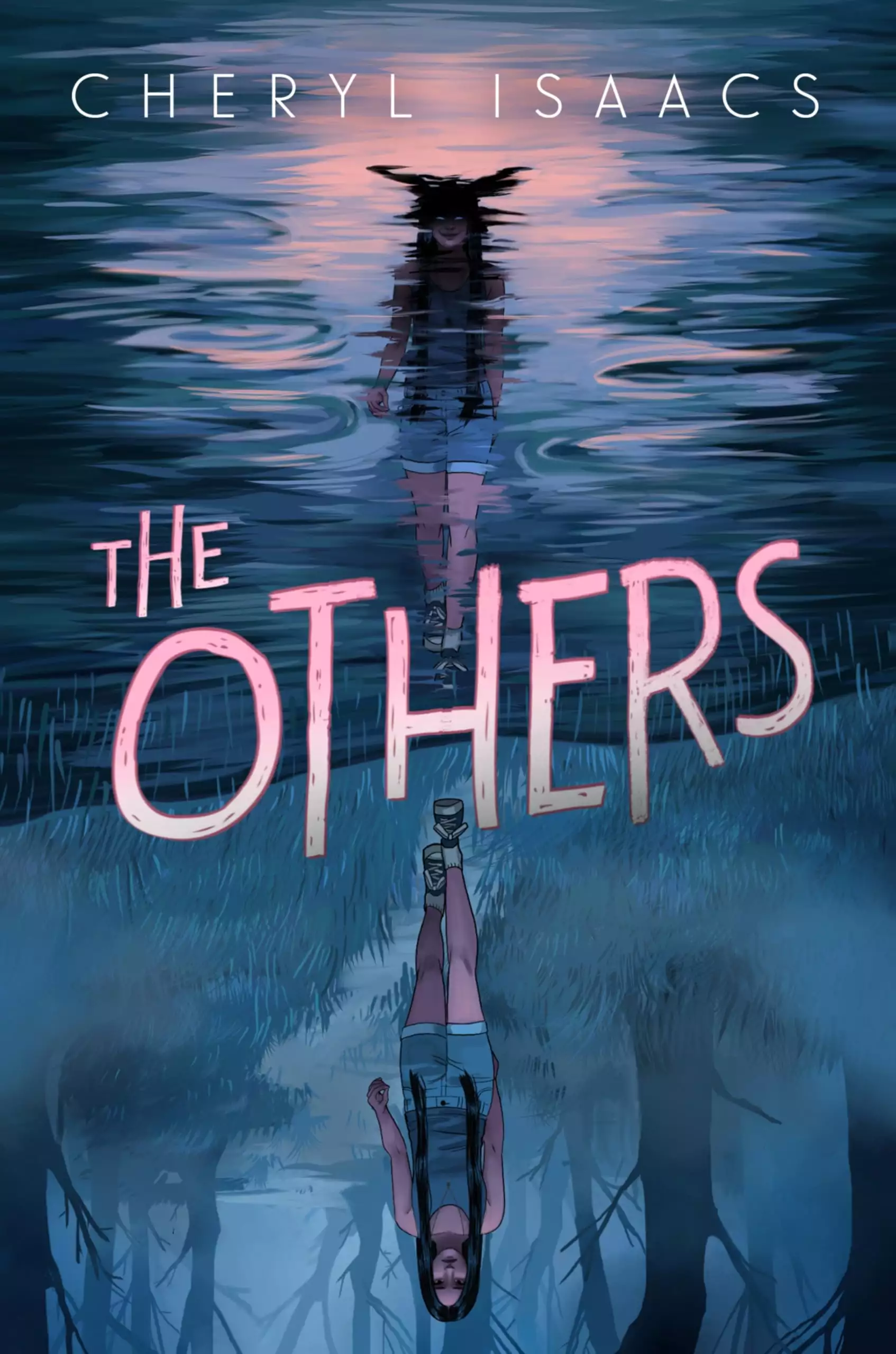
Two weeks ago, I’d been on a seemingly perfect run through the vast forest that encircled our town when I’d stumbled onto an eerie pond, and immediately after, strange things had started to happen.
Long a legend, the black water was supposedly a small pond that only revealed itself to the unlucky few and, once disturbed, unleashed the faceless Ragged Man to wreak a cycle of danger and darkness until whoever had woken it managed to put it back to sleep. It was a story I’d heard all my life and dismissed as small-town fiction until it all turned out to be horrifyingly real.
People in town started to go missing only to return as the Unfinished—faded, mindless drones—but the black water’s mental grip kept people from suspecting anything more sinister than the town having a lot of runaways. Bad turned to worse; worse became unthinkable when my best friend Key disappeared. Only a few of us—my other bestie, Stella; my boss, Frank; and my new friend, Foster—were free of the black water’s influence and could see what was going on. We stopped it by fighting the Unfinished and following ancient instructions to destroy the Ragged Man.
But even that hadn’t brought Key back, so I’d gone into the black water to get him.
And then the pond had broken its banks and grown.
Now things were back to normal—as normal as they apparently ever got in this town.
I stomped up through the parking lot, seething that this was something I was compelled to do on a day like this, to see with my own eyes where the nightmare had started and ended.
People in town were calling it the Big Pond—previously undiscovered, they thought, but I knew it was just the latest iteration of something else, something smaller and darker and much more dangerous. Now I’d heard it was just a pretty pond.
We’d see about that.
At the west side of the parking lot, I stopped at the edge of the new path cut through the brush by the park crew, the gravel they’d dumped carelessly not really necessary. Anybody could have easily followed the shredded and torn branches left behind from the machines, naked white pulp exposed like broken bone visible through flesh. The whole thing was barely a ten-minute walk from the parking lot. Much shorter than the route I’d taken the day I found it, the one that I couldn’t remember and had never found again.
You only find it if it
wants you.
I shivered at the memory but forced myself to walk the new path, the goose bumps on my skin and sick twisting in my stomach at odds with the brightness and beauty of the day.
Crunch, crunch, crunch.
Cut right into the brush, the new path was like a corridor, outraged green and damaged branches rising like a wall on either side of me. Whatever was in there, I’d never see it coming. The closer I got, the more the little voice inside told me to turn around and run, certain that I’d find something dark and dripping at the end of the path, a ruined face torn open in a gaping smile.
Welcome back.
I shook out my hands and sped up, trotting the last little bit until the bushes on either side of me opened out onto a broad clearing, a sudden release from the claustrophobic path, and there it was.
In front of me, the pond lay clear and sparkling, pretty and inviting—not evil at all. When I’d pulled Key out of the water, the pond had grown, like I’d pulled a plug, but instead of water draining out, more had flooded in. Much more. The pond was now easily twice its original size, almost the size of the soccer fields where I sometimes ran sprints. From the end of the path, I could just glimpse the newly submerged long strands of grass that swayed gently under the surface; the last time I’d been here, those grasses had been a treacherous meadow. On the far side of the water, the pines still stood guard over the end of the original path, the one I’d been unlucky enough to stumble on, but no one would be taking that route. Whoever visited would take this new shortcut.
“Like an express lane to hell,” I muttered to myself, rising up on my toes to see more without actually getting closer. I could just make out a couple of orange safety cones on the opposite shore and what looked like some pipes sticking out of the water’s edge. I squinted briefly, but cones and pipes weren’t what I was looking for. They weren’t what I dreaded seeing.
To my right, a man and a preschool-age boy with matching baseball caps and fishing rods stood with the water lapping at their feet. I looked down at the toes of my running shoes, sinking into the crabgrass, gravel still under my heels, and decided against another step forward.
This was far enough.
I’d been in that pond when it was smaller, but my memory of it was as murky as the water had been. I had only the vague sense of pressure, of cold wrapping itself around me tighter and tighter, squeezing until everything went dark. I’d gone in deliberately for a very good reason, but I’d never go back again. The man and boy might think there were fish in the pond, but I still had bad dreams about what was in there before.
At a flutter in the corner of my eye, I froze and held my breath. I didn’t dare turn to track it, fearing I’d see something dark and brooding just behind my shoulder, staring at the back of my skull with eyes like pits that had no bottom. I stood still as a stone, because I knew this forest held things that would give chase if you ran. At a little glimmer of movement on the ground, I flicked my eyes down and felt icy cold flood my veins.
The pond was breaking its banks. Tiny trickles, slivers of glistening silver were slithering out and onto the scrubby grass of the shore, threading their way blade by blade, questing closer and closer to my feet at the end of the gravel path.
On the other side of the pond, the man showed the boy how to cast his line. Two practice throws and then the bobber hit the water with a plop! The boy squealed with delight.
At the end of the path, my body thrummed with panic rising fast, threatening to surge up from my stomach and take my brain completely offline. But I was stubborn, and so I fought back. I swallowed hard against the constriction in my throat. What I saw wasn’t real. The pond was not branching out; it was not making its way toward me.
“It’s not real.” I muttered, but I still couldn’t look away. It was just lingering trauma, that’s all. Residual anxiety from everything I’d been through. The pond was not sending out tendrils to wrap around my ankles and drag me under the surface, to keep me in the cold and dark forever.
“It’s not.” I swallowed hard and closed my eyes for a moment to slow my pulse, taking a long breath in and reminding myself that I had woken up. The nightmare had ended, and I hadn’t lost anything—not even the trails I’d half feared would be ruined for me forever. I had run them and enjoyed them as much as ever.
I opened my eyes and looked down. No tendrils. A glance over my shoulder showed only
the path.
“It’s fine.” I nodded, one part of me reassuring another. I drew in a breath that was long and only a little shaky.
Things were more than fine: It was summer, school was over, FallsFest was about to start, and Key was home and healthy. I had learned a lot about myself and about just being myself, not keeping every little thing a secret locked up tight. Key and I were officially “something”—TBD but on the way to OMG. My life was pretty much perfect. Which was why I had to keep reminding myself to unclench my jaw.
Because nothing was perfect.
Life was good again, except for that other shoe. I didn’t want waste another second thinking about what had happened. I wanted to move on.
One last look at the pond, and I turned on my heel. As fast as I could without running, I went back down the path laid with fresh gravel, out of the parking lot, and onto the sidewalk, where my chest immediately loosened and my mind turned toward brighter things. The black water was in the past; all that remained of it was the Big Pond, and I’d come here to satisfy myself that it was truly harmless. It checked out, as far as I could tell, but I was used to things not being quite what they appeared.
It’s fine.
It’s fine.
I shook my hands out and willed my heart to slow, putting all the bad memories into a room in my mind and shutting the door. I wasn’t running from anything anymore; I was going forward. I hopped over a crack in the sidewalk, even though my mom wasn’t there. She’d always made a game of watching my footsteps when I was little. One crack stepped on and I’d be startled by a loud “Ow!” sending us both into fits of giggles. I missed those times, that feeling of lightness and unexpected joy; I was determined to get at least some of it back.
The neighborhood felt quiet and lazy, everyone on a summer schedule or in a summer state of mind. The trees and grass were every shade of green; a hundred kinds of flowers bursting with color and heady fragrance swayed in gardens. My body drank it all in. This summer was going to be perfect.
I crossed to the next block, and then my day got better because a man and a dog were coming toward me. No day could be perfect without
meeting a dog—no offense to the cat currently out like a light on my bed. As the pair got closer, though, my enthusiasm dimmed.
There it was.
The other shoe.
The pert little Westie trotting toward me used to be walked by a woman. But she’d been one of the first the black water had stolen, and now the other end of the leash was held by a bear of a man who looked like he hadn’t slept well in a year: unshaven, with rumpled clothes and vacant eyes. I’d woken from my nightmare, but he hadn’t; he never would, and so as much as I wanted to cross the street to avoid them, as penance I forced myself to stay on course and pass right by. As much as I’d been through, I’d been lucky to come out of it in one piece.
The dog raised his little nose to me for an instant before returning to more interesting aromas; the man’s zombie stare didn’t seem to clock me at all. I only started breathing again when they’d passed by. I was in a hurry now to get where I was going, to recapture the summer euphoria I’d been feeling earlier that morning, fragile enough to sag under the weight of one man and his dog. I had to buoy the happiness levels of Summer Me, and I knew of one sure way to do that.
The front yard of Key’s house was a riot of color, his mom’s garden strategically crammed with plants that would take turns blooming all summer. The porch sported massive clay pots overflowing with blooms in purple, pink, white, and yellow that enveloped me in a cloud of fruit-scented sweetness as I waited at the door.
“Avery!” Key’s dad drew me into a bear hug on the porch and released me on the mat inside the foyer. “My dear.” His giant hands warmly clasped my shoulders, and he bent to look into my eyes. “You don’t have to knock, wait to be let in like some stranger!”
I nodded sheepishly, but we both knew I was incapable of just walking into their house.
“Key! Avery’s here!” He went down the hall, surprisingly light on his feet for a man that size.
I sat on the arm of the plush yellow sofa and breathed in the signature scent of the house—mango and cinnamon. The living room blinds were shut to keep out the worst of the heat, and from the TV came the low chatter of a cricket match—an inscrutable sport Key’s dad had tried to explain to me many times.
“My son”—he returned, shaking his head—“is a little out of sorts. I don’t think he’s sleeping well. Maybe you can ask him.”
The last part was less of a suggestion than a request. Since Key and I had finally been open with how we felt, his parents had accepted our new relationship as something they’d known about all along, and I’d officially been welcomed into their circle of People Who Care for Key. In his brief hospital stay after I’d pulled him from the pond, this had included texts from his mom to ask the nurse for warmed blankets, reminders that her son preferred orange juice over apple, and to please rinse out the containers his homecooked food had been transported in. Apparently, I was now the Decipherer of Moods as well.
“That’s okay,” I assured his dad. “I’m used to his grumpiness.” Not super true, because Key was only occasionally grumpy and usually with good reason. His off moods were never the kind of mysteries that needed to be investigated, either because they were so short-lived or because he’d straight up talk about them. Secretive grumpy was more my thing. But we were so glad to have him back at home—“Clean as a bean,” according to his doctor—that we would all happily endure any crankiness Key had to offer.
When Key emerged from the darkened hallway, I silently acknowledged his dad was right. Key did look out of sorts. There was an unfamiliar hardness to his expression, and he walked into the room without looking directly at me or his father.
“Oh, Avery!” Key’s dad raised a finger from where he’d resettled on the sofa. “My niece’s birthday party is the end of this month. You should come.”
Key slipped on his shoes and did the impatient “let’s go!” thing with his eyebrows.
“I’d love that. Bye, Mr. Rogers.” I waved as Key took my wrist and half pulled me out the door.
“Have fun!” his dad called after us. “Not too much and not too late!”
On the porch, with his dad safely on the other side of the door, Key rolled his eyes but opened his arms to me. “Hey, Ave.”
I would never get tired of this—wrapping my arms around him, solid and warm, breathing and with me. “How are you?” I asked into his shoulder, a shadow of tension in the words. I felt protective of him in a way I hadn’t before, but he had just gotten out of the hospital after being abducted by a swamp demon from another dimension. So.
“Fine.” Key kissed my temple, but that’s all I got. Even as I stood there, close enough to feel his heartbeat, I was very aware that I was holding another body containing another brain, other thoughts and feelings—a
boundary I couldn’t breach. All I could know was what he told me, and I had to believe it or not. Was he really fine, or did he just not want to worry me?
“You ready for FallsFest?” I stepped back and smiled into his eyes.
“FallsFest is not ready for me!” He pumped one fist and whooped, but I looked at his face and again thought his dad was right: Key hadn’t slept well. I wished he’d tell me why. But those were other thoughts and other feelings in a body that didn’t belong to me. Remembering all the times I’d done the exact same thing, I couldn’t blame him. It’s true—payback is a bitch.
I took his hand, and we jumped off the porch together, heading downtown. If Key wanted to pretend he was fine when he wasn’t, I’d let him. Key had never been a mystery to me. All I had to do was wait, and sooner or later, he’d tell me the truth.
By small-town standards, FallsFest was a pretty big deal. The annual festival in Crook’s Falls had been the focus of my summers since I was a little kid. Setup started two weeks before the opening, anticipation building every day as the rides, carnival games, booths, and vendor area got closer to completion. Mom always complained about the parking spots lost to trucks, generators, and coils and coils of cables, but I knew she looked forward to it almost as much as I did. It was like a vacation that came to town.
When the crew had first started stringing up lights around the town square two weeks ago, my life had been different. I’d been different. Getting through the end of the school year and training for a scholarship had been my priorities, but now everything had changed.
Key squeezed my hand as we waited for the light to change. “I am not going on that.” He raised the hand holding mine to point out a ride I thought of as “Spinny,” even though every year he tried to convince me that it was actually called a Gravitron. Key’s brain housed weird facts like this. People paid actual money to stand against the walls of the circle, spinning faster and faster, trusting gravity or magic or their own perceived invincibility to stop them from dropping out onto the pavement when the ride rose up on its side. Every year, I stopped and watched,
shaking my head in disbelief. It was still called Spinny to me, and there was still no way I was riding it. But I was pretty ride-averse in general, given my trust issues. Not everyone was like that.
“You went on the Spinny when you were a kid.” I knew this because Key’s dad had offered up the fact during one of the many “let’s embarrass Key” moments I’d shared with him in the hospital. The story ended with Key draped over a trash can, a scene his dad had mimed, wiping tears of laughter from his eyes at the same time.
Key pursed his lips and tilted his head, acknowledging the fact. “When I was a kid, I didn’t look at how the Spinny is anchored. Which is . . . not very well. Besides, I don’t think the Spinny and cotton candy go together for me anymore.”
I clucked my tongue sympathetically. “You’re very old.”
“Speaking of junk food, I don’t know how much work I can put in tonight.” Key patted his belly gently. His voice was light, but he was looking across the street, not at me. A faint note of alarm sounded far in the back of my mind. “Haven’t been piling it in lately.”
In the hospital.
His parents had made all his favorites and brought them to him, worried that he wasn’t eating enough. But really, he hadn’t been in the hospital long enough to be in danger of wasting away. I hadn’t said anything to anyone but personally suspected the slight hollows around his eyes and gauntness in his cheeks noticeable to only me and his family were due to something else; eating enough was not the issue.
“Are you . . . okay?” Not the word I was looking for, but I wasn’t sure the word I was looking for existed.
“I’m fine.” A little sharpness in his voice this time.
Fine. That word again.
He smiled quickly and pressed his other hand over mine in reassurance, but his eyes slid left and down. This had been happening a lot—me asking the same question and him unwilling to give a real answer. It was new and strange behavior for him.
“Okay.” I nodded, letting it go for now.
We passed by the food truck lot, usually parking for the library but now filled with a dozen colorful food trucks selling everything from crepes to grilled cheese. I had no idea how they’d managed to get all the trucks
to fit in so precisely, but the whole block smelled amazing, a blend of sweet, spicy, and savory. We started to wander up and down the aisles that were quickly becoming clogged with people.
“Where’s Stella meeting us?” Key asked.
“Huh? Yeah, yeah.” Stella could wait. My nose had caught the scent it had been waiting for all year. I led Key on, faster through the maze of trucks, chasing down the big prize of FallsFest. For me, anyway. We wound through two rows of trucks before I spotted the red-and-white-dotted sign. “Here!”
“She’s meeting us here?”
“Who?” Still pulling him through strolling snackers.
“Stella.”
“Who cares about Stella? Key—” I waved at the sign. “Mini donuts!”
“Oh God.” Key face-palmed, preparing, I knew, to bring up all the other FallsFests when I’d overestimated my ability to consume the tiny, perfectly fried and sugared donuts that were made right in front of us, traveling on a tiny conveyor belt until they fell in a sugary puff into a paper bag. Since I’d started training seriously, I wasn’t usually one for junk food, but these donuts . . . I could not walk by them. They were my weakness.
“Can you wait?” He asked it like he didn’t know the answer.
I stared at him. “Do you not understand? They’re mini donuts.” I mimed the shape. “They make them right in front of you and they’re warm and sugary—”
“Stella might want some, too,” he reasoned.
“Since when are you worried about Stella?” I dropped his hand like he’d burned me, faux outrage. A little drama never hurt.
“True.” He took my hand again and stepped up to the window. “Cinnamon or white sugar?”
I rolled my eyes. It was like he’d never met me.
Once I had the little sack of donuts in my possession, we strolled down the block of trucks, evaluating this year’s offerings for later.
We crossed over to the town square, where a crowd was waiting for the opening ceremony and gawking at the fountain that was flowing for the first time in my life. The fountain occupied the center of the tree-lined square and had been a bone-dry eyesore for decades. It had always seemed an unexplainable
extravagance to me, such a large and ornate fountain for such a small community, like the town was pretending to be something it wasn’t, or maybe something remembered but long gone.
My whole life, the fountain had done nothing but provide good lunchtime seating around the edge of the concrete basin. It was ten feet across with two tulip-shaped bowls that rose out of the center, supported by a column like tiers on a wedding cake. At the very top, a steady stream of water gurgled and fell, creating an ever-shifting array of beads and sheets of water that ended up in the basin to start all over again.
Now it was full of water, clear and glittering, trickling down gently, a constant musical cascade into the basin, where a few coins already gleamed on the bottom. It had started running recently enough to be a FallsFest novelty. Key stretched out his arm and let his hand cut through the curtain of water, gazing down thoughtfully and watching the droplets distort the surface so much that there were no reflections. I knew he was probably interested in the patterns of light and shadow, artsy stuff that would make beautiful photographs. Looking around at all the people, colors, and lights, I wished he’d brought a camera. It would be good for him to get back into the photography saddle. Key without a camera was just a bit weird, like a flightless bird.
“Avery!” Hearing my name at such volume startled me. I turned and saw my mom and her ihstá Lily, but it was my ihstá Ru who’d bellowed my name across the square. Mom looked a bit embarrassed but just gave her sister a hip bump and waited for Key and me to thread our way over to them.
The last time I’d seen my auntie Ru was when I was nine and we visited her place, which at the time I’d thought was a farm—it was so wide-open and green compared to our little house and patch of grass in town. I’d had fun playing with my younger cousins until Ru had casually called my mom an apple—red on the outside and white on the inside. I remembered the moment, the sudden wave of tension that swept through everyone, even though I hadn’t really understood what the term meant at the time. ...
We hope you are enjoying the book so far. To continue reading...
Copyright © 2026 All Rights Reserved

 Please log in to recommend or discuss...
