Prices may change without notice. Check price before purchase.
Share
Book info
Sample
Media
Author updates
Lists
Synopsis
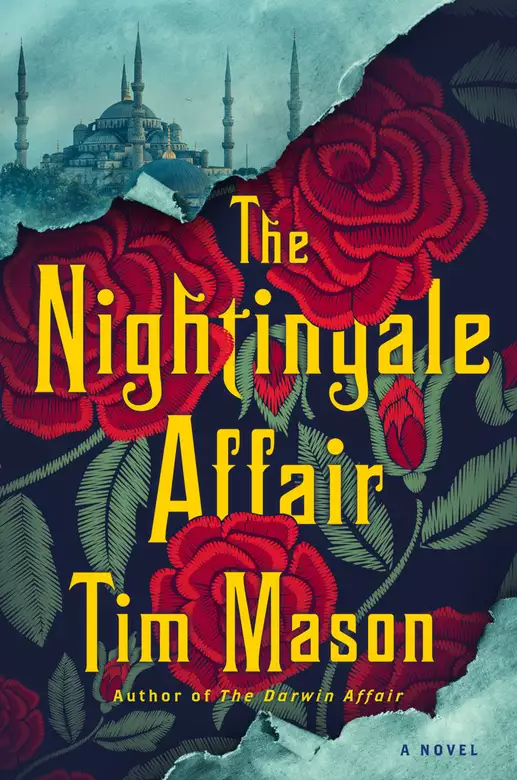
Inspector Charles Field hunts a serial killer targeting Florence Nightingale's nurses in Crimea and women in London in this twisty Victorian detective thriller from the author of The Darwin Affair.
Tim Mason’s gripping new novel finds Inspector Charles Field hunting a ruthless serial killer who is terrorizing Florence Nightingale and her nurses in Crimea in 1855. But when the main suspect turns up dead, Field determines the case is closed. Or is it? Twelve years later in London, amidst the turmoil surrounding the expansion of voting rights, Field discovers a woman’s body, mouth covered by the killer’s signature embroidered rose. Did Field suspect the wrong man before, or is he dealing with a copycat? Either way, with his own family now at risk, he must race against time to stop the killer before more bodies turn up.
Populated with real figures of the day, from Benjamin Disraeli to Florence Nightingale herself, The Nightingale Affair offers vivid details, surprising twists, and an unforgettably creepy villain. A stand-alone novel, perfect for fans of Charles Finch’s Victorian detective stories.
Release date:
May 9, 2023
Publisher:
Algonquin Books
Print pages:
320
* BingeBooks earns revenue from qualifying purchases as an Amazon Associate as well as from other retail partners.
In his youth he had been wealthy and acclaimed. His name was known throughout the Continent, his devotees queuing for hours to hear him sing. He was a sought-after society guest; heads of state sent their compliments. Unlike many of his kind, Massimo Ignazio Flammia moved with precision and grace. The chest that held his magnificent lungs was broad and manly, and his face—when he was young—had been that of an angel. He was articulate and well spoken, conversant in five languages. Women flocked to him, well-born ladies, titled ladies. Despite his condition, or perhaps because of it, he had been able to bring those he selected for clandestine trysts to unparalleled heights of ecstasy.
All that was long over.
True, at the invitation of the pope himself (Gregory XVI), Massimo had joined and was still a member of the Sistine Chapel Choir, but the pay was insulting, the repertoire stultifying, and the small boys annoying. Invitations diminished, dwindled, and finally stopped altogether. Women, titled or otherwise, no longer pursued him. He walked the streets of Rome unrecognized.
He missed the recognition bitterly, but he did not miss the women. He had turned against them.
It all had happened so gradually he hadn’t realized his danger. Even before his era, female singers had been allowed to perform on stages here and there, of course, but according to Massimo, these were loose women, obviously.
Then there were more and more of them. It was hard to believe, but eventually they became more popular than Massimo and his kind! In a matter of years they had taken his roles, every one of them, despite the undeniable inferiority of their voices. All that he had achieved, all that he had given up, and all that had been taken from him, including his testes, had been for naught.
Mother said it was our path to riches and fame, and she was proven right, never mind my tears at the time. She was a wizard with needle and thread, was Mother.
No, women were not his friends. There were two of them now, English girls, already seated when he entered his box at the Teatro Argentina. They looked and quickly looked away as he folded his frame onto the petite gilt chair and set his bag at his feet. A new work from Verdi had opened here the week before, after its premiere in Venice. Now, Massimo would see it for the third time. Teresa Brambilla was singing, and it gave Massimo pleasure to sneer. The story of the opera, in his opinion, was vulgar. So was the leading lady, who played a character called Gilda, daughter of the Duke’s corrupt court jester, Rigoletto. The Duke, too, was corrupt. As were the noblemen. Everyone here, in fact, was corrupt or, in Gilda’s case, imbecilic.
Oh, yes, we’re to believe she never leaves the house except to go to church. Ha! Brambilla looks like a whore after a busy night.
The music, though, was irresistible to him. It was, after all, the great Verdi. Massimo adjusted his fine silk cloak about his shoulders and took his embroidery from its bag. The women in the box looked again. Massimo stared them into blushing submission. He was not about to allow any nonsense from the likes of them to mar his little pleasures. The gaslights dimmed, the overture began, and the great red drape rose majestically.
It was during Gilda’s first-act aria that everything went wrong. He became aware that the English girls were scowling, one of them snapping her fingers at him. Others around him were hissing! Had he been singing without realizing it? Had he committed the aria to memory, was he making a scene?
Oh dear, I suppose I was. A simple melody, really, “Caro nome.” Well, at least now it should be clear to all whose is the superior voice!
A uniformed porter appeared and addressed the angry young Englishwomen. “Perdonino signore, il teatro chiede venia per il disturbo.” The man gestured and two other porters materialized at Massimo’s side. They were telling him in whispers that he must leave. It was a nightmare, it couldn’t be happening. They were actually touching him, lifting him up and propelling him to the exit! An outrage! The great Massimo Flammia, ejected!
He strode at a great pace, unseeing, through the dark streets, his rage uncooled by the chill, damp air, a forgotten man spurned by the world. He knew from experience he should calm himself; he knew his weaknesses and knew he could not afford to make another mistake. His superiors had overlooked his fits of rage for the last time, they had told him so. He stopped in his tracks, set down his embroidery bag, and took deep breaths. He was trembling; tears stood in his eyes. There, across the piazza, beyond the elephant and the obelisk, was the Basilica di Santa Maria sopra Minerva. He reslung his bag over his shoulder and crossed the square. He would pray to the Holy Mother, he would implore her to purge him of his thoughts.
The cold, dank darkness of the empty church was a comfort. He hurried to the nearest shrine, lit by a half-dozen guttering candles. He dropped to his knees and looked up into the Virgin’s face imploringly, but her eyes were not gentle, they were fierce; they belonged not to Santa Maria but to one of the young Englishwomen at the opera house, the finger-snapper: judgmental, unforgiving, full of scorn. He hid his face and began to sing.
Caro nome che il mio cor festi primo palpitar,
Le delizie dell’amor . . .
The broom hit him between his shoulder blades and he fell forward. “You can’t come in here and sing!” He rolled over and found an elderly nun staring down at him, shaking her broom in his face. No! He would not touch her, he would be strong, he would not defile this holy place, not with the Holy Mother watching him with implacable eyes. But then, somehow, the nun was on the floor and he was standing outside on the basilica steps, clutching his bag to his chest and panting.
The girl crossing the piazza was perhaps twenty years old. She had the bored slouch of a veteran, whatever her age. She was dark, with tightly curled black locks peeking out from a shapeless bonnet. Her cloak was threadbare. She glanced up at the man on the church steps and distractedly opened the left side of her garment to offer a glimpse of her well-shaped bodice and then pulled it tight again as she passed.
“Stop,” he said. “How much?”
“Depends.”
He steered her through the streets at a brisk pace in the general direction of the river, talking to her about embroidery.
A pair of schoolboys discovered the body in the Tiber the next morning. Details of the crime were published in the late editions that afternoon. Certain officials at the Vatican noted them with dismay. They did not report their suspicions to the authorities; they merely dismissed Massimo quietly and sent him packing.
Suddenly homeless and without an income, the castrato eventually left Rome, on foot most likely. It is thought that he spent some months at Rimini, mending sailcloth for fishing vessels. There was a rumor of him at Marseille. Eventually, though, he disappeared from record altogether.
It was a service flat in a handsome building opposite Regents Park. The leaseholder was a wealthy merchant named Vining, but he rarely was to be seen there. Flat 4 at No. 8 Hanover Terrace, however, had a reputation, and Inspector Charles Field had parked himself nearby more than once to observe the comings and goings of certain highly placed men and women. This was Field’s least favored sort of work for hire, now that he was no longer with the Metropolitan Police and did not in fact merit the title of “inspector.” Still, he had mouths to feed and his retirement years to bear in mind. In this instance, Field had been engaged by a member of Parliament who harbored misgivings concerning his much younger wife. Field already knew the member’s suspicions to be fully justified. In the space of three weeks he had observed Mrs. Hythe-Cooper, fair-haired, compact, and comely, enter the building three times. On the first occasion Field had quietly entered after her and watched as she climbed the steps to Flat 4. Then, and each time thereafter, she was followed five or ten minutes later by a valise-toting gentleman, perhaps forty years of age, with a neatly trimmed blond mustache and rosy cheeks. This person, the detective subsequently discovered, also sat in the House of Commons but on the opposite side to Mr. Hythe-Cooper.
Jeremy Sims was a Whig who represented the citizens of Tewkesbury. The cuckolded Tory was the Honorable William Hythe-Cooper, a former military man who now stood for Reigate. The three previous illicit visits Field had observed each lasted fifty-five minutes, almost to the minute. First Sims would leave. Then Mrs. Hythe-Cooper would emerge with not a hair out of place. She would bestow a brief, vague smile upon the world at large if it was fine, or put up an umbrella if it was not, and walk briskly round the corner and up Hanover Gate. The Honorable’s townhouse was not far, which, Field thought, must have been convenient for her. After today, the inspector would make his report to the husband and await his further instructions.
Here she comes now, bless her, fresh as a day in May.
The young woman climbed the steps, produced a key, and disappeared within. Field consulted his pocket watch. If Sims arrived on schedule, the inspector would have the better part of an hour to read the several newspapers with which he’d armed himself.
The flat was musty as always, perhaps because it was used only now and then. The apartment’s windows did not face Regents Park but rather a courtyard behind the building, a small but prettily planted oval of spring blossoms and budding shrubs. Still, she thought, it would have been more pleasant and less . . . illicit, somehow, had it looked out on the park. All was quiet, but Susan Hythe-Cooper, as soon as she’d taken off her hat and laid it on the settee, felt she might not be alone.
“Hallo? Jeremy?”
There was no response.
“Is someone there?” she said.
She waited a moment for a reply that did not come. Then she shook off her hesitation. She had grown up a hardy country girl at a rural estate, the daughter of the master of hounds. She had hunted and ridden with the best and was not easily frightened. Susan pulled off her gloves and continued down a short passage to the bedroom.
“Oh!”
“I know what you’ve been doing,” he said.
Inspector Field opened the Illustrated Police News, always interested in the activities of his former colleagues. Today, though, apart from a burglary at Russell Square and the suicide of a vicar’s wife, there was nothing of interest. Field unfolded The Times. The front page concerned itself almost exclusively with the Reform Act currently being debated vociferously in Parliament. The Whigs had proposed legislation that would grant the right to vote to a modestly greater number of British males, voting previously having been the sole prerogative of landowners and the wealthy. Even this measured proposal had aroused great consternation. To give the vote to the common man, said the Tories—and a considerable number of Liberals—would be to invite chaos. Mob rule. An end to civilization itself. This, in fact, was the opinion of The Times. On the other side of the argument was the Evening Standard, which had been running a controversial weekly column, written anonymously, that laid out arguments in favor of a vast expansion of enfranchisement. Field’s wife, Jane, was an avid reader of the feature, titled Notes from Our Future. The Evening Standard backed the Reform League, a sizable body of citizens who had the audacity to claim a voice in the institutions that ruled their lives. The league intended to stage a rally in Hyde Park at this time tomorrow. The home secretary had forbidden them to do so.
Thereby ensuring chaos instead of just a bit of noise, thought Field, and my boy, Tom, will be on the front lines with the mounted police.
The inspector glanced up in time to see Jeremy Sims climbing the steps at No. 8, valise in hand and a spring to his step. Now that the MP had arrived, Field anticipated a leisurely read and was glad of the bright, dry day. He folded shut The Times and opened yesterday’s Evening Standard. Its crime section mentioned the Russell Square burglary and covered two assaults upon women, one within the bonds of matrimony and one without. The Notes from Our Future column concerning the current debate in Parliament cited an incident wherein a female in Chelsea accidentally had been allowed to cast a ballot in the previous year’s pollings. The woman had been arrested, of course, but the world as we knew it had not come to an end. Field thought this was a weak argument. Was the writer saying there should be no restrictions as to who may or may not vote? Female as well as male?
Field folded the Standard and just barely caught sight of Jeremy Sims fairly flying from the building opposite only minutes after his arrival, his cheeks no longer rosy but ashen. The inspector stood and watched him dodge a carriage and enter Regents Park at a brisk pace. Field hurried across the road, fiddled with his ring of passkeys, and climbed the steps to Flat 4.
The door was ajar. A short passage led to a modest sitting room. Field entered it cautiously. Two ornate chairs flanked an unlit fire. There was a settee, on which rested a fashionable lady’s hat. An ormolu clock ticked loudly on the mantel, and to either side of the clock, portraits of a gentleman and lady, forebears of no one knew whom, stared dismally into the pendant dust motes. The door off this room led Field along a short corridor to the bedchamber. Mrs. Hythe-Cooper lay fully clothed on the bed. Her eyes were open and staring, a thin, livid bruise round her throat. Field hurried to her side and touched her still-warm neck and wrist. There was no pulse. The woman’s lips were parted, as if in surprise. The track about her neck made Field think of other victims he’d examined who had been dispatched by a silk garrote or something of that nature. The bruise’s dull red color accentuated the whiteness of her skin and her youth.
Not yet thirty years of age, at a guess.
There was a small kid glove on the floor at the foot of the bed, and another hung off the side of a chair in the corner. A small mirror on the wall near the chair was splintered. On the floor beneath it lay an ornamental ashtray. Field looked again at the body of the young woman and her clothing. Very little disarray there.
A struggle, but not much of one.
Could Jeremy Sims have strangled his lover in the few minutes he’d spent with her? Certainly. But why? He’d looked cheerful enough on his arrival, just as he had on the three previous occasions Field had observed him. More likely, Sims had discovered the body and fled. If that were the case, the killer must be close by still.
The bedchamber held a large wardrobe and a single closed door. Field flung open the wardrobe. It was empty. The door revealed a small dressing room, a wooden commode, and a porcelain basin. The inspector retraced his steps from the bedchamber along the passage to a tiny pantry and a servant’s entrance. He found the door there unlocked. He opened it, revealing a landing that led to a set of service stairs. Field descended them quietly to a passage below the street at the basement level. It was deserted.
He climbed the steps again and returned to the bedroom. Under the bed he found a single page of what seemed to be parliamentary minutes, which he pocketed. Except for Mrs. Hythe-Cooper, the flat was unoccupied. As he passed her again, something caught his eye. He leaned down for a closer look. Carefully, he put thumb and forefinger into her mouth and came out with a square of embroidered fabric, decorated with an ornate red blossom. Field stood erect, taking a deep breath. He hesitated for a moment, uncertain. He reinserted the patch of cloth into Mrs. Hythe-Cooper’s mouth. Then he took it out again and pocketed it.
He hurried out of the flat and quietly mounted the front stairs, looking into unlit corners from one landing to the next, up three flights to the top, but he found nothing and no one. Then he padded down again.
A charwoman with a bucket on the steps made way for him and watched him leave the building. She glanced up the staircase apprehensively, then started to climb. Field was already in Regents Park when he faintly heard her staccato screams. By then, of course, Jeremy Sims was nowhere to be seen.
Field stood stock-still in the vernal world and tried to gather his thoughts. A nanny pushed a pram. Dogs barked and birds scolded. Field realized he was shaken to the core. He reluctantly had to admit to himself that this was not the first time he’d found an ornamental rose in the vicinity of a dead woman’s mouth. Twelve years earlier, in the Crimea, he had hunted down the man responsible, cornered him, and watched as he died by suicide.
He took the cloth square from his pocket and examined it.
Yes, there’s no mistaking it.
Field took a seat on the nearby bench and stared at No. 8 Hanover Terrace. He’d got the right man, hadn’t he, all those years ago?
There was always the doubt, admit it, right from the start.
Field cast back his mind to September of 1855.
When I got the message, my first thought, summoned to the personal home of the secretary of state at war, was What have I done now? But when the servant showed me in, Sir Sidney Herbert treated me gracious, called for tea and served it himself when it came.
A problem, he said, has arisen in the Crimea, as if we didn’t have enough already.
A problem? Putting it lightly, Sir Sidney. Here we were, arm in arm with the French of all people, fighting the Russians who wanted to snatch a chunk of Turkey from the Turks, this Crimea everyone was on about. But according to The Times, the army had made a bollocks of it all, with no proper care for our sick and wounded soldiers, who were dying in terrible numbers.
It seems, Inspector Field, said Sir Sidney, that women are being harassed out there. Miss Nightingale’s crew. Frightened. Even threatened.
Then he showed me the letter. It was from Miss Florence Nightingale herself, the rich young society lady who’d gathered up thirty-eight nurses months earlier and sailed out to the rescue of our fighting men. I confess it was a bit of a thrill to hold these words, from Nightingale herself, writ in her own hand. The gist was clear enough: the medical men and the military brass had no time for Nightingale or her women. Since their arrival the men had, how had she put it? Erected a very palisade of resistance to our efforts. Evidently this wasn’t news, it had been going on from the beginning. Now, though, someone seemed to be stalking the nurses if they left the Barrack Hospital for any reason, especially from dusk to dark. A bogeyman, she wrote, perhaps trying to scare us out of the Crimea. She couldn’t go to the head doctors or the British ambassador in residence, explained Nightingale. To do so would be seen as proof positive that women had no business in the male worlds of war and medicine. Could you not send out someone who would be our ambassador? she asked of Sir Sidney. To scout out the mischief-maker, if indeed he existed? It was signed Ever truly yours, F.N. with a postscript: Send two thousand knives, forks, and spoons immediately. The soldiers at Balaclava are forced to tear their meat like animals!
Well, that was bad enough. But now, according to Sir Sidney, he’d had a dispatch via electric telegraph. A woman had been killed. Murdered. Not one of Nightingale’s crew but British nonetheless, and she was wearing the cape of a Nightingale nurse. What’s more, the dead woman’s mouth had been covered over by a bit of sailcloth embroidered with a red rose. It was stitched there, closing her mouth.
Good God.
We agreed this was dreadful. Bizarre and cruel. But back then I fancied myself a rising star with the Metropolitan Police. I had a full roster of cases I was pursuing in London, I couldn’t just up and leave. When I said that, the weather changed. Sir Sidney set down his cup.
According to Commissioner Mayne, it’s not only cases you pursue, Mr. Field, but a rather too full roster of young women and, whether you have the time or funds for it, horses at the track.
It was like he’d struck me.
Do you deny it?
I couldn’t speak. He went on to praise my work as a detective, but I barely heard him. My face felt on fire. Then he put the knife in and twisted it.
For God’s sake, man, you’re not particularly young anymore, you know. What are you doing with your life? The valiant women out there in the Crimea, nursing our soldiers, enduring hardships we can barely imagine, are in need of a protector. Are you him?
It took time, but finally I looked him full in the eye and said I would endeavor to be so. See that you do, Mr. Field, he said.
I had one final question.
Sir, what will be my title, my official function?
A British subject has been murdered, said Sir Sidney. You’re a policeman. It’s simple enough, really.
And that was that. I went out one man and came back another.
Now, twelve years later, Charles Field sat on a bench at the edge of Regents Park staring at No. 8 Hanover Terrace. Mrs. Hythe-Cooper lay within, her death as yet unreported, unmourned by anyone but himself. Field frankly hesitated to go directly to his old friend, Sam Llewellyn, to report the murder in Flat 4. In the time since Charles Field had been encouraged to leave the Metropolitan, his former subordinate had risen from constable to sergeant, and then, just recently, had achieved the rank of detective inspector. All this time, Sam and Charles had remained the closest of friends. But now, what to do? The bit of embroidery pointed not to Jeremy Sims, MP, but in another direction altogether and was itself an impossibility: what he had found and dealt with in the Crimea was singular, as was the deranged murderer, and it all had ended with the man’s death. Or so he fervently wanted to believe.
Once again, he took the patch from his pocket and stared at it.
Why did I take the bloody thing?
If it was someone else operating today, someone with knowledge of the madman’s crimes, an imitator, had Inspector Field deliberately been placed in the position of being first on the scene? If so, by whom and why? Who knew about his current assignment? His client, certainly, but was there anyone else? Of course, someone might have observed him here on the three previous occasions when he’d been watching the address at Hanover Terrace. Field glanced about. Because of the fine spring weather, the park was more populated today than it had been recently. Two schoolboys passed, in earnest conversation. A bearded man took a seat on the bench opposite and shook open his newspaper. A shopgirl on a nearby bench carefully unwrapped a sandwich. A man in his thirties hurried by, consulting his pocket watch but then pausing to look at Field before walking on. Field was used to such observations, ever since Charles Dickens had made a famous man of him.
There were other reasons for Field’s hesitation. His client, the Honorable Hythe-Cooper, might not wish the private detective to report his wife’s murder to the police, involved as it seemed to be in an affair and, worse yet, a liaison with an MP of the opposing party. He might not even pay the detective’s fee. Field hated thinking in this politic, cautious way; it offended his policeman’s heart, just as it hurt his human heart to walk away from the poor woman in Flat 4. She had been young and full of life this morning. She did not deserve this cruel ending. She did not deserve to be left alone, abandoned, Field felt, as he abandoned her, making his way out of the park, heading for home.
The bearded man on the bench opposite watched him leave. Then he closed his paper, stood, and stretched, lifting first one knee as high as it would go and then the other. He extended his arms and rotated his torso this way and that, this way and that. The afternoon, he felt, had played out well. Earlier in his life he may have acted on caprice, but the years had taught him discipline and restraint. On the one hand, he now was an agent in a noble cause. On the other, this was a long-awaited reckoning, and he would savor every moment.
He took up his tall hat from the bench and placed it firmly on his head. He flung a red silk scarf about his neck and began to walk. There was ahead of him still the business of the evening.
Belinda Field, a petite seventeen-year-old with curly black hair and finely chiseled features, met her adoptive father at the door of his Bow Street home, breathless with news. “Mr. Field, you’ll never guess!”
“I’m sure I won’t.”
Belinda was as voluble today as when she’d been taken in by Charles and Jane Field. The years she’d spent with them had taken off some of her rough edges. She was now clean and tidy. She could read and write. She no longer stole, although she came and went oftener than her adoptive parents liked; she had been a child of the streets, after all, and London was her territory. It’s not proper for a young lady, it’s not right, it’s not safe! These arguments availed little. Currently Jane was instructing Belinda in the basics of nursing, and the girl hoped to begin soon her formal training.
“Who do you think sent Mrs. Field a note?” she said.
“Truly, Belinda, I haven’t a clue.”
Jane Field, née Rolly, appeared on the kitchen stairs, holding a letter. “Miss Nightingale, my dear! She wants me to come work for her again, after all this time!”
Field was startled by the name, since it had been on his mind all afternoon.
“Does she now? What for?”
“Just to help with her correspondence,” said Jane, “and other odds and ends, she says. She wants to see you, too, after she’s explained my duties and introduced me to the household staff. May I send round that we’ll come?”
“Of course, of course,” he said. “When is this to be?”
“Tomorrow!”
“Do you wish it, Jane?”
“I think it’s quite an honor to be asked. She sees almost no one, you know, and she never goes out—she’s an invalid, poor dear.”
Field searched his wife’s face. She evidently was not thinking of the terror she herself had experienced as one of Nightingale’s nurses in the Crimea.
“Well, then,” said Field, “of course we’ll call on her. Is Tom about?”
“He’s in his room,” said Belinda, “and has been ever since he came home from the stables. He’s impossible these days, he’s that full o. . .
We hope you are enjoying the book so far. To continue reading...

 Please log in to recommend or discuss...
