A Guardian Book of the Year 2024 'A glorious jewel of a novel'Sophie Ward 'Exhilarating, profoundly beautiful and exquisitely written'Salena Godden 'A mesmerising debut from one of the most talented literary stylists writing today'The Bookseller 'Hugely imaginative'Marie Claire (Best New Books, 2024) 'It's hard to think of many books more restlessly inventive' Guardian (Book of the Day)
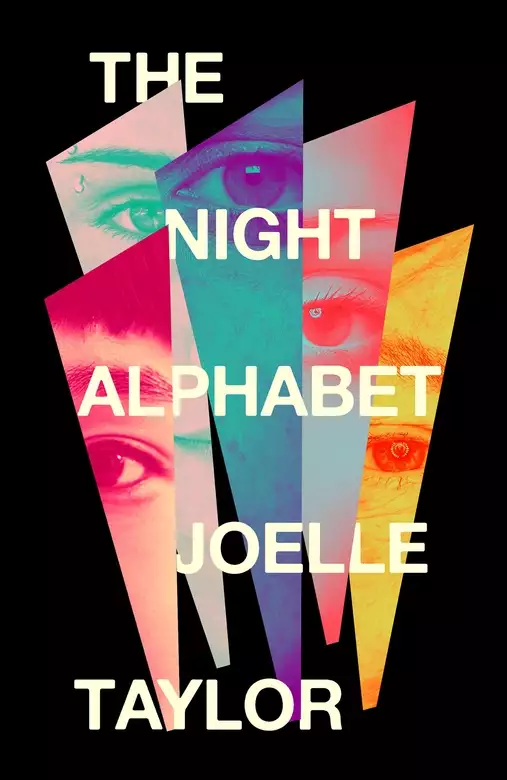
--------------------------------------------------------------------------------- Hackney, 2233: a woman walks into a tattoo parlour. Jones' body is covered in tattoos but she wants to add one final inking to her gallery - a thin line of ink that connects the haunting images of her body art together, creating a unique and mysterious map.
As the two tattoo artists set to work, Jones tells them the story behind each tattoo. As Jones is no ordinary woman, these are no ordinary stories: each one represents a doorway to a life Jones fell into, a 'remembering'.
Set across geographies and time-spans, The Night Alphabet is a deep and bold investigation into violence, resilience and women's stories.
Release date:
February 15, 2024
Publisher:
Quercus Publishing
Print pages:
432
* BingeBooks earns revenue from qualifying purchases as an Amazon Associate as well as from other retail partners.
I know where I am. Back. This is the last time; it has to be.
I land in myself, running across a trim playing field flanked by holographic London plane trees and analogue tower blocks. The grass beneath my feet is well behaved. Here again. Hackney MunicoPark. The weather programmers have calculated this day to always be the start of Spring here. The children in the overlooking tower blocks might not be able to afford the daily entrance fee to the playground, but they still catch the artificial breezes from it for free, gathered in blue plastic bags. I have grown to love them.
At the exit, a soft tide of tattoos materialises across each of my arms. Without looking, I know the tattoos have begun to find themselves again across my body, as though called. The anchor, the fly and the cat, the great net across my belly, the soundwave, the mermaid, the word ‘mother’ in a banner, the map of me. Perhaps I look like a gallery rather than a tattooed woman. Perhaps I am a hanged woman, something to be curious about on Sunday afternoons. Maybe each of the tattoos is a still in the film reel of my existence, my skin a cinema screen.
Spring is over as soon I hit the concrete conveyor belt that leads along Mare Street, and a carefully programmed Autumn begins. Above me clouds gather like teenagers, considering the ground.
Hackney is always the same. The only thing money cannot buy is poverty. It is difficult to gentrify grief, it seems; the Harrods outlets in the abandoned job centres were always going to be a hard sell. And you can sell anything except nothing, though they try that too. While Hackney inherited some of the new technology that the twenty-third century brought, it did not stick. There are a few overfriendly holographs of West End shows that leap across the conveyor belt, there are a handful of grimy AutoBars, dirt smeared across pink neon, punters smeared across forecourts. Hackney will always find a way to be Hackney.
The sky tube snakes back to the shrug of the city, casting its serpentine shadow over me while my tattoos quietly assemble. I am headed toward the Winter streets, the part of town where the stitches are weakest, where the analogue returns like a lost uncle, tanned, impatient and strange. A couple of passers-by notice me, but they are remembering something that has not happened yet.
My clothing changes as fast as the weather. I scroll through decades of wardrobe as I run. Now a barefooted young woman. Now a boot-encased old thing. Now a pert man, mouth as tight as deadlines. Now the old woman again, whose skin flicks through an exhibition of tattoos, appearing and disappearing, emerging on skin that becomes old as you watch it. I know I smell. I must. It has been a very long four minutes, longer than I hope to experience again.
My first tattoo was a wound, but all the rest have been a healing. Did you know that a tattoo is a series of holes threaded together? What does a necklace of holes make? I think of them as my inside dress, my beautiful wounds. Whatever, I am wearing a suit of holes as I hurry toward the end of the belt. Some are tallies, others are totems. All are archives, books lined up across my body. A love letter to war, a child’s handprint. An invented god. A dragon peering between the bars of my ribcage. The threaded outline of a kiss. A caged heartbeat. Angels playing cards in the low light. A ship unzipping the ocean. Each tattoo is a story, a moment pinned to the body. No, not quite: the tattoo is the butterfly unpinned.
Nearer to Winter now, I bow my head against insistent November rains, the kind that nag the body and worry the heart. Wolves of wind chase my silhouette up the street. The weather programmers are all notorious sadists. Ahead of me the white sun is a baby’s head retreating into the womb, and who could blame her? The evening is coming and if I am right, as sometimes I am, it may even come on time. It is strange how the past is always slightly ahead of us, standing on a street corner smoking a cigarette, waiting for us to catch up with what has already happened. I know now that when we leave home, it follows us.
I step off the belt and cross Mare Street at the junction of Cambridge Heath, and head beneath the old railway bridge. It mutters something but it has been years since I stopped to listen. My breath runs ahead of me and checks the route. Clear. There, to the left of the bridge, between nothing much and what is to come, is the piss prayer of an alleyway that leads to the arches. I pause for a moment to remember myself and allow my clothes to stop scrolling. Finally, they settle into my usual ensemble in this place of ruined jeans, heavy jumper, scuffed work boots, and thick coat. My hair chooses its final length: long, greyed, matted, each thread of hair mated to another in an infinite array of infinity symbols.
The sun says do it now, and I do. My shadow waits outside and lights a cigarette.
On the other side of the door, it is 1996. The door, warped and peeled, is a hologram. The door is a picture of a door. It opens into a scruffy vintage tattoo parlour, and I am assaulted by discordant colours and clashing smells. The floor is a black and white check lino and is permanent rather than programmed. Niche. Itchy sounds pace the room, a mid-nineties hard house CD from one of the big gay clubs – Turnmills, I think. The light follows with its head down, a yellow quiet. The walls lean toward each other slightly as though they are passing notes across the heads of the clients, each wall badly dressed in torn posters and band stickers. In tune with the retro vibe there is one reclining chair in the centre of the space, which folds out into an uneven table. It is a deep girl red, ripped on the hand rests. A young woman leans across it washing down the vinyl with disinfectant, her arm annotated in half-completed designs. The shop is Dettol and boredom disguised as insouciance. It is a late Autumn afternoon, and the sky outside has bruised cheeks. The sun drinks too much and can’t take criticism. At the back of the room another woman stands with her back to me, bent over a 3D laptop. The projection from it, purple and green, dances in the air between us. Her hair is fused into white dreadlocks and tied up with a leather thong. I can hear my heart beginning its parade, but I don’t think she can. Some things are difficult to remember and harder to forget. Ghosts crowd every room.
The one washing the chair looks up, someone like my father walking across her face. She has the look of a woman who left for the bar hours ago and is waiting for her body to catch up. The young are full of wild dogs. When she speaks, I’m surprised at the quiet of her voice, as though the words only step halfway out before they stop-sudden and run back into her mouth.
Hi, she says. Hello.
The air ages between us. The older woman shuts down her laptop with a finger snap and strides over, hand outstretched. Tribal tattoos creep upward on each side of her neck, the ironic indigenous English. When I take her hand, I can feel the flutter of a pulse and wish I could keep it, right there in my inside pocket where I can take it out and set it free later. Watch it fly across the endless rooftops of this infinite city. She smiles but does not mean it. She will be looking forward to getting back to the squat; maybe there is a party planned for the weekend. I know that a party is more important than anything I have to say. The younger one sighs and disguises it as a yawn. ‘Sorry. Long day.’ We both know that this day was the same length as any other day, and all days are too long, but I nod anyway. The older woman, her grin a shop door opening. ‘What can we do for you?’ I arrange my face into a think. ‘I need a tattoo.’
Yeah?
Yes.
It seems like you have plenty already, mate.
But this one is important.
Oh, it’s important, is it?
Oooh, an important tattoo, Cass!
Cass glances at her wristwatch, and I am transported back to a time before there was time, when all we had to do was draw and talk and dance and sleep. She might act like a street warrior now, but she has inherited her parents’ administrative skills from their years of teaching at the local college. The squats during this period are filled with people who can afford to pay high rent. It is the only way to squat in the twenty-third century, the golden era of enhanced ironies.
In the retro tattoo parlour, I am examined, a small fly in a large glass jar. I can tell that my presence has brought them together somehow.
Where do you want this important tattoo then?
Everywhere.
I gesture toward my body. They study my clothes, which haven’t been washed in a while, and I know what they are thinking. That’s fine. She will offer me a shower soon. They are both as still as summer lakes.
What do you want there? Do you have the design with you?
It’s the ink that’s important.
She looks briefly confused.
The ink? We use standard laser ink, a few different colours, but my engine is not so good at mixing pigments.
Cass gestures at the computerised tattoo machine that handles most of the skin work these days. It is mounted above the reclining chair, its thirty-six pigmented lasers automatically rotating to where they are needed. Digitisation brought the digital tattoo, ten times as fast and twice as safe. You know things are bad when even skin is gentrified. The tattooist photographs the area of the body where the tattoo is to be imprinted from several angles, and feeds each shot into a skin art program. From there designs can be uploaded to create a template that is lasered directly onto the skin. The whole process might take an hour, and most of that time is spent on entering data. The actual tattoo itself is instantaneous, and much easier to erase or adapt than the old-style ink and needle numbers.
I don’t want the laser. I want the gun. I heard you still do a few now and again . . .?
I pull a small leather pouch from my inside jean pocket. They glance at the bag and each other before Cass reaches out and takes it from me. As her hand touches the bag, a gentle ripple invisible to most passes across the face of the planet. Call it quantum physics. Call it Catholicism. She peers inside, and looks up, her eyebrows conducting a discordant orchestra.
What’s in it?
She draws out a vial of dark fluid.
Blood. I want it mixed into the ink, then tattooed here. Old-school style, rotary needle.
She flinches but doesn’t drop the vial, though her lips make the shape of a startled cat. She does not want to look weak in front of the younger one, who has sidled closer to us and peers into the depths of the tiny vitrine.
Where, again?
Here.
Mate, you’re pointing at everywhere . . .
I want you to join all my tattoos together.
She straightens her smile like the hem of a skirt.
OK. OK. So, two things, mate: one, it’s illegal to mix organic material – especially fucking blood – in with the ink. And two, what the actual fuck? I haven’t got time for this, ther . . .
I hold my hands up.
I know the risks and I’m willing to take them. I need to take them. I’ve got money.
No one has that kind of money mate, you—
She interrupts herself as I pull old five-pound notes from my clothing and boots. It’s a magic trick. They keep appearing. They form a stack on the tattooing table, stained, bent-backed and alluring. They smell of the quiet places. It is rare anyone sees physical currency anymore; we wear our bank accounts on our sleeves, literally, chips embedded in our forearms. Anything involving real money is suspicious, illicit, fabulous.
There’s a grand there. For one tattoo. Not exactly a complex one either . . .
She stares. The younger one stares. She moves toward me.
Hi, my name is Small. And she’s Cass . . .
At the sound of her name, Cass pulls herself back into the moment.
Explain it to me again.
It’s simple. I want you to mix this blood—
Whose is it?
It’s my mother’s blood.
I let a solemn beat walk by us.
I need to feel connected to her.
I look down as though peering into my mother’s grave. All women feel the need to hear their mother’s heartbeat, to sense that pulse again in our blood. We listen intently to the nothing. Cass sucks the end of one of her dreadlocks, as though it’s attached to an oxygen tank.
I see, sorry. OK. And what’s the design again?
Just a line. A line that links all these other tattoos together. Like a map—
Like a star chart . . .?
Yeah, something like that.
She holds the vial to the light, trying to see the answer resting in its wide red. I know they need the money. Small may not have guessed, may not even care. The young are so young. But Cass is perfectly aware of how tenuous their grip on the tenancy is. She lightly touches the stack. She thinks I’m a drug dealer. I have the clothes and the lip for it. I have gathered the notes as though they were street deals. Some of them are partially rolled. She turns back to me.
You sure?
Yes. Yes, I am.
What kind of a line?
Just a thin one, nothing fancy.
They look at one another. A decision is made without conversation, and Small turns to me with a look of wonder and resignation. Cass offers a nod, and in this way the deal is done.
Mixing organic material with tattoo ink is a dangerous business. The risk of infection is high, and the quality of the tattoo can be easily compromised. Cass gingerly clutches the vial and carries it as though it were an incendiary device to the back of the room. The steriliser hums a tune I almost remember.
This may take me a while . . . Small, why don’t you take our guest through to the shower room? Sorry, I didn’t catch your name . . .?
Jones.
Jones?
Yeah. Jones. I had a weird mother . . .
The steriliser purrs and the cassette tape fingers its constant rosary. Cass mutters something, already lost to the idea. She is already more of herself than she was when I walked in. It will take her years to realise this. Small and I settle into an uneasy silence, listening to the wolves outside call our names as I undress for the shower. I watch her through the mirror. Her hair is a confusion, curled on top of her head like an ill-treated pet. She wears the vintage art-squat uniform of combat trousers and army jacket with heavy black steel-toe-capped boots. Small has the face of someone else, someone she has not met yet. I know she is still only fifteen, though Cass does not. Small did not so much leave home as watch her home leave her. Her father, a shout in a glass, her mother, a white shape in a window. The only person who searched for her when she left was herself. I know how she got the scuff marks on the underside of her boots. I know how her boots wrote the road she walked on. I know where she got them, who wore them before her. I know she wears her skin like an emergency blanket. I know her bones are bird-thin but strong, and that they sing when she sleeps. She is a sapling in a tornado. A windchime. She catches my eye in the mirror.
You can put this gown on when you’re done.
She pauses, her eyes travelling my skin.
Tea? Coffee?
No. Thanks. I could do with somewhere to hang my clothes though. Maybe something more interesting to drink?
Now you’re talking . . .
This time when she smiles, I can see her white picket fence teeth and imagine what it would be to live in the house they guard.
I shrug off my jumper and jeans to reveal intricate technicolour designs wound around each arm and leg, each tattoo unrelated to the other. An anchor, a faded blue map, a heart with angel wings, a murmuration of swallows, a sailing schooner, a pin-up model with a slow polka-dot wink. There are tattoos from across generations and cultures.
Can I see?
She stops at the door. I drop my towel to reveal still more tattoos, thick and thin and gaudy and dull, a full symphony of ink in A minor.
Fuck.
Fuck, she says, and means it.
These are the questions they ask in the tattooing chair: is this your first one? When did you get your first? Did it hurt? And this one? And this? Have you had your nipple done? Your eye. Under your tongue. Your teeth. Small asks none of these questions. Instead, she fetches our cans of cider, and we open them together like hissing cats. My gown is one they’ve liberated from a hospital ward, and it hangs over my shoulders, like a falling man.
Do you smoke?
I nod and scramble in my bag for tobacco. We roll in peaceable quiet, Small assessing me from beneath her eyelashes. Her smoking is so serious it is obvious she has not been doing it for long. It is still something she shows people, rather than just does. There are few smokers in the twenty-third century, and tobacco is considered a collectible contraband. Something wonderfully wrong, with its own alluring rituals of rolling that bind smokers. I wonder if I will still be addicted to tobacco when I go home. The CD has moved on to mirror my heartbeat but neither of the women notice. A foot taps. A pulse runs into a wall. A roil of smoke uncurls from my mouth and in it I see the faces of my ancestors, indistinct. My little mouth ghosts. Same jawline. Same avoidance of the eye. I wait. Finally, Small leans forward and taps the edge of a tattoo at the side of my finger. It is a pale lemniscate, white against white, more of a feeling than a picture.
Go on then. Tell me the story of this one.
She laughs and something buried is born. She laughs, and her smile is a starting line.
CHAPTER TWO
There once was a woman who lived inside another woman.
The moment I looked into my mother’s face I recognised her. She was always someone from somewhere else to me, a name I could not quite remember. My father seemed the wrong age too. Younger perhaps. It felt like my whole family were wearing each other’s clothes. My elder brother dreamed of ballet, my younger of falling in a lit airplane. I dreamed tomorrow. Always did, always will. Things have become more complicated, but that’s a simple truth to observe and hold on to. The always.
My mother had a face like wet laundry and a laugh that could dig up a field. She raised three children to believe that the ground was exactly where it was supposed to be and the sun a shepherd that would guide us through the days ahead. Pragmatic, practical but with riptides of surreality. She was the kind of woman who named each knuckle, and she taught me to do the same. Women, she would say, are fighters. But quiet, like. Wait until the enemy sleeps. And then that sudden laugh that made all the crockery and pans in the kitchen hold on to each other. At night she would tell us stories. There were few tales of princesses and kingdoms, talking bears and happy penguins for us. My mother favoured Grand Guignol, the chattering decapitated head, the tap at the chamber door, the child who lived in the plumbing. Once she told me that she kept the skin of her teeth in the top drawer of her dressing table. She had hung on to it for years, she said. It was her mother’s before her. One day, she would pass it on to me as her only daughter.
She named me Jones, after the milkman she said. Dad said nothing. Fortunately, I had my father’s eyes and his way of walking into a room and knocking everything over. After a while it just seemed like my name.
My mother leaked tattoos. They materialised across her body, blank ink to tissue paper, a slowly spreading watercolour. The designs were crude, more secrets than artworks. They were for the most part indecipherable, even more so when asked to give an explanation. My mum could suck the story straight out of a story, and I often wandered off to examine abandoned rooms in my own head before she had finished talking. So it was with the shaky blue biro tiger tail that began to edge out of the rolled-up sleeve of her jumper. I noted it one morning before school, her arms sunk deep in the washing-up the boys were supposed to have done the night before. Ineptly etched, still raised and reddening, the tail looped and clung to her forearm.
I wondered how far up her arm the tail curled, and what was waiting at the other end of it. Whether she was holding the tail, or it was holding her. Years later I would understand that there was no difference.
What’s the new tattoo, Mam? I asked, pouring milk that had been out of the fridge too long over my cornflakes.
She didn’t turn around.
It’s not a tattoo, Jones. It’s a haunting. It’s a bloody haunting.
Her tattoos were my baby book. They were how I learned to read. I knew she had other tattoos, but we did not speak of them. They were loud secrets.
It was on my twelfth birthday that everything changed. My blood had started, and I was crouched under my duvet hating the gods when my mother backed into the room carrying a cake. Get down! she shouted and threw it at me. As chocolate fondant exploded, I in turn erupted in a distant land. I watched my hand dislocate from my wrist and fly serenely overhead, my legs dissolve beneath me and my heart shoot from my chest. A slow-motion disassembly. My mouth was dirt and sour, a wet autumn. I thought of Joseph and wondered where he was. Whether he made it through. If he was still telling jokes through his half face.
My mother stood at the foot of my bed, cake dripping candle wax, lit and waiting for my breath to enact the next year. My brothers stood beside her, all angles and apologies. For a moment Joseph haunted her face, my brothers beside her, bones.
I knew you dead, I said.
Right, said my mother, and blew out the candles herself.
Later I saw the woman inside my father. I saw him bind his necktie like women weave plaits. Saw him pull up the cuffs of his trouser when stepping over puddles, saw his nails as painted thick red. When he spoke, it was through a girl’s pink lips, though his voice retained its deep timbre. My younger brother pirouetted in his armchair, my elder stared down at things we could not see, before disappearing in a spray of red carnations. Puberty is never easy.
I don’t remember much about the rest of the day or even that year. Puberty is a cliff edge we are all pushed off at some point. I landed at the bottom, bruised, with bones nudging through skin, but still somehow alive.
I do remember Mrs Sunderland’s class though. She was our English teacher and, while irritated by the way my imagination marauded stories, carrying them off to the hills, she still somehow saw value in me. I was often late to school, and she would sit still at her desk as I edged into the room, a gale of half-eaten apologies and red with lies, looking quietly down at her register. Without comment, she would tick the box beside my name as though brushing a fly off her food.
I sat next to Young Paul, so named because he was younger than Old Paul. He was a skinny boy, thin as a sailor’s whistle, with large brown eyes that looked as though they had been dug into his face. Young Paul was a studious boy, a frown and wrinkle-head. He hardly spoke in class but that was OK. I could speak for two. I tried not to look at Young Paul too much. He was always in pieces, in the act of falling away from himself. I wondered if he had known Joseph.
When I walked into class for the first time back at the beginning of secondary school, I knew all the strangers in front of me. I knew them like you know someone you always share the same bus route with, or regularly pass on your way to see someone whose face you will remember. I am constantly forgetting the names of people I haven’t met yet.
There was an odd resignation to the class when I think back on it. Something old about each one of those children, something of the land. Even in thick daylight their faces danced with dust.
One afternoon as I reached reluctantly toward my twelfth year, I crouched across my desk writing a response to the latest book we had been set to read. I don’t recall what I wrote, only that as I looked at my pen digging into the page it became the handle of a shovel and the paper blackened. The classroom lights blinked out and the walls edged in toward me. The ceiling rushed down to meet me like a lost relative. I was bent almost double with my shovel held out before me, scraping at a hard, black surface that glittered in the weak light of a Davy lamp balanced on the uneven dirt floor. Behind me I could hear Mrs Sunderland dully repeat her instructions to the class, before a stronger wider voice ‘Shape thissen, Fred!’ drowned her out. I jumped and hit my head on the low ceiling, the clang of my helmet shocking me still more. ‘Come on, lad!’ The shout came again. I dug my shovel into loose coal and backed down the narrow seam toward the voice, my breath as tight as the fissure. The air was damp and warm and pooled silver in my lungs. Strong hands grabbed my boots and pulled me the few remaining feet into a tunnel, as black as the seam I had been investigating, but wild hot. I stood and fac. . .
We hope you are enjoying the book so far. To continue reading...

 Please log in to recommend or discuss...
