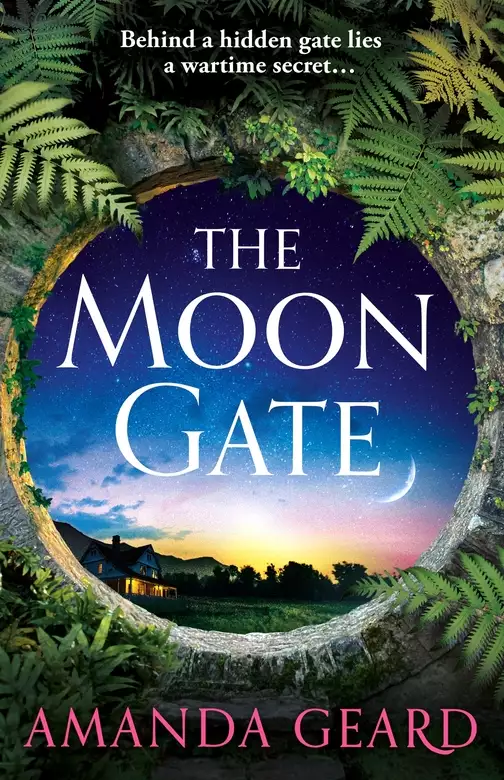
A faded photograph. An abandoned house. A wartime secret . . .
From the author of the Richard and Judy Book Club pick The Midnight House, a mesmerising story of love, war, and a mystery that ensnares three generations, sweeping the reader from London to Tasmania and to Ireland. Perfect for fans of Kate Morton, Lucinda Riley and Eve Chase.
1939: On the eve of war, young English heiress Grace Grey travels from London to the wilderness of Tasmania. Coaxed out of her shell by the attentions of her Irish neighbour, Daniel - Grace finally learns to live. But when Australian forces are called to the frontline, and Daniel with them, he leaves behind a devastating secret which will forever bind them together.
1975: Artist Willow Hawkins, and her new husband, Ben, can't believe their luck when an anonymous benefactor leaves them a house on the remote Tasmanian coast. Confused and delighted, they set out to unmask Towerhurst's previous owner - unwittingly altering the course of their lives.
2004: Libby Andrews has always been sheltered from the truth behind her father Ben's death. When she travels to London and discovers a faded photograph, a long-buried memory is unlocked, and she begins to follow an investigation that Ben could never complete. But will she realise that some secrets are best left buried . . .?
------
YOUR FAVOURITE AUTHORS LOVE AMANDA GEARD . . .
'I loved The Midnight House. Wonderful storytelling' RACHEL HORE 'A wonderful tale of family secrets, brimming with lush historical detail' HAZEL GAYNOR 'A multi-layered mystery spanning generations, evocative and beautifully written' TRACY REES 'I loved it. An intriguing story with wonderful characters' RACHAEL ENGLISH 'I really, really loved it. A wonderful mystery. Totally atmospheric and just wonderfully escapist' LORNA COOK 'Intriguing, moving and I loved the wat the stories moved back and forth in time' SINEAD MORIARTY
(P) 2023 Headline Publishing Group Ltd
Release date:
May 1, 2023
Publisher:
Headline
Print pages:
512
* BingeBooks earns revenue from qualifying purchases as an Amazon Associate as well as from other retail partners.
The letter opens a hole in the earth, and through the darkness she tumbles. Falling. Falling. Slowing. Slowing. Until she reaches light and arrives at an island on the other side of the world. The place where she once was. The place where they once were.
Tasmania.
She only glances at the page, but suddenly she’s back a lifetime ago, smelling the sweet sassafras, waking to the chatter of a thousand birds, turning her face to the sun; that burning antipodean glare.
She shuffles the letter beneath the pile of post. Something to face later. Outside the wind whistles, coaxing white caps from Kenmare Bay, and she busies herself with the remaining mail her eldest son delivered with an accusatory look that morning. The post box is up the boreen and she walks to it, and beyond, every day. But occasionally she leaves it full, stuffed with unread words; she just walks on past as though she hasn’t a care in the world.
Later, the storm has moved inland and there’s a freshness in its wake, as though it stole away the electricity that pulsed through her when she sat at the table, opening the envelope.
She takes a sip of sherry, her gaze lingering on the fire where peat smoulders and glows, its liquorice smoke curling up the chimney and away. Beside her, on the coffee table, the letter is half hidden in shadow as though it’s just an idea, but in her heart she knows whoever wrote it thought very hard indeed. All the signs are there. The careful text, the quality of the envelope: heavy, textured, olde-worlde.
Like her.
It’s addressed to Mrs McGillycuddy, and the sender’s details are written on the back in tiny, whispered text, as if this woman, this Libby Andrews, was writing an apology. And part of her address is familiar. Grosvenor Square, London.
It is a coincidence, that’s all.
Still, she contemplates striking a line through her details and writing ‘Return to Sender’ so the letter can drift back to where it came from.
But you can’t plough a field by turning it in your mind, as Daniel used to say.
Even before she reads the letter in its entirety, she knows something about Libby Andrews. She clearly takes care over the little things. And although she doesn’t want to, she likes her already. She feels a cautious warmth emanating from the page, adding to the glow of the fire. The letter finishes with placations: Only if it is suitable for you. Formal for an Australian.
She walks to the window, gripped by a need to look into the darkness and see what’s peering back. Outside, the clouds have lifted and moonbeams cut the bay, separating her peninsula from the next.
Libby Andrews wants to ask about Daniel. That is all.
She takes a pencil, and sharpens it slowly.
And in the dying light, she replies.
Chapter 1
London
November 2004
Three weeks before the letter . . .
The absence of greenery in Covent Garden wasn’t so much a surprise to Libby Andrews as an inevitability. The city she thought she might recognise from Monopoly boards, Dickens and programmes on the telly was buried beneath a shiny present that concealed its history until she peeled away the layers and searched for what hid beneath. From the bomb-scarred facade of the V&A to the muddy course of the Thames, itself a repository for centuries of the city’s flotsam, London’s piled past was slowly coming alive for Libby as she walked its endless streets. But it wasn’t the city’s history that had brought her to the dingy waiting room a stone’s throw from Waterloo Station. It was her own.
‘Number thirteen!’
Libby stood quickly and stepped up to the counter, cursing her superstition as she slid the docket and her letters through the square hole in the glass with shaking hands. If only she’d left her aunts’ apartment earlier and not boarded the wrong bus, indeed if she’d overcome her doubts sooner, and done this immediately when she’d arrived in London, she might well have been number one. But when had she ever been first? She never won, never pushed herself forward, and even now she stepped back from the counter to give the rotund man behind the glass plenty of space.
Immediately, she began to babble. ‘I wrote to the coroner’s archive six months ago to confirm the box hadn’t been destroyed. You can see the dates on the two letters: the first one in 1975 and the other in 2004. Can’t you?’ She hesitated, but the man remained unmoved. ‘I’ve come a really long way. From Tasmania, in fact . . .’
Usually, mention of the island piqued interest, prompting a story about a visit, or more often than not an intention to visit, but the man only turned her letters over with chubby fingers as though doubting their authenticity, oblivious to the charms of Australia’s southernmost state and those who hailed from it. Behind Libby, three people waited, each clutching their little blue tickets, each perched on one of the uncomfortable plastic seats lined up along the wall. Feeble daylight washed down from a high window that showcased passing feet splashing through the downpour, the sound of rain-pummelled pavement drowned out by a grumbling vent whose warm air ruffled the diminutive foliage of a palm standing bravely next to the counter. That plant, Libby thought as she watched the man’s concrete expression, was the only indication that a human being worked here at all. The room smelled of wet dog and yesterday’s lunch, and although Christmas was less than a month away it was nowhere to be found amongst the signs that barked at those who waited.
TAKE A TICKET OR TAKE A HIKE.
ABUSE OF STAFF WON’T BE TOLERATED.
NO ID, NO ITEM.
‘ID?’ said the man, finally raising his eyes, his gaze hovering over her shoulder to the waiting numbers.
Libby slid across her Australian passport.
‘You’re not Willow Andrews, then?’
‘Willow’s my mother.’ She took a copy of her birth certificate from her pocket and pressed it against the glass. ‘And Ben Andrews was my father.’
‘The deceased?’
The ceiling vent chose that moment to stop its grumble, and several of the waiting numbers looked in her direction. The deceased? A ribbon wound itself around Libby’s heart, and from somewhere deep within, familiar pain burbled. She’d felt it thousands of times over the years: on Father’s Day, the anniversary of his death, the times friends bemoaned frustrating moments with their dads as though having a dad wasn’t by itself joyful enough.
‘Yes,’ she said quietly.
‘What?’
‘I said: yes.’
Only the day before, under the cavernous roof of the London Transport Museum, she’d felt it as she stood before a single, tiny display. It said nothing more than she already knew, but somehow reading the words here in London, instead of half a world away, had sucked the moisture from her mouth.
The Moorgate Tube crash, the plaque read, was the worst peacetime disaster on the London Underground. At 8.46 a.m. on the 28th of February 1975, 43 people died after a train failed to stop at Moorgate Station, the terminus of what was then the Northern City Line.
There her father’s name had been, right at the top. He was the man who’d left her life before it had even begun, and yet she missed him, and what might have been. From the museum, she’d walked to Moorgate Station itself to watch people pour out of the Britannic House exit at rush hour, blissfully ignorant of the accident that had taken place there thirty years before. In a wholly visceral way, the sight had flipped her stomach and, with a wave of regret, she wished she was still back in Tasmania, still living in her small, shared terrace house with her unreliable flatmates, working dead-end jobs she hated. She felt a sudden, terrible sense of loneliness and realised her mum had probably been right all along: even though their small island state hung off the end of the world, it had everything anyone could want. There was no need to go to Europe, Willow had explained, peering over her red glasses as they’d sat at a pseudo-French café drinking Italian coffee, because ‘Europe comes to us’.
The man slid her documents back. ‘Your mother will have to collect the belongings.’
Libby paused. ‘But it’s been thirty years . . .’
‘Regulations.’
‘The letter says . . .’
‘The letters, madam, are both addressed to Willow Andrews.’
‘She’s in Tasmania. She can’t just jump on a plane and collect them.’ Though that wasn’t strictly true. ‘What am I supposed to do?’
‘Not my problem.’
Libby glanced at the ABUSE OF STAFF WON’T BE TOLERATED sign. Taking a shaking breath, she continued, ‘Please, I—’
He tapped yet another regulation stuck haphazardly to the screen. ALL COLLECTIONS ON BEHALF OF OTHERS REQUIRE A DOCTOR’S LETTER OR DEATH CERTIFICATE.
She’s sick, Libby wanted to plead, though that would be a lie. Her mum was as fit as a fiddle. Strong. A strength that Libby herself hadn’t inherited, along with any of her other features.
‘Next!’
Libby was bustled aside by an impatient number fourteen, and her vision blurred with tears as her obedient feet took her out of the waiting room, up the stairs and onto the rain-battered street. There, she leaned against the entrance and felt her heart break as she gazed at her fingers, picturing this opportunity slipping through them, lamenting how close she’d felt these last months as she planned her move to London to finally retrieve a piece of the father she’d never had.
Tears dropped onto her black coat and rolled down the wool to the already wet pavement. Libby bit her lip, trying to stop the flow, but it was all too much. She was pathetic, completely pathetic. Some soulless paper-pusher had got the better of her and, as usual, she’d simply let it happen.
She sniffed and turned to the wall, hiding her face from the passing commuters. She should go back in, she should demand to see the manager. She should make a fuss. And yet . . . she wouldn’t. She would retreat meekly to her aunts’ apartment and wonder what on earth she’d been thinking, and why she’d hung so much on getting her dad’s belongings. After all, if her own handbags were anything to go by, the satchel probably only contained an old receipt, half a packet of chewing gum and some slightly sticky coins saved for a rainy day. Still, she would have liked to find those things. Was that so shameful to admit?
‘Are you all right, dear?’ asked a small woman who seemed to appear from nowhere, her blue rinse the brightest thing on a dull street. ‘It’s just you’re sobbing on the steps of a public office. A great offence, you know?’ The woman smiled kindly, to show that she was joking.
Libby wiped the mascara from her eyes. ‘I’m fine. Fine. Thank you.’ Sniffing, she stepped aside. ‘Sorry.’
‘No need to apologise, dear. Any delay in getting to the desk suits me just fine.’
Libby smiled, her eyes stinging, and dug into her deep pockets, looking for a tissue, but all she found were three receipts, a pocket map of London and the documents she’d submitted to the clerk not five minutes before.
The woman looked down, catching sight of the letters. She nodded to herself, unclipped her handbag, and withdrew a pristine white handkerchief. ‘For the mascara,’ she said.
‘Oh, I couldn’t.’
‘I have more.’
Gratefully, Libby took it and dabbed her eyes. ‘Thank you.’
They stood in silence, watching a sea of dark umbrellas bob through the downpour.
‘Will this rain ever stop?’ said the woman finally, and Libby gave a small smile. The English and their weather. ‘It’s very wearing, isn’t it, love? And there’s too much work to get through before the holidays. Not at all good for the mood, is it?’
‘Really, I’m fine. Just a bit of a wobble.’ Libby scrabbled for an excuse. ‘New city and all.’ In fact, too much work would be a good thing. Next week she’d start applying for jobs; her Australian dollar savings would not hold up well to the pound.
The woman glanced again at the letters. ‘I might be wrong but . . . I suspect you’ve had a run-in with the notorious Computer Says No?’ She waved a hand, indicating somewhere beyond the closed glass doors. ‘What was it? Your collection letter too creased? That man’s nothing but a menace.’
The doors opened and number fourteen spilled out, empty handed, and with a face like thunder.
‘Well?’ The woman raised an eyebrow. She was an entire foot shorter than Libby, who herself was less than average height.
‘I wanted to collect a box the coroner archived,’ Libby admitted. ‘I should have insisted, but I just . . . couldn’t find a way. It’s under Mum’s name, you see? She lives in Tasmania.’
‘Ah, Tasmania!’ said the woman. ‘My husband and I wanted to visit on our honeymoon in sixty-five. But it was a long way to go back then.’
Despite herself, Libby grinned. ‘It still is.’
A nod. ‘Now, let me guess: Computer Says No insisted on a doctor’s certificate?’ She sighed again, with the resignation of someone familiar with this carry-on. ‘And you can prove you are your mother’s daughter?’
Libby’s heart leapt. ‘Yes . . .’
‘You’re sure about that?’
‘Absolutely.’
‘Well, come on then, let’s take another look at that paperwork and see what we can do.’
Libby was bustled into a small office wholly in contrast to the waiting room outside. Tinsel hung from the cornicing, and a small coffee machine filled the room with a welcoming aroma.
The woman held out her hand, all bustling efficiency. ‘Now, what’ve you got for me?’
As she passed across the letters, her passport and the birth certificate, Libby’s voice was snatched away by hope, and she stood mute, a feeling of desperation deep in her stomach.
‘A satchel containing documents and personal effects.’
A gulp. She was close, so close. Whatever lay inside that satchel might tell her who Ben Andrews had been. Who he’d really been. Not the pale shadow her mum had painted of him.
The woman opened the passport page, noting Libby’s birth date, August 1975. ‘Twenty-nine years old . . .’ She compared it to the birth certificate, then examined the photo carefully. ‘You must never have met your father?’ she said, looking up. ‘What a terrible thing.’
‘He died six months before I was born.’
‘Oh, love. A tragedy, that is. I was working on London Wall at the time. Half the city came to donate blood as word spread. I joined the queue quick smart, I can tell you. They were operating on poor souls down in the station, you know? Did your father . . .’
Libby shook her head. ‘From what I understand, he died instantly.’
The documents were placed gently in Libby’s hand, which itself was patted by the woman’s cool touch. ‘Now, you sit yourself down there. Can I make you a coffee?’
‘No, thank you.’
‘OK. Box 9462, is that right?’
Libby frowned and looked at the reference number in the two letters – one of which had been sent to her mum’s old address in 1975, the other to Libby’s rented address only six months before. Both were labelled Attention: Willow Andrews.
‘You don’t . . . need my mum to collect it?’
The woman paused at the door. ‘I thought you said your mum was ill?’
‘No, I . . .’
‘Really? But I saw the doctor’s certificate myself, didn’t I?’ She raised her eyebrows and nodded almost imperceptibly.
Libby wasn’t good at lying, so she merely dropped her gaze, smiling weakly, willing her lack of confidence not to mess up the second chance she’d been gifted.
An hour later, the 139 bus crossed Waterloo Bridge with Libby on board, the grubby window throwing back her reflection as though it didn’t much care for it, as though it was judging her for doing something of which her mum would certainly not approve. She felt incurably guilty for the deception, for stealing the letter, for lying to Willow about the reasons she wanted to go to London.
‘A gap year? A bit late, isn’t it?’
‘It’s never too late,’ Libby had said in reply, a practised response, and at those words, her mum had looked away.
But other feelings already threatened to overwhelm her guilt. On her lap sat the weathered satchel that had belonged to her father and inside it she hoped to find traces of the man he’d been. She had resisted the urge to open it then and there in the kind woman’s office. Instead, she’d asked if she could leave the box, then slung the satchel over her left shoulder and bitten her lip.
‘I don’t know how to thank you.’
‘There, there. No more tears now.’
‘But really, this means the world to me.’
The woman had held up a palm. ‘You need say nothing, my dear. If we can’t help one another now and again, then what’s it all about? Now, you get yourself settled at home before you open that. Reaching into years gone by can be a traumatic affair. You never know what you’ll find,’ she’d said with the certainty of someone who had seen this sort of thing before.
But as the bus halted in traffic, Libby could contain herself no longer. Just a little look. A glance. A peek into the past. Her past, in a way. Carefully unbuckling the straps with tingling fingers, she lifted the flap, releasing the scent of time, neglect, and the feeling she was doing something she shouldn’t. Before she could close her eyes, look away, or change her mind, she peered into the two large compartments, one containing several documents and a book, the other full of everyday items: pens, a soft packet of Fisherman’s Friends, a ticket for the tube that made her hands shake. Postage stamps of the queen, a stack of pounds (British and Irish) and a passport. Libby’s heart flipped as she removed the latter, opened it and came face to face with her father, his features familiar from the few grainy photos she’d seen. She felt he was looking right at her as she traced a finger over his image, pausing when a photo slipped from between the passport’s pages. Taking a deep breath, she withdrew it.
Mum.
There she was, Willow Andrews, wearing those large red glasses and the seventies bob she’d stubbornly retained all these years. But on her face she sported something unfamiliar: a wide, happy smile. In one hand she held a set of keys, and her other was wrapped around Libby’s father, embracing him like she’d never let go. The aura of excitement surrounding them was so strong that, despite herself, and the painful chasm opening up inside of her, Libby smiled.
Looming behind her parents was a magnificent weatherboard Federation home, the type that lined Tasmania’s oldest city streets. But this house wasn’t in the city of Launceston, where Libby knew her parents had lived. Rather, it was surrounded, suffocated, by trees. She squinted, looking closer, a strange sense of familiarity scratching at a hidden part of her mind. On the far right of the photo a tower stretched up and away.
She shook her head and a memory dislodged. A house in a rainforest. A turret reaching to the sky. She was hit with a realisation: she knew this place. Slowly, she turned the photo over and, sure enough, there it was.
Willow and Ben, Towerhurst. 1974.
Towerhurst! She had been there, just once, and Libby’s mind was dragged back two decades, settling on a childhood memory from which the haze began to clear.
Chapter 2
Towerhurst, west coast Tasmania, Australia
September 1985
They’d only just got out of the car and already Libby’s hair was plastered to her head. She huddled in a bright red coat that was far too big, though according to the label it should fit a girl who was already ten.
‘What is this place?’ she said, sidling up to her mum, who waited by a sign so creaky it threatened to tumble onto the mossy ground below.
Towerhurst, it read.
‘Come on,’ her mum muttered, and they started up the drive. She’d been in a mood the entire trip, and Libby knew exactly why.
Old Mrs Murphy had called at 7 a.m. to say she couldn’t, as had been agreed, babysit for the day: her own grandchild had chickenpox, and it was safer Libby stay away. ‘No worries,’ Mum had said sweetly down the phone, replacing the receiver calmly before huffing and puffing. ‘There’s no time’ – she’d glanced at her watch – ‘you’ll have to come with me.’ Softening then, as though realising she’d been a terrible grump, she’d given a weak thumbs up. ‘It’ll be fun.’
They’d driven for hours across the state, one picturesque scene giving way to another. Gone was the dry scrubby forest that surrounded their home on Tasmania’s north coast, gone were the waves lapping at its shore, gone was the smell of salt in the air. Everything turned green, an endless emerald carpet that rolled over the hills, the whiff of livestock heavy on the wind. Libby had fallen asleep, an open book in her lap, and when she’d woken, the Tasmania she knew had disappeared, replaced with a desolate landscape that might have been on the moon.
‘West-coast mining country,’ her mum said as she navigated the turns winding through bare landscape that had been, she’d said, cleared of trees a century ago when pioneers dug for copper.
Over the next mountain the forest had returned, a morphed version of the one Libby knew: taller, thicker, crowding the road. It was as lush as she imagined the Amazon to be, and it seemed quite as unfamiliar. The narrow road had cut through the vegetation like a knife, and soon enough they’d glimpsed grey ocean, before turning north, following the coast, bumping along the potholed road until they’d reached an impassable track that snaked up a hill, and the creaky sign to Towerhurst.
Their boots splashed in the mud as they trudged past the inquisitive ground ferns, past the trees with their glistening leaves. Running water gouged the mossy track. As Libby skipped to keep up, she repeated what her mother had told her moments before.
‘So, you’re showing this house to some people?’
‘Yes.’
‘Why?’
‘Because they want to buy it.’
‘From who?’
With a sharp intake of breath, her mum stopped abruptly, and Libby careered into her side.
‘Mum?’
No answer.
‘Mum?’
‘I’m helping sell Towerhurst for . . . a friend. I’ve never been here before.’
‘What friend?’
Overhead, a currawong broke low from the trees, flying so close that Libby saw rain splash from its glossy black wings. Only then did she register what lay beyond, what had halted her mother.
A house, just visible at the top of the track, peered down at them like a schoolmaster might regard his students. At its front, two large windows looked out from a sweeping verandah, a prominent monobrow over watching eyes, the deck warped in a way that only time could manage. But it wasn’t this part of the house that was remarkable, nor the upper floor where four windows lined up like watchmen. The schoolmaster, it seemed, wore a hat; a tall hexagonal turret – a single round window in each face – rose above the forest canopy.
‘What is this place?’
‘A legacy,’ her mum said quietly.
Before Libby could ask what that meant, a roar cut through the rain. Behind them, a vehicle climbed the steep track, its wheels barely gripping the mud. It rolled to a stop and the driver wound down his window, leaning out with a grin.
‘You’re Willow?’
‘That’s right.’
The man reached out a large paw. ‘G’day,’ he said, switching off the engine. The silence made the rain louder still as it hissed on the bonnet, turning immediately to steam. ‘I’m Denny and this is Jess.’ He leaned back, revealing a petite woman whose brown hair was piled into a topknot. She waved, giving a wink; she had remarkable eyes: one blue, one brown.
Mum managed a weak smile. ‘Not a great day for viewing.’
‘It’s . . . authentic,’ Denny said. ‘Wouldn’t be moving to the west coast of Tassie for the weather!’
‘No,’ said Mum as she fished in her pocket for the keys.
The lock was jammed, but a sharp shove pushed the door ajar. Mum stepped back as they filed through, Libby sandwiched between Denny and Jess, blinking in the gloom.
Towerhurst was a mess: debris covered the floor, paintings hung askew and a soft layer of mould coated the wide, beautiful staircase that led up into the beyond. ‘Looks like you’ve had a visitor,’ Denny said, pushing a pile of droppings with his boot. ‘Or more than one . . .’
When there was no answer, Libby turned. She frowned: her mum stood rigid in the doorway, eyes wide, hands clasped together. Then her expression cleared, and she stepped inside.
Most of the rooms were in a similar state; possums had moved in, making the house their own. But the windows were intact and it was dry, or dry enough, so Libby overheard Denny whisper to Jess.
They poked around the first floor, then the second. The house was a warren of rooms, more than a dozen in total, connected by airy hallways themselves linked by that impressive golden staircase. ‘Huon pine,’ Denny murmured to Jess, barely containing his excitement, as he scratched beneath the banister.
A strange door led from the end of the second floor. It was a perfect circle, almost as wide as the hall itself, and Denny whistled when he saw it, a low drawing in of breath through his blond beard.
Mum paused, blocking the way. ‘Can’t say what state the tower’s in.’
‘If it’s like the rest of the house’ – Denny shrugged – ‘it’ll be all right.’
‘Might be dangerous. We’ll get a professional to have a look . . . when you’re serious about buying, that is.’
Jess gave Denny a look. He nodded. ‘We are serious.’
‘But you’ve only just arrived.’
‘All the same . . .’ He ran a hand over the door. ‘It’s like something out of The Hobbit,’ he laughed at Jess.
Mum wasn’t amused. ‘No one’s been into the tower for more than a decade. I’ll get an engineer in, then we can go up.’
‘Funny you should say that,’ Jess said, with that wink of hers. ‘I happen to be an engineer. Didn’t I mention that?’
‘No, you didn’t.’
The only sound was the pat of rain on the roof, a muffled echo in the hallway.
‘Look, Willow,’ Denny said, ‘we aren’t interested in playing games. My wife and I love the house. It’s exactly what we’re looking for.’ He linked a hand through Jess’s. ‘Exactly what we need to fill our life.’
Libby watched a look pass between them: sad, quiet. Something only adults could understand.
Mum nodded, softening.
‘And we know about what happened here. We read about it in the library archive. Don’t worry, it doesn’t bother us. Do you have any information on the body—’
‘No,’ Mum interrupted, turning quickly to Libby. ‘You’d better wait in the front room, love.’
‘But I want to come up to the tower.’
‘You can have a look another time.’ Mum knelt before her, still with that soft look on her face. ‘And when I say wait in the front room, I mean it. Do not – I repeat – do not go outside. You’ll only get soaked to the bone.’ She reached over to touch the backpack slung on Libby’s shoulders. ‘You’ve got your book in there?’
Libby nodded, turning to go. Then she paused at the top of the stairs, listening to the creak of the tower door, and the gasps of amazement as Denny and Jess started their ascent.
There was nowhere to sit in the front room. The couch, which may have once been deep red, was now pink under the mould. At Libby’s feet peeled wallpaper lay like sloughed snakeskins, and before her dark paintings showed Australian scenes: garrison towns on wide open plains. So different to the landscape outside.
Beneath the mantelpiece were the remnants of an unlit fire and she pulled out a page of newspaper, smoothing its crinkled surface. The Examiner. Launceston’s local paper. Dated January 1975.
The room was flanked by two large windows. One at the rear, where the rainforest stood close, almost touching the glass; one at the front overlooking the verandah. The rain had stopped and a thin mist rolled across the driveway, hugging Denny and Jess’s ute in a soupy embrace. It was quiet inside now without that thundering on the roof, but outside the world had woken, the air full of calls from birds she didn’t know.
And then: a sudden movement. Beside the ute, then disappearing. Again, there it was. Small, the size of a dog and reddish.
Then it was gone.
She followed because she could. Sneaking out of the house, leaving the front door ajar. Running across the wooden verandah, down the stone steps, past the ute to the very back of the house where she stopped short. There, framing a trail that led into rainforest, was a stone archway, shaped into a perfect circle, just like the door that led to the tower.
Libby stepped closer. She was afraid to pass beneath it – what if it should tumble? Just as she reached out to touch it, to test its strength, her foot knocked against something hard hidden beneath a thick layer of moss. She got to her knees and pulled away the sopping-wet vegetation to reveal a low cut stone. A message was carved into its surface.
Always loved. Never forgotten.
She wasn’t sure what it meant, but the stone was beautiful; swirls of purple and green like she’d never seen before. Brushing off her knees, she stood, eyeing the archway once more. Fingers of fog rolled through it, swirling on the other side as though beckoning her through. On the trail beneath her feet, animal footprints
We hope you are enjoying the book so far. To continue reading...

 Please log in to recommend or discuss...
