When Sukanya finally finds the missing piece that's been calling to her, she must ask: will it fit - and at what price?
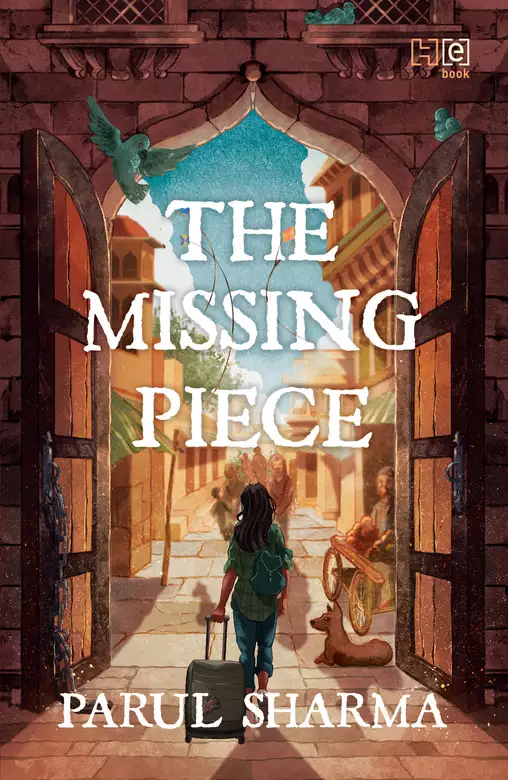
London-born Sukanya has grown up dreaming of the ancient mohalla - its narrow lanes, courtyards and the fading Nawabon ki Haveli - her father left behind years ago.
When her grandmother falls ill, Sukanya is finally allowed to return to Bulandwada. Here, she is warmly embraced by people who seem to have forgotten her family's complicated past. Drawn into the intimacy of this world, she begins to believe she may be home at last.
But Bulandwada is more than poetry, history, and belonging - beneath it lie rigid hierarchies and simmering resentments that punish defiance. As Sukanya becomes entangled in the hidden conflicts of the mohalla, she is forced to confront its darker truths.
Extraordinarily compelling, The Missing Piece is a story of reckoning with the cost of inheritance and the uncertain promise of future.
Release date:
April 16, 2026
Publisher:
Hachette India
Print pages:
320
* BingeBooks earns revenue from qualifying purchases as an Amazon Associate as well as from other retail partners.
7. London, 1984–2006 – The Days Are Short, But the Years Are Long
8. London, 2006 – The Troubling Question of The Gap Year
9. London, June 2006 – The Letter
10. Meerut, September 2006 – Shikanji and Tharra
11. Meerut, September 2006 – Bulandwada, At Long Last
12. Meerut, October 2006 – Bibi’s Chowk
13. Meerut, October 2006 – Nawabon Ki Haveli
14. Meerut, October 2006 – Enter: Gumbi
15. Meerut, October 2006: Sudhir Tyagi Makes an Appearance
16. Meerut, October 2006: Badi Mummy Wanes Further
17. Meerut, November 2006: The Pleasures of the Chaat Shop
18. Meerut, November 2006 – The Sagai
19. Meerut, November 2006 – The Church at Sardhana
20. Meerut, November 2006 – The Church and Sudhir Tyagi
21. Meerut, November 2006 – An Encounter with Roshni
22. Meerut, December 2006 – Fine Movie Lab
23. Meerut, December 2006 – Munto Baba’s Prophecy
24. Meerut, December 2006 – The Hospital
25. Meerut, December 2006 – The Hospital (continued)
26. Meerut, January 2007 – Badi Mummy Returns from Hospital
27. Meerut, January 2007 – Gumbi’s Mehndi
28. Meerut, January 2007 – The Aftermath of Puru’s Shenanigans
29. Meerut, January 2007 – Gumbi’s Haldi
30. Meerut, January 2007 – Gumbi’s Haldi (continued)
31. Meerut, January 2007 – A Brief Conversation with Puru
32. Meerut, January 2007 – Gumbi’s Wedding
33. Meerut, January 2007 – An Unexpected Twist
34. Meerut, January 2007 – The Past Becomes the Present
35. Meerut, February 2007 – The Funeral
36. Meerut, March 2007 – Back at Bibi’s Chowk
37. Meerut, March 2007 – The Stabbing Incident
38. Meerut, April 2007 – It’s Goodbye Once Again
39. Meerut, April 2007 – Gulshan, Again
40. Meerut, May 2007 – The Return of Gumbi (and Puru)
41. Meerut, May 2007 – Gumbi and Puru Return to Mumbai
42. Meerut, May 2007 – The Long Way Home
About the Author
About the Book
1.
London, 1988 – Shiladitya
Shiladitya’s daughter arrived in the world on a freezing night in London. Freezing nights in London were not something he was overtly fond of.
‘People appreciate winter when they have enjoyed a full run of summer,’ he would often say to the other homesick Indians in his neighbourhood at their monthly get-togethers. Dull evenings overloaded with Jameson whiskey and masala peanuts; everyone looking to get drunk quickly so that they could begin to forget and remember. ‘How can we look forward to winter here when it’s not been hot enough?’
How indeed! Before a chilly dusk could fall early, with an indefinable, smoky mist in the air, before they could gather around a small fire to eat moongphalis, making a veritable mound of brown shells at their feet, before they could warm their feet beneath the razai listening to Tai’s stories about deadly chudails and covetous dayans, before they could rub their hands together to tease out some warmth, before all of this, something else had to come first: an endless summer.
A summer which would come blazing with unrelenting, oppressive heat, hot gusts of loo winds, power cuts, and scorched earth, but also gujhiyas, gulaal and thandai at Holi, the mango journey from Dussehri to Langda to Chausa, and nights spent sleeping under the night skies, a net massehri the only thing between them and the stars. This summer made it impossible to hurry for anything, forcing certain languorousness upon everyone, slowing everything down to a drowsy, laid-back pace.
‘Bhai, we like our seasons four in number and well defined,’ Shila would laugh, as he had done all these years.
Like back home, though that always remained unsaid.
Not once had he been back, not once.
All these years had passed and yet, the dream had remained unchanged. Bade Papa playing his harmonium and singing in his deep, sweet voice, ‘Mera joota hai Japani, yeh patloon Englishtaani, sar pe laal topi roosi, phir bhi dil hai Hindustani.’ Sometimes, he would wake with a jolt in the middle of the night, the strains of the song still in the air, having made their way from his dreams to the place where he tried to forget things.
Sometimes, he would sit at the table to eat and find himself suddenly and brutally ravenous for something that only Badi Mummy could make, aloo ka halwa perhaps, something that couldn’t be bought, the memory of the flavours burning on his parched tongue. Sometimes, unexpectedly, he would think of Rajni Mausi sitting at her sewing machine and churning out blouse after blouse to put her three royal princes through school as they struggled to move their academic careers beyond eighth class. Sometimes, he would find himself sitting on a charpai in Bibi’s courtyard, listening to all the gossip of the mohalla he called home. Whenever this happened, Shila tried to think of it as a wave of nausea. He just needed to sit still for some time, take a few deep breaths, and with time, it would pass. All of this, people, songs, home, was left behind in another space-time. And now he, like the man in the song, was only Hindustani at heart.
All this for Api. No regrets there, not ever. In which world did someone like Aparajita Dugar notice Shila, the ‘scholarship boy’? That was all he had going for him back then, his college scholarship, established by a wealthy seth, in the memory of his young son, hard-fought and hard-won through years and years of swotting and slogging, in his room next to the terrace. The terrace itself was always boiling hot, always smelling of the pigeons that Natwar tamed and kept nearby. To get out, to leave, to get away from that small town, that was Shila’s rosary. To not get trapped in the house-town-life of his father.
Though on that winter night, the night when his child arrived, he forgot all about the home he had left behind. Here she was, his flesh and blood, his firstborn, his only born. The cold, impersonal hospital and the interminable wait that he had spent pacing the hallways while his wife went through the pain of childbirth melted away as he held his child. He peered at her tiny, scrunched-up, perfect face, awed and delighted by her newfound presence in the way only new parents can be.
‘Sukanya,’ he said, a smile lighting up his own even features, the features that the little girl would assume before too long. ‘Beautiful girl. Isn’t that a perfect name for her, Api? She is pretty at birth, surely a rarity? Look at her, perfect as a rose. Someone has spent a lot of time on her, don’t you think?’
Aparajita did not reply. Tired and overwhelmed, her desperation gave way to tears, making their way out quietly from the corners of her large eyes. Everything hurt.
‘What is this, Api?’ Shiladitya hastily handed over the baby to the six-foot tall maternity ward nurse who had been watching the new father inexpertly handle the newborn. The nurse discreetly made her way outside, taking the infant with her.
‘Why are you crying, darling? Are you in pain? What happened?’ Shiladitya asked again, gently pushing away the black strands from her forehead that had escaped the blue hospital cap, and sat on the steel stool next to her bed.
In response, Aparajita shook her head and said nothing. Shiladitya didn’t probe any further. He knew Api’s thoughts mirrored his own. On a day like this, they didn’t know what they were supposed to do with all the unfinished business they were left holding. Who were they supposed to call? Who was supposed to come looking for them? What was to happen next?
2.
London, 1988 – Aparajita
Aparajita looked at her husband, holding her hand absently, lost in thoughts of his own. The newborn baby with the perfect face, her daughter, her daughter, was still with the nurse. The well of despair that she normally kept guarded rose once again. Had they been at home, her daughter would not be welcomed by the father alone. In the seventh month of her pregnancy, her mother would have arrived, bearing gifts for the godh-bharai. Songs would be sung in her honour as a mother-to-be and exhortations to be careful whispered as she did the simplest of things – walk, climb up steps and water the plants. And then, when the baby would arrive, there would be celebrations, songs would be sung, sweets would be sent to the neighbours’ homes, the servants would be given money as they blessed the baby, protecting her from nazar again and again, cracking their knuckles on the floor.
Sukanya would not be named like this, by her father in a bare, impersonal hospital room where a picture of a smiling, plump, blue-eyed Caucasian baby on the wall was its only decor. The naamkaran itself would be an elaborate ceremony. Relatives from all over would come to their home and after due consultation with the stars and constellations in the skies above, the family pundit would announce the single auspicious letter with which the child’s name must begin. Of course, Gulshan would dismiss pundits and their affectations in her inimitable way.
‘These priests, they know how to ruin a baby’s life. Listen to me, last winter, when Gaura had her son, the pundit said the name had to start with “jh”. Gaura’s father-in-law named his grandson Jhamroo. Now you tell me, is that a good name for a boy or a dancing bear?’
Gulshan, her beautiful, brilliant cousin, who could tell the most offensive jokes with a perfectly straight face, was now beginning to fade in Api’s memory, becoming a relic in the secret heart where she kept Delhi alive. Gulshan, the only sister she had ever had. Gulshan, the one she had grown up with, had shared a room and clothes and toys with, the one who would sit with her every evening to solve tricky mathematical theorems and help her learn Keats and Frost, and write her essays. Gulshan, the one with that beautiful mind that got everything twice as fast as anyone else, the one that lapped up complex concepts and spat them out, making it simplified for a six-year-old. Gulshan who played Bach on the piano, had taught herself Spanish and Italian just for fun, whose stories were regularly published in the local newspaper.
Everything else was fading too. The sprawling, white-washed, garden bungalow in North Delhi with its wrought-iron gate, the lawns lush with daisies, pansies, tulips, the breathtaking Nathdwara pichwai made with real gold in the living room, a tribute to the Rajasthani roots of her father, the beautiful brass elephant that stood at the door, the stuffed cotton quilts with the kalamkari and leheriya covers that her mother would make and discreetly sell – all this was fading and soon would be gone.
Gone also would be the memory of her family. The stern, handsome father whose face would soften at the sight of Api. Her quiet, elegant mother, her head always covered with the pallu of her chiffon sari, besotted with Indian textiles, stately like a queen of some princely state. Api’s widowed aunt, Kanta Bua, always in white, cooking this and that for her beloved niece. Api had become the child that Kanta Bua never got to have. The never-ending visitors, the retinue of loyal, ageless servants. The games of rummy that were played on the expansive terrace of their beautiful home on cool evenings would disappear next. The Lohri celebrations that their neighbours, the Malhotras, invited them to every year, would vanish too.
Api clung to the memories of the years she had spent in India. She did not regret her decision to marry Shiladitya. Not ever. But her homesickness, cruelly and steadfastly ignored for a couple of years, a painful sore that had to be kept covered and cushioned, had reared its head ever since she conceived Sukanya, bringing bits and pieces of India to her in weird, senseless, vivid dreams of her own. She didn’t know it yet, but she had passed on this strange homesickness to the baby.
Everything was fading. If you don’t remember things, do they still exist?
3.
Delhi, 1981 – Small Towns, Big Cities
Every great city inspires and imagines its own version of a beautiful girl. Aparajita Dugar was one such girl from Delhi, her crisp chikankari kurtis and silver baalis drawing admiring glances and besotted gazes wherever she stepped. And yet, disturbingly enough, the tall, khadi kurta–clad Shiladitya Pandey, the scholar from some small town in the back of beyond would march past her without as much as a look. Shila hid his fears well and carried himself as if he really couldn’t be bothered with anyone.
In her first year at the University, Aparajita relentlessly tracked this intriguing boy, saying nothing but always on the lookout for him, following his movements as he made his way from the college hostel to the classrooms to the library, his head always held high, never looking anywhere except where he was going.
Who was Shila back then, she would smile as she sometimes remembered those days to herself. He was superlatively sharp, that much was immediately apparent, more well-read than anybody she knew, save Gulshan perhaps. He had a masterful command over any topic he chose to declaim over. His English was sometimes suspect, learnt as it was from books, but it seemed absurd to make fun of someone so erudite. Api, raised in large parts by Gulshan, knew intelligence when she saw it and found it irresistible.
‘Api, it baffles me, this infatuation of yours,’ Charu Sinha, Aparajita’s friend often said as she saw Api stare longingly at the oblivious Shila. ‘Why anyone would pine over a boy who reads books that can serve as weights in a gym is beyond me. Look at him, that kurta is at least three sizes too big, though those silver buttons are pretty. And when was the last time he got a haircut? So dehaati, my God.’
Api would only laugh in response. The truth was that she herself did not know why she liked to look at the brooding and inordinately shy Shiladitya over the other attractive specimens doing the rounds of the college. These others were good-looking and well-groomed, scented with perfumes bought in the duty-free shops of airports around the world, careless with their money, generous in their disdain for anyone not like them. They were articulate and well-spoken, having been brought up in the company of accomplished men and women since they were children. They could talk about musical theatre and jazz clubs, and they were willing to take her to either, for Api had the self-assuredness of a much older person, like very attractive people often do.
Aparajita persisted with her silent devotion to Shila probably because she knew that there was no risk of this, this thing, going anywhere. Like most students attending college with the aid of scholarships, Shila stayed completely focused on his grades, always topping each course and leaving no doubt in the minds of the authorities that he really deserved to be there. Only later would Api come to know of his nightmarish anxiety over losing his place in the hostel if his grades slipped. He lived an austere life, always dressed in old khadi kurtas, a pair of tiny silver buttons connected with a chain – the only reminder of the ancestral jeweller’s shop that Bade Papa had so carelessly lost. He spent every spare minute in the library, his sights now set on UPSC. A career in diplomacy. See the world a little bit. Count for something.
Shiladitya’s grandfather had been a successful jeweller, owner of a large store in Meerut’s Sarafa Bazaar. His son, Shiladitya’s father, known in their mohalla only as Bade Papa, turned out to be a poet at heart, a man of bazms and mushairas, and therefore, with very little sense for business. The poor, beleaguered shop had to be sold soon after he took charge. Bade Papa was relieved; it was not for him: sitting at the galla, showing beautiful baazubands and chaandbaalis to unshapely women who didn’t do them justice.
After saying a relieved, if untimely, goodbye to the longstanding family business, Bade Papa started teaching literature in a small local college. The modest salary he earned there was supplemented by the tuitions he gave to college boys particularly challenged in English. It was a hand-to-mouth existence but it was enough for Shila’s father. His true passions were poetry and literature, and he spent most of his days rocking in an old, worn-out chair that had known better times, one leg draped over its arm, reading and re-reading Anna Karenina, Rashmirathi or Of Human Bondage with his myopic eyes, still a handsome man despite the receding hairline and the worn-out clothes.
‘Wait till Shila grows up and becomes an IAS officer,’ Shila’s mother, predictably known as Badi Mummy, would say. ‘He is not like his father. He’ll go really far in life. My Shila is different.’
Shiladitya was different. Not only was he exceptionally bright, but from an early age, he also knew that the narrow gullies of Meerut and the 150-year-old ancestral Pandey house couldn’t contain his ambitions and his plans. It was something that he never spoke of, but he never forgave Bade Papa for ruining things in such a spectacular fashion – selling the jewellery shop, allowing poverty and all its accompanying hardships to creep into their lives. Poverty, Shila would remind himself, was a parasite that was difficult to shake off, and he was determined not to follow in Bade Papa’s footsteps.
At eighteen, Shiladitya was one of those rare men who knew, with an unwavering certainty, that destiny had something wonderful waiting for them just around the corner – it was only a matter of time before they would meet. His confidence in his future was so immense that sometimes Bade Papa couldn’t help but feel that the cheap cotton kurta draped on his son’s slender frame was melting away, replaced by a Brooks Brothers suit – the kind accomplished men wore in books. The boy had inherited his mother’s graceful carriage, that much was certain.
Shiladitya’s mother did not keep too well, suffering for as long as he could remember, but even that hadn’t dulled the flawless lines of her beautiful face. She had been so lovely at sixteen that Shiladitya’s father had been completely enamoured by her at first sight, immediately sending his mother that very evening to ask for her hand. Now after a lifetime of financial struggles, everyday compromises, and years spent with a particularly unambitious companion, she sometimes forgot to check her once-perfect reflection in the only mirror in the house.
When Shiladitya topped the district in his board examinations, Bade Papa tried to make a case for him to stay back but Shiladitya wouldn’t hear of it. And when St. Theresa offered him a scholarship, it became even clearer that his future lay outside of the confines of Meerut. This was the small-town dream – to escape it at all costs, until they did, and then spent their lives being homesick for it.
‘This is what I’ve waited for so long, Bade Papa,’ he had said, pulling out the only suitcase the family owned – likely a relic of his mother’s meagre dowry from her wedding. ‘I need to step out, see the world. There is no competition for me here anymore. Everything is waiting for me out there.’ The determination in his voice left no room for the weak arguments his father might have made. After bidding a series of curt goodbyes to the life he had known, and inflicting this first wound on his parents, Shiladitya left for Delhi, carrying with him large steel katordaans filled with mathris and laddus, tearfully made that night by Rajni Mausi and stoically packed by Badi Mummy.
Dhiren Chaudhary, Shila’s unlikely best friend since childhood, made regular visits to him in Delhi. Dhiren’s family owned vast tracts of farmland in the state, had in fact made a considerable fortune off sugar but wrapped in a chaadar and reeking of cigarettes, the stubble-covered Dhiren never gave away the slightest hint of his affluence. He had systematically failed every public exam he’d ever taken, only to promptly organize fraudulent certificates for each one, finding them perfectly acceptable. Fiercely loyal to Shila, Dhiren became the bridge between Delhi and Meerut, the old and the new, carrying news back and forth. Meanwhile, Shila avoided returning home even for holidays, preferring to stay in Delhi and study in the library, quiet and cool even in . . .
We hope you are enjoying the book so far. To continue reading...

 Please log in to recommend or discuss...
